Introduction
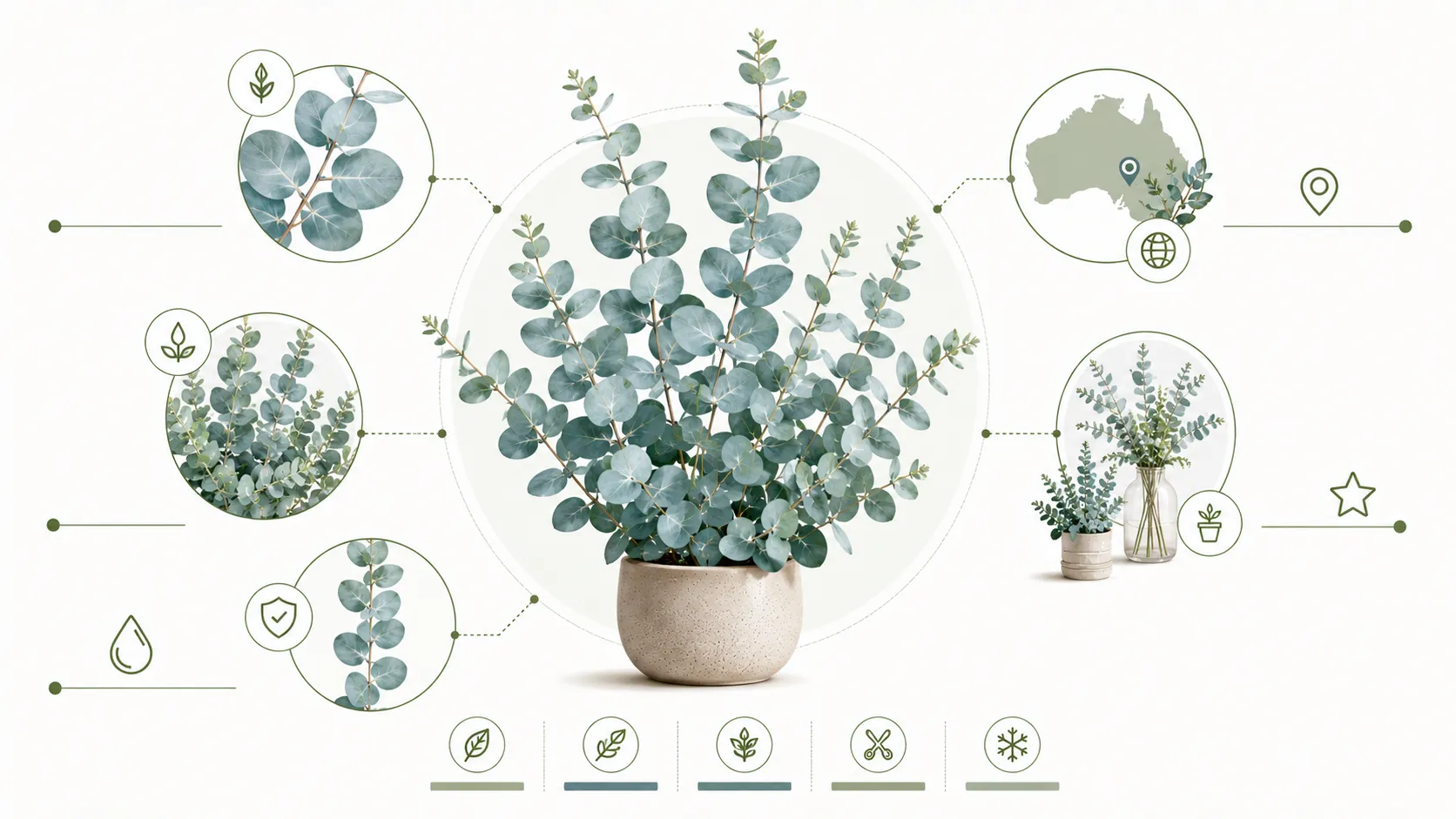
The baby blue eucalyptus plant (Eucalyptus pulverulenta ‘Baby Blue’) is an evergreen eucalyptus cultivar known for its rounded, silvery-blue leaves, refreshing fragrance, and popularity in floral arrangements. Native to Australia, this ornamental plant is valued as both a garden specimen and a cut foliage plant for bouquets. The eucalyptus pulverulenta ‘Baby Blue’ variety has a compact appearance when young but can develop into a fast-growing tree or shrub outdoors. Its unique blue-gray foliage, low-maintenance nature, and aromatic leaves make it a favorite among gardeners and florists seeking attractive year-round greenery. As part of Australia’s diverse native flora, baby blue eucalyptus is often included in gardens designed around drought-tolerant and regionally adapted plants. Explore more options in this guide to Australian native garden plants.
Quick Summary
- Baby blue eucalyptus (Eucalyptus pulverulenta ‘Baby Blue’) is a fast-growing evergreen plant with rounded, silvery-blue foliage.
- It grows best outdoors in full sun with well-drained soil and usually struggles as a long-term indoor houseplant.
- This eucalyptus variety is a perennial in warm climates, especially USDA zones 8–11, and can grow several feet annually.
- Proper pruning encourages bushier growth, while overwatering is one of the most common causes of problems.
- Its fragrant foliage makes it popular for landscaping, dried arrangements, and fresh floral bouquets.
What Is Baby Blue Eucalyptus?
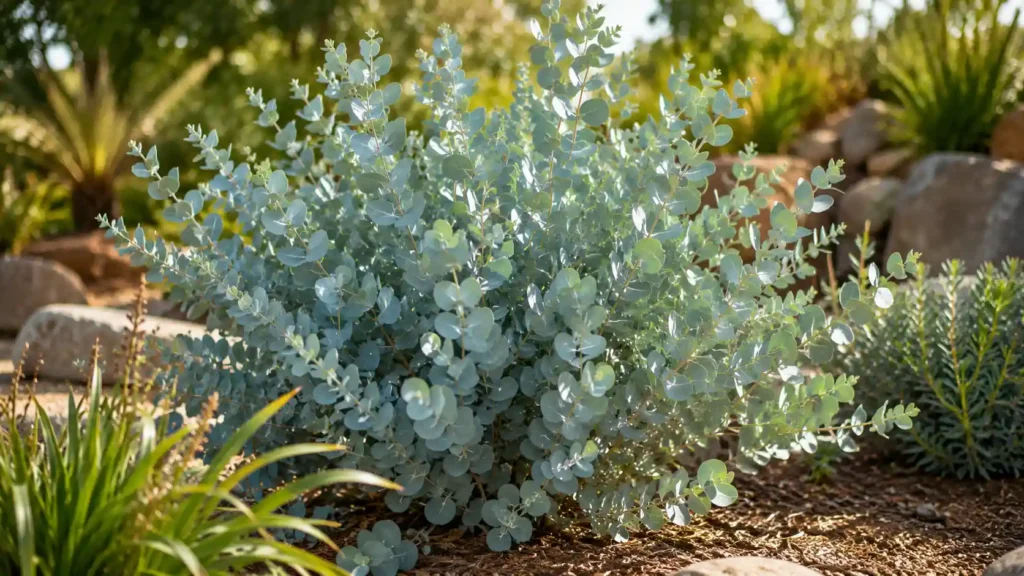
Baby blue eucalyptus is a cultivated variety of Eucalyptus pulverulenta, a species belonging to the Myrtaceae (myrtle) plant family. It is an evergreen Australian native known for its distinctive rounded leaves covered with a silvery-blue waxy coating. This foliage gives the plant its signature appearance and makes it highly desirable for ornamental gardens and floral design. Other eucalyptus groups, including mallee eucalyptus varieties, are also valued for their unique growth forms, drought tolerance, and ornamental foliage.
Unlike many eucalyptus species with long, narrow leaves, baby blue eucalyptus produces small, circular to oval leaves that remain attached closely along the stems. Young plants often maintain a shrub-like appearance, while mature plants can develop into small trees when grown outdoors in suitable climates. Baby blue eucalyptus belongs to the broader eucalyptus group, a genus of flowering trees and shrubs native mainly to Australia.
Common names used for this plant include:
- Baby blue eucalyptus
- Eucalyptus baby blue
- Baby blue eucalyptus tree
- Eucalyptus blue
- Bouquet eucalyptus plant
The plant is widely grown for several purposes:
- Ornamental landscaping: Its blue-gray foliage adds year-round color and texture to gardens.
- Floral arrangements: Florists use fresh and dried stems because the leaves maintain their shape and color well.
- Aromatic gardens: The leaves release a classic eucalyptus scent when touched or crushed.
Baby blue eucalyptus is especially popular in modern floral designs because its rounded leaves create a soft, elegant look compared with traditional eucalyptus varieties with narrow foliage.
Baby Blue vs. Silver Dollar Eucalyptus
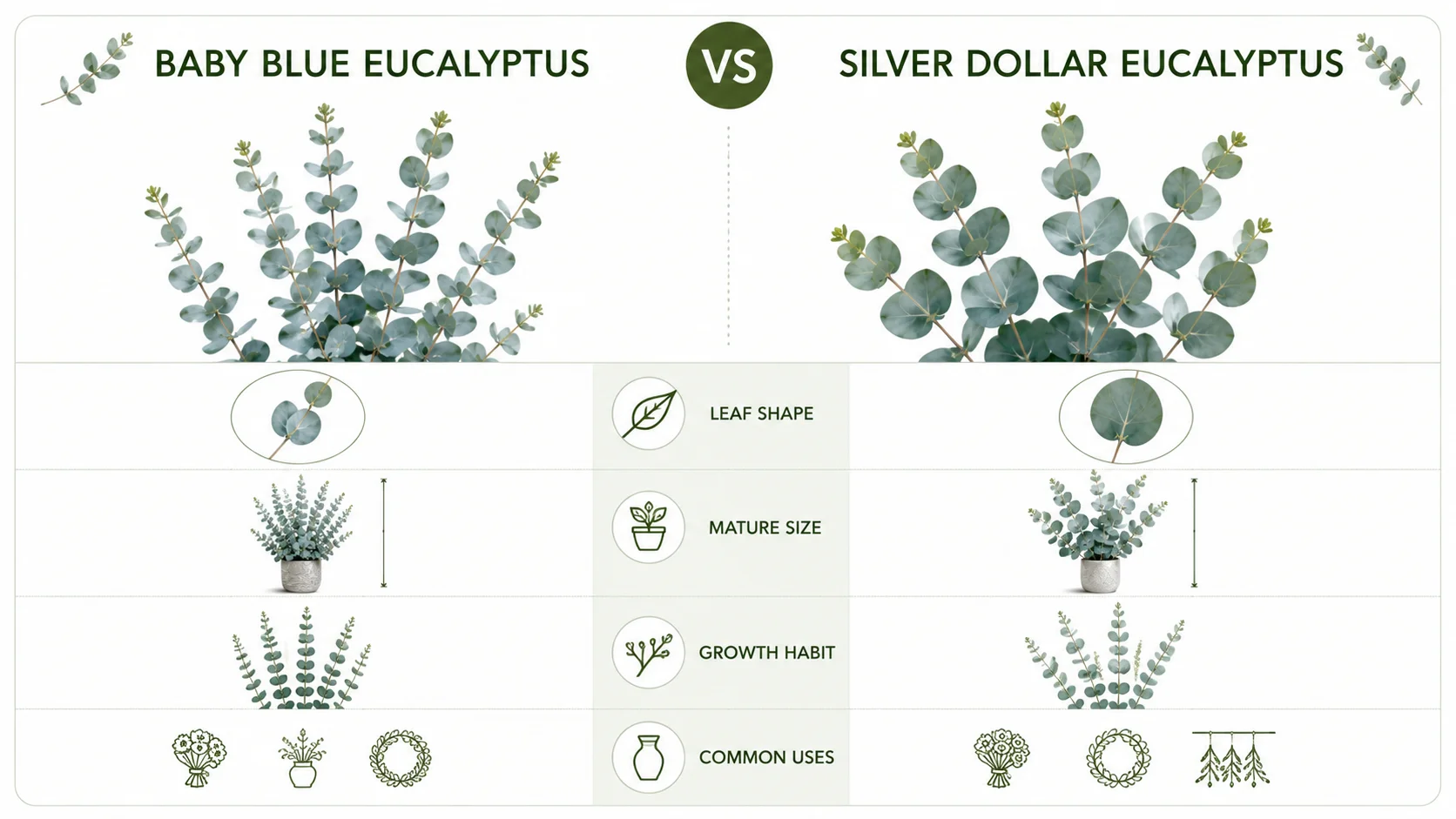
Baby blue eucalyptus and silver dollar eucalyptus are closely related eucalyptus varieties often compared because both produce attractive rounded leaves and are widely used in floral arrangements. However, they differ in mature size, leaf characteristics, and landscaping uses.
| Feature | Baby Blue Eucalyptus | Silver Dollar Eucalyptus |
| Leaf shape | Small, rounded leaves | Larger, rounder “coin-shaped” leaves |
| Growth rate | Fast | Fast |
| Common use | Floral arrangements and ornamental gardens | Floral arrangements and larger landscapes |
| Mature height | 20–30 ft (unpruned) | 40–75 ft |
| Growth habit | Smaller tree or shrub form | Large tree form |
Baby blue eucalyptus is usually preferred when gardeners want a manageable eucalyptus with decorative foliage. Silver dollar eucalyptus (Eucalyptus cinerea) is often chosen for larger landscapes because it can become significantly taller and wider.
For bouquets, both varieties are popular, but baby blue eucalyptus is especially favored for delicate arrangements because its smaller leaves create a softer texture.
Is Baby Blue Eucalyptus an Indoor Plant?
Baby blue eucalyptus is not considered an ideal long-term indoor plant because it requires intense sunlight, good airflow, and enough root space to support its naturally fast growth. While it can survive indoors temporarily, it usually performs best when planted outdoors in suitable climates.
Many gardeners search for baby blue eucalyptus plant indoor care because the plant is attractive in containers and floral displays. However, maintaining healthy growth inside a home can be challenging.
Indoor limitations include:
- High light requirements: Baby blue eucalyptus needs at least 6 or more hours of direct sunlight daily.
- Humidity and airflow issues: Indoor environments may have stagnant air and humidity levels that do not match outdoor conditions.
- Limited root space: Eucalyptus develops a strong root system and can quickly become restricted in containers.
- Growth management challenges: Without enough sunlight and pruning, indoor plants may become tall and leggy.
A potted baby blue eucalyptus can work as a temporary decorative plant, especially near a bright window, patio door, or sunroom. However, it generally performs better outdoors where it receives full sun and natural airflow.
Growing Baby Blue Eucalyptus in Pots
Baby blue eucalyptus can grow in pots, especially when young, but container growing requires careful management because the plant naturally grows quickly. A large container with excellent drainage is essential for maintaining healthy roots.
For growing eucalyptus baby blue in pots:
- Choose a container with drainage holes to prevent water buildup.
- Use a well-draining soil mix containing materials such as compost, sand, or perlite.
- Select a pot large enough to support root development.
- Repot when roots become crowded or begin circling the container.
Container-grown plants usually remain smaller than outdoor specimens because their root system is restricted. Regular pruning can also help maintain a compact shape.
Common container problems include:
- Yellowing leaves caused by excessive moisture.
- Slow growth from insufficient sunlight.
- Root stress from small containers.
- Weak stems from poor pruning practices.
Water potted eucalyptus carefully. Allow the soil surface to dry slightly between watering sessions because eucalyptus plants are more tolerant of dry conditions than constantly wet soil.
Baby Blue Eucalyptus Plant Size
Baby blue eucalyptus can vary greatly in size depending on whether it is grown outdoors in the ground or maintained in a container. Under ideal outdoor conditions, it develops into a medium-sized evergreen tree, while container-grown plants remain much smaller. Gardeners looking for smaller eucalyptus varieties for limited spaces can also explore dwarf eucalyptus options, such as Eucalyptus Euky Dwarf, which offers a more compact growth habit.
Typical size:
- Outdoor mature height: Around 20–30 feet when left unpruned.
- Outdoor width: Approximately 10–20 feet depending on growing conditions and pruning.
- Container size: Often maintained between 3–8 feet with regular pruning.
Several environmental factors influence baby blue eucalyptus plant size:
- Soil volume: Larger root systems allow greater growth.
- Climate: Warm regions with long growing seasons encourage faster development.
- Sun exposure: Full sun produces stronger stems and denser foliage.
- Pruning: Regular trimming controls height and encourages branching.
In colder regions, eucalyptus may remain smaller because seasonal limitations slow growth. In warm climates, it can quickly become a substantial landscape plant.
How Fast Does Baby Blue Eucalyptus Grow?
Baby blue eucalyptus is considered a fast-growing plant and can gain approximately 3–6 feet of growth per year under favorable conditions. Its growth speed depends heavily on sunlight, climate, soil quality, and water availability.
Growth patterns typically follow seasonal changes:
- Spring and summer: Active growth occurs as temperatures increase and sunlight levels rise.
- Fall: Growth may slow as temperatures decrease.
- Winter: Growth often becomes limited, especially in cooler climates.
Factors that encourage faster growth include:
- Full sun exposure for most of the day.
- Well-drained soil with moderate fertility.
- Adequate water during establishment.
- Warm temperatures.
Although eucalyptus is naturally fast-growing, excessive fertilizer or constant moisture does not necessarily improve growth. Healthy growth depends more on proper environmental conditions than heavy feeding.
For the best results, gardeners should focus on strong root development, good drainage, and regular pruning rather than forcing rapid growth.
Is Baby Blue Eucalyptus a Perennial?
Yes, baby blue eucalyptus is a perennial evergreen plant when grown in climates that match its natural growing requirements. Eucalyptus pulverulenta ‘Baby Blue’ can survive year-round in warm regions, especially USDA hardiness zones 8–11, where winters are mild and frost exposure is limited.
In colder climates, baby blue eucalyptus is often grown as an annual plant or maintained in containers that can be protected indoors during freezing temperatures. Although mature plants can tolerate some cold, prolonged frost can damage leaves, stems, and young plants.
The lifespan of baby blue eucalyptus depends on several factors:
- Climate: Warm regions allow continuous growth for many years.
- Winter protection: Cold temperatures may reduce survival in colder zones.
- Growing conditions: Proper drainage and sunlight improve long-term health.
- Plant maintenance: Regular pruning helps maintain structure and prevents decline.
When planted in suitable outdoor conditions, baby blue eucalyptus can live for many years and become a reliable evergreen landscape plant. In unsuitable climates, gardeners often treat it as a seasonal ornamental or grow it in containers.
Does Baby Blue Eucalyptus Spread?
Baby blue eucalyptus can spread through its root system and canopy expansion, but it is generally not considered an aggressively invasive eucalyptus species in most garden settings. However, its strong root growth and large mature size require careful planting location selection.
As the plant matures, its roots compete for water and nutrients, especially in dry environments. Planting eucalyptus too close to buildings, pathways, or other plants may create maintenance issues.
Recommended spacing considerations:
- Allow enough room for the mature canopy to expand.
- Avoid planting directly beside foundations or underground structures.
- Give neighboring plants adequate distance to reduce root competition.
Gardeners often ask what not to plant next to eucalyptus because eucalyptus trees can influence nearby plants through natural compounds released from leaves and roots. Some eucalyptus species produce allelopathic chemicals that may reduce the growth of certain nearby plants.
Avoid placing eucalyptus near:
- Small plants that require consistently moist soil.
- Shallow-rooted plants that compete poorly for water.
- Sensitive companion plants affected by eucalyptus leaf litter.
Good spacing and thoughtful companion planting help reduce potential problems while allowing baby blue eucalyptus to grow successfully.
Baby Blue Eucalyptus Care Guide
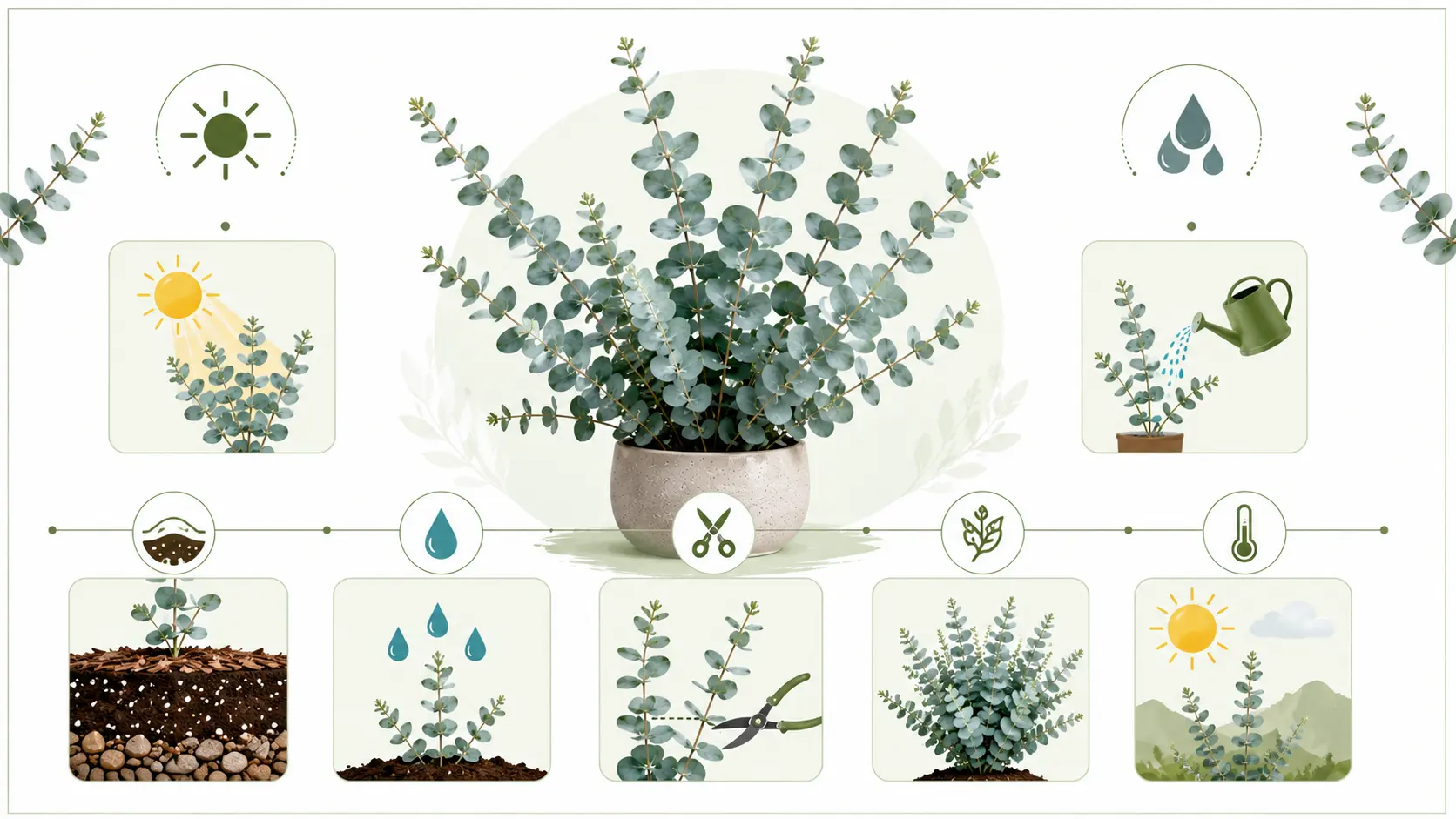
Baby blue eucalyptus care is relatively simple when the plant receives the conditions it naturally prefers. The most important requirements are full sunlight, well-draining soil, careful watering, and regular pruning to maintain a healthy shape.
This Australian native is adapted to periods of dryness and does not perform well in constantly wet soil. Many growing problems occur because gardeners treat eucalyptus like moisture-loving plants instead of drought-tolerant trees.
Watering Requirements
Baby blue eucalyptus becomes drought-tolerant once established, but young plants require consistent moisture while developing their root system.
General watering guidelines:
- Water deeply after planting to encourage strong root growth.
- Allow the soil to dry slightly between watering sessions.
- Reduce watering frequency after establishment.
- Avoid keeping roots constantly wet.
Signs of watering problems include:
- Yellowing leaves from excessive moisture.
- Drooping foliage from root stress.
- Poor growth caused by inconsistent watering.
Overwatering is one of the most common mistakes with eucalyptus plants because their roots require oxygen-rich soil.
Light Requirements
Baby blue eucalyptus grows best in full sun and requires strong direct light for healthy growth.
Ideal conditions include:
- At least 6 hours of direct sunlight daily.
- Open outdoor locations with good airflow.
- Protection from excessive shade.
Insufficient light often causes:
- Thin, stretched stems.
- Reduced leaf production.
- Weak, leggy growth.
Soil Preferences
The best soil for baby blue eucalyptus is loose, well-drained soil with slightly acidic to neutral pH.
Recommended soil characteristics:
- Good drainage.
- Moderate fertility.
- Ability to dry between watering.
- No standing water around roots.
Heavy clay soils should be improved with organic matter or drainage materials because compacted soil increases the risk of root problems.
Fertilization Practices
Baby blue eucalyptus generally does not require heavy feeding. Excess fertilizer can encourage weak growth rather than a strong, naturally shaped plant.
Fertilizing tips:
- Apply a balanced fertilizer lightly during the active growing season.
- Avoid excessive nitrogen applications.
- Reduce feeding during winter when growth slows.
Plants growing in nutrient-poor soil may benefit from occasional feeding, but established outdoor eucalyptus usually performs well with minimal fertilizer.
Pruning Considerations
Pruning helps control size, improve branching, and maintain attractive foliage. Baby blue eucalyptus naturally grows upright, but strategic trimming can create a fuller appearance.
Pruning benefits include:
- Encouraging bushier growth.
- Removing weak or damaged branches.
- Maintaining manageable size.
- Producing more usable stems for floral arrangements.
Climate Tolerance
Baby blue eucalyptus prefers warm climates and handles heat well once established. It is moderately frost-sensitive, especially when young.
Best conditions:
- Warm summers.
- Mild winters.
- Good air circulation.
- Protection from severe frost.
In colder areas, container growing allows gardeners to protect the plant during winter.
How to Make Baby Blue Eucalyptus Bushy
To make baby blue eucalyptus bushy, regular pruning and pinching encourage the plant to produce more side branches instead of growing tall and sparse. Young plants respond especially well to shaping techniques.
Methods to encourage bushier growth include:
- Pinching growing tips: Removing the ends of new shoots encourages lateral branching.
- Regular pruning: Cutting back stems promotes fuller growth.
- Coppicing: Cutting the plant back strongly can encourage multiple new shoots from the base.
For a bushier appearance:
- Prune during active growth periods.
- Remove overly long stems.
- Avoid allowing one central stem to dominate.
- Maintain balanced branching.
A common beginner mistake is allowing eucalyptus to grow without pruning until it becomes tall and thin. Early shaping creates a stronger, more attractive plant.
Does Baby Blue Eucalyptus Smell?
Yes, baby blue eucalyptus has a noticeable eucalyptus fragrance, especially when its leaves are crushed, handled, or cut. The scent comes from aromatic oils naturally produced within the foliage.
The fragrance is most noticeable when:
- Fresh stems are harvested.
- Leaves are rubbed between fingers.
- Branches are pruned.
- Foliage is used in floral arrangements.
The aroma is often described as fresh, clean, and slightly mint-like. This fragrance is one reason baby blue eucalyptus is commonly used in bouquets, wreaths, and dried flower arrangements.
Are Eucalyptus Plants Hard to Keep Alive?
Eucalyptus plants are not necessarily difficult to keep alive, but they can be challenging when grown in conditions that do not match their natural environment. Many problems occur because gardeners provide too much water, too little sunlight, or unsuitable growing conditions.
Eucalyptus is considered difficult mainly because it has specific environmental preferences:
Common beginner mistakes include:
- Overwatering: Keeping soil constantly wet can damage roots and cause yellow leaves.
- Poor drainage: Compact or heavy soil prevents proper root oxygenation.
- Insufficient light: Low light causes weak, stretched growth.
- Wrong climate zone: Frost and cold temperatures can damage the plant.
- Container-bound roots: Small pots restrict growth and create stress.
The key to successful eucalyptus care is understanding that it behaves more like a drought-adapted tree than a typical houseplant. Providing sunlight, drainage, and appropriate space usually results in a healthier plant.
Common Problems With Baby Blue Eucalyptus (Problem-Solution Section)
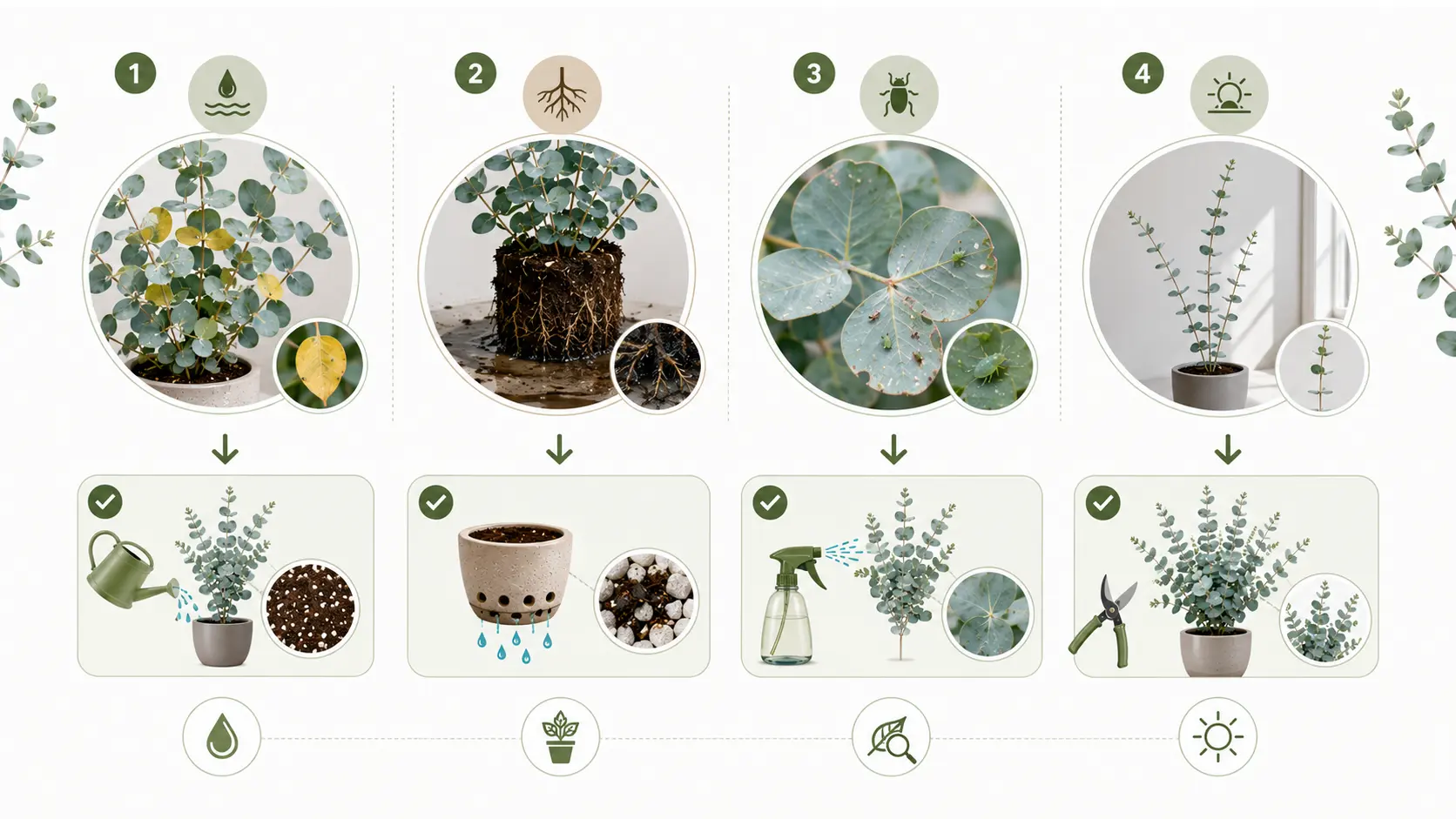
Baby blue eucalyptus problems usually result from environmental stress rather than serious disease. Identifying the cause early helps prevent long-term damage.
Yellowing Leaves
Yellow leaves on baby blue eucalyptus are commonly caused by overwatering, poor drainage, or nutrient imbalance.
Possible causes:
- Soil staying wet too long.
- Root stress from poor drainage.
- Lack of essential nutrients.
Solutions:
- Allow soil to dry before watering again.
- Improve drainage if soil remains saturated.
- Apply a balanced fertilizer if nutrient deficiency is confirmed.
Prevention:
- Use well-draining soil.
- Follow a moisture-based watering schedule.
- Avoid planting in areas where water collects.
Overwatering Issues
Overwatering is one of the most common causes of eucalyptus decline. Excess moisture reduces oxygen around roots and increases the risk of root rot.
Signs of overwatering:
- Yellowing foliage.
- Soft or declining growth.
- Persistent wet soil.
- Leaf drop.
Fixes include:
- Reducing watering frequency.
- Improving soil drainage.
- Removing damaged roots if root rot develops.
A practical watering approach is to check soil moisture before watering rather than following a fixed daily schedule.
Pest Infestations
Baby blue eucalyptus may occasionally experience pest problems, including:
- Psyllids.
- Aphids.
- Scale insects.
Treatment options:
- Remove heavily affected leaves.
- Spray pests with insecticidal soap or horticultural oil.
- Encourage airflow around the plant.
Prevention methods:
- Maintain healthy growing conditions.
- Avoid excessive nitrogen fertilizer.
- Inspect new plants before adding them to the garden.
Slow or Leggy Growth
Slow or stretched growth usually indicates environmental problems rather than natural growth limitations.
Common causes:
- Lack of sunlight.
- Poor pruning practices.
- Restricted roots.
- Low-quality soil.
Solutions:
- Move the plant to a brighter location.
- Prune regularly to encourage branching.
- Repot container plants when roots become crowded.
With proper light and pruning, baby blue eucalyptus usually develops stronger, fuller growth.
What Are the Cons of Eucalyptus Plants?
Although eucalyptus plants are attractive and useful, they also have several disadvantages that gardeners should consider before planting. Baby blue eucalyptus is easier to manage than some larger eucalyptus species, but it still shares many characteristics common to eucalyptus plants, including rapid growth and strong root development.
Common disadvantages include:
- Large mature size: Outdoor eucalyptus can become much larger than expected and may require regular pruning to remain manageable.
- Root competition: Strong roots can compete with nearby plants for water and nutrients.
- Allelopathic effects: Some eucalyptus species release natural compounds through leaves and roots that may affect the growth of certain nearby plants.
- Flammability concerns: Eucalyptus foliage contains aromatic oils that can increase fire risk in dry conditions.
- Pet toxicity concerns: Eucalyptus leaves and oils may be harmful if consumed by cats, dogs, or other pets.
- Maintenance requirements: Fast growth means regular pruning may be needed to control shape and size.
For gardeners with limited space, growing baby blue eucalyptus in a container or choosing a dedicated planting area can help manage these challenges.
Baby Blue Eucalyptus Varieties and Sourcing
Baby blue eucalyptus is most commonly available as Eucalyptus pulverulenta ‘Baby Blue’, but gardeners may encounter related eucalyptus cultivars with similar blue-gray foliage. Understanding the source and growing method helps ensure the plant matches the expected appearance and growth habit.
When searching for a baby blue eucalyptus plant for sale, common sources include:
- Local nurseries specializing in ornamental trees.
- Garden centers in warm-climate regions.
- Online plant suppliers offering young eucalyptus plants.
- Specialty growers that provide eucalyptus seeds or starter plants.
Nursery-grown plants are usually the easiest option because they already have established roots and provide faster results. Young plants are often sold as small shrubs or seedlings that can be transplanted into gardens or larger containers.
Growing From Baby Blue Eucalyptus Seeds vs. Nursery Starts
Baby blue eucalyptus can be grown from seeds, but the process requires more time and patience compared with purchasing a young plant.
| Growing Method | Advantages | Challenges |
| Seeds | Affordable, allows growing multiple plants, natural propagation method | Slow establishment, requires proper germination conditions |
| Nursery starts | Faster results, easier for beginners, established roots | Higher cost and limited variety availability |
Seed-grown eucalyptus requires:
- Warm temperatures for germination.
- Consistent moisture without waterlogging.
- Bright light after seedlings emerge.
- Careful transplanting because young roots can be sensitive.
Nursery plants are often preferred by gardeners who want faster landscaping results or immediate access to healthy foliage.
Related eucalyptus cultivars may also be available, including varieties selected for different leaf shapes, sizes, or growth habits. However, Eucalyptus pulverulenta ‘Baby Blue’ remains one of the most recognized choices for decorative foliage and floral use.
Conclusion
Baby blue eucalyptus (Eucalyptus pulverulenta ‘Baby Blue’) is a fast-growing evergreen plant valued for its rounded silver-blue leaves, fresh fragrance, and versatility in gardens and floral arrangements. It performs best outdoors with full sun, well-drained soil, and careful watering practices.
Although baby blue eucalyptus can be grown temporarily indoors or in containers, it naturally prefers outdoor conditions where it has enough light, airflow, and root space. Regular pruning helps maintain a bushier shape, while avoiding overwatering prevents many common problems.
With the right environment, the baby blue eucalyptus plant is a low-maintenance, high-reward ornamental that provides attractive year-round foliage and useful cut stems for decorative purposes.
FAQs
Is eucalyptus baby blue an indoor plant?
Baby blue eucalyptus is not an ideal long-term indoor plant because it requires strong direct sunlight, airflow, and significant root space. It can be grown indoors temporarily in a very bright location, but it usually performs best outdoors in full sun.
How do you care for baby Blue Eucalyptus?
Baby blue eucalyptus care involves providing full sun, well-drained soil, moderate watering, and occasional pruning. Allow the soil to dry slightly between watering sessions, avoid waterlogged conditions, and trim the plant regularly to encourage healthy branching.
What are the common problems with baby Blue Eucalyptus?
The most common problems with baby blue eucalyptus include yellowing leaves, overwatering stress, pest infestations, and leggy growth. These issues are usually caused by poor drainage, insufficient sunlight, or incorrect watering practices.
Does baby Blue Eucalyptus spread?
Baby blue eucalyptus can spread through root growth and canopy expansion, but it is not typically considered highly invasive when properly planted. It should be given enough space because its roots can compete with nearby plants for water and nutrients.
Can eucalyptus baby blue grow in pots?
Yes, eucalyptus baby blue can grow in pots when placed in a large container with excellent drainage and adequate sunlight. Container plants require regular monitoring because restricted roots can limit growth and increase stress.
How long does baby Blue Eucalyptus last?
Baby blue eucalyptus can live for many years when grown in suitable outdoor climates, especially USDA zones 8–11. In colder regions, it may only survive seasonally unless protected from freezing temperatures or grown as a container plant.