
Introduction
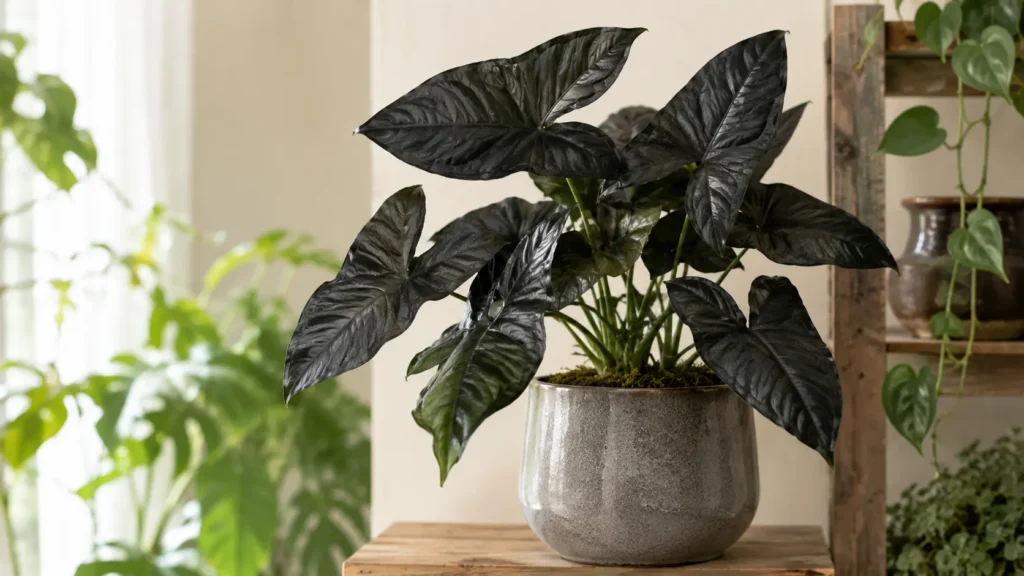
Syngonium Black Panther is a dark-leaved cultivar of Syngonium podophyllum, commonly known as the arrowhead plant. It is valued for its deep green to nearly black arrow-shaped leaves, compact growth habit, and attractive tropical appearance. This rare-looking houseplant belongs to the Araceae family and is popular among indoor plant collectors because it combines dramatic foliage with relatively easy care requirements. Unlike some highly demanding tropical plants, Syngonium Black Panther adapts well to indoor environments when provided with suitable light, moisture, and humidity. This guide explains its identity, care needs, growth habits, common problems, and differences from similar Syngonium varieties.
Quick Summary
- Syngonium Black Panther is a dark-foliage cultivar of Syngonium podophyllum with nearly black arrow-shaped leaves.
- It is considered an easy-care houseplant that tolerates moderate indoor conditions and lower light levels.
- It grows slower and often appears bushier than many standard green Syngonium varieties.
- It is commonly confused with Syngonium Maria and Syngonium Black Velvet because of similar dark foliage.
- Proper pruning, humidity, and indirect light help maintain fuller and healthier growth.
What Is Syngonium Black Panther?
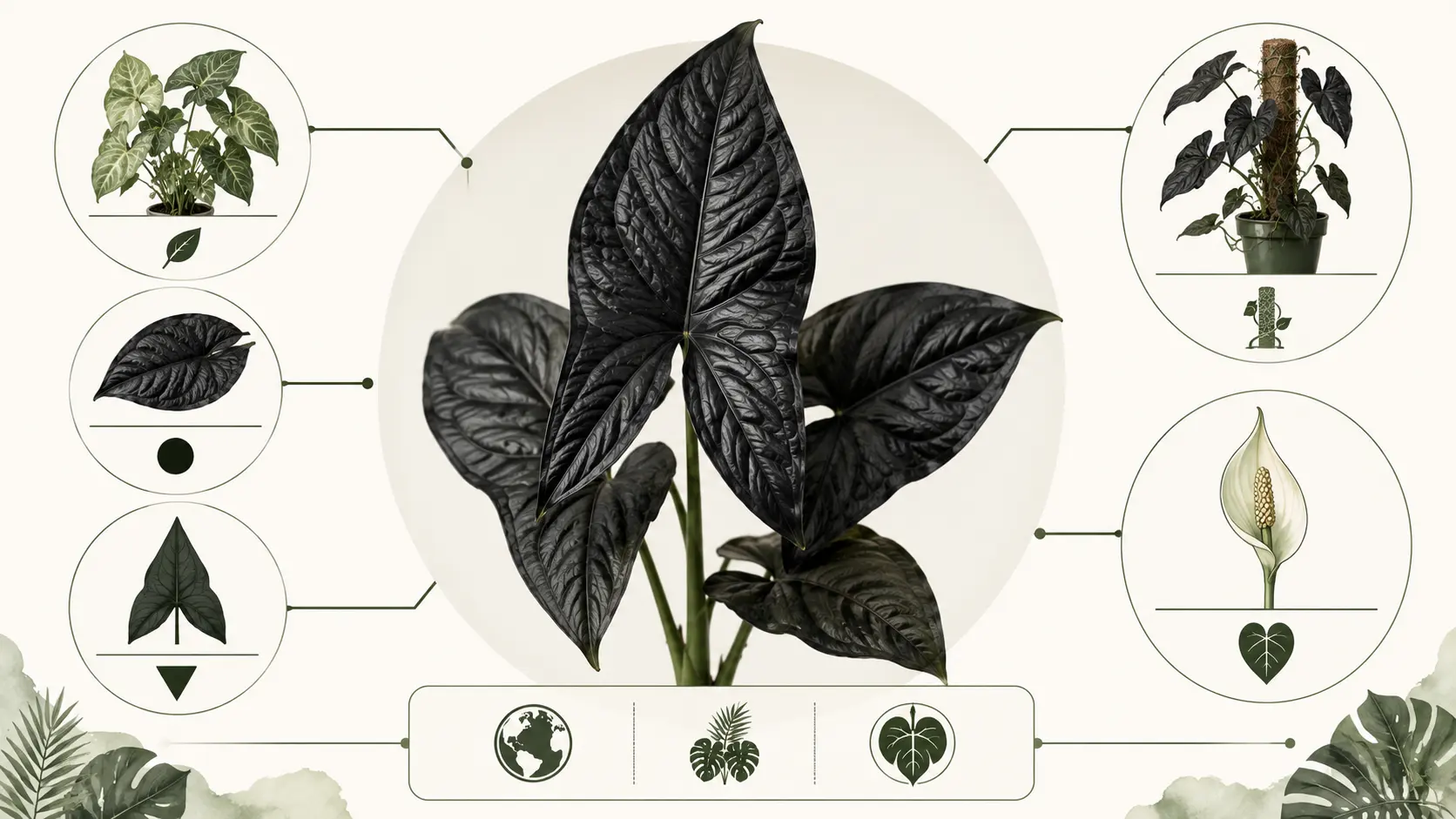
Syngonium Black Panther is a dark-leaved cultivar of Syngonium podophyllum, a tropical climbing plant from the Araceae family. It is commonly called a black arrowhead plant, dark Syngonium, or black Syngonium because of its unusually deep-colored foliage. Syngonium belongs to the Araceae family, a group of tropical flowering plants that includes many popular ornamental houseplants. More botanical information about the genus can be found on Wikipedia’s Syngonium page.
The name “Black Panther” refers to the plant’s dark, dramatic leaf appearance rather than a separate botanical species. Its leaves typically develop a deep green, charcoal, or almost black coloration depending on maturity, lighting conditions, and growing environment.
Syngonium Black Panther is related to other arrowhead plant cultivars and shares common characteristics:
- Arrow-shaped juvenile leaves
- Climbing or trailing growth habit
- Aerial roots along stems
- Preference for warm, humid conditions
- Ability to grow indoors as a houseplant
The plant is often collected for its ornamental foliage rather than flowers because indoor Syngonium rarely bloom.
Old Name / Botanical History
The older botanical name associated with Syngonium plants is Nephthytis. In older horticultural references, many Syngonium species were grouped under the genus Nephthytis before modern botanical classification placed them under Syngonium.
The accepted botanical classification today is:
- Genus: Syngonium
- Species: Syngonium podophyllum
- Family: Araceae
Although the name Nephthytis is outdated botanically, it is still sometimes used by plant sellers and collectors when referring to arrowhead plants.
How It Differs from Syngonium Maria and Black Velvet
Syngonium Black Panther, Syngonium Maria, and Syngonium Black Velvet are often confused because all three have darker foliage compared with common green arrowhead plants. However, they differ in color intensity, patterns, and availability.
| Variety | Leaf Appearance | Growth Habit | Rarity |
| Syngonium Black Panther | Very dark green to almost black leaves | Compact and bushy | Less common |
| Syngonium Maria | Dark green leaves with subtle pink or burgundy tones | Moderate growth | More available |
| Syngonium Black Velvet | Velvet-like dark foliage appearance | Compact growth | Often considered rarer |
| Standard Green Syngonium | Bright green arrow-shaped leaves | Faster climbing growth | Common |
Black Panther is mainly recognized for its uniform dark foliage, while Maria may show more color variation and Black Velvet is usually described by its velvety leaf texture.
Comparison — Syngonium Black Panther vs Similar Varieties
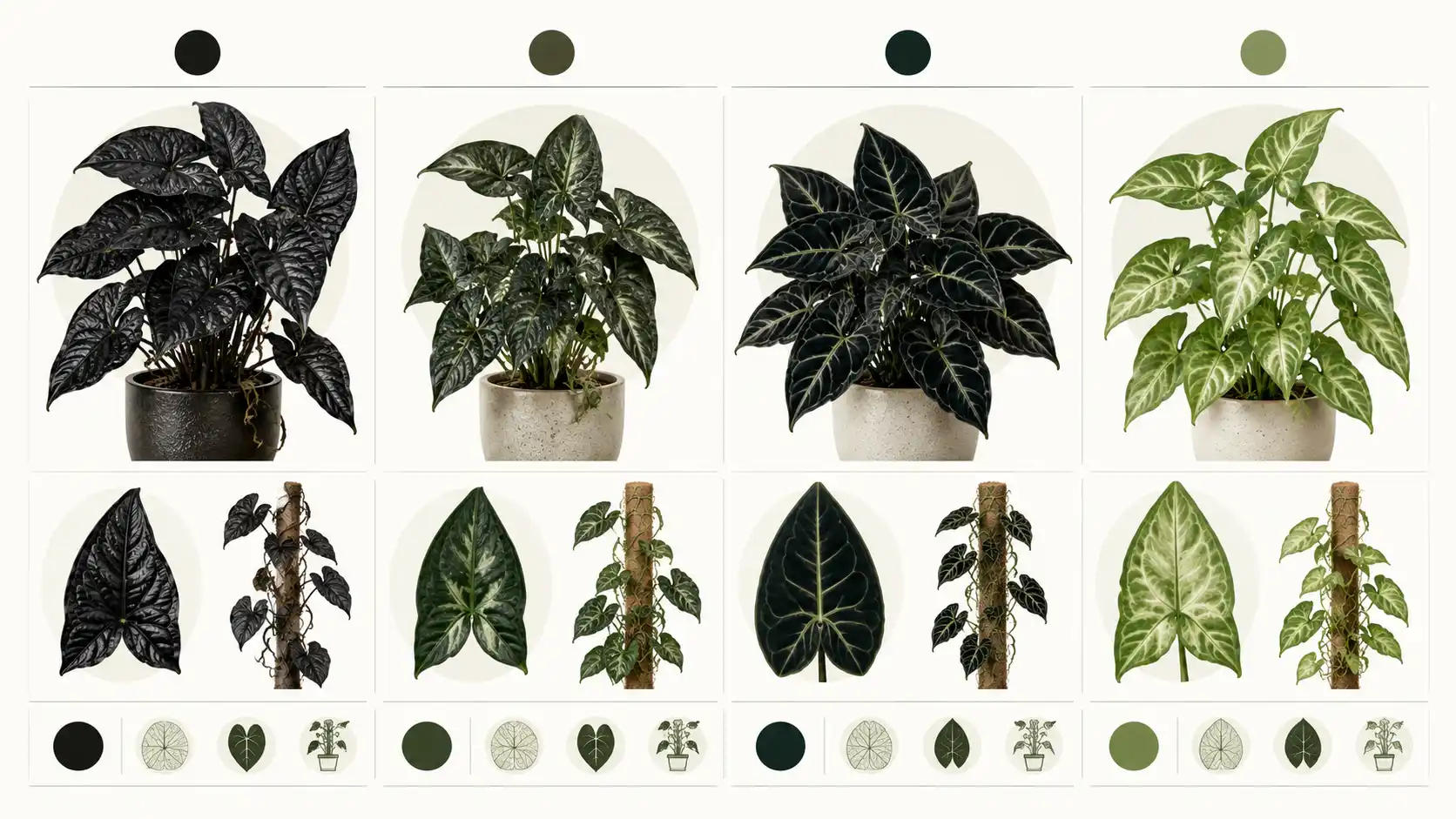
| Feature | Black Panther | Maria | Black Velvet | Green Syngonium |
| Leaf Color | Deep dark green/black | Dark green with muted tones | Dark velvet appearance | Bright green |
| Growth Speed | Slow to moderate | Moderate | Slow | Faster |
| Light Needs | Bright indirect light preferred | Medium to bright indirect light | Bright indirect light | Adaptable |
| Rarity | Uncommon | More common | Often rare | Very common |
| Appearance | Dramatic dark foliage | Classic dark Syngonium look | Premium collector appearance | Traditional arrowhead plant |
Is Syngonium Black Velvet Rare?
Syngonium Black Velvet is considered uncommon because it is less widely available than standard Syngonium cultivars. However, rarity depends on location, nursery availability, and propagation supply. A plant being labeled “rare” does not always mean it is naturally difficult to grow.
Many rare Syngonium varieties become more accessible as growers propagate and distribute them.
Is Syngonium Black Panther Hard to Care For?
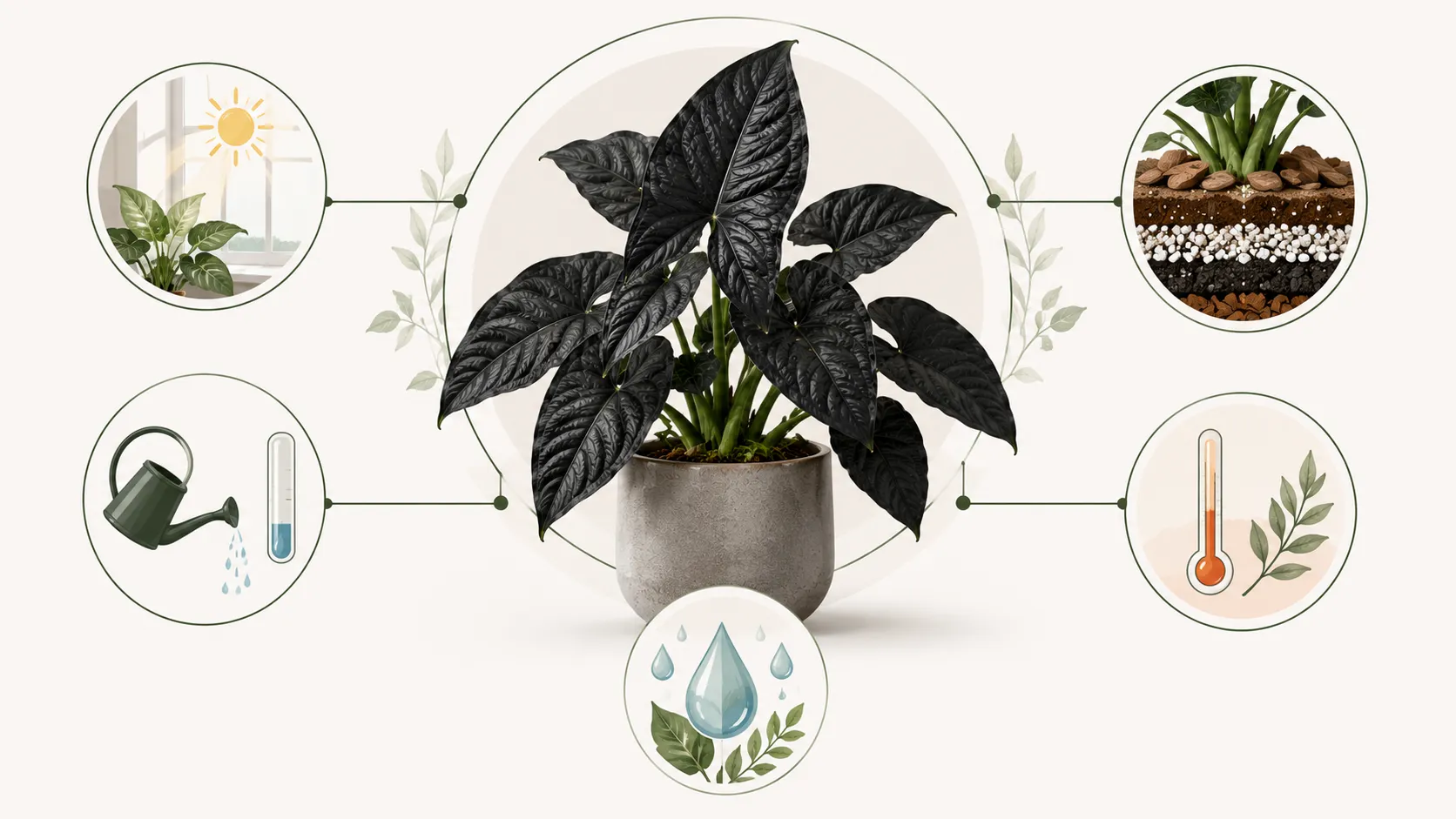
Syngonium Black Panther is not considered difficult to care for. It is generally beginner-friendly because it tolerates a range of indoor conditions and recovers well from minor care mistakes.
Basic care requirements include:
- Bright indirect light for stronger leaf color
- Watering when the upper soil layer begins to dry
- Well-draining soil to prevent root problems
- Moderate to high humidity
- Warm temperatures between approximately 60–85°F (16–29°C)
Like most tropical plants, it performs best when environmental conditions remain consistent.
Light Requirements
Syngonium Black Panther grows best in bright indirect light. Adequate light helps maintain darker foliage and encourages compact growth.
Suitable locations include:
- Near an east-facing window
- A few feet away from a bright south or west window
- Under a grow light indoors
Low light conditions are tolerated, but the plant may grow slower and produce smaller leaves. Direct intense sunlight can damage foliage and cause leaf fading or scorching. Because Syngonium Black Panther is a tropical plant, maintaining suitable humidity can improve leaf quality and growth. Explore ways to increase humidity for indoor plants naturally for better tropical plant care.
Watering Needs
Syngonium plants prefer evenly moist soil but do not tolerate constantly wet roots. The best approach is to water when the top 1–2 inches of soil feel dry.
Signs of improper watering:
- Yellow leaves: often caused by overwatering
- Crispy brown edges: possible underwatering or low humidity
- Soft stems: possible root rot from excess moisture
A practical watering routine:
- Check soil moisture weekly
- Water thoroughly until excess drains from the pot
- Empty standing water from trays
Some growers also keep Syngonium stems growing hydroponically or in water for decorative purposes. Learn more about whether Syngonium can grow in water and how to maintain it properly.
Soil Preferences
Syngonium podophyllum soil should be lightweight, airy, and well-draining. A suitable mix allows roots to receive oxygen while retaining enough moisture.
A recommended soil blend includes:
- Indoor potting soil
- Perlite for drainage
- Orchid bark for airflow
- Coco coir or peat moss for moisture retention
Heavy compact soil increases the risk of root rot.
Pot Size — Do Syngonium Like Small Pots?
Syngonium plants generally prefer slightly snug pots rather than oversized containers. A smaller pot helps prevent excess moisture because soil dries more evenly.
Choose a pot that:
- Is only 1–2 inches larger than the root ball
- Has drainage holes
- Allows gradual root expansion
A severely root-bound plant may need repotting if roots circle densely or emerge from drainage holes.
Growth Habits and Size
Syngonium Black Panther naturally grows as a climbing tropical vine. Indoors, it can remain compact with pruning or develop longer trailing stems when allowed to climb.
Growth style depends on:
- Light availability
- Humidity
- Support structures
- Pruning frequency
A moss pole or trellis can encourage larger leaves and stronger climbing growth.
How Big Does Syngonium Grow?
Indoor Syngonium Black Panther commonly reaches around 2–6 feet in length when grown as a trailing or climbing plant. Its size depends on growing conditions and whether it receives support.
Outdoor plants in suitable tropical climates may grow significantly larger because of warmer temperatures, higher humidity, and longer growing seasons.
Growth Rate
Syngonium Black Panther is usually a slow to moderate grower compared with common green Syngonium varieties.
Growth increases during:
- Spring and summer
- Warm temperatures
- Higher humidity
- Strong indirect light
Growth slows during:
- Winter
- Low-light conditions
- Cooler temperatures
Providing consistent care helps maintain steady leaf production.
How to Make Your Syngonium Bushy
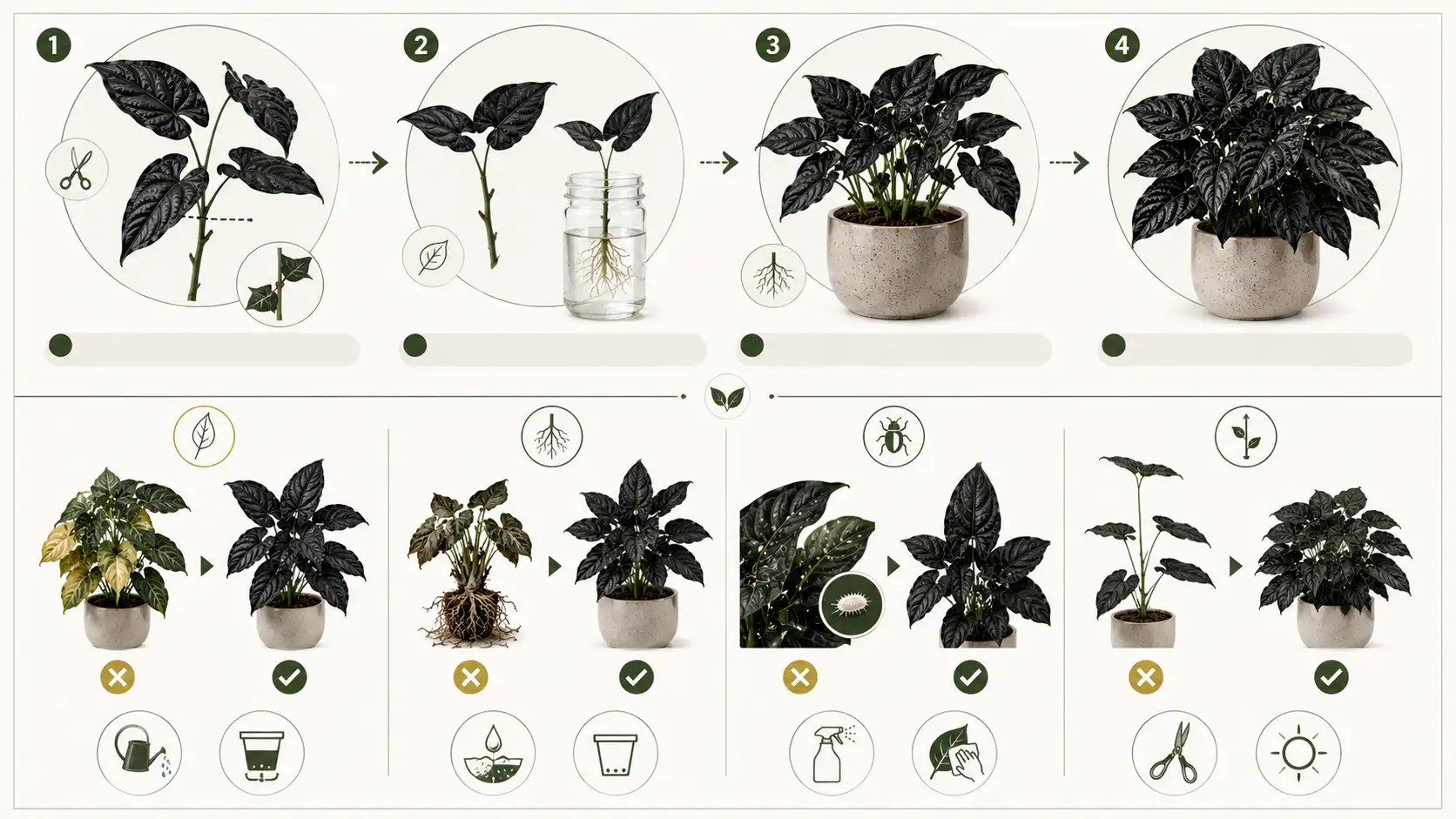
To make Syngonium Black Panther bushier, focus on pruning, proper light, and encouraging multiple stems.
Helpful methods include:
- Pinching growing tips to encourage branching
- Pruning long vines regularly
- Propagating cuttings and placing them back into the same pot
- Providing bright indirect light
Pruning steps:
- Identify a healthy stem with a node.
- Cut just above the node using clean scissors.
- Allow the plant to produce side shoots.
- Root cuttings to create a fuller appearance.
Propagating healthy stem cuttings is another effective way to create a fuller Syngonium display. Learn more about how to propagate Syngonium using water and soil methods to grow new plants from existing stems.
Common Syngonium Problems (Problem-Solution Coverage)
Yellowing Leaves
Yellow leaves are commonly caused by overwatering, poor drainage, or insufficient light.
Fix:
- Allow soil to dry slightly between watering
- Improve drainage
- Move the plant to brighter indirect light
Prevention:
Avoid watering on a fixed schedule without checking soil moisture.
Yellow leaves are one of the most common issues growers experience with arrowhead plants. For a deeper troubleshooting guide, see Syngonium leaves turning yellow: causes and solutions.
Root Rot / Overwatering
Root rot occurs when roots remain wet for too long, reducing oxygen availability.
Signs include:
- Mushy stems
- Brown roots
- Persistent yellow leaves
- Slow growth
Fix:
- Remove damaged roots
- Repot into fresh, well-draining soil
- Reduce watering frequency
Pests (Spider Mites and Aphids)
Syngonium can occasionally attract common houseplant pests.
Solutions:
- Wipe leaves regularly
- Isolate infected plants
- Use insecticidal soap or appropriate treatments
Maintaining humidity also helps reduce spider mite problems.
Slow or Leggy Growth
Leggy growth usually happens because of insufficient light.
Fix:
- Move the plant closer to indirect light
- Rotate the pot regularly
- Prune stretched stems
Beginner Mistakes to Avoid
Common mistakes include:
- Overwatering before checking soil moisture
- Using pots without drainage holes
- Exposing leaves to harsh direct sunlight
- Keeping humidity too low
- Choosing containers that are too large
Beginners often assume tropical plants need constantly wet soil, but Syngonium roots need both moisture and oxygen.
Is Syngonium an Air Purifier?
Syngonium is often considered an air-purifying plant because it was included among indoor plants studied for potential air-quality benefits. The NASA Clean Air Study explored how certain plants could help remove specific airborne compounds under controlled conditions.
However, in normal homes, the main air-quality benefit comes from plant presence, humidity contribution, and overall indoor greenery rather than replacing ventilation systems.
Why People Like Syngonium
People grow Syngonium because it offers:
- Attractive dark foliage
- Easy indoor care
- Compact growth options
- Tropical appearance
- Adaptability to different spaces
It is also popular because many Syngonium varieties work well in apartments, offices, and smaller indoor areas.
Pet owners should note that Syngonium contains calcium oxalate crystals and can be irritating if eaten by pets.
Best Placement for Syngonium Black Panther Indoors
The best placement for Syngonium Black Panther is a warm indoor area with bright indirect light and moderate humidity.
Ideal locations include:
- Living rooms near windows
- Bathrooms with natural light
- Kitchens with suitable humidity
- Shelves and plant stands
Avoid placing it directly beside heating vents, cold drafts, or intense afternoon sunlight.
Conclusion
Syngonium Black Panther is a unique dark-leaved cultivar of Syngonium podophyllum that combines striking foliage with beginner-friendly care requirements. Its nearly black arrow-shaped leaves, compact growth habit, and adaptability make it a popular choice among indoor plant collectors. With proper indirect light, balanced watering, well-draining soil, and occasional pruning, Syngonium Black Panther can maintain healthy growth and attractive foliage for years. Understanding its differences from varieties like Syngonium Maria and Black Velvet helps growers identify and care for this distinctive arrowhead plant correctly.
FAQs
What is the most sought-after Syngonium?
The most sought-after Syngonium varieties are usually rare cultivars with unusual leaf colors or patterns, including dark-leaved varieties, variegated types, and collector cultivars.
What is the Black Panther plant?
The Black Panther plant refers to Syngonium Black Panther, a dark-foliage cultivar of Syngonium podophyllum known for its nearly black arrow-shaped leaves.
Is Syngonium hard to care for?
No, Syngonium is generally easy to care for. It grows well indoors when provided with indirect light, proper watering, humidity, and well-draining soil.
Is Syngonium Black Velvet rare?
Yes, Syngonium Black Velvet is considered uncommon compared with standard Syngonium varieties, although availability varies by region and nursery supply.
What is a rare Syngonium?
A rare Syngonium is a cultivar that is less commonly available due to limited propagation, unusual leaf characteristics, or collector demand.
Do Syngonium like small pots?
Yes, Syngonium generally prefers slightly smaller pots because they help prevent excess moisture and encourage healthier root growth.
Is Syngonium an air purifier?
Syngonium is considered an air-purifying houseplant because plants can contribute to indoor air quality, although normal household ventilation remains essential.