
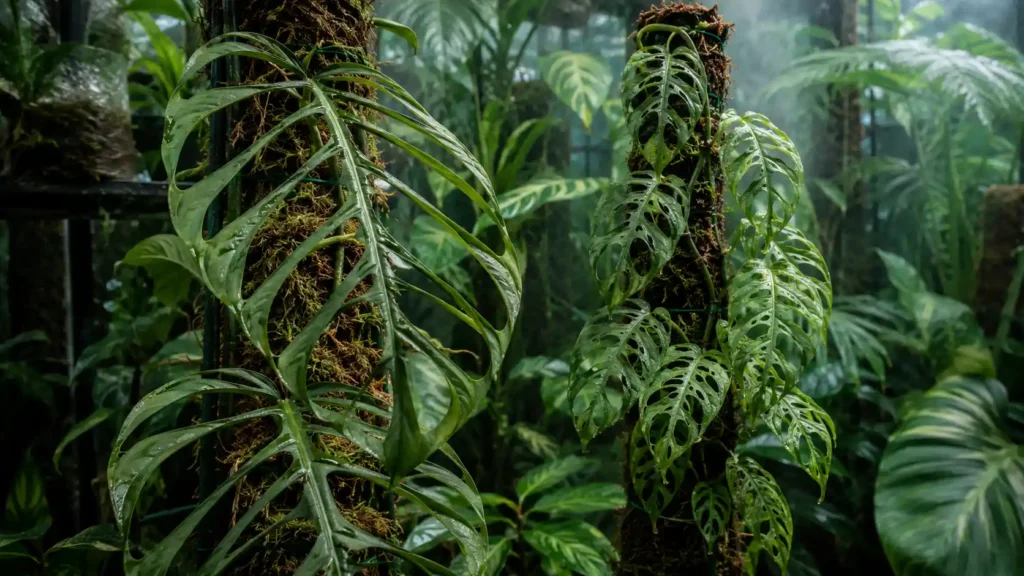
According to Manuela Nogueira, Monstera esqueleto is a robust cultivar (Monstera sp. aff. lechleriana ‘Esqueleto’) with leaves over a meter long and large, showy fenestrations, while Monstera obliqua is a true, extremely rare species with thin, delicate leaves that are often more hole than leaf tissue, making it far harder to grow and acquire.
In the trade, the “obliqua” name is frequently misapplied to the far more common Monstera adansonii, since genuine obliqua rarely reaches commercial cultivation. Esqueleto develops two distinct sizes of perforation running from midrib to leaf margin, whereas obliqua shows a single set of apertures joined only by fine strands of tissue — a distinction that’s nearly impossible to see until the plants mature past their juvenile, shingling stage.
Quick Summary
- Monstera esqueleto and Monstera obliqua are often confused, but esqueleto is commonly associated with certain forms of true obliqua rather than being a completely separate species.
- True Monstera obliqua is one of the rarest and most expensive houseplants, with some rare specimens reaching thousands of dollars.
- Both plants have extremely thin leaves and heavy fenestration, but they differ in classification, rarity, growth behavior, and availability.
- Many plants sold as “Monstera obliqua” are actually Monstera adansonii because of their similar leaf patterns.
- Esqueleto and obliqua require careful growing conditions because their delicate leaves are sensitive to humidity, watering, and environmental changes.
What Is Monstera Esqueleto?
Monstera esqueleto is a common name used for a Monstera with exceptionally thin leaf tissue and large natural openings between the veins. The word “esqueleto” means “skeleton” in Spanish, referring to the plant’s skeletal-looking leaves where much of the leaf surface is replaced by fenestrations.
The esqueleto plant is often linked to a form of Monstera obliqua, especially the Peru form that has become popular among collectors. However, the name “esqueleto” is mainly a horticultural trade name rather than a universally accepted botanical classification.
Unlike common Monstera varieties, the skeleton monstera has extremely delicate foliage. Its leaves can appear almost lace-like because the fenestrations occupy a large percentage of the leaf surface. This unusual appearance is the main reason it attracts collectors.
Key characteristics of Monstera esqueleto include:
- Extremely thin leaf texture compared with common Monstera species.
- Large internal holes created by natural fenestration.
- A lightweight, delicate climbing growth habit.
- High humidity requirements for maintaining healthy leaves.
- Slow availability because propagation is limited.
The plant is sometimes marketed under names such as:
- Esqueleto plant
- Esqueleto monstera
- Skeleton monstera
- Monkey leaf monstera (in some informal markets)
Because trade names vary, buyers should verify the plant’s origin and characteristics rather than relying only on labels.
Is Esqueleto the Same as Monkey Leaf Monstera?
Esqueleto is not always the same as monkey leaf monstera because “monkey leaf” is an informal nickname that can refer to different Monstera plants depending on the region and seller.
The term “monkey leaf monstera” is often used for plants with naturally perforated leaves, including:
- Monstera adansonii
- Certain Monstera obliqua forms
- Other climbing aroids with fenestrated foliage
For collectors, the name alone is unreliable. Proper identification depends on leaf thickness, fenestration pattern, growth habit, and botanical origin.
What Is Monstera Obliqua?
True Monstera obliqua is a rare tropical aroid species native to regions of Central and South America. It belongs to the family Araceae and is recognized for its extremely thin leaves, delicate structure, and unusually high fenestration levels.
Monstera plants belong to the Araceae family and include many tropical climbing species with unique leaf adaptations. Learn more about the genus background on Wikipedia.
Unlike many Monstera species with thick, durable leaves, Monstera obliqua produces foliage with very little tissue between the veins. In mature plants, fenestrations can occupy a very large portion of the leaf surface, with some forms reaching approximately 90% openings.
Monstera obliqua has several regional forms and populations, which contribute to differences in appearance and naming.
Commonly discussed forms include:
- Peru form
- Peruvian form
- Amazonas populations
- Australia populations
These regional variations may differ in leaf shape, fenestration patterns, and growth characteristics, which has contributed to confusion among collectors and sellers.
True Monstera obliqua is considered one of the most challenging Monstera species to cultivate because its fragile leaves and slow growth require stable environmental conditions.
Important characteristics of true Monstera obliqua include:
- Very thin, almost paper-like leaves.
- Extremely high fenestration compared with most Monstera species.
- Slow growth compared with common houseplants.
- Preference for warm temperatures and high humidity.
- Limited availability due to slow propagation.
What Is Another Name for Monstera Obliqua?
Monstera obliqua is commonly known by several informal names depending on the plant trade and region. Some names overlap with other Monstera plants, making identification difficult.
Common names associated with Monstera obliqua include:
- True obliqua
- Peruvian obliqua
- Peru form obliqua
- Esqueleto (for certain highly fenestrated forms)
The name “esqueleto” is often applied specifically to the Peru form because of its skeleton-like leaves. However, not every plant sold as esqueleto should automatically be considered identical to all forms of Monstera obliqua.
How Do I Identify a Real Monstera Obliqua?
A real Monstera obliqua can be identified by examining several characteristics rather than relying only on seller descriptions. Many plants labeled as obliqua are actually Monstera adansonii, which has a similar appearance but is much more common.
Identification checklist:
- Leaf thinness: True obliqua leaves are extremely thin and delicate compared with adansonii.
- Fenestration level: Mature leaves often have very large openings that may cover most of the leaf surface.
- Leaf texture: The leaves feel softer and more fragile than common Monstera varieties.
- Growth pattern: True obliqua grows slowly and usually develops a delicate climbing habit.
- Stem and node structure: Mature plants should match known Monstera obliqua growth characteristics.
- Seller reputation: Rare plants are frequently mislabeled because true obliqua is difficult to source.
A common mistake is assuming that any Monstera with holes is an obliqua. Monstera adansonii is much easier to find and is often incorrectly marketed as rare obliqua.
Monstera Esqueleto vs Obliqua vs Adansonii: Key Differences
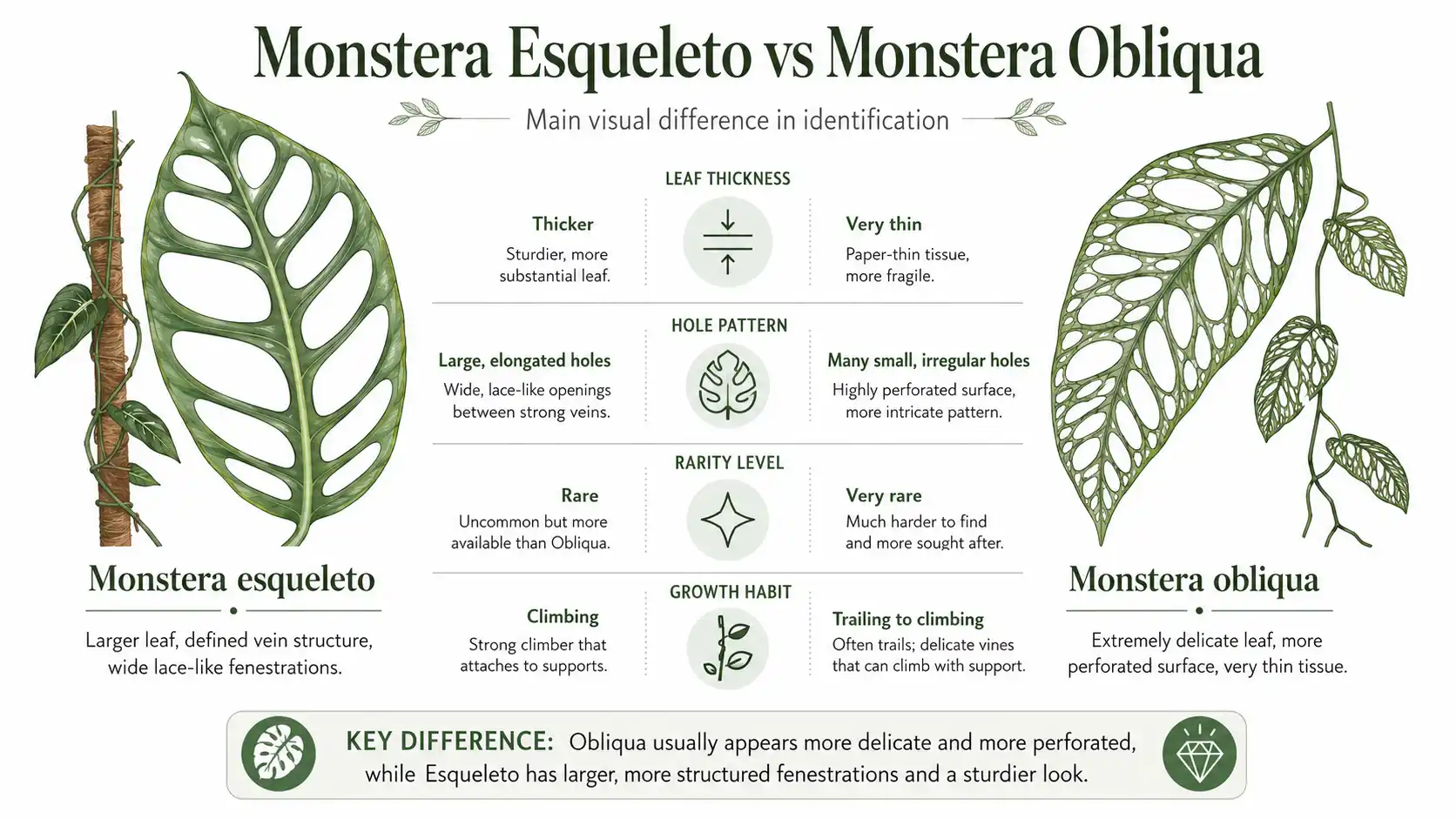
The confusion between Monstera esqueleto, Monstera obliqua, and Monstera adansonii comes from their similar leaf shapes and natural fenestrations. However, these plants differ significantly in rarity, texture, price, and care difficulty.
While rare Monsteras like esqueleto and obliqua are valued for their extreme fenestration, other collector favorites such as variegated Monstera varieties are often grown for their unique leaf patterns and color variations. Learn more in our Variegated Monstera Deliciosa Care Guide.
| Feature | Monstera Esqueleto | Monstera Obliqua (True) | Monstera Adansonii |
| Leaf fenestration | Very high | Up to approximately 90% | Moderate |
| Leaf thickness | Extremely thin | Extremely thin | Thicker and sturdier |
| Rarity | Rare | Extremely rare | Common |
| Price range | High | Very high | Low to moderate |
| Ease of care | Difficult | Very difficult | Easy to moderate |
| Growth speed | Slow | Very slow | Faster |
| Collector demand | High | Extremely high | Moderate |
Monstera esqueleto and true Monstera obliqua share many similarities because esqueleto is commonly associated with certain obliqua forms. However, true obliqua remains the species-level botanical reference, while esqueleto is mainly a trade name used for a distinctive appearance.
Monstera adansonii is the major source of confusion because it develops attractive holes but has thicker leaves, faster growth, and much wider availability.
Is Monstera Esqueleto the Same as Adansonii?
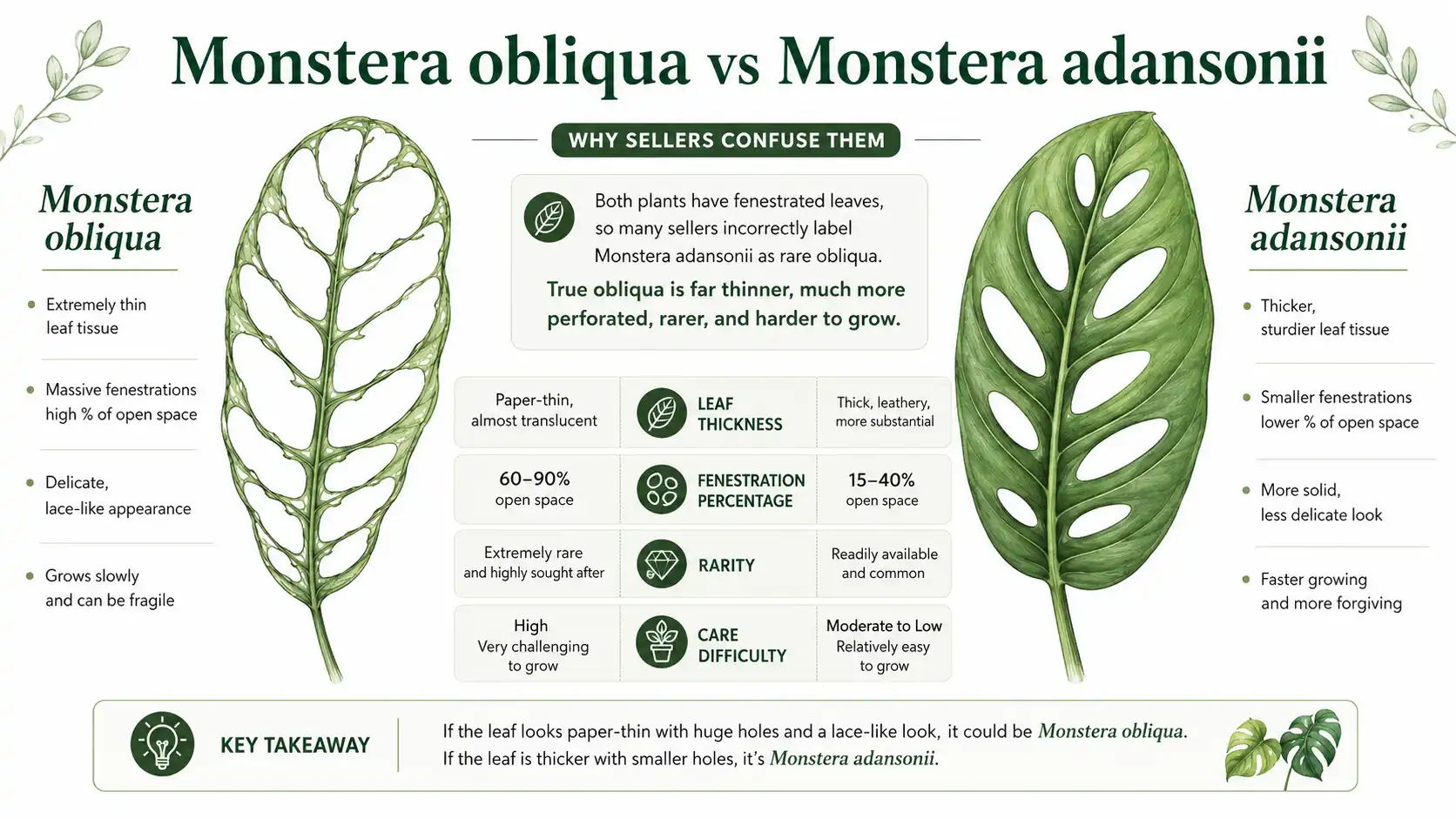
Monstera esqueleto is not the same as Monstera adansonii. They are frequently confused because both plants produce fenestrated leaves, but their structure and rarity are very different. Because Monstera adansonii is commonly confused with rare obliqua forms, understanding its normal growth pattern and care requirements can help buyers identify differences. See our Monkey Mask Plant Care Guide (Monstera Adansonii) for complete details.
The main differences include:
- Esqueleto has much thinner, more fragile leaves.
- Adansonii has thicker leaves that tolerate normal houseplant conditions better.
- Esqueleto develops more extreme fenestration.
- Adansonii grows faster and is widely available.
- Esqueleto is associated with rare collector plants, while adansonii is considered a beginner-friendly Monstera.
Many nurseries and online sellers mislabel Monstera adansonii as obliqua or esqueleto because the plants look similar when young. Careful identification is important before purchasing a rare Monstera at a high price.
How Rare Is Monstera Esqueleto and Obliqua?
Monstera esqueleto and true Monstera obliqua are considered rare because they are difficult to propagate, grow slowly, and have limited availability compared with common Monstera varieties. True Monstera obliqua is especially rare because wild populations are limited and successful cultivation requires very specific environmental conditions.
Collectors often consider these plants among the most desirable tropical aroids because of their unusual leaf structure. Their rarity is not only based on appearance but also on biological limitations, including slow growth and fragile foliage.
Reasons these Monsteras are considered rare include:
- Slow growth compared with common Monstera species.
- Limited availability from reliable growers.
- Difficult propagation due to delicate stems and slow establishment.
- High demand among rare plant collectors.
- Frequent misidentification, making genuine plants harder to verify.
Is an Esqueleto Monstera Hard to Find?
Yes, an esqueleto monstera can be difficult to find, especially from trustworthy sellers. While availability has increased as more collectors propagate rare Monsteras, genuine plants remain much less common than Monstera adansonii or other popular varieties.
Finding a true esqueleto requires checking:
- Plant identification accuracy.
- Seller reputation.
- Mature leaf characteristics.
- Propagation history.
- Price consistency with rarity.
Young plants are especially difficult to identify because juvenile leaves may not show the extreme fenestration and thin texture associated with mature specimens.
What Is the Rarest Monstera Obliqua?
The rarest Monstera obliqua forms are generally considered those with extremely limited availability from specific wild populations or regional forms. Certain Peru, Amazonas, and other regional populations are highly valued because they display distinctive leaf characteristics.
However, rarity can vary depending on:
- Number of plants available in cultivation.
- Propagation success rates.
- Collector demand.
- Geographic availability.
Among collectors, true Monstera obliqua remains one of the rarest Monstera species overall because it is much harder to cultivate than more common species.
What Is the Rarest Monstera Variety?
The rarest Monstera varieties are usually those that combine unusual appearance with limited propagation. True Monstera obliqua is often ranked among the rarest because of its delicate growth requirements and scarcity.
Other rare Monsteras may become highly valued due to:
- Unique variegation patterns.
- Limited mutations.
- Slow propagation.
- Restricted availability.
Rarity in Monsteras is not determined only by appearance. A visually unusual plant can become common if it propagates easily, while a less colorful plant can remain extremely rare if cultivation is difficult.
What Is the Most Sought After Monstera?
The most sought-after Monstera plants are usually those with unusual leaf structures, rare genetics, or limited supply. True Monstera obliqua is highly desired because its extreme fenestration creates an appearance that few other plants can replicate.
Collectors often value:
- True species identity.
- Healthy mature growth.
- Verified provenance.
- Rare leaf characteristics.
The combination of rarity and appearance makes true obliqua and esqueleto forms highly desirable among serious collectors.
What Is the Holy Grail of Houseplants?
True Monstera obliqua is often described by collectors as one of the “holy grails” of houseplants because it represents the combination of rarity, unusual appearance, and cultivation difficulty.
The term “holy grail” is subjective, but rare plant enthusiasts commonly use it for plants that are:
- Extremely difficult to obtain.
- Challenging to grow successfully.
- Highly valued among collectors.
- Unusual compared with common houseplants.
For many aroid collectors, Monstera obliqua holds this status because of its delicate skeleton-like leaves and limited availability.
Why Is Monstera Obliqua So Expensive?
Monstera obliqua is expensive because its price reflects a combination of biological difficulty, limited supply, and strong collector demand. The plant grows slowly, produces fewer viable propagations, and requires specialized care conditions compared with common Monstera varieties.
The main factors affecting its high cost include:
- Slow growth rate: Monstera obliqua develops slowly, reducing the number of plants available for sale.
- Difficult propagation: Cuttings require suitable nodes, stable humidity, and careful handling.
- High failure rate: Fragile stems and leaves make propagation more challenging.
- Collector demand: Rare aroids attract enthusiasts willing to pay premium prices.
- Authenticity concerns:Genuine plants are harder to verify due to frequent mislabeling.
The price of rare Monsteras can vary significantly depending on:
| Factor | Effect on Price |
| Mature size | Larger, established plants usually cost more |
| Verified identity | Genuine plants command higher prices |
| Leaf quality | Strong fenestration increases collector interest |
| Propagation history | Healthy propagated plants are more valuable |
| Market availability | Limited supply increases prices |
Although rare Monstera prices can reach very high levels, market values change as propagation methods improve and more plants become available.
What Monstera Plant Sold for $5000?
Some rare Monstera plants have been reported to sell for around $5,000 or more through private sales, collector trades, or rare plant auctions. These high prices usually involve exceptionally rare specimens, verified genetics, mature plants, or highly desirable characteristics.
The value of an expensive Monstera depends on:
- Species or cultivar rarity.
- Plant maturity.
- Leaf appearance.
- Provenance.
- Collector demand at the time of sale.
Extreme prices should not be considered a standard value for all rare Monsteras. Many online listings use high prices as marketing tactics, so buyers should verify plant authenticity before purchasing.
Is Monstera Esqueleto Hard to Care For?
Monstera esqueleto and true Monstera obliqua are difficult to care for because their extremely thin leaves are sensitive to environmental changes. They require more stable conditions than common Monstera varieties, especially regarding humidity, watering consistency, and airflow.
They are not impossible to grow, but they are better suited for growers who understand tropical aroid care.
Is Monstera esqueleto hard to care for?
Yes, Monstera esqueleto is considered difficult to care for because its delicate leaves can easily suffer from low humidity, improper watering, or sudden environmental changes.
Common challenges include:
- Maintaining high humidity.
- Preventing root rot.
- Protecting fragile leaves from physical damage.
- Providing enough light without direct sun exposure.
- Encouraging climbing growth.
Is Monstera obliqua hard to care for?
Yes, Monstera obliqua is considered one of the more challenging Monsteras to grow indoors. Its thin leaves lose moisture quickly, and the plant responds poorly to inconsistent care.
Successful growth usually requires:
- Warm temperatures.
- High humidity.
- Bright indirect light.
- Well-draining soil.
- Careful watering practices.
What Is the Hardest Monstera to Grow?
True Monstera obliqua is often considered one of the hardest Monsteras to grow because of its slow growth, delicate structure, and sensitivity to environmental stress.
The difficulty comes from:
- Fragile foliage.
- Slow recovery after damage.
- Strict humidity requirements.
- Limited tolerance for poor watering habits.
What Are the Common Problems With Monstera Esqueleto?
Common Monstera esqueleto problems include:
- Leaf tearing: Thin leaves can tear from low humidity, handling, or rapid unfurling.
- Stem rot: Overwatering or poor drainage can damage the roots and stem.
- Slow growth: Insufficient light, low humidity, or weak roots can reduce growth.
- Humidity stress: Dry indoor air can cause browning and damaged leaf edges.
Understanding these problems helps prevent unnecessary damage and improves long-term plant health.
How to Grow Monstera Esqueleto and Obliqua
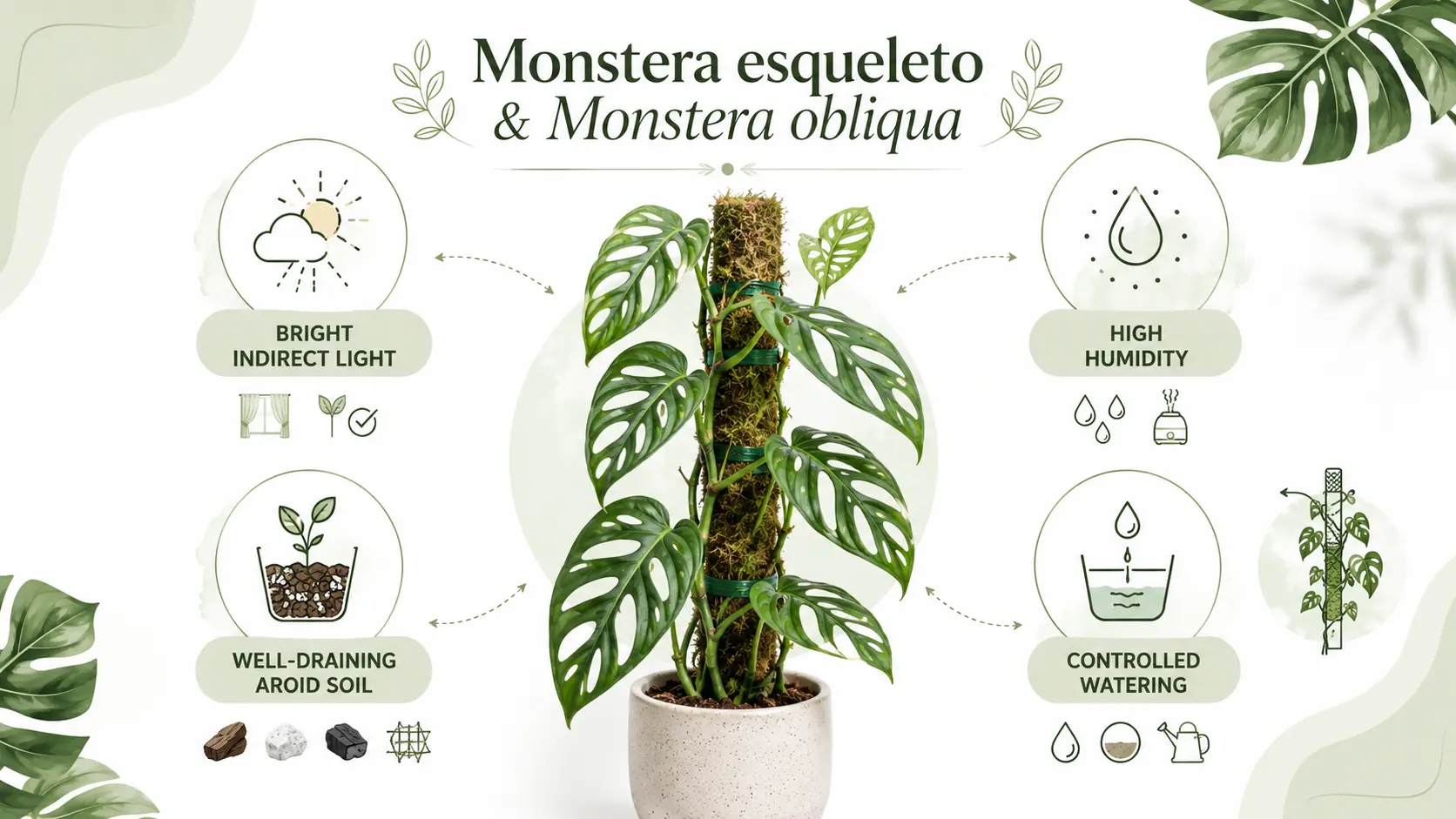
Growing Monstera esqueleto and Monstera obliqua successfully requires creating conditions similar to their natural tropical environment. These plants are climbing aroids that perform best with stable warmth, humidity, moisture control, and suitable support.
A successful growing approach includes:
- Providing bright indirect light.
- Maintaining consistent humidity.
- Using an airy, well-draining soil mix.
- Supporting climbing growth.
- Avoiding sudden environmental changes.
Watering Needs
Monstera esqueleto and obliqua need consistent moisture but do not tolerate constantly wet soil. The goal is to keep the root environment lightly moist while allowing excess water to drain.
Watering guidelines:
- Check the top layer of soil before watering.
- Water when the upper portion of the mix begins to dry.
- Avoid letting roots sit in standing water.
- Reduce watering during slower winter growth.
Overwatering is one of the most common mistakes because growers often confuse high humidity needs with constantly wet soil. Water management is one of the most important factors for healthy Monstera growth. Learn more about creating proper watering routines in our How Often to Water a Cheese Plant: Complete Guide.
Light and Humidity Requirements
Monstera esqueleto and obliqua grow best in bright, indirect light combined with high humidity. Their thin leaves are adapted to tropical forest conditions where moisture levels remain stable.
Ideal conditions include:
- Bright filtered light.
- Humidity levels around 60–80% when possible.
- Warm temperatures.
- Good airflow to reduce fungal problems.
Direct sunlight can scorch the delicate leaves, while dry air can cause browning, curling, and tearing. Choosing the correct lighting conditions is essential because delicate Monstera leaves can suffer from direct sunlight damage. Read our guide on Bright Indirect Light vs Direct Sunlight for Plants to understand proper indoor lighting.
Soil, Pot Size, and Support
Monstera esqueleto and obliqua prefer an airy soil mix that provides both moisture retention and oxygen around the roots. A chunky aroid mix with materials such as bark, perlite, and organic matter is commonly used.
For support:
- A moss pole or climbing support can encourage natural growth.
- These Monsteras are climbing plants rather than typical trailing plants. Providing proper climbing support is an important part of Monstera care. Explore more techniques for training climbing varieties in our Ultimate Hanging Monstera Guide: Care, Varieties & Tips.
- Support helps produce larger, healthier leaves.
Do Monsteras like small or big pots?
Monsteras generally prefer pots that match their root system size. Oversized pots can hold excess moisture and increase the risk of root rot, while extremely small pots may restrict growth.
Does Monstera obliqua need a moss pole?
A moss pole is not absolutely required, but it can improve growth by providing a structure similar to the plant’s natural climbing environment.
Should Monstera esqueleto climb or crawl?
Monstera esqueleto naturally climbs in tropical habitats. Providing vertical support usually encourages healthier growth and better leaf development.
Fertilization and Soil Amendments
Monstera esqueleto and obliqua benefit from balanced fertilization during active growth periods. Because they grow slowly, excessive fertilizer does not speed growth and can damage sensitive roots.
Recommended practices:
- Use a diluted balanced fertilizer during spring and summer.
- Avoid heavy feeding when growth slows.
- Maintain healthy soil structure rather than relying only on nutrients.
Will coffee grounds help Monstera?
Coffee grounds are not considered a reliable fertilizer for Monstera plants when added directly to soil. They can create moisture and nutrient balance problems if used incorrectly.
A better approach is using proven fertilizers designed for container plants and maintaining proper soil conditions.
What Should You Not Do With Monstera Esqueleto or Obliqua?
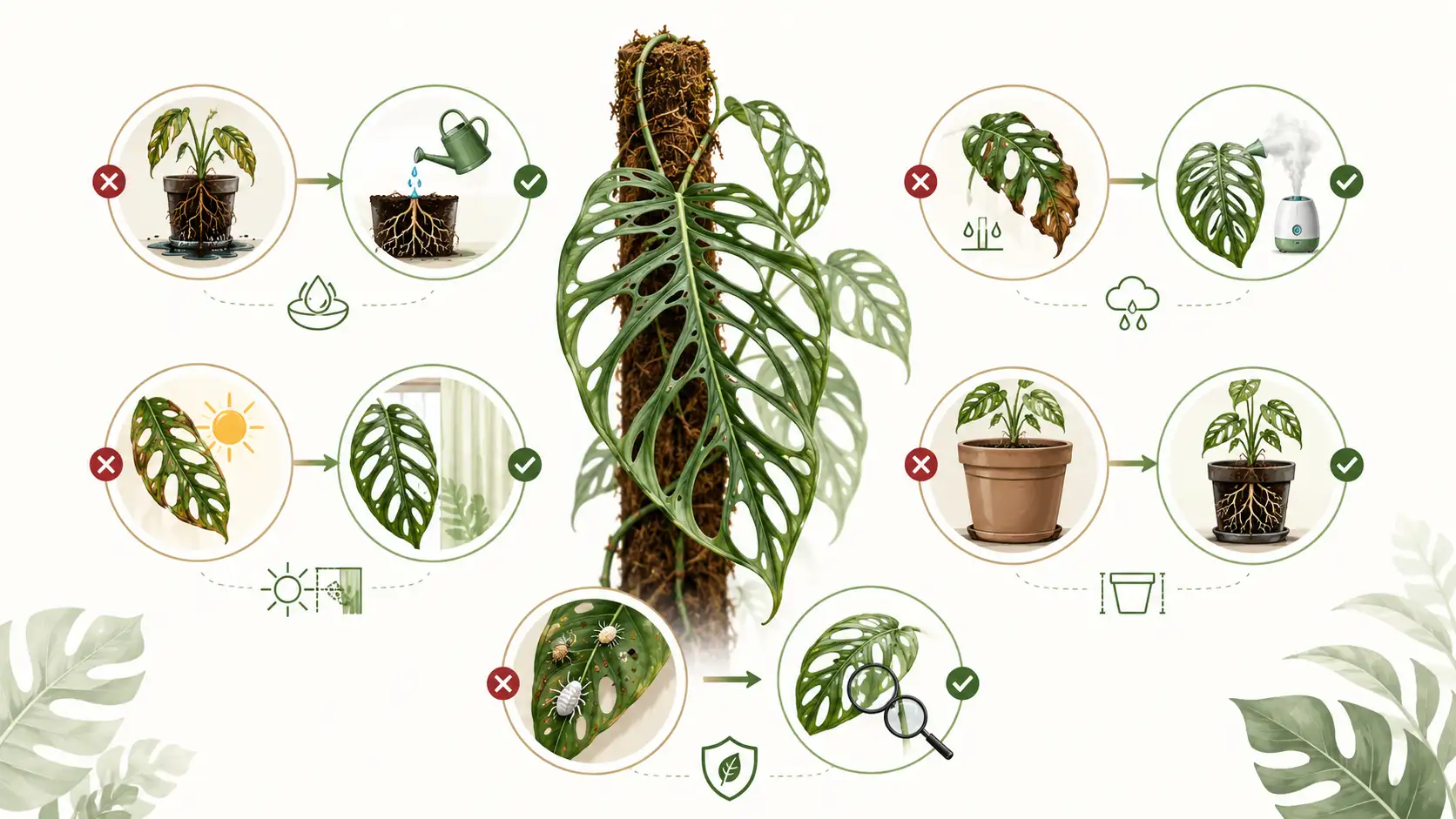
Monstera esqueleto and Monstera obliqua should not be treated like ordinary Monstera varieties because their thin leaves and delicate roots are more sensitive to stress. Avoiding common mistakes helps prevent leaf damage, root problems, and slow growth.
Common mistakes to avoid include:
- Overwatering the plant.
- Keeping humidity too low.
- Exposing leaves to direct sunlight.
- Repotting too frequently.
- Using pots that are too large.
- Ignoring early pest problems.
Overwatering and Root Rot
Overwatering is one of the most damaging mistakes for Monstera esqueleto and obliqua. These plants prefer moisture but need oxygen around their roots. Constantly wet soil reduces airflow and can lead to root rot.
Signs of overwatering include:
- Yellowing leaves.
- Soft or darkened roots.
- Slow growth.
- Mushy stems near the soil line.
- Unpleasant soil odor.
How to fix it:
- Remove damaged roots if root rot has developed.
- Repot into fresh, well-draining soil.
- Allow excess water to drain completely after watering.
- Adjust watering frequency based on soil moisture rather than a fixed schedule.
How to prevent it:
- Use an airy aroid soil mix.
- Choose a pot with drainage holes.
- Check soil moisture before watering.
Low Humidity Causing Leaf Browning and Tearing
Low humidity can cause stress because Monstera esqueleto and obliqua naturally grow in humid tropical environments. Their thin leaves lose moisture quickly compared with thicker-leaved Monstera species.
Symptoms of low humidity include:
- Brown leaf edges.
- Crispy patches.
- Leaves tearing while unfurling.
- Smaller new growth.
How to fix it:
- Increase surrounding humidity with a humidifier.
- Group compatible tropical plants together.
- Keep the plant away from dry heating or cooling vents.
How to prevent it:
- Maintain stable humidity levels.
- Avoid sudden changes in environment.
- Provide good airflow to prevent fungal issues.
Direct Sunlight Scorch
Direct sunlight can damage the delicate leaves of rare Monsteras. While these plants need bright light, intense sun exposure can burn leaf tissue.
Signs of sun damage include:
- Pale or bleached patches.
- Brown crispy areas.
- Leaf discoloration.
How to fix it:
- Move the plant to filtered or indirect light.
- Remove severely damaged leaves if necessary.
How to prevent it:
- Place the plant near a bright window with filtered light.
- Use curtains or sheer barriers if sunlight is intense.
Repotting Too Frequently or Into Oversized Pots
Frequent repotting can stress Monstera esqueleto and obliqua because they need time to establish roots. Moving them too often can interrupt growth and damage fragile roots.
Oversized pots can also create problems because extra soil holds moisture longer than the plant can use.
Better practices include:
- Repot only when roots become crowded.
- Increase pot size gradually.
- Avoid disturbing healthy root systems unnecessarily.
Ignoring Pest Issues Early
Rare Monsteras can experience common houseplant pests such as:
- Spider mites.
- Thrips.
- Mealybugs.
- Scale insects.
Because their leaves are delicate, pest damage can quickly affect new growth.
Prevention methods include:
- Regularly inspecting leaves and stems.
- Cleaning leaves carefully.
- Isolating new plants before placing them near existing collections.
- Treating infestations early.
Troubleshooting Common Problems
Monstera esqueleto and obliqua problems are often caused by environmental stress rather than disease. Identifying the cause early can help protect fragile foliage and encourage healthy growth.
Why Are My Monstera Leaves Turning Yellow?
Yellowing leaves are usually caused by watering problems, root stress, insufficient light, or natural aging. On rare Monsteras, yellow leaves often indicate that the plant is experiencing an imbalance in its growing conditions.
Common causes include:
- Too much water.
- Poor drainage.
- Lack of nutrients.
- Low light levels.
- Root damage.
Solutions:
- Check the soil moisture before watering.
- Improve drainage if soil stays wet too long.
- Move the plant to brighter indirect light.
- Inspect roots if yellowing continues.
Why Is My Monstera Esqueleto or Obliqua Growing Slowly?
Slow growth is normal for Monstera esqueleto and obliqua because both are naturally slower-growing compared with common Monstera varieties. However, extremely slow or stalled growth may indicate unsuitable conditions.
Possible causes include:
- Insufficient light.
- Low humidity.
- Weak root systems.
- Lack of nutrients.
- Seasonal dormancy.
Ways to encourage growth:
- Provide consistent warmth.
- Maintain proper humidity.
- Fertilize lightly during active growth.
- Give the plant climbing support.
Why Are My Monstera Leaves Tearing Beyond Natural Fenestration?
Natural fenestrations are a normal feature of Monstera leaves, but additional tearing can indicate environmental stress.
Common causes include:
- Low humidity.
- Leaves sticking while unfurling.
- Physical damage.
- Poor watering consistency.
Prevention methods:
- Increase humidity during new leaf development.
- Avoid handling young leaves.
- Maintain stable moisture levels.
How Do I Manage Pest Infestations?
Pest problems should be addressed early because insects can weaken slow-growing plants.
Steps for managing pests:
- Inspect both leaf surfaces and stems.
- Remove visible pests manually when possible.
- Clean affected areas.
- Apply an appropriate houseplant pest treatment.
- Repeat monitoring to prevent reinfestation.
Plant Lifespan
Monsteras are long-lived tropical plants when provided with suitable growing conditions. The lifespan of a Monstera depends on species, environment, care quality, and whether it grows indoors or outdoors.
Under proper care, many Monstera plants can live for several decades.
Factors that influence lifespan include:
- Stable temperature.
- Proper watering.
- Healthy root systems.
- Adequate light.
- Pest prevention.
- Suitable humidity.
Monstera esqueleto and Monstera obliqua can potentially live for many years, but their survival depends heavily on maintaining conditions similar to their natural tropical habitat.
Indoor plants often live longer when protected from extreme weather, pests, and environmental stress. Outdoor plants in suitable tropical climates may grow larger but face additional risks from storms, pests, and temperature changes.
Which Monstera Is the Prettiest or Most Desirable?
The “prettiest” Monstera depends on personal preference, but Monstera esqueleto and Monstera obliqua are among the most visually distinctive because of their extreme fenestration and delicate leaf structure.
Collectors often value these plants for different reasons:
| Monstera Type | Main Appeal |
| Monstera esqueleto | Skeleton-like leaves with dramatic openings |
| Monstera obliqua | Extreme rarity and unusual leaf structure |
| Monstera adansonii | Attractive holes with easier care |
| Variegated Monstera varieties | Unique color patterns |
Monstera obliqua is often considered more desirable among collectors because of its rarity and botanical significance. Monstera esqueleto attracts attention because of its dramatic appearance and highly perforated leaves.
However, beauty is subjective. Some growers prefer rare fenestrated species, while others prefer easier-care Monsteras that provide reliable growth.
Conclusion
Monstera esqueleto vs obliqua is a common comparison because both plants have extremely thin, highly fenestrated leaves that create a similar skeleton-like appearance. Monstera esqueleto is generally associated with certain forms of true Monstera obliqua, while true Monstera obliqua is a rare botanical species known for its extreme fenestration and difficult cultivation requirements.
The main differences come down to identity, rarity, availability, and growing difficulty. Both plants require high humidity, careful watering, bright indirect light, and stable conditions. Before purchasing either plant, buyers should verify authenticity because many plants sold as rare obliqua or esqueleto are actually Monstera adansonii.
Rare Monsteras like esqueleto and obliqua require specialized knowledge of indoor plant care, including light, humidity, watering, and growing conditions. Learn more about essential houseplant care practices in our complete Plants: Benefits and Guides resource.
Understanding these differences helps collectors make informed decisions and provides a clearer path to successfully growing these unusual tropical Monsteras.
FAQs
What is the difference between Monstera esqueleto and Monstera obliqua?
Monstera esqueleto is commonly used as a trade name for a highly fenestrated Monstera associated with certain forms of Monstera obliqua, while Monstera obliqua is a recognized species. Both have thin leaves and large openings, but their naming and classification differ.
Is Monstera esqueleto rarer than Monstera obliqua?
Monstera obliqua is generally considered rarer because it refers to a botanical species with limited availability. Esqueleto is often associated with specific obliqua forms, but rarity depends on the exact plant material and availability in cultivation.
Can Monstera esqueleto be grown without a moss pole?
Yes, Monstera esqueleto can grow without a moss pole, but a climbing support often improves growth. These plants naturally climb in tropical environments, and vertical support can encourage healthier leaf development.
Why do so many sellers mislabel Monstera adansonii as obliqua or esqueleto?
Many sellers mislabel Monstera adansonii because young plants look similar and adansonii is much easier to produce and sell. Differences become clearer through leaf thickness, fenestration patterns, growth speed, and plant structure.
How long does it take for Monstera obliqua to mature?
Monstera obliqua is a slow-growing plant, and maturity can take several years depending on growing conditions. Warm temperatures, high humidity, proper light, and stable care can support faster development.
What is the safest way to buy a genuine Monstera esqueleto or obliqua online?
The safest way is to buy from a reputable specialist grower who can provide accurate identification, propagation information, and clear photos of mature leaves. Avoid sellers offering rare Monsteras at unusually low prices without verification.