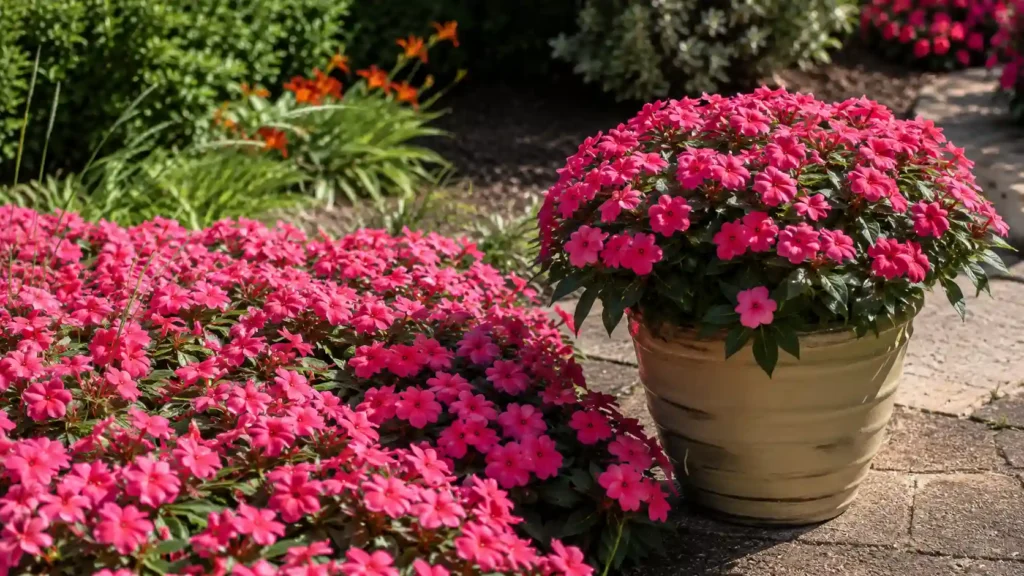
SunPatiens Tropical Rose (Impatiens x hybrida ‘SAKIMP037’) is a Compact-series New Guinea impatiens with bright pink, red-accented blooms set against yellow-and-green variegated foliage. According to Manuela Nogueira, it grows 16-32 inches tall, spreads up to 24 inches, and thrives in full sun to part shade, flowering nonstop from spring through frost.
The cultivar holds U.S. Plant Patent 28,027 and belongs to Sakata’s wider SunPatiens breeding line, which also offers taller Spreading and Vigorous series for larger beds. Unlike traditional impatiens, it resists downy mildew, needs no deadheading, and behaves as a true perennial only in USDA zones 10-11, grown as an annual everywhere else.
SunPatiens Tropical Rose is one example of how understanding plant types, growing conditions, and care routines helps gardeners successfully maintain healthy ornamental plants.
Quick Summary
- SunPatiens Tropical Rose is a compact, sun-loving impatiens hybrid commonly grown as an annual.
- It thrives in full sun to partial shade and produces continuous blooms from spring until frost.
- Overwatering commonly causes yellow leaves, while overcrowding can reduce flowering.
- It requires consistent moisture, well-drained soil, and adequate spacing for best performance.
- It is a low-maintenance alternative to traditional shade impatiens for sunny landscapes and containers.
What Is SunPatiens Tropical Rose?
SunPatiens Tropical Rose is a compact hybrid impatiens developed to thrive in sunny conditions while producing abundant rose-pink flowers throughout the growing season. It belongs to the SunPatiens series, a breeding program created by Sakata Seed Corporation, which focuses on combining vigorous growth, heat tolerance, and extended blooming.
Unlike common impatiens that perform best in shade, sun impatiens tolerate direct sunlight while maintaining healthy foliage and continuous flowering. This makes them suitable for landscapes where traditional impatiens often struggle.
The name Tropical Rose identifies the flower color within the Compact series rather than indicating any relationship to true rose plants. Although gardeners sometimes search for terms such as impatiens rose, rose impatiens, or tropical impatiens, this cultivar remains a member of the Impatiens genus rather than the genus Rosa.
Key characteristics include:
- Bred specifically as a sun-tolerant impatiens hybrid.
- Compact, rounded growth ideal for borders, containers, and flower beds.
- Bright rose-pink blooms that flower continuously during warm weather.
- Excellent heat tolerance compared with traditional impatiens.
- Strong resistance to many common impatiens diseases, including improved tolerance to downy mildew.
The SunPatiens plant is widely appreciated for its ability to maintain colorful displays even during periods of high summer temperatures when many bedding plants begin to decline.
Tropical Rose vs. Other SunPatiens Series
The Compact Tropical Rose cultivar belongs to the Compact series, which differs from the Vigorous and Spreading SunPatiens series mainly in overall size and growth habit.
| Feature | Compact | Spreading | Vigorous |
| Growth habit | Dense and rounded | Wide and spreading | Large and upright |
| Best use | Containers, borders, small beds | Ground cover, mass planting | Large landscapes and public gardens |
| Mature size | Smaller | Medium | Largest |
| Maintenance | Easy | Moderate | Moderate |
Gardeners who need a neat, controlled plant for patios, containers, or formal flower beds often choose Compact Tropical Rose, while larger landscapes may benefit from the broader coverage of the Spreading or Vigorous series.
Is Tropical Rose SunPatiens an Annual or a Perennial?
Tropical Rose SunPatiens is grown as an annual in most climates but can behave as a tender perennial in frost-free regions. Its lifespan depends primarily on winter temperatures rather than the plant’s natural growth cycle.
In most temperate climates, gardeners plant SunPatiens each spring after the last frost. The plants continue flowering until autumn, when freezing temperatures kill the foliage and roots.
In USDA Hardiness Zones 10–11, where frost is uncommon, the plant may survive year-round as a tender perennial if provided with suitable growing conditions.
Key points include:
- Grown as an annual throughout most of North America and Europe.
- May overwinter outdoors in frost-free tropical and subtropical climates.
- Frost damages leaves, stems, and roots, ending the plant’s life in colder regions.
- Many gardeners replace plants each spring for the best seasonal display.
Plant Size
SunPatiens Tropical Rose reaches a compact, manageable size that makes it suitable for both small and large landscapes. Mature dimensions vary depending on sunlight, soil quality, watering, and available root space.
Typical mature size:
| Growing Condition | Height | Spread |
| Garden beds | 14–24 inches | 14–24 inches |
| Containers | 12–20 inches | 12–20 inches |
Plants grown directly in garden soil generally become larger because their roots have greater room to expand. Container-grown specimens often remain slightly smaller but still produce abundant blooms when properly maintained.
Several environmental factors influence final plant size:
- Six or more hours of sunlight encourages fuller growth.
- Rich, well-drained soil supports vigorous root development.
- Regular watering prevents growth setbacks.
- Balanced fertilization promotes healthy foliage and flowering.
- Larger containers provide more room for root expansion.
When grown indoors for temporary display, Compact Tropical Rose usually remains smaller due to reduced light intensity and limited root space.
Growth Rate
SunPatiens Tropical Rose is considered a fast-growing bedding plant once warm temperatures arrive. It establishes quickly after transplanting and develops into a dense flowering mound during the active growing season.
Growth begins slowly in cool spring weather but accelerates as daytime temperatures consistently remain above approximately 65°F (18°C).
Typical seasonal growth pattern includes:
- Slow establishment immediately after planting.
- Rapid vegetative growth during late spring and early summer.
- Continuous flowering throughout summer.
- Slower growth during cool autumn weather before frost.
Growth is fastest when plants receive:
- Full sun or bright partial shade.
- Consistently moist soil.
- Good air circulation.
- Regular feeding with a balanced fertilizer.
- Warm daytime temperatures.
Although the Compact series grows more moderately than the Vigorous series, it fills containers and flower beds quickly without becoming overly large.
Care Guide
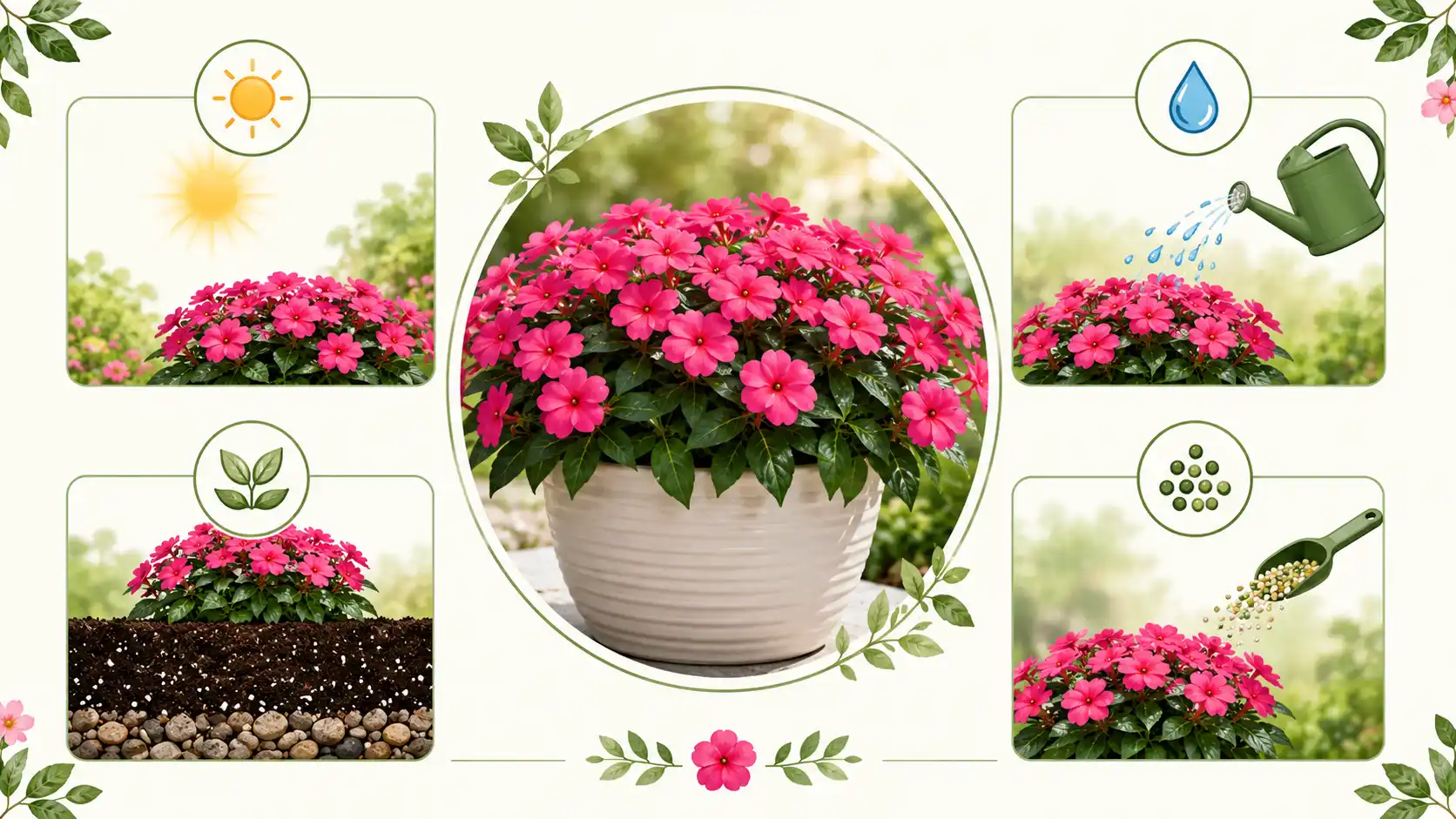
Healthy SunPatiens Tropical Rose plants depend on consistent watering, adequate sunlight, fertile soil, proper spacing, and occasional maintenance. While they are relatively easy to grow, following a balanced care routine helps maximize flowering throughout the season.
Watering Needs
SunPatiens do not usually require daily watering. Instead, they perform best when the soil remains consistently moist without becoming waterlogged.
Watering frequency depends on where the plants are growing:
- Containers: Often require watering every day during hot summer weather because soil dries rapidly.
- Raised beds: Usually need watering every two to three days, depending on rainfall.
- Garden beds: Deep watering once or twice weekly is often sufficient after plants become established.
Signs of underwatering include:
- Wilting leaves
- Dry soil
- Reduced flowering
Signs of overwatering include:
- Yellow leaves
- Soft stems
- Root rot
- Poor plant vigor
Checking the top inch of soil before watering helps prevent both underwatering and excessive moisture. Understanding how plants respond to moisture levels is important because different species have different humidity and watering needs, as seen in plants like Calathea Roseopicta Medallion.
Light Requirements
Yes, SunPatiens can tolerate full sun throughout the day when provided with adequate moisture. This ability distinguishes them from traditional impatiens, which generally prefer shade.
Ideal light conditions include:
- Full sun in cooler climates.
- Morning sun with afternoon shade in extremely hot regions.
- Partial shade where afternoon temperatures regularly exceed 95°F (35°C).
Too much shade may result in:
- Fewer flowers
- Taller, weaker stems
- Reduced branching
Excessive heat combined with dry soil can cause temporary afternoon wilting, although plants often recover after watering. Similar to other ornamental flowering plants, such as Begonia Maculata, understanding light intensity and seasonal changes is essential for maintaining healthy growth and consistent blooms.
Soil Preferences
SunPatiens Tropical Rose grows best in fertile, organically rich, well-drained soil that retains moisture while allowing excess water to drain away.
Ideal soil characteristics include:
- Slightly acidic to neutral pH (about 6.0–7.0)
- High organic matter
- Good drainage
- Moderate moisture retention
Improving heavy clay soil with compost helps reduce the risk of waterlogged roots, while organic matter added to sandy soil improves moisture retention.
Fertilization Practices
Yes, SunPatiens respond well to balanced fertilizers, including products such as Miracle-Gro when used according to label directions. Regular feeding supports vigorous foliage and continuous flowering throughout the growing season.
Recommended fertilization schedule:
- Apply a slow-release fertilizer when planting.
- Supplement with a balanced water-soluble fertilizer every two to four weeks during active growth.
- Avoid excessive nitrogen, which may encourage leafy growth at the expense of flowers.
Consistent fertilization is especially important for container-grown plants because nutrients leach from potting soil more quickly than garden soil.
Pruning & Deadheading
No, SunPatiens generally do not require deadheading because they are self-cleaning plants. Spent flowers naturally drop off as new blooms develop.
Occasional pruning remains beneficial because it:
- Encourages fuller branching.
- Improves airflow.
- Removes damaged or diseased stems.
- Refreshes plants that become leggy during midsummer.
If growth becomes overly stretched, trimming stems back by one-third often stimulates fresh growth and renewed flowering within a few weeks.
Climate Tolerance & Spacing
SunPatiens perform best when given adequate spacing rather than being planted too closely together. Good airflow reduces disease risk while allowing each plant to develop a full, rounded shape.
Recommended spacing:
- Compact Series: 14–18 inches apart.
- Slightly wider spacing in humid climates improves air circulation.
- Avoid overcrowding to maximize bloom production.
Outdoor plants generally outperform indoor specimens because they receive stronger sunlight and better airflow. While Compact Tropical Rose can be grown indoors temporarily in bright locations, it is primarily bred for outdoor landscapes where its heat tolerance and vigorous blooming are fully expressed.
SunPatiens Tropical Rose vs. Traditional Impatiens (Comparison Block)
Are SunPatiens Better Than Traditional Impatiens?
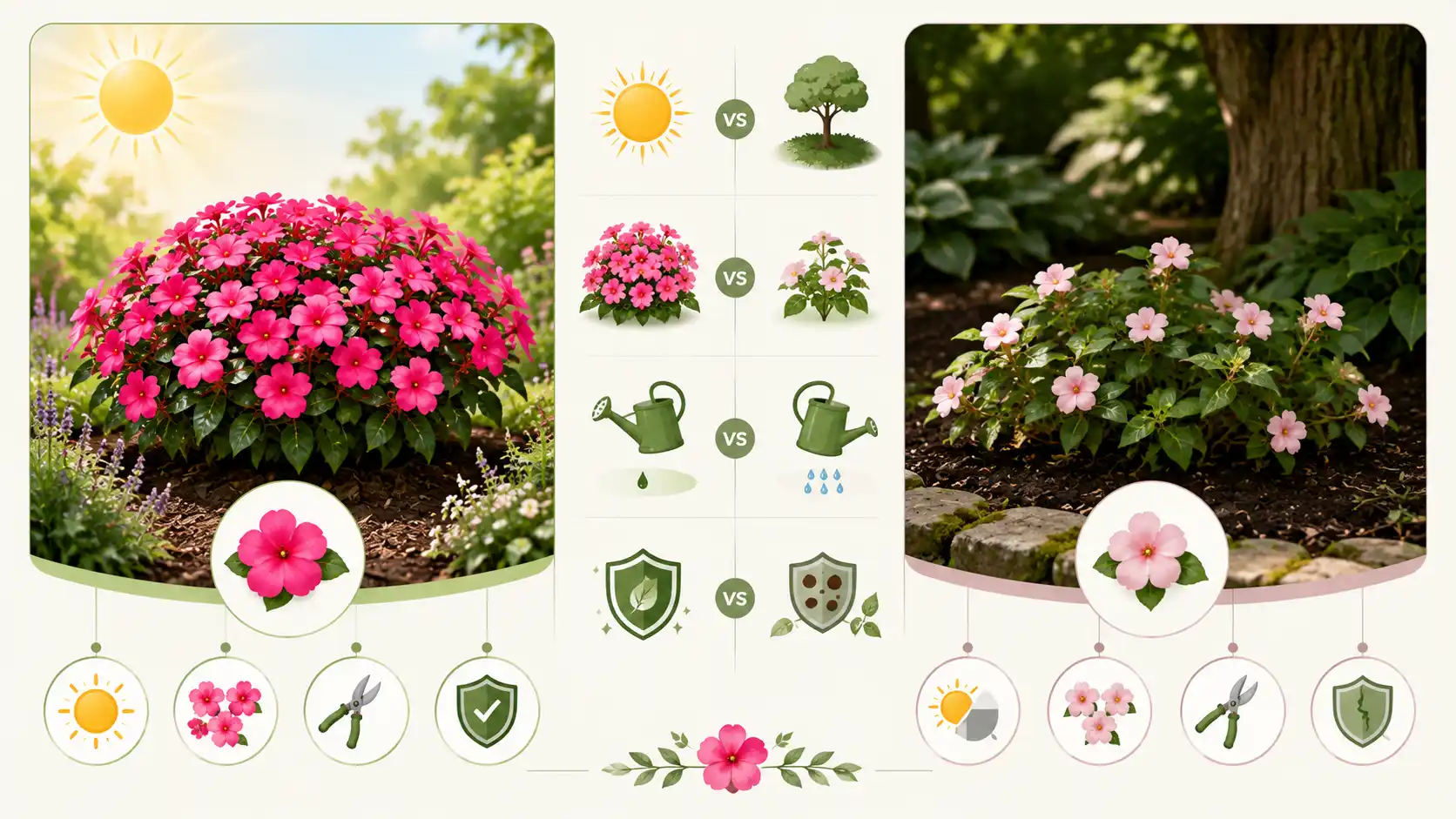
SunPatiens Tropical Rose is often considered a better choice for sunny gardens because it tolerates direct sunlight, produces longer-lasting blooms, and has improved disease resistance compared with traditional impatiens. However, traditional impatiens may still be preferred for deeply shaded areas where SunPatiens receives insufficient light.
| Feature | SunPatiens Tropical Rose | Traditional Impatiens |
| Sun tolerance | Full sun to part shade | Shade to part shade |
| Disease resistance | Higher resistance, including improved tolerance to downy mildew | More susceptible to downy mildew issues |
| Maintenance | Low maintenance; self-cleaning blooms | Moderate maintenance; may require more care |
| Size | Larger and more vigorous growth | Usually smaller and more compact |
| Flowering season | Continuous blooms from spring to frost | Strong blooms mainly in cooler seasons |
| Best location | Sunny beds, borders, containers | Shaded gardens and woodland areas |
The main advantages of SunPatiens include:
- Better performance in hot, sunny locations.
- Longer flowering periods.
- Greater tolerance to heat and humidity.
- Reduced need for deadheading.
- Wider landscape use compared with shade-only impatiens.
Potential disadvantages include:
- Higher water needs during hot weather.
- Limited cold tolerance.
- Reduced performance in deep shade.
For gardeners asking “are SunPatiens worth it?”, the answer depends on the growing location. They are especially valuable where traditional impatiens fail because of strong sunlight or summer heat.
Where Tropical Rose Fits in the SunPatiens Color Line
SunPatiens are available in a wide range of flower colors across Compact, Spreading, and Vigorous series. The Tropical Rose variety is recognized for its rich rose-pink blooms that provide strong color contrast in garden designs.
The SunPatiens color range commonly includes:
- Pink shades
- Rose and coral tones
- White flowers
- Lavender and purple shades
- Red and orange varieties
Tropical Rose stands out because of its saturated pink-rose flower color, making it suitable for colorful borders, mixed containers, and seasonal flower displays.
Color availability may vary slightly by region and growing season as plant breeders introduce new selections and discontinue older varieties.
Common Problems & Troubleshooting
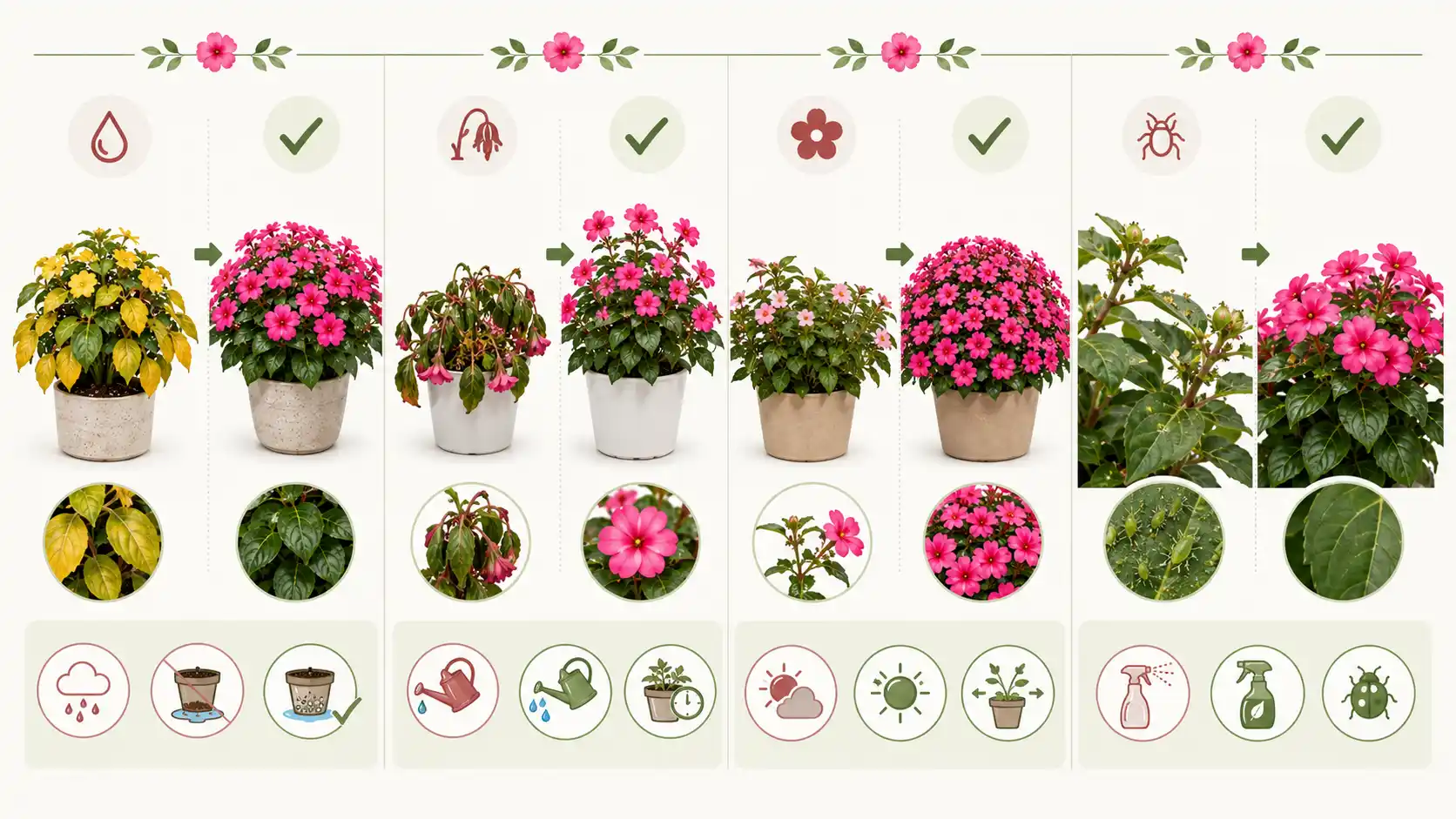
SunPatiens Tropical Rose is generally resilient, but incorrect watering, poor spacing, temperature stress, and pest pressure can affect growth and flowering. Understanding the cause of problems helps prevent plant decline.
Why Are My SunPatiens Leaves Turning Yellow?
Yellow leaves on SunPatiens are usually caused by overwatering, poor drainage, or root stress rather than a lack of fertilizer. When roots remain saturated, they cannot absorb oxygen properly, leading to yellowing foliage and reduced plant health.
Common causes include:
- Watering too frequently.
- Heavy soil that drains poorly.
- Containers without drainage holes.
- Excessive rainfall combined with slow-draining soil.
Solutions:
- Allow the soil surface to dry slightly between watering.
- Improve drainage with compost or well-draining potting mix.
- Remove severely damaged leaves.
- Check container drainage before increasing watering.
Why Are My SunPatiens Not Blooming?
SunPatiens may stop blooming when they receive insufficient light, become overcrowded, or experience environmental stress. These plants require enough sunlight and consistent care to maintain continuous flowering.
Common causes include:
- Too much shade.
- Excess nitrogen fertilizer.
- Crowded planting conditions.
- Heat stress combined with irregular watering.
Solutions:
- Move plants to a brighter location if possible.
- Maintain proper spacing.
- Use a balanced fertilizer instead of excessive nitrogen.
- Keep moisture levels consistent.
Why Do SunPatiens Keep Dying?
SunPatiens usually decline because of root problems, frost damage, drought stress, or improper growing conditions. Although they tolerate heat well, they are not cold-hardy plants.
Possible causes:
- Frost exposure.
- Root rot from wet soil.
- Severe underwatering during heat waves.
- Poor air circulation.
Prevention methods:
- Plant after the danger of frost has passed.
- Use well-draining soil.
- Water deeply and consistently.
- Protect container plants from cold temperatures.
What Is Eating My SunPatiens?
Aphids and spider mites are among the most common pests affecting SunPatiens, especially when plants are stressed. Early identification helps prevent major damage.
Common pest signs:
- Sticky residue on leaves from aphids.
- Fine webbing from spider mites.
- Distorted or curled leaves.
- Reduced plant vigor.
Treatment options:
- Spray plants with a strong stream of water to remove small infestations.
- Use insecticidal soap when needed.
- Monitor leaf undersides regularly.
Early identification of insects is important because many flowering plants can experience similar pest problems, including aphids and mites covered in common garden pest guides.
Beginner Mistakes & Practical Care Tips
Many SunPatiens problems occur because gardeners treat them like traditional shade impatiens or overlook their specific growing requirements. Gardeners looking for easier landscapes can also explore low-maintenance plant choices that reduce ongoing care while maintaining visual appeal.
Common beginner mistakes include:
Planting Too Early
Planting before soil temperatures warm can slow growth and cause stress.
Better practice:
- Wait until after the final frost date.
- Plant when nighttime temperatures remain consistently mild.
- Allow soil to warm before transplanting.
Overcrowding Plants
Planting too closely reduces airflow and may decrease flower production.
Better practice:
- Follow recommended spacing guidelines.
- Allow plants room to expand naturally.
- Avoid creating dense, humid conditions.
Assuming They Grow in Deep Shade
Although SunPatiens tolerate some shade, they are designed for brighter conditions.
Better practice:
- Provide several hours of sunlight daily.
- Use partial shade only in very hot climates.
- Avoid dark indoor locations.
Inconsistent Watering During Heat Waves
SunPatiens are heat tolerant but still require moisture during extreme temperatures.
Better practice:
- Check soil regularly during summer.
- Water containers more frequently.
- Add mulch around outdoor plants to reduce moisture loss.
Growing in Pots vs. Garden Beds
Can SunPatiens Stay in Pots?
Yes, SunPatiens Tropical Rose grows well in containers when provided with adequate space, drainage, sunlight, and regular watering. Container growth is one of the most popular ways to display this compact variety.
Container requirements:
| Requirement | Recommendation |
| Pot size | Medium to large container with drainage holes |
| Soil | High-quality, well-draining potting mix |
| Light | Full sun to partial shade |
| Watering | More frequent than garden beds |
| Fertilizer | Regular feeding during active growth |
Container-grown plants usually need more attention because pots dry out faster than landscape soil.
Differences between pots and garden beds:
Pots:
- Dry faster.
- Need more frequent watering.
- Have limited root space.
- Are easier to move indoors before frost.
Garden beds:
- Maintain moisture longer.
- Support larger root systems.
- Require less frequent watering once established.
If growing SunPatiens Tropical Rose indoors temporarily, place it near a bright window and monitor humidity, but remember that it performs best outdoors.
Seasonal Care & Winter Considerations
When Should You Plant SunPatiens?
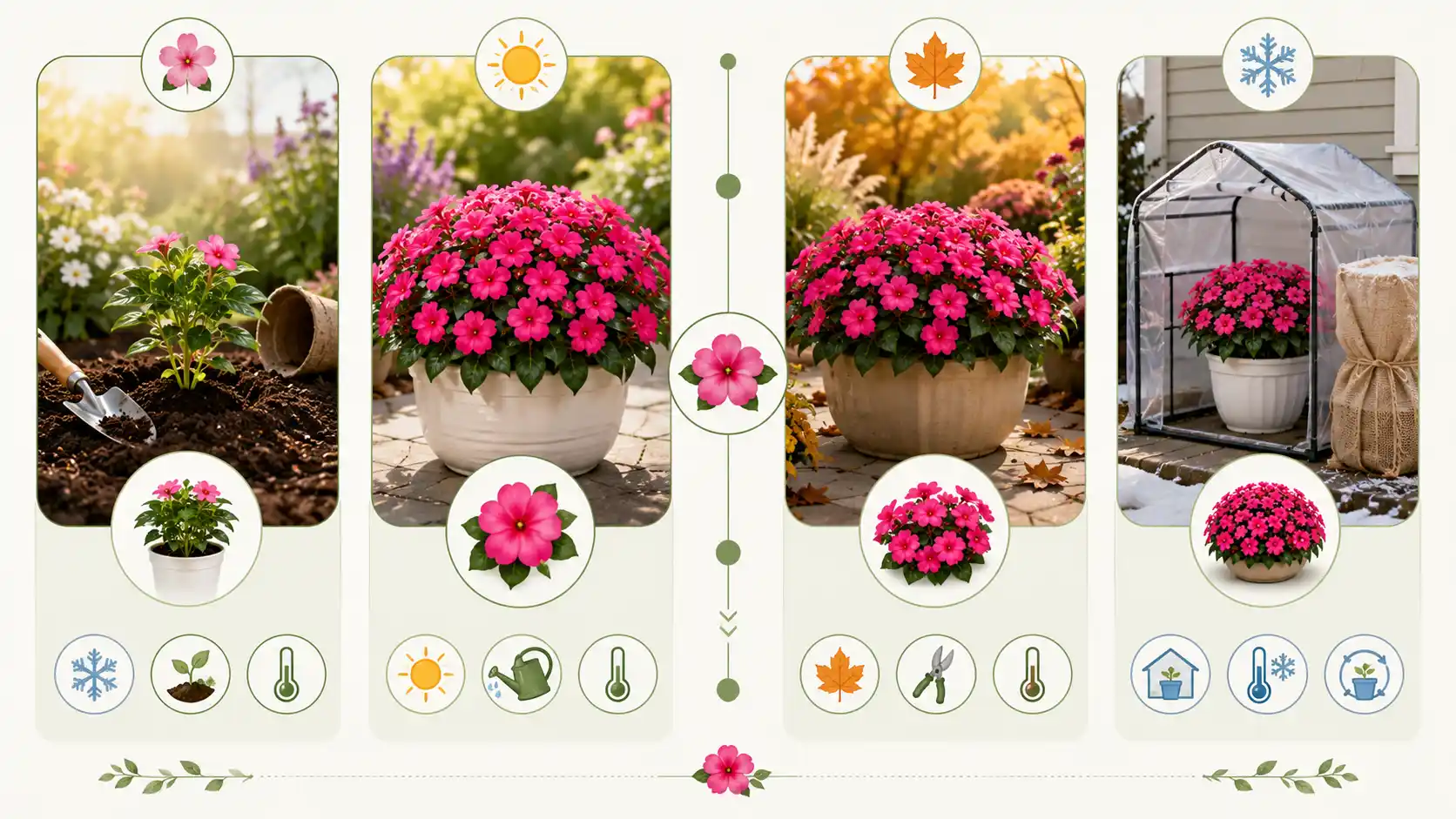
SunPatiens should be planted after the last frost when soil and air temperatures remain warm enough for active growth. Planting too early can slow establishment and increase stress.
Best planting conditions:
- Soil temperature above approximately 60°F (16°C).
- Warm daytime temperatures.
- No expected frost.
How Long Do SunPatiens Last?
SunPatiens typically bloom from spring through the first frost, providing several months of continuous color during the growing season. Their lifespan depends on climate, care, and winter temperatures.
Factors affecting lifespan:
- Warm temperatures extend flowering.
- Consistent moisture supports continuous growth.
- Frost quickly damages plants.
- Healthy plants may continue longer in protected climates.
What Do You Do With SunPatiens in the Winter?
In cold climates, most gardeners treat SunPatiens as seasonal annuals, while gardeners in frost-free regions may keep them growing year-round.
Winter options include:
- Remove plants after frost kills them.
- Move container plants indoors before freezing temperatures.
- Reduce watering during indoor overwintering.
- Maintain bright light if keeping plants indoors.
In USDA Zones 10–11, plants may survive outdoors with suitable protection.
Is SunPatiens Tropical Rose Worth Growing?
What Are the Benefits and Drawbacks of SunPatiens?
SunPatiens Tropical Rose is worth growing for gardeners who need a colorful, low-maintenance flowering plant that performs well in sunny conditions. Its combination of heat tolerance, continuous blooms, and disease resistance makes it a reliable choice for seasonal landscapes.
Advantages:
- Produces bright rose-pink flowers for months.
- Handles full sun better than traditional impatiens.
- Requires little deadheading.
- Works well in containers and garden beds.
- Has improved resistance to common impatiens diseases.
Disadvantages:
- Cannot tolerate frost.
- Requires consistent watering during hot periods.
- May struggle in deep shade.
- Needs adequate spacing for best performance.
SunPatiens Tropical Rose can also be combined with other landscape plants when planning colorful outdoor spaces, similar to the design principles used in Australian native garden designs.
Do SunPatiens Attract Hummingbirds?
Yes, SunPatiens flowers can attract hummingbirds and other pollinators because their colorful blooms provide nectar during the growing season. While they are not specifically grown as a wildlife plant, their bright flowers can contribute to pollinator-friendly gardens.
They are especially useful when planted alongside other nectar-rich flowering plants that provide a longer range of bloom shapes and colors.
Conclusion
SunPatiens Tropical Rose is a compact, sun-tolerant impatiens variety valued for its vivid rose-pink flowers, heat resistance, disease tolerance, and easy-care nature. Unlike traditional shade-loving impatiens, it performs well in sunny landscapes, containers, and borders when provided with consistent moisture, proper spacing, and suitable soil.
Successful SunPatiens Tropical Rose care depends on balancing sunlight and watering needs while avoiding common problems such as overcrowding, overwatering, and frost exposure. For gardeners seeking a reliable seasonal flowering plant with long-lasting color, this compact SunPatiens variety offers strong performance from spring through the end of the growing season.
FAQs
Are Tropical Rose SunPatiens perennials?
Tropical Rose SunPatiens are usually grown as annuals but can survive as tender perennials in frost-free climates such as USDA Zones 10–11. Cold temperatures typically end their growth cycle in temperate regions.
Can SunPatiens take full sun all day?
Yes, SunPatiens can tolerate full sun all day when they receive enough water and nutrients. In extremely hot climates, some afternoon shade may help reduce heat stress.
Do you need to deadhead SunPatiens?
No, SunPatiens do not require deadheading because they are self-cleaning plants. Old flowers naturally fall away, although occasional trimming can improve shape and branching.
Why don’t my SunPatiens bloom?
SunPatiens may fail to bloom because of insufficient sunlight, overcrowding, nutrient imbalance, or inconsistent watering. Improving light exposure and maintaining proper care usually restores flowering.
Can SunPatiens stay in pots year-round?
SunPatiens can remain in pots year-round only in warm, frost-free climates or when protected indoors during winter. In colder areas, they are typically seasonal container plants.
Do SunPatiens attract hummingbirds?
Yes, SunPatiens flowers can attract hummingbirds and pollinators because their bright blooms provide nectar during the growing season.
What do you do with SunPatiens in the winter?
In cold climates, remove SunPatiens after frost or move container plants indoors before freezing temperatures arrive. In frost-free areas, they may continue growing outdoors year-round.