
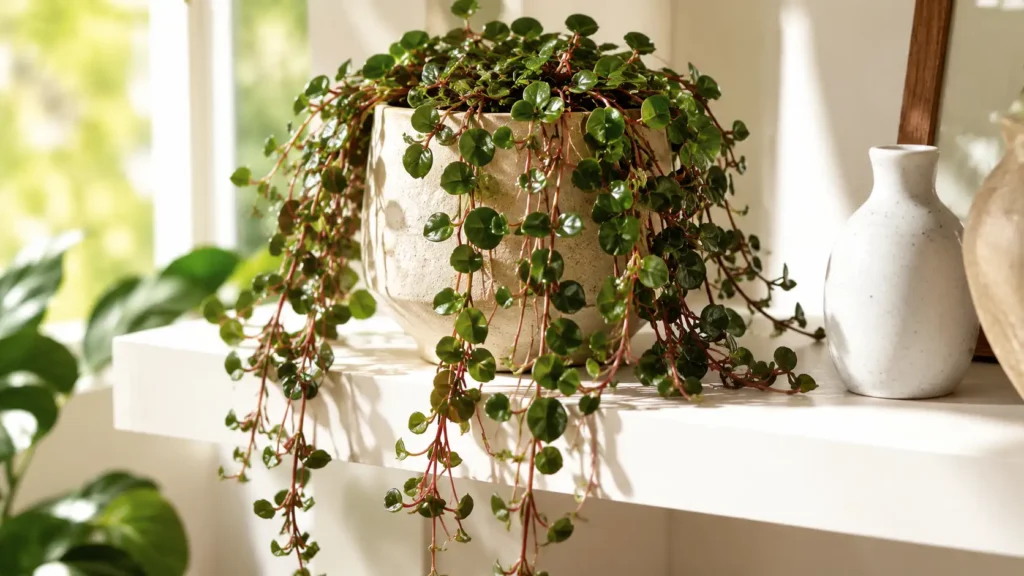
Ruby Cascade Peperomia is a trailing, semi-succulent houseplant with small, round, glossy green leaves and deep ruby-red undersides and stems. According to Furry Care Hub, it thrives in bright indirect light, well-draining succulent soil, and infrequent watering, and is considered non-toxic to cats and dogs, making it a safe pick for pet-friendly homes.
Its water-storing leaves make it more forgiving of missed waterings than true tropical peperomias, though soggy soil remains the leading cause of root rot. Growers debate its exact parentage, often tracing it to a Peperomia rotundifolia-type hybrid, and it propagates easily from stem cuttings rooted in water or moist soil within two to three weeks.
Ruby Cascade Peperomia is one example of an easy-care indoor plant that fits into broader houseplant care practices, including plant benefits, maintenance routines, and growing guides.
Quick Summary
- Ruby Cascade Peperomia is a semi-succulent trailing houseplant known for its wine-red stems and glossy rounded leaves.
- It is low-maintenance, drought-tolerant, and ideal for hanging baskets, shelves, or tabletop displays.
- The plant grows best in bright, indirect light and well-draining succulent-style soil.
- Moderate watering and avoiding soggy soil are essential for healthy roots.
- Although many Peperomia species are considered pet-friendly, always place houseplants where curious pets cannot chew on them.
What Is Ruby Cascade Peperomia?
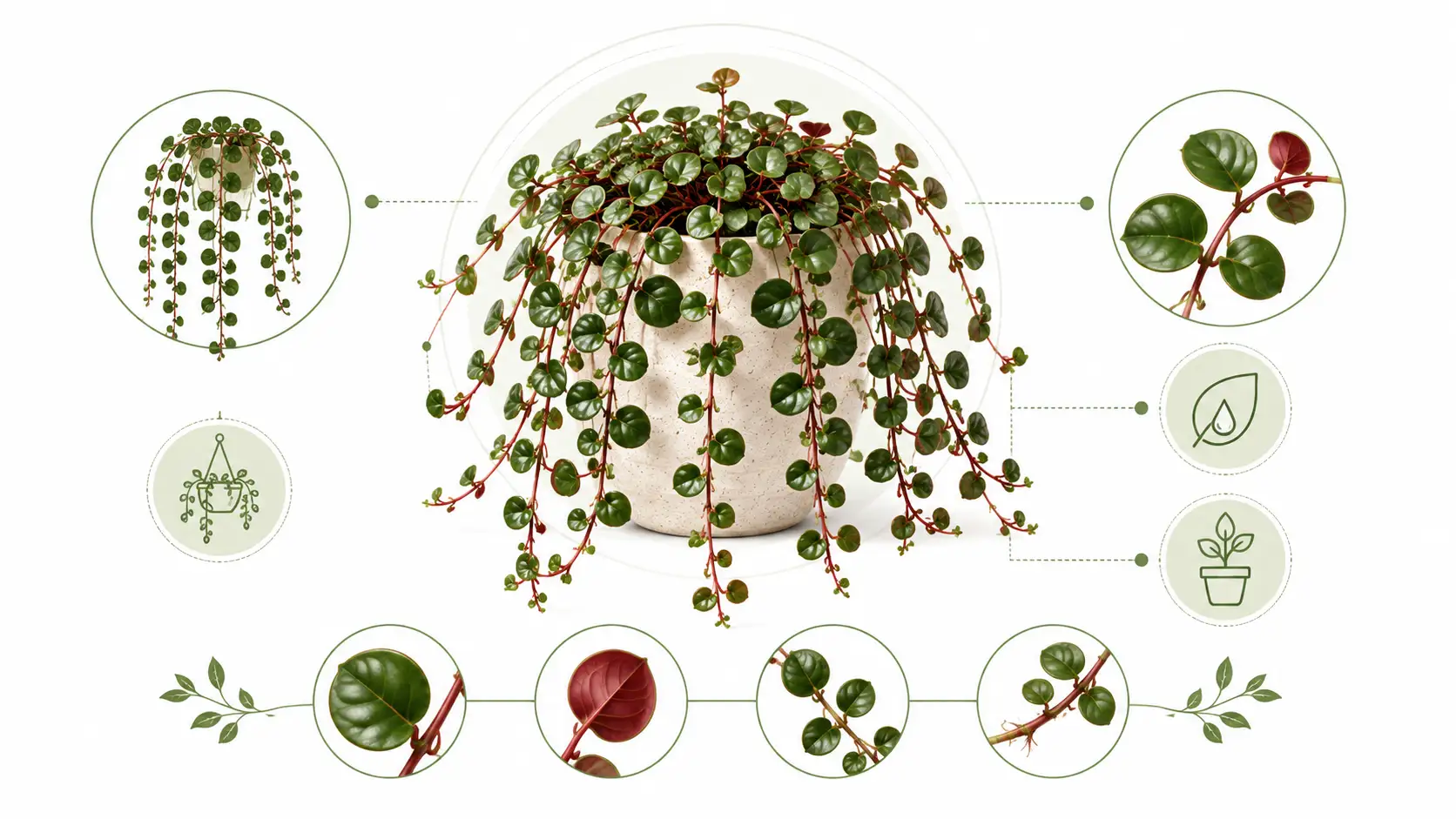
Ruby Cascade Peperomia is a compact trailing houseplant grown primarily for its colorful foliage and elegant cascading stems. Unlike climbing vines, it naturally drapes over the edges of containers, making it especially attractive in hanging planters or elevated pots. The plant combines glossy green leaves with deep ruby-red stems and reddish leaf undersides, creating year-round ornamental interest indoors. Ruby Cascade Peperomia belongs to the diverse Peperomia group, which includes other trailing varieties such as Peperomia Rotundifolia, a popular species known for its round leaves and similar easy-care nature.
As a member of the Peperomia group, Ruby Cascade shares many characteristics with other radiator plants, including slow to moderate growth, shallow roots, and tolerance for average indoor conditions. It prefers warm temperatures, filtered light, and careful watering rather than constant moisture.
One common source of confusion is the name “Ruby Cascade.” While it is widely used for this Peperomia cultivar, another ornamental plant, Philotheca myoporoides ‘Ruby Cascade’, also shares the same common name. These are completely different species with different growth habits and care requirements.
Scientific Name and Classification
Ruby Cascade Peperomia belongs to the Piperaceae (pepper) family, a diverse group containing more than 1,000 Peperomia species. Although its exact botanical classification may vary among growers because it is sold primarily as a cultivated ornamental variety, it is universally recognized as part of the Peperomia genus.
Ruby Cascade Peperomia belongs to the Peperomia genus, a diverse group of plants within the Piperaceae family. More information about this plant genus can be found in this botanical reference: Peperomia genus – Wikipedia
Botanical classification
| Classification | Details |
| Common Name | Ruby Cascade Peperomia |
| Botanical Group | Peperomia |
| Plant Family | Piperaceae |
| Plant Type | Semi-succulent perennial |
| Growth Habit | Trailing, cascading |
| Native Relation | Tropical and subtropical Peperomia relatives |
The Piperaceae family includes plants naturally found in Central and South America, where many Peperomia species grow beneath forest canopies. Their adaptation to filtered light explains why they perform so well as indoor plants.
It is important not to confuse Peperomia Ruby Cascade with Philotheca myoporoides ‘Ruby Cascade’, an Australian flowering shrub. Despite sharing a similar common name, they differ significantly.
| Feature | Ruby Cascade Peperomia | Philotheca ‘Ruby Cascade’ |
| Plant Family | Piperaceae | Rutaceae |
| Plant Type | Trailing houseplant | Evergreen shrub |
| Primary Feature | Decorative foliage | Pink and white flowers |
| Growing Location | Indoors | Outdoor landscapes |
| Water Needs | Moderate | Moderate after establishment |
Knowing the correct plant helps ensure accurate care and prevents confusion when researching growing requirements.
Is Ruby Cascade a Succulent?
Ruby Cascade Peperomia is not a true succulent, but it is considered a semi-succulent. Its fleshy leaves and stems store water, allowing it to survive short periods of drought more effectively than many tropical foliage plants.
Unlike desert succulents such as jade plants or echeverias, Peperomia naturally grows in tropical forests where it receives filtered sunlight and periodic rainfall. As a result, it appreciates slightly more consistent moisture than true succulents while still requiring excellent drainage.
The semi-succulent nature of Ruby Cascade provides several advantages:
- Stores water in leaves and stems.
- Tolerates occasional missed watering.
- Requires less frequent irrigation than many tropical houseplants.
- Benefits from drying slightly between waterings.
- Is sensitive to prolonged soggy soil.
Many people search for “Ruby Cascade succulent” because of its thick leaves. While the plant shares water-storage abilities with succulents, it should be cared for as a tropical semi-succulent rather than a desert cactus.
Why Is Peperomia Called the “Radiator Plant”?
Peperomia is commonly called the radiator plant because many species thrive in the warm, stable indoor conditions traditionally found near household radiators. The nickname originated decades ago when these compact plants proved capable of tolerating warm rooms and relatively dry indoor air better than many other tropical houseplants.
The name applies to the Peperomia genus as a whole, including Ruby Cascade Peperomia, rather than to a single species.
Although the nickname suggests they enjoy heat, it does not mean they should be placed directly on or against a radiator. Excessively hot, dry air can cause leaf stress, dehydration, and premature leaf drop.
Ruby Cascade performs best when it receives:
- Warm indoor temperatures.
- Bright but indirect light.
- Moderate airflow.
- Protection from intense heating vents.
- Stable environmental conditions.
Its ability to adapt to average household environments is one reason it has become such a popular indoor plant.
How to Care for Ruby Cascade Peperomia
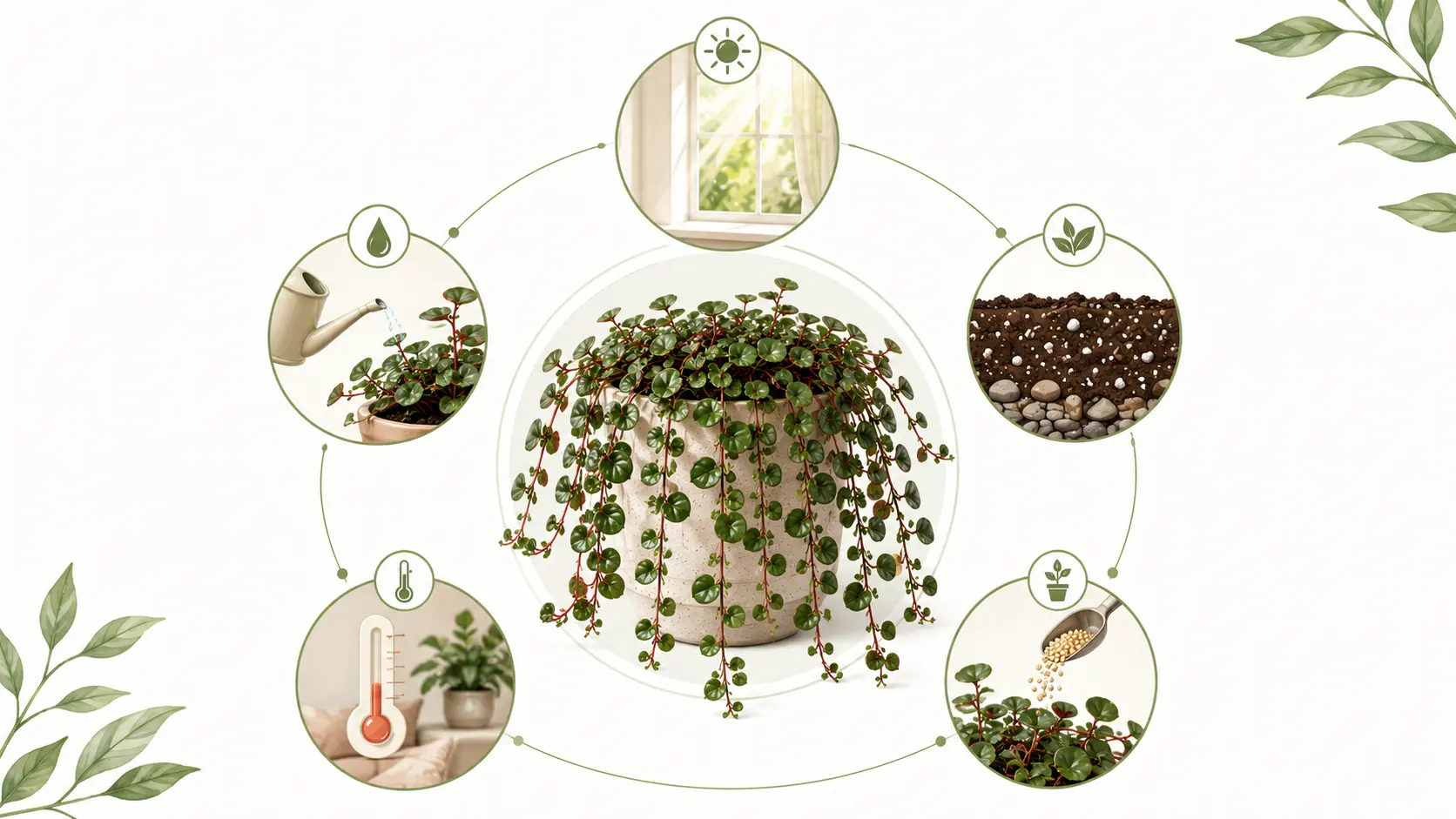
Ruby Cascade Peperomia grows best when provided with bright indirect light, well-draining soil, moderate watering, warm temperatures, and occasional feeding during the growing season. Because it stores water in its foliage, maintaining the right balance between moisture and drainage is more important than frequent watering.
Rather than requiring constant attention, this plant responds well to consistent care and stable indoor conditions. Avoiding extremes—whether excessive sunlight, overwatering, or cold temperatures—helps maintain healthy foliage and vibrant stem color.
Light Requirements
Ruby Cascade Peperomia thrives in bright, indirect light. This level of lighting supports compact growth, vibrant foliage, and the rich ruby coloration of its stems.
An east-facing window often provides ideal morning sunlight, while a west-facing window works well if harsh afternoon rays are filtered through sheer curtains.
Too much direct sunlight can lead to:
- Scorched or faded leaves.
- Brown leaf edges.
- Loss of glossy appearance.
- Heat stress.
Too little light may result in:
- Smaller leaves.
- Longer, weaker stems.
- Wider spacing between leaves.
- Slower overall growth.
- Reduced red coloration.
If natural light is limited, a quality LED grow light positioned several inches above the plant can supplement daylight successfully.
Watering Needs — Top or Bottom?
The best watering method for Ruby Cascade Peperomia is the soak-and-dry approach. Water thoroughly, then allow the upper portion of the soil to dry before watering again. This closely matches the plant’s natural preference for alternating moisture and drying cycles.
Both top watering and bottom watering can be effective.
Top watering
- Flushes excess fertilizer salts.
- Moistens the entire root system.
- Mimics natural rainfall.
- Requires proper drainage afterward.
Bottom watering
- Encourages roots to grow downward.
- Helps prevent water from sitting on foliage.
- Reduces surface disturbance.
- Works well for compact indoor pots.
Whichever method you choose, never allow the pot to remain in standing water.
Signs of underwatering
- Slightly wrinkled leaves.
- Dry potting mix.
- Slower growth.
- Mild leaf curling.
Signs of overwatering
- Yellowing leaves.
- Mushy stems.
- Wilting despite wet soil.
- Soft or blackened roots.
- Foul-smelling potting mix.
Checking soil moisture before watering is more reliable than watering on a fixed weekly schedule.
Soil and Potting Preferences
Ruby Cascade Peperomia requires well-draining soil that allows excess moisture to move away from the roots quickly. A cactus or succulent potting mix works well because it contains coarse materials that improve drainage while still retaining enough moisture for healthy growth.
Many growers also improve drainage by mixing in ingredients such as:
- Perlite.
- Pumice.
- Coarse sand.
- Fine orchid bark.
A loose soil structure provides oxygen to the shallow root system and reduces the risk of root rot.
Do Peperomia like deep pots?
No. Ruby Cascade Peperomia grows best in shallow, wide pots because its roots spread outward rather than deeply downward. Oversized or deep containers tend to hold excess moisture for longer periods, increasing the likelihood of overwatering problems.
Choose containers with:
- Drainage holes.
- Moderate width.
- Stable base for trailing stems.
- Breathable material such as terracotta if overwatering is a concern.
Repot only when roots begin filling the container, typically every two to three years.
Temperature, Humidity, and Misting
Ruby Cascade Peperomia grows best in temperatures between 65°F and 80°F (18°C–27°C). Consistent indoor temperatures encourage healthy foliage and steady growth throughout the active growing season.
For gardeners trying to increase humidity indoors, it is important to understand the difference between plant humidification methods and devices such as diffusers, which are not designed as true humidifiers.
Avoid exposing the plant to:
- Temperatures below 50°F (10°C).
- Cold drafts from doors or windows.
- Sudden temperature fluctuations.
- Direct blasts from heaters or air conditioners.
Ruby Cascade adapts well to average household humidity. While it appreciates moderate humidity, it generally does not require specialized humidification in most homes.
Should you mist Ruby Cascade Peperomia?
Routine misting is usually unnecessary. Although brief misting may temporarily increase surface moisture, it raises humidity only for a short time and can leave leaves damp. Prolonged moisture on foliage may encourage fungal issues in poorly ventilated spaces.
If humidity is consistently very low, better alternatives include:
- Using a pebble tray.
- Running a humidifier nearby.
- Grouping houseplants together.
- Maintaining good air circulation.
Fertilizing and Pruning
Ruby Cascade Peperomia benefits from light feeding during its active growing season. A balanced liquid houseplant fertilizer diluted to half strength every four to six weeks in spring and summer is generally sufficient.
Avoid excessive fertilization, as too much fertilizer may cause salt buildup, weak growth, or root damage.
Pruning helps maintain a fuller, healthier appearance by encouraging branching and removing damaged growth.
Regular pruning can be used to:
- Maintain a compact shape.
- Encourage bushier growth.
- Remove yellow or damaged leaves.
- Prevent leggy stems.
- Collect healthy cuttings for propagation.
Reduce or stop fertilizing during autumn and winter when the plant’s growth naturally slows.
Quick-Reference Care Checklist
- Light: Bright, indirect light
- Water: Allow the top soil to dry before watering
- Soil: Well-draining cactus or succulent mix
- Pot: Shallow container with drainage holes
- Temperature: 65–80°F (18–27°C)
- Humidity: Average indoor humidity is suitable
- Feeding: Half-strength fertilizer every 4–6 weeks during spring and summer
- Pruning: Trim regularly to maintain shape and encourage bushier growth
How to Make Ruby Cascade Peperomia Bushy
Ruby Cascade Peperomia becomes bushier when it receives enough light, regular pruning, and occasional stem propagation to encourage fuller growth. Because it naturally grows as a trailing plant, some stems may become long and sparse over time. Strategic trimming redirects energy into new side shoots and creates a denser appearance.
The most effective ways to make Ruby Cascade Peperomia fuller include:
- Pinching growing tips: Remove the ends of long stems to encourage branching from lower nodes.
- Pruning leggy growth: Trim stretched stems caused by insufficient light.
- Propagating cuttings back into the same pot: Rooted cuttings can be planted around the original plant to create a thicker cascade.
- Improving lighting: Brighter indirect light encourages compact growth and stronger stems.
- Rotating the pot: Turning the plant regularly helps all sides receive balanced light.
A common beginner mistake is keeping Ruby Cascade in low light because it tolerates indoor conditions. While it may survive, insufficient light often causes thin stems, fewer leaves, and a less attractive trailing shape.
For the fullest growth, prune during the active growing season, especially spring and summer. Avoid removing too much foliage at once because the plant still needs leaves for photosynthesis and recovery.
How to Propagate Ruby Cascade Peperomia
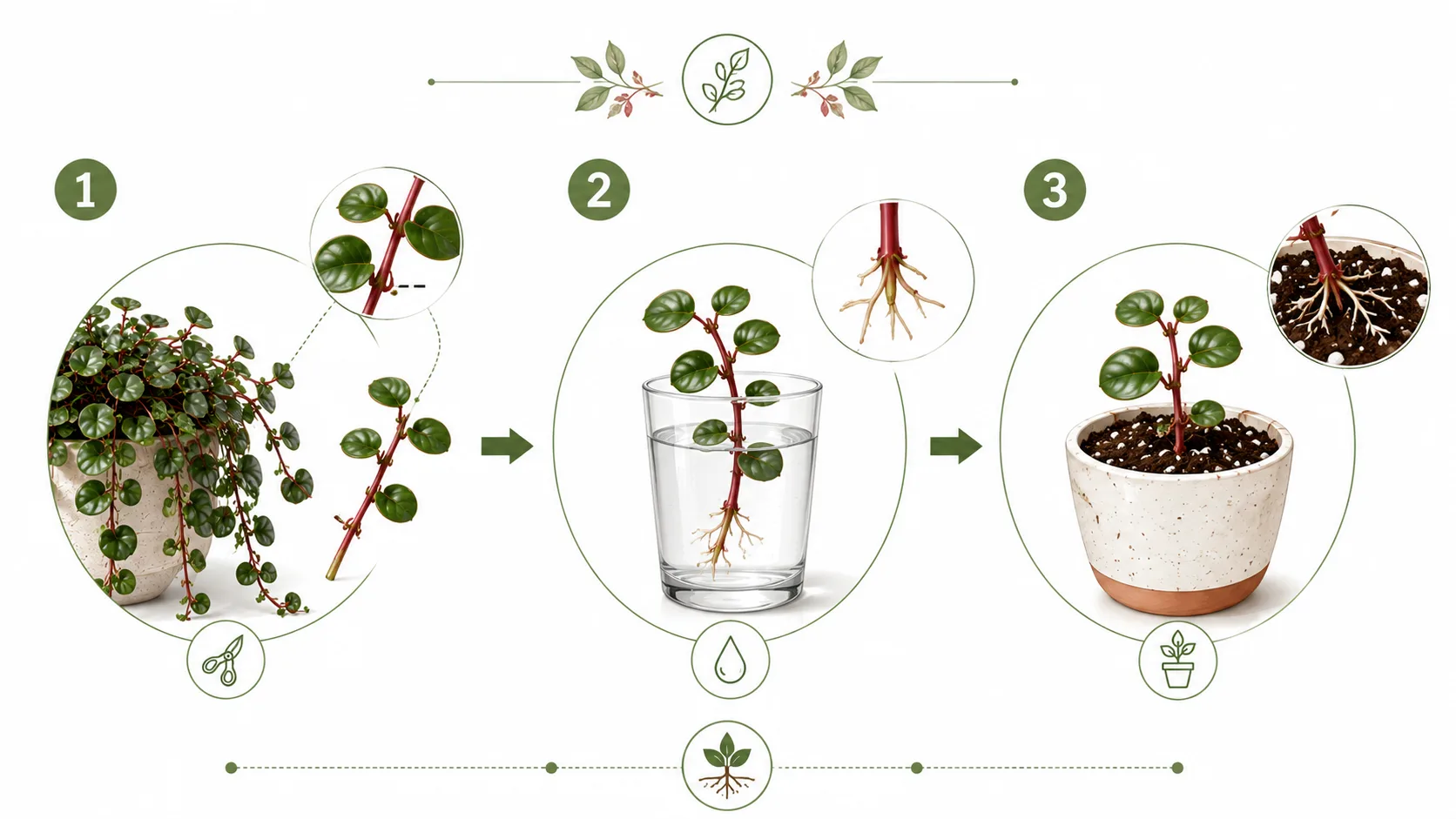
Ruby Cascade Peperomia can be propagated successfully through stem cuttings. The easiest methods are water propagation and soil propagation. Both methods rely on healthy stems containing nodes, where new roots can develop. Peperomia propagation methods vary slightly between varieties, but techniques used for other species such as Peperomia Frost can also help growers understand successful cutting and rooting practices.
Propagation is most successful during warmer months when the plant is actively growing. Healthy cuttings from a mature plant usually root faster than weak or damaged stems.
Water Propagation
Water propagation is a simple method for beginners because root development can be observed clearly. Ruby Cascade Peperomia produces roots from stem nodes when placed in clean water.
Steps for water propagation:
- Select a healthy stem with at least one or two leaves and a visible node.
- Cut below the node using clean, sterilized scissors.
- Remove lower leaves that would sit underwater.
- Place the cutting in a small container of clean water.
- Keep the node submerged while keeping leaves above the water surface.
- Place the container in bright indirect light.
- Change the water regularly to keep it fresh.
- Transfer the cutting to soil once roots are several centimeters long.
Root development commonly begins within a few weeks, although timing depends on temperature, light, and plant health.
Can Peperomia grow in just water long-term?
Ruby Cascade Peperomia can survive in water for an extended period, but it is not usually the best long-term growing method. Plants grown permanently in water may develop weaker growth compared with those grown in nutrient-rich, well-aerated soil.
For permanent growth, transferring rooted cuttings into a suitable potting mix usually provides better access to nutrients and oxygen.
Soil Propagation
Soil propagation allows Ruby Cascade cuttings to establish roots directly in their final growing medium. This method often creates stronger root systems because the plant adapts immediately to soil conditions. Some Peperomia varieties can also be propagated from leaves, although stem cuttings with nodes are generally more reliable for trailing plants like Ruby Cascade.
Steps for soil propagation:
- Choose a healthy stem cutting with at least one node.
- Remove the lower leaves near the cut end.
- Allow the cutting to dry briefly if the stem is very moist.
- Insert the node into a well-draining propagation mix.
- Keep the soil lightly moist but never waterlogged.
- Place the cutting in bright indirect light.
- Maintain warmth and moderate humidity until roots develop.
Helpful propagation conditions include:
- Loose, airy soil.
- Warm temperatures around 65–80°F (18–27°C).
- Protection from direct sunlight.
- Slightly higher humidity during early rooting.
Rooting hormone is not required, but it may speed up root formation in some cases. Keeping the soil too wet is one of the most common propagation mistakes because unrooted cuttings are especially vulnerable to rot.
Common Problems With Ruby Cascade Peperomia
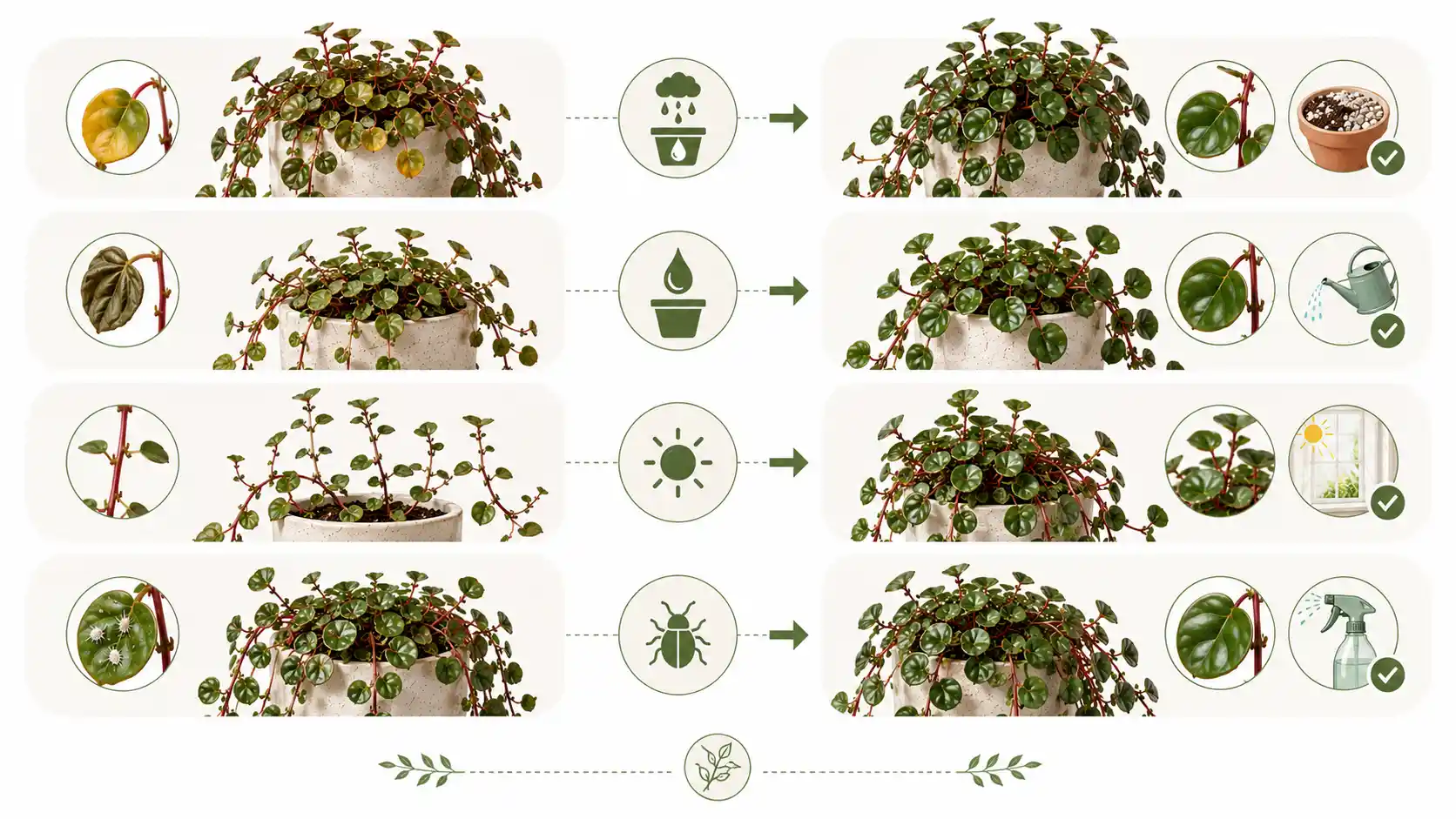
Ruby Cascade Peperomia is generally easy to care for, but problems can occur when watering, lighting, or environmental conditions are not balanced. Most issues are related to excess moisture, insufficient light, or sudden changes in growing conditions. If your Peperomia starts losing leaves, understanding the common causes of leaf drop, watering mistakes, and environmental stress can help prevent further damage.
Yellowing Leaves
Yellow leaves on Ruby Cascade Peperomia are most commonly caused by overwatering, although light stress and natural aging can also contribute.
Possible causes:
- Soil staying wet for too long.
- Poor drainage.
- Low light slowing water absorption.
- Sudden environmental changes.
Solutions:
- Allow soil to dry more between waterings.
- Check that the pot has drainage holes.
- Move the plant to brighter indirect light.
- Remove severely damaged leaves.
Prevention:
- Test soil moisture before watering.
- Use a fast-draining potting mix.
- Avoid placing the plant in oversized containers.
Overwatering Symptoms
An overwatered Ruby Cascade Peperomia often shows signs that the roots are struggling due to insufficient oxygen in wet soil.
Common symptoms include:
- Yellowing leaves.
- Soft or mushy stems.
- Leaf drop.
- Wilting while the soil remains wet.
- Blackened or unhealthy roots.
Recovery steps:
- Remove the plant from its pot.
- Inspect roots and cut away damaged, mushy sections.
- Allow healthy roots to dry briefly.
- Repot into fresh, well-draining soil.
- Reduce watering frequency.
Prevention is easier than recovery. Ruby Cascade stores moisture in its foliage, so it does not need frequent watering.
Slow or Stalled Growth
Slow growth is common when Ruby Cascade Peperomia does not receive enough light or proper nutrients. While it is naturally a slow-to-moderate grower, extremely limited growth often indicates an environmental issue.
Common causes include:
- Low light conditions.
- Lack of nutrients.
- Cold temperatures.
- Root problems.
- Incorrect watering.
Solutions include:
- Moving the plant closer to filtered sunlight.
- Feeding lightly during spring and summer.
- Checking roots if growth stops completely.
- Maintaining stable temperatures.
Healthy Ruby Cascade Peperomia growth is gradual rather than rapid, so patience is important.
Leaf Drop or Shriveling
Leaf drop and shriveling usually indicate a moisture imbalance. The plant may be losing stored water faster than it can absorb it.
Possible causes include:
- Underwatering.
- Extremely dry air.
- Root damage.
- Sudden temperature changes.
- Excessive sunlight.
Fixes:
- Check soil moisture and water if the mix is completely dry.
- Move away from direct hot sunlight.
- Maintain stable indoor conditions.
- Inspect roots if watering does not improve the plant.
Wrinkled leaves often indicate dehydration, while soft yellow leaves are more commonly linked to excess moisture.
Pest Issues
Ruby Cascade Peperomia can occasionally experience common houseplant pests, including:
- Mealybugs.
- Spider mites.
- Aphids.
- Scale insects.
Signs of pest problems include:
- Sticky residue on leaves.
- White cotton-like clusters.
- Fine webbing.
- Distorted new growth.
Treatment options include:
- Wiping leaves with diluted insecticidal soap.
- Removing visible pests manually.
- Applying horticultural oil when appropriate.
- Isolating affected plants to prevent spread.
Regularly checking the undersides of leaves helps detect pests early.
Peperomia Ruby Cascade Flowers
Ruby Cascade Peperomia can produce flowers, but its blooms are not the main reason growers cultivate this plant. Like many Peperomia species, it produces small, spike-like flower structures called inflorescences rather than large decorative flowers.
The blooms usually appear as:
- Thin greenish or cream-colored spikes.
- Small clusters emerging above the foliage.
- Subtle structures compared with flowering ornamentals.
Flowering generally indicates that the plant is mature and receiving suitable growing conditions. However, a healthy Ruby Cascade does not need to flower to be considered successful.
Indoor flowering depends on factors such as:
- Adequate light.
- Mature plant size.
- Proper nutrition.
- Stable environmental conditions.
Many indoor growers focus more on maintaining colorful stems and attractive trailing foliage than encouraging blooms.
Is Ruby Cascade Peperomia Toxic to Cats?
Ruby Cascade Peperomia is generally considered non-toxic to cats and dogs according to commonly referenced pet safety databases such as the ASPCA. This means accidental nibbling is not expected to cause serious poisoning in most pets.
However, individual animals may still experience mild digestive upset after eating plant material. It is always best to discourage pets from chewing houseplants.
The terms “radiator plant,” “red twist,” and other Peperomia names can create confusion because many different varieties exist. Toxicity information should be checked for the specific plant rather than assuming every similarly named houseplant has the same safety profile.
Are all Peperomia safe for cats?
Most commonly grown Peperomia houseplants are considered pet-friendly, including many popular foliage varieties. However, plant identification matters because common names can overlap between unrelated species.
Safe practices for pet households include:
- Place trailing plants in hanging baskets or elevated shelves.
- Prevent pets from repeatedly chewing leaves.
- Remove fallen leaves from accessible areas.
- Monitor pets around any new plant.
Even non-toxic plants can cause temporary stomach discomfort if eaten in large amounts.
Ruby Cascade Peperomia vs. Similar Varieties (Comparison Block)
Ruby Cascade Peperomia is often confused with other trailing or red-toned Peperomia varieties because many share similar growth habits and foliage colors. Comparing leaf appearance, growth style, and care difficulty helps identify the differences between these plants.
Ruby Cascade is recognized by its cascading stems, green upper leaf surfaces, and deep ruby-red stems and undersides. Other varieties may have similar colors but differ in growth form, texture, or variegation patterns.
| Variety | Growth Habit | Leaf Color | Care Difficulty |
| Ruby Cascade | Trailing | Green top / ruby-red underside and stems | Easy |
| Pepperspot | Compact, bushy | Solid green | Easy |
| Variegated Ruby Cascade | Trailing | Cream and pink variegation | Moderate |
| Red Twist | Upright/trailing | Twisted red-green leaves | Easy |
Ruby Cascade vs. Pepperspot
Ruby Cascade and Pepperspot are both easy-care Peperomia varieties, but their growth forms are different. Ruby Cascade produces longer trailing stems suitable for hanging containers, while Pepperspot grows in a more compact, bushy form.
Ruby Cascade vs. Variegated Ruby Cascade
Variegated Ruby Cascade has similar trailing growth but features cream or pink patterns on its leaves. Because variegated plants contain less chlorophyll, they may grow slightly slower and require brighter light to maintain their coloration.
Ruby Cascade vs. Red Twist
Red Twist Peperomia differs mainly in leaf shape and growth structure. It typically has more twisted, elongated leaves with red and green tones, while Ruby Cascade is recognized for rounded leaves and cascading stems.
Choosing between these varieties depends on the desired appearance:
- Choose Ruby Cascade for a trailing hanging plant.
- Choose Pepperspot for compact shelves or desks.
- Choose Variegated Ruby Cascade for decorative leaf patterns.
- Choose Red Twist for unusual twisted foliage.
Is Ruby Cascade Peperomia a Good Indoor Plant?
Ruby Cascade Peperomia is an excellent indoor plant because it combines attractive foliage, compact size, and simple care requirements. Its trailing growth habit makes it suitable for apartments, offices, shelves, and hanging baskets where space is limited.
The plant is especially popular among beginners because it tolerates occasional watering mistakes better than many tropical houseplants. Its semi-succulent leaves allow it to store moisture, reducing the risk of immediate stress when watering is delayed.
Ruby Cascade is valued for:
- Low-maintenance care needs.
- Attractive ruby-red stems.
- Adaptability to indoor temperatures.
- Small-space-friendly growth.
- Easy propagation.
However, it should not be considered completely indestructible. The most common beginner mistakes are overwatering, placing it in very low light, and using heavy soil that retains too much moisture.
How Long Does Ruby Cascade Peperomia Live?
Ruby Cascade Peperomia can live for many years with proper care. While exact lifespan depends on growing conditions, healthy Peperomia plants commonly remain attractive for several years indoors when provided with suitable light, drainage, and watering practices.
Factors that support a longer lifespan include:
- Bright indirect light.
- Proper watering habits.
- Regular removal of damaged growth.
- Occasional pruning.
- Healthy root conditions.
Because Ruby Cascade can be propagated from stem cuttings, growers can also maintain the plant by creating new plants from healthy growth over time.
Older plants may naturally become less compact or develop woody stems, but pruning and propagation can help restore a fuller appearance.
Is Peperomia an Air Purifier?
Peperomia plants are often described as air-purifying houseplants, but the practical benefits should be understood realistically. Research on indoor plants has shown that plants can remove certain airborne compounds under controlled conditions, but typical household plants do not significantly replace ventilation or air-cleaning systems.
Ruby Cascade Peperomia can still contribute to a healthier indoor environment by:
- Adding greenery and visual appeal.
- Supporting a more pleasant indoor atmosphere.
- Increasing plant diversity in living spaces.
- Encouraging connection with indoor gardening.
For cleaner indoor air, the most effective methods remain:
- Proper ventilation.
- Reducing indoor pollutants.
- Using suitable air filtration when needed.
- Maintaining good household hygiene.
Are Peperomias Hard to Keep Alive?
Peperomias are generally considered beginner-friendly plants because they tolerate average indoor conditions and do not require complex maintenance. Ruby Cascade Peperomia is especially manageable due to its semi-succulent characteristics and ability to handle occasional dry periods.
Common beginner mistakes include:
- Watering too frequently.
- Keeping the plant in deep, moisture-retaining pots.
- Placing it in dark corners.
- Ignoring signs of root stress.
- Fertilizing too heavily.
A thriving Ruby Cascade Peperomia usually shows these signs:
- Firm, glossy leaves.
- Strong ruby-red stems.
- Steady new growth.
- Healthy trailing stems.
- No yellowing caused by excess moisture.
- Compact growth without excessive stretching.
When basic care needs are met, Ruby Cascade Peperomia can remain an attractive and reliable indoor plant for years.
Conclusion
Ruby Cascade Peperomia is an easy-care trailing houseplant known for its ruby-red stems, rounded green leaves, and semi-succulent characteristics. Its ability to tolerate occasional dry periods, compact size, and attractive cascading growth make it a popular choice for indoor plant collections.
The key to growing a healthy Ruby Cascade Peperomia is maintaining the right balance of care: provide bright indirect light, use well-draining soil, and water only when the potting mix begins to dry. Avoiding overwatering and providing stable indoor conditions will help this plant maintain strong growth and vibrant foliage.
For beginners and experienced growers alike, Ruby Cascade Peperomia offers a combination of beauty, simplicity, and easy propagation that makes it a valuable indoor plant.
FAQs
How do you care for Ruby Cascade Peperomia?
Ruby Cascade Peperomia care requires bright indirect light, well-draining soil, moderate watering, and warm indoor temperatures. Allow the soil to dry partially between waterings because its semi-succulent leaves store moisture and are sensitive to overwatering.
Is Ruby Cascade Peperomia a succulent?
Ruby Cascade Peperomia is not a true succulent but a semi-succulent plant. It stores water in its thick leaves and stems, allowing it to tolerate occasional drought, but it prefers tropical-style care rather than desert succulent conditions.
Is Ruby Cascade Peperomia toxic to cats?
Ruby Cascade Peperomia is generally considered non-toxic to cats and dogs. However, pets should still be discouraged from chewing large amounts of any houseplant because plant material may cause mild digestive discomfort.
Do you water Peperomia from the top or bottom?
You can water Peperomia from either the top or bottom as long as the soil drains well. Top watering helps flush salts from the soil, while bottom watering can encourage even moisture absorption. The most important step is allowing the soil to dry slightly before watering again.
How do you propagate Ruby Cascade Peperomia in water?
To propagate Ruby Cascade Peperomia in water, cut a healthy stem below a node, remove lower leaves, place the node in clean water, and keep it in bright indirect light. Roots usually develop within a few weeks before the cutting can be transferred to soil.
Why is Peperomia called the radiator plant?
Peperomia is called the radiator plant because many Peperomia species were historically grown in warm indoor areas near radiators. The name reflects their tolerance for warm rooms and relatively dry household air, not a need for direct heat.
How big does Ruby Cascade Peperomia get?
Ruby Cascade Peperomia usually remains a compact houseplant, with trailing stems that can extend several feet when grown in suitable conditions. Its final size depends on light, pruning, container size, and growing environment.