
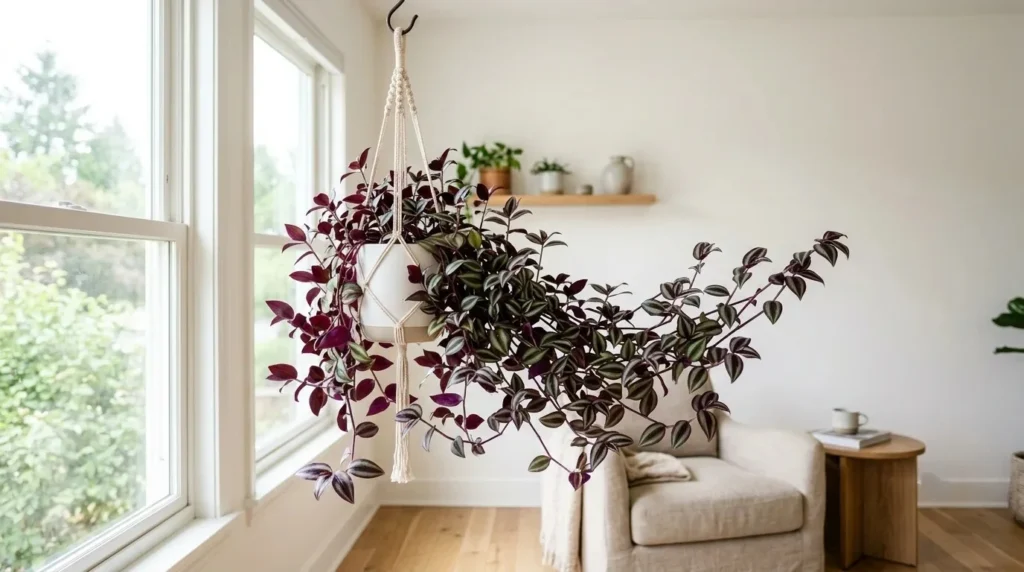
According to Manuela Nogueira, Tradescantia zebrina ‘Burgundy’ is a trailing houseplant cultivar valued for its deep wine-purple leaves, a departure from the silver-striped pattern of the standard zebrina. It thrives in bright, indirect light, which intensifies its coloring, and prefers to dry out slightly between waterings. Native to Mexico, it is mildly toxic to pets.
Unlike many variegated houseplants, ‘Burgundy’ propagates easily from stem cuttings set in water, often rooting within one to two weeks. Insufficient light doesn’t slow its growth so much as cause the foliage to fade toward green. In frost-free climates, it can also be grown outdoors as a fast-spreading groundcover.
Quick Summary
- Tradescantia zebrina ‘Burgundy’ is a fast-growing trailing houseplant with deep purple-burgundy foliage.
- It grows best in bright indirect light, evenly moist but well-draining soil, and moderate watering.
- It is closely related to the classic silver-striped Tradescantia zebrina but develops richer, darker leaf coloration.
- Stem cuttings root easily in water or soil, making it one of the simplest houseplants to propagate.
- Proper lighting is the key factor for maintaining its vibrant burgundy color.
What Is Tradescantia Zebrina ‘Burgundy’?
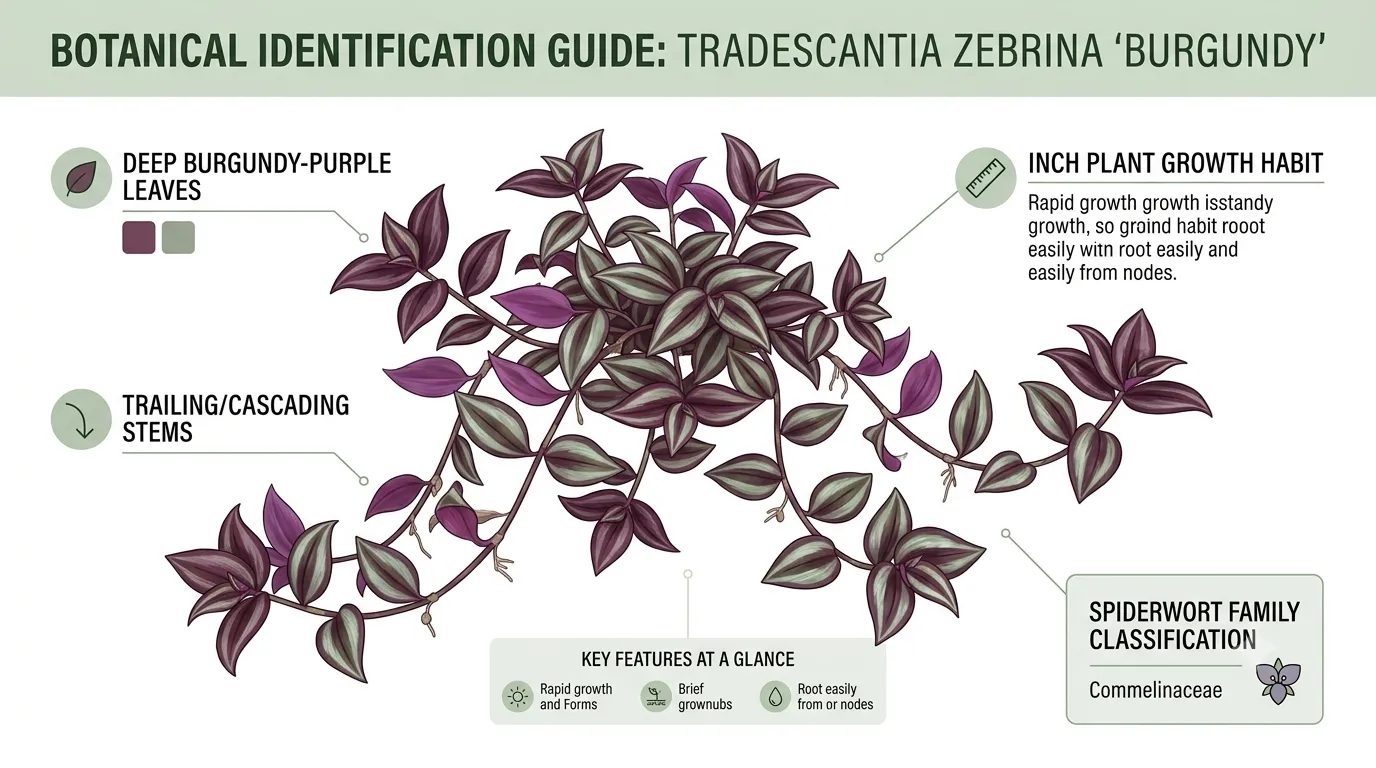
Tradescantia zebrina ‘Burgundy’ is a colorful cultivar of Tradescantia zebrina grown primarily for its deep burgundy-purple leaves and trailing stems. It belongs to the spiderwort family and is widely cultivated as an indoor ornamental plant because of its rapid growth, attractive foliage, and simple maintenance. Tradescantia belongs to the spiderwort family (Commelinaceae), a group of flowering plants commonly recognized for their ornamental foliage and adaptability. More botanical background about this plant family can be found on Wikipedia’s page about Commelinaceae.
Unlike the standard silver-striped form, this cultivar produces darker foliage with stronger purple pigmentation, giving it a dramatic appearance in containers and hanging baskets. Its flexible stems spread quickly, making it suitable for indoor displays or as seasonal outdoor ground cover in frost-free climates.
Scientific Classification and Common Names
Scientific Classification
| Classification | Information |
| Scientific name | Tradescantia zebrina ‘Burgundy’ |
| Genus | Tradescantia |
| Species | Tradescantia zebrina |
| Family | Commelinaceae (Spiderwort family) |
| Plant type | Herbaceous perennial |
| Growth habit | Trailing and spreading |
Common names include:
- Burgundy tradescantia
- Burgundy wandering jew
- Inch plant
- Purple inch plant
- Zebrina
- Wandering dude plant (modern alternative)
The traditional common name “wandering jew” has historical use in horticulture but has become controversial because of its cultural associations. Many gardeners, botanical organizations, and retailers now prefer neutral alternatives such as wandering dude, wandering plant, or simply Tradescantia.
Some online searches also use the misspelling “transcendia” instead of Tradescantia. Although incorrect botanically, this spelling is a common search variation referring to the same genus.
How Burgundy Differs From Standard Tradescantia Zebrina
Tradescantia zebrina ‘Burgundy’ differs from the standard Tradescantia zebrina mainly in leaf coloration. While both have similar care requirements and growth habits, Burgundy develops much deeper purple foliage with reduced silver striping.
| Feature | Burgundy | Standard Zebrina | Purpusii | Quadricolor |
| Leaf color | Deep burgundy-purple | Green with silver and purple | Dark purple | Pink, cream, green, purple |
| Stripe pattern | Minimal silver | Bold silver stripes | Little to no striping | Multicolored variegation |
| Light needs | Bright indirect light | Bright indirect light | Bright indirect light | Bright indirect light with stable conditions |
| Growth habit | Fast trailing | Fast trailing | Compact trailing | Trailing with slower variegated growth |
Although the foliage varies between cultivars, all belong to the same genus and generally require similar watering, soil, and propagation methods.
Light Requirements — Sun or Shade?
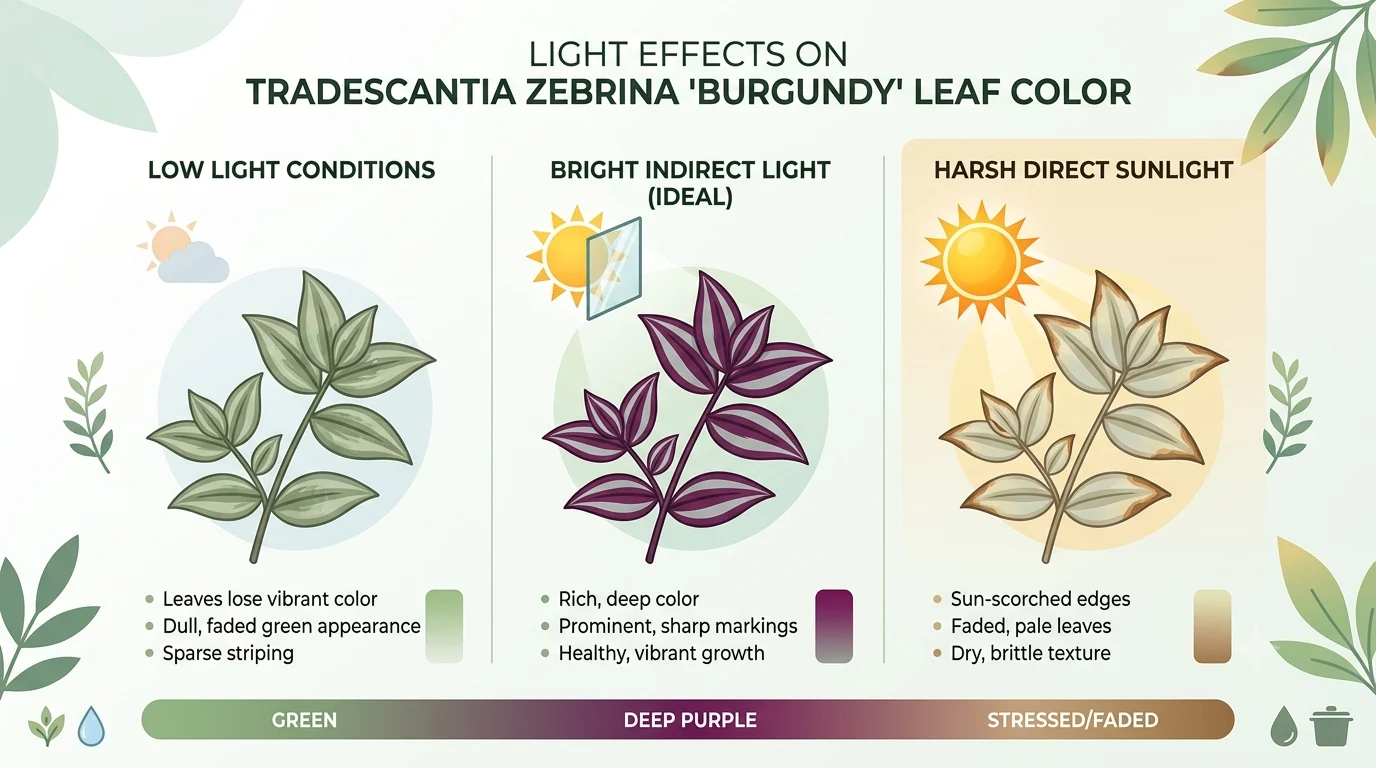
Tradescantia zebrina ‘Burgundy’ grows best in bright indirect light rather than full shade or prolonged direct afternoon sun. Bright filtered light supports healthy growth while preserving the rich burgundy pigmentation that makes this cultivar distinctive.
Morning sunlight for a few hours is usually beneficial, especially indoors, while harsh afternoon sun can scorch delicate leaves. In low-light rooms, stems often become longer, leaves become smaller, and the deep purple tones gradually fade.
Signs the plant is receiving appropriate light include:
- Rich purple or burgundy leaf color
- Compact growth
- Short stem spacing
- Healthy, vibrant foliage
- Continuous production of new leaves during the growing season
If natural light is limited, a full-spectrum grow light positioned several inches above the plant can help maintain healthy coloration.
Why Your Tradescantia Isn’t Purple Enough
Insufficient light is the most common reason Tradescantia zebrina ‘Burgundy’ loses its purple color. Without enough bright light, the plant produces more green chlorophyll, reducing the vivid burgundy pigments.
Other contributing factors include:
- Deep shade
- Winter’s shorter daylight hours
- Aging leaves
- Excess nitrogen fertilizer
- Long periods without pruning
To restore stronger coloration:
- Move the plant to brighter indirect light.
- Allow gentle morning sunlight if available.
- Rotate the pot regularly for even exposure.
- Trim leggy stems to encourage compact new growth.
- Avoid excessive fertilization, which promotes greener foliage.
Color usually improves gradually as new leaves develop under better lighting conditions.
Watering Needs
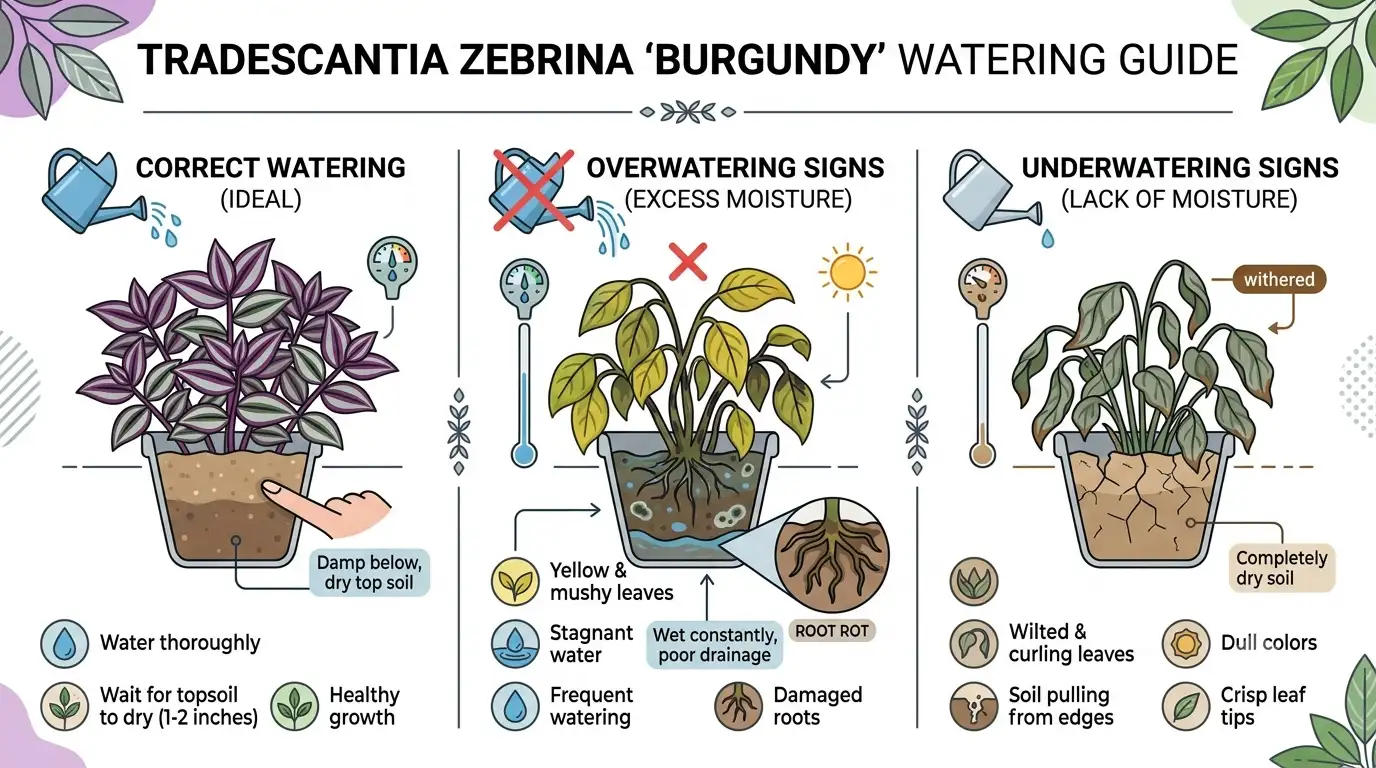
Tradescantia zebrina ‘Burgundy’ prefers evenly moist soil that dries slightly between waterings. Consistently soggy soil increases the risk of root rot, while prolonged dryness can lead to wilted stems and crispy leaf edges.
How often to water depends on temperature, humidity, pot size, and light exposure rather than a fixed schedule. During spring and summer, many indoor plants require watering about once the top inch (2–3 cm) of soil feels dry. In winter, growth slows, so watering is generally less frequent.
How often to water
- Check soil moisture before watering.
- Water thoroughly until excess drains from the pot.
- Empty decorative cachepots after watering.
- Reduce watering during cooler months.
Should you bottom water?
Yes. Bottom watering can encourage even moisture throughout the root zone while reducing surface compaction. Place the pot in shallow water for 15–20 minutes, then allow excess moisture to drain completely before returning it to its location.
Should you mist the leaves?
Routine misting is generally unnecessary. While occasional misting does not usually harm healthy plants, it raises humidity only briefly. Maintaining moderate indoor humidity provides more consistent growing conditions.
Signs of overwatering
- Yellowing leaves
- Soft stems
- Mushy roots
- Persistent wet soil
- Fungal growth
Signs of underwatering
- Dry soil
- Drooping stems
- Crispy leaf margins
- Curling foliage
- Slower growth
A common beginner mistake is watering on a calendar instead of checking soil moisture first.
Potting Mix, Pot Size, and Root Habits
Tradescantia zebrina ‘Burgundy’ performs best in a loose, well-draining potting mix that retains some moisture while allowing excess water to escape quickly. Heavy soils that remain wet for long periods increase the likelihood of root problems.
An effective potting mix often contains:
- High-quality indoor potting soil
- Perlite for drainage
- Coco coir or peat moss for moisture retention
- Fine orchid bark for improved aeration
This combination balances water retention with oxygen around the roots.
Shallow vs. deep pot preference
Because the plant develops relatively shallow, fibrous roots, wide and moderately shallow pots often work better than excessively deep containers. Wide pots also provide more surface area for trailing stems to root if they contact the soil.
Does it like being root bound?
Tradescantia tolerates becoming slightly root bound but should not remain severely crowded for long periods. Repotting every one to two years or whenever roots fill the container helps sustain vigorous growth.
Choose a new pot only one size larger than the previous container. Oversized pots can hold excess moisture, increasing the risk of overwatering.
Plant Size
Tradescantia zebrina ‘Burgundy’ is a vigorous trailing plant that can produce long cascading stems under favorable conditions. Most indoor specimens remain compact at first but gradually spread outward and downward as they mature.
Typical mature size:
| Growing Condition | Typical Size |
| Indoor height | 6–12 inches (15–30 cm) |
| Indoor trailing length | 2–4 feet (60–120 cm), sometimes longer |
| Outdoor spread | Several feet in warm climates |
Several factors influence mature size, including:
- Available light
- Pot size
- Regular pruning
- Fertility
- Temperature
- Growing season length
Regular trimming encourages fuller growth by stimulating branching rather than allowing stems to become sparse and elongated.
Growth Rate
Tradescantia zebrina ‘Burgundy’ is considered a fast-growing houseplant under suitable conditions. During active growth in spring and summer, new stems and leaves develop quickly, allowing the plant to fill containers and hanging baskets within a relatively short period.
Growth is typically strongest when the plant receives:
- Bright indirect light
- Warm temperatures
- Consistent moisture
- Well-draining soil
- Occasional balanced fertilization during the growing season
Growth naturally slows during autumn and winter as daylight decreases. This seasonal slowdown is normal and usually does not indicate a health problem.
Environmental conditions significantly influence growth speed. Plants kept in bright, stable indoor environments generally produce denser foliage than those grown in dim locations. Regular pruning also encourages branching, resulting in a fuller, more attractive trailing habit instead of long, leggy stems.
Propagation
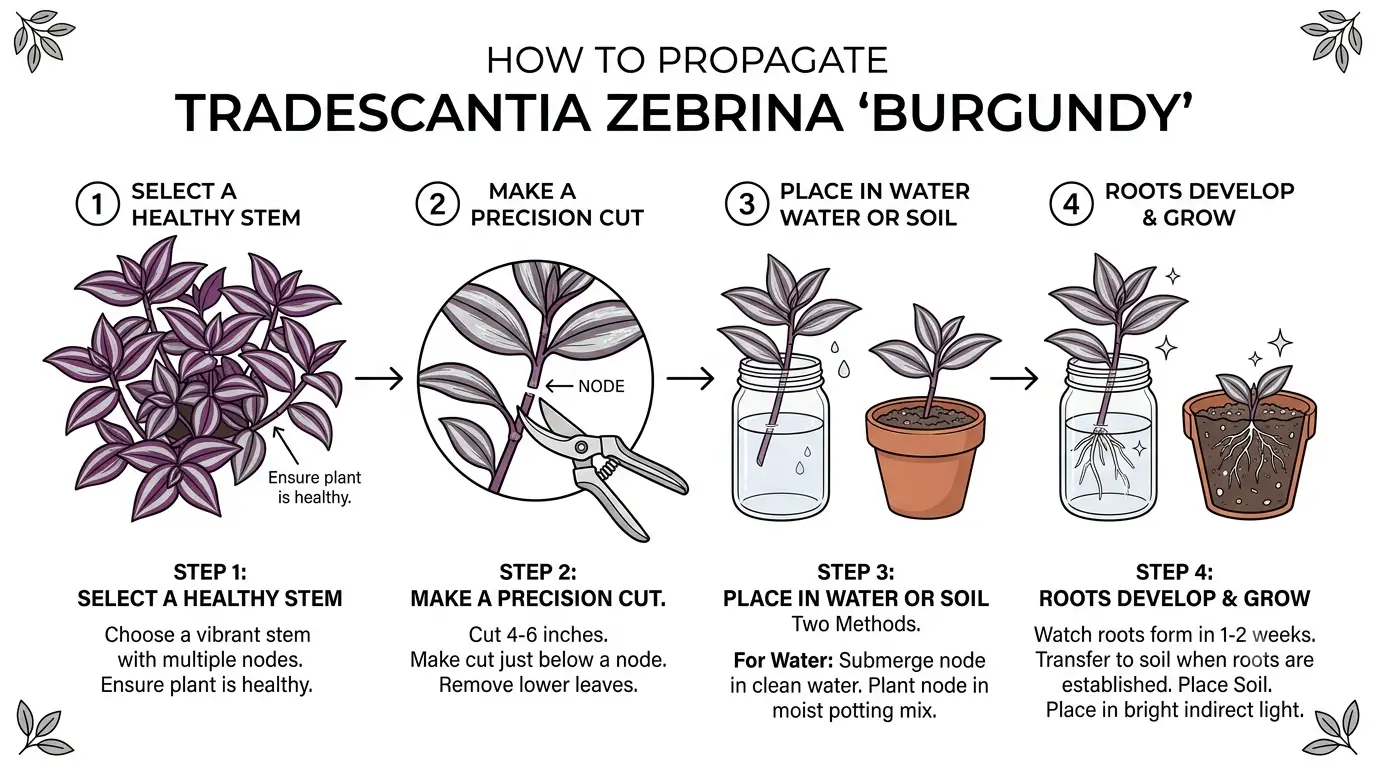
Tradescantia zebrina ‘Burgundy’ is one of the easiest houseplants to propagate from stem cuttings. Healthy cuttings root readily in either water or soil, making propagation simple for beginners and experienced gardeners alike. The best time to propagate is during spring and summer when the plant is actively growing, although indoor plants can often be propagated successfully year-round under suitable conditions. Similar propagation techniques are also used for other popular Tradescantia varieties, such as Tradescantia Nanouk propagation, which follows comparable water and soil rooting methods.
Choose healthy, non-flowering stems with at least one node, as roots develop from these growth points. Using clean, sharp scissors helps reduce the risk of disease and produces cleaner cuts.
Can Cuttings Go Directly Into Soil?
Yes, Tradescantia zebrina ‘Burgundy’ cuttings can be planted directly into moist potting mix. Direct-to-soil propagation often results in strong root systems because the cuttings adapt immediately to their permanent growing medium.
Water propagation is equally effective and allows you to monitor root development before planting. Both methods typically produce roots within one to three weeks under warm, bright conditions.
Water propagation
- Easy to monitor root growth.
- Suitable for beginners.
- Transplant once roots are approximately 1–2 inches (2.5–5 cm) long.
Direct soil propagation
- Eliminates transplant shock.
- Encourages immediate soil adaptation.
- Keep the soil lightly moist until new growth appears.
Step-by-Step Propagation
- Select a healthy stem with one or more nodes.
- Cut just below a node using sterilized scissors.
- Remove the lower leaves that would sit below the soil or water line.
- Place the cutting in water or insert it into moist, well-draining potting mix.
- Keep the cutting in bright indirect light.
- Maintain lightly moist soil or refresh water every few days.
- Once roots develop and new growth begins, continue normal plant care.
Propagating several cuttings together produces a fuller, bushier plant more quickly than planting a single cutting.
Common Problems and Troubleshooting
Most problems with Tradescantia zebrina ‘Burgundy’ are caused by environmental conditions rather than serious diseases. Incorrect watering, inadequate light, or pest infestations account for the majority of issues. Identifying symptoms early allows most plants to recover with simple care adjustments.
Yellowing Leaves
Cause
Yellow leaves are most commonly associated with overwatering and poorly drained soil. However, older leaves naturally yellow and drop as part of normal plant growth.
Other possible causes include:
- Poor drainage
- Root rot
- Low light
- Sudden temperature changes
- Nutrient imbalance
Fix
- Allow the top layer of soil to dry before watering again.
- Check that drainage holes are unobstructed.
- Remove severely damaged foliage.
- Repot if roots show signs of rot.
- Move the plant to brighter indirect light if necessary.
Prevention
- Use well-draining potting mix.
- Avoid leaving water standing in decorative pots.
- Check soil moisture before watering.
- Ensure adequate airflow around the plant.
Pest Infestations
Cause
Although generally resilient, Tradescantia zebrina ‘Burgundy’ may occasionally attract common houseplant pests, particularly when grown in dry indoor conditions.
Common pests include:
- Spider mites
- Mealybugs
- Aphids
- Fungus gnats
- Scale insects
Fix
- Isolate affected plants.
- Rinse foliage with lukewarm water.
- Remove visible pests by hand or with cotton swabs.
- Apply insecticidal soap or horticultural oil according to label directions if infestations persist.
- Inspect nearby plants to prevent spreading.
Prevention
- Check new plants before bringing them indoors.
- Maintain moderate humidity.
- Keep foliage clean.
- Monitor plants regularly for early signs of pests.
Slow or Leggy Growth
Cause
Leggy growth usually develops when the plant does not receive enough bright light. Long spaces between leaves and sparse stems indicate the plant is stretching toward available light.
Other contributing factors include:
- Low light
- Lack of pruning
- Nutrient deficiencies
- Cool temperatures during the growing season
- Overcrowded roots
Fix
- Relocate the plant to brighter indirect light.
- Trim elongated stems to encourage branching.
- Fertilize lightly during active growth with a balanced houseplant fertilizer.
- Repot if the roots have completely filled the container.
Prevention
- Provide consistent bright indirect light.
- Rotate the pot regularly.
- Pinch growing tips to encourage fuller growth.
- Maintain appropriate watering and feeding routines.
Is Tradescantia Zebrina Easy to Care For?
Yes, Tradescantia zebrina ‘Burgundy’ is generally considered an easy-care houseplant suitable for beginners. Its rapid growth, forgiving nature, and simple propagation make it an excellent choice for those new to indoor gardening. While it appreciates consistent care, it usually recovers well from minor mistakes.
Many gardeners find it rewarding because visible improvements often occur quickly after correcting lighting or watering issues.
Common Beginner Mistakes
New growers commonly encounter avoidable problems such as:
- Overwatering before the soil begins to dry.
- Growing the plant in dim rooms.
- Using poorly draining soil.
- Ignoring leggy stems instead of pruning them.
- Leaving standing water in decorative pots.
- Waiting too long to propagate older stems.
Addressing these issues early helps maintain compact, colorful growth.
Overall Difficulty Assessment
| Care Factor | Difficulty |
| Light | Easy |
| Watering | Easy to Moderate |
| Soil | Easy |
| Propagation | Very Easy |
| Pest Management | Easy |
| Overall Care | Easy |
With proper light, moderate watering, and occasional pruning, Tradescantia zebrina ‘Burgundy’ remains one of the most dependable trailing houseplants for indoor spaces.
Additional Benefits and Characteristics
Tradescantia zebrina ‘Burgundy’ offers more than attractive foliage. Its colorful trailing stems, rapid growth, and ease of propagation make it a versatile ornamental plant for homes, offices, and indoor gardens.
Is It an Air Purifier?
Tradescantia species have been included in studies examining indoor plants and their ability to absorb certain airborne compounds under controlled laboratory conditions. However, there is limited evidence that a single houseplant significantly improves indoor air quality in typical home environments.
For most people, the plant’s primary value lies in its ornamental appeal rather than measurable air purification.
Hanging vs. Climbing Habit
Tradescantia zebrina ‘Burgundy’ is naturally a trailing plant rather than a true climbing vine. Its flexible stems cascade over the edges of containers, making it especially suitable for:
- Hanging baskets
- Floating shelves
- Plant stands
- Window planters
- Mixed container arrangements
If stems touch moist soil, they may root at the nodes and spread across the surface, but the plant does not climb vertical supports in the same way as many vining species.
Bloom Frequency and Rarity of Flowering
Small pink to purple flowers may appear during the growing season, particularly when the plant receives adequate light and favorable temperatures. While the blooms are attractive, they are generally short-lived and less noticeable than the colorful foliage.
Flowering indoors is possible but tends to be occasional rather than continuous.
Lifespan Expectations
Individual stems naturally become longer and less attractive with age, but the plant itself can be maintained for many years through regular pruning and propagation. Replacing older stems with fresh cuttings is a common horticultural practice that keeps plants compact and vigorous.
Ideal Placement in the Home
The best indoor locations provide bright, indirect light and stable temperatures. Maintaining suitable humidity can improve indoor plant performance, and methods such as those explained in how to increase humidity for indoor plants without a humidifier can help create a better growing environment.
Suitable placements include:
- East-facing windows
- Bright north-facing windows
- A few feet back from sunny south- or west-facing windows with filtered light
- Shelves near large windows
- Hanging baskets in bright living spaces
Avoid placing the plant near heating vents, air conditioners, or cold drafts, as sudden temperature fluctuations can stress the foliage.
Tradescantia Varieties Comparison
Tradescantia includes numerous ornamental cultivars with different leaf colors and patterns. While their care requirements are broadly similar, each variety offers distinct visual characteristics that suit different indoor plant collections. Gardeners who enjoy purple trailing foliage may also explore Purple Bridal Veil Plant care, another ornamental plant known for colorful cascading growth.
| Variety Name | Leaf Color | Stripe Pattern | Light Needs | Distinguishing Trait |
| Burgundy | Deep burgundy-purple | Minimal silver | Bright indirect light | Rich purple foliage |
| Standard Zebrina | Green, silver, purple | Bold silver stripes | Bright indirect light | Classic striped appearance |
| Purpusii | Dark purple | Little or none | Bright indirect light | Nearly solid purple leaves |
| Quadricolor | Green, pink, cream, purple | Multicolored variegation | Bright indirect light | Highly variegated foliage |
| Pendula Red | Red-purple | Subtle striping | Bright indirect light | Red-toned trailing growth |
| Silver Zebrina | Green and silver | Prominent silver bands | Bright indirect light | Bright reflective stripes |
| Green Zebrina | Mostly green with purple undersides | Reduced striping | Bright indirect light | Greener overall appearance |
Although these varieties differ in appearance, they generally thrive under similar conditions, including bright indirect light, moderate watering, well-draining soil, and regular pruning. Choosing between them largely depends on personal preference for foliage color and variegation rather than differences in care requirements.
Conclusion
Tradescantia zebrina ‘Burgundy’ is a low-maintenance trailing houseplant that rewards proper care with vibrant purple-burgundy foliage, fast growth, and easy propagation. Providing bright indirect light is the most important factor for maintaining its rich coloration, while balanced watering and well-draining soil help prevent common problems such as yellowing leaves and root issues.
This cultivar of Tradescantia zebrina is suitable for beginners because it adapts well to indoor conditions and can quickly recover from minor care mistakes. Regular pruning encourages fuller growth, and stem propagation allows gardeners to refresh older plants or create new ones easily. With the right light, moisture, and growing environment, Tradescantia zebrina ‘Burgundy’ remains an attractive and rewarding trailing plant for indoor spaces. For more indoor plant care information, benefits, and growing guidance, explore our complete Plants Benefits and Guides resource covering a wide range of houseplants and their care requirements.
FAQs
How do I care for a Tradescantia zebrina ‘Burgundy’?
Tradescantia zebrina ‘Burgundy’ care requires bright indirect light, moderate watering, well-draining soil, and occasional pruning. Allow the top layer of soil to dry slightly between waterings, avoid waterlogged conditions, and provide enough light to maintain its purple-burgundy foliage. Regular trimming helps create a fuller trailing shape.
Does Tradescantia zebrina prefer sun or shade?
Tradescantia zebrina prefers bright indirect light rather than deep shade or harsh direct sun. A few hours of gentle morning sunlight can improve leaf coloration, but intense afternoon sunlight may scorch the leaves. Low-light conditions often cause weaker growth and reduced purple pigmentation.
What are the common problems with Tradescantia zebrina?
The most common Tradescantia zebrina problems include yellowing leaves, fading color, leggy growth, and pest infestations. Yellow leaves are often linked to overwatering, while loss of purple color usually indicates insufficient light. Spider mites, mealybugs, and aphids may occasionally appear, especially in dry indoor environments.
Is Tradescantia zebrina easy to care for?
Yes, Tradescantia zebrina is considered an easy-care houseplant for beginners. It grows quickly, tolerates occasional care mistakes, and propagates easily from stem cuttings. The main challenges are maintaining proper light levels and avoiding excessive watering.
How to make Tradescantia zebrina more purple?
To make Tradescantia zebrina more purple, provide brighter indirect light and avoid excessive nitrogen fertilizer. Stronger light encourages the development of purple pigments, while low light causes greener foliage. Gradually increase light exposure to prevent leaf stress or sun damage.
Do Tradescantia like to be root bound?
Tradescantia can tolerate being slightly root bound but grows best when roots have enough space to expand. A mildly crowded pot may encourage compact growth, but severely root-bound plants can experience slower growth and require repotting. Choose a container only slightly larger when upgrading.
Is Tradescantia an air purifier?
Tradescantia may contribute to indoor greenery but should not be considered a major air purifier in normal household conditions. While some plants have shown pollutant absorption abilities in controlled studies, a single houseplant does not significantly replace ventilation or air-cleaning systems.
How often does Tradescantia bloom?
Tradescantia usually blooms occasionally during the active growing season when growing conditions are favorable. Small flowers may appear in bright light with proper care, but the plant is mainly valued for its colorful foliage rather than frequent flowering. Indoor flowering is possible but generally less common than outdoor flowering in ideal climates.