
Introduction
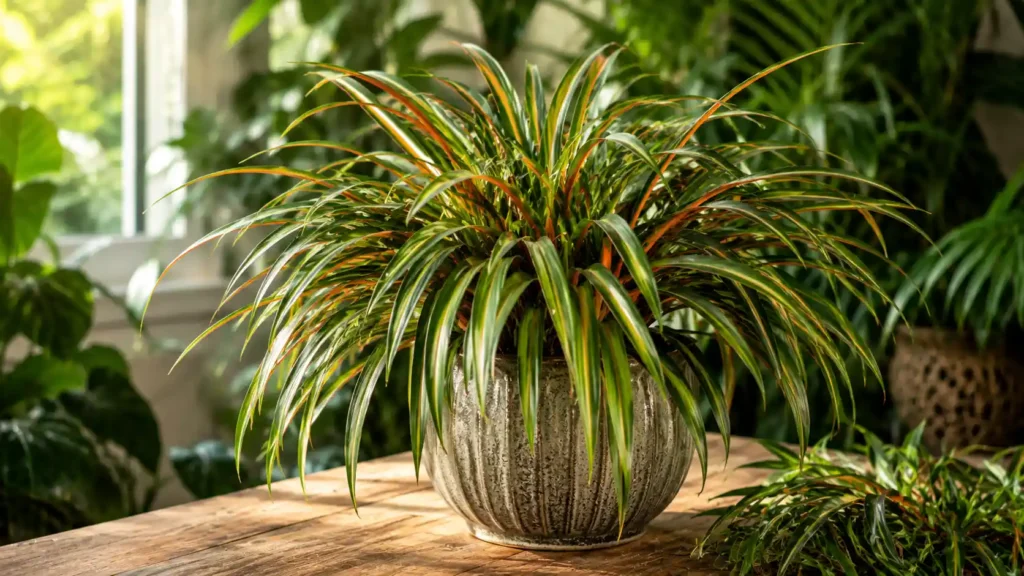
Chlorophytum fire flash is a tropical foliage plant known for its striking orange petioles and midribs that contrast beautifully with dark-green leaves. Also sold as Chlorophytum orchidastrum ‘Fire Flash’ or Chlorophytum amaniense ‘Fire Flash’, this unique plant is commonly called the mandarin spider plant, orange spider plant, or fire flash spider plant. Unlike the traditional spider plant, it is grown primarily for its bold coloration rather than trailing plantlets. Native to tropical Africa, it combines ornamental appeal with relatively easy care. This guide explains everything growers need to know about Chlorophytum fire flash care, including indoor and outdoor growing conditions, watering, propagation, common problems, and seasonal maintenance.
Quick Summary
- Chlorophytum fire flash thrives in bright indirect light, well-draining soil, and moderate watering while avoiding drought and waterlogged conditions.
- Unlike the common spider plant, it does not produce runners or spiderettes and is propagated by division or seed.
- It is a low-maintenance, pet-safe tropical houseplant suitable for most indoor environments.
- Outdoors, it performs best in USDA zones 10–12 in partial shade or filtered light.
- Proper light levels are essential for maintaining its vivid orange stems and midribs.
What Is Chlorophytum Fire Flash?
Scientific Identity and Common Names
Chlorophytum fire flash belongs to the species Chlorophytum orchidastrum, sometimes listed under the synonym Chlorophytum amaniense. The cultivar name is ‘Fire Flash’. It is native to tropical regions of Africa and has become popular worldwide as an ornamental foliage plant.
Common names include:
- Fire flash spider plant
- Mandarin spider plant
- Mandarin plant
- Orange spider plant
- Fire flash plant
These names originate from the plant’s vivid orange petioles and leaf midribs. It is also marketed under trade names such as Chlorophytum orchidastrum ‘Fire Flash’ and Chlorophytum Green Orange.
How It Differs from the Common Spider Plant
Although both belong to the Chlorophytum genus, Fire Flash differs significantly from Chlorophytum comosum, the classic spider plant. The classic spider plant is scientifically known as Chlorophytum comosum and is widely documented for its air-purifying qualities.
| Feature | Fire Flash (C. orchidastrum) | Common Spider Plant (C. comosum) |
| Leaf color | Dark green with orange midrib | Green or variegated green/white |
| Petiole color | Vivid orange | Green |
| Runners/spiderettes | None | Produces long runners with plantlets |
| Size | Larger, compact rosette | Spreading, trailing habit |
| Light preference | Bright indirect light | Tolerates lower light |
| Propagation | Division or seed | Runners (offshoots) |
The most important distinction is that Fire Flash does not produce runners, making its growth habit more compact and upright. You can also explore the Spider Plant Indoor Benefits guide to understand why Chlorophytum species are popular indoor plants.
Chlorophytum Fire Flash Care Indoors
Light Requirements
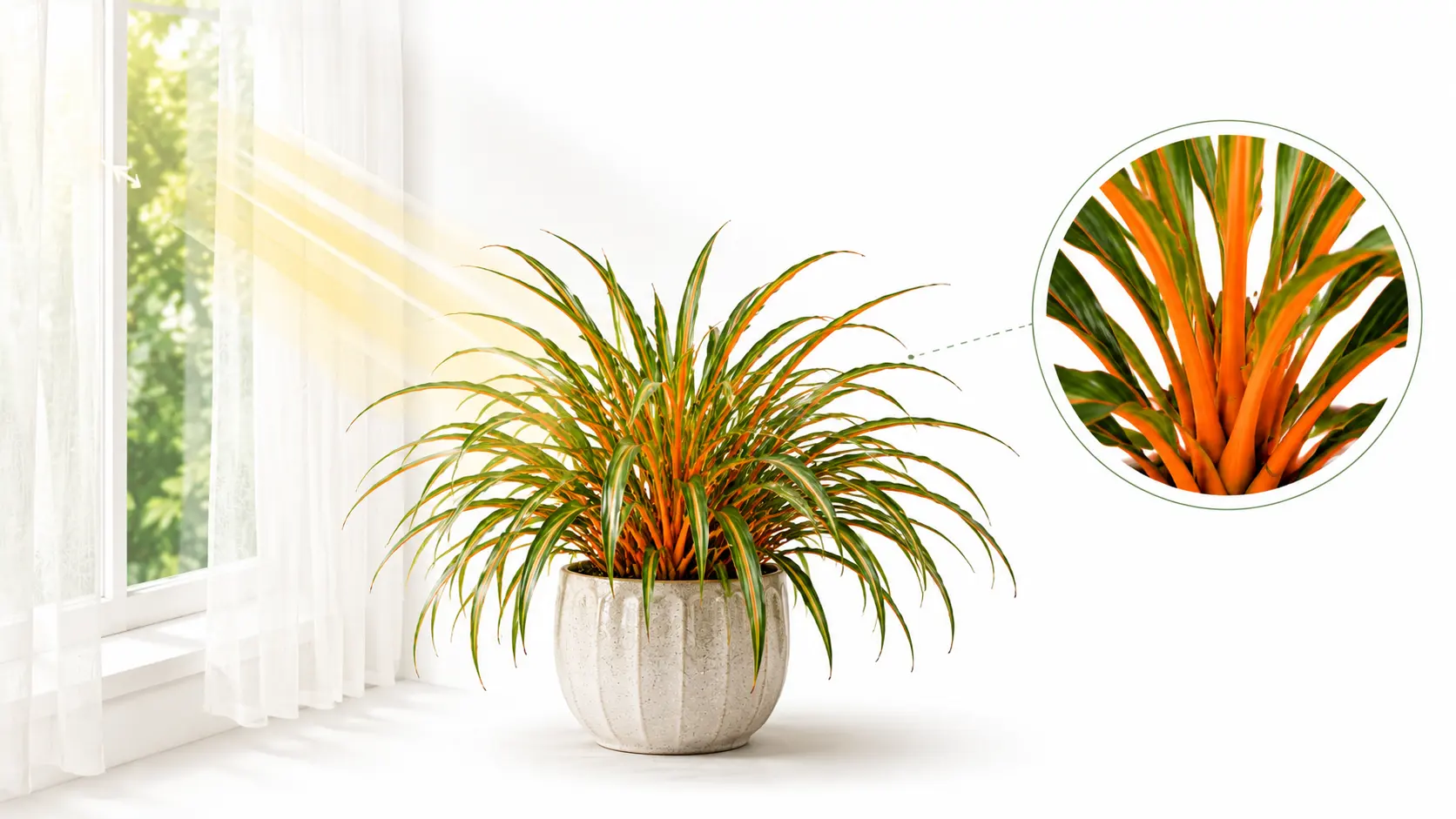
Chlorophytum fire flash grows best in bright indirect light. East-facing and west-facing windows often provide ideal conditions. If you are exploring more low-maintenance indoor plants, the Sansevieria Laurentii Care Guide explains another hardy option that thrives in similar indoor conditions.
Too much direct sunlight may cause:
- Leaf scorch
- Brown patches
- Faded orange coloration
For plants that tolerate lower light than Fire Flash, the ZZ Plant Care Guide is a great comparison for beginners.
Too little light may result in:
- Slower growth
- Reduced vigor
- Loss of vibrant orange coloring
Although it tolerates moderate indoor light, the brightest indirect location generally produces the healthiest foliage and strongest coloration. Understanding plant light needs is essential, as also explained in the Bird of Paradise Light Guide.
Watering Needs and Schedule
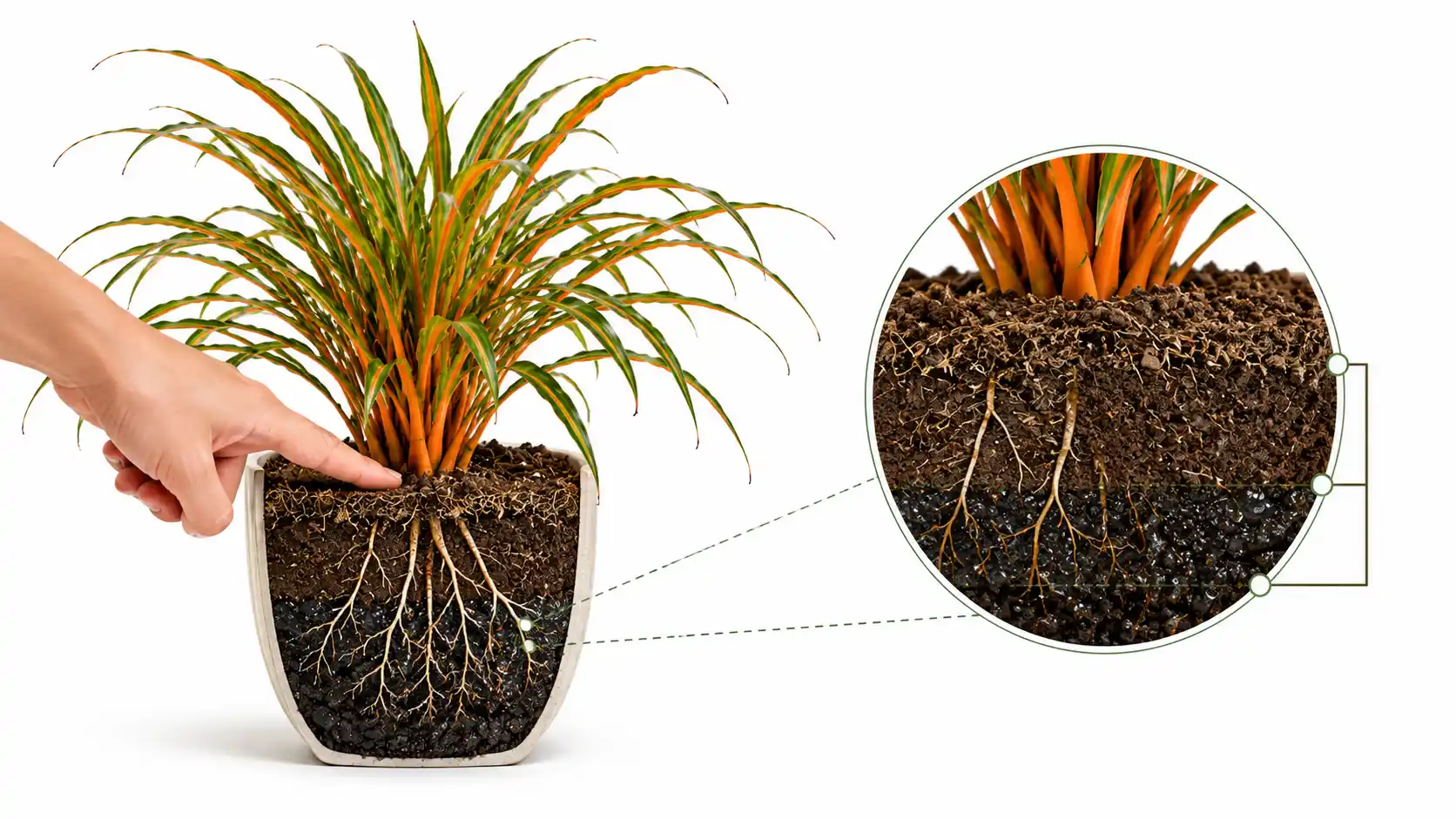
The best watering method is to allow the top inch of soil to dry before watering again.
General guidelines include:
- Water more frequently during spring and summer.
- Reduce watering during autumn and winter.
- Always check soil moisture before watering.
Signs of underwatering:
- Dry soil
- Drooping leaves
- Crispy leaf edges
Signs of overwatering:
- Yellowing foliage
- Soft stems
- Root rot
A simple finger test is more reliable than following a strict weekly schedule.
Soil and Potting Mix
The ideal potting mix is well-draining while retaining moderate moisture.
A suitable mix may contain:
- Quality peat-free potting mix
- Perlite
- Fine bark or compost
Containers should always have drainage holes. Repot every two to three years or whenever roots become crowded.
Temperature and Humidity
Ideal temperatures range from 65–85°F (18–29°C).
Important considerations include:
- Protect from frost.
- Avoid cold drafts.
- Keep away from heating vents.
The plant tolerates average household humidity but benefits from moderate humidity levels. Plants like Calathea Orbifolia also require similar humidity levels for healthy growth.
Ways to increase humidity include:
- Pebble trays
- Occasional misting
- Grouping plants together
Fertilization
Use a balanced liquid fertilizer once per month during spring and summer.
Best practices include:
- Dilute according to label directions.
- Stop feeding in autumn and winter.
- Avoid excessive fertilizer applications.
Overfeeding can lead to salt buildup, root damage, and leaf discoloration. Standard houseplant fertilizers work well; no specialized fertilizer for fire flash plant care is necessary.
Chlorophytum Fire Flash Care Outdoors
Outdoor Growing Conditions
Chlorophytum fire flash can be grown outdoors year-round in USDA hardiness zones 10–12.
Ideal outdoor conditions include:
- Partial shade
- Filtered sunlight
- Protection from harsh afternoon sun
In cooler climates, it performs exceptionally well in containers placed outdoors during warm months. If you’re interested in easy-care outdoor plants, the Low Maintenance Australian Native Plants Guide offers useful alternatives.
When moving plants outdoors:
- Introduce them gradually.
- Avoid sudden exposure to direct sun.
- Monitor moisture levels carefully.
Soil and Drainage Outdoors
Outdoor plants prefer:
- Loamy soil
- Good drainage
- Organic matter enrichment
Avoid:
- Heavy clay
- Compacted soil
- Areas prone to standing water
Container cultivation often provides the best drainage control and flexibility.
Winter Care and Frost Protection
Fire Flash is not frost-hardy.
Before temperatures fall below 50°F (10°C):
- Bring container plants indoors.
- Reduce watering.
- Inspect for pests.
In marginal climates, mulch may help protect roots during brief cold periods.
Plant Size
Mature Chlorophytum fire flash plants generally reach 12–24 inches (30–60 cm) in height and width.
Growing environment influences final size:
- Indoor plants often remain more compact.
- Outdoor plants may become slightly larger.
- Larger containers support greater growth.
Unlike common spider plants, Fire Flash maintains a tidy rosette shape without producing long runners.
Growth Rate
Chlorophytum fire flash is considered a moderate grower.
Growth characteristics include:
- Active growth in spring and summer
- Slower growth in autumn
- Near dormancy during winter
Growth speed is influenced by:
- Light levels
- Temperature
- Consistent watering
- Root space
Under favorable conditions, a healthy plant can fill a medium-sized pot within one to two growing seasons.
Chlorophytum Fire Flash Propagation
How to Propagate by Division
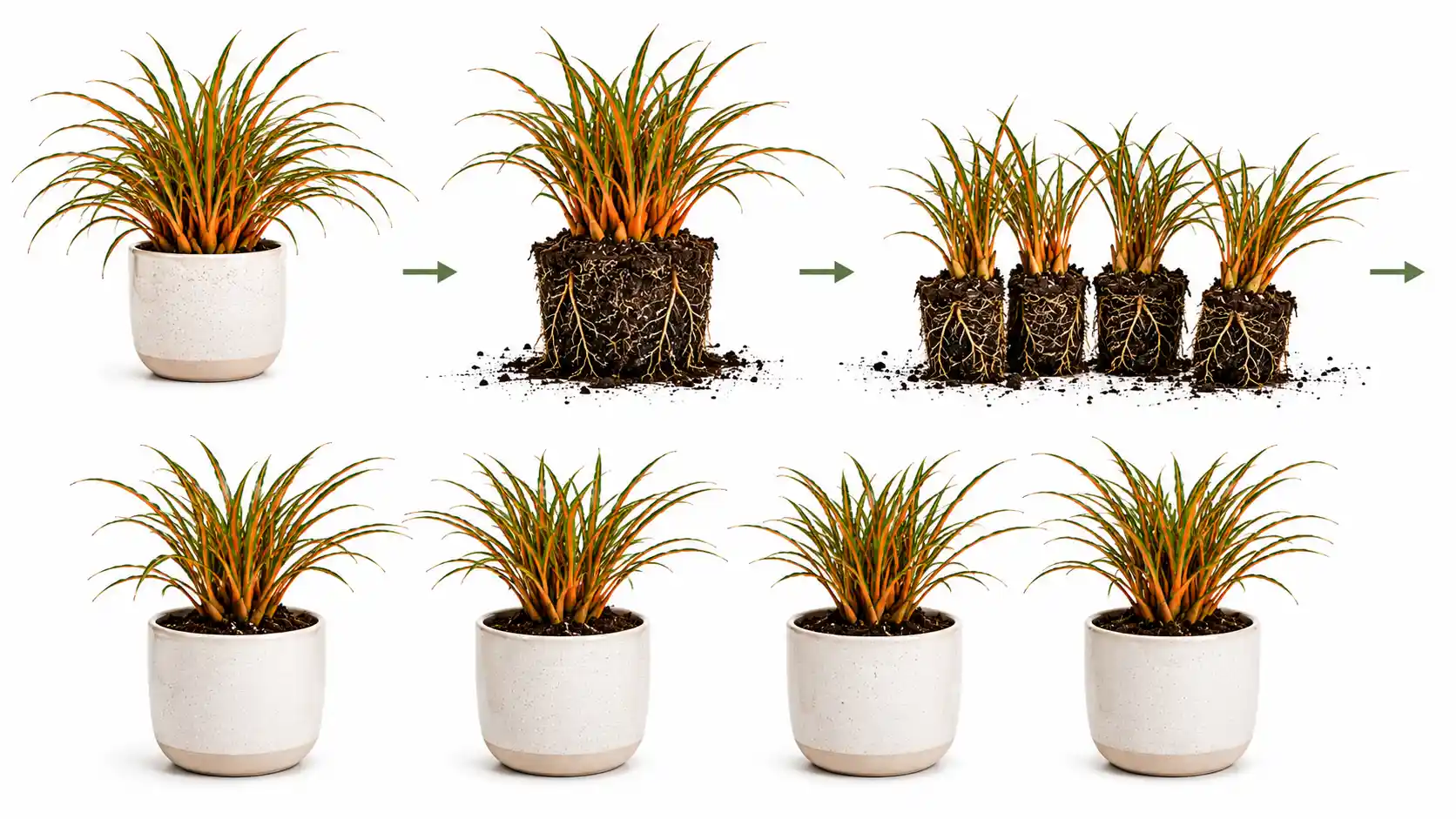
Division is the most reliable propagation method.
Steps:
- Remove the plant during repotting.
- Gently separate the root clump.
- Ensure each division has healthy roots and leaves.
- Plant divisions in fresh potting mix.
- Water lightly.
Spring is the best time for division. Mature plants often provide multiple divisions.
After dividing, avoid heavy watering for a short period while roots establish.
Propagation from Seed
Fire Flash may produce seeds after flowering.
Seed propagation involves:
- Collecting mature seeds
- Sowing in moist growing medium
- Maintaining warmth and humidity
Seed-grown plants require more time to mature and are less commonly propagated this way.
Why It Cannot Be Propagated from Runners
Unlike Chlorophytum comosum, Fire Flash does not produce runners or spiderettes.
This means:
- No plantlets develop on stems.
- Offshoot propagation is impossible.
- Division and seed remain the primary propagation methods.
This is one of the most common misunderstandings among beginner growers.
Fire Flash Plant Flowers
Fire Flash produces small white flowers on long flowering stalks.
Flower characteristics include:
- Small size
- White color
- Delicate appearance
Flowering often occurs when plants receive bright conditions and are well established.
Although the flowers are attractive, the plant is primarily valued for its foliage. Flowers occasionally develop seeds that can be used for propagation.
Common Problems: Brown Leaves and How to Fix Them
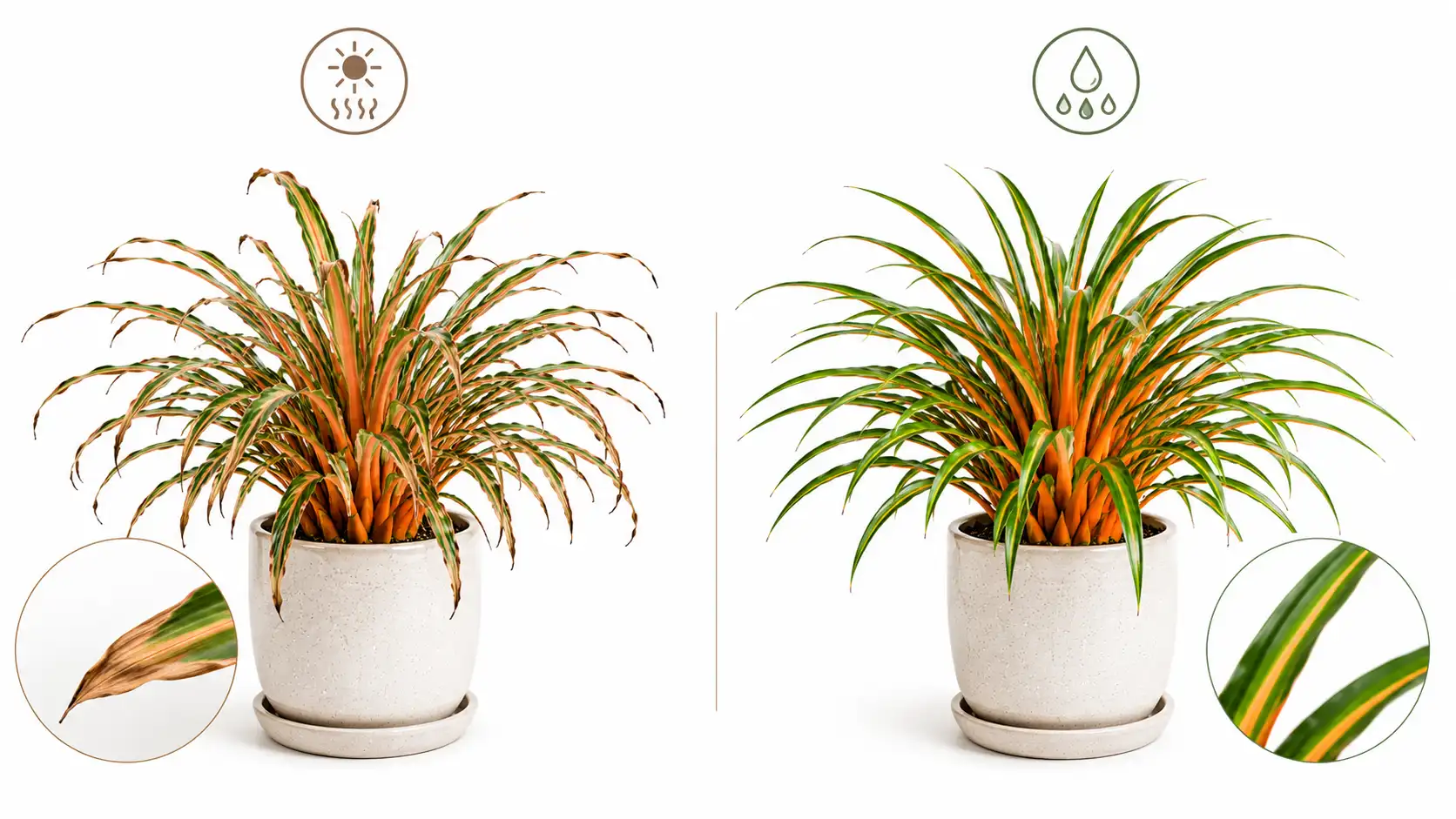
Why Chlorophytum Fire Flash Gets Brown Leaves
Brown leaf tips are the most common complaint.
Potential causes include:
- Low humidity
- Fluoride in tap water
- Salt accumulation
- Underwatering
- Excessive sun exposure
- Drafts
Usually, only the leaf tips become brown initially.
How to Fix and Prevent Brown Tips
To reduce brown tips:
- Use filtered, distilled, or rainwater.
- Flush soil periodically.
- Increase humidity.
- Avoid extreme temperatures.
- Keep plants away from vents and drafty windows.
Brown tips can be trimmed carefully using clean scissors without removing entire leaves.
Common Chlorophytum Problems and How to Solve Them
Overwatering and Root Rot
Overwatering is the most serious problem.
Symptoms include:
- Yellow leaves
- Mushy stems
- Sour-smelling soil
Solutions:
- Remove affected roots.
- Repot into fresh mix.
- Improve drainage.
- Reduce watering frequency.
Similar watering mistakes are also common in other indoor plants, as explained in the Pachira Aquatica Problems Guide.
Pests: Spider Mites, Mealybugs, and Scale
Common pests include:
Spider mites
- Fine webbing
- Speckled leaves
Mealybugs
- White cotton-like masses
Scale
- Hard brown bumps on stems and leaves
Treatment options include:
- Insecticidal soap
- Neem oil
- Manual removal
- Appropriate chemical controls when necessary
Regular inspections help prevent infestations. For a deeper understanding of pest control, see Bugs in Indoor Plant Soil: Identification, Treatment & Prevention.
Yellowing Leaves
Yellow leaves commonly result from:
- Overwatering
- Insufficient light
- Nutrient deficiencies
Diagnose conditions systematically before making corrections.
Faded Orange Color
Loss of orange coloration is typically related to light exposure.
Possible causes:
- Too little light
- Excessive direct sunlight
Moving the plant to a bright indirect-light location often restores color within several weeks.
Beginner Mistakes to Avoid With Fire Flash Plants
Common mistakes include:
- Confusing it with the common spider plant and expecting runners
- Watering on a fixed schedule instead of checking soil moisture
- Growing it in low-light locations
- Applying too much fertilizer
- Using fluoride-heavy tap water
- Expecting rapid growth
The number one killer of houseplants remains overwatering. Proper moisture management prevents many common problems.
Is Chlorophytum Fire Flash Safe? Toxicity and Air Quality
Pet and Child Safety
Chlorophytum fire flash is generally considered non-toxic to:
- Cats
- Dogs
- Humans
Like the common spider plant, it is widely regarded as a pet-friendly houseplant. However, preventing pets from chewing foliage is still advisable.
Air-Purifying Properties
Fire Flash is frequently associated with claims about air purification.
Important facts include:
- The NASA Clean Air Study focused on Chlorophytum comosum.
- Fire Flash was not specifically tested.
- Houseplants can contribute modestly to indoor air quality.
Claims that a plant removes a specific percentage of airborne mold should be interpreted cautiously. Fire Flash is not known to be harmful for people with asthma and is generally considered safe for indoor environments.
Seasonal Care Differences
Spring
- Resume fertilization
- Repot root-bound plants
- Increase watering as growth begins
Summer
- Monitor soil moisture frequently
- Watch for pests
- Expect the strongest growth
Autumn
- Reduce fertilization
- Water less often
- Move outdoor plants indoors before frost
Winter
- Water sparingly
- Stop fertilizing
- Maintain warmth
- Protect from drafts
- Use supplemental lighting if necessary
Conclusion
Chlorophytum fire flash (Chlorophytum orchidastrum ‘Fire Flash’) is a rewarding and visually distinctive tropical plant suited to both beginner and experienced growers. Its core care requirements—bright indirect light, moderate and moisture-responsive watering, well-draining soil, and warmth—are straightforward once understood. The key differentiators from the common spider plant are its bold orange petioles, its compact non-spreading growth habit, and the absence of runners. Whether grown indoors on a bright windowsill or outdoors in a shaded patio container, consistent care and attention to a few common pitfalls will keep a fire flash plant vibrant, healthy, and true to its striking coloration for years.
Chlorophytum fire flash is part of a wider group of ornamental houseplants discussed in our Plants Benefits and Guides, where you can explore more indoor greenery ideas and care strategies.
Frequently Asked Questions
1. How big do fire flash plants get?
Mature plants typically reach 12–24 inches in both height and width. Indoor specimens tend to stay on the smaller end, while outdoor plants in warm climates may reach the upper range.
2. What are the most common Chlorophytum fire flash care mistakes?
The most frequent mistakes include overwatering, insufficient light, fluoride-rich tap water that causes brown tips, and expecting the plant to produce runners like the common spider plant.
3. Why is my fire flash plant losing its orange color?
Faded orange petioles and midribs are usually caused by incorrect lighting. Moving the plant to brighter indirect light typically restores coloration within a few weeks.
4. Can you propagate Chlorophytum fire flash from runners?
No. Fire Flash does not produce runners or spiderettes. Propagation is done through division or seed.
5. Is Chlorophytum fire flash safe for cats and dogs?
Yes. It is generally considered non-toxic to cats, dogs, and humans.
6. How often should I water Chlorophytum fire flash?
Water when the top inch of soil becomes dry. Depending on conditions, this may be about once weekly in summer and every two to three weeks during winter.
7. Can Chlorophytum fire flash grow outdoors?
Yes. It grows outdoors year-round in USDA zones 10–12 in partial shade. In cooler regions, it is best grown in containers that can be brought indoors before frost.