
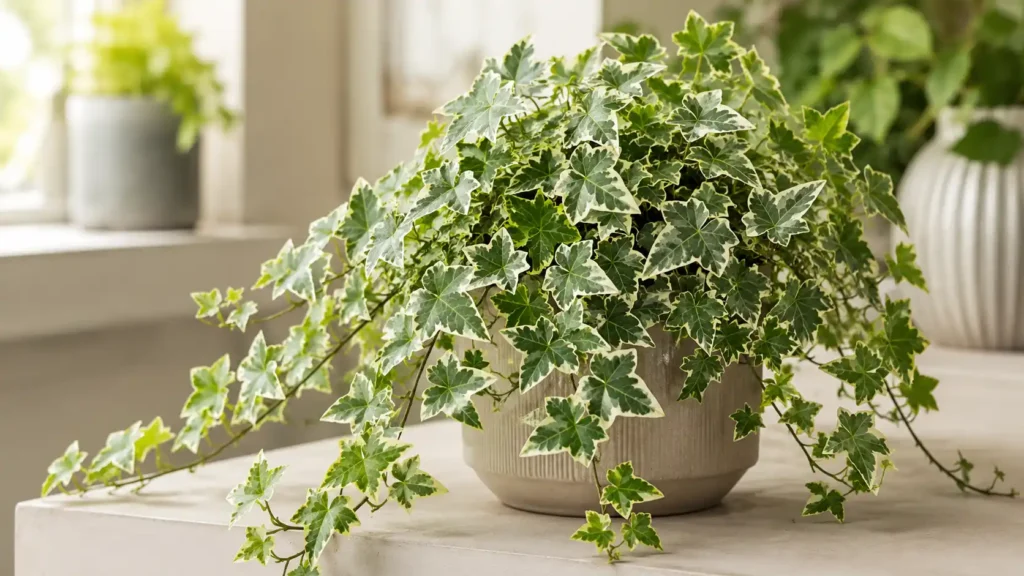
Ivy with white edges is typically variegated Hedera helix, most often the cultivars ‘Glacier’ or ‘Marginata,’ featuring gray-green centers rimmed in cream-white margins. According to Manuela Nogueira, these plants require brighter indirect light than solid-green ivy, since the white portions of each leaf contain no chlorophyll and burn easily under direct, harsh sun.
Variegated ivies grow noticeably slower than all-green types because their reduced pigment limits energy production, and individual stems sometimes revert to solid green — reversions should be trimmed off quickly, or they’ll outgrow and dominate the plant. Other popular white-edged cultivars include ‘Adam’ and ‘Eva,’ both compact enough for hanging baskets, and all Hedera helix varieties are toxic to cats and dogs if chewed or swallowed.
Many indoor plants have unique foliage characteristics, from variegated patterns like white-edged ivy to textured leaves found in other ornamental houseplants.
Quick Summary
- Ivy with white edges usually refers to variegated English ivy (Hedera helix) cultivars such as ‘Glacier’ and ‘White Wonder’.
- The white or cream borders are caused by natural variegation, not plant disease or pest damage.
- Variegated ivies are popular houseplants because of their compact growth and decorative foliage.
- Ivy with white edges is different from poison ivy, which does not have white-edged leaves.
- Proper lighting helps maintain strong white markings and prevents green reversion.
What Does “Ivy with White Edges” Mean?
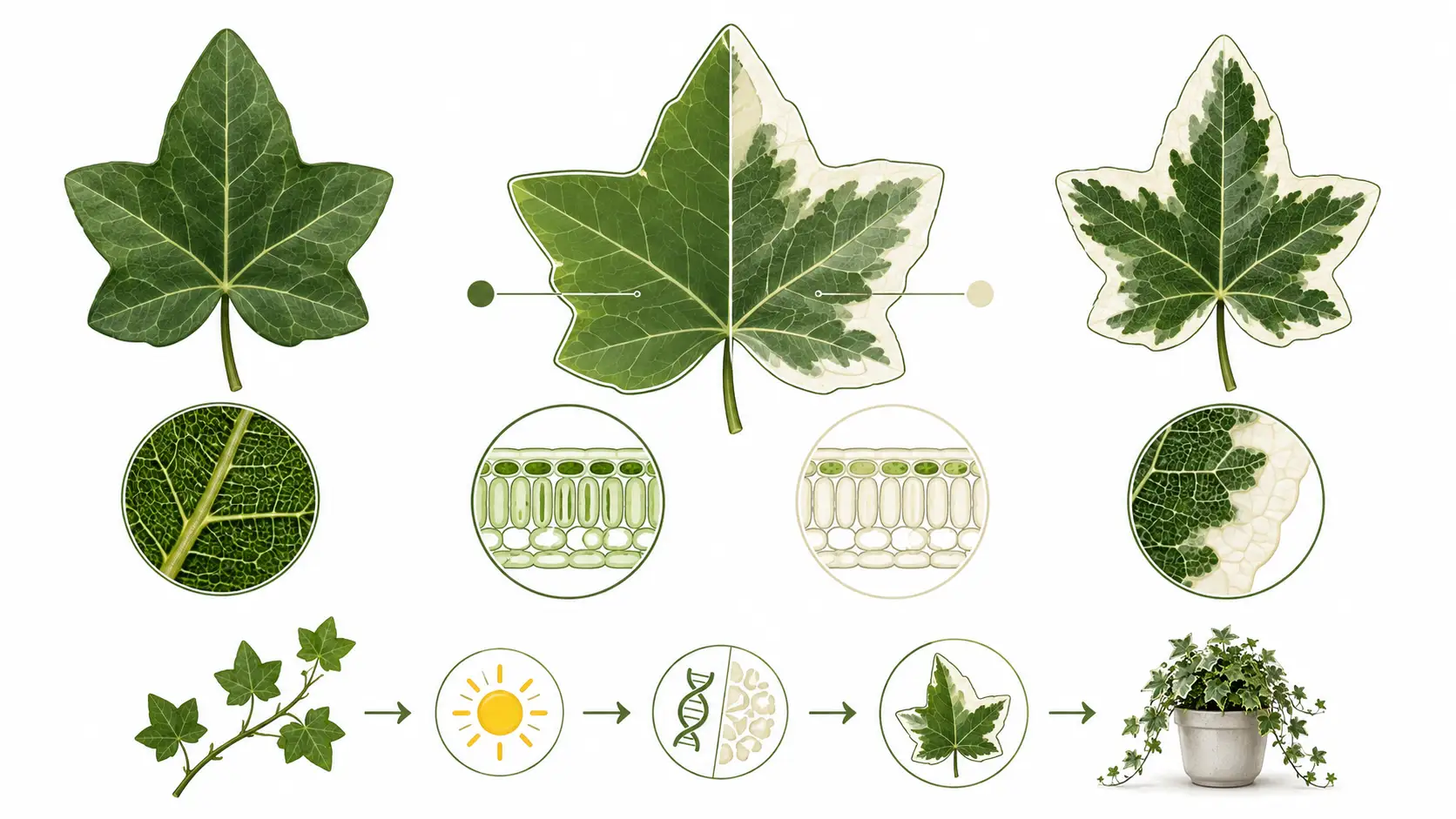
Ivy with white edges refers to ivy plants with naturally occurring white or cream-colored leaf margins, most often found in variegated cultivars of Hedera helix (English ivy). Botanically, this coloration is caused by variegation, a condition where some leaf cells produce less chlorophyll, creating areas that appear white, cream, or pale green.
Ivy with white edges usually refers to variegated cultivars of English ivy (Hedera helix), a climbing evergreen species known for its distinctive leaf shapes and vigorous growth habit.
The term “white edges” is a common-language search phrase rather than a formal botanical name. It usually points to variegated English ivy cultivars that have contrasting leaf patterns. These plants belong to the genus Hedera, within the family Araliaceae, and are valued for their ornamental foliage rather than flowers.
Variegation can appear in different patterns, including:
- White or cream borders around leaf edges
- Irregular patches across the leaf surface
- Marbled patterns combining green and pale sections
Because the lighter sections contain less chlorophyll, variegated ivy generally grows slightly slower than fully green ivy. The reduced chlorophyll also means these plants often require brighter indirect light to maintain their distinctive coloring.
Common Cultivars With White-Edged Leaves
Several English ivy cultivars are recognized for their white or cream leaf margins. Although they share similar characteristics, each cultivar has slightly different leaf patterns and growth habits.
| Cultivar | Leaf Appearance | Common Features |
| ‘Glacier’ ivy | Gray-green leaves with irregular white margins | One of the most popular variegated English ivy types |
| ‘White Wonder’ ivy | Creamy-white borders with heart-shaped leaves | Known for strong contrast between green centers and pale edges |
| Other variegated English ivy types | Various combinations of green, cream, and white patterns | Includes multiple decorative Hedera helix cultivars |
Glacier ivy is one of the most widely recognized forms of variegated English ivy. Its leaves usually have gray-green centers with silver-gray tones and uneven white edges. The cultivar name Hedera Glacier is often used informally when people search for this variety.
White Wonder ivy is another variegated English ivy type known for lighter cream-colored margins. Its leaves typically maintain a softer contrast compared with darker green cultivars.
Other variegated English ivy varieties may also display white-edged leaves, but the exact pattern depends on the cultivar and growing conditions.
How to Identify Ivy with White Edges
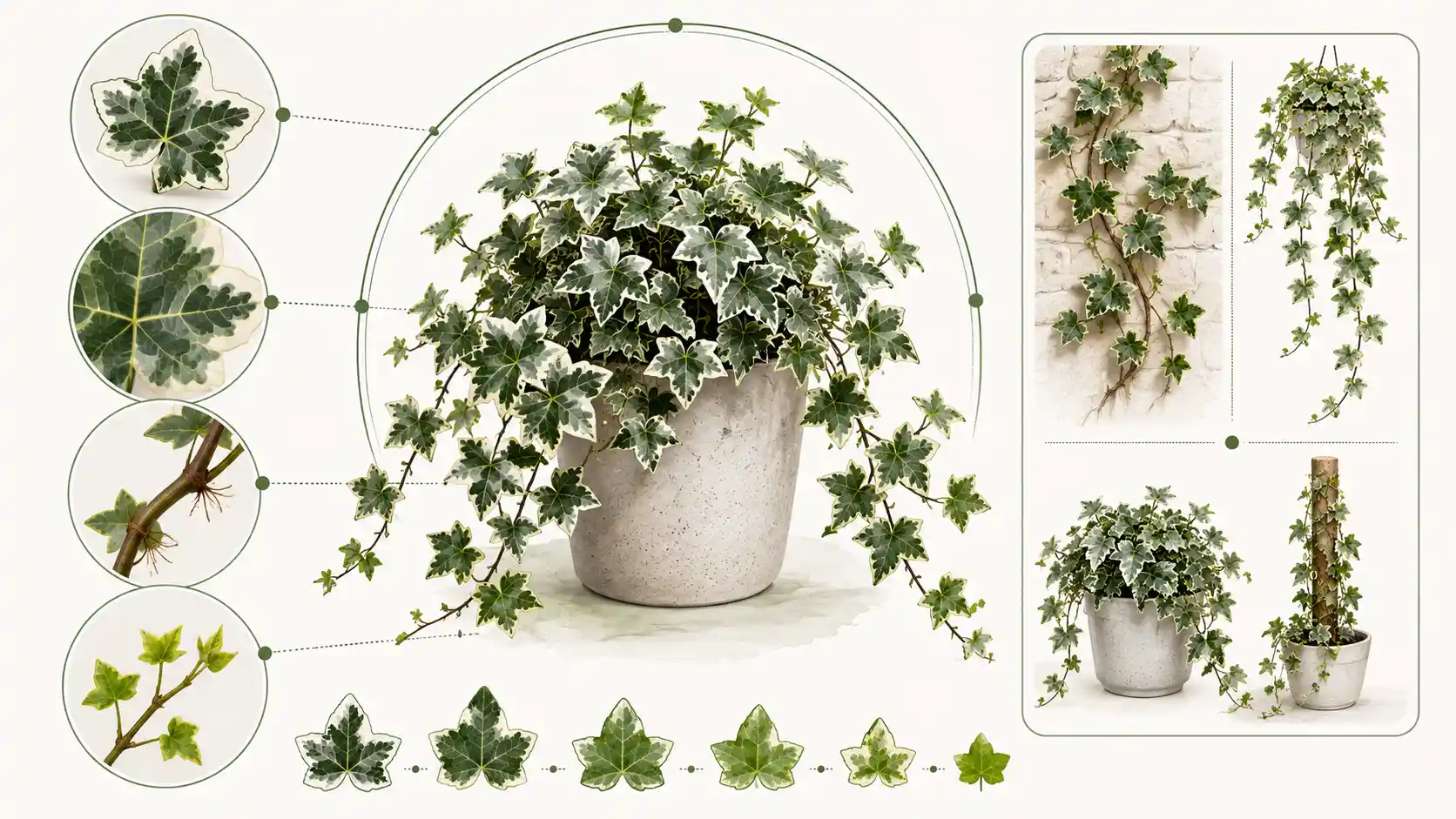
Ivy with white edges can usually be identified by examining the leaf shape, coloration, and growth pattern. Most plants matching this description are variegated forms of English ivy (Hedera helix) rather than separate ivy species.
To identify this type of ivy, look for a combination of:
- Ivy-shaped leaves with lobed edges
- Cream or white markings around leaf margins
- A trailing or climbing vine growth habit
- Green centers surrounded by lighter-colored areas
Key Identifying Features
The main identifying features of ivy with white edges include:
Lobed, ivy-shaped leaves with irregular cream or white margins
Variegated English ivy typically has recognizable ivy leaves with pointed lobes. The white or cream coloring usually appears along the outer edges, creating a border effect.
Climbing or trailing vine growth
English ivy naturally grows as a climbing vine using aerial rootlets that help it attach to surfaces. Indoors, it commonly grows as a trailing plant from hanging baskets or shelves.
Green leaf centers with lighter edges
The middle portion of the leaf is usually green, ranging from gray-green to deep green depending on the cultivar. The outer margins contain the lighter variegated sections.
The amount of white coloring can vary depending on genetics, age, and environmental conditions. Plants grown in stronger indirect light usually maintain clearer variegation, while low-light conditions may encourage more green growth.
Ivy with White Edges vs. Poison Ivy vs. Swedish Ivy
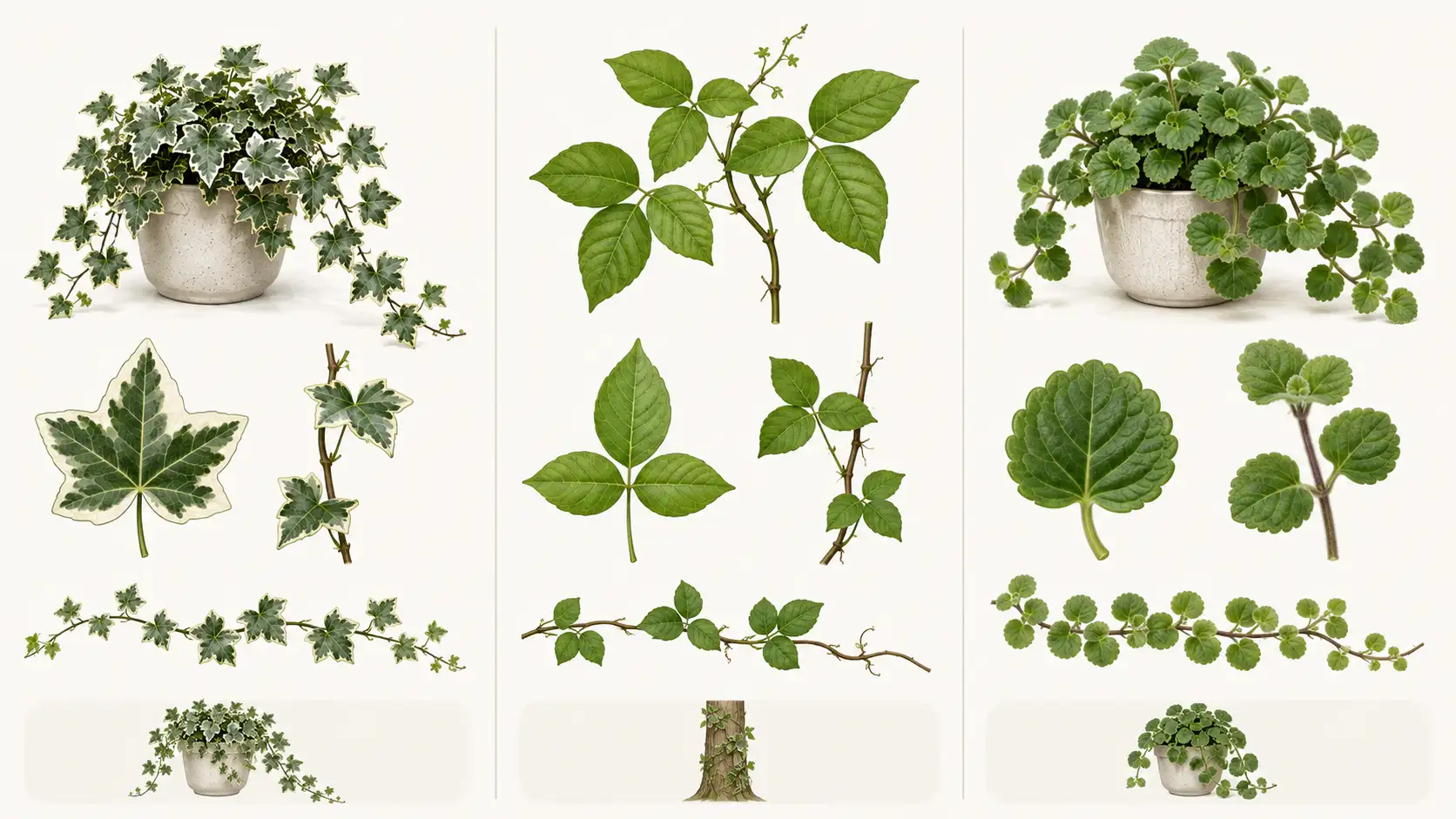
Ivy with white edges is often confused with other plants because several species share the word “ivy” in their common names. However, variegated English ivy, poison ivy, and Swedish ivy are botanically different plants with distinct leaf structures and characteristics.
| Feature | Variegated English Ivy | Poison Ivy | Swedish Ivy |
| White edges | Yes | No | No |
| Leaf shape | Lobed, ivy-shaped leaves | Three separate leaflets | Rounded, scalloped leaves |
| Toxicity | Mildly toxic if ingested | Causes skin rash | Non-toxic |
| Botanical family | Araliaceae | Anacardiaceae | Lamiaceae |
The plant most commonly mistaken for poison ivy is often another three-leaflet plant, not variegated English ivy. Poison ivy (Toxicodendron radicans) does not normally have decorative white leaf margins. Its identifying feature is its three-leaflet arrangement, commonly remembered as “leaves of three.”
Ivy with white edges belongs to the Araliaceae family, while poison ivy belongs to the Anacardiaceae family. Their botanical differences are significant despite the similar common name.
Is Ivy with White Edges the Same as Swedish Ivy?
No, ivy with white edges is not the same as Swedish ivy. Variegated white-edged ivy usually refers to Hedera helix cultivars from the Araliaceae family, while Swedish ivy (Plectranthus verticillatus) belongs to the Lamiaceae family and is not a true ivy.
The shared word “ivy” comes from their similar trailing growth habits rather than a close botanical relationship. Swedish ivy is a completely different plant that produces softer, rounded leaves and has different care requirements.
Swedish ivy is commonly grown as a hanging plant because of its cascading stems, but it does not typically develop the classic lobed ivy leaves or white-edged patterns associated with variegated English ivy.
Key Differences Between English Ivy and Swedish Ivy
The main differences between these two plants include:
- Plant family: English ivy belongs to Araliaceae, while Swedish ivy belongs to Lamiaceae.
- Leaf shape: English ivy has lobed, pointed leaves; Swedish ivy usually has rounded, scalloped leaves.
- Variegation: White-edged patterns are common in some English ivy cultivars but are not a defining feature of Swedish ivy.
- Growth style: Both can trail, but English ivy is naturally a climbing vine, while Swedish ivy is mainly a trailing houseplant.
- Flowers: Swedish ivy may produce small tubular flowers under suitable conditions, while English ivy has different flowering characteristics when mature.
Because of these differences, identifying the leaf structure is the easiest way to tell whether a plant is variegated English ivy or Swedish ivy.
Is Ivy with White Edges Poisonous or Safe to Touch?
Ivy with white edges is generally safe to touch, but it should not be eaten because variegated English ivy (Hedera helix) contains compounds that can cause mild toxicity if ingested. Unlike poison ivy, it does not usually cause a skin rash simply from contact.
English ivy contains saponins, naturally occurring compounds that may irritate the mouth, throat, or digestive system when plant material is chewed or swallowed. The level of toxicity is usually mild, but caution is still recommended around pets and young children.
Direct contact with the leaves is generally considered safe for most people. However, some individuals with sensitive skin may experience irritation after prolonged handling, especially when pruning large amounts of foliage.
Important safety considerations include:
- Avoid allowing children to chew or eat the leaves.
- Keep the plant away from pets that frequently nibble on houseplants.
- Wash hands after pruning or handling damaged leaves.
- Avoid confusing English ivy with poison ivy, which causes skin reactions through contact with its oils.
The term “white ivy” can sometimes create confusion because the white coloring refers only to leaf variegation, not a different toxic plant type. The white edges do not make the plant more poisonous.
Is Ivy with White Edges Invasive?
Ivy with white edges can be invasive when planted outdoors in areas where English ivy (Hedera helix) is considered a non-native aggressive species. However, when grown indoors in containers, variegated ivy does not create invasive problems because its growth is controlled.
English ivy has been classified as invasive in some regions, including parts of the United States and the United Kingdom, because it can spread quickly through outdoor landscapes. Once established, it may compete with native plants and cover large areas of soil, trees, and structures.
The invasive risk depends mainly on where and how the plant is grown.
Outdoor English ivy can:
- Spread into natural areas and replace native vegetation.
- Climb trees and create heavy foliage cover.
- Reduce sunlight availability for surrounding plants.
- Attach to walls and surfaces through aerial rootlets.
- Require regular maintenance to prevent uncontrolled growth.
Indoor variegated ivy has no practical invasive risk because it grows within a limited container environment. Regular pruning and controlled watering keep the plant manageable.
Growing Ivy with White Edges Outdoors
When planted outdoors, white-edged English ivy should be managed carefully. Some gardeners choose container growing or restricted planting areas to reduce unwanted spreading.
Outdoor considerations include:
- Avoid planting near forests or unmanaged natural areas where it can escape.
- Monitor vines that reach walls, fences, or nearby vegetation.
- Trim regularly to prevent uncontrolled expansion.
- Remove unwanted runners before they establish new roots.
The question “why was English ivy banned?” relates to its invasive behavior in certain locations, not because all forms of ivy are harmful everywhere. Regulations vary by region based on ecological impact.
Growing Ivy with White Edges Indoors
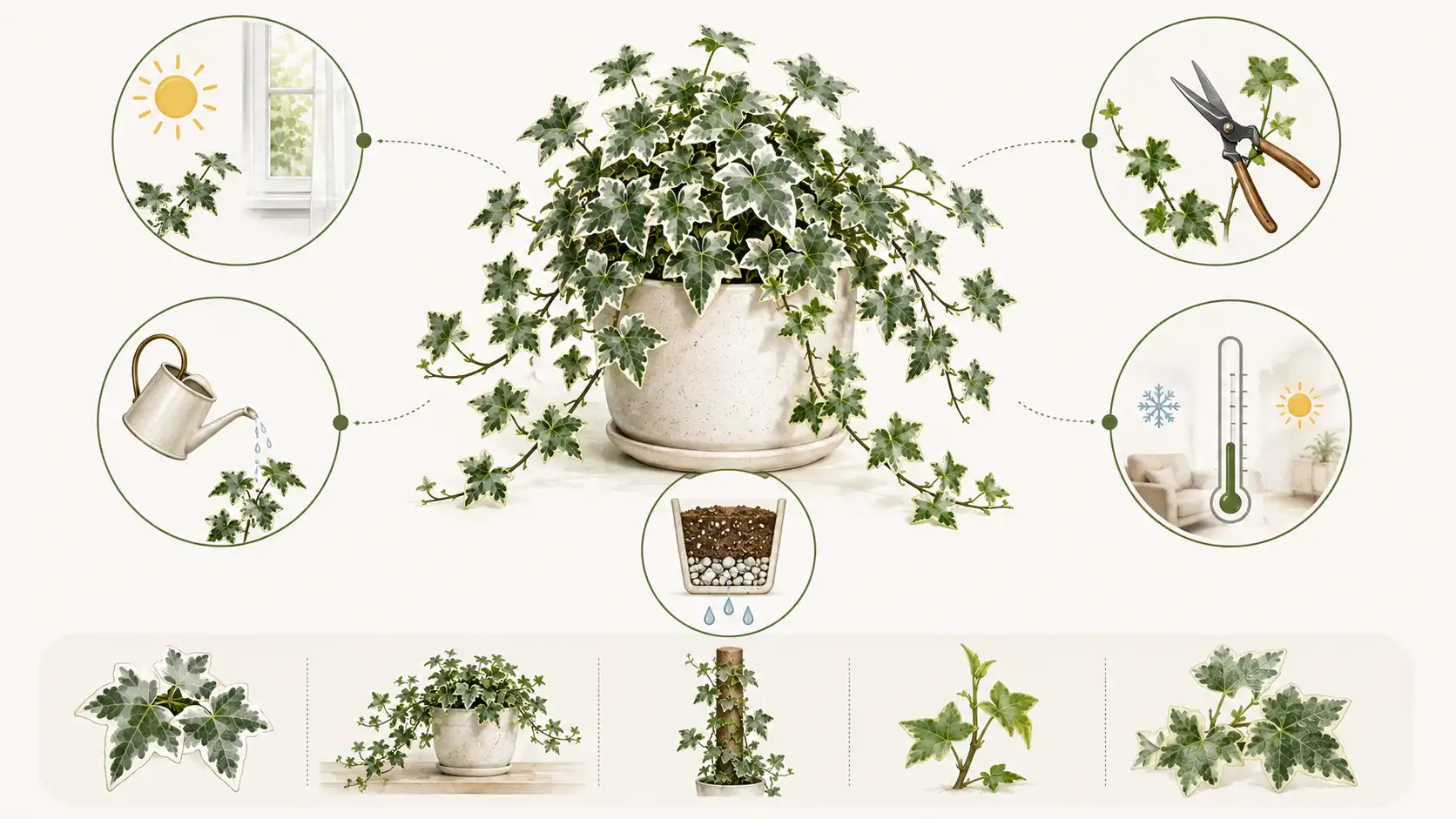
Ivy with white edges is commonly grown indoors as a decorative foliage plant because its trailing vines and patterned leaves add visual interest to homes. Variegated English ivy performs best when provided with bright indirect light, moderate watering, and well-draining soil.
Similar trailing ivy varieties, such as Starling Ivy, also require balanced indoor conditions including proper light, watering, and pruning to maintain healthy foliage.
Indoor conditions often keep the plant smaller and easier to manage compared with outdoor ivy, where vines can spread extensively.
Plant Size
Ivy with white edges usually remains compact when grown indoors, but its final size depends on light, pot size, pruning, and growing conditions. As a houseplant, it commonly develops trailing stems several feet long, especially when grown in hanging baskets.
Typical size differences include:
| Growing Environment | Typical Size |
| Indoor container plant | Compact growth with trailing vines around 3–6 feet long when mature |
| Outdoor ground cover or climbing vine | Can spread widely and climb several feet or more |
Indoor ivy often stays smaller because container space limits root growth. Larger pots, stronger light, and regular feeding can encourage more vigorous growth.
Factors affecting plant size include:
- Amount of available light
- Pot size and root space
- Pruning frequency
- Temperature and humidity
- Overall plant health
Regular trimming helps maintain a fuller, bushier appearance instead of allowing long, thin vines to develop.
Growth Rate
Ivy with white edges is generally a moderate to fast-growing plant when grown under suitable conditions. Growth is usually strongest during spring and summer when temperatures increase and daylight hours are longer.
The growth rate can slow during:
- Winter months with reduced daylight
- Low-light indoor environments
- Periods of drought stress
- Poor soil conditions
Bright indirect light encourages healthier growth because variegated leaves contain less chlorophyll than fully green leaves. Plants receiving insufficient light may grow more slowly and may produce greener leaves.
Warm temperatures and consistent care help maintain steady growth, while extreme heat or dry indoor air can reduce plant vigor.
Care Guide
Ivy with white edges requires balanced care rather than frequent attention. The main goal is maintaining enough light for variegation while avoiding excessive moisture.
| Care Requirement | Recommended Conditions |
| Watering | Allow the top layer of soil to dry before watering again |
| Light | Bright, indirect light for strong variegation |
| Soil | Well-draining potting mix |
| Fertilization | Light feeding during active growth |
| Pruning | Regular trimming to maintain shape |
| Temperature | Cool to moderate indoor temperatures |
Watering
Allow the top portion of the soil to dry between waterings. Overwatering is one of the most common problems with ivy because constantly wet roots can lead to yellow leaves and root stress.
A practical approach is to check soil moisture with a finger before watering. If the top inch of soil feels dry, the plant usually needs water.
Light
Bright indirect light is ideal for preserving white-edged foliage. Low light conditions often cause variegated ivy to lose its white patterns and produce more solid green leaves.
Avoid intense direct sunlight through windows because it can scorch the lighter sections of the leaves, which contain less protective chlorophyll.
Understanding the difference between bright indirect light and direct sunlight is important because variegated plants like white-edged ivy can lose color or develop leaf damage under unsuitable lighting conditions.
Soil
A well-draining potting mix prevents water from collecting around the roots. A standard indoor potting mix combined with materials that improve drainage can help maintain healthy root conditions.
Good soil should:
- Drain excess moisture quickly.
- Hold enough water for root absorption.
- Prevent prolonged saturation.
Fertilization
Ivy with white edges benefits from light feeding during the growing season, usually spring through summer. Excess fertilizer can damage roots and may encourage weak growth.
A balanced houseplant fertilizer applied at reduced strength is generally sufficient.
Pruning
Regular pruning encourages a fuller plant and keeps trailing stems at a manageable length. Remove damaged leaves and trim overly long vines to maintain the desired shape.
Pruning also helps prevent the plant from becoming thin and stretched when grown indoors.
Climate Tolerance
Variegated English ivy prefers cool to moderate indoor temperatures. It generally performs better in cooler conditions than many tropical houseplants.
Ideal indoor conditions include:
- Moderate temperatures
- Good air circulation
- Avoidance of extreme heat
- Protection from sudden temperature changes
Very warm, dry environments may increase stress and encourage pests such as spider mites. Maintaining moderate humidity can support healthier foliage. Although ivy prefers cooler indoor conditions, maintaining suitable humidity levels can help reduce stress and prevent problems such as spider mite infestations.
Common Problems With Ivy with White Edges (Problem-Solution Coverage)
Ivy with white edges is generally easy to grow, but several issues can affect leaf color, growth, and overall plant health. Most problems are linked to watering mistakes, insufficient light, or environmental stress. Identifying the cause early helps maintain the plant’s characteristic white-edged variegation.
Indoor plant pests can affect many houseplants, and understanding common soil and foliage pests helps prevent long-term damage.
Leaves Turning Yellow
Yellow leaves on ivy with white edges are usually caused by overwatering or poor drainage. When roots remain wet for too long, they cannot absorb oxygen properly, which may lead to root stress and declining leaf health.
Common causes include:
- Watering before the soil has dried sufficiently
- Using containers without drainage holes
- Heavy soil that retains too much moisture
- Poor airflow around the plant
Fix: Reduce watering frequency and improve drainage. Allow the upper layer of soil to dry before adding more water. If the soil stays constantly wet, consider repotting the plant into a better-draining mix.
Prevention: Check soil moisture before watering instead of following a fixed schedule. Indoor conditions change throughout the year, so watering needs may decrease during cooler months or low-light periods.
Healthy watering habits include:
- Water deeply when needed rather than lightly watering frequently.
- Remove excess water from the saucer after watering.
- Use a pot with drainage holes to prevent standing water.
Loss of White Variegation (Reverting to Green)
Loss of white coloring, also called reversion, occurs when ivy with white edges begins producing more fully green leaves. This usually happens because the plant is not receiving enough light to support the energy demands of variegated foliage.
Since white areas contain less chlorophyll, plants often respond to low-light conditions by producing greener leaves with more chlorophyll.
Why it happens:
- Insufficient light exposure
- Placement too far from windows
- Seasonal reduction in natural light
- Natural genetic changes in some plant sections
Fix: Move the plant to a brighter location with indirect light. Avoid sudden exposure to intense direct sunlight, which may damage leaves.
Prevention:
- Provide consistent bright indirect light.
- Rotate the plant regularly so all sides receive balanced exposure.
- Prune fully green reverted stems if maintaining strong variegation is a priority.
A small amount of green growth is normal and helps the plant produce energy, but excessive green leaves may indicate that lighting conditions need improvement.
Pest Infestations
Ivy with white edges can occasionally attract common houseplant pests, especially when grown indoors in warm, dry conditions. The most common pests include spider mites and mealybugs. Regularly cleaning plant leaves can help remove dust, improve photosynthesis, and make it easier to detect early signs of pests on indoor plants.
Spider mites often appear as tiny moving dots on leaves and may cause:
- Yellow speckled patches
- Fine webbing
- Dry-looking foliage
Mealybugs appear as small white cotton-like clusters, often found near leaf joints or along stems.
Fix:
- Wipe leaves gently with a damp cloth.
- Remove visible pests manually.
- Use insecticidal soap or an appropriate houseplant pest treatment if infestations continue.
Prevention:
- Inspect new plants before placing them near existing houseplants.
- Maintain moderate humidity.
- Clean leaves regularly to remove dust and detect pests early.
- Avoid allowing the plant to become severely stressed.
Healthy plants with suitable light and watering conditions are generally less vulnerable to pest problems.
Beginner Mistakes to Avoid With Variegated Ivy
Variegated ivy requires slightly different attention than many common tropical houseplants. Beginners often make mistakes by treating it like a moisture-loving plant or ignoring the importance of light for maintaining leaf patterns.
Common mistakes include:
Overwatering because ivy appears delicate
Many new growers assume ivy needs frequent watering because of its trailing appearance. However, ivy prefers soil that partially dries between waterings. Constantly wet roots increase the risk of yellow leaves and root problems.
Placing the plant in low light and expecting bright variegation
Variegated leaves require enough light to maintain their color patterns. In dark areas, the plant may gradually produce greener leaves because green tissue contains more chlorophyll and supports stronger photosynthesis.
Planting invasive outdoor varieties without considering containment
English ivy can spread aggressively in some outdoor environments. Planting it near natural areas, forests, or uncontrolled garden spaces may create maintenance and ecological problems.
For beginners, growing ivy with white edges indoors in a container is often the easiest way to enjoy its foliage while keeping growth controlled.
Conclusion
Ivy with white edges most commonly refers to variegated English ivy (Hedera helix) cultivars such as ‘Glacier’ and ‘White Wonder’. The distinctive white or cream margins are caused by natural variegation, where certain leaf areas contain reduced chlorophyll. These plants are different from both poison ivy and Swedish ivy, despite occasional confusion caused by similar common names.
Successful care of ivy with white edges depends mainly on providing bright indirect light, allowing soil to partially dry between waterings, and pruning regularly to maintain a healthy shape. Proper lighting is especially important because it helps preserve the plant’s signature white-edged foliage and prevents excessive green reversion.
When grown indoors with suitable conditions, variegated ivy remains a decorative, manageable houseplant. Understanding its botanical identity, growth habits, and care requirements helps growers maintain vibrant leaves and avoid common problems.
FAQs
Is white ivy poisonous?
White ivy, usually referring to variegated English ivy (Hedera helix), is mildly toxic if eaten but is generally safe to touch. The leaves contain compounds such as saponins that may cause stomach irritation if ingested. It does not cause the skin reaction associated with poison ivy.
What does a Swedish ivy look like?
Swedish ivy (Plectranthus verticillatus) has rounded, scalloped leaves with a soft green appearance and trailing stems. It is not a true ivy and belongs to the Lamiaceae family rather than the Araliaceae family. Unlike variegated English ivy, it usually does not have classic lobed ivy leaves.
How do I tell what type of ivy I have?
You can identify ivy by examining leaf shape, color pattern, and growth habit. Variegated English ivy usually has lobed leaves with white or cream margins and climbing or trailing stems. Swedish ivy has rounded leaves, while poison ivy has three separate leaflets.
Is white ivy invasive?
White-edged English ivy can be invasive outdoors in regions where Hedera helix is considered a problematic non-native species. Indoors, it does not pose an invasive risk because container growth limits spreading. Outdoor planting should be managed carefully to prevent uncontrolled growth.
Does English ivy attract snakes or rats?
English ivy does not directly attract snakes or rats. However, dense outdoor ivy growth can create hiding areas for small animals by providing ground cover and shelter. Keeping ivy trimmed and managing outdoor growth reduces these potential habitat effects.
Why does Swedish ivy turn white?
Swedish ivy may turn white because of stress, disease, lighting issues, or natural leaf changes, but it is not the same type of white variegation found in English ivy cultivars. If leaves develop unusual white patches, environmental conditions should be checked.
What plant is commonly mistaken for poison ivy?
Several plants can be mistaken for poison ivy, but the most common confusion comes from plants with three-part leaves. Variegated English ivy is usually not poison ivy because it has different leaf structures, white margins, and belongs to a different botanical family.



One Response