
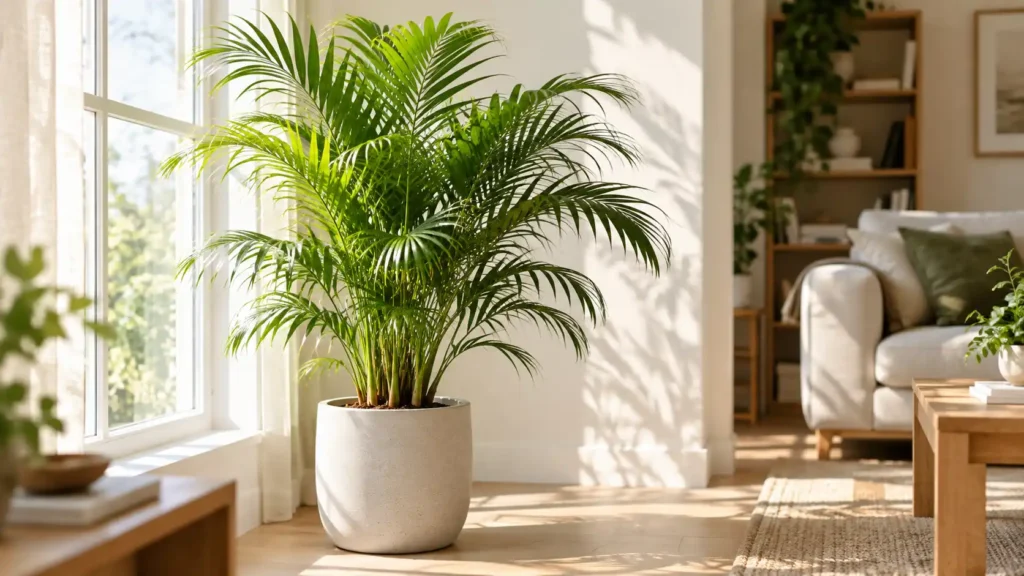
If your palm’s fronds are browning, yellowing, or just refusing to grow, you’re not alone — and you probably haven’t done anything drastically wrong. Most palm problems come down to one of a handful of fixable causes, not neglect. This guide walks through exactly how to pick the right palm for your space, read what your plant is telling you, and fix the most common issues before they get worse.
Quick Summary
- Palms fail most often from overwatering and low humidity, not lack of attention — check soil moisture before assuming light is the issue.
- Not all “palms” are true palms. Sago Palm is toxic to pets and isn’t part of the palm family at all.
- Match species to your room’s light, humidity, and space before buying — a mismatch here causes most later problems.
- You can’t prune a palm shorter. It grows from one central point, and cutting it won’t produce new growth the way it does on branching houseplants.
Choosing the Right Palm for Your Space
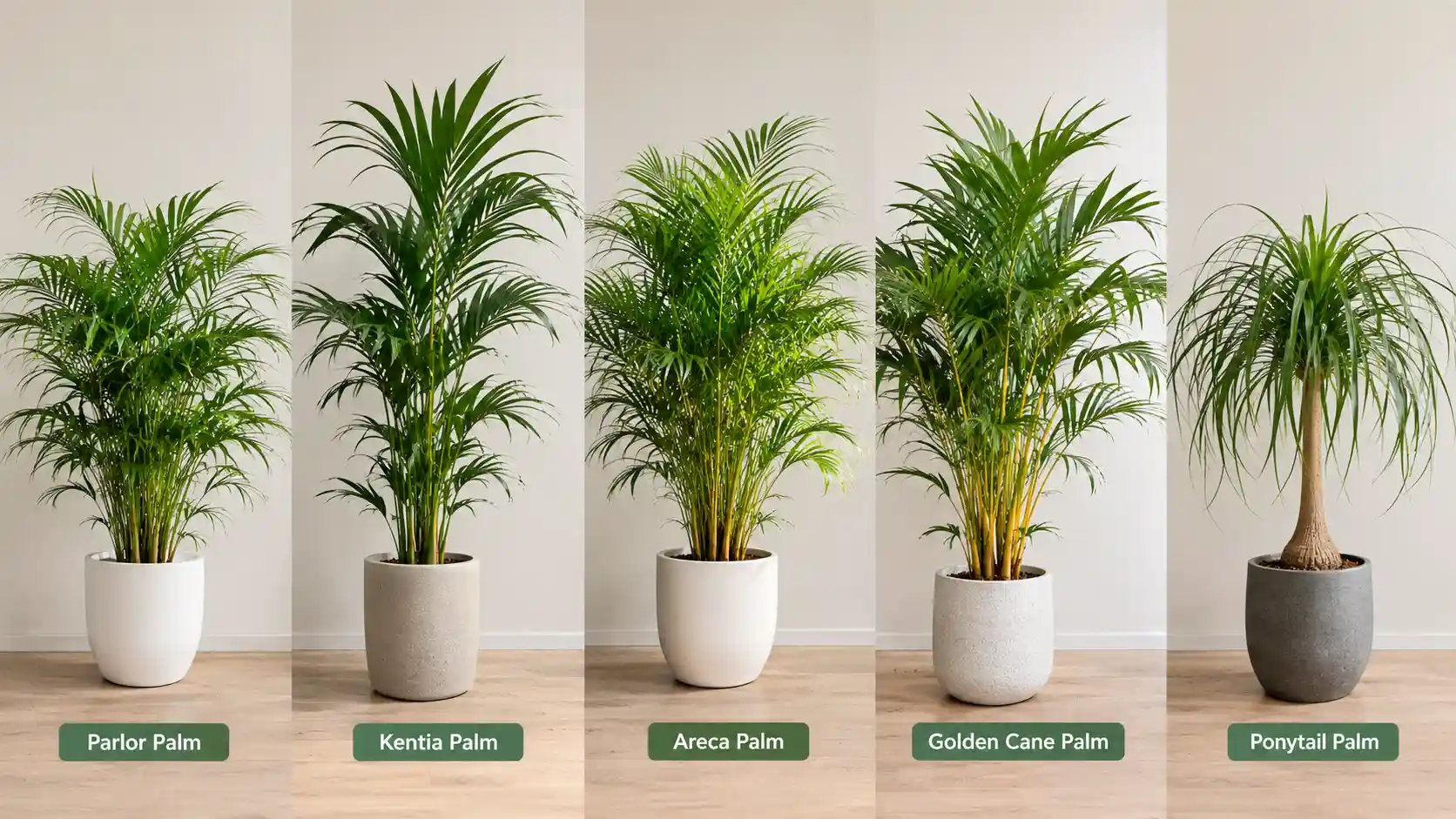
Before troubleshooting a struggling palm, it’s worth asking whether the plant was ever a good match for the room in the first place. Palm species vary enormously in light tolerance, mature size, and humidity needs — far more than the average “palm” search suggests.
Low-Light Apartments
Parlor palm and Kentia palm are two of the most forgiving species for rooms without direct sun. Both tolerate the low, indirect light typical of apartments with north-facing windows or rooms set back from the glass.
Bright Rooms and Sunrooms
Areca palm thrives in bright, indirect light and rewards a sunnier spot with denser, faster growth than shade-tolerant species can manage.
Outdoor Patios and Landscaping
Golden cane palm and ponytail palm are common outdoor choices, but their mature size and cold tolerance vary a lot by climate — worth checking before planting them somewhere permanent.
Species at a glance
| Species | Light Needs | Mature Size | Best Setting |
| Parlor palm | Low to medium indirect | Compact, 2–6 ft indoors | Apartments, low-light rooms |
| Kentia palm | Low to medium indirect | 6–10 ft indoors | Offices, low-light rooms |
| Areca palm | Bright indirect | 6–8 ft indoors | Sunrooms, bright interiors |
| Golden cane palm | Bright indirect to full sun | Tall clumping, landscaping-scale | Outdoor gardens, warm climates |
| Ponytail palm | Full sun to bright indirect | Slow, architectural | Patios, drought-prone spots |
For a full species breakdown, see our guide to common palm trees. If you’re setting up a palm indoors for the first time, our indoor palm care guide covers the basics room by room. And if bright light is what you’ve got, our Areca palm care guide is the more detailed next step.
Diagnosing a Struggling Palm
This is the part most guides skip — they’ll mention “brown tips” and “yellow leaves” separately, without connecting each symptom to a specific, checkable cause. Here’s a diagnostic table that puts it all in one place.
| Symptom | Likely Cause | Quick Check | Fix |
| Brown, crispy tips | Low humidity or salt buildup (often from tap water or fertilizer) | Is the room dry? Do you use tap water? | Flush soil with distilled water occasionally, raise humidity with a tray or humidifier |
| Yellowing on older, lower fronds only | Natural aging — completely normal | Is it the plant’s oldest frond? | No action needed; trim the spent frond at the base once fully brown |
| Yellowing plus a soft or mushy base | Overwatering or root rot | Check soil 2 inches down — is it soggy? | Let soil dry out more between waterings, check the pot has drainage |
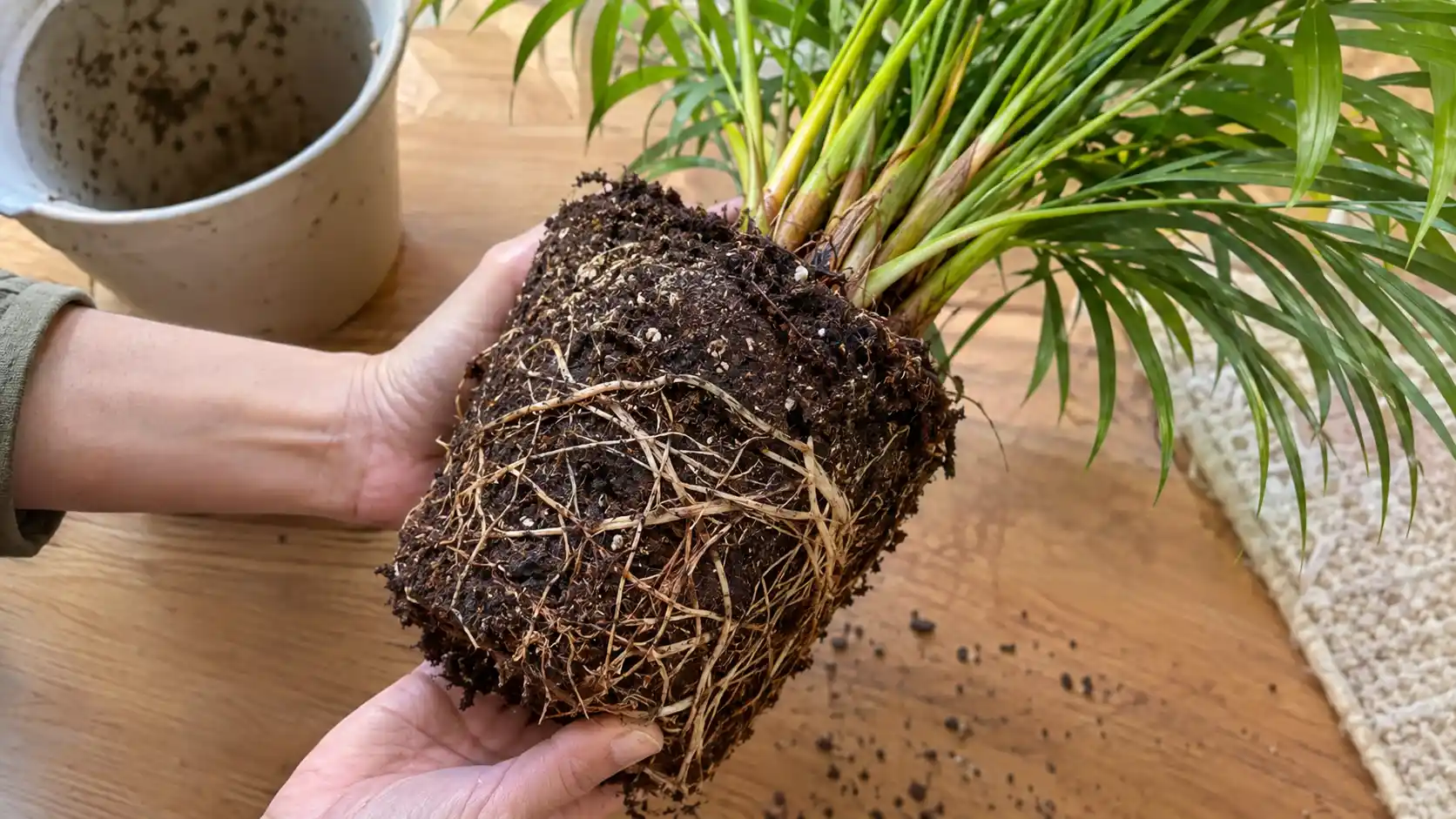
| Slow or stalled growth | Underwatering, insufficient light, or a rootbound pot | Check light exposure and root crowding | Adjust watering or light, or move up one pot size |
| Drooping fronds | Underwatering or sudden cold exposure | Was there a recent temperature drop or draft? | Water thoroughly, move away from cold drafts or AC vents |
If your palm’s symptoms don’t clear up with these fixes, species-specific issues can look different — our Kentia palm troubleshooting guide goes deeper into that species’ particular problem patterns.
Common Beginner Mistakes
- Watering on a fixed schedule instead of checking the soil first — palms don’t dry out at the same rate year-round.
- Assuming any yellow leaf means disease, when it’s often just an old frond reaching the end of its natural life.
- Choosing a fast-growing outdoor species for a small apartment, then fighting its size for years.
Watering, Light, and Soil Fundamentals
Water when the top 1–2 inches of soil feel dry, not on a fixed calendar. Most palms prefer bright, indirect light — direct afternoon sun can scorch fronds on species that aren’t adapted to it, while too little light leads to slow, leggy growth. Use well-draining soil; a mix that stays soggy is the single most common way palms develop root rot, since their roots are more sensitive to waterlogging than to a missed watering.
Are Palms Toxic to Pets?
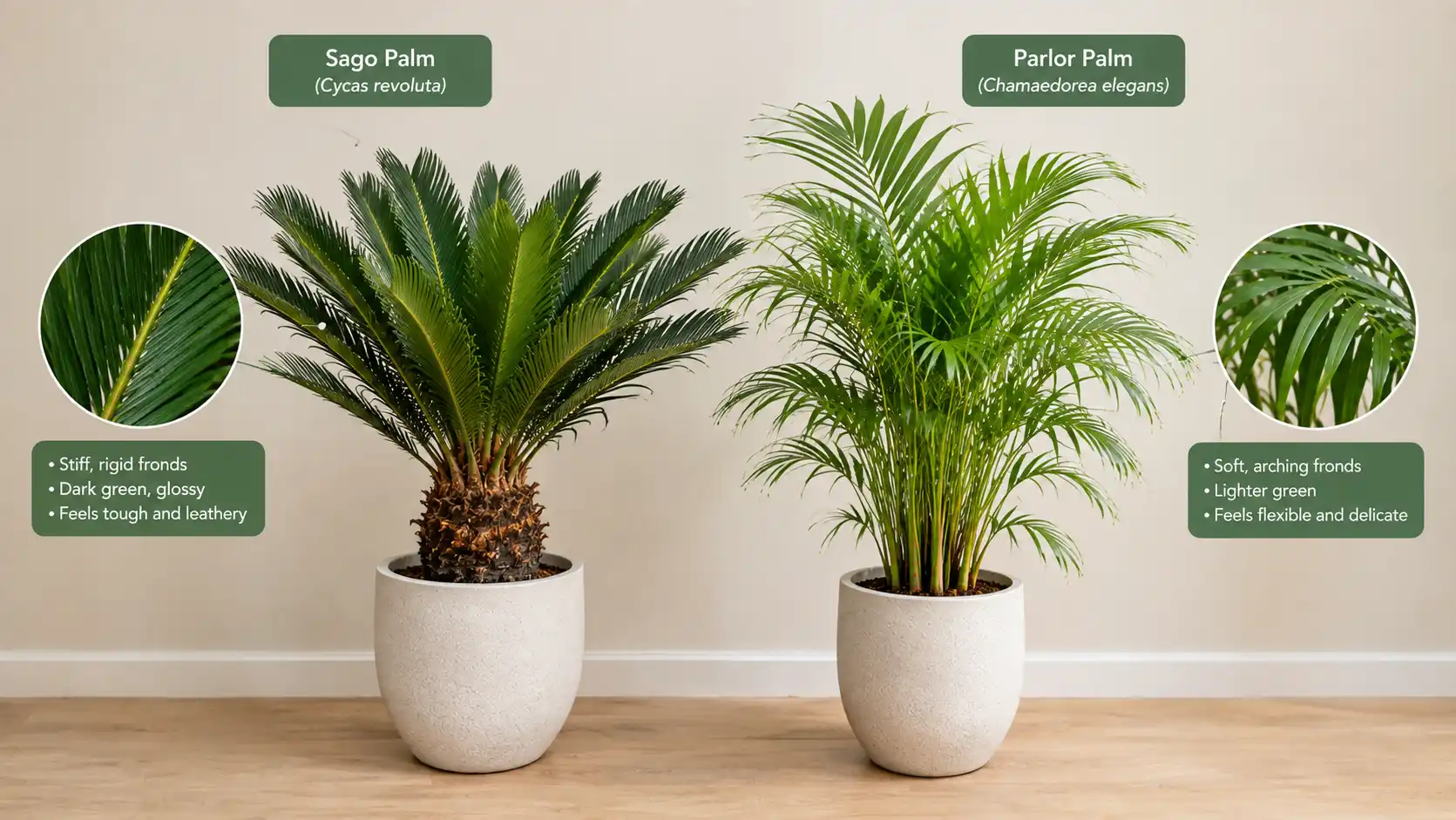
Here’s a mix-up that causes real confusion: true palms, in the botanical family Arecaceae, are generally non-toxic to cats and dogs. But Sago Palm — despite the name — isn’t a true palm at all. It belongs to a completely different family, Cycadaceae, and it’s highly toxic to pets if ingested. If you have pets and you’re not sure which “palm” you have, it’s worth confirm the exact species using the ASPCA’s toxic and non-toxic plant list before assuming it’s safe.
Repotting Palms
Repot every 2–4 years, sizing up gradually rather than jumping to a much larger pot. Palms tolerate being slightly rootbound better than most houseplants, and their root systems are easily shocked by aggressive repotting. If you’re propagating rather than repotting a mature plant, our parlor palm propagation guide covers that process separately.
Moving Palms Outdoors for Summer
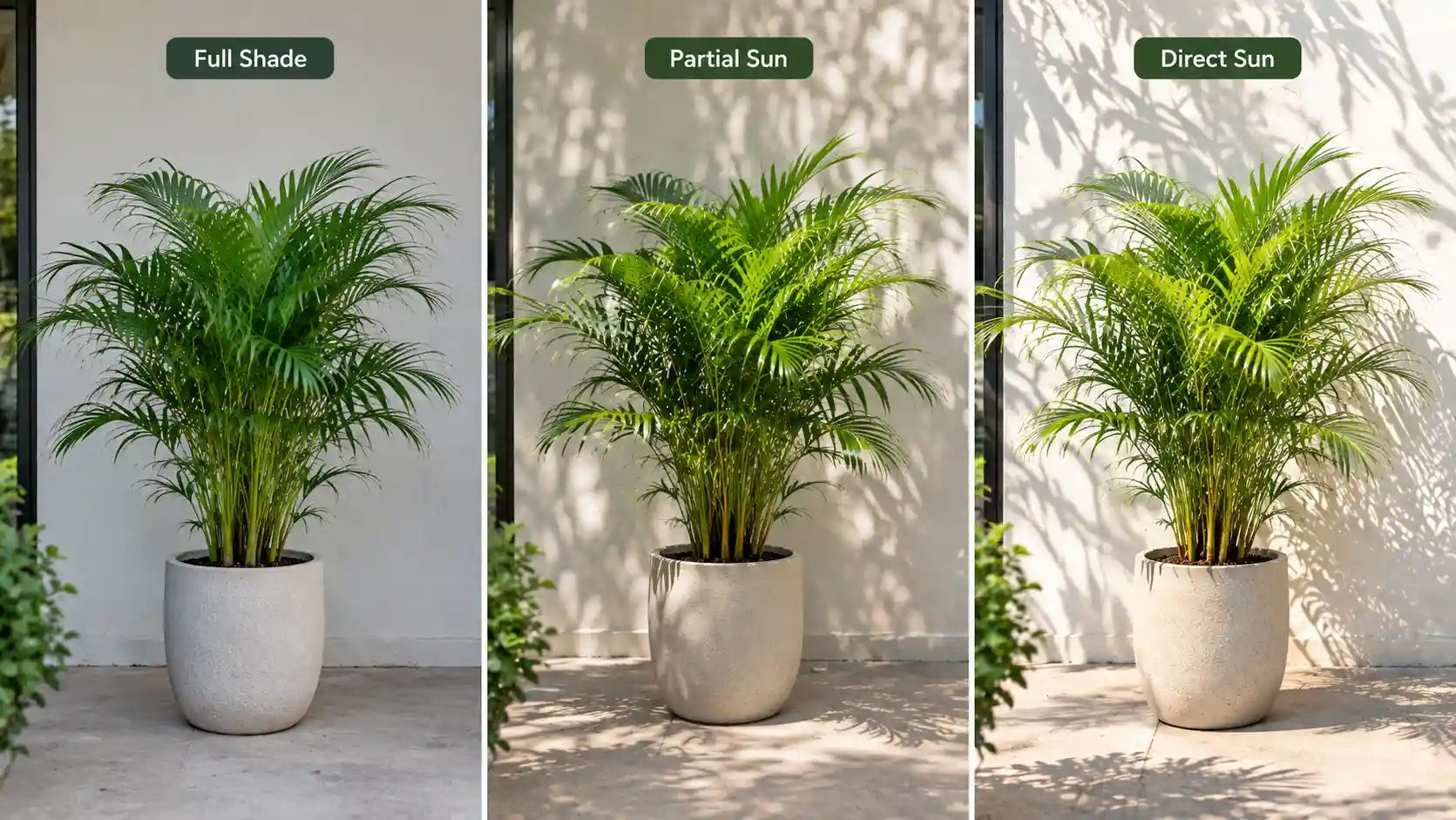
If you want to give an indoor palm a summer outside, do it gradually — over about 7 to 10 days, increasing light exposure a little each day rather than placing it in full sun immediately. Indoor-grown foliage hasn’t adapted to direct UV or wind, and a sudden move outdoors commonly causes scorch or shock even on species that handle full outdoor sun once acclimated. For a real-world example of this kind of outdoor transition, see our guide on ponytail palms outdoors in Australia.
Why You Can’t “Prune” a Palm Shorter
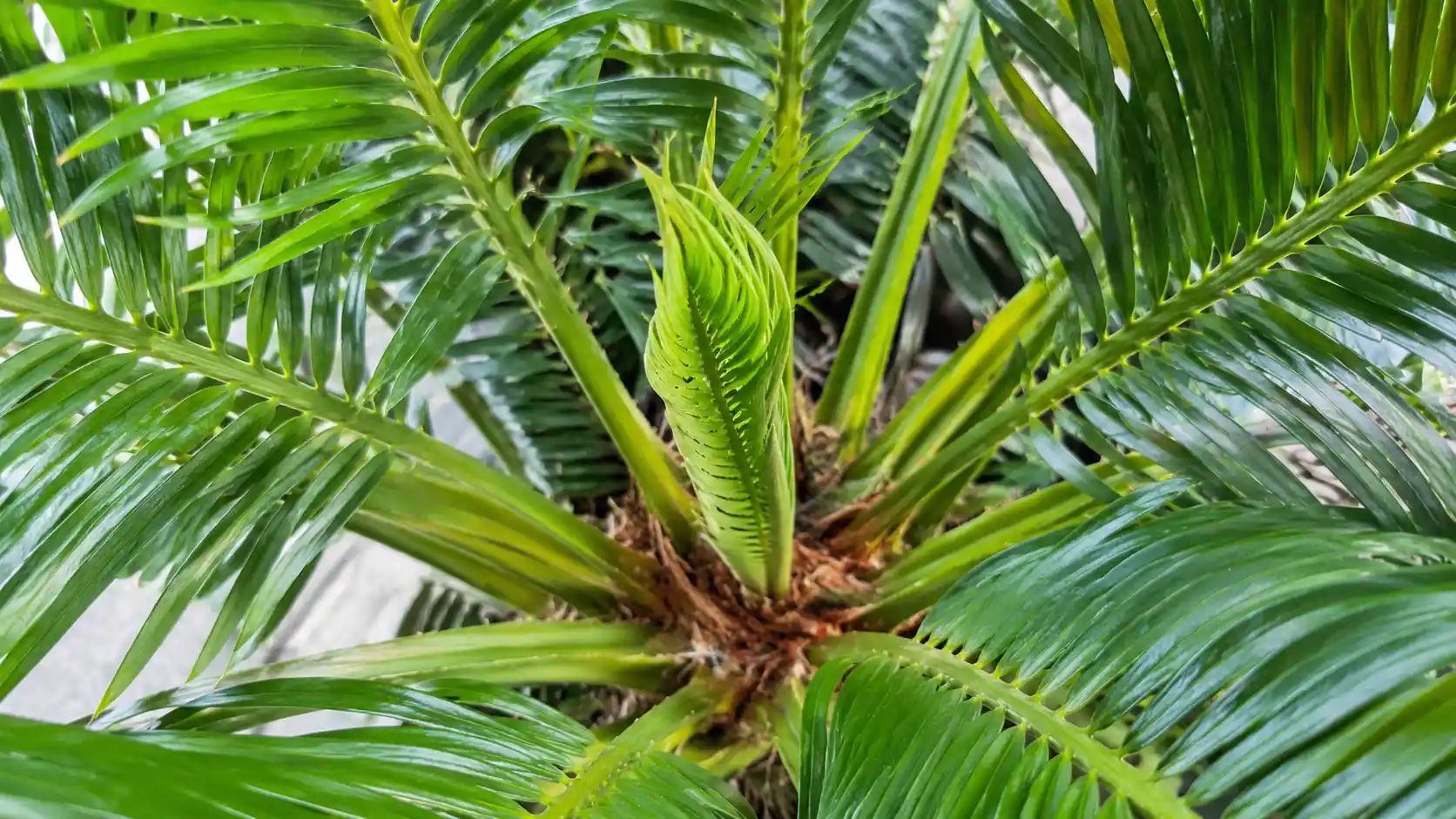
Unlike branching houseplants, a palm grows from a single point at its crown, called the apical meristem. There’s no secondary growth point waiting to take over if that one is damaged. Cutting the top off doesn’t make the plant bushier or shorter in a healthy way — it can seriously injure or kill the plant. The only pruning that’s genuinely useful on a palm is removing fully brown, spent fronds at the base.
Growth Rate and Mature Size
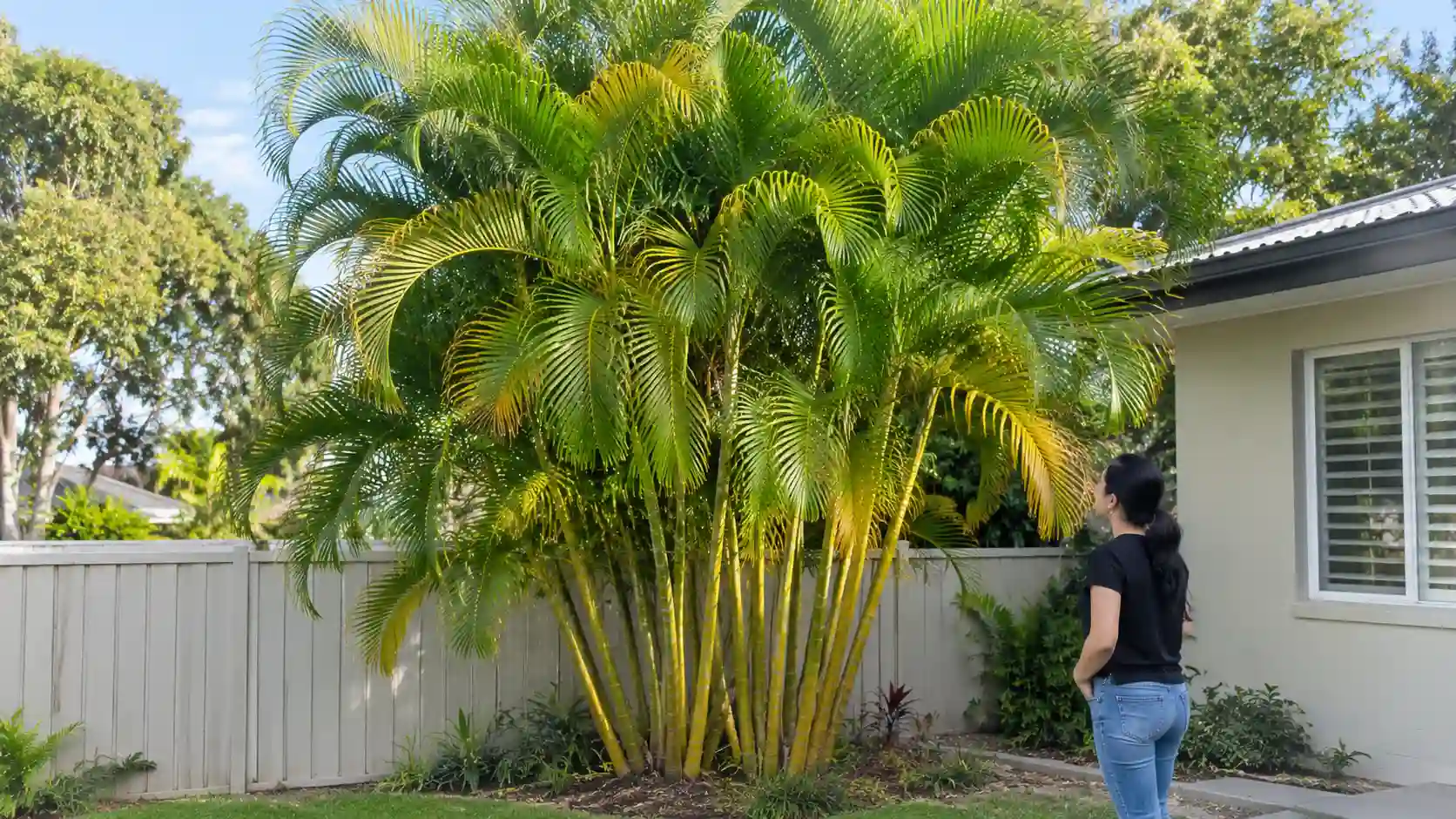
Growth speed varies by species and season — most palms put on the bulk of their growth in spring and summer, slowing or pausing in winter. Light, temperature, and feeding all affect how fast that happens. Mature size also depends heavily on setting: a species that stays compact in a pot indoors can grow dramatically larger planted outdoors in the right climate. Our guide on a full-grown golden cane palm shows what that outdoor growth ceiling can actually look like.
Conclusion
Most palm plant care problems trace back to one of three things: a species that doesn’t match the room, a watering habit that doesn’t match the soil, or a growth expectation that doesn’t match how palms actually grow. Get those three right, and palms are far more forgiving than their reputation suggests. Start by matching your species to your space, check soil moisture before reacting to leaf color, and remember that pruning a palm shorter was never going to work in the first place.
Frequently Asked Questions
How do I know if I’m overwatering or underwatering my palm?
Check the soil about 2 inches down. Soggy soil paired with yellowing and a soft base points to overwatering; dry soil paired with drooping or slow growth points to underwatering.
Why are the tips of my palm’s fronds turning brown?
This is usually low humidity or mineral buildup from tap water, not a sign of disease. Try distilled water and a humidity boost before assuming something is seriously wrong.
Are palm plants toxic to cats and dogs?
True palms are generally non-toxic, but Sago Palm — which isn’t a true palm — is highly toxic to pets. Confirm the exact species if pet safety is a concern.
Can I move my indoor palm outside for the summer?
Yes, but acclimate it gradually over 7–10 days with increasing light exposure rather than placing it in full sun right away.
How often should I repot a palm plant?
Every 2–4 years, sizing up gradually. Palms tolerate being slightly rootbound better than most houseplants.
Why can’t I prune my palm to make it shorter?
Palms grow from a single point at the crown. There’s no second growth point to take over if you cut it, so pruning for height isn’t possible the way it is on branching plants.


