The Real Question Behind “Best Indoor Jungle Plants”
If you’ve searched for large ferns or big-leaf houseplants, you probably don’t actually want a list of pretty species. You want to know one thing: will this plant survive in my home, or is it going to end up brown and crispy in six weeks?
That worry is fair. Large-leafed plants fail indoors more often than small ones, and it’s not bad luck — it’s physics. A bigger leaf has more surface area, and more surface area means more water evaporating out of the plant at all times (a process called transpiration). A 4-inch pothos can shrug off a missed watering. A Bird of Paradise or a Boston fern with three times the leaf surface can’t — it shows stress within days.
Once you understand that one mechanic, almost every “why is my plant dying” question in this guide has a simpler answer. This piece walks through the actual decisions that matter: which plants fit ferns vs. foliage plants, what your home can realistically support, how big things really get indoors, how to fix the plant you already have, and when a beautiful fake plant beats a struggling real one.
If you already have a specific fern giving you trouble, our general fern care guide and fiddle leaf fig care guide go deeper on those two specifically — this article is the map that connects all of it.
Fern or Foliage Plant? Why the Difference Matters for Care Difficulty
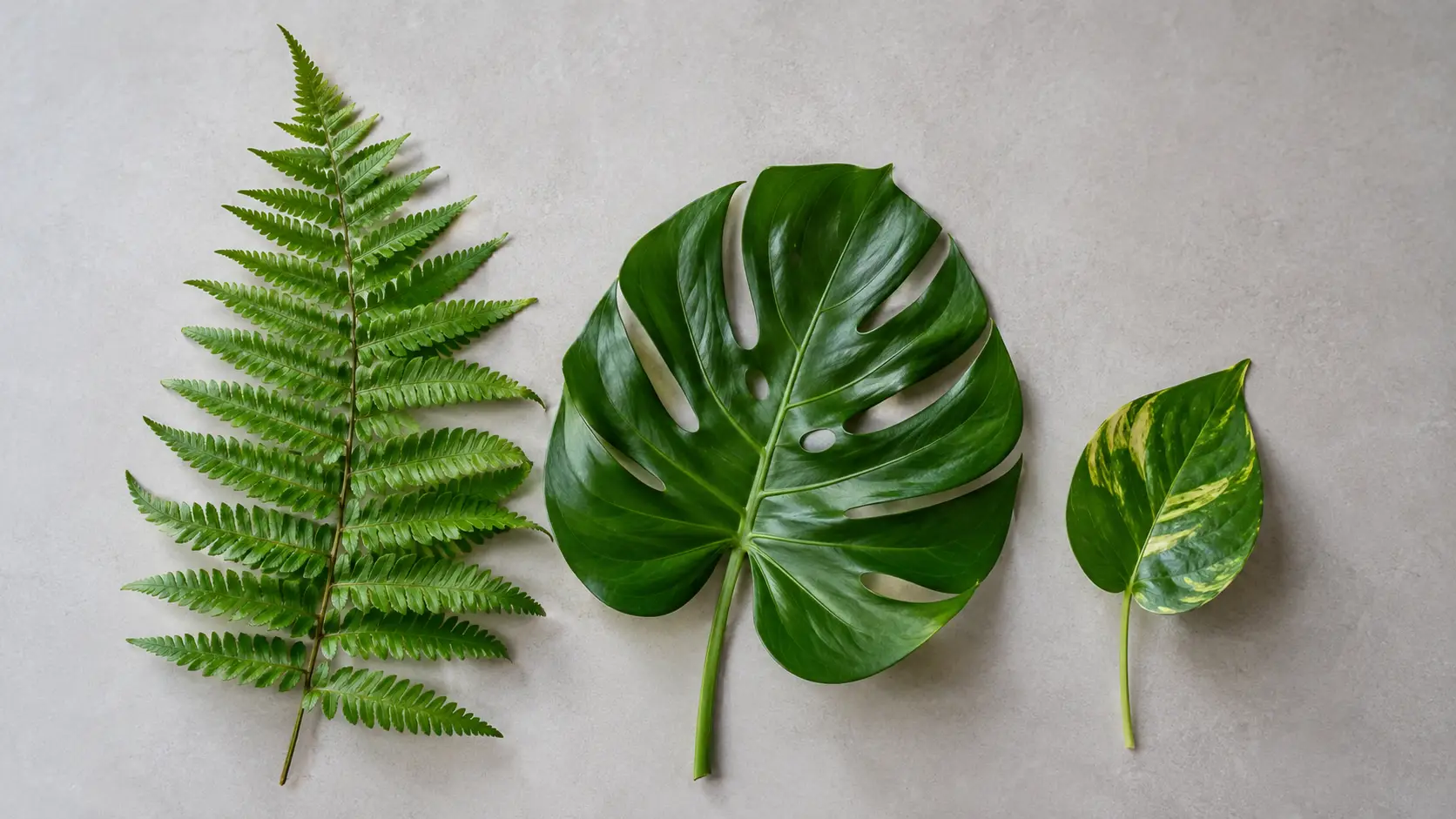
“Jungle look” plants usually fall into two groups that get lumped together in every roundup list, even though they fail in different ways:
- True ferns — Boston fern, staghorn fern, maidenhair fern, bird’s nest fern. These are humidity-obsessed and comparatively forgiving on light. Drop the humidity and they crisp up fast, even in decent light.
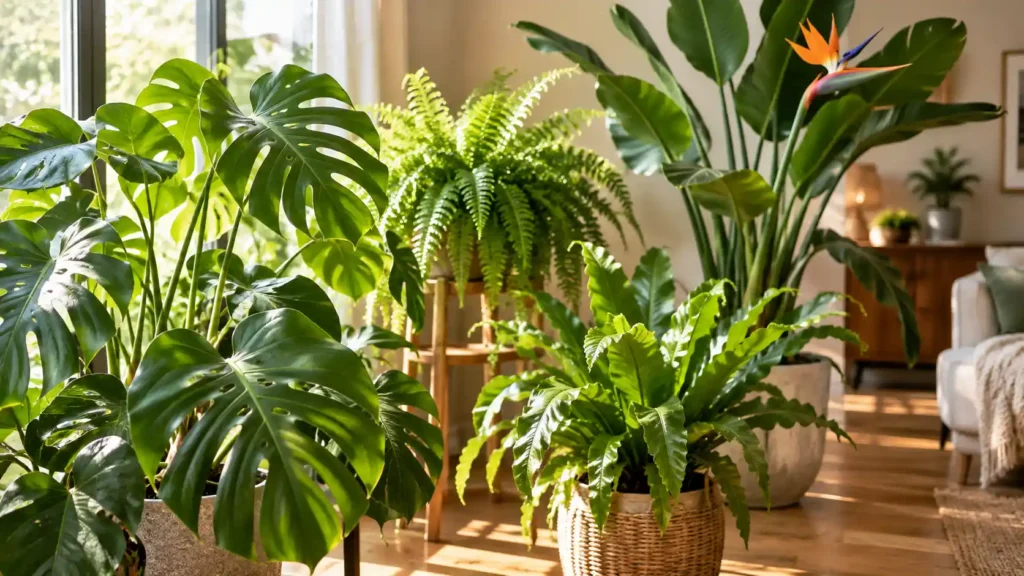
- Big-leaf foliage plants — Monstera, Bird of Paradise (Strelitzia), elephant ear, fiddle leaf fig, banana plant, dragonscale plant. These are more light-hungry and more tolerant of average home humidity, but far less forgiving of inconsistent watering or poor drainage. Root rot, not dry air, is usually what kills them.
Knowing which category a plant belongs to tells you which mistake to guard against before you even bring it home.
Comparison Table: Ferns vs. Large-Leaf Foliage Plants
| Plant | Type | Humidity need | Light need | Most common failure |
| Boston fern | True fern | High | Medium | Dry air → shedding leaflets |
| Staghorn fern | True fern | High | Medium-bright, indirect | Overwatering the mount |
| Maidenhair fern | True fern | Very high | Low-medium | Soil drying out even briefly |
| Monstera | Foliage plant | Medium | Medium-bright | Overwatering / root rot |
| Bird of Paradise (Strelitzia nicolai) | Foliage plant | Medium | Bright | Insufficient light → no new growth |
| Elephant ear | Foliage plant | Medium-high | Bright, indirect | Inconsistent watering |
| Fiddle leaf fig | Foliage plant | Medium | Bright | Overwatering + drafts |
| Banana plant | Foliage plant | Medium-high | Bright | Underestimating eventual size |
| Dragonscale plant | Foliage plant | Medium-high | Medium, indirect | Low humidity → dull, curling leaves |
How Much Light and Humidity Do These Plants Actually Need vs. What Homes Provide
Most homes sit somewhere around 30–40% relative humidity and “medium” indirect light — a level of light that feels bright to us but is actually far dimmer than what a plant standing in a tropical understory would get. That gap between what these plants evolved for and what a living room offers is the real root cause behind most “my plant is struggling” searches — more than any single watering mistake.
Most homes sit well below the humidity range tropical foliage plants evolved for — according to Penn State Extension’s guidance on houseplant humidity, indoor relative humidity often drops below 30% in winter, while most houseplants prefer 30–60%.
The Misting Myth
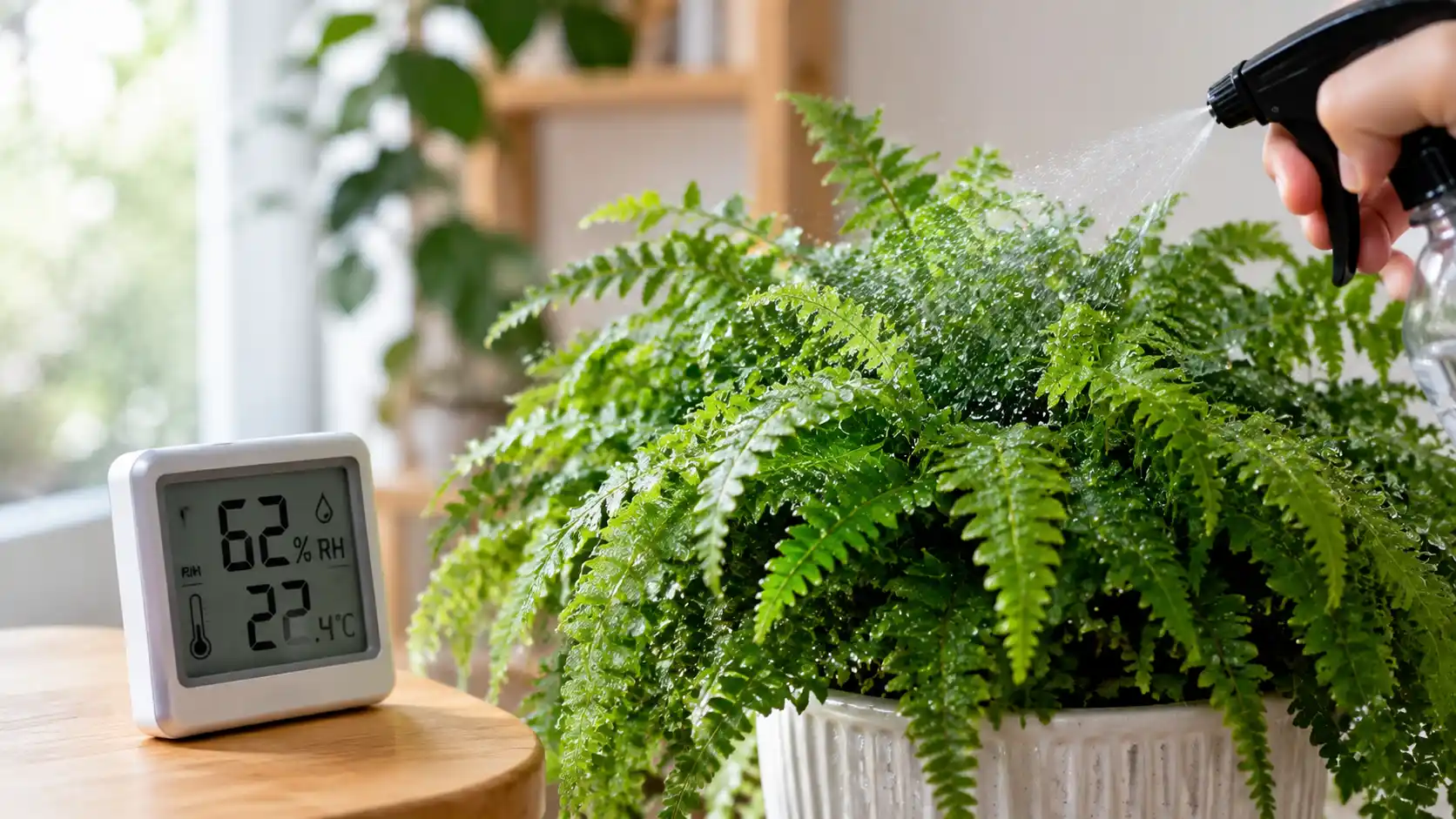
Misting your fern feels like it should help, but it barely moves the needle. Water on a leaf surface evaporates within seconds — long before it meaningfully raises the humidity of the air around the plant. Worse, repeatedly wetting foliage without proper airflow raises the risk of fungal leaf spot and bacterial issues, especially on ferns with dense, overlapping fronds.
If you want to actually raise humidity, a humidifier, a pebble tray with standing water under (not touching) the pot, or grouping plants together all work — misting alone doesn’t.
Which Varieties Tolerate Lower Light or Lower Humidity (Realistic Apartment Picks)
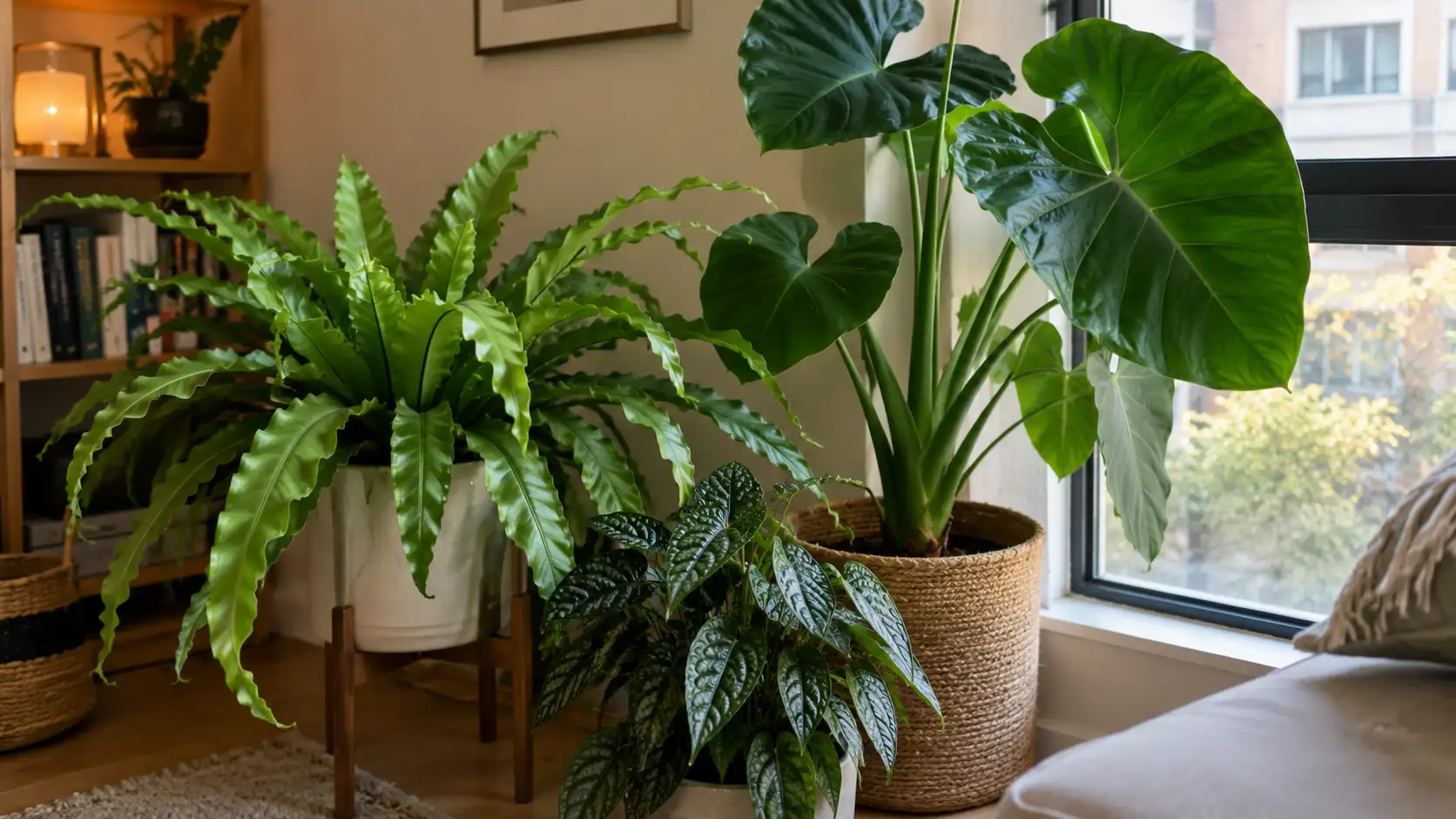
Not every “jungle” plant needs greenhouse conditions. If you live in a dry apartment with average light, some choices are far more forgiving than others:
- More forgiving: bird’s nest fern, dragonscale plant, elephant ear (tolerates average humidity better than most true ferns), Strelitzia nicolai once established.
- Less forgiving, needs real commitment: maidenhair fern, staghorn fern, Strelitzia reginae (compare it directly against nicolai here if you’re deciding between the two).
Matching the plant to your actual conditions — not the photo that convinced you to buy it — is what prevents the “buy it, watch it decline, give up” cycle so many first-time jungle-style plant owners go through.
How Big Will These Plants Actually Get Indoors?
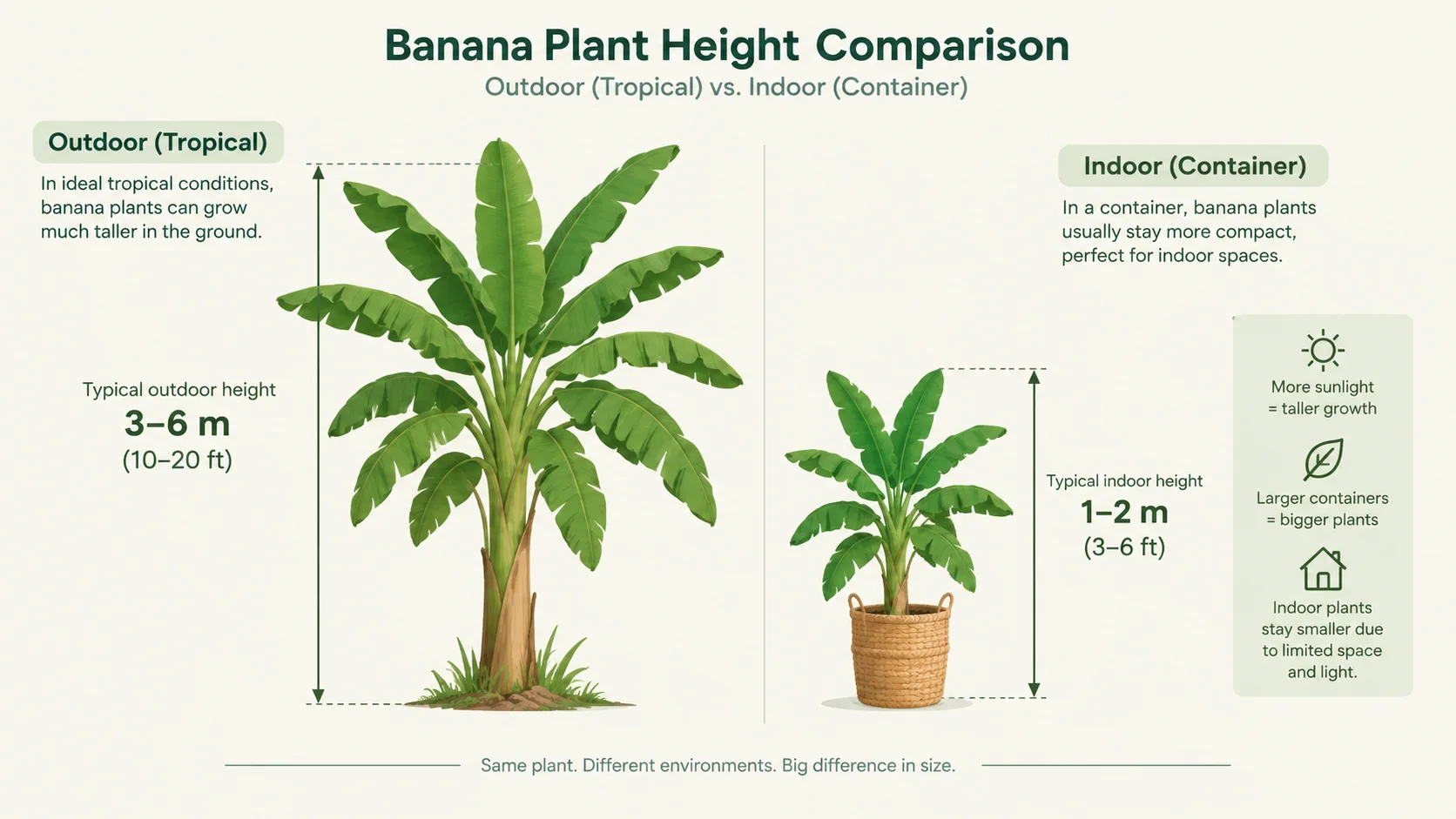
Plant Size
Indoors, these plants almost always stay smaller than their tropical or outdoor size — often by half or more — because container size and available light both cap growth. A banana plant that could reach 15+ feet outdoors typically tops out much lower in a pot indoors. Strelitzia reginae and nicolai also differ meaningfully in eventual size, which is worth checking before you choose between them.
Growth Rate
Most of these plants are moderate growers, with a visible slowdown in winter as light drops — this is normal, not a sign of a problem, and it’s one of the most common false alarms people search for.
Grouping Large Foliage Plants Without a Humidity/Light Competition
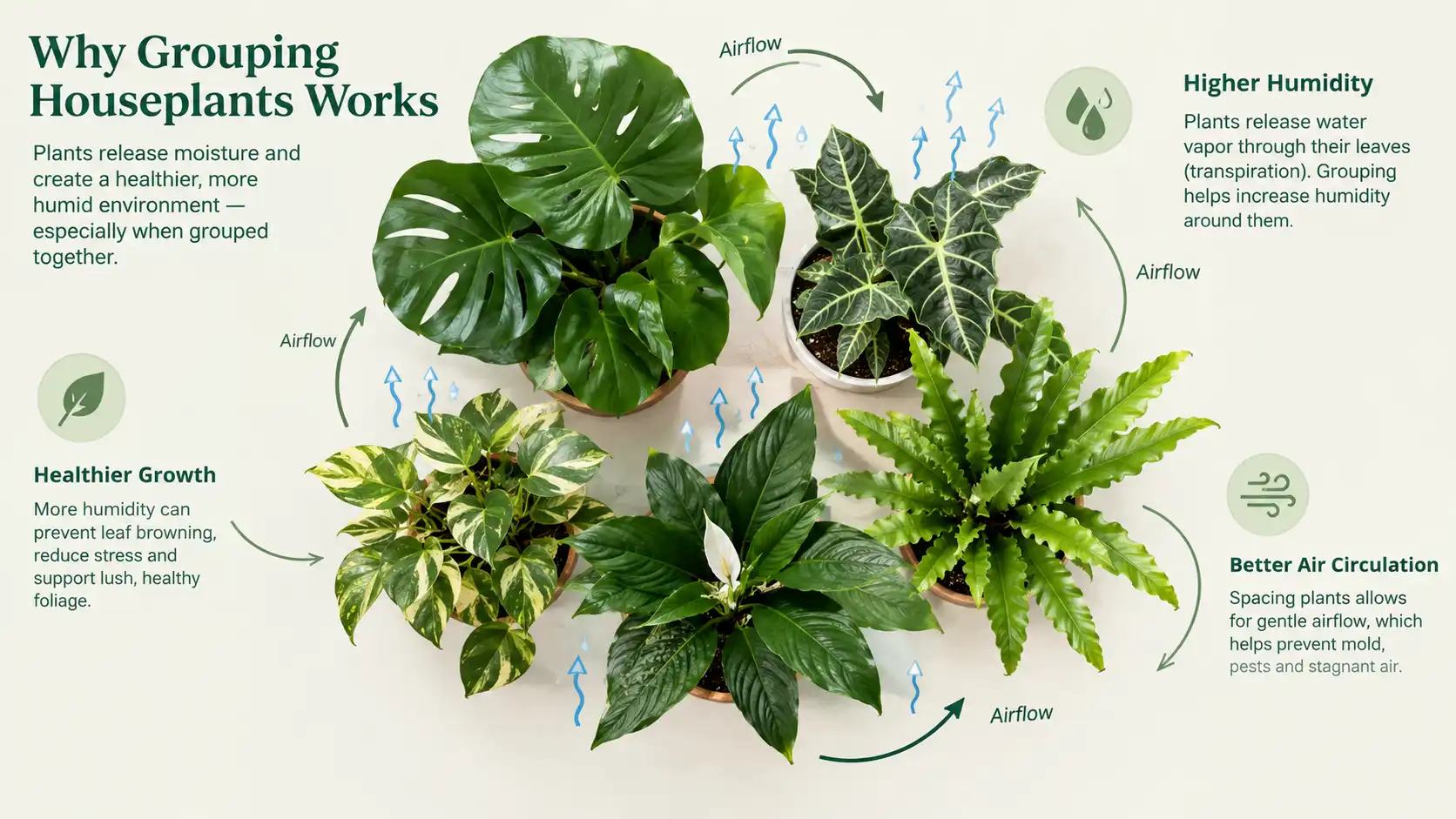
Clustering large-leaf plants together is one of the most effective humidity tricks that isn’t misting — each plant releases moisture as it transpires, and grouped together they create a small shared pocket of more humid air. The trade-off is that crowding plants too tightly blocks light and airflow, which invites the fungal issues you were trying to avoid in the first place.
The goal is a loose cluster with breathing room between leaves, not a solid wall of foliage — think “neighborhood,” not “pile.”
Common Large-Foliage Problems — Symptom, Cause, Fix
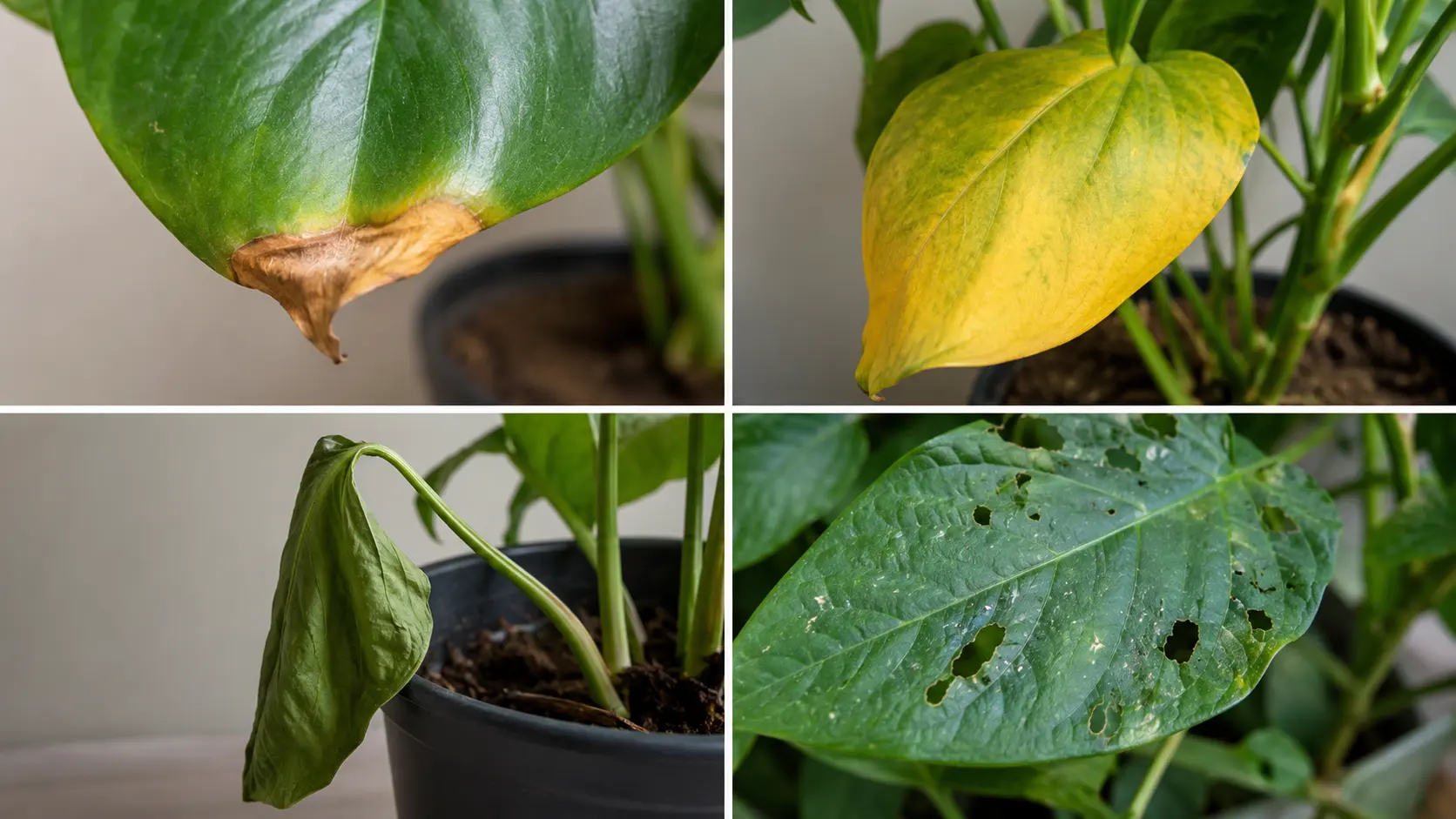
Overwatering-driven root and crown rot is one of the most common culprits behind drooping and yellowing, and University of Maryland Extension’s guide to overwatered indoor plants outlines exactly how to tell excess moisture apart from drought stress.
Symptom → Cause → Fix Table
| Symptom | Likely cause | Fix | Prevention |
| Crispy, brown leaf tips | Low humidity or underwatering | Increase humidity around the plant; water more consistently | Group plants or use a humidifier; check soil weekly |
| Yellowing lower leaves | Natural aging, or overwatering | Remove yellowed leaves; check drainage and let soil dry between waterings | Water on a schedule tied to soil moisture, not the calendar |
| Drooping despite moist soil | Root rot from overwatering | Check roots; trim mushy/black roots and repot in fresh, well-draining mix | Use pots with drainage holes; don’t let pots sit in standing water |
| Slow or stalled growth | Insufficient light or nutrients | Move closer to a bright window; feed lightly during growing season | Rotate the plant and feed on a light seasonal schedule |
| Pests (spider mites, scale) | Low humidity, stressed plant | Wipe leaves, isolate the plant, treat with insecticidal soap | Inspect new plants before bringing them home; keep leaves dusted |
If a fern is too far gone to save whole, propagating a staghorn or propagating a maidenhair from a healthy section is often a better outcome than starting over from scratch — and our general fern care guide covers the day-to-day habits that prevent most of this table in the first place.
Real vs. Faux — When Artificial Large Foliage Is the Better Choice
This isn’t a compromise — it’s a legitimate decision for the right space. A windowless hallway, a stairwell landing, or a spot you’ll walk past but never really tend to is a place where a high-quality artificial Monstera or fern will look better, longer, than a real plant slowly declining in conditions it was never going to thrive in. Save your real plants for the spots where you can actually give them what they need, and let faux foliage do the “jungle” work everywhere else.
Conclusion: Matching the Jungle Look to Your Actual Room
Large ferns and big-leaf foliage plants aren’t interchangeable, and neither are their failure points — ferns punish inconsistent humidity, foliage plants punish inconsistent watering and light. Misting won’t fix a humidity problem, but grouping and a humidifier will. Most plants stay smaller indoors than their tropical size suggests, and a slowdown in winter growth is normal, not a crisis. The real skill isn’t memorizing more species — it’s matching what a plant needs to what your room can actually give it, and knowing which of your 9 large-leaf options (from ferns to bananas to Bird of Paradise) fits that room best.
FAQs
Do large ferns need more humidity than small ferns?
Yes. Larger fronds have more surface area, so they lose moisture to the air faster, making humidity swings show up sooner and more severely than on smaller ferns.
What’s the biggest difference between caring for a fern and caring for a Monstera or Bird of Paradise?
Ferns fail mainly from low humidity; big-leaf foliage plants like Monstera and Strelitzia fail mainly from overwatering and insufficient light. The daily habit that matters most is different for each group.
Why are the tips of my large fern or foliage plant turning brown?
Brown, crispy tips are almost always low humidity or inconsistent watering, not a pest or disease issue in most cases. Check the humidity around the plant before assuming something worse is wrong.
Can I keep a jungle-style large plant in an apartment with average humidity?
Yes, if you choose more forgiving varieties like bird’s nest fern, dragonscale plant, or elephant ear, and group your plants together to raise local humidity.
Is misting my fern actually helping it?
Not meaningfully. Misted water evaporates within seconds and doesn’t raise ambient humidity for long — a humidifier or plant grouping is far more effective, and misting can even increase fungal risk.
How much bigger will my elephant ear or banana plant get indoors compared to outdoors?
Both typically stay noticeably smaller indoors than their outdoor tropical size, usually by half or more, because container size and available light limit growth.