
If you searched for indoor palm care because something already looks wrong with your plant, you’re not alone — and you’re also not necessarily doing anything wrong. Palms have earned a reputation as easy houseplants, and in one sense that’s true: they’re forgiving about exact watering timing. But that reputation glosses over the part that actually causes most problems — palms are strict about light, humidity, and water quality, and they show stress slowly, weeks after the real mistake happened. That lag is why so many owners feel blindsided.
This guide covers the common houseplant palms — Areca, Parlor, Kentia, Bamboo, and Majesty — not outdoor landscape palms. And one safety note up front: not everything called a “palm” is a true palm. The Sago Palm, despite the name, is a cycad and is toxic to pets, while the actual palms in this guide are pet-safe. Keep that distinction in mind if you’re comparing plants by name alone. This guide is part of our broader Indoor Green Living Hub, where you’ll find care guides for other common houseplants beyond palms.
Quick Summary
- Water only when the top 1–2 inches of soil are dry — check by finger, not a calendar.
- Bright, indirect light is essential for most species; low light slows growth but won’t kill a genuinely tolerant species.
- New palms often drop or yellow a few fronds in their first 2–3 weeks home — usually acclimation, not failure.
- True indoor palms (Areca, Parlor, Kentia, Bamboo, Majesty) are non-toxic to pets; the Sago “palm” is not a true palm and is toxic.
Symptom-First Diagnosis: What’s Actually Wrong With Your Palm
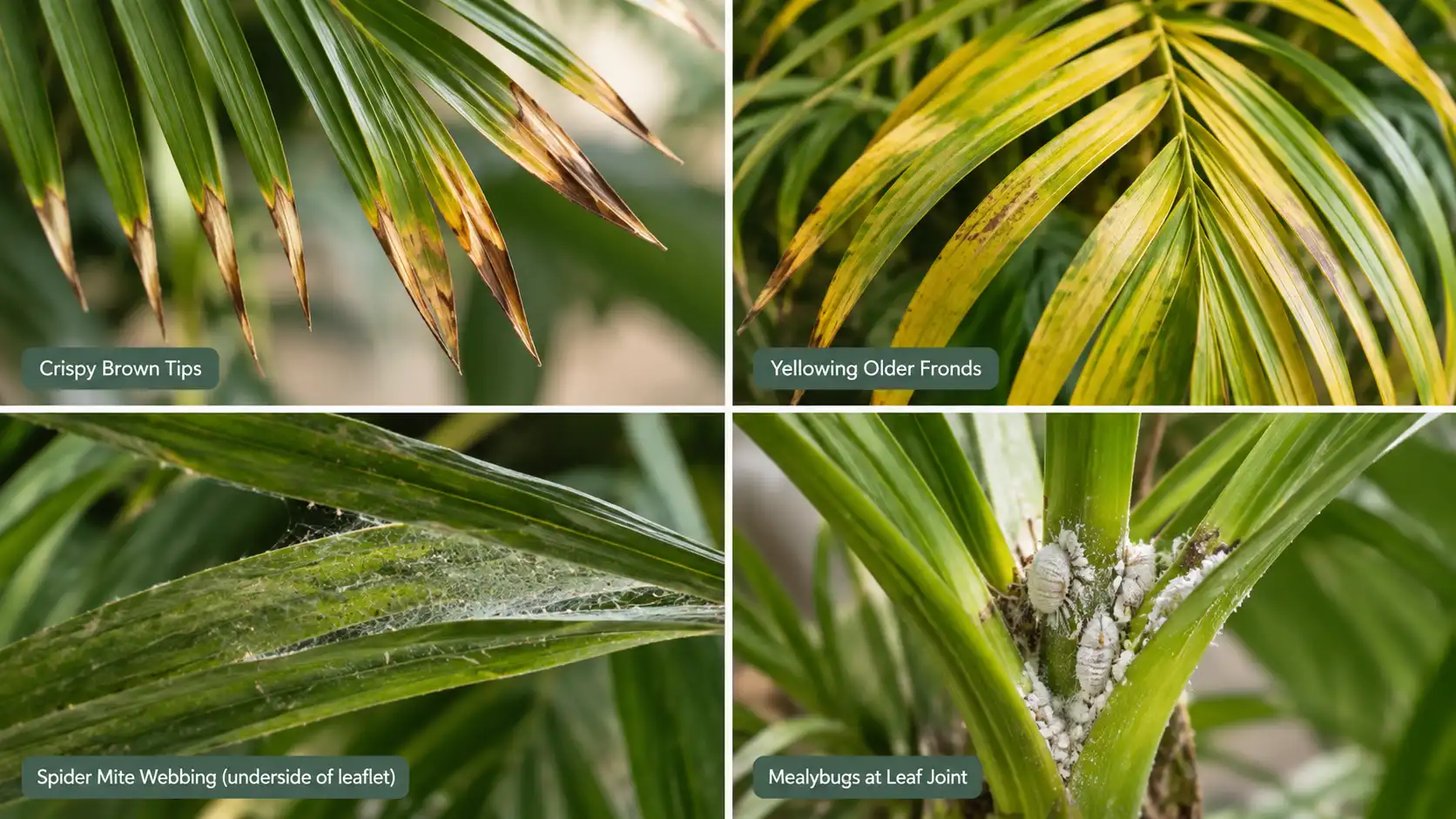
Rather than making you read through generic tips hoping one matches your plant, start here. Match what you’re seeing to the row below, then jump to the relevant section for the full fix.
| Symptom | Most Likely Cause | Fix | How to Confirm |
| Brown, crispy leaf tips | Low humidity or mineral buildup from tap water | Raise humidity; switch to distilled, filtered, or rainwater | Tips are dry and crisp, not soft or mushy |
| Yellowing on older, lower fronds only | Natural aging — normal shedding | No action needed; trim spent fronds | Only the lowest, oldest leaves are affected |
| Yellowing new growth plus drooping | Overwatering or early root rot | Let soil dry fully; inspect roots; repot if they’re brown and mushy | Soil stays wet for days; possible sour smell at the soil line |
| Yellow-brown stippling with fine webbing | Spider mites | Isolate the plant; wipe leaves; treat with insecticidal soap or neem oil | Webbing under leaflets; leaves feel gritty |
| White, cottony clusters at leaf joints | Mealybugs | Dab with rubbing alcohol; follow with insecticidal soap | Visible fuzzy white clusters in crevices |
| Pale, stretched, sparse new fronds | Insufficient light | Move closer to a bright window; add a grow light if needed | New growth is smaller and paler than older fronds |
| Multiple fronds dropping right after purchase | Acclimation shock | Hold a steady routine for 2–3 weeks; skip repotting and fertilizing | Timing lines up with a recent move or repot |
A pattern worth knowing: in Areca palms specifically, an overall yellowing that starts at the newest growth (sometimes called “yellow top”) often points to a manganese deficiency rather than watering — a palm-specific fertilizer corrects it, where a generic houseplant feed usually won’t.
The First Two Weeks: Why a New Palm Struggles After You Bring It Home
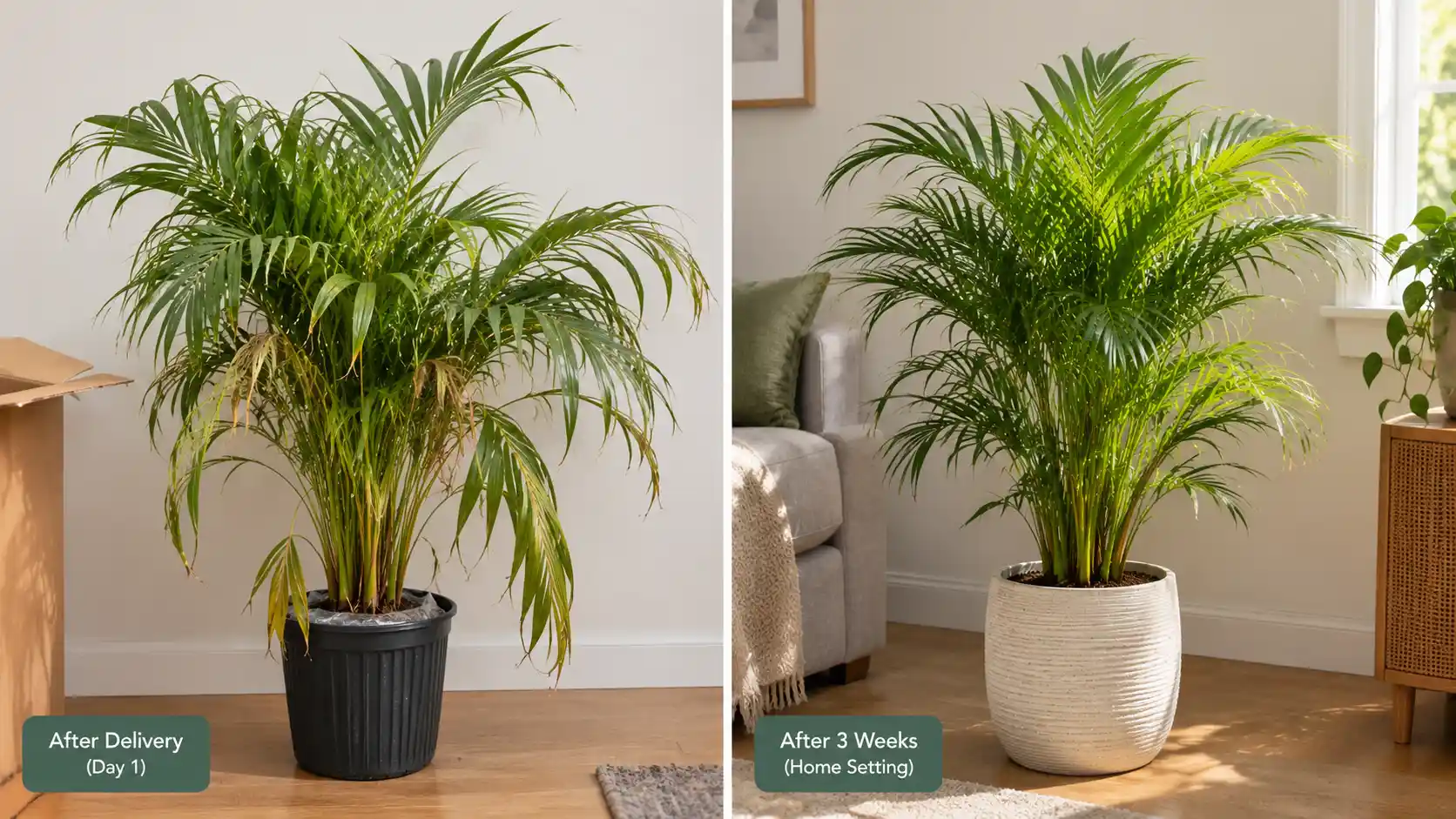
If your palm dropped or yellowed a few fronds shortly after you brought it home, it’s very likely acclimation shock rather than anything you did wrong. Nurseries and greenhouses keep humidity high, light controlled, and watering frequent — conditions your home almost never matches. When the palm arrives in a drier, dimmer, less consistent environment, it sheds the leaves it can no longer support while it adjusts to the new baseline.
The most useful thing you can do during this window is nothing dramatic: keep light, watering, and location consistent, and resist the urge to repot or fertilize right away. Both add further stress on top of a plant that’s already adjusting. Give it two to three weeks before judging whether something else is actually wrong.
Light Requirements: Which Palms Actually Tolerate Low Light
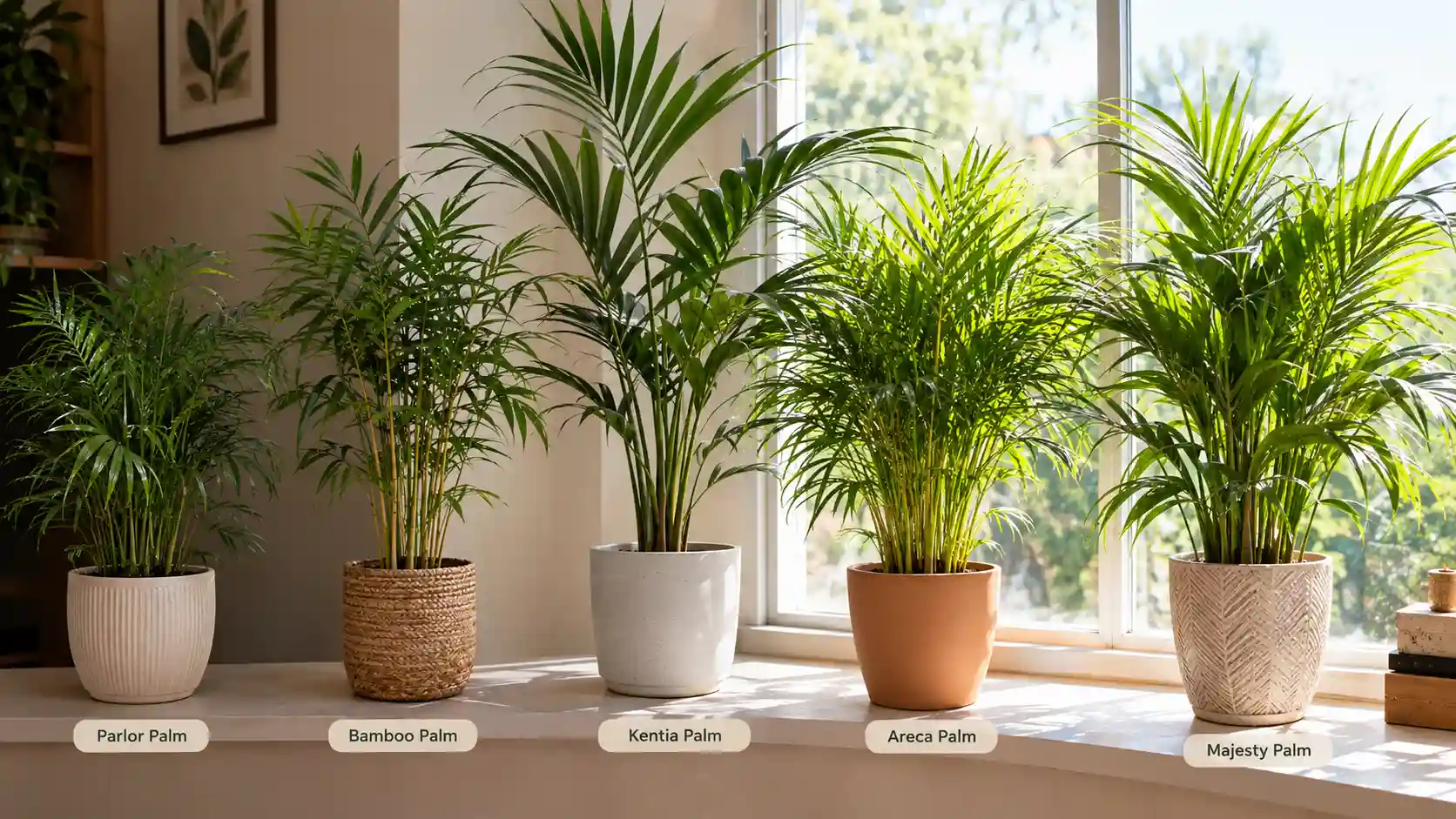
Marketing copy calls a lot of palms “low-light tolerant.” In practice, tolerance varies a lot by species — here’s a realistic ranking, most to least tolerant:
- Parlor Palm — genuinely low-light tolerant; grows slowly in dim spots but stays stable.
- Bamboo Palm — handles low light without rapid decline, though it won’t push much new growth there.
- Kentia Palm — moderate tolerance; prefers medium-to-bright indirect light.
- Areca Palm — needs bright indirect light; visibly declines (yellowing, leggy growth) in low light.
- Majesty Palm — the least tolerant of the group; needs the most direct, bright light despite frequently being marketed as easy-care.
Before choosing a species, check your actual room: how many hours of light a spot gets and whether it’s direct or filtered. Matching the plant to the room you have — rather than the room you wish you had — prevents most long-term struggles.
Not sure what ‘bright indirect light’ actually looks like in your space? Our guide on bright indirect light vs. direct sunlight breaks down how to tell the difference room by room.
Watering Palms the Right Way (Not Just “When Dry”)
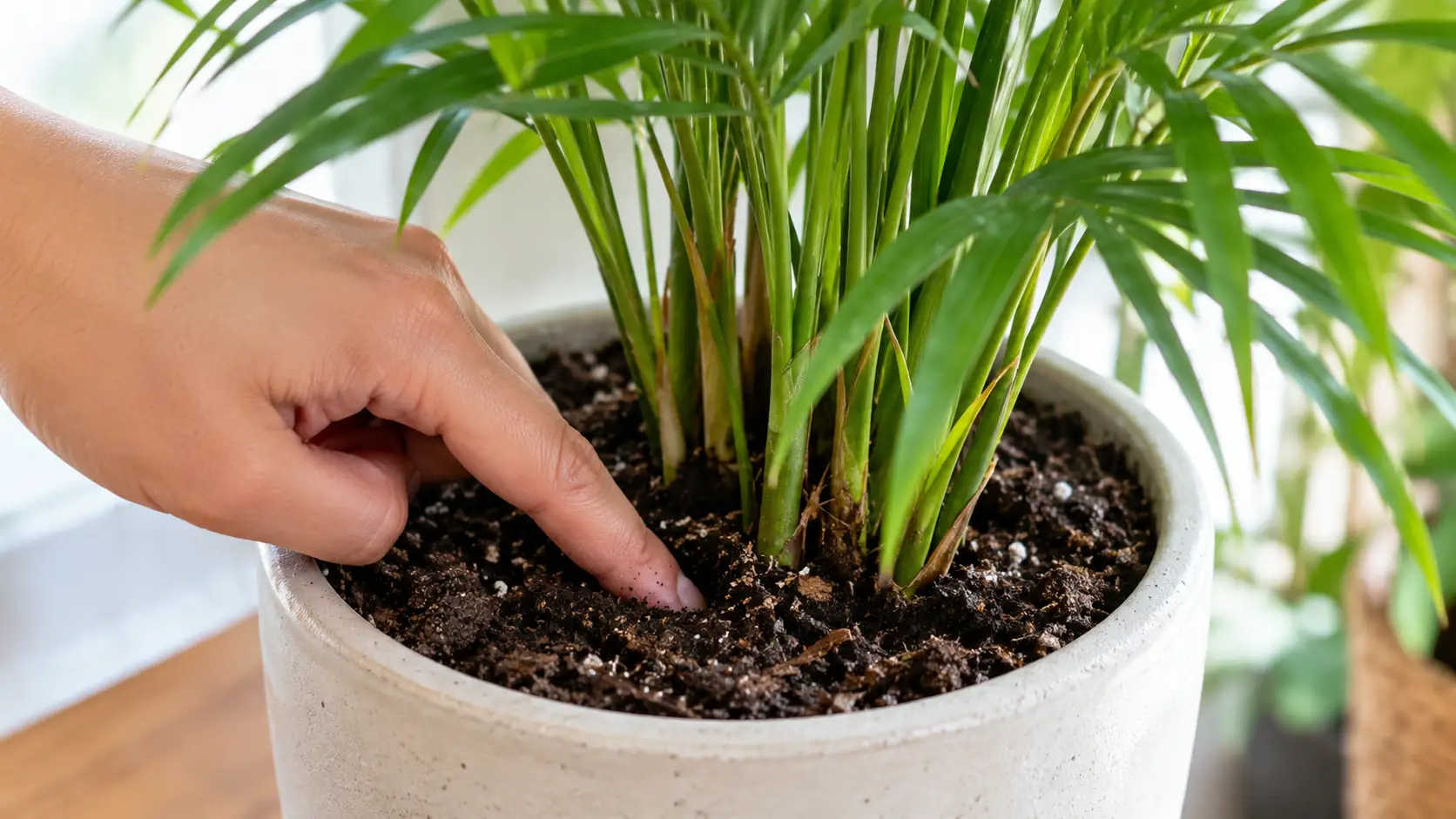
The most reliable method is a finger test: water when the top 1–2 inches of soil feel dry, not on a fixed schedule. Overwatering is the more common killer of the two extremes, because root rot develops quietly under the soil before any leaf symptom appears — by the time you see yellowing, the damage is often already underway.
Water quality matters more than most owners expect. Areca and similar species are sensitive to fluoride and chlorine, which can cause tip browning even when your watering frequency is correct. Switching to distilled, filtered, or rainwater often resolves tip burn that watering-schedule changes don’t. If you’re unsure whether the finger test is telling you what you think it is, our general guide on how to check if an indoor plant needs water covers a few other reliable methods too.
Is misting worth it? Only marginally. Misting gives a brief humidity bump that fades within minutes. A pebble tray or humidifier raises ambient humidity more reliably and is a better use of your time.
Humidity, Temperature, and Feeding
Aim for 40–60% humidity where possible — a humidifier, grouping plants together, or a pebble tray under the pot all help. Keep palms away from heating vents, air conditioners, and drafty windows, since temperature swings stress them as much as low humidity does.
Feed lightly with a balanced or palm-specific fertilizer during the active growing season (spring and summer) only. Over-fertilizing in winter, when growth naturally slows, is a common and avoidable mistake that can burn roots rather than help the plant.
Repotting an Indoor Palm Without Damaging Roots
Repot based on signs, not a calendar: roots visibly circling the pot or water running straight through without absorbing. Palms actually prefer being slightly root-bound, so there’s no need to size up every year. When you do repot, disturb the roots as little as possible and move up only one pot size — and avoid doing it during acclimation or the dormant winter months.
Pests and Problems Beyond Watering
Spider mites and mealybugs are the two most common indoor palm pests. Prevent both with periodic leaf wiping and regular inspection of leaf joints, especially on new plants before they join the rest of your collection. If you find an infestation, treat with insecticidal soap or neem oil rather than harsh chemical pesticides, which are often less effective indoors and can be unnecessarily toxic to pets and people.
| Problem | Root Cause | Prevention |
| Brown tips | Low humidity, poor water quality | Filtered water, humidity tray |
| Yellow new growth | Overwatering, root rot | Let soil dry between waterings; ensure drainage |
| Slow or no growth | Low light, or normal winter dormancy | Match species to available light |
| Pest infestation | Low airflow, dust buildup, no inspection | Regular leaf cleaning and checks |
Are Indoor Palms Safe for Pets?
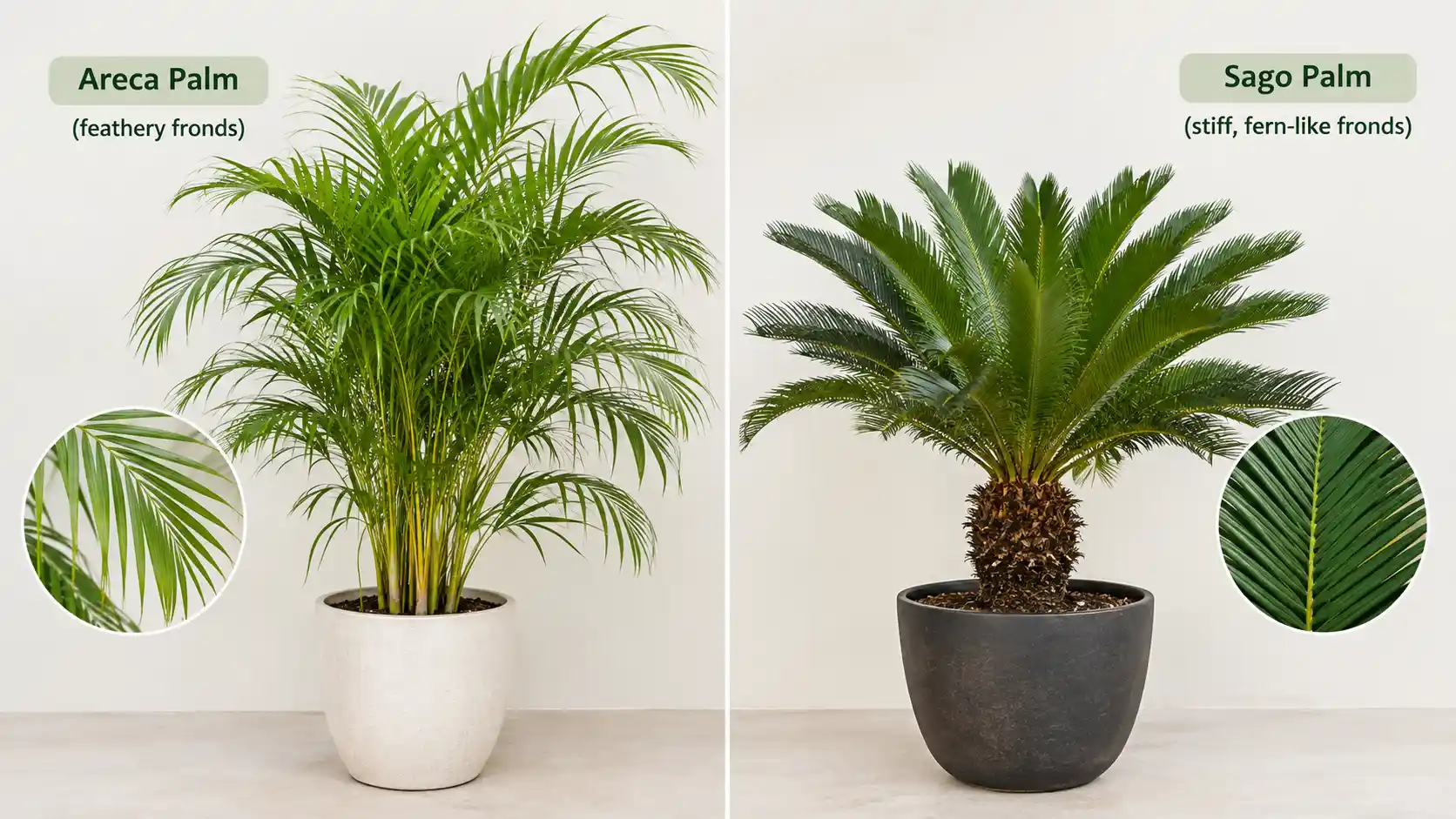
Yes — the common houseplant palms covered here (Areca, Parlor, Kentia, Bamboo, Majesty) are non-toxic to cats and dogs. The confusion worth clearing up: the Sago Palm is not a true palm at all — it’s a cycad — and it is highly toxic if ingested by pets. If you’re comparing plants by name, don’t assume “palm” means safe; check the actual species. You can cross-check any plant against the ASPCA’s toxic and non-toxic plant list before bringing it home.
Comparing Common Indoor Palm Species
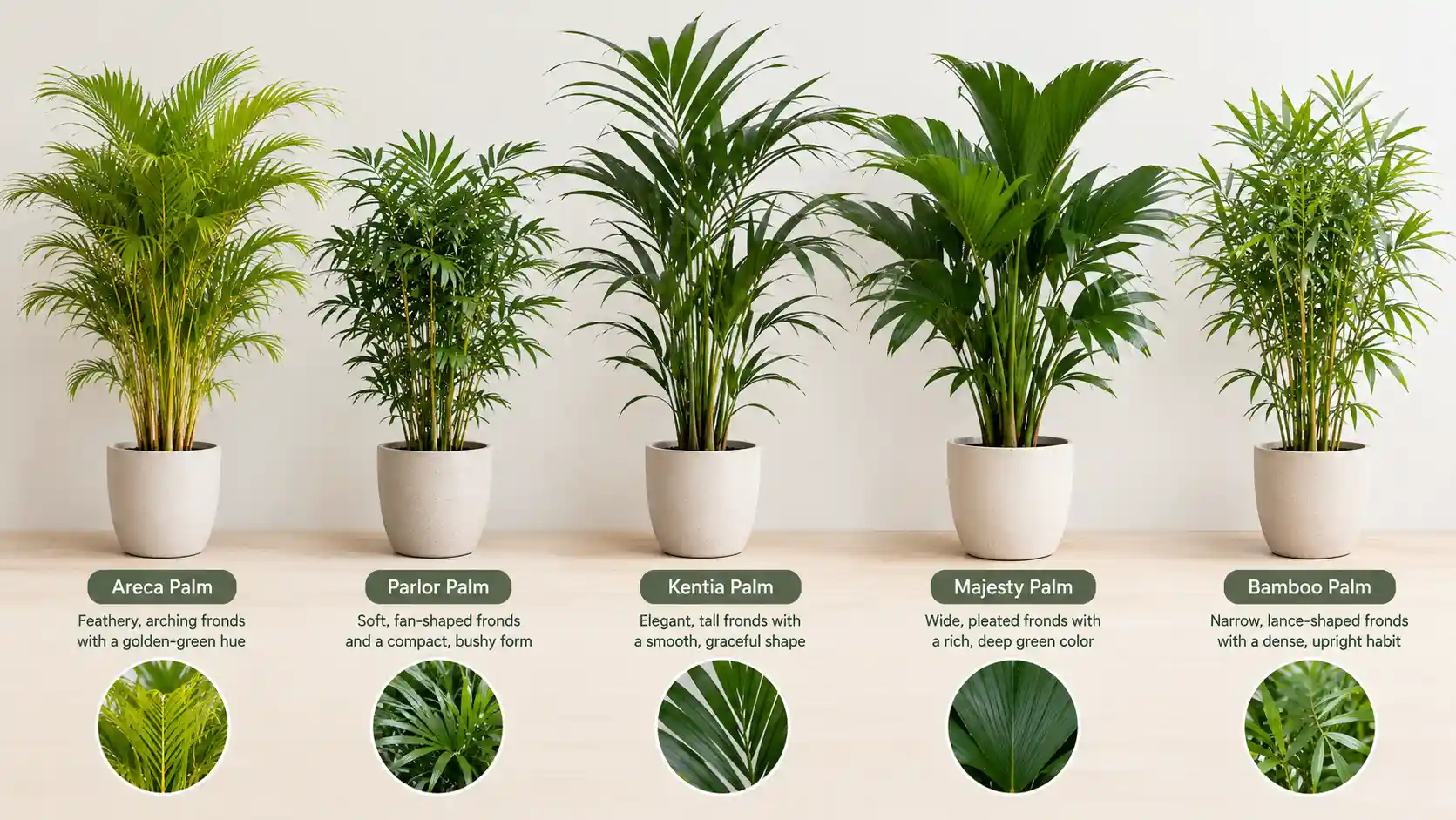
| Species | Light Need | Humidity Need | Growth Speed | Best For |
| Areca | Bright, indirect | High | Moderate | Bright rooms, statement plant (If Areca is the species you’re growing, our Areca Palm Care Guide goes deeper into its specific watering rhythm and manganese-deficiency fix.) |
| Parlor | Low–medium | Moderate | Slow | Low-light rooms, beginners |
| Kentia | Medium–bright | Moderate | Slow | Elegant look, forgiving care (Kentia owners dealing with something the table above doesn’t quite match should check our dedicated Kentia Palm Problems guide for species-specific troubleshooting.) |
| Majesty | Bright/direct | High | Moderate–fast | Sunrooms, bright spaces only |
| Bamboo | Low–medium | Moderate–high | Moderate | Low light, room dividers |
Realistic Growth Rate and Lifespan Expectations
Most indoor palms are slow growers — expect only a few new fronds per year rather than rapid fullness. That’s not a sign of a problem; it’s typical. In exchange for the patience, a well-matched palm can live for decades indoors, making it one of the more durable houseplant investments once you’ve got its light and water needs right.
Conclusion: Keeping Your Indoor Palm Thriving Long-Term
Indoor palm care comes down to a few decisions done consistently: match the species to the light you actually have, water by soil feel rather than a schedule, expect some frond loss in the first few weeks after a move, and use symptom-based diagnosis rather than guesswork when something looks off. None of this requires expert-level plant knowledge — it requires paying attention to the right signals. Get those right, and an indoor palm isn’t just low-maintenance in theory; it’s a houseplant you can reasonably expect to keep for years.
FAQs
Why is my indoor palm’s fronds turning brown at the tips?
Usually low humidity or mineral buildup from tap water. Raise ambient humidity and switch to filtered or distilled water.
How often should I really water an indoor palm?
There’s no fixed schedule — check the top 1–2 inches of soil by touch and water only when that layer is dry, adjusting for the season.
Which indoor palm is best for low-light rooms?
Parlor Palm and Bamboo Palm handle low light best among common houseplant palms; Majesty Palm needs the most light and struggles in dim rooms.
Is it normal for a new palm to drop leaves after I bring it home?
Yes. A few fronds dropping or yellowing in the first 2–3 weeks is typically acclimation shock, not poor care.
Are indoor palms toxic to cats and dogs?
True palms like Areca, Parlor, Kentia, and Bamboo are non-toxic to pets. The Sago “palm” is not a true palm and is toxic — don’t confuse the two by name.
How do I get rid of spider mites on my palm?
Isolate the plant, wipe down the leaves, and treat with insecticidal soap or neem oil, repeating every 7–10 days until the mites are gone.
When should I repot my indoor palm?
Only when roots are visibly circling the pot or water runs straight through without absorbing — palms generally do better slightly root-bound.