
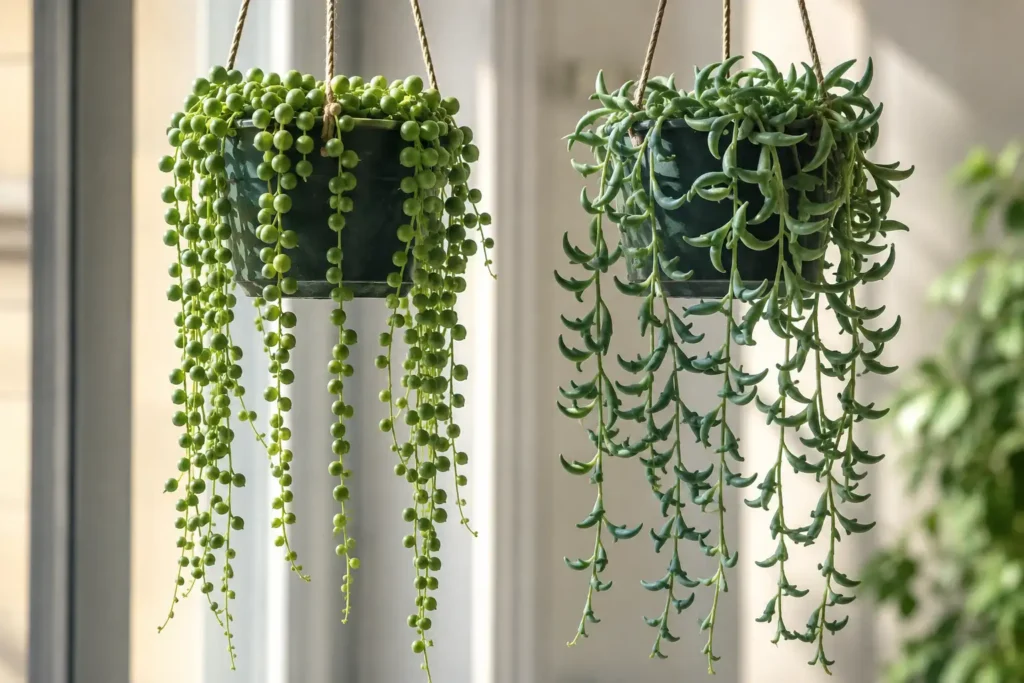
According to Manuela Nogueira, String of Pearls (Curio rowleyanus) has spherical, pea-like leaves on trailing stems, while String of Dolphins (Curio × peregrinus) is a hybrid cross between String of Pearls and String of Fish Hooks, producing leaves shaped like leaping dolphins. Both are succulents needing bright indirect light, infrequent watering, and well-draining soil.
String of Dolphins tends to grow slightly larger and hardier leaves, making it more forgiving of inconsistent watering than its parent. Its hybrid origin also means propagation can occasionally revert to fish-hook or pearl-like leaf shapes on the same vine.
Quick summary
- String of Dolphins is a hybrid of String of Pearls and the hot dog cactus (Curio articulatus) — not a rename, not a separate wild species.
- Light and soil needs are nearly identical between the two; the real gap is watering margin and rot tolerance.
- Dolphins is the pickier, more rot-prone, and usually pricier/harder-to-find plant of the pair.
- Both are toxic to cats and dogs and mildly irritating to human skin — neither is the “pet-safe” option.
Are String of Pearls and String of Dolphins the Same Plant?
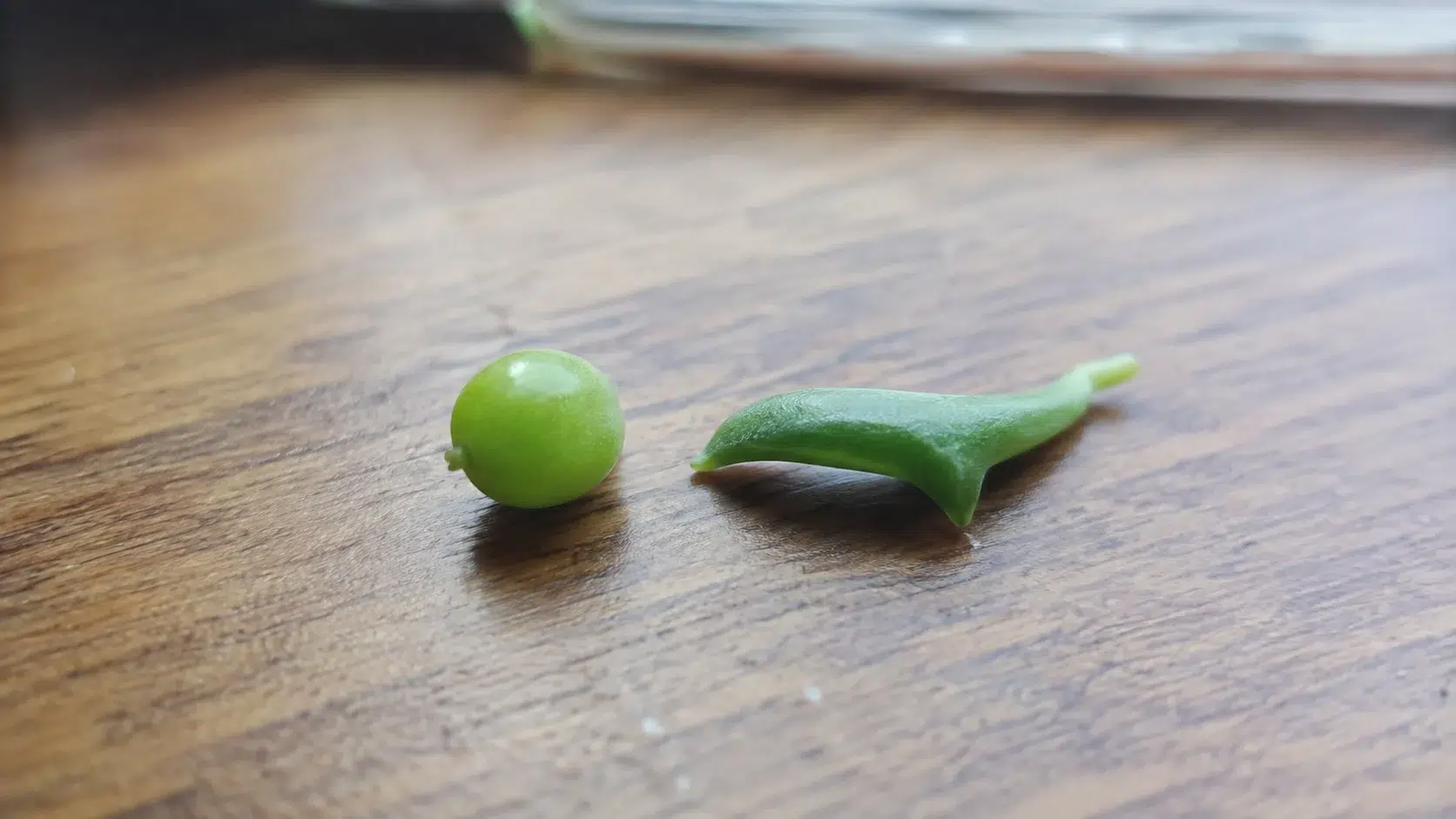
No. String of Dolphins (Curio × peregrinus, also sold as Senecio peregrinus) is a hybrid — a deliberate or naturally occurring cross between String of Pearls (Curio rowleyanus) and the hot dog cactus, also called candle plant (Curio articulatus). Think of it as Pearls’ offspring rather than its twin: it inherited the trailing habit and drought tolerance from the Pearls side, but its curved, notched leaf shape and its slightly narrower tolerance for wet soil come from its other parent. For the full watering, light, and propagation breakdown on the parent plant itself, see our complete String of Pearls care guide.
That parentage is also why care guides that say “treat it just like Pearls” aren’t wrong exactly — they’re just incomplete. Same family, same general philosophy, different margin for error. Its native range and full taxonomic history are documented on Wikipedia’s Curio rowleyanus entry.
Botanical Names at a Glance
- String of Pearls: Curio rowleyanus (older name: Senecio rowleyanus)
- String of Dolphins: Curio × peregrinus (older name: Senecio peregrinus)
- Shared genus: Curio, family Asteraceae
- Second parent of Dolphins: Curio articulatus (hot dog/candle plant)
You can view the full botanical profile for String of Pearls on the Missouri Botanical Garden’s Plant Finder.
Comparison Table: Pearls vs. Dolphins at a Glance
| Attribute | String of Pearls | String of Dolphins |
| Botanical name | Curio rowleyanus | Curio × peregrinus |
| Leaf shape | Round, bead-like | Curved, notched, dolphin-shaped, with a translucent leaf “window” |
| Light | Bright, 6–8 hrs indirect/morning sun | Bright light; slightly more shade-tolerant thanks to the leaf window, but scorches in harsh direct sun |
| Water | Soak-and-dry; wide drought tolerance | Soak-and-dry, but a narrower margin — prefers evenly moist-but-fast-draining soil and rots faster if left wet |
| Soil | Fast-draining cactus/succulent mix | Same fast-draining mix |
| Mature trail length | Up to 3 ft | 1–3 ft |
| Difficulty | Easier, more forgiving | Moderate — tougher than Pearls, more sensitive to both light and water extremes |
| Price / availability | Widely sold, moderate cost | Rarer; specialty growers often sell out and restock in small batches |
| Pet toxicity | Toxic to cats/dogs (vomiting, drooling, lethargy); mildly irritating to human skin | Toxic to cats/dogs via alkaloid compounds (vomiting, GI upset); mildly irritating to human skin |
No single source has this laid out in one place — most articles cover one plant and mention the other in a sentence. Bookmark this table before you shop.
Do They Actually Need Different Care? (The “Treat Them the Same” Myth)
Mostly, yes, they’re the same — with one real exception: watering tolerance. Both want bright light and fast-draining soil, and both should be watered on a soak-and-dry cycle rather than kept constantly damp. Where they split is how much room for error you get. Pearls will sit on the dry side for a while and barely complain. Dolphins, with its narrower margin, tips into root rot faster if the soil stays wet — and confusingly, a Dolphins plant that’s been overwatered often looks soft and swollen right before it collapses, not obviously waterlogged.
Light Requirements Compared
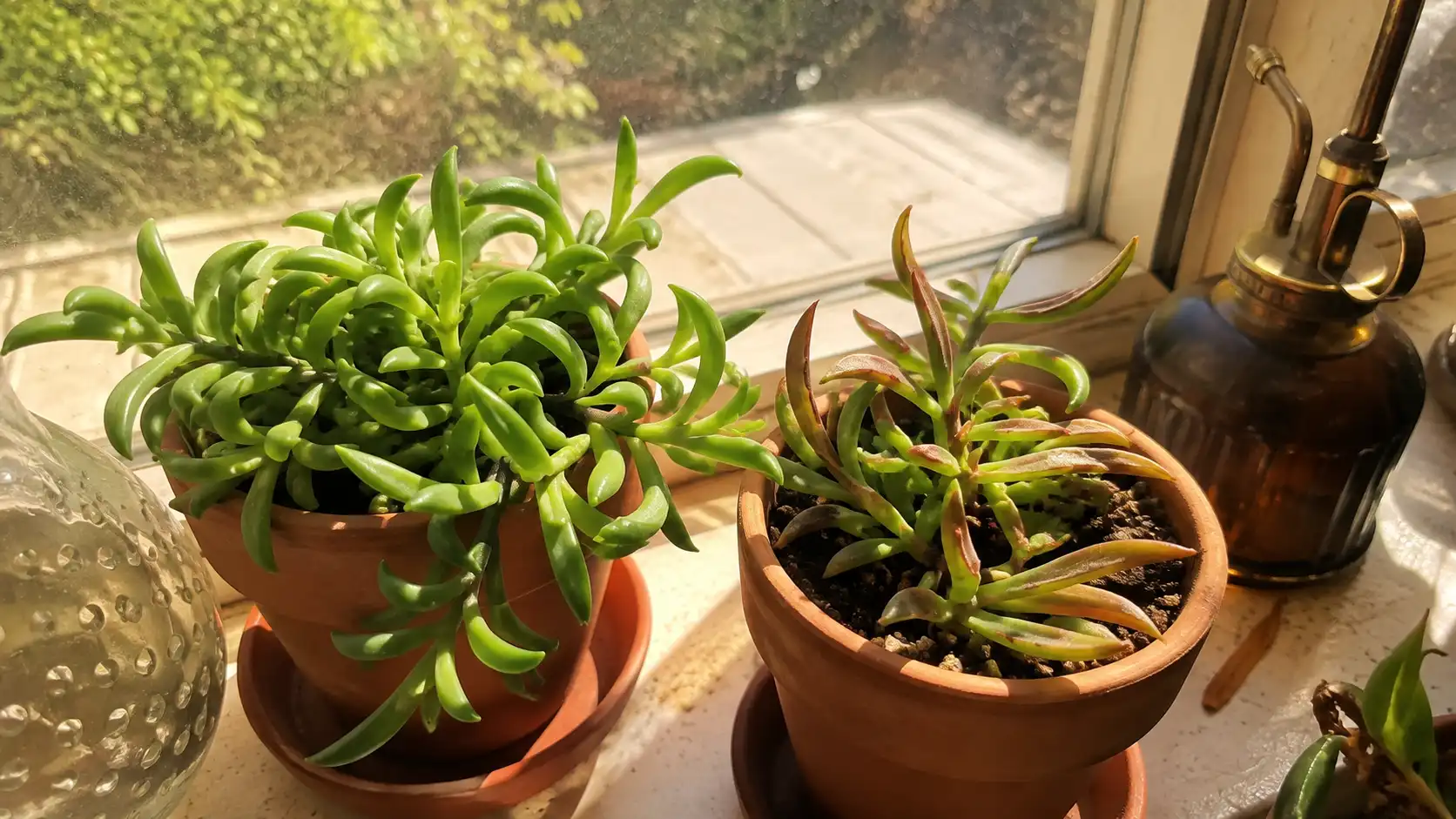
Both plants want strong, mostly indirect light, with tolerance for a few hours of gentle morning sun. Dolphins’ leaves have a translucent “window” that lets light reach the interior of the leaf, which is why it can handle slightly dimmer conditions than Pearls without stretching — but too little light still causes its distinctive curved leaves to lose their shape and flatten out, an early warning sign Pearls doesn’t really show in the same way. If you’re unsure what ‘bright indirect light’ actually means in your space, our guide to indirect vs. direct sunlight breaks it down room by room.
Watering and Soil
Use the same fast-draining succulent mix and the same soak-and-dry method for both. The practical difference: water Dolphins slightly less often, or in a slightly faster-draining pot, than you would Pearls in the same room — and never let either sit in standing water.
Which One Is More Beginner-Friendly?
String of Pearls is the better first “string of” plant. It tolerates inconsistent watering, is cheap enough to replace if you make a mistake, and is sold nearly everywhere. String of Dolphins rewards someone who’s already kept a succulent alive for a season — its narrower watering margin and light sensitivity punish overwatering and low light faster than Pearls will. Start with Pearls; add Dolphins once you trust your watering instincts.
Is One More Toxic Than the Other?
Neither is the safer pick for a household with pets. Both plants contain alkaloid compounds that cause similar symptoms if chewed or eaten — vomiting, drooling, lethargy, and general GI upset in cats and dogs — and both can mildly irritate human skin on contact with the sap. In practice, most pets don’t eat enough of either plant to cause more than mild, short-lived symptoms, but neither should be placed within paw’s reach, and any suspected ingestion is worth a call to your vet. For a broader look at which succulents are safe around cats and dogs, the ASPCA’s succulent safety overview is a reliable reference.
Symptoms to Watch For in Pets
Vomiting, excessive drooling, lethargy, or loss of appetite after chewing on either plant. Contact your vet or an animal poison control line if you see any of these, especially in kittens or small dogs.
Can You Grow Them Together in the Same Pot?
Yes — their light and soil needs are close enough to share a container comfortably. The risk isn’t compatibility, it’s watering: if you set a schedule tuned to Pearls’ drought tolerance, Dolphins may sit too wet in the same pot. Use a wide, shallow, well-draining container and lean slightly drier than you would for Pearls alone.
How to Tell Them Apart at the Nursery (The 5-Second ID Test)
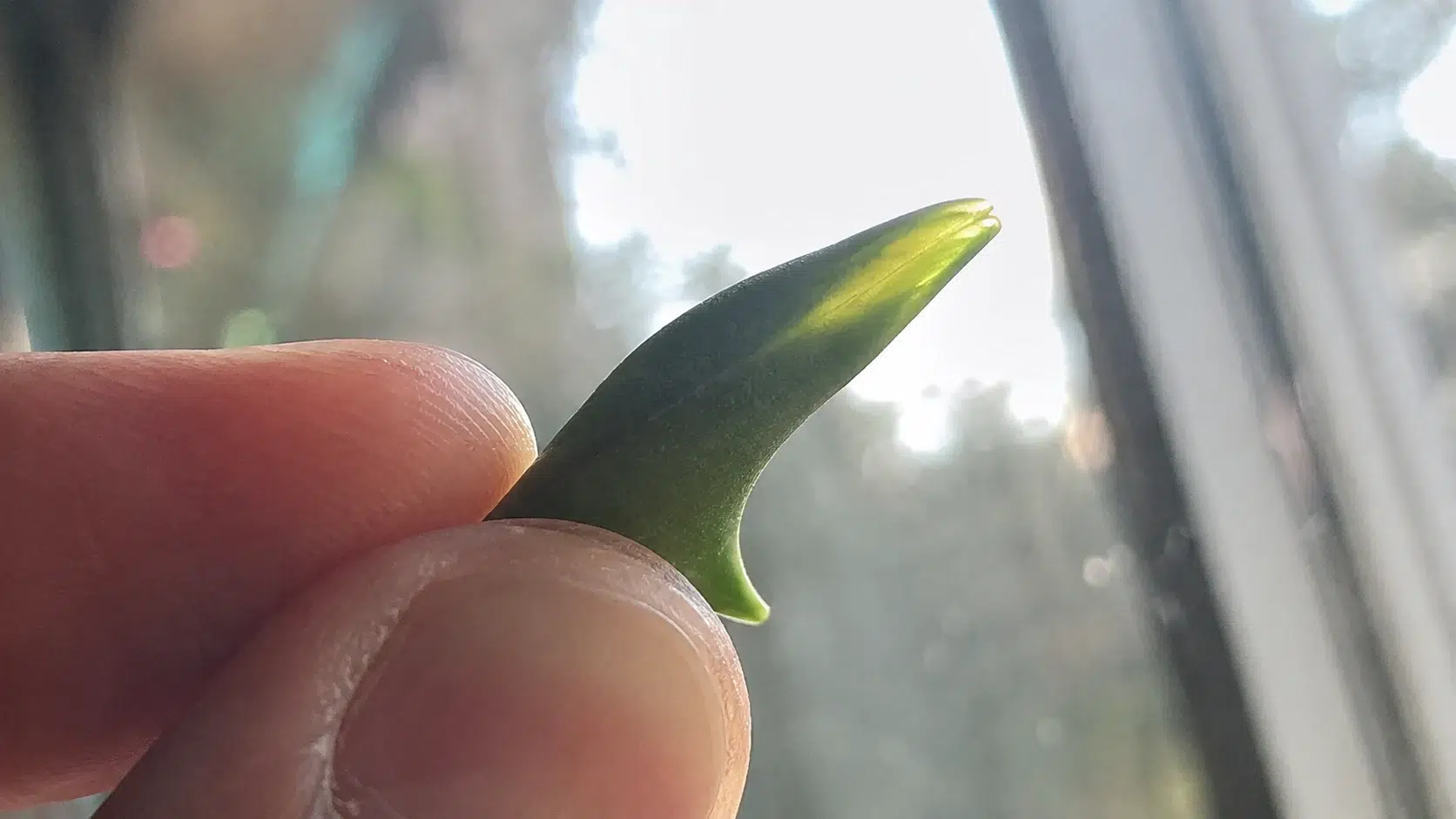
Mislabeling is common enough that it’s worth checking yourself. Look at the leaves: perfectly round, bead-like leaves mean Pearls. Curved, notched leaves that resemble tiny leaping dolphins mean Dolphins — and if you hold a leaf up to the light and see a lighter, translucent strip near the tip, that “leaf window” confirms it’s a Dolphin, not an immature or oddly shaped Pearl.
Which Is Harder to Find, and Why Does It Cost More?
String of Dolphins is the rarer, typically pricier plant. It’s propagated more slowly, in smaller batches, by fewer specialty growers, so supply lags well behind demand — it’s common to find it sold out or offered in limited quantities at nurseries that stock it at all. Pearls, by contrast, is propagated widely and is a nursery staple.
Do They Propagate the Same Way?
Yes. Both root from stem cuttings using the same method: let the cut end callus for a day or two, then lay or lightly bury it in fast-draining soil and keep it barely moist until roots form. Since both plants root the same way, our step-by-step String of Pearls propagation guide works for taking Dolphins cuttings too.
Troubleshooting: Shriveling vs. Yellowing in Both Plants
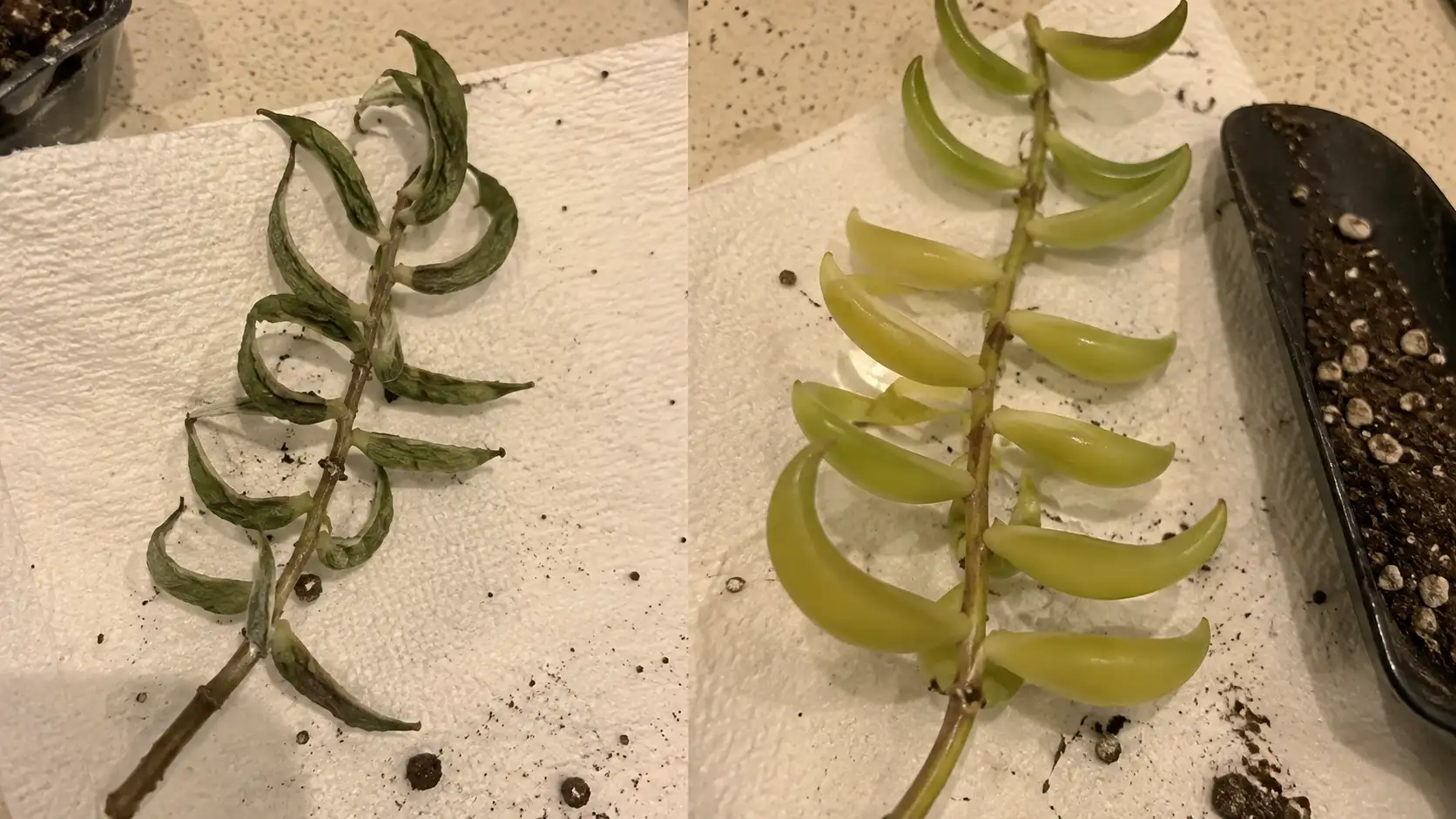
Because both plants store water in their leaves, the leaves themselves are your diagnostic tool. Shriveled, deflated leaves mean the plant is thirsty — water it. Soft, mushy, translucent, or yellowing leaves mean the opposite: too much water, likely heading toward root rot. Dolphins tips into this second failure mode faster than Pearls, so check its soil moisture more often. A separate warning sign specific to Dolphins: leaves losing their curved shape and flattening out points to low light, not a watering problem. Not sure whether you’re looking at thirst or rot? Our general guide to checking if any indoor plant needs water is a useful gut-check before you reach for the watering can.
Beginner Mistakes With Both Plants
- Overwatering out of “succulents need less water” anxiety, then overcorrecting into a soggy pot
- Placing either plant in low light, causing legginess in Pearls or shape loss in Dolphins
- Using a decorative pot with no drainage hole
- Ignoring early aphid or mealybug buildup in dry indoor air
Pests and Environmental Limits
Both plants are largely pest-resistant but can attract aphids, mealybugs, or spider mites in dry indoor conditions — treat with insecticidal soap or a cotton swab dipped in rubbing alcohol. Neither is frost-hardy; both need to come indoors before temperatures drop near freezing. If you spot early aphid clusters on either plant, our aphid removal guide for houseplants covers safe, effective treatment options.
Conclusion
String of Pearls and String of Dolphins share a genus, a growth habit, and most of their care requirements — but they are not interchangeable. Dolphins is Pearls’ hybrid offspring, with a narrower watering margin, a pickier light requirement, a higher price tag, and lower availability. Both are equally unsafe around curious pets. If you’re choosing your first “string of” plant, start with Pearls. Once you’ve proven you can resist overwatering, Dolphins is a striking, worthwhile addition — and now you know exactly how to spot the real thing on the shelf. Looking for more comparisons like this? Check out our Indoor Green Living Hub for the complete indoor plant care library.
FAQs
Is String of Dolphins just a String of Pearls hybrid, or a separate species?
It’s a true hybrid — a cross between String of Pearls and the hot dog cactus — not a separate wild species and not a rebranded Pearls.
Can I water my String of Pearls and String of Dolphins on the same schedule?
You can start there, but lean drier for a mixed collection, since Dolphins rots faster than Pearls if the schedule runs too wet.
Why does my String of Dolphins look like it’s unfurling or losing its shape?
That’s typically a light problem, not a watering problem — Dolphins needs consistently bright light to hold its curved leaf shape.
Are String of Pearls or String of Dolphins safe if I have cats or dogs?
No — both are toxic to cats and dogs and can cause vomiting, drooling, or GI upset if eaten, so neither is the safer pick for a pet household.
Why is String of Dolphins more expensive than String of Pearls?
It’s propagated more slowly in smaller specialty-grower batches, so tighter supply keeps prices and availability less predictable than the widely propagated Pearls.
How can I tell if a nursery mislabeled my cutting?
Wait for the leaves to mature, then check the shape: perfectly round means Pearls; curved and notched with a translucent tip “window” confirms Dolphins.



One Response