
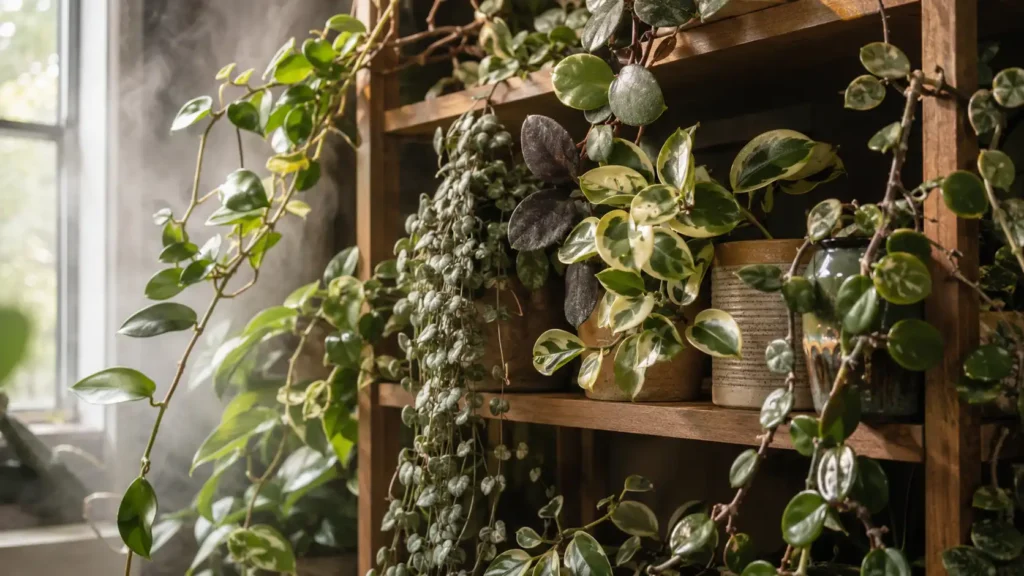
Rare Hoya varieties are Hoya species or cultivars that are difficult to obtain because of limited natural distribution, restricted propagation, or highly sought-after variegation. Unlike common houseplant Hoyas such as Hoya carnosa or Hoya kerrii, rare types are prized for scarcity, unusual foliage, or hard-to-replicate blooms. This guide defines what “rare” actually means in Hoya collecting, tiers genuinely worthwhile varieties by attainability, and covers sourcing, scam avoidance, and care adjustments — building on the fundamentals in our Hoya care for beginners guide.
Many rare Hoya varieties are prized for their cascading growth habit, making them a favorite among trailing houseplants lovers.
By Elemo Baker | Plant Care & Gardening Expert
Last Updated: September 2026
Quick Summary
- Rarity in Hoyas comes from three distinct sources: species scarcity, cultivar/variegation, or limited propagation — not marketing language.
- True grail species like Hoya macgillivrayi differ sharply in difficulty from attainable rare cultivars like variegated Hoya curtisii.
- Common scam signals include prices well below market rate, stock photos instead of the actual plant, and vague or copy-pasted descriptions.
- Most rare Hoyas need higher humidity (60–80%), bright indirect light, and a faster-draining substrate than standard carnosa-type Hoyas.
- Specialty nurseries and vetted collector communities are safer sources than open marketplaces.
1. What Makes a Hoya “Rare”?
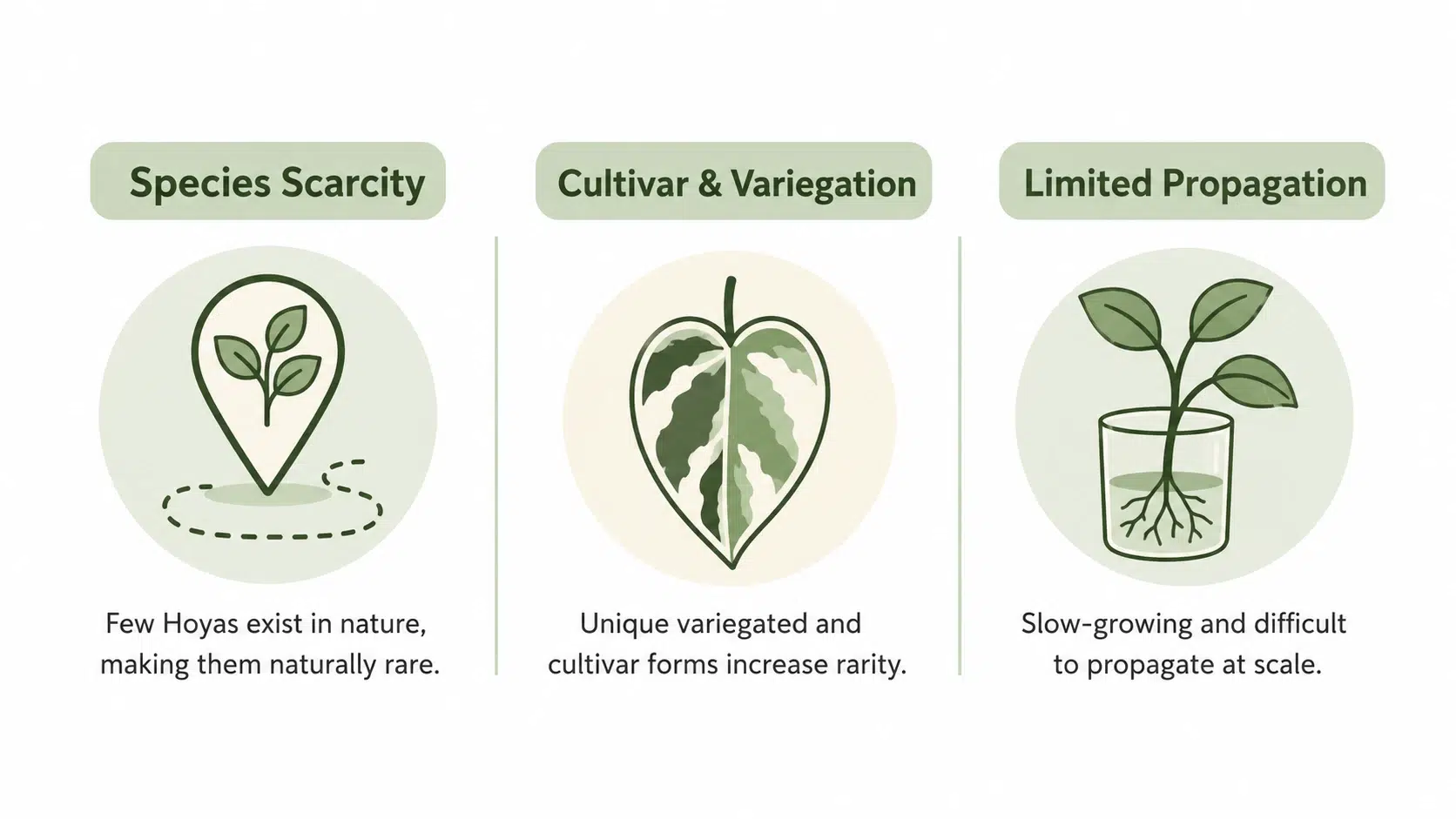
A Hoya is considered rare when it is genuinely scarce in cultivation, not simply uncommon in big-box stores. Three separate factors drive rarity:
Species Scarcity
Some Hoya species, such as Hoya macgillivrayi, occur in narrow native ranges (in this case, parts of Queensland, Australia) and were never widely distributed into the hobby trade. Limited wild collection and slow seed propagation keep supply low.
Cultivar and Variegation Rarity
A cultivar can be rare even when its parent species is common. Variegated forms — where a genetic mutation produces white, cream, or pink patterning on the leaves — are typically slower-growing and harder to propagate true-to-type, which raises both scarcity and price. Our Hoya compacta variegata care guide covers one widely collected example of this category.
Limited Propagation
Some Hoyas are botanically not rare in the wild but are difficult to propagate from cuttings, root slowly, or produce few viable offsets. This bottlenecks supply regardless of natural abundance.
In our experience growing Hoyas across all three categories, propagation-limited types are often the most frustrating for collectors: the plant itself isn’t inherently delicate, but sourcing enough material to grow a specimen-sized plant takes years. Baseline Hoya care standards — bright indirect light and warm indoor temperatures — are well documented by the Royal Horticultural Society’s Hoya growing guide, which most rare varieties diverge from in humidity needs.
2. Rare Species vs. Rare Cultivars: What’s the Difference?
A rare species is a naturally occurring, taxonomically distinct plant (family Apocynaceae, subfamily Asclepiadoideae) that exists in limited numbers regardless of human intervention. A rare cultivar is a selectively propagated variant of an existing species — often a common one — that has been bred or selected for a specific trait like variegation, leaf shape, or compact growth.
This distinction matters for buyers: a rare species typically demands species-appropriate humidity, light, and substrate research, since less general care information exists. A rare cultivar usually follows its parent species’ care profile closely, with adjustments mainly for reduced chlorophyll in variegated tissue (variegated leaves photosynthesize less efficiently and often need slightly more light). Taxonomic classification for the genus is maintained by Kew’s Plants of the World Online database, the reference standard collectors can use to confirm a species name before buying.
3. Rare Hoya Varieties Worth Seeking Out
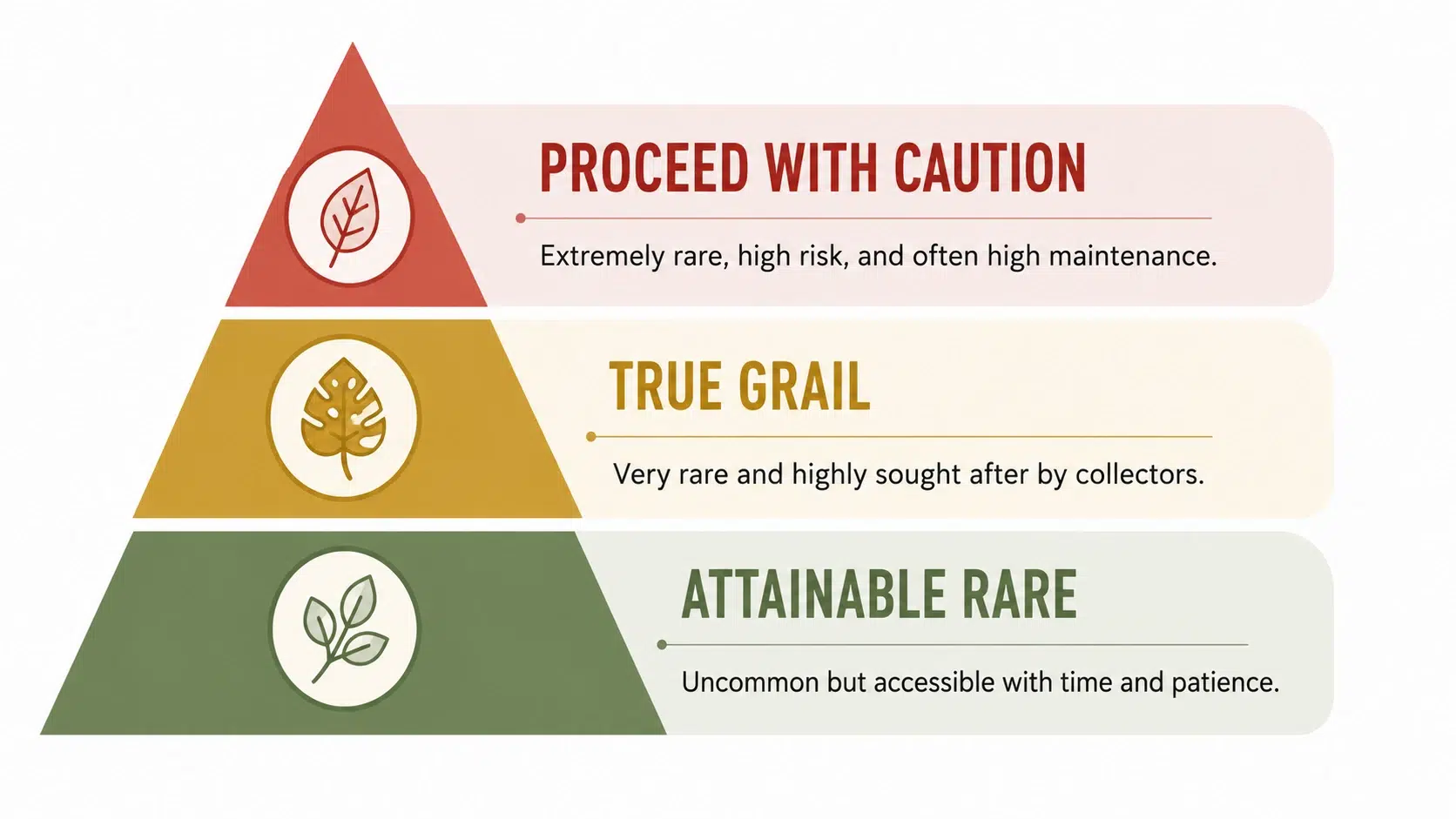
Elemo Baker recommends approaching rare Hoya collecting in tiers rather than treating every “rare” listing as equally worthwhile.
Attainable Rare
- Hoya curtisii ‘Variegata’ — A small-leaved climbing species with cream variegation; slow but manageable indoors. See our Hoya curtisii variegated guide for propagation specifics.
- Hoya linearis — Native to the Himalayas, valued for trailing silvery foliage and fragrant blooms; covered in depth in our Hoya linearis flowering guide.
- Hoya bella — Compact and floriferous, increasingly considered a “gateway rare” once growers move past carnosa types; see our Hoya bella propagation guide.
True Grail
- Hoya macgillivrayi — Large, deep red-maroon flowers; slow-growing and genuinely uncommon in cultivation.
- Hoya coriacea — Thick, leathery, elongated leaves; demanding light requirements make it a genuine challenge indoors.
Proceed With Caution
- Hoya sp. “Aceh Gomas” and similarly unresolved field-collected names — often sold before formal species identification is confirmed, meaning buyers may receive inconsistent plants under the same label.
4. Care Comparison: Featured Rare Hoyas
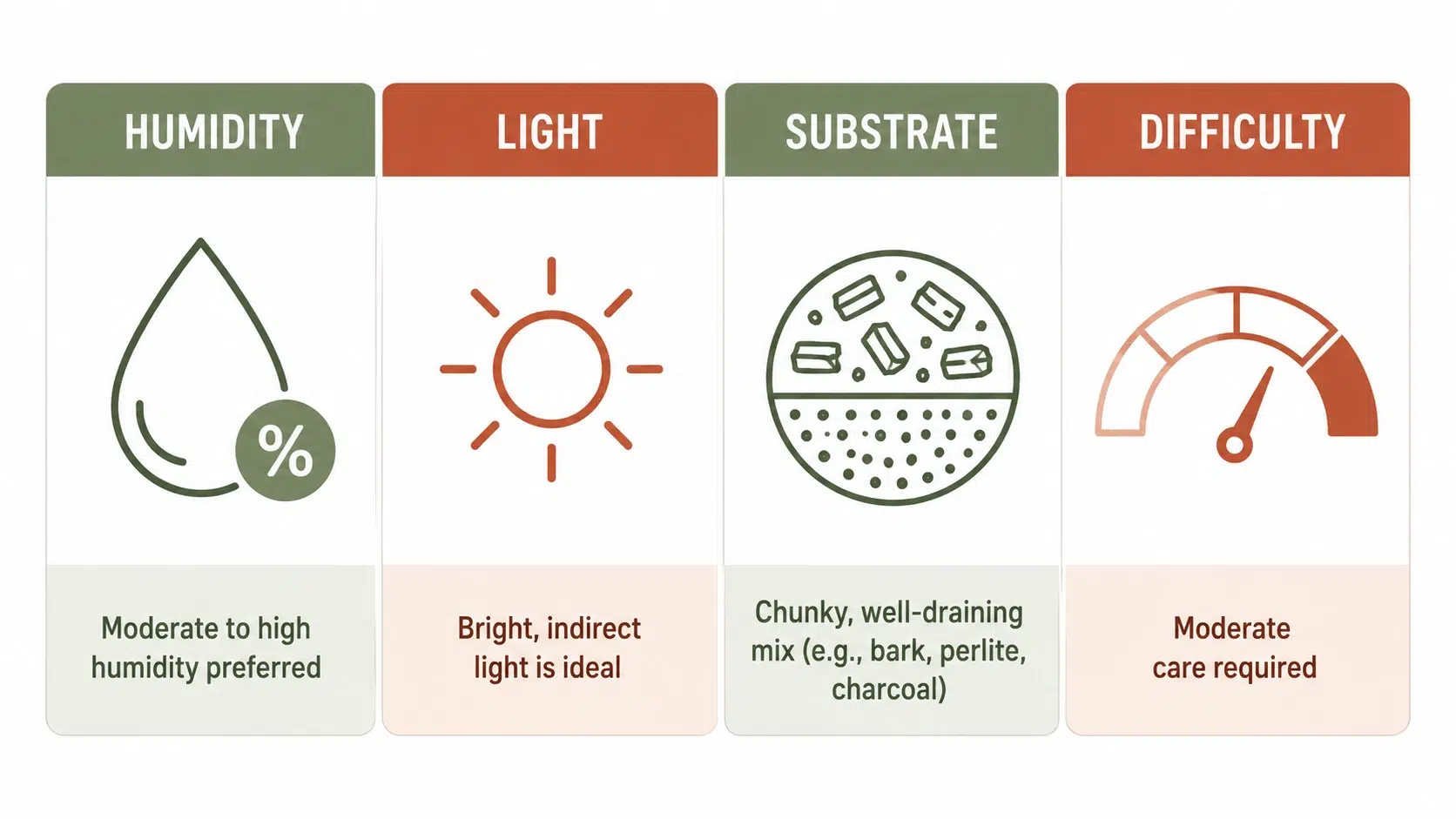
| Variety | Humidity | Light | Substrate/Mounting | Difficulty |
| Hoya curtisii ‘Variegata’ | 50–60% | Bright, indirect | Chunky, well-draining mix | Easy–moderate |
| Hoya linearis | 60–70% | Bright, indirect | Airy, moss-based mix | Moderate |
| Hoya bella | 50–60% | Bright, indirect | Well-draining potting mix | Easy |
| Hoya macgillivrayi | 70–80% | Bright, some direct | Chunky bark mix or mounted | Difficult |
| Hoya coriacea | 65–75% | Bright, indirect–direct | Bark-based, mounted preferred | Difficult |
5. Red Flags When Buying Rare Hoyas Online
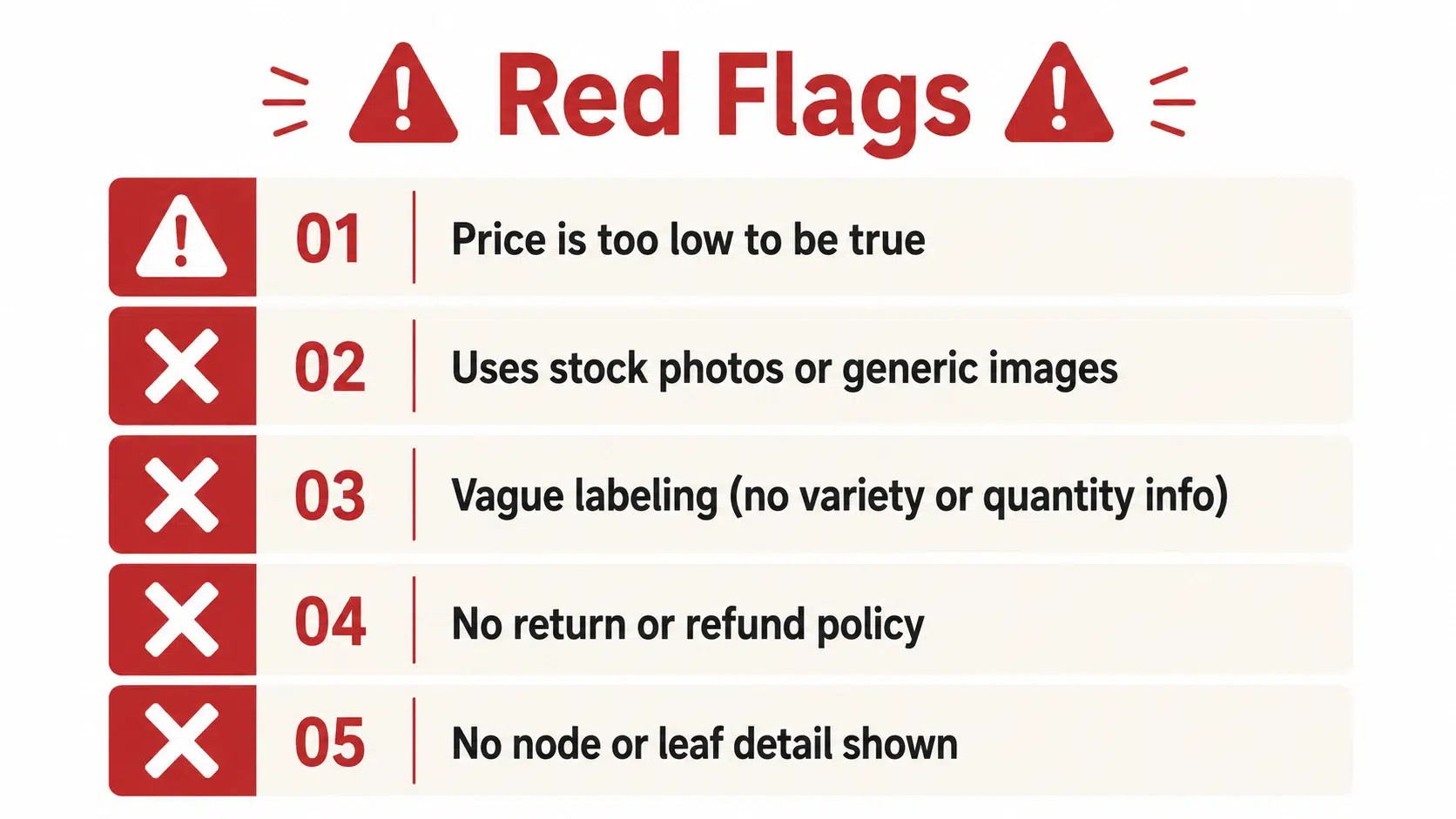
Collector forum complaints reveal recurring patterns worth checking before purchase:
- Price far below typical market range for a named rare variety.
- Stock or borrowed photos rather than images of the actual cutting or plant being shipped.
- Vague labeling, such as “rare Hoya mix” with no species or cultivar name.
- No return or ID-guarantee policy if the plant doesn’t match its listing once it matures.
- Seller unwilling to show node detail or leaf undersides, which are often needed to confirm identity.
Beyond plant-specific red flags, the FTC’s guidance on buying from online marketplaces recommends never paying outside a platform’s official payment system, since doing so forfeits any buyer protection.
6. Where to Source Rare Hoyas Legitimately
Specialty Hoya nurseries with documented sourcing, active collector communities with vetted seller lists, and botanical garden plant sales tend to carry lower mislabeling risk than open marketplace listings. As of 2026, more growers are also verifying rare listings against reference photos in dedicated Hoya identification groups before purchasing, an extra step that has reduced mislabeled-cutting complaints in several active collector communities.
7. Caring for High-Humidity, Epiphytic Rare Hoyas
Many rare Hoyas are epiphytic in the wild, growing on tree bark rather than in soil.
This calls for adjustments beyond standard Hoya care:
- Substrate: Chunky, fast-draining bark or moss mixes rather than dense potting soil.
- Humidity: 60–80% for many grail-tier species, versus 40–50% tolerated by common carnosa types.
- Mounting: Some species, like Hoya coriacea, often perform better mounted on bark than potted.
- Watering: Allow the mix to dry faster between waterings than you would for soil-based Hoyas, since epiphytic roots are prone to rot in retained moisture.
A common beginner mistake is applying the same watering schedule used for common Hoyas to these more humidity-dependent species, which frequently leads to root rot rather than the intended extra hydration.
Conclusion
Rare Hoya varieties reward patient, informed collectors more than impulse buyers. Understanding whether a plant is rare due to species scarcity, cultivar variegation, or propagation limits helps set realistic care and pricing expectations. Starting with attainable rare varieties, verifying sellers carefully, and adjusting humidity and substrate for epiphytic species are the practical steps that separate a thriving rare Hoya collection from an expensive disappointment.
Frequently Asked Questions
What is the rarest Hoya variety?
Hoya macgillivrayi is widely considered among the rarest in active cultivation due to its narrow native range and slow propagation rate.
Are variegated Hoyas rarer than species Hoyas?
Not inherently — variegated cultivars can be rarer than their parent species because variegation is harder to propagate true-to-type, but this varies by specific plant.
How do I know if a “rare” Hoya listing is legitimate?
Check for a specific species or cultivar name, real (non-stock) photos of the actual plant, and a seller with a documented sourcing or identification policy.
Do rare Hoyas need different care than common Hoyas?
Many rare, epiphytic species need higher humidity and faster-draining substrate than common carnosa-type Hoyas, though care overlaps significantly at the genus level.
What’s a fair price for a rare Hoya cutting?
Prices vary widely by species, but a price far below what similar verified listings charge for the same named variety is a common scam indicator.