
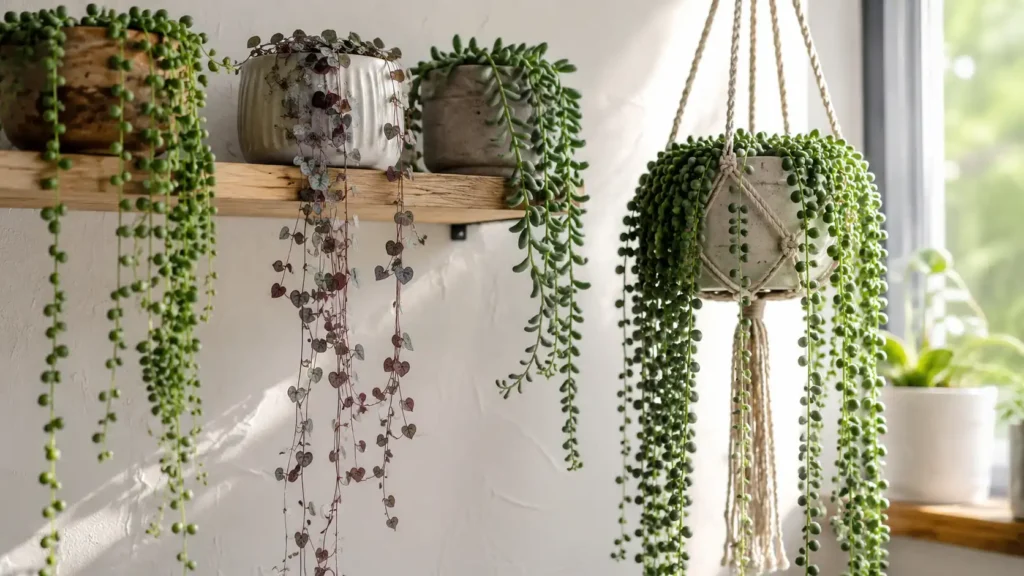
If you own a string succulent — String of Pearls, String of Hearts, String of Bananas, String of Dolphins, or String of Turtles — chances are you didn’t buy it because you researched its care sheet first. You bought it (or someone gave it to you) because it looked incredible cascading over a shelf. And now it looks… not like that. Thin. Patchy. One long strand instead of a full curtain of growth.
String and vine succulents are trailing plants prized for that cascading habit, but despite looking similar, they don’t all want the same light, water, or handling. Most of the advice online treats them as one plant with one set of rules, which is exactly why so many people end up here — with a plant that’s alive, but not thriving.
This guide treats them as a family with real differences, and focuses on the part most care guides skip: what to do when something’s already gone wrong.
Quick Summary
- String and vine succulents share a trailing growth habit, but light, water, and propagation needs differ enough between them that “one-size-fits-all” care is the #1 cause of problems.
- Sparse, leggy strands are almost always apical dominance — not a disease — and it’s fixable with a simple pinch.
- Shriveled leaves usually mean the plant is thirsty; soft, translucent, or mushy leaves mean it’s had too much water.
- Propagation works best when the method (laying, looping, or cutting) matches how the specific plant naturally roots.
Meet the String and Vine Succulent Family
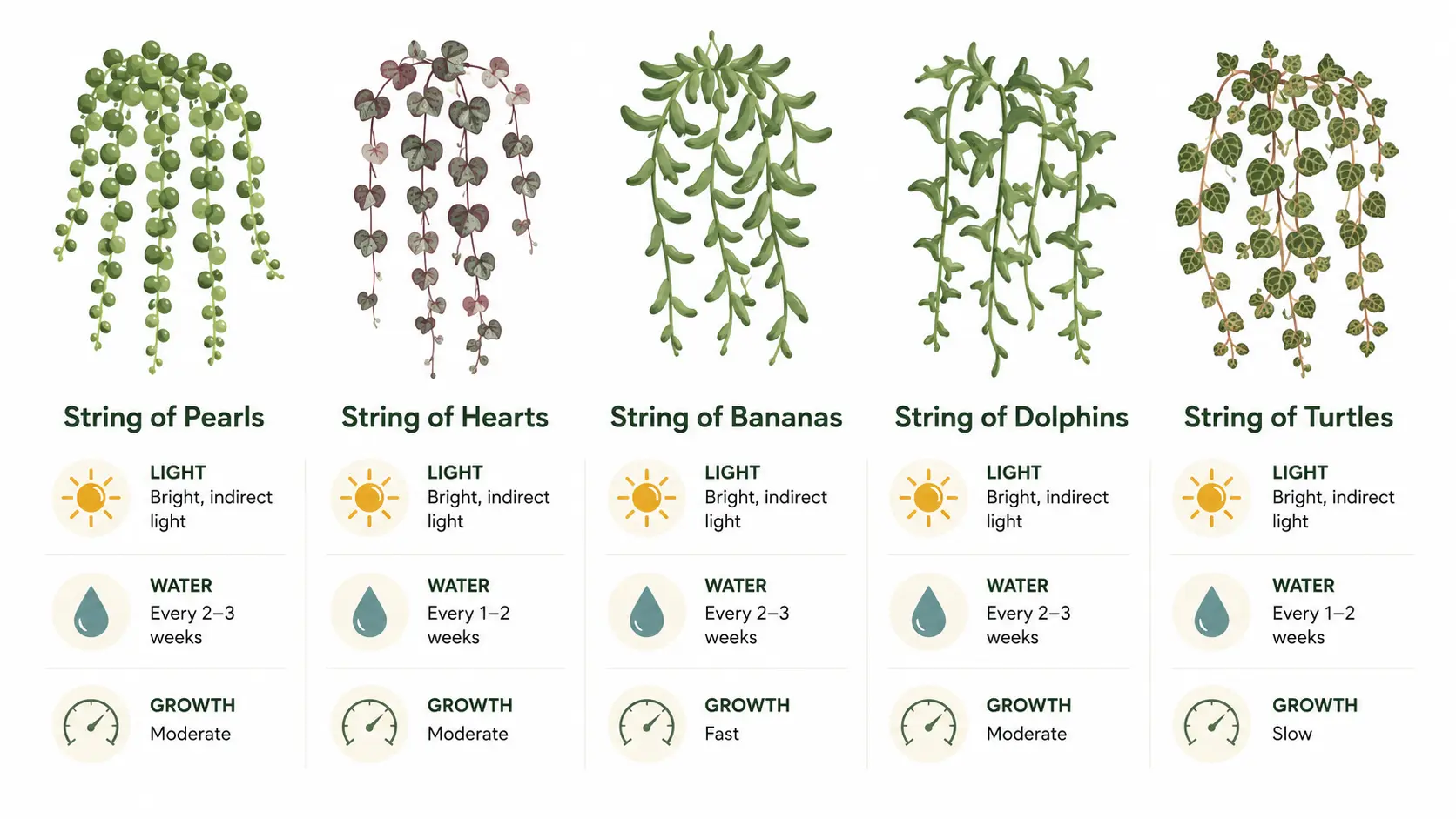
These plants get lumped together because they all trail, but they come from different genera and behave differently.
- String of Pearls (Curio rowleyanus, formerly Senecio rowleyanus) — round, pea-like beads; the most sensitive to overwatering of the group.
- String of Hearts (Ceropegia woodii) — heart-shaped leaves on wiry vines; tolerates lower light better than most.
- String of Bananas / Fish Hooks (Curio radicans) — curved, banana-shaped leaves; generally the fastest and most forgiving grower.
- String of Dolphins (Curio × peregrinus, a Pearls × Bananas hybrid) — leaves shaped like tiny leaping dolphins; care sits between its two parent plants. If you’re trying to tell it apart from its Pearls parent, our String of Pearls vs. String of Dolphins comparison breaks down the leaf shape and care differences side by side.
- String of Turtles (Peperomia prostrata) — technically not a true succulent at all (it’s a Peperomia), but it gets grouped here because it trails, stores water in its leaves, and shows up in the same searches. It wants noticeably more humidity than the others.
- String of Tears (Senecio citriformis) — a lesser-known, lemon-shaped-leaf cousin often confused with Pearls or Dolphins; see our String of Tears plant care guide if that’s the one on your shelf.
String of Pearls has enough species-specific quirks — dormancy timing, bead shape variations, common failure points — that it gets its own deep-dive in our Senecio rowleyanus care guide.
Trailing houseplants come in a few distinct growth styles, and string and vine succulents are just one branch of the family — see our full guide on what makes a houseplant “trailing” to see how it compares to climbers and hanging varieties.
At a Glance: How They Compare
| Variety | Light | Water | Best Propagation Method | Toxic to Pets? | Growth Speed |
| String of Pearls | Bright, indirect; some direct morning sun | Let dry fully between waterings | Laying | Mildly toxic | Moderate |
| String of Hearts | Bright, indirect; tolerates some low light | Let dry fully between waterings | Looping | Non-toxic | Moderate |
| String of Bananas | Bright, indirect to some direct | Let dry fully, slightly more forgiving | Laying | Mildly toxic | Fast |
| String of Dolphins | Bright, indirect | Let dry fully between waterings | Laying | Mildly toxic | Moderate |
| String of Turtles | Bright, indirect; avoid direct sun | Keep lightly moist, don’t let fully dry out | Node cutting (“butterfly” method) | Non-toxic | Slow |
If you only remember one thing from this table: String of Turtles is the outlier. Treat it like the others and it will struggle.
Why Is My String Succulent Leggy or Sparse?
This is usually the reason people search for this topic in the first place, so it gets answered first, directly.
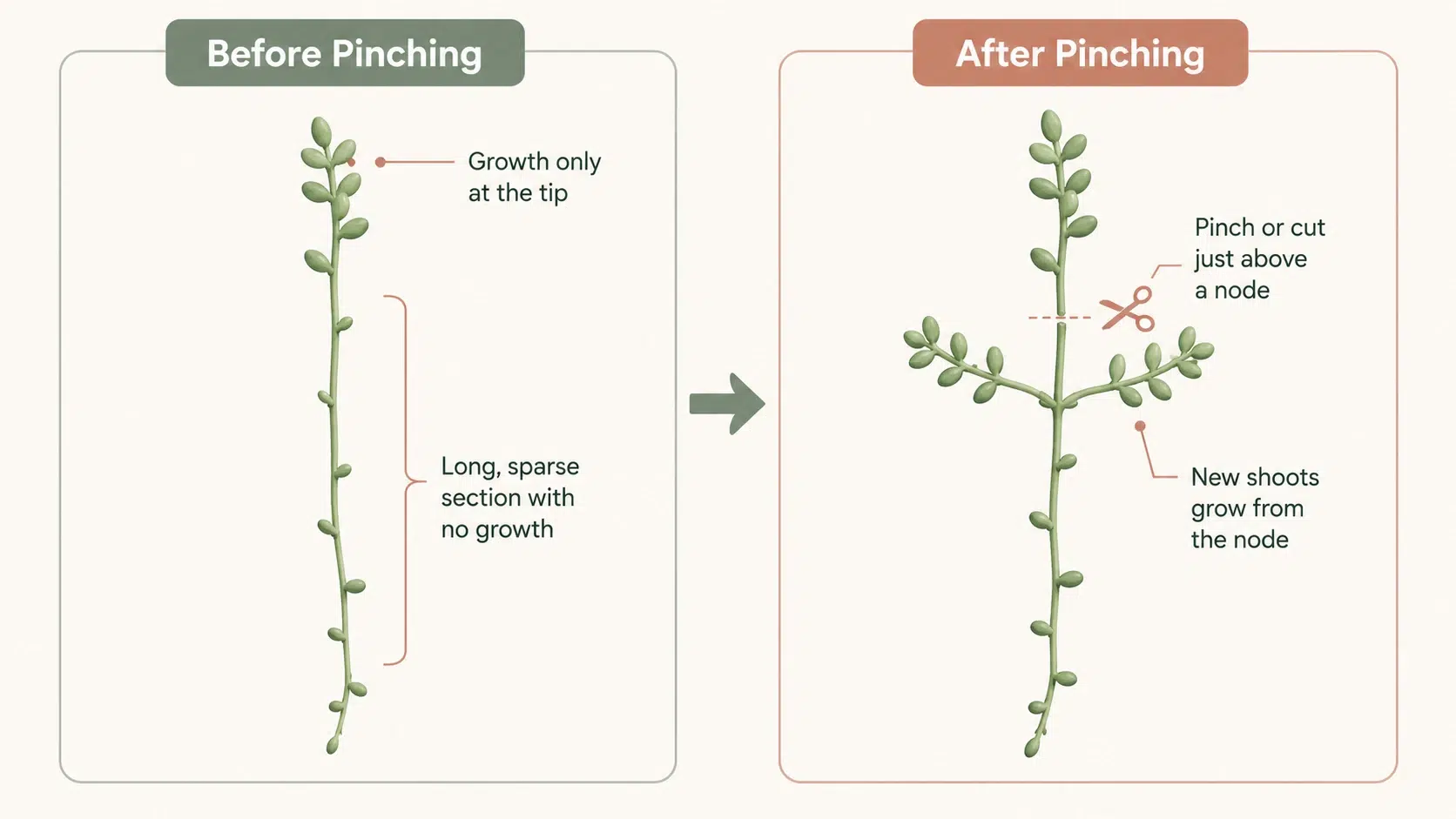
The direct answer: a single long, bare strand with growth only at the tip is caused by apical dominance — the growing tip produces a hormone that suppresses side shoots from forming further down the vine. Low light makes it worse by causing the plant to stretch (etiolation) as it reaches for more light.
Why it happens: as long as the tip is intact and growing, the plant has no biological reason to branch out. It puts all its energy into extending that one point. Left alone, this is exactly how you end up with a single 3-foot strand and a mostly bald pot.
The fix: pinch or snip the growing tip off each strand, just above a node (the small bump where a leaf or bead attaches). Removing the tip breaks the hormone’s suppression and typically triggers two or more new shoots to form from the nodes just below the cut. This works across String of Pearls, Bananas, Dolphins, and Hearts. For String of Turtles, cut just above a leaf node rather than the very tip, since its growth pattern is a bit less vine-like. Do this during active growth (spring through early fall) rather than in winter dormancy, when the plant is slower to recover.
Troubleshooting by Symptom
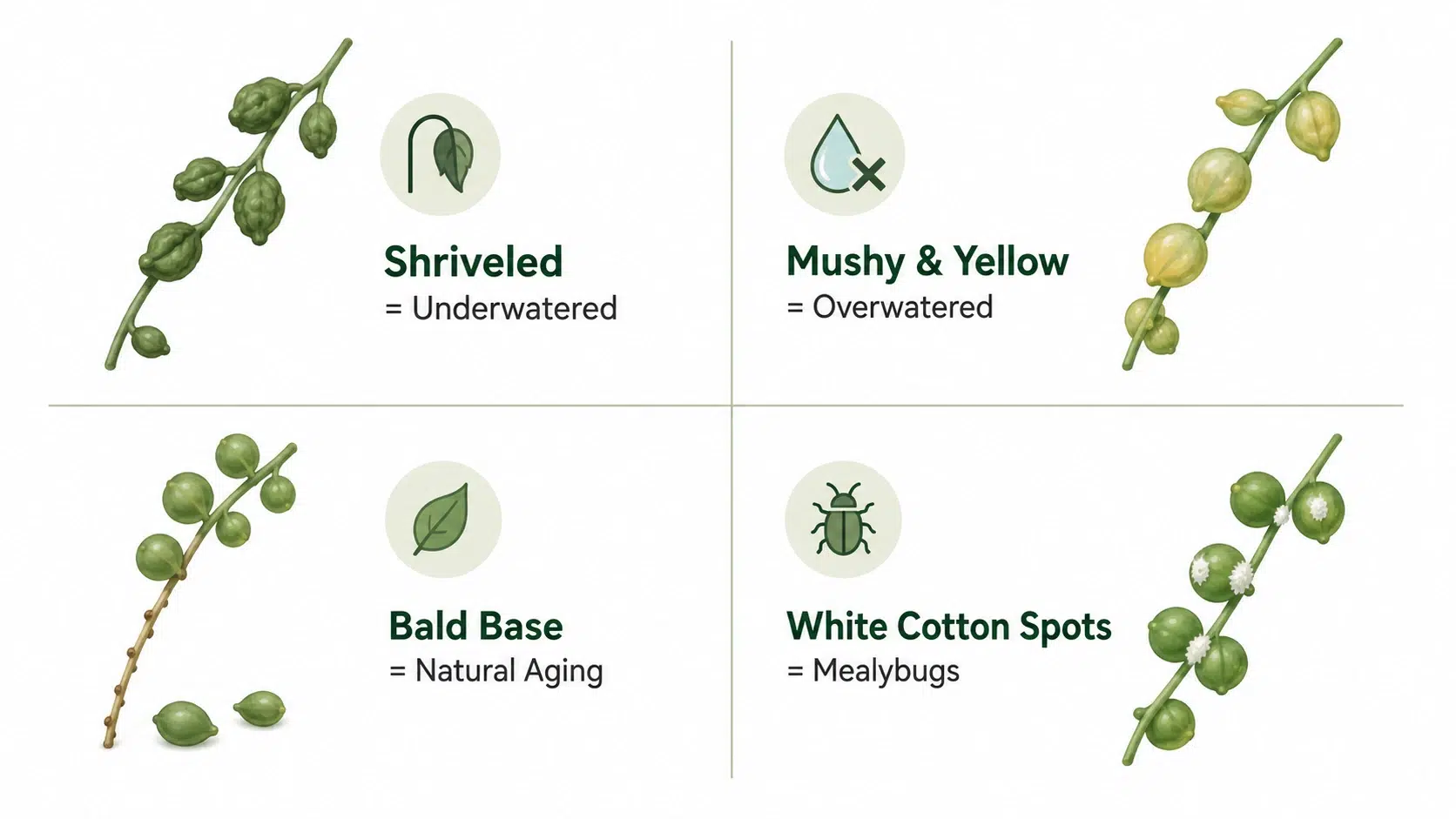
Instead of guessing which article matches your specific plant, start with what you’re actually seeing.
Shriveled or deflated beads/leaves This is thirst, not disease. Succulent leaves store water, and when the reserve runs low, they visibly shrink and soften. Fix it with a deep, thorough watering (soak until it runs from the drainage hole) rather than frequent light sips, then let the soil dry out fully again before the next watering.
Yellowing or soft, translucent, mushy leaves This is the opposite problem — too much water, too often, or a pot without adequate drainage. Left unchecked it progresses to root rot. Stop watering immediately, check the roots (healthy roots are white/tan and firm; rotten ones are brown, mushy, and smell off), trim away any rot, and repot into fresh, fast-draining soil. Iowa State University Extension’s guide to common succulent problems confirms this pattern is often mistaken for underwatering, which leads owners to add more water and make the rot worse.
Bald patches or missing beads near the base Older growth naturally sheds beads and leaves closest to the soil over time — this is normal aging, not a problem to fix. It only becomes a concern if it’s happening rapidly across the whole plant, which usually points back to inconsistent watering or too little light.
Mealybugs Look for small white, cottony clusters tucked into the crevices where leaves meet the stem — a favorite hiding spot on trailing succulents. Dab them directly with a cotton swab dipped in rubbing alcohol, then follow up weekly for a few weeks, since eggs hatch in waves. This matches the treatment University of Maryland Extension recommends for mealybugs on indoor plants, which also warns to keep alcohol off the leaves themselves to avoid damage.
Propagation: Which Method for Which Plant
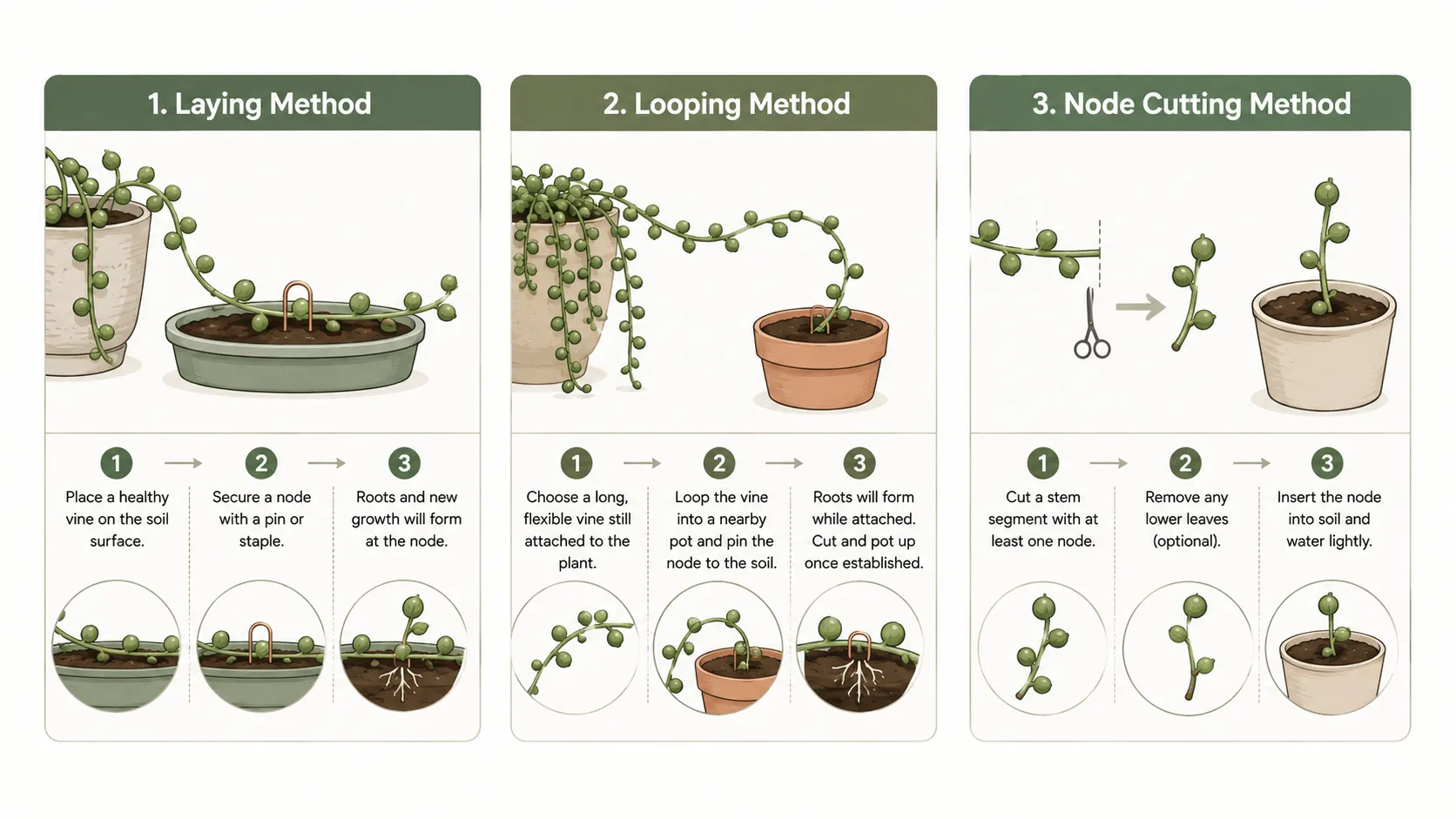
Not every string succulent roots the same way, and using the wrong method is a common reason cuttings fail.
- Laying method (String of Pearls, String of Bananas, String of Dolphins): lay a cutting flat across moist, well-draining soil so the underside of the strand makes contact with it. Roots form along the length of the vine wherever it touches soil. For the full step-by-step on timing, cutting length, and aftercare specific to Pearls, see how to propagate String of Pearls.
- Looping method (String of Hearts): instead of cutting the vine free, loop a section of an attached vine down into a neighboring pot of soil while it’s still connected to the mother plant. It roots while still being fed by the parent, then can be severed once established. Our dedicated String of Hearts propagation guide walks through exactly where to loop and when to cut it free.
- Node cutting / “butterfly” method (String of Turtles, and works for Dolphins too): cut a short section containing at least one healthy node, and place it directly into soil with the node buried, leaves above the surface.
Across all methods, bright indirect light and soil that stays barely moist (not wet) during rooting gives cuttings the best shot. Yellow, mushy cuttings usually mean the soil stayed too wet; cuttings that shrivel before rooting usually mean it stayed too dry or the light was too low.
Light, Soil, Pot, and Watering Basics
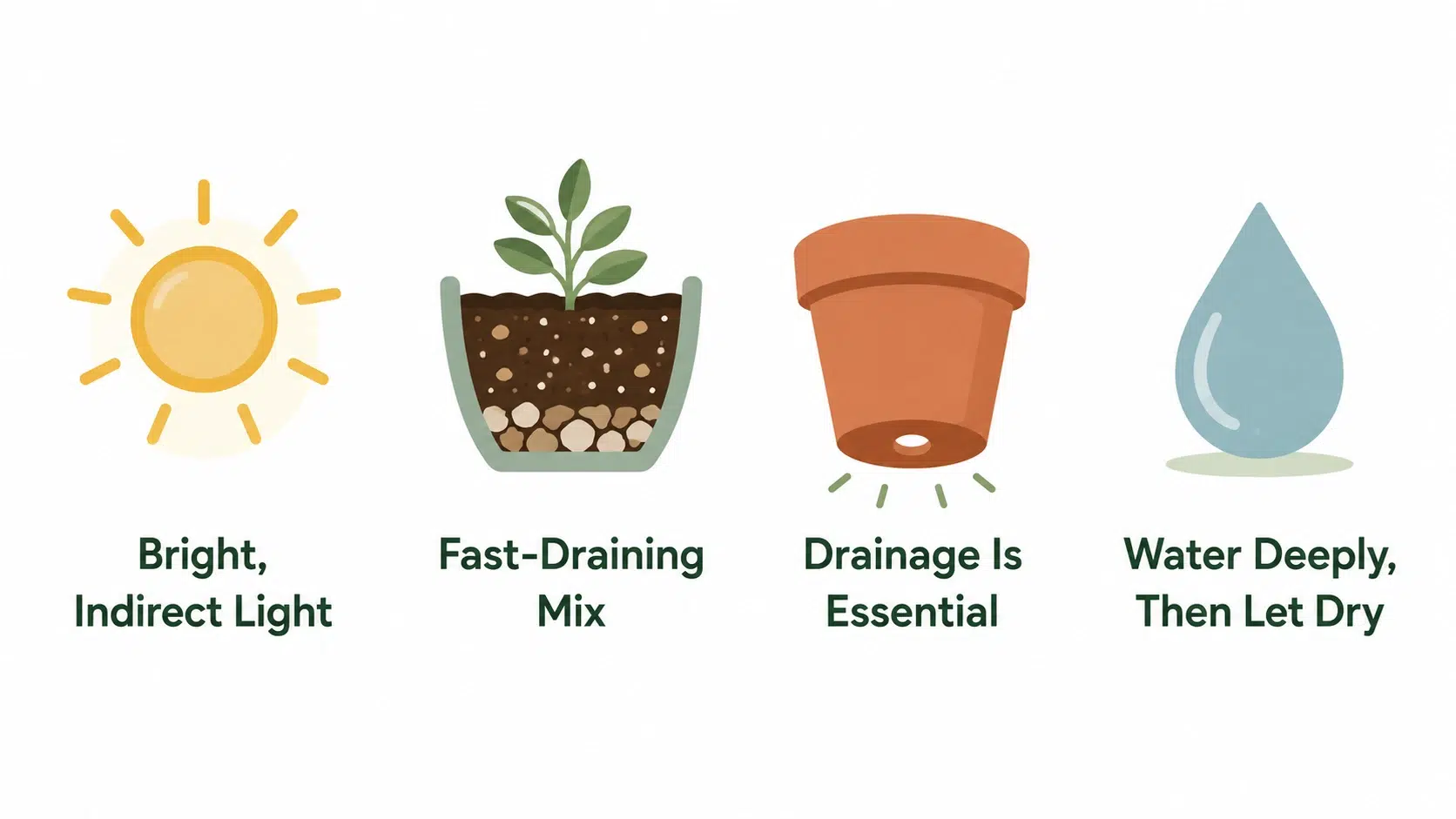
Trailing succulents dry out faster than a similarly-sized upright succulent, because more of their surface area (spread across a long, cascading strand) is exposed to air. That’s the main reason “regular succulent care” advice sometimes falls short here.
- Light: bright, indirect light is the safe default for the whole family; String of Pearls and Bananas can handle some direct morning sun. String of Turtles is the exception — keep it out of direct sun entirely.
- Soil: a fast-draining succulent or cactus mix, ideally amended with extra perlite or pumice, prevents the soggy-soil conditions that cause rot.
- Pot: a pot with a drainage hole is close to non-negotiable for this plant family, given how rot-prone they are when water pools around the roots. Hanging pots or shallow, wide containers both work — the priority is drainage, not shape.
- Watering: water thoroughly, then let the soil dry out completely before watering again (String of Turtles wants to stay lightly moist rather than fully dry). “When in doubt, wait” is the safer default than watering on a fixed schedule.
Growth Rate: Fast, Moderate, or Slow?
String of Bananas tends to grow fastest and most vigorously of the group. String of Pearls and Dolphins grow at a moderate pace. String of Hearts grows steadily but a bit slower. String of Turtles is the slowest grower of the family — if its pace feels frustratingly slow, our breakdown of how fast String of Turtles grow covers realistic timelines so you know what to actually expect. All of them slow down or pause growth during winter dormancy, which is normal — resist the urge to water more to “wake it up.” Growth speed is also affected heavily by light: a plant in dim light won’t just stretch, it will also grow more slowly overall than the same plant in bright, indirect light.
Mature Size Indoors
Indoors, most string succulents will cascade to somewhere between 1 and 3 feet given enough time and an appropriately sized pot, though String of Turtles typically stays shorter and more compact than the others. Root space matters as much as time — a plant that’s root-bound in a small pot will plateau in size regardless of care quality. If you want length, size up the pot as the plant fills its current one; if you want a fuller, bushier look instead of maximum length, prune regularly using the pinching method above rather than letting it run unchecked.
Are String and Vine Succulents Toxic to Pets or Kids?
This varies by plant, so don’t assume they’re all the same:
- Mildly toxic if ingested: String of Pearls, String of Bananas, String of Dolphins (all Curio/Senecio species) can cause vomiting or irritation in pets and people if eaten. The ASPCA’s own listing for String of Pearls confirms this, so it’s worth checking there directly if you’re unsure about a specific variety on your shelf.
- Generally considered non-toxic: String of Hearts and String of Turtles are typically listed as safe around pets and kids, though any plant material can cause mild stomach upset if eaten in quantity.
If you have curious pets, keep the mildly toxic varieties out of reach, and hanging planters are a practical way to do that.
Pairing String Succulents With Other Trailing Houseplants
If you’re building out a full cascading shelf rather than a single pot, string succulents pair well visually with non-succulent trailers that share the “spill over the edge” look but tolerate slightly different conditions. Purple Heart (Tradescantia pallida) adds bold purple foliage color and is notably low-maintenance — our guide to Purple Heart’s indoor benefits covers why it’s a popular shelf companion. Purple Bridal Veil (Tradescantia zebrina relative) brings a softer, more delicate trailing texture that contrasts nicely against the bead- and coin-shaped leaves of string succulents — see our Purple Bridal Veil plant guide for its care needs, which differ from the succulents above since it prefers more consistent moisture.
Beginner Mistakes With String and Vine Succulents
- Overwatering out of fear of underwatering. These plants recover from a missed watering far more easily than from root rot.
- Assuming “succulent” means “tolerates low light.” Most of this family still wants bright, indirect light to stay compact and full.
- Never pinching the tips. Waiting for fullness to happen on its own usually just produces one long, bare strand.
- Using regular potting soil. It holds too much moisture for this plant family and is one of the most common root-rot causes.
Conclusion
String and vine succulents look like one plant family from a distance, but the details — light tolerance, watering cadence, propagation method — genuinely differ enough between varieties to matter. Most of what looks like a “sick plant” is actually one of two things: apical dominance causing sparse, leggy growth, or a watering mismatch showing up as shriveling or mushiness — both fixable once you know which one you’re looking at. Match the care to the specific plant in front of you, prune with intention instead of letting one strand run wild, and a string succulent will reward you with the full, cascading look you bought it for in the first place.
FAQs
Why is my string of pearls losing its beads?
Beads shrivel from underwatering or drop from natural aging near the base of older strands; sudden widespread bead loss usually points to a watering or light issue rather than normal shedding.
Can I grow different string succulent varieties in the same pot?
Yes, as long as their light and water needs are similar — String of Pearls, Bananas, and Dolphins pair well together, but String of Turtles’ need for more consistent moisture makes it a poor match for the others in a shared pot.
How often should I water a string succulent indoors?
There’s no fixed schedule — water thoroughly, then wait until the soil is fully dry before watering again (String of Turtles prefers to stay lightly moist rather than bone dry).
Is string of turtles actually a succulent?
Not technically — it’s a Peperomia, not a true succulent — but it stores water in its leaves and gets grouped with string succulents due to its trailing habit and similar-looking search demand.
How long does it take a string succulent cutting to root?
Rooting time varies by species, light, and season; new growth at the cutting’s tip is the clearest sign roots have established, and it happens faster during the active spring-to-fall growing season than in winter.
Do string succulents need direct sunlight?
Most do best in bright, indirect light, with String of Pearls and Bananas able to tolerate some gentle direct morning sun; String of Turtles should be kept out of direct sun altogether.