
Introduction
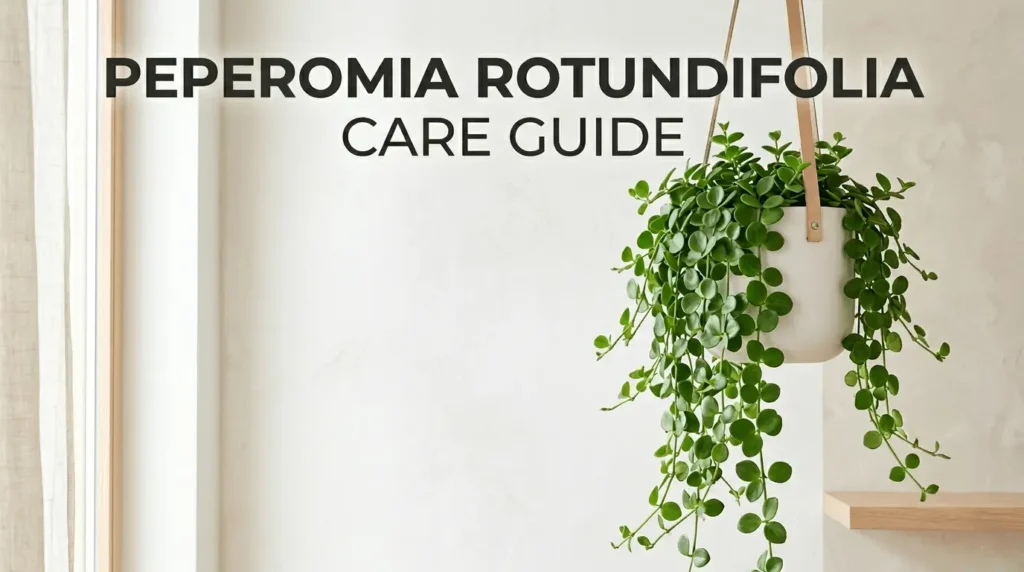
Caring for a Peperomia rotundifolia involves providing this trailing houseplant, also known as trailing jade, with bright indirect light, well-draining soil, and moderate watering to mimic its tropical South American origins. This semi-succulent peperomia thrives indoors as a hanging or shelf plant, producing round, plump green leaves on vining stems. Its compact growth habit and low-maintenance nature make it ideal for beginners and indoor plant enthusiasts seeking decorative trailing greenery. Peperomia plants belong to the Piperaceae family, a group of tropical plants widely studied for their ornamental and ecological importance (see more on Wikipedia).
Quick Summary
- Peperomia rotundifolia prefers bright indirect light, moderate watering, and high humidity for optimal trailing growth.
- Propagation is easy through stem or leaf cuttings in water or soil, especially during spring.
- Yellow leaves and legginess are usually caused by overwatering or insufficient light exposure.
- It is a slow-growing, non-toxic, beginner-friendly houseplant suitable for indoor spaces.
Plant Size
Typical Size and Growth Habit
Peperomia rotundifolia is a compact trailing plant that produces slender stems reaching up to 12 inches in length. Its foliage clusters typically spread 6–8 inches wide, forming a dense, cascading appearance in hanging baskets or shelf displays.
Indoor vs Outdoor Growth Differences
Indoors, growth remains controlled and slower due to limited light and container size. Outdoors in warm, humid climates, the plant may trail more vigorously and develop longer vines.
Factors Affecting Size
Several environmental factors influence plant size and spread:
- Light intensity (bright indirect light promotes fuller growth)
- Pot size (larger pots encourage longer trailing stems)
- Pruning frequency (regular trimming increases bushiness)
For more decorative indoor foliage inspiration, explore Spider Plant Indoor Benefits: Air, Wellness, and Easy Care, which shares similar trailing and air-purifying qualities, and Purple Heart Plant Indoor Benefits: Care, Light & Growth Guide, known for its colorful cascading stems.
Growth Rate
Seasonal Growth Pattern
Peperomia rotundifolia is classified as a slow to moderate grower, typically adding 2–5 inches of new growth annually under ideal conditions. Growth accelerates during spring and summer when warmth and humidity levels are higher.
Environmental Influence
Growth slows significantly in winter due to reduced light and cooler indoor temperatures. Consistent fertilization during the growing season can support healthier and slightly faster trailing development.
Temperature and Humidity Effects
Optimal growth occurs in temperatures between 65–75°F. Cold drafts or dry indoor air can restrict development and reduce leaf density along the stems.
Care Guide
Watering Requirements
Water when the top inch of soil becomes dry. Overwatering is the most common issue and can lead to root rot.
Light Requirements
Provide bright indirect light. Direct sunlight can scorch leaves, while low light conditions often cause leggy growth. If you enjoy low-maintenance indoor plants, you may also like growing the Zamioculcas Zamiifolia Care Guide: ZZ Plant Growing Tips or exploring the Japanese Money Plant Care: Light, Watering & Propagation Guide, both of which thrive in similar indoor conditions.
Soil Requirements
Use a well-draining peperomia soil mix with perlite and peat to ensure aeration and prevent water retention.
Fertilization
Feed monthly with a diluted balanced fertilizer during the active growing season (spring and summer).
Pruning Practices
Prune trailing stems regularly to maintain compact shape and encourage bushier growth.
Climate Tolerance
- Indoor temperature range: 60–80°F
- Outdoor suitability: USDA zones 10–11
Care Essentials
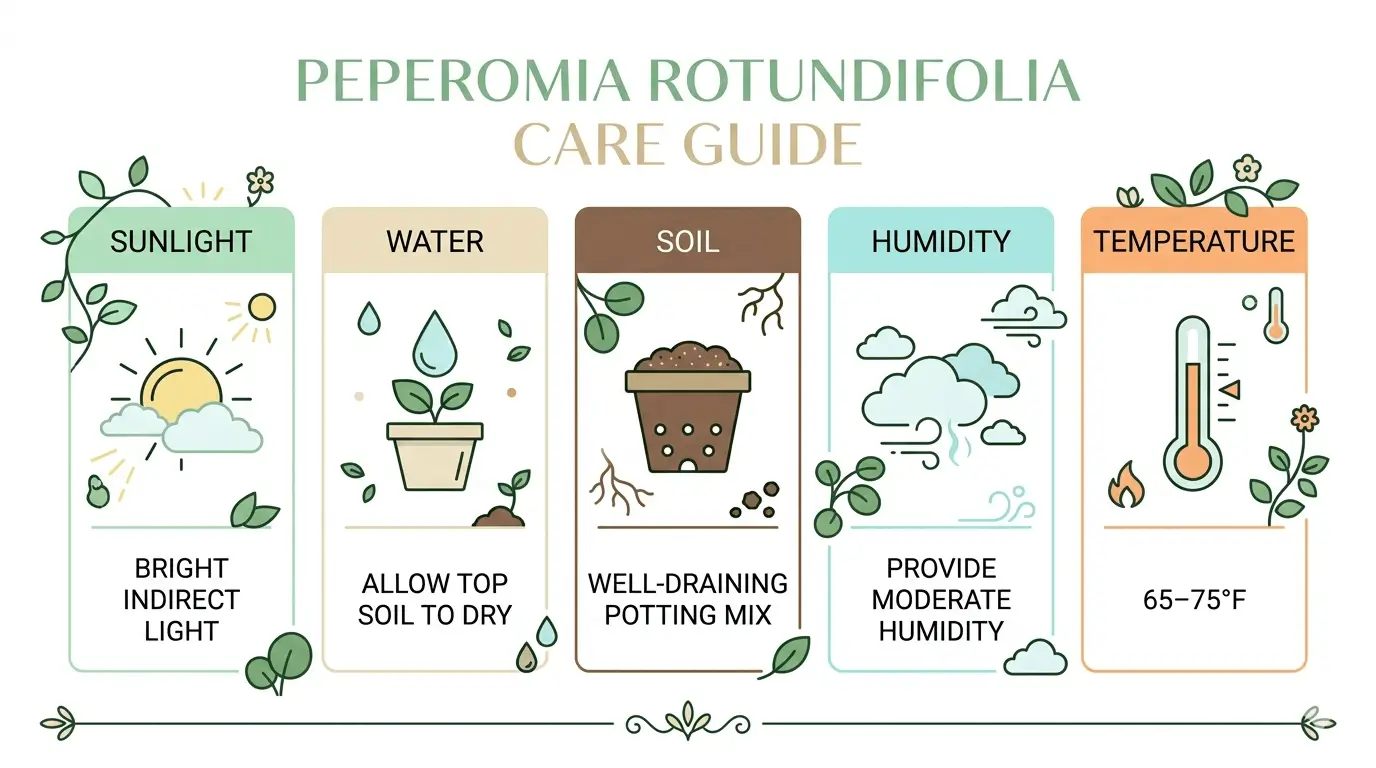
- Water when top soil dries; avoid soggy soil conditions.
- Provide bright indirect light for healthy foliage.
- Use well-draining soil with aeration materials like perlite.
- Maintain moderate humidity using misting or pebble trays.
- Prune regularly to encourage dense, attractive growth.
Propagation Methods
Stem Cutting Propagation
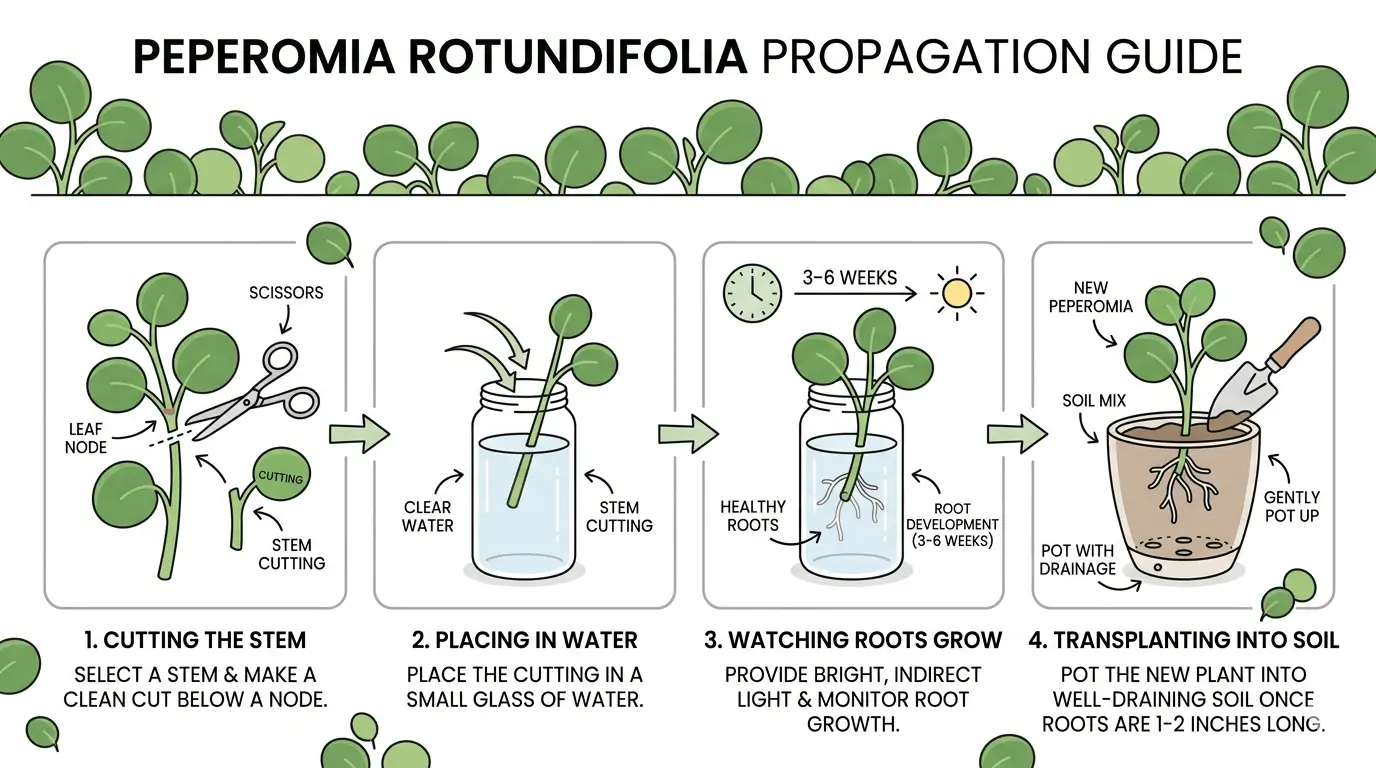
Stem cuttings root easily in water within 3–6 weeks. Place healthy stems in clean water, change it weekly, and transplant once roots are established.
Soil Propagation Method
Cuttings can also be planted directly into moist, well-draining soil. Maintain high humidity using a plastic cover to improve rooting success.
Leaf Cutting Propagation
Individual healthy leaves can also be used for propagation, though stem cuttings are generally more reliable.
Best Season for Propagation
Spring is the ideal time due to active growth and warmer temperatures, which enhance rooting speed.
Common Problems and Solutions
Yellow Leaves
Yellowing leaves are usually caused by overwatering or poor drainage. Improve soil aeration and allow the soil to dry before watering again.
Dropping Leaves
Leaf drop often results from underwatering, cold temperatures, or low humidity. Move the plant to a warmer, more stable environment and increase humidity.
Leggy Growth
Legginess occurs due to insufficient light. Relocate the plant to a brighter indirect light source and rotate it regularly.
Troubleshooting Table
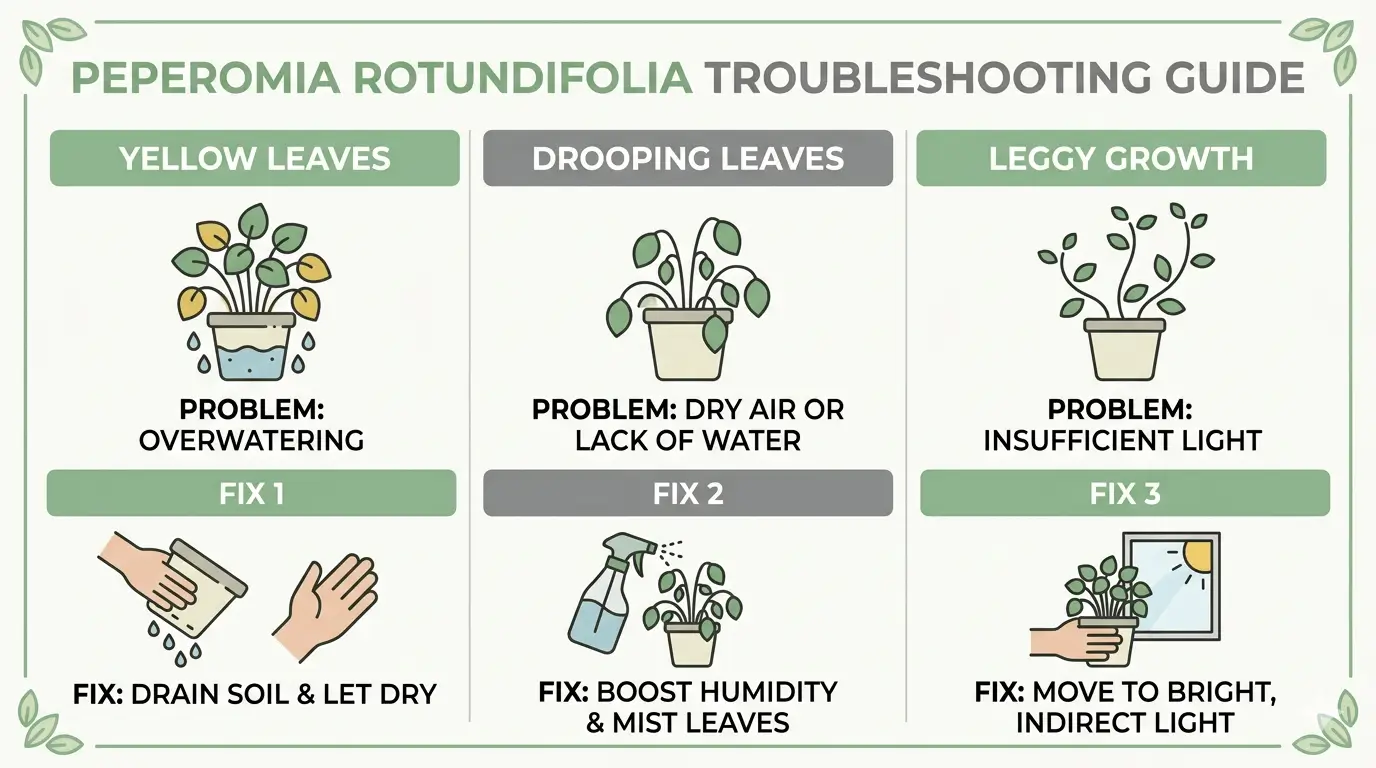
| Problem | Cause | Solution | Prevention |
| Yellow leaves | Overwatering | Repot in dry soil, trim rot | Check soil before watering |
| Dropping leaves | Underwatering/cold | Increase humidity, warm spot | Avoid drafts |
| Leggy growth | Insufficient light | Brighter indirect location | Rotate plant regularly |
Comparisons with Similar Varieties
Key Differences Overview
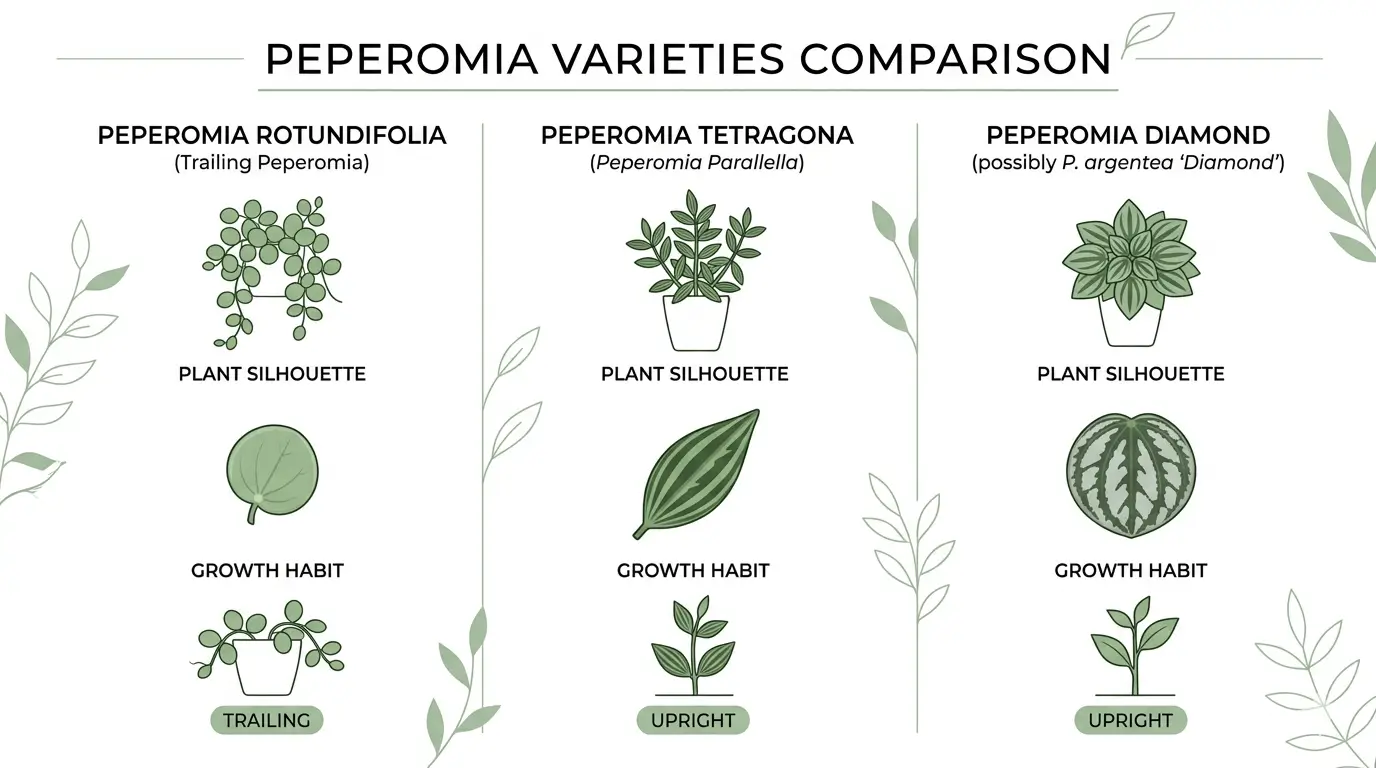
Peperomia rotundifolia is often compared with similar trailing or upright peperomia varieties due to its growth habit and leaf shape differences.
Peperomia Rotundifolia vs Similar Types
| Feature | P. Rotundifolia | P. Tetragona | P. Diamond |
| Growth Habit | Trailing | Upright/shrubby | Trailing |
| Leaf Shape | Round, plump | Elliptical | Narrow, diamond-striped |
| Care Difficulty | Easy, humidity-loving | Similar, less trailing | Easy, tolerates lower light |
Practical Identification Notes
- Rotundifolia is best recognized by its small, round, bead-like leaves.
- Tetragona grows upright with stronger structural stems.
- Diamond types feature striped leaf patterns and slightly different texture.
Pet Safety and Other Facts
Pet Toxicity
Peperomia rotundifolia is considered non-toxic to cats and dogs, although ingestion may still cause mild digestive discomfort.
Flowering Characteristics
The plant produces small, inconspicuous yellowish flower spikes that are not the main ornamental feature.
Beginner Mistakes
Common mistakes include overwatering, poor drainage, and placing the plant in low-light areas, all of which negatively affect growth health.
Conclusion
Mastering Peperomia rotundifolia care ensures consistent trailing growth with minimal effort. By maintaining proper drainage, bright indirect light, and moderate humidity, this plant remains healthy and visually appealing. Its slow growth, non-toxic nature, and adaptability make it an excellent choice for indoor plant collections and beginner gardeners alike.
FAQ
How often should I water Peperomia rotundifolia?
Water when the top inch of soil is dry, usually every 1–2 weeks depending on temperature and humidity levels.
Why are my Peperomia rotundifolia leaves turning yellow?
Yellow leaves are typically caused by overwatering or poor drainage conditions that lead to root stress.
Can I propagate Peperomia rotundifolia in water?
Yes, stem cuttings root successfully in water within 3–6 weeks before transplanting into soil.
Is Peperomia rotundifolia safe for cats?
Yes, it is generally non-toxic, but ingestion may cause mild stomach upset in pets.
How do I prune Peperomia rotundifolia?
Trim leggy stems above leaf nodes during spring to encourage fuller and bushier growth.



13 Responses