
Introduction
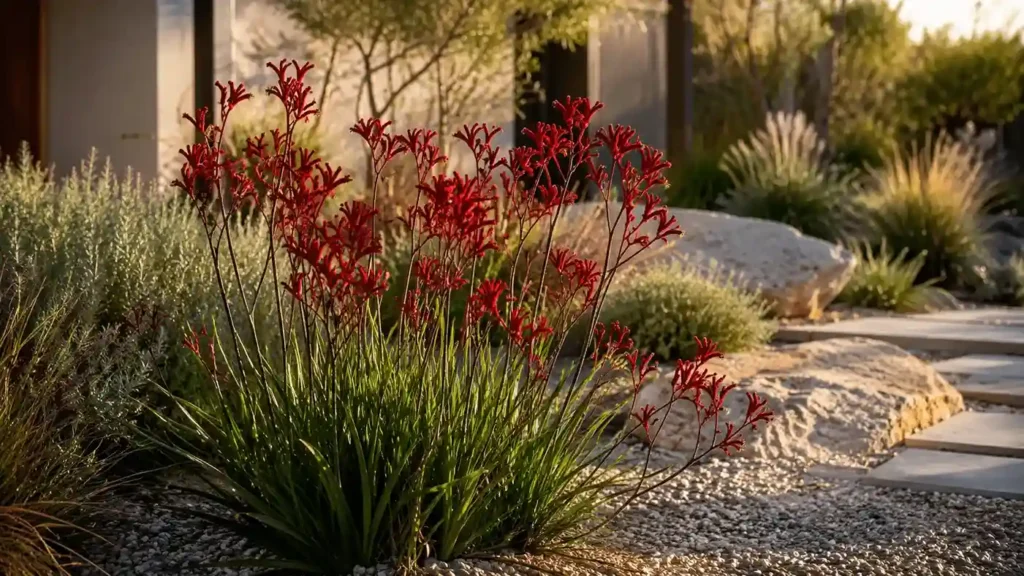
Kangaroo paw landscape scarlet is a premium hybrid cultivar of Anigozanthos developed for reliable flowering, vibrant colour, and landscape durability. Known botanically as Anigozanthos ‘Landscape Scarlet’, this Australian native plant produces velvety scarlet-red tubular flowers on upright stems above clumping strap-like foliage. The plant is widely used in low-water landscapes, native gardens, and decorative borders because of its long bloom period and compact growth habit. Both professional landscapers and home gardeners value anigozanthos landscape scarlet for its drought tolerance, architectural appearance, and ability to attract birds and pollinators in warm climates.
Quick Summary
- Kangaroo paw landscape scarlet is a hybrid Anigozanthos cultivar from the Landscape Series, known for vivid scarlet-red tubular flowers and reliable garden performance.
- It thrives in full sun, well-drained sandy soil, and warm dry climates, making it ideal for low-water landscaping.
- Mature plants reach approximately 60–90 cm in height with a compact clumping habit suited to borders, mass plantings, and containers.
- Regular pruning after flowering is essential to maintain colour vibrancy, prevent disease, and encourage repeat blooms.
What Is Kangaroo Paw Landscape Scarlet?
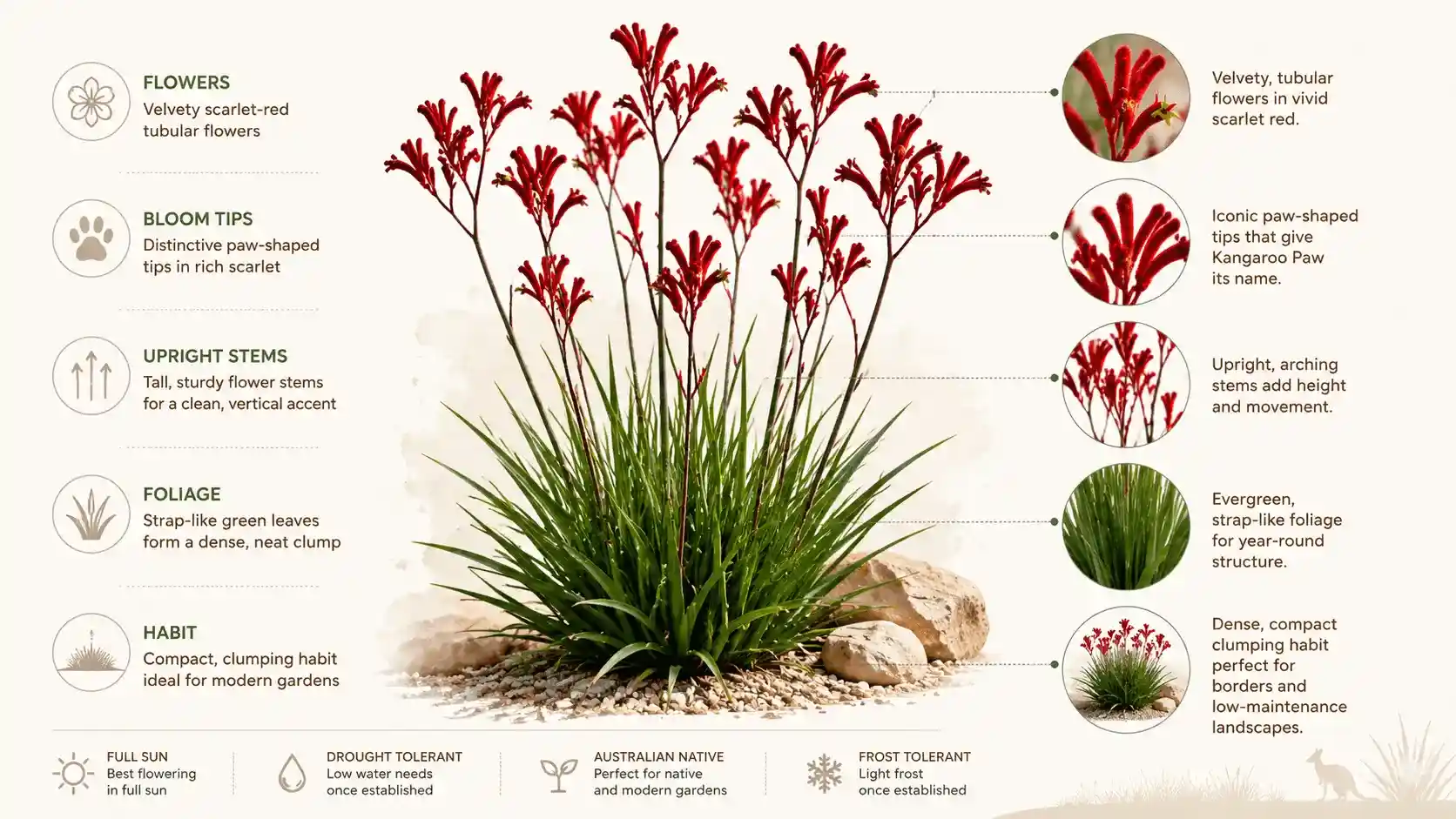
Kangaroo paw landscape scarlet is a hybrid cultivar within the Anigozanthos genus bred specifically for landscape performance, repeat flowering, and colour consistency. The plant is recognized for its velvety scarlet-red kangaroo paw flowers, upright stems, and compact evergreen foliage.
The Anigozanthos genus is well documented in botanical science and is part of the Haemodoraceae family, with further classification details available on Wikipedia.
The common name “kangaroo paw” comes from the unusual flower shape. Each tubular bloom splits at the tip into curved segments covered in soft hairs, resembling a kangaroo’s paw. This distinctive structure makes red kangaroo paw varieties highly recognizable in ornamental landscaping.
Landscape Scarlet belongs to a modern group of anigozanthos hybrids selected for improved disease resistance, stronger stems, and prolonged flowering compared to older species forms.
Botanical Identity and Cultivar Background
The Anigozanthos genus is native to southwestern Australia and belongs to the family Haemodoraceae. These plants evolved in sandy, nutrient-poor soils and warm Mediterranean-like climates.
Anigozanthos landscape scarlet is a hybrid cultivar rather than a naturally occurring species. Breeders developed the Landscape Series to improve:
- Flower consistency
- Bloom duration
- Heat tolerance
- Garden reliability
- Disease resistance
Compared to wild species, modern anigozanthos hybrids generally produce denser flowering and more compact growth suited to residential gardens.
Flower Characteristics and Colour at a Glance
Kangaroo paw flowers grow on tall arching stems above dense green foliage clumps. The flowers have a soft velvety texture created by fine hairs covering the tubular petals.
The intense scarlet-red colour develops best in strong sunlight. Reduced light, ageing blooms, nutrient imbalance, or disease can cause flower colour to fade over time.
| Trait | Details |
| Botanical Name | Anigozanthos ‘Landscape Scarlet’ |
| Common Name | Kangaroo Paw Landscape Scarlet |
| Height | 60–90 cm |
| Flower Colour | Scarlet red |
| Bloom Season | Spring through autumn |
| Water Needs | Low once established |
| Hardiness | USDA Zones 9–11 |
| Growth Habit | Compact clumping perennial |
Kangaroo Paw Landscape Scarlet Size and Height
Kangaroo paw landscape scarlet typically reaches 60–90 cm in height with a moderate clumping spread. Its compact size makes it suitable for garden borders, containers, and mass landscape plantings.
Compared to large kangaroo paw species, Landscape Scarlet maintains a more controlled growth habit while still producing abundant flower spikes.
Mature Dimensions: Height and Spread
In ideal conditions, mature plants form clumps approximately:
- Height: 60–90 cm
- Spread: 50–70 cm
The plant spreads slowly through underground rhizomes. This rhizomatous clumping form allows gradual expansion without aggressive invasion.
Flower stems rise above the foliage, creating a layered architectural appearance commonly used in modern native landscapes.
Environmental Factors Affecting Plant Size
Several environmental conditions influence kangaroo paw landscape scarlet height and overall growth:
- Richer soil can increase foliage density but excessive fertility may weaken stems.
- Moderate watering promotes healthy flowering.
- Excess shade can reduce flowering height and stem strength.
- Warm climates encourage faster seasonal growth.
Compared to Anigozanthos flavidus and Tall and Tough kangaroo paw varieties, Landscape Scarlet remains more compact and manageable in smaller gardens.
Kangaroo Paw Landscape Scarlet Care Guide
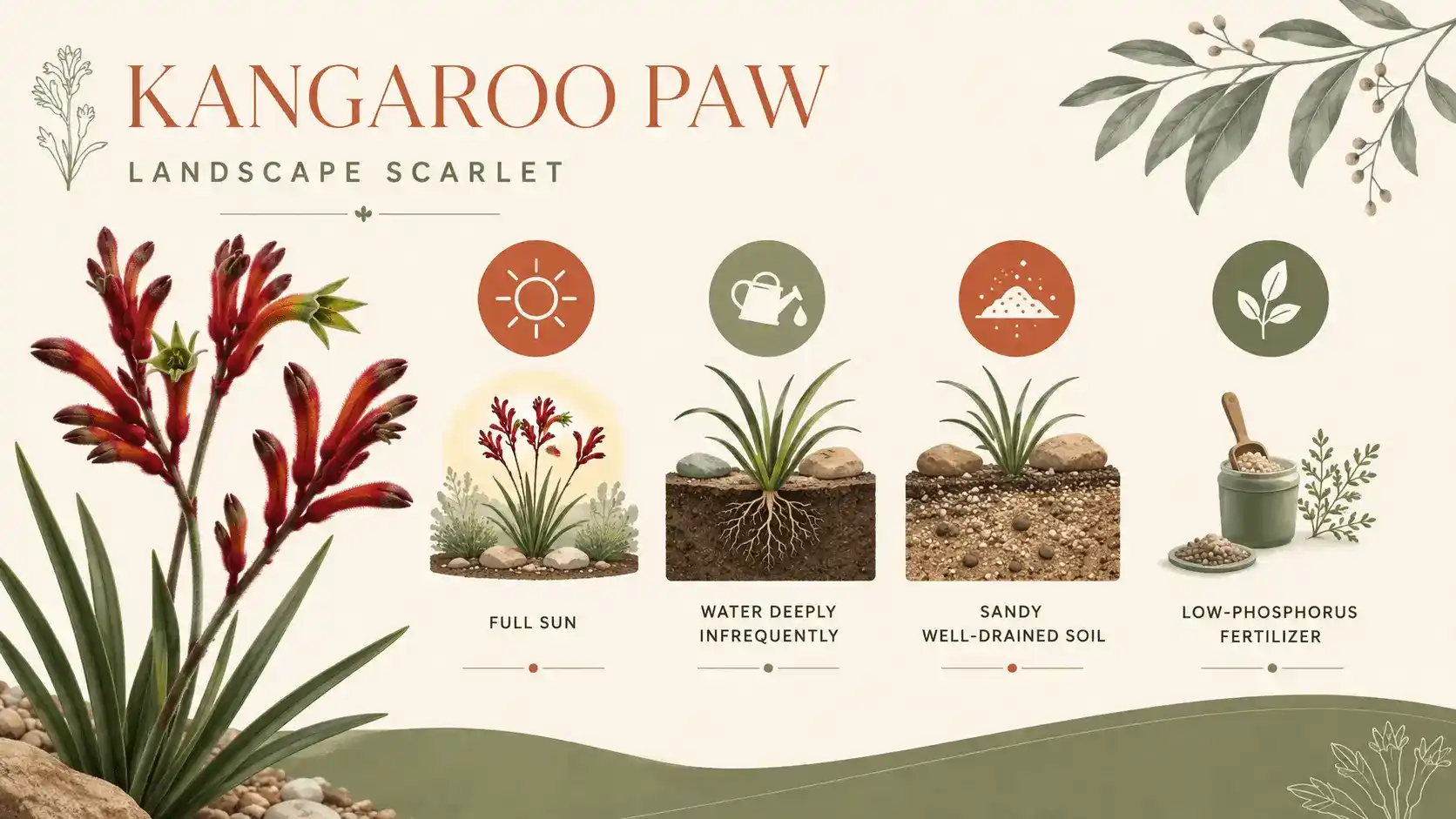
Kangaroo paw landscape scarlet care is relatively simple when the plant is grown in suitable conditions. For broader understanding of maintenance practices, you can also refer to Kangaroo Paw Care: 6+ Essential Tips for Healthy Blooms, Hibbertia Stellaris (Orange Star Plant) Care Guide, and Australian Native Garden Plants: Types, Care Tips & Design Ideas, which provide deeper insight into native plant care principles and sustainable gardening methods. The species performs best in sunny, dry environments with excellent drainage.
Watering Requirements
Once established, kangaroo paws are drought tolerant and prefer deep but infrequent watering.
Best watering practices include:
- Water deeply during establishment.
- Allow soil to dry slightly between watering.
- Reduce irrigation during cooler seasons.
Overwatering is one of the most common beginner mistakes. Excess moisture can cause:
- Root rot
- Crown rot
- Yellowing leaves
- Fungal disease
Sunlight and Exposure
Full sun is essential for healthy growth and vivid flower colour.
The plant should receive at least:
- 6 hours of direct sunlight daily
Insufficient sunlight may cause:
- Faded flowers
- Weak stems
- Reduced flowering
- Increased disease risk
In humid climates, strong sunlight and airflow become even more important for preventing fungal issues.
Soil Preferences and Drainage
Sandy, free-draining soil is ideal for planting kangaroo paw.
Avoid:
- Heavy clay soils
- Water-retentive potting mixes
- Poorly drained planting sites
Anigozanthos plants are highly phosphorus-sensitive. Excess phosphorus can damage roots and reduce plant health.
Recommended soil conditions:
| Soil Factor | Preferred Condition |
| Drainage | Fast draining |
| Texture | Sandy or sandy loam |
| pH Range | Slightly acidic to neutral |
| Phosphorus | Low |
Gardeners often improve drainage using coarse sand, gravel, or raised beds.
Fertilization Practices
Low-phosphorus fertilizer is essential for kangaroo paw landscape scarlet care.
Use:
- Native plant fertilizers
- Slow-release low-phosphorus products
- Light organic compost applications
Fertilize lightly during active growth in spring and early summer.
Overfertilization may cause:
- Excess foliage
- Weak flowering
- Nutrient stress
Climate Tolerance and Hardiness
Kangaroo paw landscape scarlet grows best in USDA zones 9–11 or similar warm-climate regions.
The plant tolerates:
- Heat
- Drought
- Coastal exposure
- Mild frost once established
Dry climates generally produce better flowering and lower disease pressure than humid environments.
- Choose a sunny planting location.
- Ensure excellent drainage before planting.
- Use low-phosphorus soil amendments only.
- Space plants for airflow.
- Mulch lightly without covering the crown.
- Water regularly during establishment only.
How to Prune Kangaroo Paw Landscape Scarlet
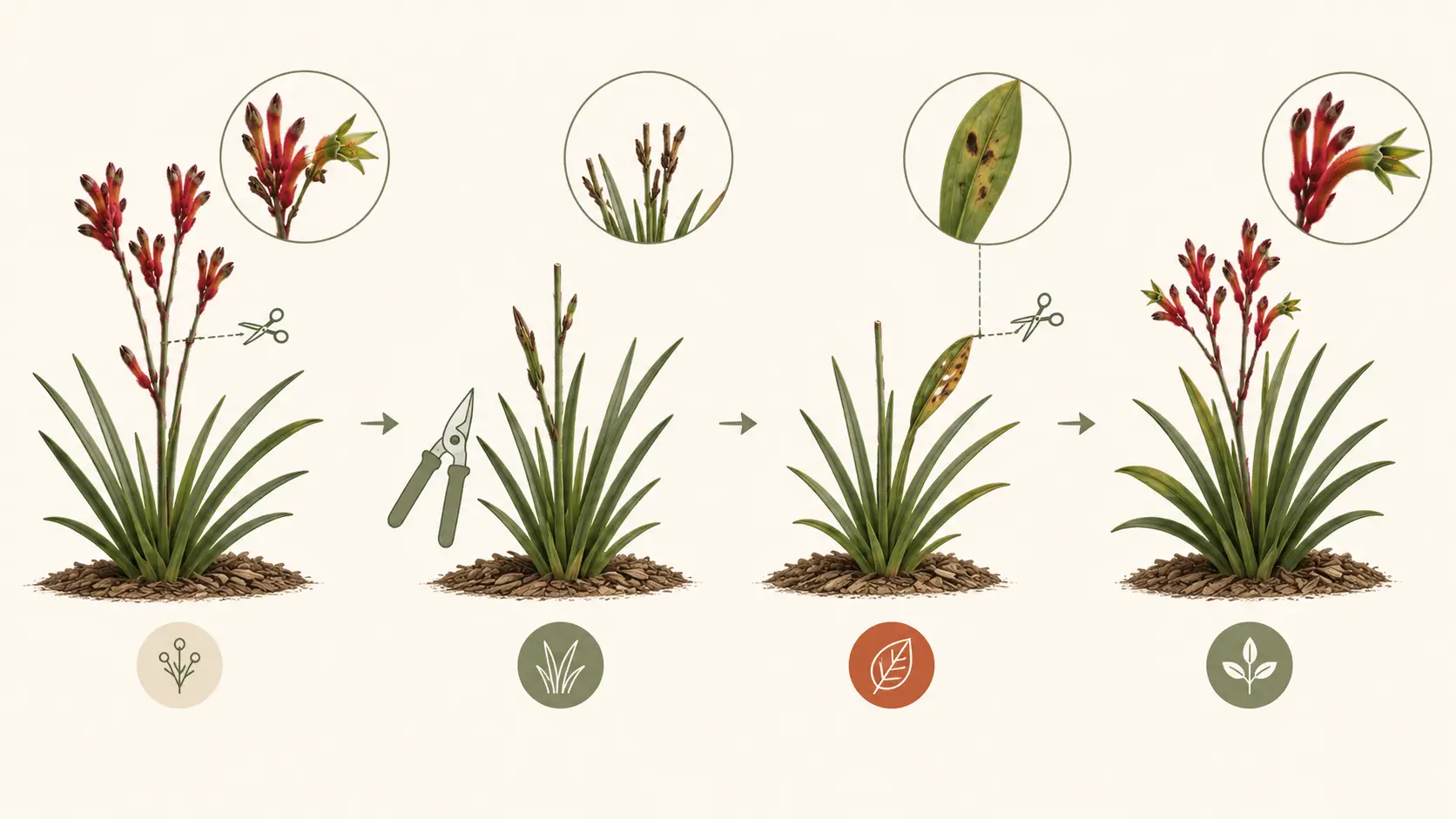
Yes, you can prune kangaroo paws, and regular pruning is essential for long-term plant health. Proper pruning improves flowering, reduces disease risk, and keeps the plant tidy.
Hard pruning or “cropping back” is commonly recommended after flowering.
When to Prune: Timing and Triggers
The best time to prune kangaroo paw landscape scarlet is after the main flowering season, typically in late summer or autumn.
Signs pruning is needed include:
- Spent flower stems
- Brown or damaged leaves
- Dense overcrowded growth
- Ink disease symptoms
In warmer climates, lighter maintenance pruning may continue throughout the growing season.
How to Prune: Step-by-Step Method
Remove spent flower stems directly at the base using clean pruning tools.
Cut older foliage back by approximately one-third to one-half to encourage fresh growth.
Dispose of infected material immediately to reduce fungal spread.
After pruning:
- Water lightly
- Avoid overwatering
- Improve airflow around the plant
Pruning Steps
- Remove faded flower stems at ground level.
- Trim damaged foliage.
- Cut back older leaves by one-third to one-half.
- Dispose of diseased material away from the garden.
- Lightly water after pruning.
- Monitor for new growth within several weeks.
Planting Kangaroo Paw Landscape Scarlet in Your Garden
Planting kangaroo paw successfully begins with proper site preparation and drainage management.
The best planting seasons are:
- Spring
- Early autumn in mild climates
Avoid planting during periods of excessive rainfall.
- Select a full-sun location.
- Prepare sandy, free-draining soil.
- Avoid high-phosphorus fertilizers.
- Space plants 50–70 cm apart for airflow.
- Mulch lightly around the base.
- Water consistently until established.
Mass plantings create strong visual impact, while border plantings work well in mixed perennial gardens.
Landscaping with Kangaroo Paw Landscape Scarlet
Kangaroo paw in landscaping is valued for bold colour, drought tolerance, and vertical structure. For more design inspiration, explore Australian Native Garden Plants: Types, Care Tips & Design Ideas, Procreate Landscape Design: 7+ Smart Planning Tips, and Shrubs With Blue Flowers Australia Guide, which help in planning visually balanced native and ornamental gardens.
The plant works particularly well in:
- Native Australian gardens
- Xeriscapes
- Coastal landscapes
- Mediterranean-style gardens
- Pollinator-friendly gardens
Garden Design Ideas and Companion Planting
Landscape Scarlet combines effectively with warm-toned and contrasting flowering plants.
Popular companion plants include:
- Grevillea
- Lomandra
- Lavender
- Agapanthus
- Ornamental grasses
Many designers use colour-blocking techniques by combining:
- Kangaroo paw landscape gold
- Kangaroo paw landscape lilac
- Kangaroo paw landscape tangerine
Layered planting designs often position:
- Groundcovers in front
- Kangaroo paw in the middle layer
- Taller shrubs behind
Low-Water and Native Landscape Applications
Kangaroo paw landscape scarlet is widely used in xeriscaping because it requires relatively little supplemental irrigation once established.
The plant also suits:
- Fire-wise landscaping
- Coastal gardens
- Gravel gardens
- Native habitat-style planting schemes
Top 5 Landscape Use Cases
- Residential borders
- Mass colour plantings
- Patio containers
- Water-wise landscapes
- Pollinator gardens
Kangaroo Paw Landscape Series: Comparing Varieties
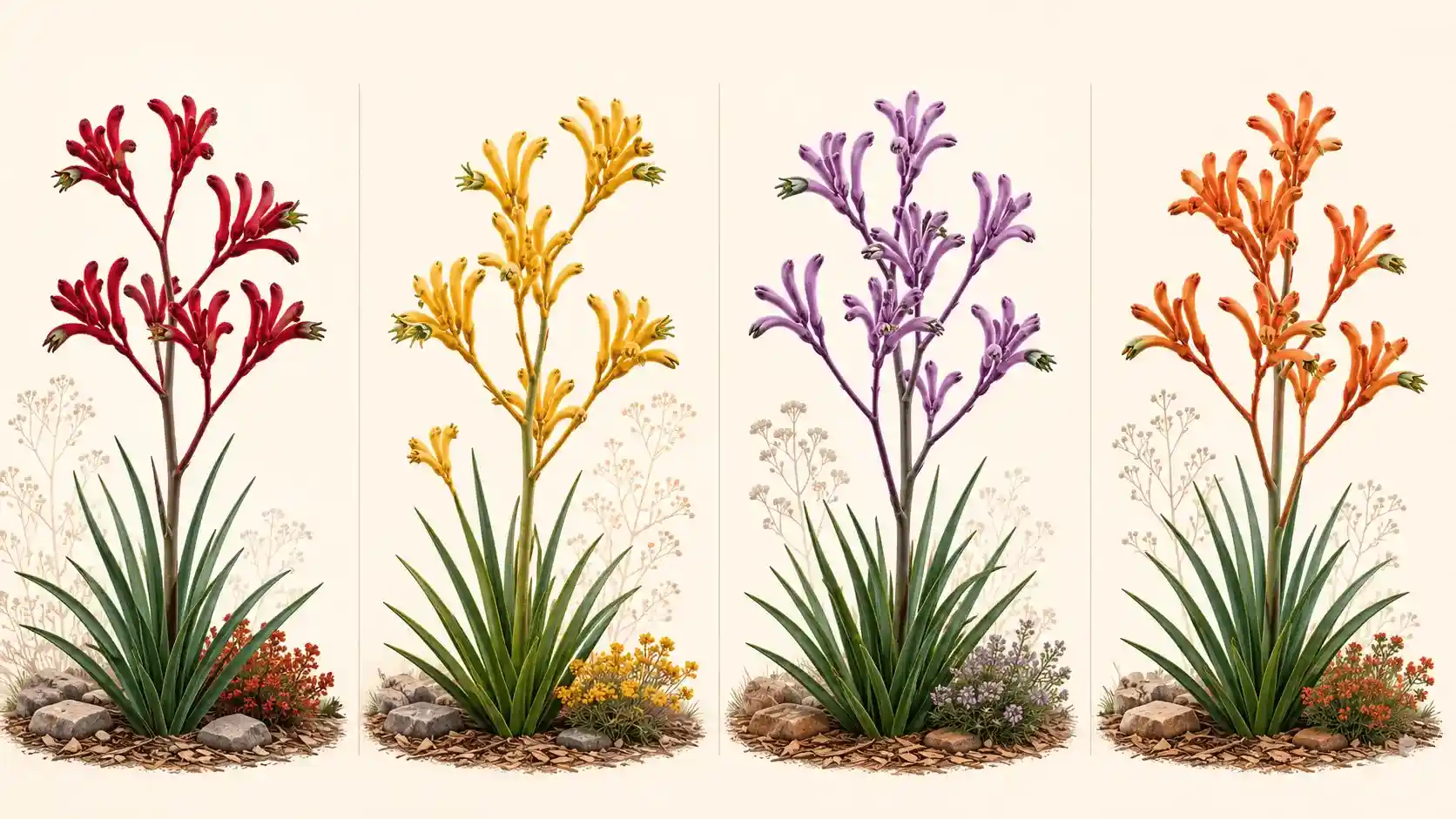
The Landscape Series includes several hybrid kangaroo paw cultivars bred for colour stability, compact growth, and landscape durability. You can enrich understanding of different cultivars by exploring related guides such as Yellow Kangaroo Paw: Essential Care & Growth Guide, Anigozanthos Pink Beauty Guide to Pink Kangaroo Paw, and What to Plant with Kangaroo Paw: Best Companion Guide, which help expand knowledge of color variations, care differences, and companion planting strategies.
| Variety | Height | Flower Colour | Bloom Season | Best Use |
| Landscape Scarlet | 60–90 cm | Scarlet red | Spring–autumn | Bold borders |
| Landscape Gold | 60–80 cm | Golden yellow | Spring–summer | Bright contrast |
| Landscape Lilac | 60–90 cm | Lilac-purple | Spring–autumn | Cool-toned gardens |
| Landscape Tangerine | 70–90 cm | Orange | Spring–summer | Warm colour themes |
Landscape Scarlet vs Landscape Gold
Landscape Scarlet produces deep red flowers, while Landscape Gold offers bright golden-yellow blooms.
Key Differences
| Feature | Scarlet | Gold |
| Flower Colour | Scarlet red | Golden yellow |
| Visual Impact | Bold dramatic contrast | Bright cheerful tone |
| Best Use | Statement planting | Mixed warm borders |
Landscape Scarlet vs Landscape Lilac
Landscape Scarlet and lilac kangaroo paw varieties create complementary colour schemes in mixed plantings.
Purple kangaroo paw tones often soften intense red plantings and work well in contemporary garden designs.
Landscape Lilac may tolerate slightly softer light conditions compared to Scarlet.
Landscape Scarlet vs Landscape Tangerine
Landscape Tangerine produces warm orange flowers, while Landscape Scarlet develops deeper red tones.
Tangerine varieties often create softer transitional colour palettes in Mediterranean-style gardens.
Other Notable Kangaroo Paw Cultivars
Several additional cultivars are popular in landscaping:
| Variety | Colour | Height | Standout Feature |
| Big Red | Deep red | Tall | Large flowers |
| Yellow Gem | Yellow | Medium | Bright colour |
| Bush Ballad | Red-pink | Compact | Dense habit |
| Gold Velvet | Golden yellow | Medium | Velvety blooms |
| Tall and Tough | Various | Tall | Strong stems |
| Cocktail Series | Mixed colours | Compact | Patio suitability |
| Bush Gem Range | Multiple | Compact | Long flowering |
| Anigozanthos flavidus yellow | Yellow | Tall | Species durability |
Do Kangaroo Paws Spread and Are They Invasive?
Kangaroo paws spread slowly through rhizomatous clumping growth, but they are not considered invasive in most regions.
Landscape Scarlet forms contained clumps rather than aggressive runners.
Conditions influencing spread include:
- Warm temperatures
- Good drainage
- Regular division
- Suitable sunlight
Factors limiting spread include:
- Heavy clay soil
- Waterlogging
- Cold climates
- Poor sunlight
Compared to some larger species forms, Landscape Scarlet remains relatively controlled and easy to manage.
Why Do Kangaroo Paws Lose Their Colour?
Kangaroo paws lose their colour due to environmental stress, ageing blooms, nutrient imbalance, or disease.
Common causes include:
- Insufficient sunlight reducing pigment intensity
- Ageing flowers naturally fading over time
- Iron or nutrient deficiency affecting plant health
- Overwatering weakening roots
- Ink disease damaging foliage and flower quality
To restore vibrant colour:
- Increase sunlight exposure
- Improve drainage
- Prune old flowering stems
- Use appropriate low-phosphorus fertilizer
- Remove diseased growth promptly
Pruning remains one of the most effective methods for maintaining strong flower colour and encouraging fresh blooming.
Common Problems with Kangaroo Paw Landscape Scarlet and How to Fix Them
Ink Disease (Black Leaf Streaking)
Ink disease is caused by fungal pathogens such as Alternaria.
Symptoms include:
- Black streaks on leaves
- Browning foliage
- Weak flowering
Fixes include:
- Removing infected material
- Applying copper fungicide
- Improving airflow
Avoid overhead watering to reduce fungal spread.
Root Rot and Waterlogging
Root rot usually develops from excessive moisture or poor drainage.
Symptoms include:
- Wilting
- Yellow leaves
- Soft crown tissue
Solutions include:
- Reducing watering
- Improving soil drainage
- Replanting in raised beds if necessary
Yellowing Leaves
Yellow leaves may result from:
- Overwatering
- Nitrogen deficiency
- Iron deficiency
- Waterlogged roots
Corrective actions include:
- Improving drainage
- Applying balanced low-phosphorus fertilizer
- Adjusting watering frequency
Faded or Dull Flower Colour
Faded flowers commonly result from:
- Low sunlight
- Ageing blooms
- Disease pressure
Improving light exposure and pruning spent flowers often restores stronger flowering performance.
Conclusion
Kangaroo paw landscape scarlet is one of the most reliable and visually striking hybrid Anigozanthos cultivars for warm-climate landscaping. Its vivid scarlet-red flowers, compact clumping form, drought tolerance, and long flowering season make it highly valuable for borders, native gardens, containers, and low-water landscapes.
With proper sunlight, excellent drainage, low-phosphorus feeding, and regular pruning, kangaroo paw landscape scarlet delivers strong seasonal colour with relatively low maintenance. Gardeners seeking bold architectural flowers and water-wise performance often choose this Landscape Series cultivar for both residential and commercial landscapes.
Frequently Asked Questions
1. What is kangaroo paw landscape scarlet?
Kangaroo paw landscape scarlet is a hybrid Anigozanthos cultivar from the Landscape Series known for vivid scarlet-red tubular flowers, compact growth, and reliable performance in warm-climate gardens.
2. How tall does kangaroo paw landscape scarlet grow?
Most mature plants reach approximately 60–90 cm in height, depending on climate, soil quality, watering, and sunlight conditions.
3. How do you care for kangaroo paw landscape scarlet?
The plant requires full sun, sandy well-drained soil, low-phosphorus fertilizer, moderate watering, and regular pruning after flowering.
4. Why is my kangaroo paw losing its colour?
Common causes include insufficient sunlight, ageing flowers, nutrient deficiency, overwatering, or fungal disease such as ink disease.
5. Is kangaroo paw landscape scarlet invasive?
No. Kangaroo paw landscape scarlet spreads slowly through clumping rhizomes and is not considered invasive in most growing regions.
6. How does kangaroo paw landscape scarlet compare to other varieties?
Landscape Scarlet offers deep scarlet-red flowers and compact growth, while other Landscape Series varieties provide yellow, lilac, or orange colour variations for different design styles.