
Introduction
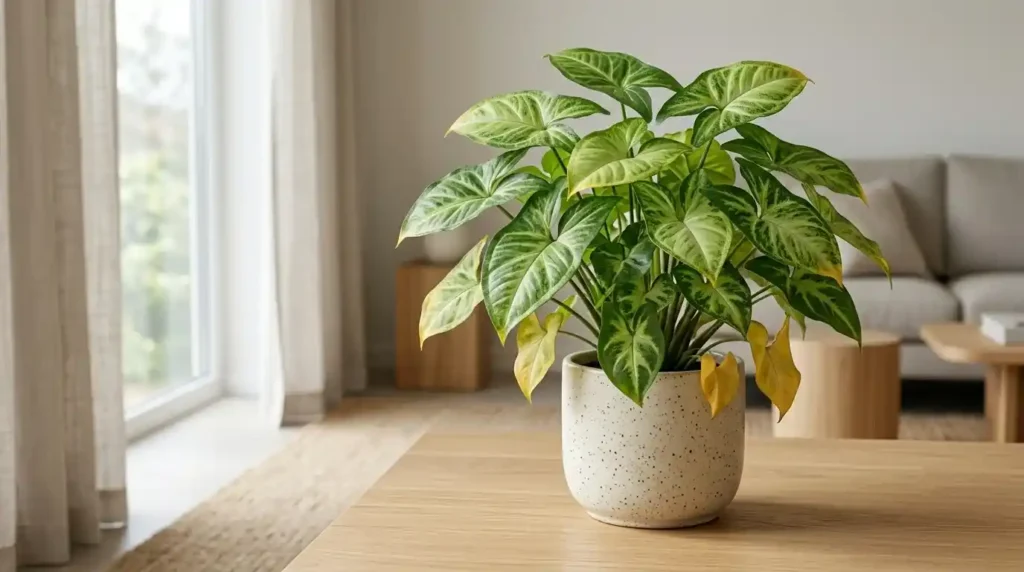
Syngonium leaves turning yellow is one of the most common concerns among arrowhead plant owners. Syngonium, also known as the arrowhead plant, is a popular tropical houseplant valued for its attractive foliage, adaptability, and relatively easy care requirements. While occasional yellow leaves are normal, widespread yellowing often indicates an underlying environmental or care-related issue. Understanding the cause is essential because different problems require different solutions. This guide explains every major reason syngonium leaves yellow, how to diagnose the problem accurately, and the steps needed to restore healthy growth.
Quick Summary
- Syngonium leaves turn yellow most often because of overwatering, underwatering, or improper light conditions.
- Yellow leaves after repotting are usually caused by temporary transplant shock and often resolve within a few weeks.
- Natural aging causes older lower leaves to yellow and drop over time.
- Most yellowing problems can be corrected by adjusting watering, lighting, humidity, or fertilization practices.
- Identifying the yellowing pattern helps determine the exact cause and appropriate solution.
What Causes Syngonium Leaves to Turn Yellow?
Several factors can cause syngonium yellow leaves. In most cases, the problem can be traced to stress affecting the plant’s ability to produce and maintain chlorophyll.
Common causes include:
- Overwatering
- Underwatering
- Insufficient light
- Excessive direct sunlight
- Low humidity
- Cold drafts
- Nutrient deficiencies
- Root-bound conditions
- Transplant shock
- Pest infestations
- Natural leaf aging
Understanding which factor is affecting the plant is the first step toward successful treatment. Yellowing occurs due to loss of chlorophyll, the pigment responsible for green color in leaves, which is explained in detail in plant biology concepts like chlorophyll.
Is Yellowing Always a Problem?
Not always. Lower, older leaves naturally yellow and fall off as part of the plant’s normal growth cycle. This process, known as senescence, allows the plant to redirect energy toward producing new foliage. Just like Syngonium, plants such as Monstera Adansonii Hanging or Climbing also show natural lower leaf aging that is often mistaken for disease.
Natural aging usually involves:
- One or two lower leaves at a time
- Healthy upper growth
- No signs of stem damage
- No widespread yellowing
If multiple leaves across the plant are yellowing simultaneously, a care issue is more likely responsible.
Overwatering: The Most Common Reason Syngonium Leaves Turn Yellow
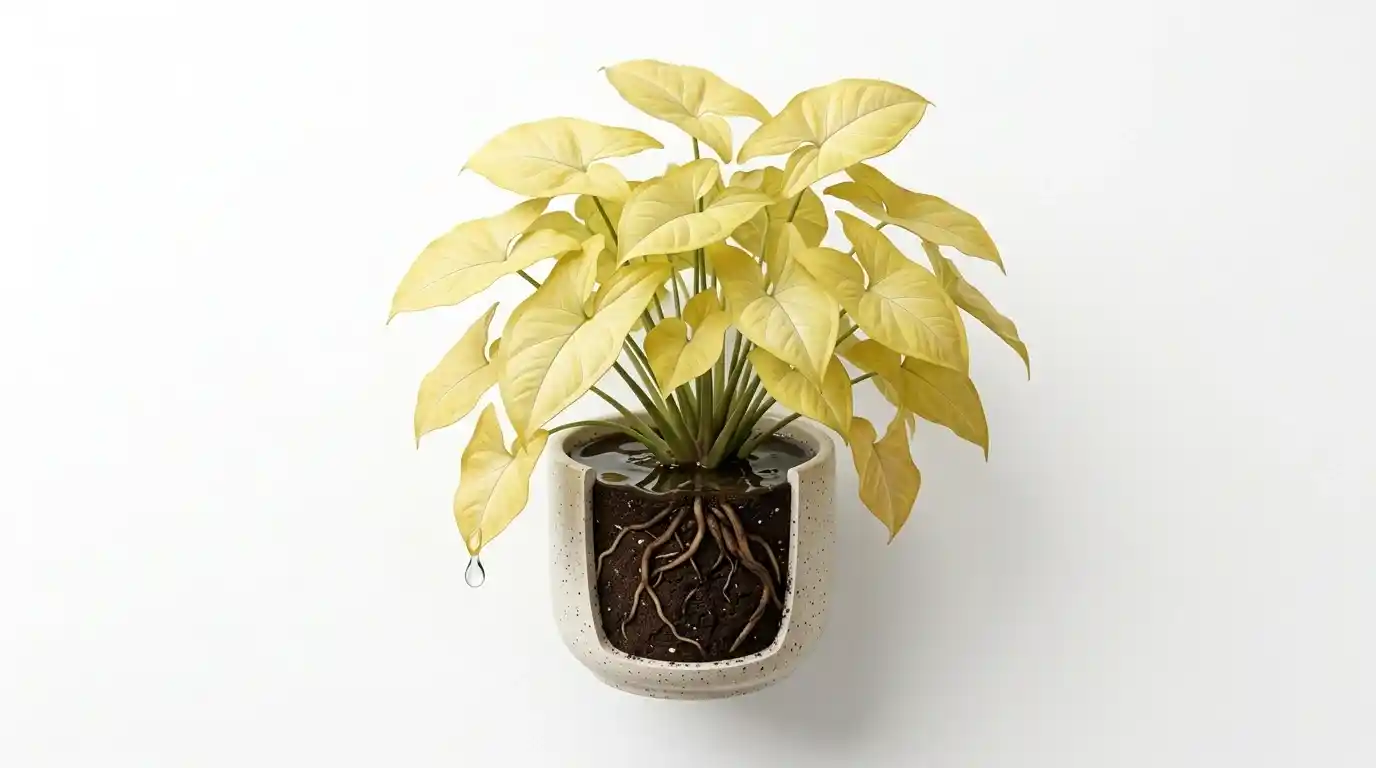
Overwatering is the leading cause of syngonium leaves turning yellow. Excess moisture fills air spaces within the soil, depriving roots of oxygen. Without oxygen, roots struggle to absorb water and nutrients effectively. Overwatering issues in Syngonium are very similar to those seen in Peperomia Leaves Falling Off, where excess moisture leads to root stress and leaf decline.
As root health declines, leaves begin turning yellow and may eventually develop brown areas or drop prematurely.
What Does an Overwatered Syngonium Look Like?
An overwatered syngonium typically displays several recognizable symptoms.
Common signs include:
- Uniform yellow leaves
- Yellowing starting from lower foliage
- Soggy soil that remains wet for extended periods
- Mushy stems near the soil surface
- Brown leaf edges accompanying yellow discoloration
- Wilting despite wet soil
- Root rot odor
- Brown, mushy roots when inspected
Unlike nutrient deficiencies, overwatering often causes widespread yellowing rather than isolated discoloration.
How to Fix an Overwatered Syngonium
Follow these recovery steps:
- Stop watering immediately.
- Allow the soil to dry partially.
- Inspect roots for signs of rot.
- Remove damaged roots using sterilized scissors.
- Repot into fresh, well-draining potting mix.
- Ensure the container has drainage holes.
- Resume watering only when the upper soil layer becomes dry.
Prevention is easier than treatment. Always check soil moisture before watering.
How Often Should I Water a Syngonium?
Most syngonium plants need watering every 7–10 days during spring and summer. During fall and winter, watering every 10–14 days is usually sufficient. Watering frequency principles are also important for plants like Sansevieria Laurentii Care Guide, which prefers even less frequent watering.
Factors affecting watering frequency include:
- Pot size
- Temperature
- Humidity levels
- Soil composition
- Light exposure
The most reliable method is checking the top 1–2 inches of soil before watering.
Syngonium Light Requirements and Yellow Leaves
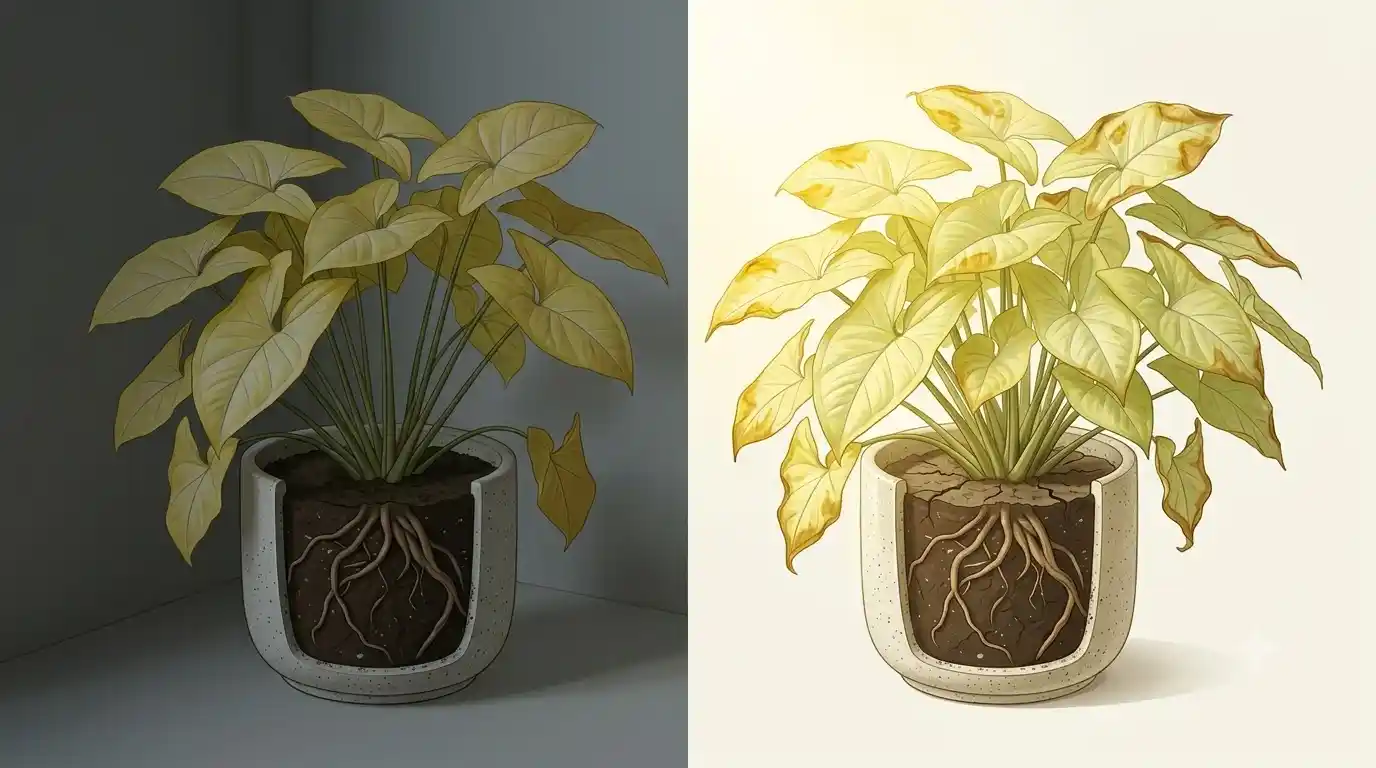
Light plays a major role in maintaining healthy foliage color. Both insufficient light and excessive direct sun can trigger yellowing.
Most syngonium varieties thrive in bright indirect light.
Too Little Light
Low light reduces photosynthesis, limiting the plant’s ability to produce energy. As a result, leaves become pale and gradually yellow. Similar yellowing patterns can also be seen in other indoor plants like the Dracaena fragrans Care Guide, especially when light levels are too low.
Signs of insufficient light include:
- Slow growth
- Smaller leaves
- Long, stretched stems
- Reduced variegation
- Overall pale appearance
Moving the plant closer to a bright window often improves growth and leaf color.
Too Much Direct Sunlight
Direct sunlight can scorch delicate syngonium foliage. Damaged areas often appear yellow before turning brown and crispy.
Signs of sun damage include:
- Yellow patches
- Brown scorch marks
- Dry leaf edges
- Curling leaves
East-facing windows are often ideal. South- or west-facing exposures may require sheer curtains for protection.
Syngonium Leaves Turning Yellow After Repotting
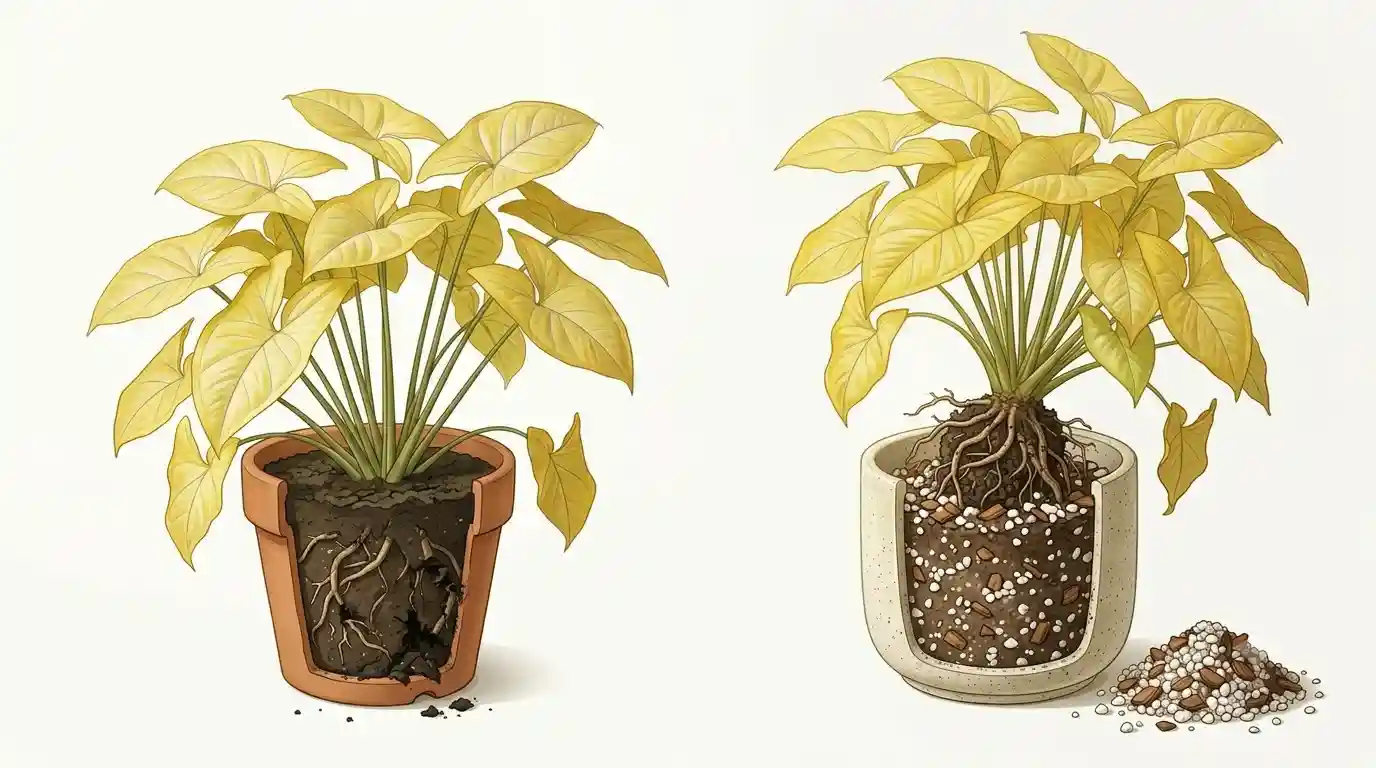
Yellow leaves after repotting are commonly caused by transplant shock. During repotting, roots experience disturbance, temporarily reducing their ability to absorb water and nutrients.
Typical symptoms include:
- Mild yellowing
- Temporary drooping
- Slower growth
- Minor leaf loss
Most plants recover within two to four weeks.
To minimize transplant shock:
- Repot during spring
- Use well-draining soil
- Water before repotting
- Avoid fertilizing immediately afterward
- Minimize root disturbance
Why Are Syngonium Leaves Turning Yellow and Brown?
Yellowing combined with browning often indicates multiple stress factors affecting the plant simultaneously.
Yellow with Brown Tips
Yellow leaves with brown tips commonly result from:
- Low humidity
- Inconsistent watering
- Excess fertilizer
- Salt accumulation
- Poor-quality water
Increasing humidity and occasionally flushing the soil can help resolve these issues.
Yellow with Brown Patches
Yellow leaves accompanied by brown patches are often linked to:
- Sunscorch
- Fungal infections
- Severe moisture stress
Prompt diagnosis helps prevent further damage.
| Yellowing Pattern | Most Likely Cause | Recommended Fix |
| Uniform yellow leaves | Overwatering | Improve drainage and reduce watering |
| Pale yellow foliage | Low light | Increase indirect light |
| Yellow with brown tips | Low humidity or salt buildup | Raise humidity and flush soil |
| Yellow with brown patches | Sunscorch | Move away from direct sunlight |
| Lower leaves yellowing | Natural aging | Remove affected leaves |
Syngonium Care Guide: Preventing Yellow Leaves
Proper care significantly reduces the risk of yellow foliage.
Watering
Best watering practices include:
- Check soil before watering
- Avoid standing water
- Use containers with drainage holes
- Adjust watering seasonally
Light
Ideal light conditions include:
- Bright indirect light
- Protection from intense afternoon sun
- Consistent exposure throughout the year
Soil and Potting Mix
A well-draining mix is essential.
Recommended components:
- Potting soil
- Perlite
- Orchid bark
- Coco coir
Heavy soils that retain excessive moisture should be avoided.
Humidity and Temperature
Syngonium thrives in:
- 50–60% humidity or higher
- Temperatures between 60°F and 85°F (16°C–29°C)
Avoid:
- Air conditioning vents
- Heating vents
- Cold drafts
- Sudden temperature fluctuations
Fertilization
Feed monthly during active growth using a balanced liquid fertilizer.
Avoid:
- Excessive fertilization
- Feeding stressed plants
- Fertilizing immediately after repotting
Periodic soil flushing helps prevent salt buildup.
Pruning
Pruning benefits include:
- Removal of damaged foliage
- Improved airflow
- Encouragement of new growth
- Better overall appearance
Always use clean, sterilized tools.
Do Syngonium Like to Be Root Bound?
Syngonium tolerates mild root binding but does not thrive when severely root bound. Restricted roots limit nutrient uptake and water absorption, increasing stress and yellowing risk.
Signs a plant needs repotting include:
- Roots emerging from drainage holes
- Roots circling the pot
- Water draining too quickly
- Stunted growth
- Frequent wilting
Choose a container only 1–2 inches larger than the current pot.
Variety-Specific Yellowing: Pink, Albo, Pixie, Wendlandii & More
Different syngonium varieties can respond differently to environmental stress.
Pink Syngonium
Pink varieties require brighter indirect light to maintain coloration. Insufficient light often causes fading followed by yellowing.
They are also more sensitive to excessive watering.
Syngonium Albo (White Butterfly)
Variegated sections contain less chlorophyll, making them more susceptible to stress-related yellowing.
Provide:
- Bright indirect light
- Stable humidity
- Consistent watering
Syngonium Pixie
Pixie varieties have smaller root systems and can dry out more quickly than larger cultivars.
Monitor soil moisture regularly.
Syngonium Wendlandii
Wendlandii prefers moderate indirect light and consistent moisture.
Overwatering remains the most common cause of yellowing.
Bottom Leaves Yellowing
Lower leaves naturally yellow as the plant matures.
If upper and middle leaves remain healthy, the process is generally normal.
Popular Syngonium Varieties and Their Care Needs Comparison
| Variety Name | Leaf Description | Light Needs | Yellowing Risk | Notes |
| White Butterfly | Cream-green variegation | Bright indirect | Moderate | Popular indoor variety |
| Pink Allusion | Pink-tinted leaves | Bright indirect | Moderate | Needs good light |
| Neon Robusta | Pink foliage | Bright indirect | Moderate | Sensitive to low light |
| Podophyllum Green | Solid green leaves | Moderate indirect | Low | Beginner-friendly |
| Wendlandii | Dark velvety leaves | Medium indirect | Moderate | Avoid overwatering |
| Pixie | Compact growth | Bright indirect | Moderate | Dries faster |
| Maria Allusion | Bronze-green leaves | Bright indirect | Moderate | Attractive coloration |
| Albo Variegatum | White variegation | Bright indirect | High | Sensitive to stress |
Yellow and Yellow-Green Syngonium Varieties
Some syngonium varieties naturally display yellow-green or chartreuse foliage.
Examples include:
- Glo Go
- Lime cultivars
- Certain Neon Robusta forms
These colors are natural and should not be confused with stress-related yellowing.
How to Revive a Syngonium: Troubleshooting Yellow Leaves Step by Step
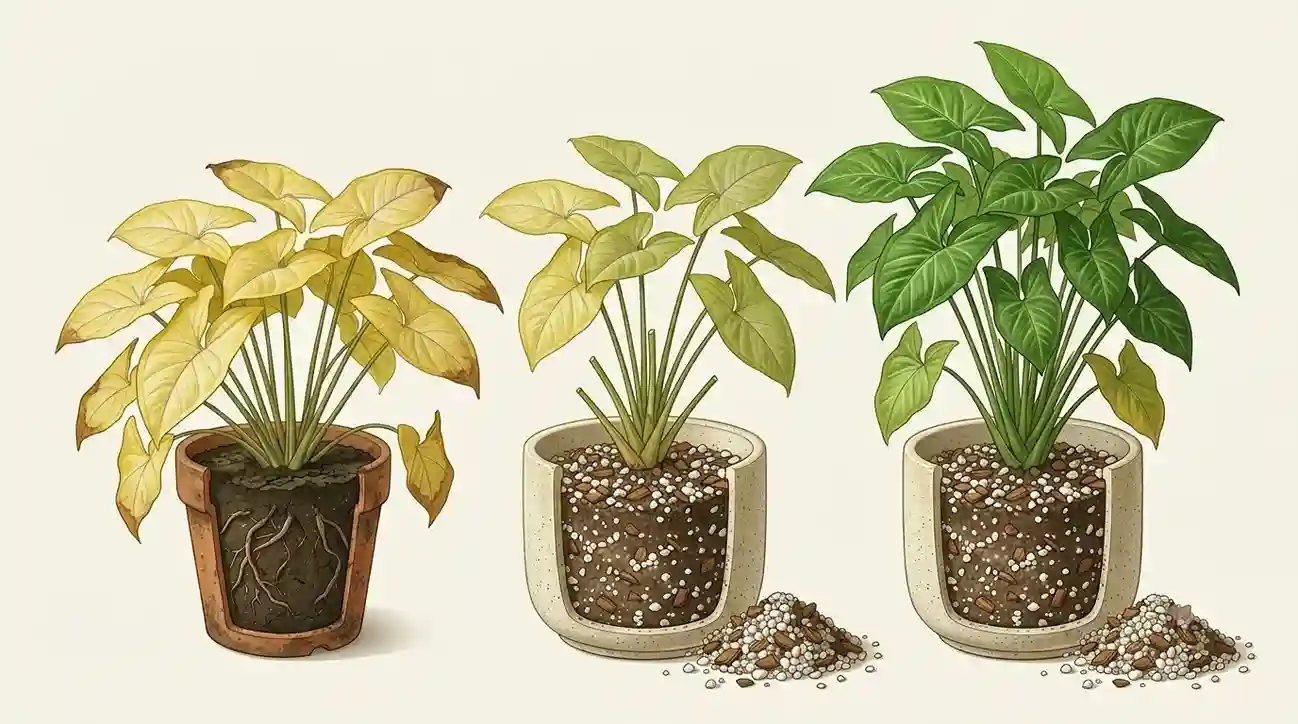
Reviving a syngonium begins with identifying the underlying problem.
Step 1 — Diagnose the Symptom Pattern
Evaluate:
- Soil moisture
- Light conditions
- Recent environmental changes
- Presence of pests
- Fertilization history
Compare symptoms to known yellowing patterns.
Step 2 — Remove Yellow Leaves
Remove damaged foliage using sterilized scissors.
Benefits include:
- Reduced disease risk
- Improved appearance
- Better energy allocation
Step 3 — Address the Root Cause
Apply the correct solution:
- Overwatering → Improve drainage
- Underwatering → Increase watering consistency
- Low light → Move to brighter location
- Nutrient deficiency → Fertilize appropriately
- Pests → Use neem oil or insecticidal soap
Can Leaves Recover From Turning Yellow?
In most cases, yellow leaves do not turn green again. Once chlorophyll is lost, recovery is uncommon.
Signs of successful recovery include:
- New healthy leaves
- Improved growth
- Stable coloration
Removing fully yellow leaves helps the plant focus resources on healthy growth.
Common Beginner Mistakes That Cause Syngonium Yellowing
Many yellowing problems result from common care errors.
Frequent mistakes include:
- Watering on a schedule instead of checking soil moisture
- Using pots without drainage holes
- Placing plants in direct afternoon sun
- Over-fertilizing
- Fertilizing stressed plants
- Ignoring humidity requirements
- Over-misting instead of improving room humidity
- Confusing natural cultivar color with stress symptoms
Avoiding these mistakes dramatically improves plant health.
Syngonium Plant Size and Growth Rate
Syngonium is a moderately fast-growing tropical vine. Indoors, mature plants commonly reach 3–6 feet in length when provided with support.
Growth characteristics include:
- Climbing or trailing habit
- Faster growth during spring and summer
- Slower growth during winter
- Compact forms available in dwarf varieties
Environmental factors influencing growth include:
- Light intensity
- Water availability
- Humidity
- Temperature
- Nutrient levels
Fast-growing plants often require more consistent care to prevent nutrient-related yellowing.
Conclusion
Syngonium leaves turning yellow can result from several causes, including overwatering, underwatering, poor lighting, low humidity, nutrient deficiencies, transplant shock, root-bound conditions, pest activity, and natural aging. Overwatering remains the most common reason, but careful observation of symptom patterns can quickly reveal the underlying issue. Most yellowing problems are reversible when the correct care adjustment is made. By maintaining proper watering practices, providing bright indirect light, using well-draining soil, and monitoring overall plant health, you can prevent recurring yellow leaves and encourage strong, healthy growth throughout the year. Understanding Syngonium care also connects well with broader indoor and outdoor plant ecosystems, similar to many ideas discussed in our guide on Australian Native Garden Plants, where plant health, environment, and growth conditions are explained in detail.
FAQ
Why are my syngonium leaves turning yellow?
The most common causes include overwatering, insufficient light, low humidity, nutrient deficiencies, transplant shock, or natural aging of lower leaves. Identifying the yellowing pattern helps determine the exact cause.
What does an overwatered syngonium look like?
An overwatered syngonium usually develops uniformly yellow leaves, soggy soil, mushy stems, poor growth, and in severe cases, root rot with a foul odor.
How often should I water a syngonium?
Most syngonium plants need water every 7–10 days during active growth and every 10–14 days during cooler months. Always check soil moisture before watering.
Can yellow leaves on a syngonium turn green again?
No. Most yellow leaves do not regain their green color. Recovery is indicated by healthy new growth after the underlying problem has been corrected.
Why are my syngonium leaves turning yellow after repotting?
Repotting can cause transplant shock, which temporarily stresses the root system. Mild yellowing usually resolves within two to four weeks under proper care.
Do syngonium like to be root bound?
Syngonium tolerates mild root binding but becomes stressed when severely root bound. Repotting into a slightly larger container helps restore healthy growth and prevents yellowing.



One Response