
Introduction
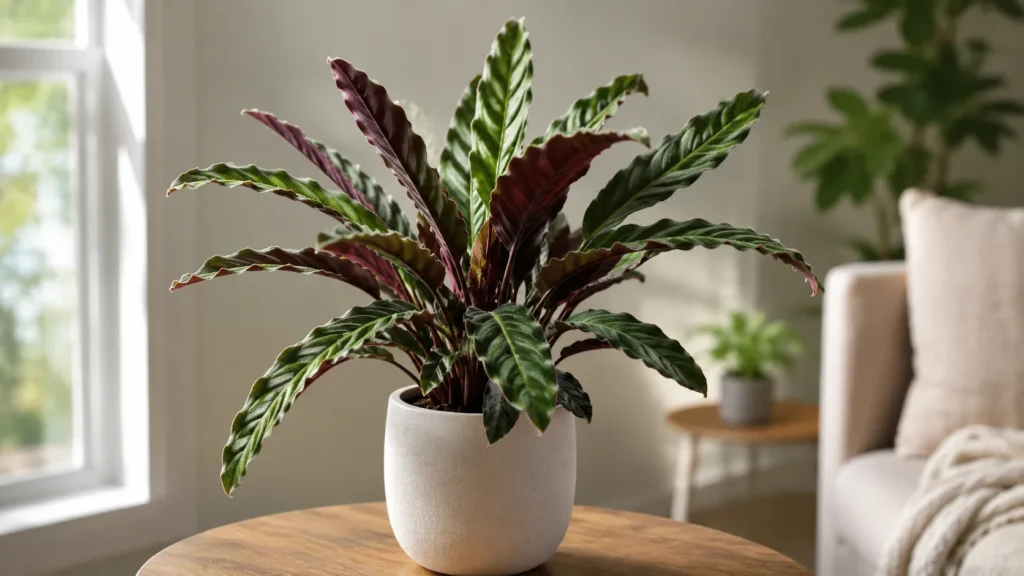
Furry feather calathea care focuses on maintaining stable humidity, indirect light, and consistent moisture to support the healthy growth of Calathea rufibarba. This tropical plant is commonly known as the furry feather calathea due to its soft, velvety leaves and burgundy undersides that create a unique tactile and visual appeal. It belongs to the Marantaceae family, also known as the prayer plant family, and is widely grown as an ornamental indoor houseplant. This guide explains everything needed to help Calathea rufibarba thrive indoors, including light, water, soil, and troubleshooting.
If you are exploring similar tropical foliage plants, you may also find the Calathea Orbifolia Care Guide helpful for understanding how different calathea varieties respond to indoor environments.
Quick Summary
- Furry feather calathea (Calathea rufibarba) is a tropical houseplant with velvety, lance-shaped leaves and deep purple undersides.
- It thrives in bright indirect light, high humidity (50–70%), and consistently moist soil.
- Most issues like brown tips or yellowing leaves come from low humidity, poor water quality, or inconsistent watering.
- It is non-toxic to pets and humans, making it safe for households with animals.
What Is Furry Feather Calathea?
Botanical Identity and Appearance
Calathea rufibarba, commonly called furry feather calathea, fuzzy calathea, or velvet calathea, is a tropical foliage plant known for its soft, hair-like texture on stems and leaf undersides. Its long, ripple-edged leaves are dark green on top and deep burgundy underneath.
The soft texture of Calathea rufibarba places it among other plants with soft velvety leaves, which share similar humidity and care requirements.
Native Habitat and Natural Behavior
This plant originates from the tropical rainforests of Brazil, where it grows on shaded forest floors under constant humidity. This environment explains its preference for moisture, warmth, and filtered light indoors.
Prayer Plant Characteristics
As part of the Marantaceae family, Calathea rufibarba shows nyctinastic movement—its leaves gently rise at night and lower during the day. This natural rhythm is a key identifying trait of calathea fuzzy leaves plants.
Calathea rufibarba belongs to the Marantaceae family, a group of tropical flowering plants commonly known as prayer plants, which are documented in botanical classifications such as Marantaceae.
Furry Feather Calathea Size and Growth Rate
Mature Size
Indoors, calathea rufibarba size typically reaches 60–90 cm (2–3 feet) in height and 30–60 cm in spread under ideal conditions.
Growth Speed
It is considered a slow-growing houseplant, producing approximately 1–2 new leaves per month when healthy.
Growth Influencing Factors
- Light intensity (bright indirect light increases growth)
- Pot size and root space
- Humidity levels
- Fertilization frequency
In USDA zones 10–12, it may grow larger outdoors, but indoors it remains compact and decorative.
Furry Feather Calathea Care: Full Indoors Guide
Light Requirements

Calathea rufibarba light requirements include bright, indirect sunlight. Direct sun damages its velvety leaves and causes fading or scorch marks. North- or east-facing windows are ideal. Too little light results in slow growth and dull coloration.
Watering Furry Feather Calathea
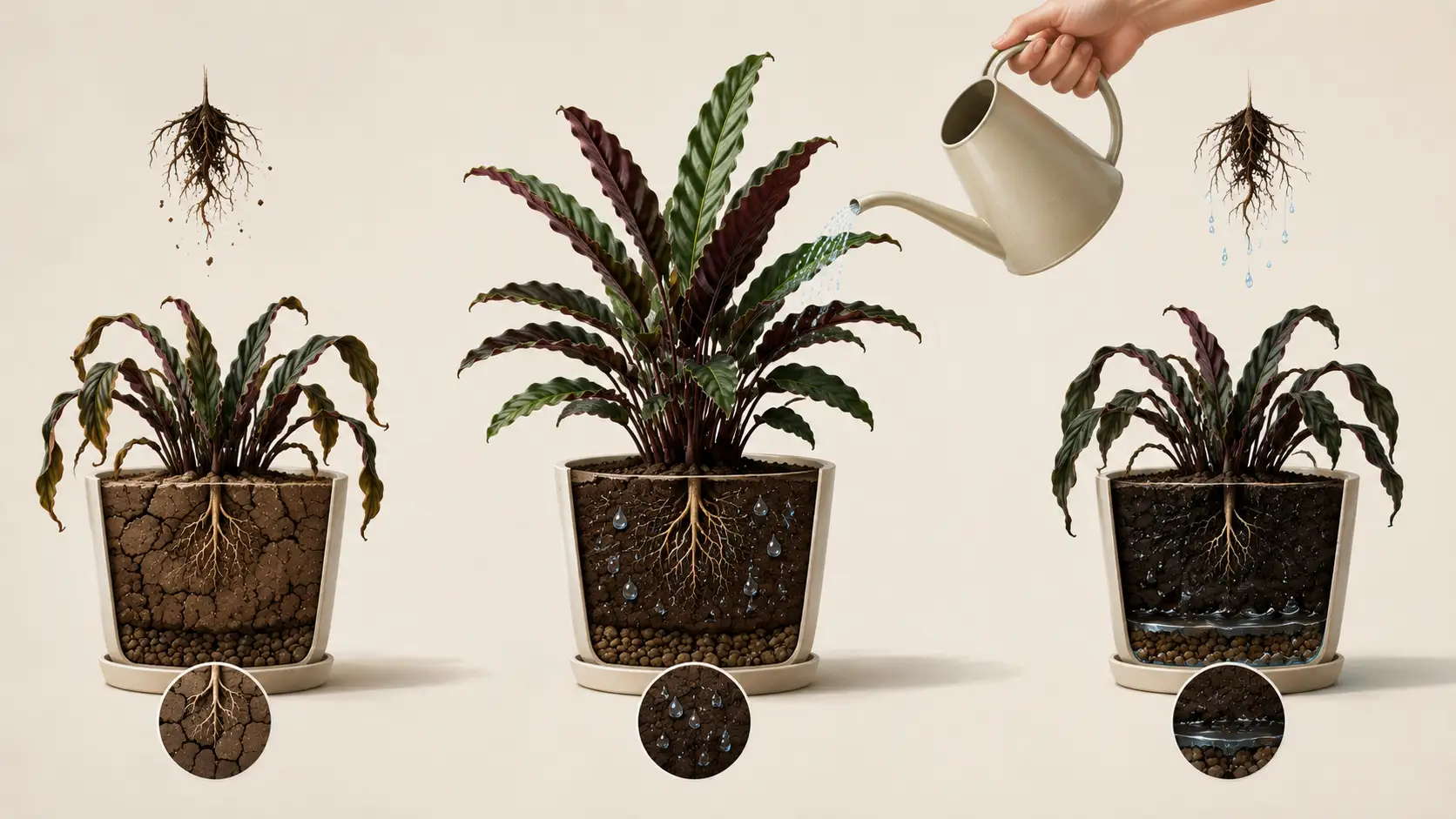
Furry feather calathea care watering requires consistently moist soil but never waterlogged conditions. Unlike drought-tolerant plants, Calathea rufibarba should not dry out completely.
Should I let it dry out before watering? No. The top 1–2 cm may dry slightly, but deeper soil must remain lightly moist.
Key watering checklist:
- Check soil moisture 2–3 cm deep before watering
- Use filtered, distilled, or rainwater
- Water thoroughly until drainage occurs
- Empty excess water from saucers after 30 minutes
- Reduce watering in winter months
Calathea rufibarba water quality is critical because fluoride and chlorine can cause brown leaf tips.
Humidity and Temperature
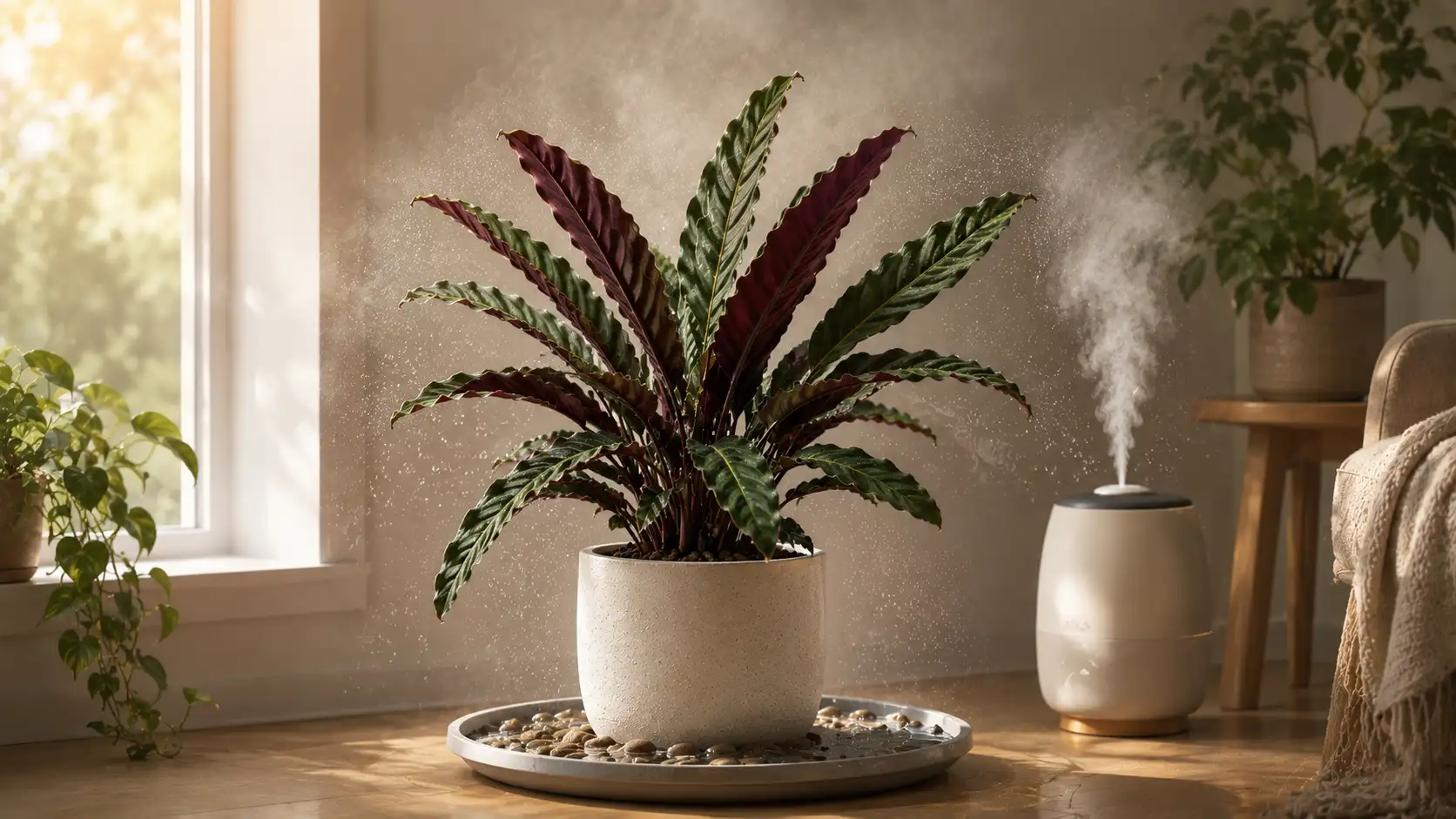
Calathea rufibarba indoor care requires 50–70% humidity. This replicates its rainforest habitat. Low humidity is the most common cause of leaf issues.
Best practices:
- Use humidifiers for stable moisture
- Place pebble trays under pots
- Group plants together
Ideal temperature range is 18–27°C (65–80°F). Avoid cold drafts and heating vents. Compared to more drought-tolerant species like Sansevieria Laurentii, calatheas require significantly higher humidity levels to maintain healthy foliage.
Soil and Potting
Calathea rufibarba plant care requires well-draining yet moisture-retentive soil. A mix of peat or coco coir with perlite works best.
- Repot every 1–2 years
- Use glazed ceramic or plastic pots for moisture retention
- Avoid overly large pots that retain excess water
Proper soil balance is also important in other indoor plants, as seen in issues like those discussed in Peperomia leaf drop causes and fixes.
Fertilizer
Furry feather calathea fertilizer should be applied only during spring and summer.
- Use balanced liquid fertilizer at half strength
- Apply every 4 weeks
- Avoid fertilizing in winter
Over-fertilization leads to salt buildup and leaf tip burn.
Pruning
Remove dead or yellow leaves at the base using clean scissors. Light pruning improves airflow and plant energy distribution.
Furry Feather Calathea Flower
Furry feather calathea flowers are small, tubular blooms that appear on short stems near the base of the plant. They are usually pale yellow or orange.
Calathea rufibarba can flower indoors under stable humidity and consistent care, though it is uncommon. The plant is primarily grown for foliage, not blooms. Removing flowers is optional and depends on whether you want to redirect energy toward leaf growth. Furry feather calathea flower care involves maintaining stable humidity and light to encourage blooming conditions.
Furry Feather Calathea Propagation
Furry feather calathea propagation is done only through division.
Steps:
- Remove plant from pot during spring
- Gently loosen soil around roots
- Identify natural clumps with roots
- Separate sections with 2–3 leaves each
- Replant in fresh moist soil
- Maintain high humidity for 4–6 weeks
Avoid propagating small or weak plants, as recovery is slow without strong root systems.
Common Problems and How to Fix Them
Brown Leaf Tips and Edges
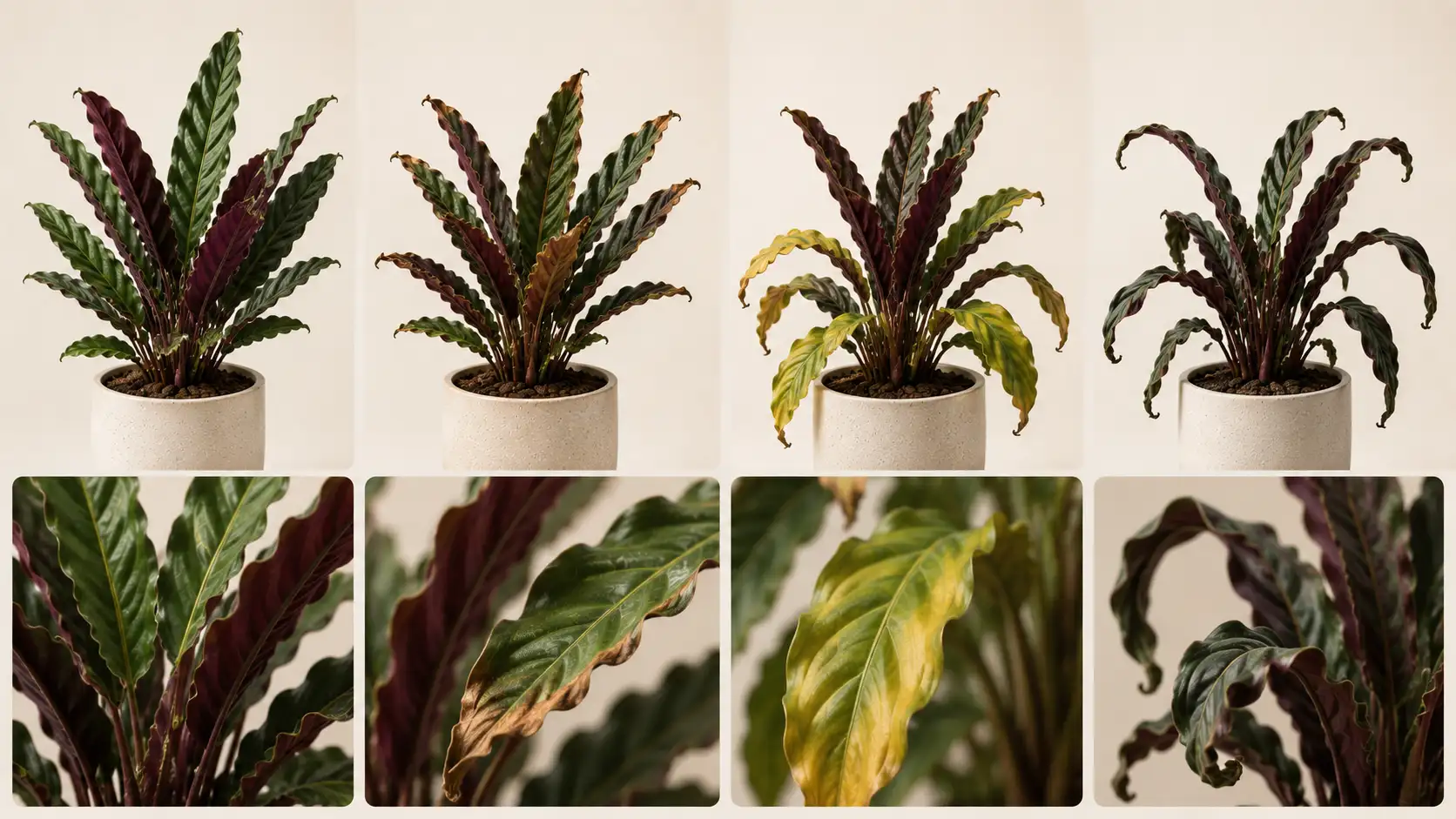
Caused by low humidity, fluoride in water, or fertilizer buildup. Increase humidity and switch to filtered water.
Yellow Leaves
Usually due to overwatering or root rot. Check soil moisture and remove damaged roots if needed.
Curling Leaves
Furry feather calathea leaves curling is typically caused by underwatering or low humidity. Leaves may also curl to reduce moisture loss.
Fix by increasing watering consistency and humidity.
How to Know If Your Calathea Is Happy
Healthy plants show:
- Upright, deep green leaves
- Regular new growth
- Visible leaf movement day and night
- No browning or fading
Sometimes plant stress symptoms can also overlap with pest-related issues discussed in indoor plant soil bug problems and prevention guides.
Why Are Calatheas Hard to Care For?
Calatheas are sensitive because they require stable humidity, filtered water, and consistent soil moisture. Most homes naturally fluctuate in these conditions. For beginners seeking easier alternatives, the low maintenance Australian native plants guide provides more resilient options for indoor and outdoor growth.
Calathea rufibarba is slightly more forgiving than other species, but still depends on:
- High humidity
- Clean water
- Stable temperature
With the right setup, furry feather calathea care becomes manageable.
Furry Feather Calathea vs Similar Varieties
| Feature | C. rufibarba | C. orbifolia | C. medallion |
| Leaf texture | Velvety / fuzzy | Smooth, striped | Smooth, patterned |
| Leaf shape | Lance-shaped | Round | Oval |
| Underside color | Burgundy | Silver-green | Purple-red |
| Care difficulty | Moderate | Moderate-high | Moderate |
| Height | 60–90 cm | 60–90 cm | 45–60 cm |
| Humidity needs | High (50–70%) | Very high | High |
Calathea with fuzzy leaves like rufibarba is generally easier than large-leaf orbifolia types.
Is Furry Feather Calathea Toxic?
Calathea rufibarba is non-toxic to cats, dogs, and humans according to the ASPCA. However, ingestion may still cause mild stomach discomfort, so placement out of reach is recommended.
Furry Feather Calathea Benefits
- Decorative velvety foliage with unique texture
- Safe for pets and children
- Adds humidity-friendly greenery indoors
- Exhibits nyctinastic movement (leaf motion)
- Enhances indoor aesthetic appeal
Like Dracaena fragrans, Calathea rufibarba is valued for its decorative foliage and contribution to indoor greenery aesthetics. For a broader understanding of indoor plant advantages and care strategies, explore our Plants Benefits and Guides pillar covering comprehensive plant care knowledge.
Common Beginner Mistakes to Avoid
- Using untreated tap water (causes brown tips)
- Placing in direct sunlight
- Allowing soil to fully dry out
- Over-misting instead of using humidifiers
- Over-fertilizing during dormancy
- Frequent repotting into oversized containers
- Misinterpreting leaf movement as wilting
Similar watering mistakes also affect other indoor plants, such as those explained in Syngonium leaf yellowing causes and solutions.
Conclusion
Furry feather calathea care depends on balancing humidity, consistent moisture, and gentle lighting conditions. Calathea rufibarba rewards proper attention with soft, velvety foliage and stable growth indoors. While it is more demanding than many houseplants, maintaining filtered water, high humidity, and indirect light ensures long-term health and visual appeal. With consistency, this plant becomes a striking addition to any indoor collection.
Frequently Asked Questions
1. How do you care for a furry feather calathea?
Provide bright indirect light, moist well-draining soil, 50–70% humidity, and temperatures between 18–27°C. Use filtered water and fertilize monthly in spring and summer.
2. Should I let my calathea dry out before watering?
No. Calathea rufibarba should never fully dry out. Keep soil lightly moist, allowing only the top layer to dry slightly.
3. Why are the leaves turning brown?
Most commonly due to low humidity or poor water quality. Other causes include direct sun, fertilizer buildup, or cold drafts.
4. Why are calatheas hard to care for?
They require stable humidity, filtered water, and consistent moisture—conditions that are difficult to maintain in most homes.
5. Is furry feather calathea toxic to cats?
No. It is non-toxic to cats and dogs, though ingestion may cause mild stomach upset.
6. How do I know if my calathea is happy?
Healthy plants show upright green leaves, new growth, and regular day-night leaf movement without browning or curling.
7. Can furry feather calathea flower indoors?
Yes, but rarely. It produces small yellow or orange tubular flowers under ideal humidity and consistent care conditions.