
Introduction
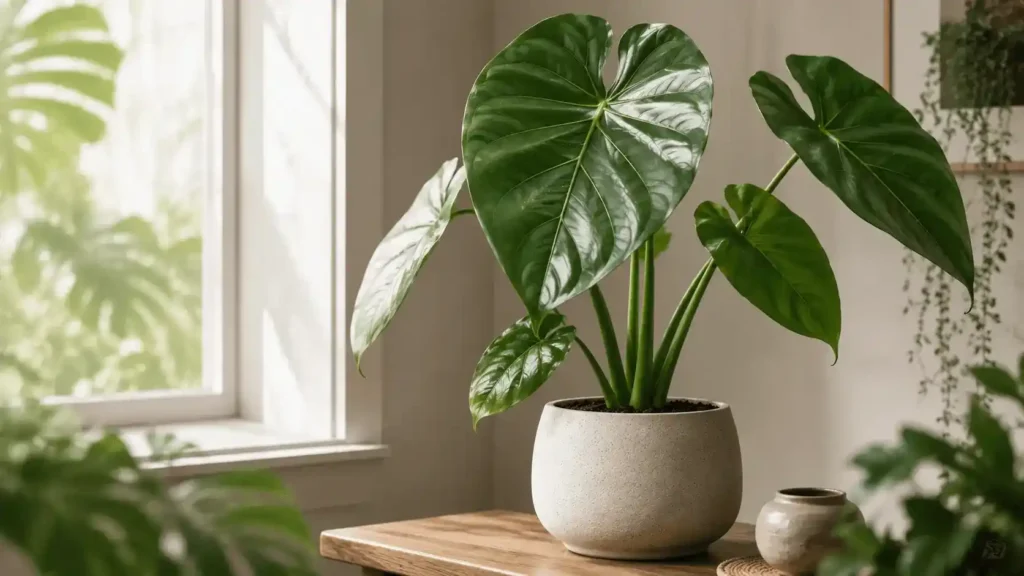
The chinese taro plant is a tropical ornamental species scientifically known as Alocasia cucullata, grown for its glossy, upward-facing elephant ear leaves and compact architectural form. Despite its name, it is not an edible taro plant but an ornamental member of the Araceae family. Native to Southern China and Southeast Asia, it thrives in warm, humid environments and is widely used as both an indoor houseplant and outdoor landscape specimen. Yes, the chinese taro plant is an Alocasia, not a Colocasia species.
Quick Summary
- The chinese taro plant (Alocasia cucullata) is a tropical perennial with upright elephant ear foliage
- It grows well indoors and outdoors in warm, humid conditions
- Propagation is done through offsets (pups), not seeds
- The plant is toxic to pets and humans if ingested
- It is different from edible taro (Colocasia esculenta)
What Is the Chinese Taro Plant?
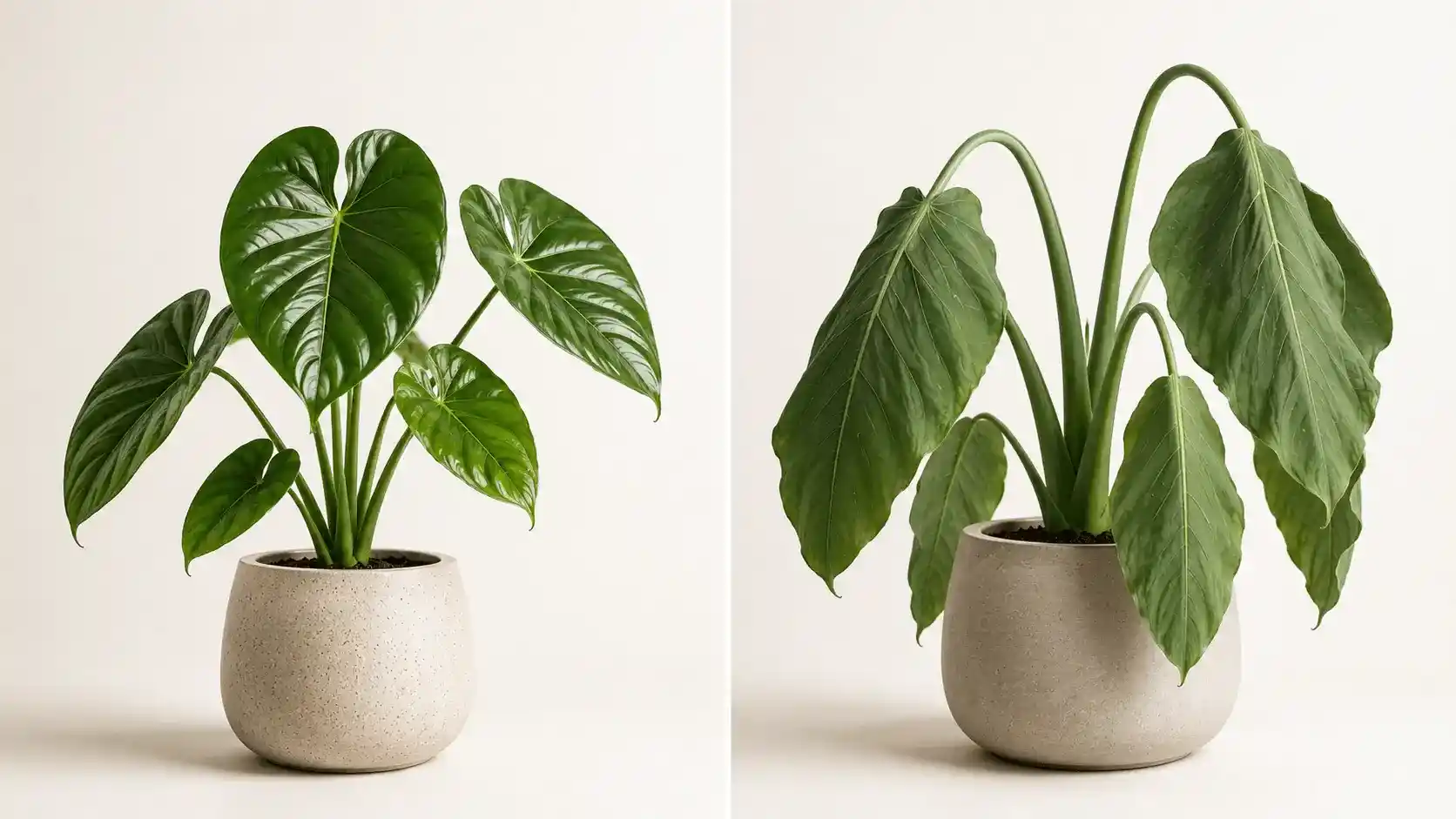
The chinese taro plant refers to Alocasia cucullata, a tropical perennial in the Araceae family known for its glossy, heart-shaped leaves that grow upward in a cupped form. It is also commonly called Asian taro plant or Alocasia calcutta in horticultural trade. The plant belongs to the Alocasia genus, which includes many ornamental elephant ear species found in tropical regions.
Native to Southern China, Southeast Asia, and parts of the Indian subcontinent, it is often seen in Buddhist temple gardens, where it symbolizes protection and good fortune. Despite its common name, it is not related to edible taro, which belongs to the genus Colocasia.
Table: Chinese Taro vs True Taro — Key Differences
| Feature | Chinese Taro (Alocasia cucullata) | True Taro (Colocasia esculenta) |
| Genus | Alocasia | Colocasia |
| Edible root | No | Yes |
| Leaf orientation | Upright | Drooping |
| Purpose | Ornamental | Food + ornamental |
| Common names | Chinese taro, Asian taro | Taro, dasheen |
Is Alocasia Cucullata the Same as Chinese Taro?
Yes, Chinese taro is the common name for Alocasia cucullata. The term “Alocasia calcutta” is a nursery trade name and not a separate species. Confusion occurs because Alocasia and Colocasia species both have elephant ear foliage but differ in leaf orientation and usage.
Chinese Taro Plant Size and Appearance
The chinese taro plant is a compact ornamental elephant ear plant with glossy green leaves and an upright growth habit.
- Indoor height: 2–4 feet
- Outdoor height: up to 5–6 feet in warm climates
- Leaf shape: heart-shaped, cupped, upward-facing
- Flower: rare pale spathe/spadix typical of aroids
- Special trait: tolerates semi-aquatic or boggy conditions
Its bold foliage structure is similar in visual impact to Monstera Adansonii, although the chinese taro plant grows in a more upright form.
How Fast Does the Chinese Taro Plant Grow?
The chinese taro plant is a moderate grower that develops faster in warm, humid environments with stable conditions.
It grows actively in spring and summer, while growth slows significantly in winter. It is a perennial in USDA zones 9–11 and can be overwintered indoors in colder regions.
- Fast growth: warmth + humidity
- Slow growth: low light or dry air
- Dormancy: cold seasonal conditions
Chinese Taro Plant Care Guide
Watering the Chinese Taro Plant
The plant prefers consistently moist soil but should not sit in stagnant water unless grown in controlled aquatic setups.
- Keep soil evenly moist
- Reduce watering in winter
- Overwatering causes root rot
- Underwatering causes crispy leaf edges
Light Requirements
Bright, indirect light is ideal for healthy growth.
- Best: east or north-facing windows
- Avoid: direct harsh sunlight
- Tolerates: moderate low light
Similar to Philodendron Scandens, it prefers filtered light rather than direct sun exposure to prevent leaf scorch.
Soil and Potting
A loose, well-draining mix prevents root rot.
- Peat or coco coir + perlite
- Slightly acidic to neutral pH (5.5–7.0)
- Repot every 1–2 years
Humidity and Temperature
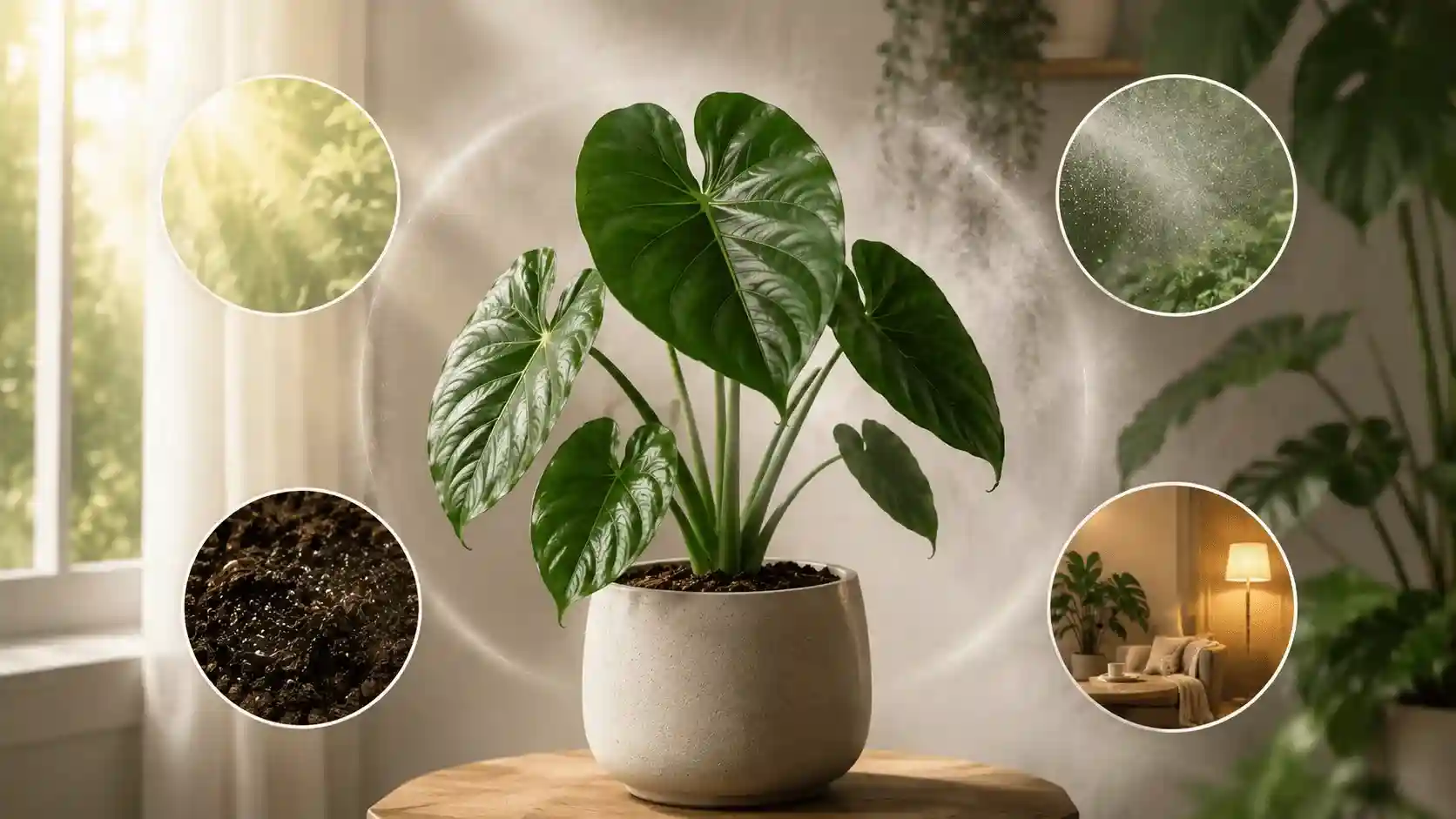
High humidity and warmth are essential for healthy foliage.
- Humidity: 50–80%
- Temperature: 65–85°F (18–29°C)
- Not frost tolerant below 50°F (10°C)
Fertilization
Feed during active growth for best results.
- Monthly balanced liquid fertilizer
- Avoid over-fertilizing
- Stop feeding in winter
Care Summary Table
| Care Factor | Requirement |
| Light | Bright indirect |
| Water | Consistently moist |
| Humidity | 50–80% |
| Temperature | 65–85°F |
| Soil | Well-draining airy mix |
| Fertilizer | Monthly (growing season) |
| Toxicity | Toxic to pets and humans |
Growing Chinese Taro Plant Indoors
Yes, the chinese taro plant is a popular indoor elephant ear houseplant due to its manageable size and adaptability. However, unlike drought-tolerant plants such as Sansevieria Laurentii, the chinese taro plant requires consistently moist soil and higher humidity. Compared to Alocasia Amazonica, the chinese taro plant is generally more forgiving and easier to maintain in typical home environments.
It performs best near bright, indirect light sources and benefits from added humidity indoors.
- Best placement: east or north-facing window
- Use humidifiers or pebble trays
- Avoid dry air from AC or heaters
- Slower growth in low winter light
Compared to larger elephant ear species, Alocasia cucullata is more suitable for indoor environments. Like other tropical foliage plants such as Dracaena fragrans, the chinese taro plant thrives in bright indirect light and stable indoor humidity levels.
Chinese Taro Plant Propagation
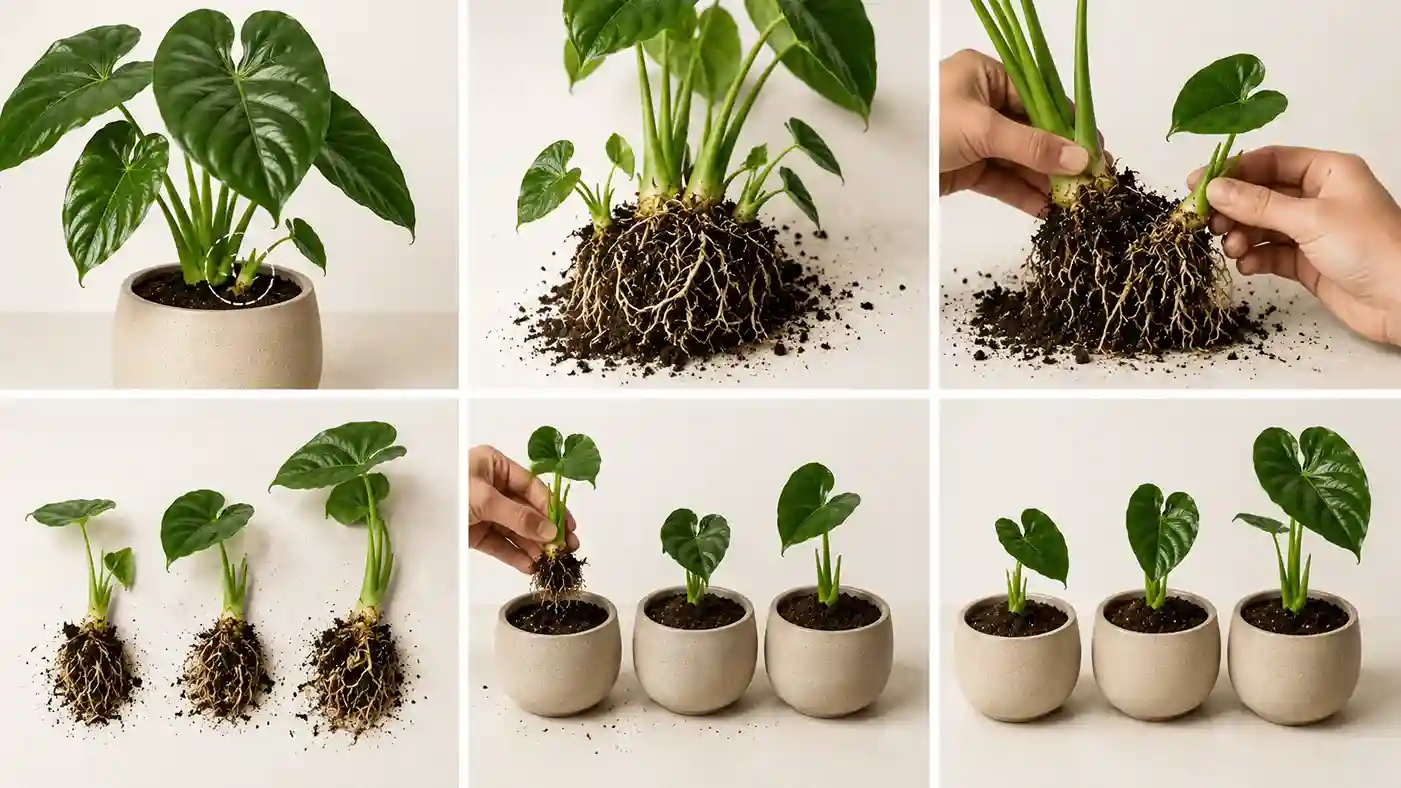
The primary propagation method is division of offsets (pups) that grow at the base of the plant.
Steps:
- Wait until pups are 3–4 inches tall with roots
- Gently separate from parent plant
- Plant in moist, well-draining soil
- Keep warm (70°F+) and humid
- Rooting takes 2–4 weeks
Offsets may also be rooted temporarily in water before planting.
Chinese Taro Plant Benefits
- Air-purifying properties associated with aroid plants
- Aesthetic value for interior and landscape design
- Cultural significance in Asian temple gardens
- Suitable for humid, boggy environments
- Helps improve indoor visual comfort and stress reduction
While the chinese taro plant is not native, it is often included in indoor collections alongside low maintenance Australian native plants due to its easy ornamental appeal.
Is the Chinese Taro Plant Toxic?
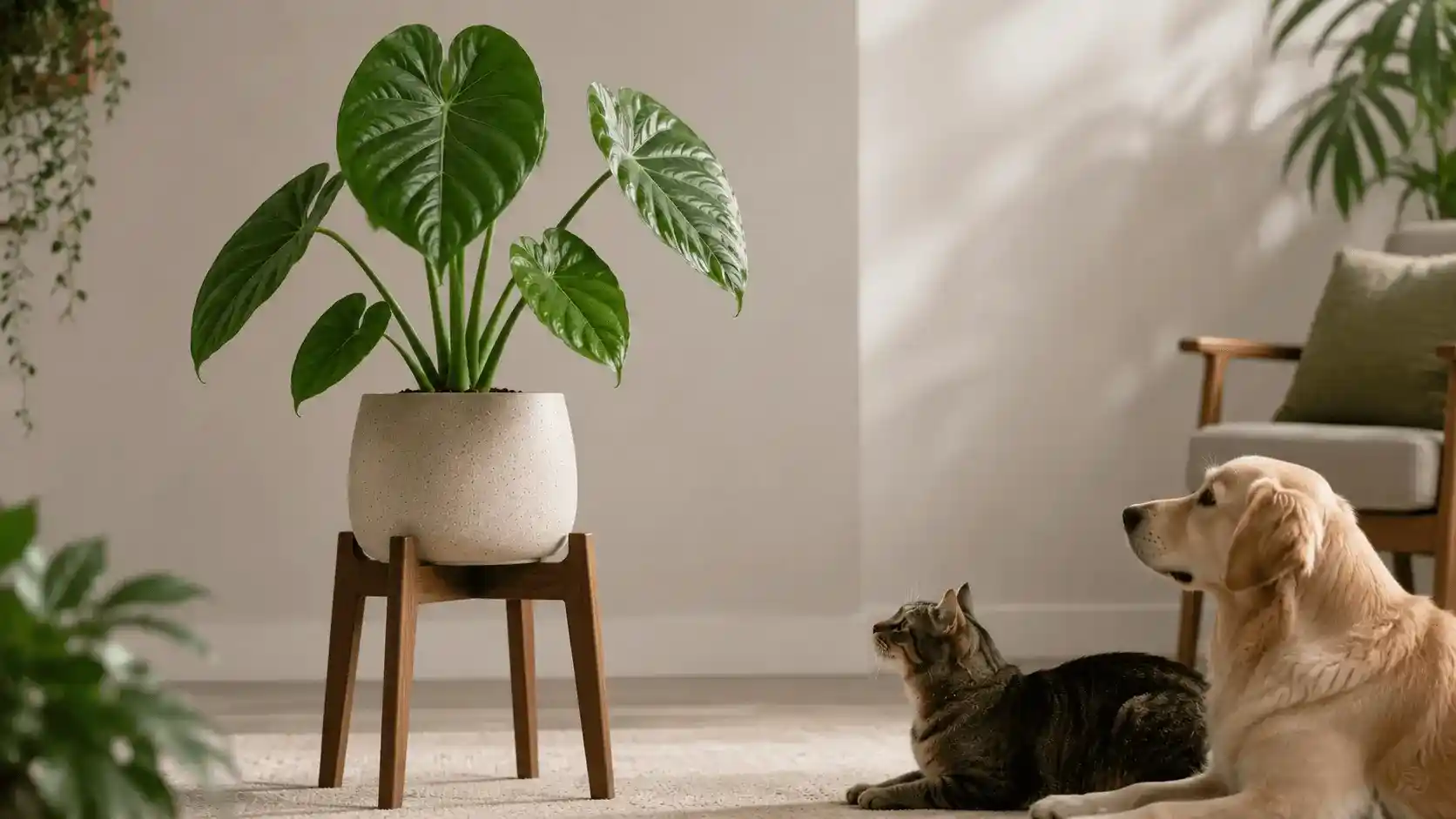
Yes, all parts of the chinese taro plant contain calcium oxalate crystals and are toxic if ingested.
- Causes oral irritation and swelling
- Leads to drooling and vomiting in pets
- Skin irritation possible during handling
- Keep away from children and animals
Chinese Taro Plant Leaves Turning Yellow — Causes and Fixes
Yellow leaves usually indicate environmental stress or care imbalance.
- Overwatering → root rot → reduce watering and improve drainage
- Low humidity → leaf edge yellowing → increase humidity
- Nutrient deficiency → older leaves yellow → resume fertilizing
- Cold stress → sudden yellowing → move to warmer location
- Natural aging → old leaves yellow → normal process
This is similar to Syngonium leaves turning yellow, where watering imbalance is one of the most common causes of foliage stress.
Common Mistakes When Growing Chinese Taro Plant
- Overwatering without drainage
- Using dense, compact soil
- Exposure to direct harsh sunlight
- Low indoor humidity conditions
- Confusing with Colocasia care requirements
- Ignoring seasonal dormancy changes
Overwatering-related leaf decline is also common in Peperomia leaves falling off, showing how sensitive tropical houseplants are to soil moisture levels.
Chinese Taro Plant vs Similar Plants
| Feature | Chinese Taro (Alocasia cucullata) | Colocasia esculenta | Alocasia macrorrhiza |
| Leaf direction | Upward | Drooping | Outward/upward |
| Size | 2–4 ft | 3–6 ft | 4–8 ft |
| Indoor suitability | Excellent | Moderate | Difficult |
| Edible | No | Yes | No |
| Water tolerance | High | Very high | Moderate |
Conclusion
The chinese taro plant (Alocasia cucullata) is a versatile tropical ornamental valued for its upright elephant ear foliage, compact growth, and adaptability to both indoor and outdoor environments. It is distinct from edible taro (Colocasia esculenta) and requires warm, humid conditions with consistent moisture to thrive. With proper care, propagation through offsets, and attention to toxicity precautions, it remains a reliable and visually striking houseplant for many growers.
Frequently Asked Questions
1: How do you care for a Chinese taro plant?
Provide bright indirect light, consistent moisture, high humidity, and warm temperatures between 65–85°F. Feed monthly during the growing season.
2: Does taro come back every year?
Yes, it is a perennial in USDA zones 9–11. In colder climates, it must be brought indoors or treated as an annual.
3: Is Chinese taro an Alocasia?
Yes, Chinese taro is Alocasia cucullata, not Colocasia, despite similar common names.
4: Can taro be grown as a houseplant?
Yes, it adapts well indoors and is easier to manage than larger elephant ear species.
5: Is the Chinese taro plant toxic to cats?
Yes, it contains calcium oxalate crystals that cause irritation and digestive issues if ingested.
How do you propagate a Chinese taro plant?
By separating healthy offsets (pups) from the parent plant and planting them in moist, well-draining soil.
7: Why are my Chinese taro plant leaves turning yellow?
Common causes include overwatering, low humidity, cold stress, or natural aging of older leaves.