Introduction
Does pot size affect how fast a plant grows is a common question among plant owners noticing uneven growth or stalling plants. In simple terms, pot size directly controls root expansion, water retention, oxygen flow, and nutrient availability. These factors determine whether a plant grows quickly or becomes restricted and slow.
Yes, pot size affects how fast a plant grows — the right container size determines root expansion, water distribution, and nutrient uptake, all of which drive above-ground growth rate.
Quick Summary
- Pot size directly controls root space, oxygen flow, and nutrient access, which determine plant growth speed.
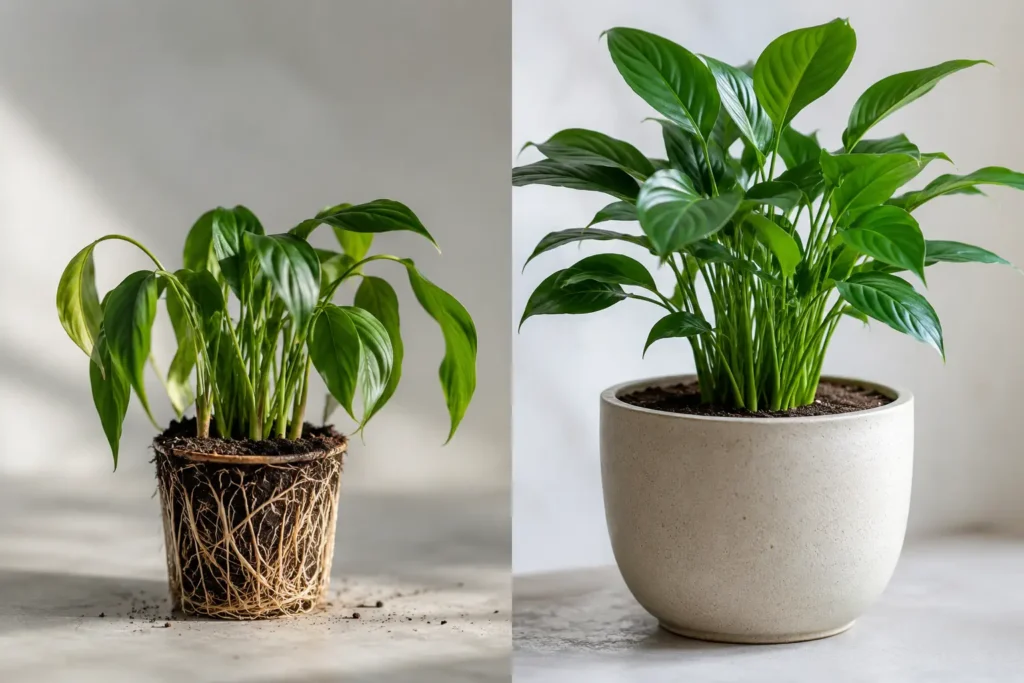
- Too small pots restrict roots, while too large pots can cause overwatering and root rot.
- The ideal pot size is usually 1–2 inches larger than the root ball.
- Matching pot size correctly is one of the most important but overlooked growth factors.
Does Pot Size Affect How Fast a Plant Grows?
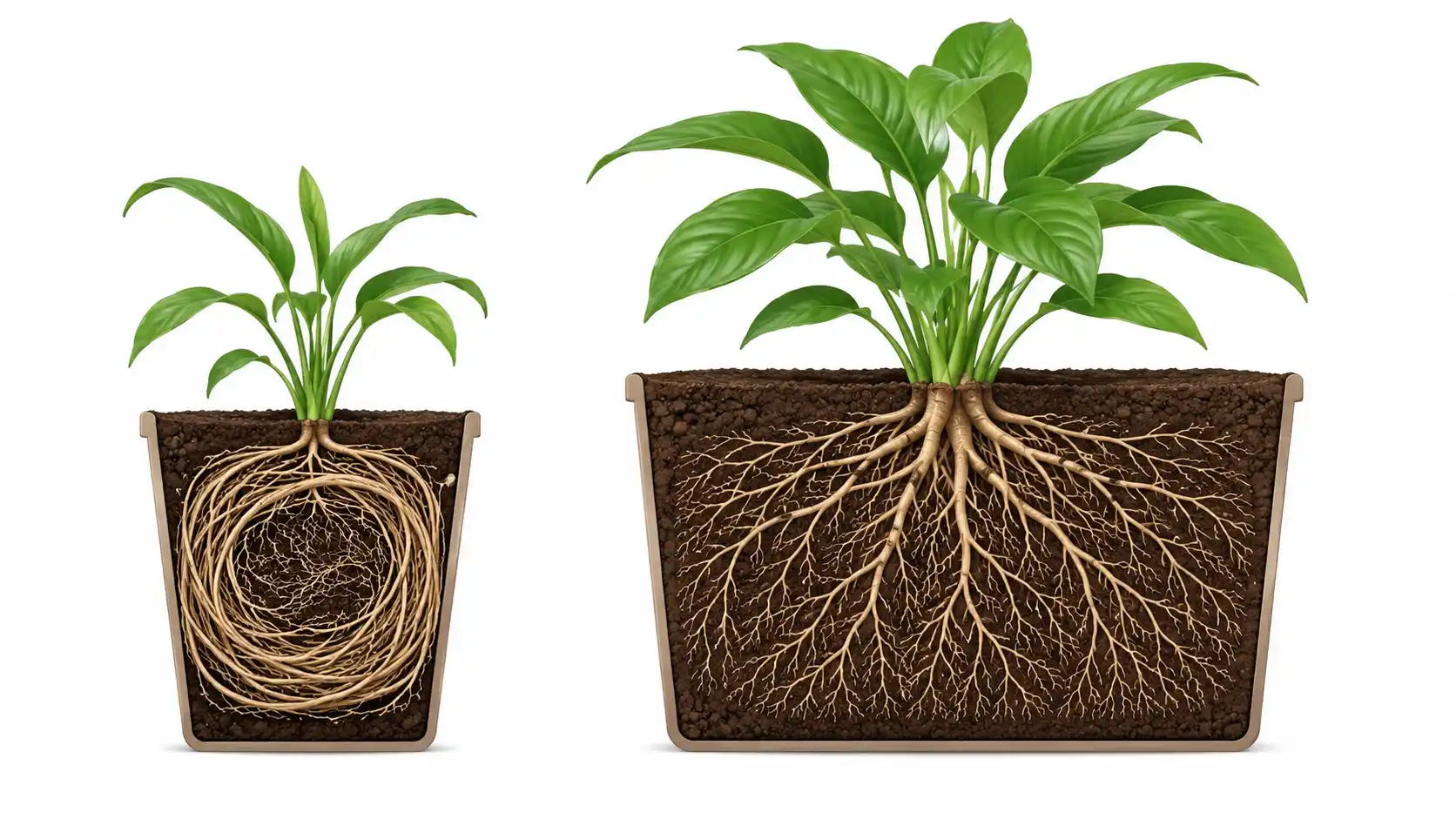
Pot size directly affects plant growth rate because root volume determines how efficiently water and nutrients are absorbed. When roots have enough space, they expand freely, supporting faster and healthier shoot development.
Root expansion drives shoot growth — once roots hit container walls, above-ground growth slows. Soil volume also regulates moisture stability and oxygen availability, both essential for continuous plant development. Research on rooting volume consistently shows that restricted root systems lead to reduced biomass and slower growth rates.
Does Pot Size Affect Plant Growth Indoors vs. Outdoors?
Indoor Plants and Pot Size
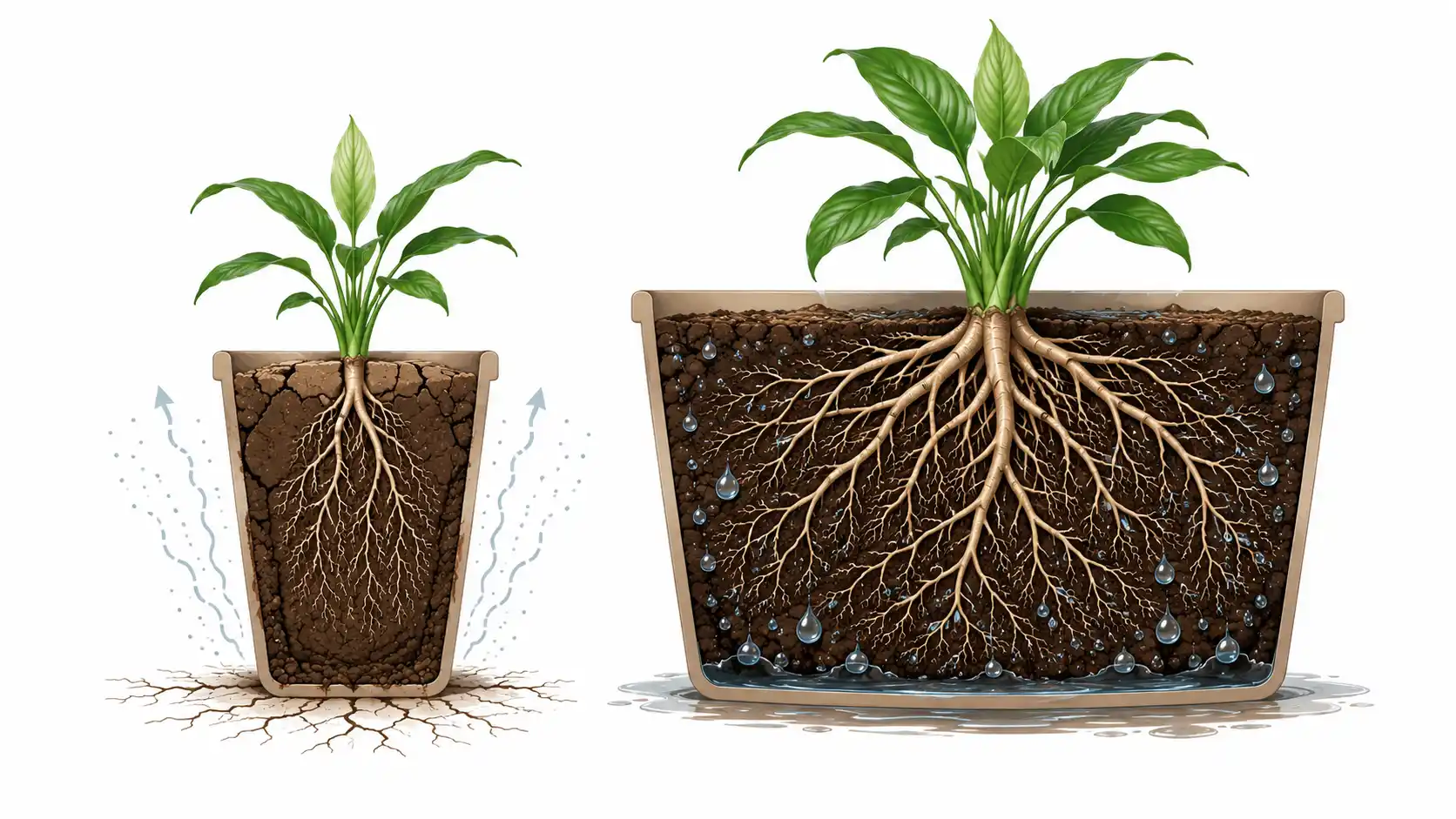
Indoor plants are highly sensitive to pot size because all environmental conditions are controlled by the container. Using our tool can help you determine whether your plant is in the correct pot size based on its current growth stage. Indoor tropical plants such as Alocasia are highly sensitive to container size because restricted root space quickly slows their growth and affects leaf development.
Key indoor effects include:
- Small pots dry out too quickly
- Large pots hold excess moisture and increase root rot risk
- Restricted airflow slows root respiration
Indoor gardeners often struggle with questions like is my pot too small for my plant or is my pot too big for my plant, which usually trace back to incorrect sizing.
Outdoor Plants and Pot Size
Outdoor container plants also depend heavily on proper pot sizing, although natural airflow and temperature fluctuations make conditions more forgiving.
Key outdoor factors:
- Larger pots stabilize soil temperature
- Faster evaporation in hot climates requires correct sizing
- Root insulation improves with balanced container volume
Even outdoors, using our tool can help ensure the plant is not restricted or over-potted.
Do Plants Grow Faster in Bigger Pots?
A bigger pot does not automatically mean faster growth. Growth depends on whether the container size matches the plant’s root system and growth stage.
When a bigger pot helps:
- Plant is root-bound and circling the pot
- Roots are emerging from drainage holes
- Fast-growing species with high nutrient demand
When a bigger pot slows growth:
- Excess soil stays wet for too long
- Roots cannot efficiently access nutrients
- Higher risk of root rot due to moisture imbalance
Proper proportional sizing is more important than simply increasing pot size.
Plant Height to Pot Size Ratio: What You Need to Know
The plant height to pot size ratio ensures structural stability and balanced root-to-shoot growth. As a general rule, plant height should not exceed twice the container height for healthy development.
| Plant Height | Recommended Pot Diameter | Recommended Pot Depth |
| 12 inches | 4–6 inches | 4–6 inches |
| 3 feet | 10–14 inches | 10–12 inches |
| 6 feet (indoor tree) | 16–24 inches | 16–24 inches |
This ratio helps maintain stability and prevents root stress caused by mismatched container size.
How to Determine the Right Pot Size for Your Plant
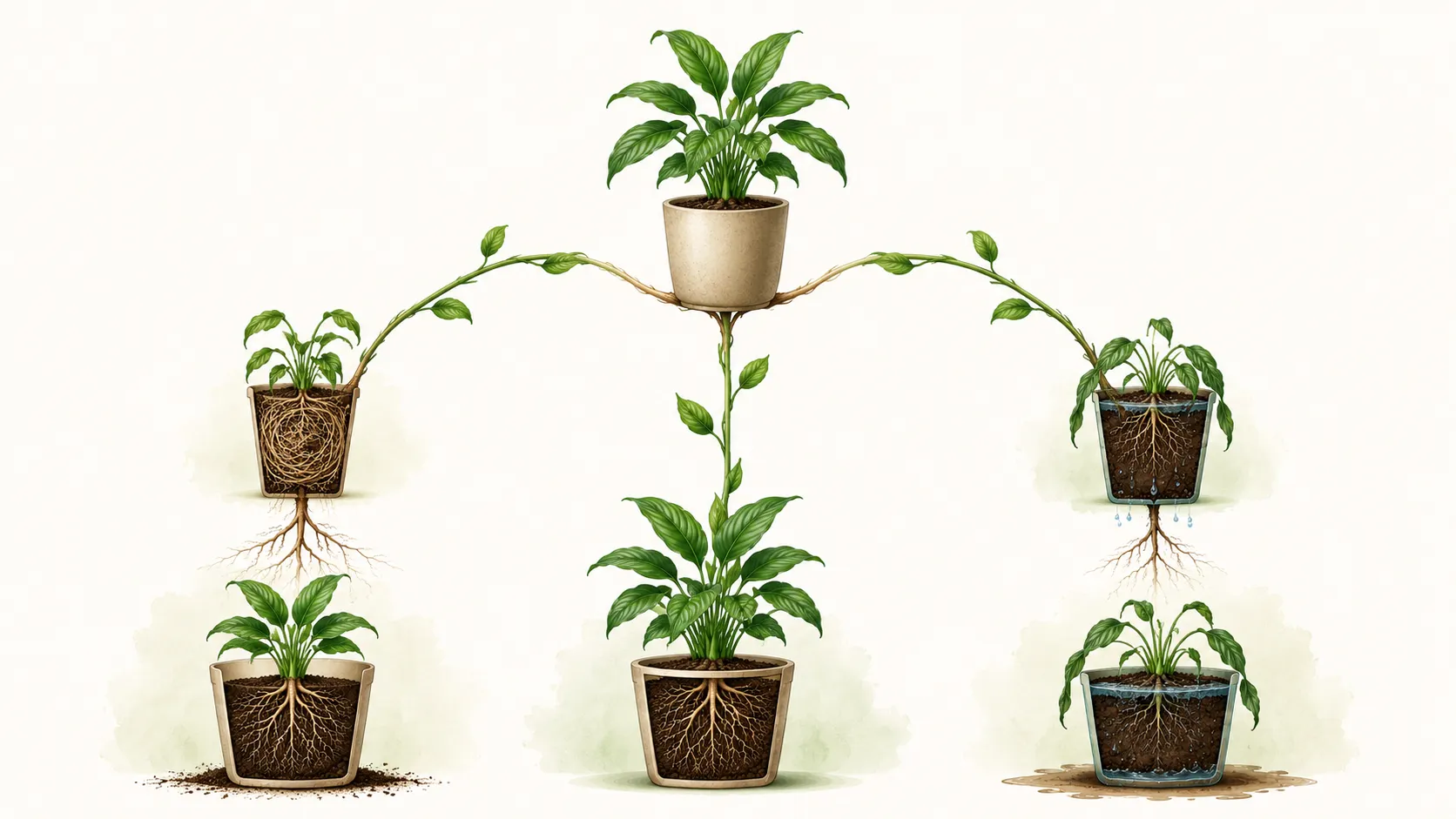
Choosing the correct pot size is essential for healthy growth, and our tool can help you make an accurate decision based on plant type and growth rate.
Steps:
- Check root ball size by gently removing the plant
- Select a pot 1–2 inches larger in diameter for most plants
- Increase 2–4 inches for fast-growing species
- Use minimal size increase for slow growers
- Always ensure proper drainage holes
This approach prevents both under-sizing and over-sizing issues that can limit growth. Choosing the correct container is especially important for large indoor plants like Monstera, where pot size significantly affects aerial root stability and growth speed.
Plant Pot Sizes Chart and Common Sizes
Plant pots are usually measured in diameter or volume, and each size supports different plant stages.
| Pot Size | Volume Equivalent | Suitable Plant Type | Example Plants |
| 4-inch | Small starter | Seedlings | Herbs, small succulents |
| 6-inch | Small houseplants | Young indoor plants | Pothos, spider plant |
| 1-gallon | Medium growth stage | Developing plants | Foliage plants |
| 3-gallon | Large containers | Mature indoor plants | Fiddle leaf fig |
| 5-gallon+ | Large plants/trees | Heavy root systems | Citrus, indoor trees |
Using our tool ensures you select the correct stage-based container size.
Pot Size vs. Plant Size: Finding the Right Balance
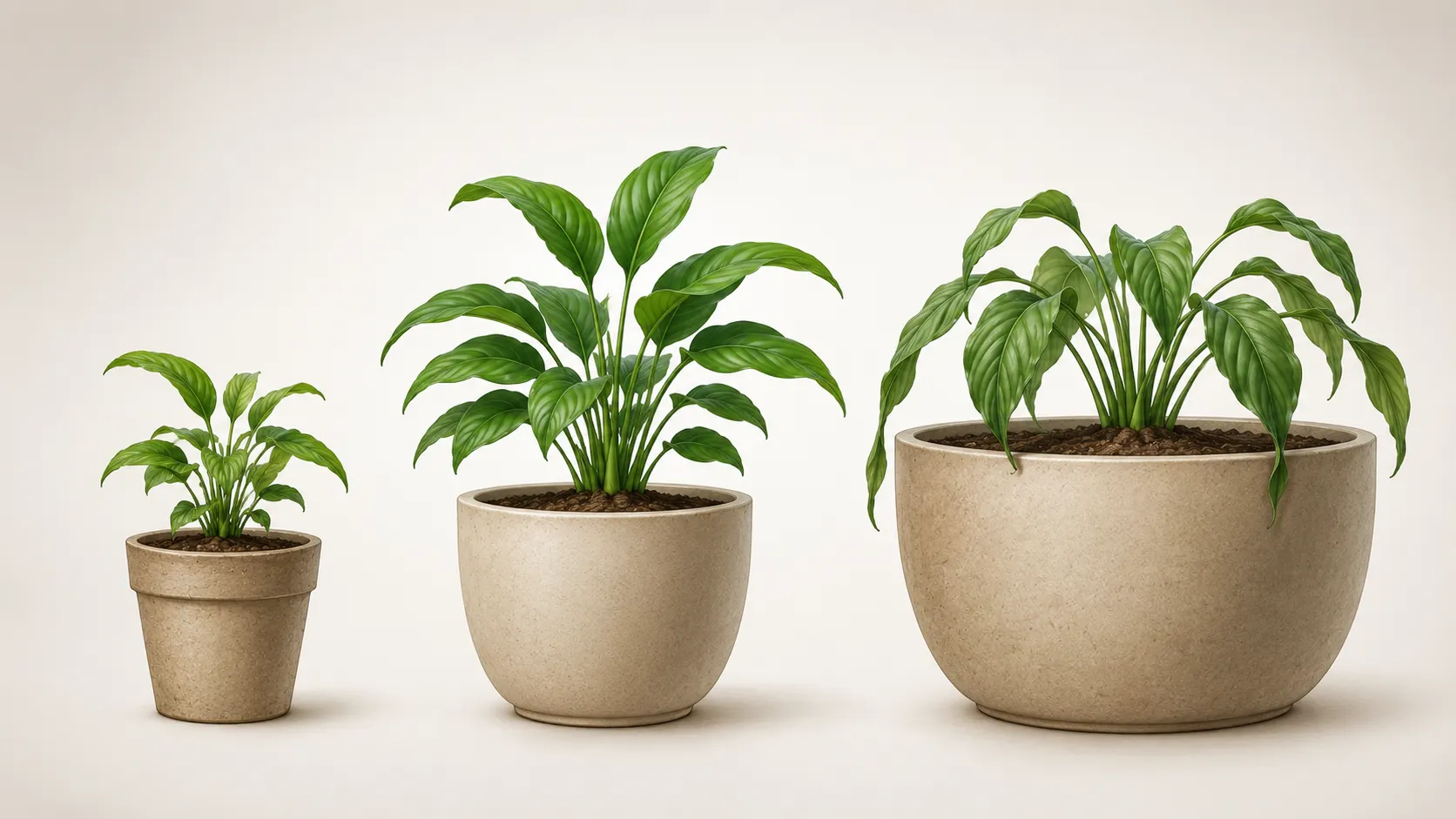
The ideal relationship between pot size and plant size is proportional, not maximal. A balanced system ensures stable root growth and healthy foliage development.
| Condition | Symptoms | Growth Effect | Action |
| Too Small Pot | Root-bound, dry soil, stunted growth | Slow or stopped growth | Repot into slightly larger container |
| Correct Size | Balanced moisture, steady growth | Optimal growth rate | Maintain current pot |
| Too Large Pot | Soggy soil, yellowing leaves | Risk of root rot | Downsize or improve drainage |
What Happens If a Pot Is Too Big or Too Small?
Both extremes negatively affect plant health and growth speed.
Signs Your Pot Is Too Small
- Roots growing out of drainage holes
- Soil dries very quickly
- Plant becomes top-heavy
- Growth slows despite care
Signs Your Pot Is Too Big
- Soil stays wet for days
- Leaves turn yellow
- Foul smell from soil (root rot)
- Drooping despite adequate watering
Effect of Container Size on Plant Growth: What Research Says
Scientific studies on rooting volume show a direct relationship between container size and plant biomass. Plants grown in restricted root environments consistently show reduced shoot growth, fewer leaves, and lower overall vigor.
Root development plays a critical role in plant health, as roots are responsible for water and nutrient absorption in vascular plants, a process explained in plant biology under concepts like [root (botany)].
In horticulture, rooting volume is considered one of the most important controlled variables because it directly influences nutrient uptake efficiency and plant energy distribution.
Plant Growth Rate and Pot Sizing: Seasonal Considerations
Pot sizing decisions should also consider seasonal growth patterns.
- Spring/Summer (Active growth): Plants may require more frequent repotting due to rapid root expansion
- Fall/Winter (Dormancy): Repotting is usually avoided as growth slows significantly
- Seasonal adjustment ensures plants are not stressed during inactive growth periods
Seasonal growth patterns also affect container choices for hardy outdoor species, especially low-maintenance native plants adapted to variable climates.
Common Mistakes When Choosing a Pot Size
Many plant growth problems come from incorrect pot selection.
Common mistakes include:
- Choosing excessively large pots thinking they improve growth
- Ignoring drainage holes entirely
- Repotting during dormancy
- Focusing on pot material instead of size
- Not checking root structure before upgrading
How to Use a Plant Growth Calculator to Match Pot Size
Using our tool can help estimate the correct pot size based on growth rate, plant type, and expected development speed.
Fast-growing plants typically require a pot increase of 3–4 inches to avoid frequent repotting, while slow-growing plants perform better in slightly snug containers. This data-driven approach reduces guesswork and improves long-term plant health.
Conclusion
Pot size does affect how fast a plant grows, but the effect depends entirely on whether the container is appropriately sized rather than simply larger. The most reliable strategy is matching pot size to root ball size with proportional room for expansion. Using our tool or sizing charts can help ensure consistent, healthy, and optimized plant growth across indoor and outdoor environments.
Want a more precise way to choose the right pot size?
Try our Plant Growth Calculator to estimate your plant’s growth potential and future size before repotting. By understanding how quickly a plant is expected to grow, you can avoid choosing a container that is too small or unnecessarily large. Our tool helps match growth rate with appropriate container sizing, making it easier to support healthy root development, improve nutrient uptake, and reduce the risk of overwatering. Explore the Plant Growth Calculator to make more informed plant care decisions.
Frequently Asked Questions
Does pot size affect how fast a plant grows?
Yes. Pot size controls root expansion, moisture levels, and nutrient uptake, all of which directly affect growth rate.
Do plants grow faster in smaller pots?
No. Small pots restrict root growth, leading to stunted development and stress over time.
Does pot size affect plant height?
Yes. Root limitation directly reduces shoot and stem growth above the soil.
What is the right pot size for a 3-foot plant?
Typically 10–14 inches in diameter depending on root type and plant species.
Will a plant die if the pot is too big?
Not immediately, but excess moisture can lead to root rot and long-term decline.
How do I know when to size up my pot?
Look for root circling, fast-drying soil, and slowed growth as key indicators.
Does pot material matter as much as pot size?
No. Pot size has a much stronger effect on growth than material, which is secondary.