
Introduction
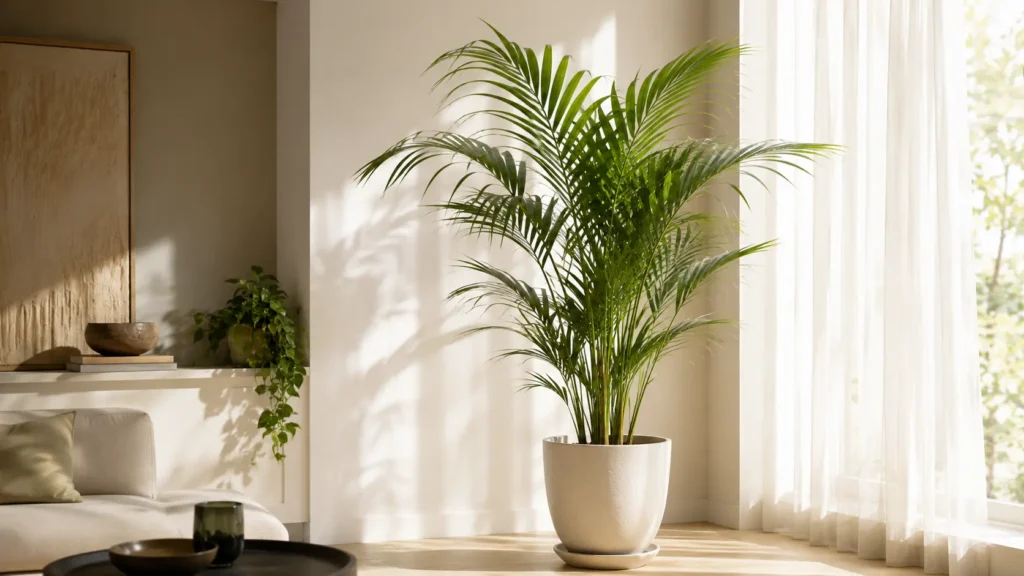
Kentia palm problems are usually related to watering, drainage, humidity, or light conditions rather than serious disease. The Kentia palm, botanically known as Howea forsteriana, is a slow-growing indoor palm native to Lord Howe Island in Australia. It is widely appreciated for its elegant fronds, tolerance of lower light conditions, and relatively low-maintenance nature. Despite its reputation as a resilient houseplant, Kentia palms can develop issues such as yellow leaves, brown tips, root rot, pest infestations, and slow growth when growing conditions become unsuitable. This guide explains how to identify common symptoms and apply practical solutions to restore healthy growth. Kentia palms are considered one of the most reliable indoor plants and fit well within broader plant care principles covered in our Plants Benefits and Guides resource.
The Kentia palm, botanically known as Howea forsteriana, is a slow-growing indoor palm native to Lord Howe Island and valued for its elegant foliage and adaptability.
Quick Summary
- Most Kentia palm problems stem from overwatering, underwatering, or low humidity rather than pests or disease.
- Yellow leaves usually indicate overwatering or root rot, while brown tips often result from dry air or insufficient watering.
- Water only when the top 1–2 inches of soil feel dry and ensure the pot drains freely.
- Bright, indirect light supports healthy growth, while direct sun may damage foliage.
- Most problems can be reversed when the underlying cause is identified and corrected.
What Is a Kentia Palm? (Howea forsteriana Overview)
The Kentia palm (Howea forsteriana) is a tropical palm species native to Lord Howe Island. It belongs to the Arecaceae family and is one of the most popular indoor palms due to its graceful appearance and adaptability. If you enjoy growing indoor palms, you may also find our Areca Palm Care Guide: Complete Growing & Maintenance Tips helpful for comparing care requirements among popular houseplant palms.
Kentia palms grow slowly and produce arching, feather-like fronds that create a classic tropical look indoors. They are commonly used in homes, offices, hotels, and public spaces because they tolerate lower light levels better than many other palm species. They are also considered pet-safe and can contribute to improved indoor air quality.
Indoor vs Outdoor Kentia Palm Differences
Kentia palms can grow both indoors and outdoors, but their size and care requirements differ.
| Feature | Indoor Kentia Palm | Outdoor Kentia Palm |
| Typical Height | 6–12 feet | Up to 40 feet |
| Growth Rate | Slow | Moderate |
| Light | Bright indirect light | Filtered sun to partial shade |
| Climate | Controlled indoor conditions | Frost-free regions |
| Maintenance | Low | Moderate |
Indoor specimens remain compact and manageable, while outdoor Kentia palms can become large landscape trees in suitable climates.
Common Kentia Palm Problems (Overview)
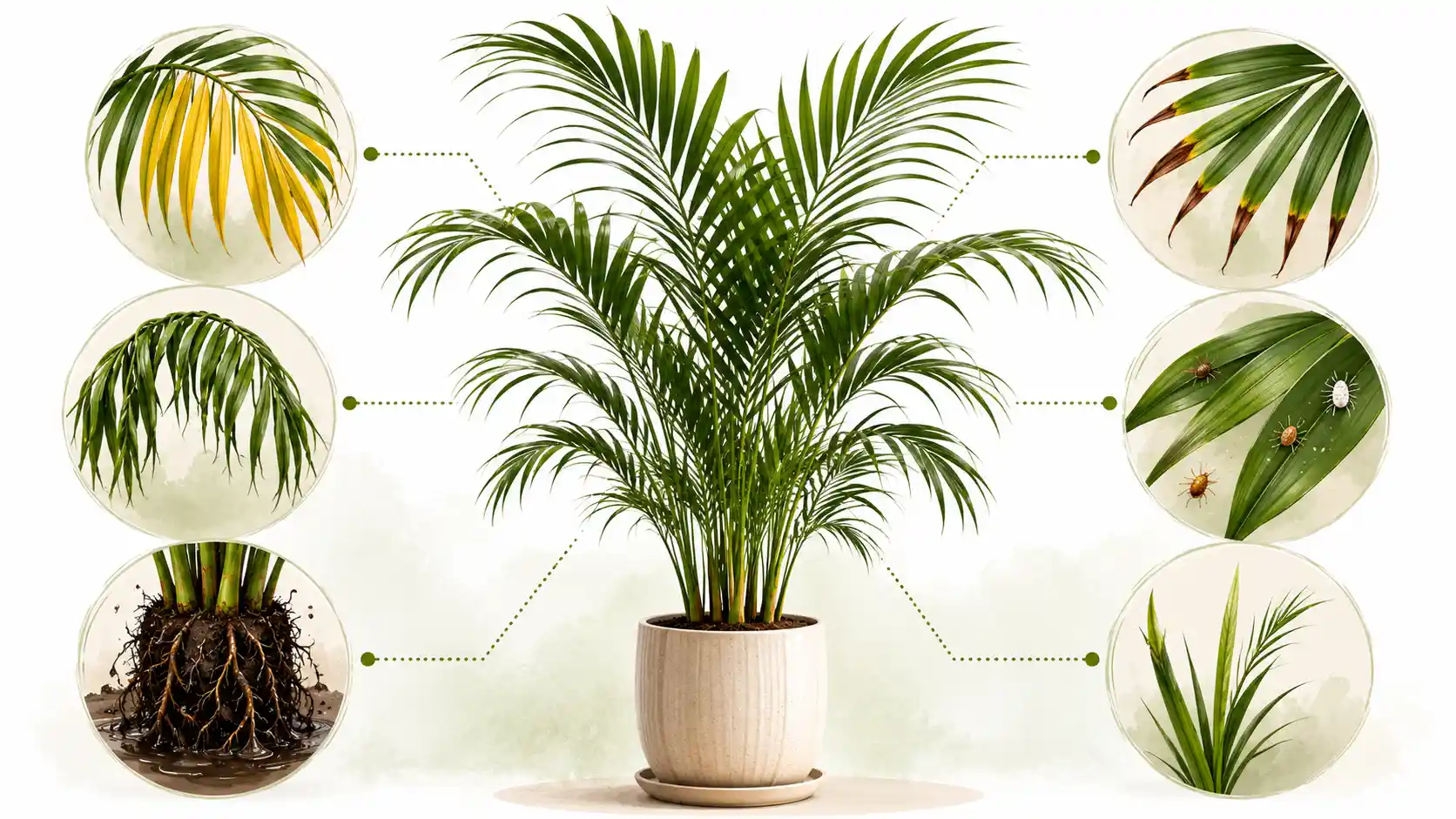
Common Kentia palm problems include yellow leaves, brown tips, root rot, slow growth, pest infestations, and drooping fronds.
The most frequently reported issues are:
- Yellowing leaves caused by overwatering, root rot, or nutrient deficiencies
- Brown tips or patches caused by low humidity, underwatering, fertilizer burn, or sunburn
- Root rot resulting from poor drainage and excessive moisture
- Slow or stunted growth due to insufficient light or nutrients
- Pest infestations from spider mites, mealybugs, or scale insects
- Drooping fronds caused by watering imbalances
Understanding the visible symptoms is the first step toward correcting the underlying problem.
Kentia Palm Leaves Turning Yellow
Yellow leaves are most commonly caused by overwatering and poor drainage. While occasional yellowing of older lower fronds is normal, widespread yellowing often indicates a care issue.
Why It Happens
Several factors may cause Kentia palm leaves turning yellow:
- Overwatering and poor drainage prevent roots from accessing oxygen.
- Root rot damages the root system and reduces nutrient uptake.
- Nutrient deficiencies, particularly potassium or manganese shortages, can affect foliage color.
- Natural aging causes older lower fronds to yellow and eventually die.
If multiple fronds yellow simultaneously, investigate watering practices before assuming natural aging.
How to Fix and Prevent It
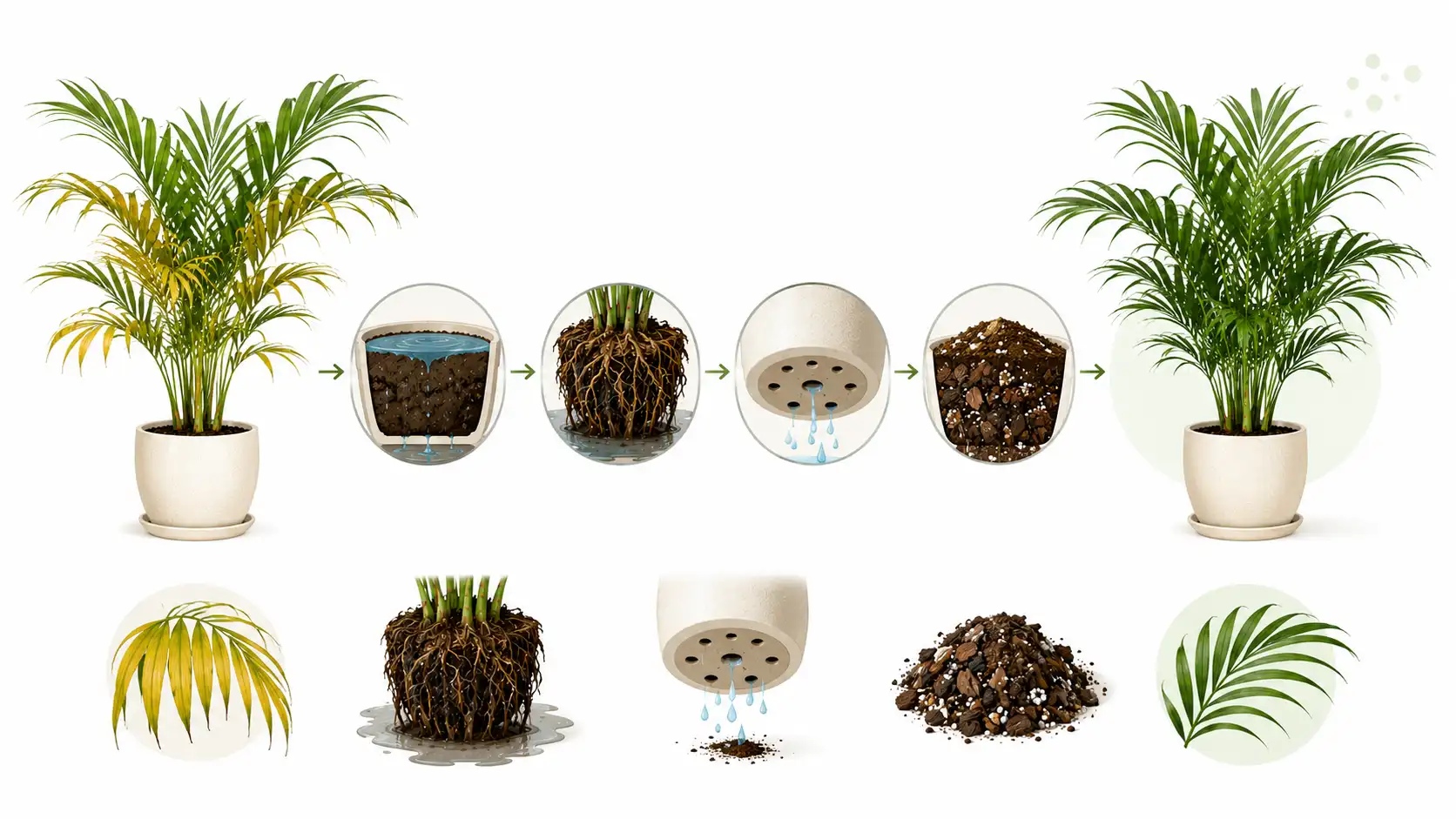
To correct yellow leaves:
- Allow the top layer of soil to dry before watering again.
- Improve drainage by using a well-draining palm mix.
- Ensure containers have drainage holes.
- Repot plants growing in compacted or waterlogged soil.
- Apply a palm-specific fertilizer if nutrient deficiency is suspected.
Consistent watering habits are the most effective prevention strategy.
Kentia Palm Brown Tips and Brown Leaves
Brown tips and brown leaves are among the most common Kentia palm problems. The appearance of the damage often helps identify the cause. Brown leaf tips are a common issue among indoor palms, and similar symptoms are discussed in our guide on Chamaedorea Elegans Dry Leaves Causes & Fix.
Brown Tips vs Brown Patches vs Brown Fronds
| Symptom | Likely Cause | Fix |
| Brown, crispy tips | Low humidity or underwatering | Increase humidity and water consistently |
| Brown patches on leaf surface | Sunburn or fertilizer burn | Move away from direct sun and reduce fertilizer strength |
| Whole frond browning at base | Natural aging or overwatering | Trim if natural; check soil moisture if widespread |
Brown tips typically appear first at leaf edges, while sun damage often creates irregular patches across leaf surfaces.
Should I Cut the Brown Leaves Off My Kentia Palm?
Yes, you can remove brown or dead leaves from a Kentia palm. Trim fully dead fronds at the base using clean, sharp pruning shears. If only the tips are brown, trim the damaged portion carefully without cutting into healthy green tissue.
Removing dead foliage improves appearance and reduces places where pests or mold may develop.
Will Brown Palm Leaves Turn Green Again?
No, brown palm leaves will not turn green again. Once plant tissue becomes brown and dies, it cannot regenerate.
Instead of trying to restore damaged tissue, focus on correcting the underlying cause to prevent additional browning on new growth.
Kentia Palm Root Rot
Kentia palm root rot occurs when roots remain in waterlogged soil for extended periods. Excess moisture prevents oxygen from reaching roots and creates conditions that favor fungal growth.
The progression typically follows this pattern:
Poor drainage → Waterlogged soil → Oxygen deprivation → Root damage → Root rot
Signs of Root Rot
Common symptoms include:
- Yellowing leaves
- Drooping fronds
- Slow growth
- Mushy, dark roots
- Foul-smelling root systems
- Soil remaining wet for many days after watering
These symptoms often develop gradually and worsen if conditions remain unchanged.
How to Revive a Dying Kentia Palm (Root Rot Recovery)
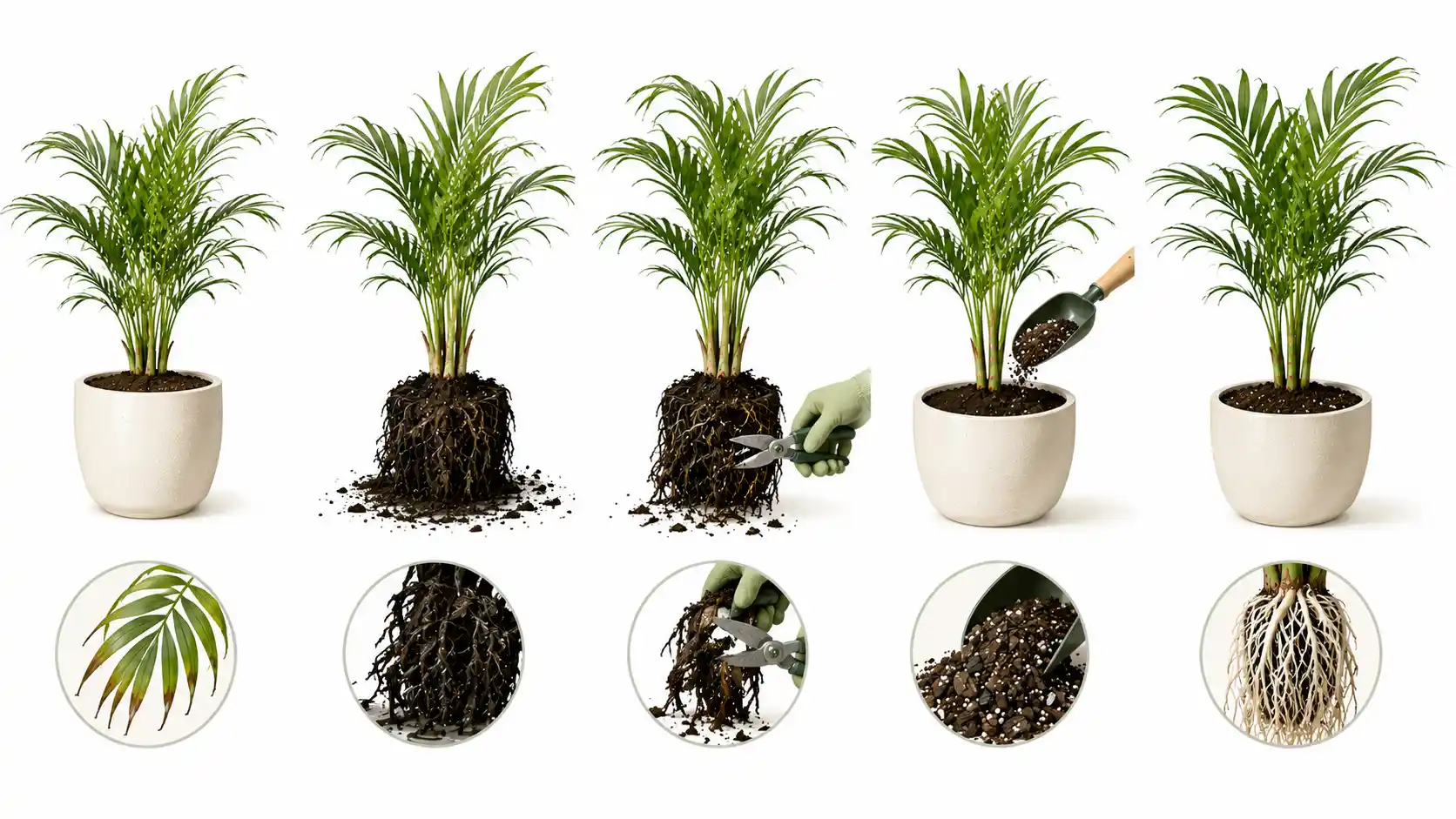
To revive a Kentia palm affected by root rot:
- Remove the plant from its container.
- Inspect the roots carefully.
- Trim away black, mushy, or rotting roots using sterilized shears.
- Discard old soil.
- Repot into fresh, well-draining palm soil.
- Ensure the container drains freely.
- Reduce watering frequency.
- Monitor recovery over the following weeks.
Recovery may take several months because Kentia palms grow slowly.
How Often to Water a Kentia Palm
Water a Kentia palm when the top 1–2 inches of soil feel dry. This approach is more reliable than following a fixed weekly schedule.
During active growth in spring and summer, watering may be required more frequently. During fall and winter, growth slows and watering needs decrease.
Signs of Overwatering vs Underwatering
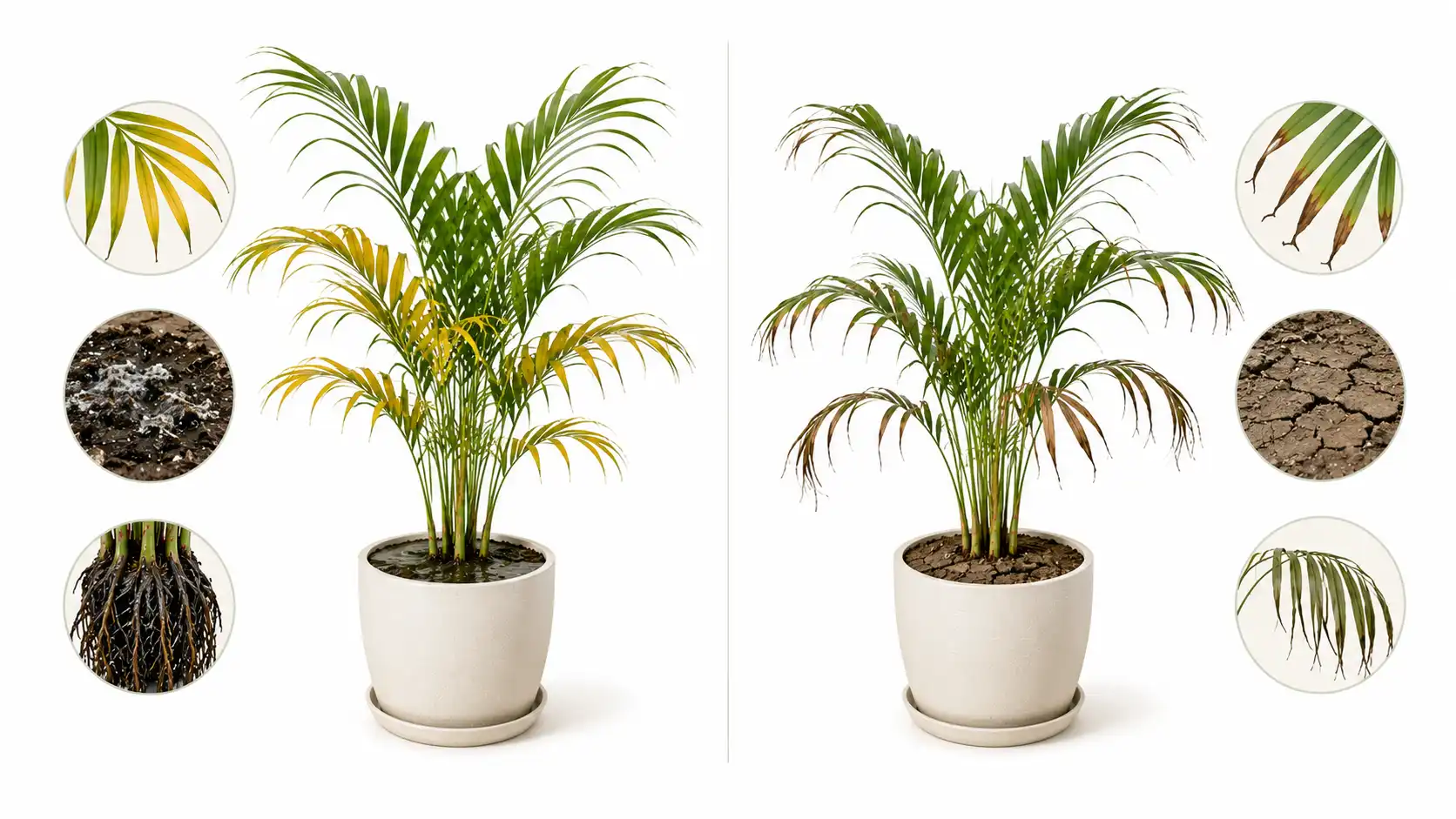
| Overwatered | Underwatered |
| Yellow leaves | Brown crispy tips |
| Mushy roots | Dry soil |
| Soggy soil | Soil pulling from pot edges |
| Mold on topsoil | Drooping fronds |
| Root rot symptoms | Slow recovery after watering |
Checking soil moisture before watering helps avoid both extremes.
Kentia Palm Light Requirements (Sun or Shade?)
Kentia palms prefer bright, indirect light. They tolerate lower light levels but perform best when exposed to consistent filtered light.
Direct sun can scorch leaves and create brown patches, particularly on indoor plants that are not acclimated to intense sunlight. Low light rarely kills a Kentia palm, but it may slow growth considerably.
A location near an east-facing window or several feet away from a bright south-facing window often provides ideal conditions.
Fertilizing a Kentia Palm to Prevent Nutrient-Related Problems
Proper fertilization supports healthy foliage color, steady growth, and resistance to stress-related problems.
Best Fertilizer Type and Schedule
The best fertilizer for Kentia palms is a balanced liquid fertilizer or palm-specific formula applied during the active growing season.
Recommended guidelines:
- Fertilize during spring and summer.
- Apply at reduced strength according to label instructions.
- Avoid excessive feeding.
- Stop fertilizing during fall and winter when growth slows.
Overfertilization can cause leaf burn and salt accumulation.
Common Fertilizer Myths and Home Remedies
Coffee grounds and Epsom salt are frequently discussed as plant remedies, but they should not replace a complete fertilizer program.
Coffee grounds may alter soil properties unpredictably and do not provide balanced nutrition. Epsom salt supplies magnesium but only benefits plants with a confirmed magnesium deficiency.
A palm-specific fertilizer remains the most reliable way to provide essential nutrients without creating imbalances.
Pruning a Kentia Palm — What Happens If You Never Trim It?
If you never trim a Kentia palm, the plant will generally continue growing. Dead fronds do not usually harm the palm directly.
However, leaving dead foliage attached can:
- Reduce visual appeal
- Harbor pests
- Encourage mold development
- Obstruct airflow around the plant
You should cut off dying palm leaves once they become fully brown or dead. Pruning is primarily cosmetic and preventive rather than essential for survival.
Kentia Palm Pests and Diseases
Kentia palm diseases are relatively uncommon, but pest infestations can occur, particularly indoors. When pest problems originate from the potting mix, our article on Bugs in Indoor Plant Soil: Identification, Treatment & Prevention can help identify and eliminate common indoor plant pests.
Common pests include:
- Spider mites
- Mealybugs
- Scale insects
Signs of infestation include:
- Sticky residue on leaves
- Tiny webbing
- White cotton-like clusters
- Yellowing foliage
- Reduced vigor
Treatment options include:
- Wiping leaves with a damp cloth
- Applying insecticidal soap
- Using neem oil
- Improving humidity and air circulation
Regular inspections help detect pests before infestations become severe.
How to Tell If a Kentia Palm Is Dying
A Kentia palm is likely dying when severe root damage, widespread frond collapse, or trunk deterioration occurs. Learning to diagnose plant stress is easier when comparing symptoms across species, as shown in Pachira Aquatica Problems Explained: Causes & Fixes.
Recoverable stress symptoms include:
- A few brown tips
- Mild yellowing
- Slow seasonal growth
- Temporary drooping
Signs of critical decline include:
- Widespread blackened roots
- Mushy trunk base
- Entire fronds collapsing
- Persistent foul odors from soil
- Extensive yellowing across the entire plant
Early intervention significantly improves recovery chances.
Beginner Mistakes That Cause Kentia Palm Problems
Many Kentia palm problems result from common care mistakes rather than unavoidable plant diseases.
Frequent mistakes include:
- Watering on a fixed schedule without checking soil moisture
- Using decorative pots without drainage holes
- Allowing water to collect in saucers
- Placing plants near cold drafts
- Positioning plants in harsh direct sunlight
- Applying excessive fertilizer
A simple routine focused on moderate watering, proper drainage, and indirect light prevents most issues.
Kentia Palm Lifespan and Growth Expectations
The lifespan of a Kentia palm can extend for several decades when properly maintained. Some specimens survive for 50 years or longer. Container size can influence root development and growth speed, a topic explored further in Does Pot Size Affect How Fast a Plant Grows? Complete Guide.
Kentia palms are naturally slow-growing. Indoor plants may produce only a few new fronds each year, which is normal and not necessarily a sign of poor health. To better understand expected plant development and estimate future growth patterns, you can use our Plant Growth Calculator to track how plants progress over time based on their growth habits and conditions.
Factors affecting growth include:
- Light availability
- Nutrient levels
- Watering practices
- Temperature
- Root health
Understanding the plant’s naturally slow growth helps distinguish normal development from genuine care problems.
Conclusion
Most Kentia palm problems can be traced to watering, drainage, humidity, or light-related issues rather than serious diseases. Yellow leaves commonly result from overwatering, while brown tips are often linked to low humidity or inconsistent watering. Root rot, slow growth, and pest infestations can usually be prevented through proper care and regular monitoring. By providing bright indirect light, maintaining moderate soil moisture, and ensuring good drainage, gardeners can keep Howea forsteriana healthy for many years. Correct diagnosis is the key to solving Kentia palm problems before they become severe.
FAQs
What are common Kentia palm problems?
Common Kentia palm problems include yellow leaves, brown tips, root rot, pest infestations, drooping fronds, and slow growth. Most are related to watering, drainage, humidity, or light conditions.
How do you know if you are overwatering a Kentia palm?
Signs of overwatering include yellow leaves, soggy soil, mold on the soil surface, drooping fronds, and root rot. The soil often remains wet long after watering.
How to revive a dying Kentia palm?
Revive a dying Kentia palm by identifying the underlying cause, removing damaged roots if root rot is present, repotting into fresh well-draining soil, adjusting watering habits, and providing appropriate light.
Should I cut the brown leaves off my Kentia palm?
Yes. Fully brown or dead fronds can be removed at the base with clean pruning shears. Avoid cutting into healthy green tissue.
Will brown palm leaves turn green again?
No. Brown tissue is dead and cannot become green again. Correcting the cause helps prevent further damage to new growth.
What is the lifespan of a Kentia palm?
A healthy Kentia palm can live for several decades and may survive 50 years or more with proper care and favorable growing conditions.
Do Kentia palms like sun or shade?
Kentia palms prefer bright, indirect light. They tolerate shade and low light better than many palms, but direct sunlight can scorch their leaves.