
Introduction
Rubber plant leaves drooping is one of the most common signs that something is wrong with a rubber plant (Ficus elastica). Drooping leaves appear limp, soft, or downward-facing and often indicate stress related to watering, light, temperature, roots, or environmental conditions. In most cases, a rubber plant drooping problem is reversible once the underlying cause is identified. Because multiple issues can produce similar symptoms, successful treatment depends on accurate diagnosis rather than guessing. Understanding why ficus elastica drooping leaves occur is the first step toward restoring healthy growth.
Rubber plant (Ficus elastica) is a tropical evergreen species from the fig family, widely grown as an ornamental indoor plant.
Quick Summary
- Drooping rubber plant leaves are usually caused by watering problems, poor light, or repotting stress.
- Most cases are reversible when the correct cause is identified and addressed.
- Yellowing, curling, and browning provide additional clues that help diagnose the problem.
- Root health plays a major role in maintaining firm, upright foliage.
- A healthy rubber plant can live 10–25 years indoors with proper care.
Rubber plants are part of a wider group of popular houseplants that offer different care requirements and benefits. Explore our complete Plants: Benefits and Guides (Complete Care, Types & Growing Tips) to learn more about indoor plant care, varieties, and growing tips.
Why Are Rubber Plant Leaves Drooping? (Core Causes)
Overwatering and Root Rot
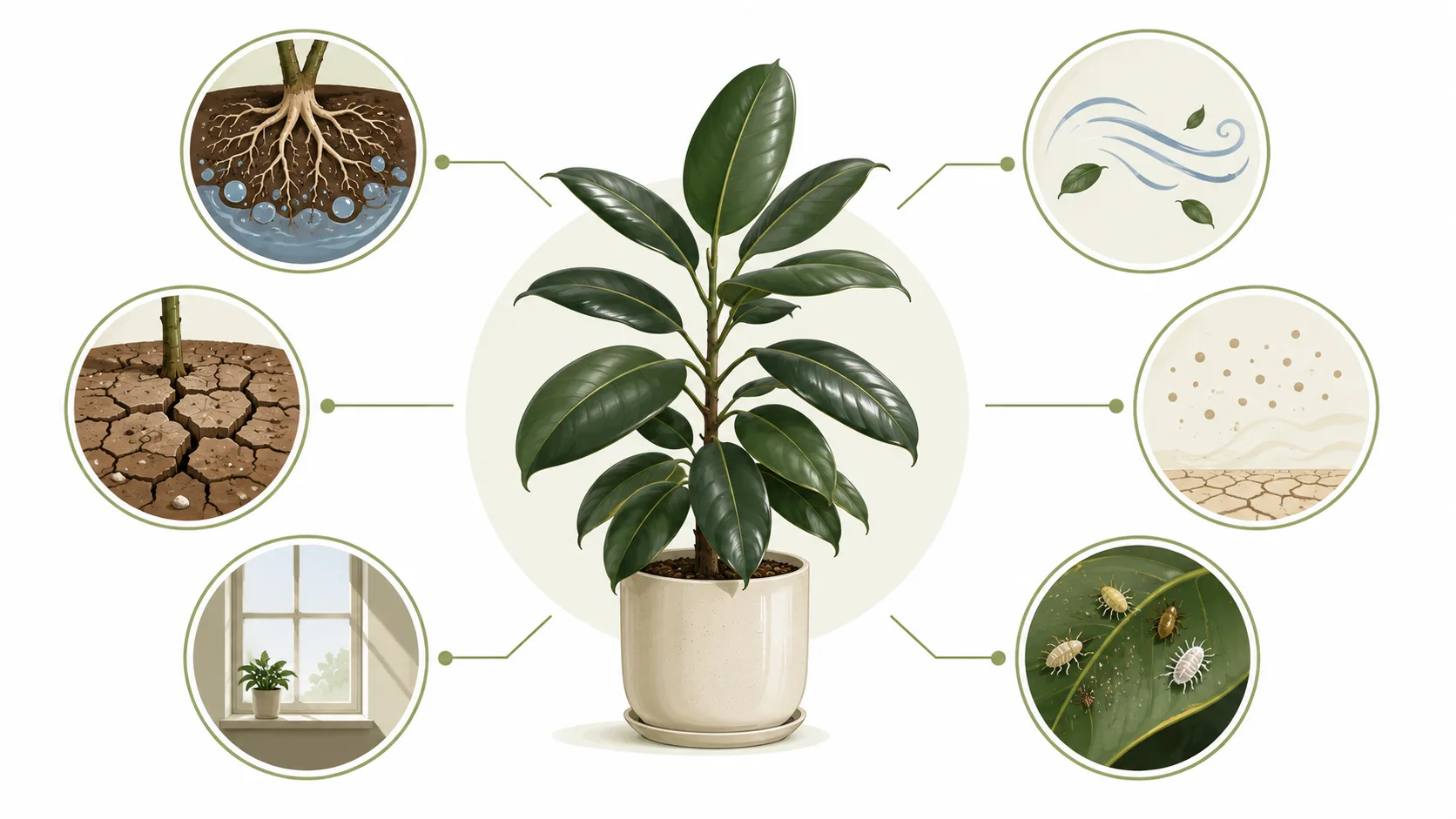
Overwatering is one of the most common reasons rubber plant leaves droop. When soil remains constantly wet, roots are deprived of oxygen. Over time, roots begin to rot, reducing their ability to transport water and nutrients to leaves.
A classic symptom combination is drooping leaves along with yellowing foliage. Even though the soil is wet, the plant behaves as if it is dehydrated because damaged roots cannot function properly.
To diagnose overwatering:
- Insert a finger 2 inches into the soil.
- Check whether the pot feels unusually heavy.
- Look for yellow leaves and a musty odor.
Unlike underwatering, overwatered plants often have soft stems and soggy soil rather than crispy leaf edges.
Underwatering and Drought Stress
Underwatering causes plant cells to lose turgor pressure, the internal water pressure that keeps leaves firm. As moisture levels drop, leaves become limp and droopy.
Signs include:
- Dry soil throughout the pot
- Crispy brown tips
- Lightweight container
- Curling leaves
Regular moisture monitoring is more effective than watering on a fixed schedule.
Insufficient or Incorrect Light
Rubber plants require bright indirect light to maintain strong growth. In low-light conditions, photosynthesis slows, weakening leaf structure over time.
Some plants also display light-seeking behavior. Leaves may angle downward or lean toward a nearby light source. This differs from stress-related wilting because the foliage remains relatively healthy in color.
Temperature Stress and Cold Drafts
Ficus elastica is a tropical species that prefers temperatures between 60°F and 85°F (15°C–29°C).
Sudden drooping can occur when plants are exposed to:
- Cold windows
- Air conditioning vents
- Heating ducts
- Rapid temperature fluctuations
Extended exposure to temperatures below 55°F (13°C) can cause significant stress.
Low Humidity
Humidity helps maintain moisture balance within leaf tissues. Dry indoor air, especially during winter, increases moisture loss through leaves.
Unlike root-level dehydration, low humidity affects foliage directly. Leaves may feel soft and droopy even when soil moisture remains adequate.
Pest Infestations
Spider mites, mealybugs, and scale insects weaken plants by feeding on sap. Indoor plant problems are often connected with hidden pest activity, including insects living around the root zone. See our guide on Bugs in Indoor Plant Soil: Identification, Treatment & Prevention for identification and control methods.
Common signs include:
- Fine webbing (spider mites)
- White cottony clusters (mealybugs)
- Brown bumps on stems (scale)
As infestations worsen, leaves lose vigor and begin drooping.
Root-Bound Conditions
A severely root-bound rubber plant struggles to absorb water efficiently. Dense root masses restrict moisture uptake and reduce nutrient availability.
Symptoms often include:
- Frequent wilting despite watering
- Roots circling the pot
- Stunted growth
Repotting into a slightly larger container usually resolves the issue.
Rubber Plant Leaves Drooping After Repotting
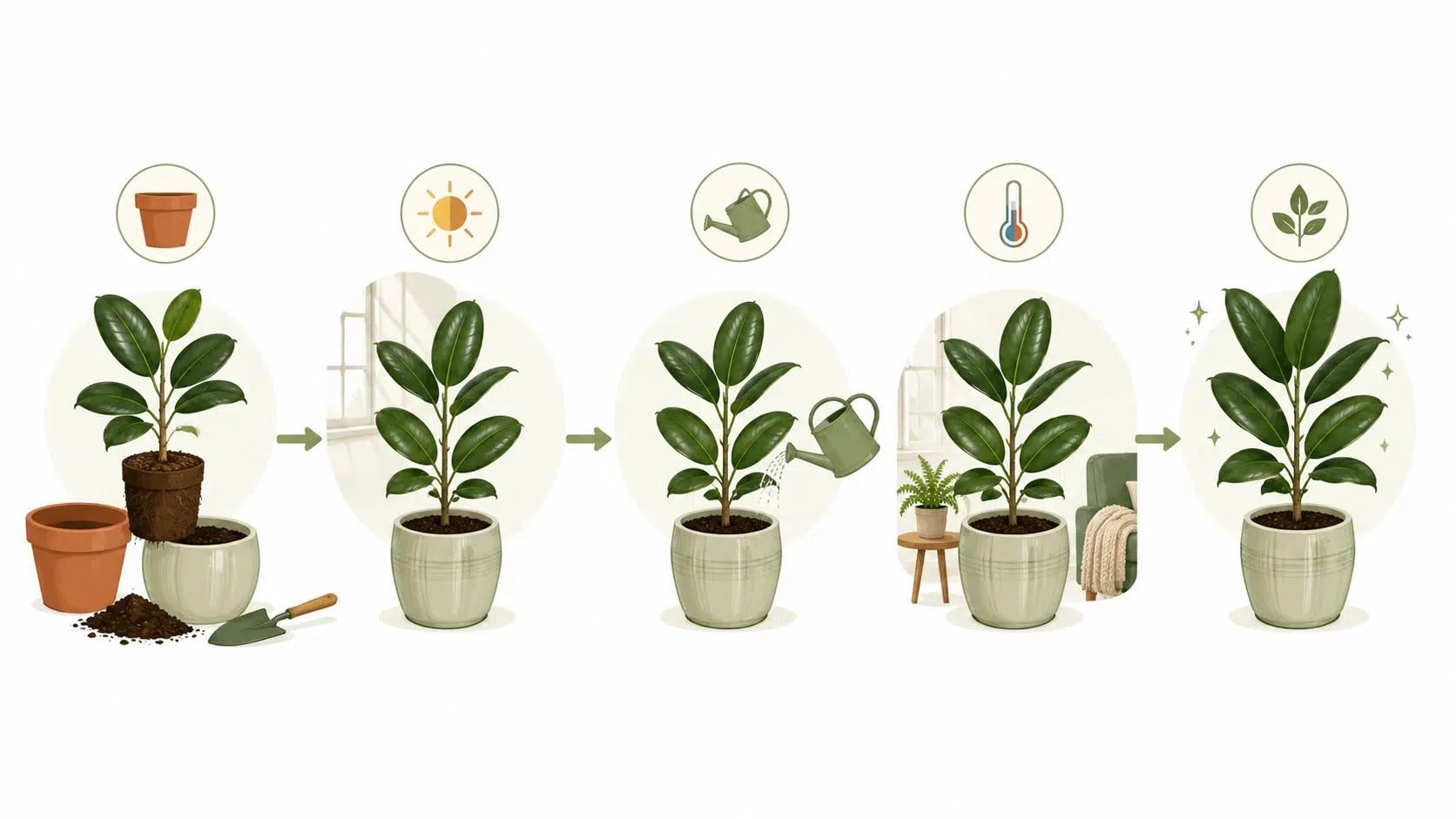
Rubber plant leaves drooping after repotting is often caused by transplant shock. Root disturbance, changes in soil composition, and environmental adjustment temporarily reduce the plant’s ability to absorb water efficiently.
Mild drooping after repotting is normal and typically improves within one to three weeks.
What to do immediately after repotting a rubber plant:
- Place in bright indirect light, not direct sun
- Water lightly — do not soak immediately after repotting
- Avoid fertilizing for at least 4–6 weeks
- Keep temperature stable and away from drafts
- Expect drooping to resolve within 1–3 weeks with correct aftercare
Persistent decline may indicate drainage issues or developing root rot.
Rubber Plant Leaves Drooping and Curling: What It Signals
Drooping combined with curling provides additional diagnostic information.
Inward curling is commonly associated with:
- Underwatering
- Heat stress
- Low humidity
Outward curling is more frequently linked to overwatering and root stress.
Newly emerging leaves may curl temporarily as they unfurl. However, persistent curling accompanied by drooping suggests environmental stress.
Comparison Table — Symptom Combinations
| Symptom | Most Likely Cause | Confirming Sign | Fix |
| Drooping only | Watering imbalance or light | Check soil moisture | Adjust watering or move plant |
| Drooping + inward curling | Underwatering or heat stress | Bone dry soil, warm location | Deep water, increase humidity |
| Drooping + outward curling | Overwatering | Soggy soil, yellowing | Let dry out, check roots |
| Drooping + curling + new leaves affected | Environmental shock | Recent move or repot | Stabilize environment, wait |
Rubber Plant Leaves Drooping and Falling Off
Drooping and leaf drop represent different stages of stress. Similar leaf-drop issues can also occur in other indoor plants, and understanding the causes behind foliage loss helps identify whether the problem is watering, roots, or environmental stress. Learn more in our guide on Peperomia Leaves Falling Off: Causes, Fixes, and Prevention.
A common progression is:
Drooping → Yellowing → Leaf Fall
Lower leaves occasionally shed as part of normal aging. However, widespread leaf loss indicates a significant problem.
Healthy-looking leaves may drop suddenly after:
- Relocation
- Repotting
- Cold shock
- Rapid environmental change
Unlike aging-related leaf loss, stress-induced leaf drop often occurs quickly.
Rubber Plant Leaves Turning Yellow or Brown: Reading the Color
Leaf color changes provide valuable diagnostic clues.
Diagnostic Table — Leaf Color and Pattern
| Symptom | Most Likely Cause | Secondary Confirming Sign | Fix |
| All-over yellowing | Overwatering | Soggy soil, wilting | Reduce watering, check drainage |
| Yellow lower leaves only | Natural ageing or low light | Other leaves healthy | Normal — remove affected leaves |
| Brown crispy edges | Underwatering or low humidity | Dry soil, dry air | Water deeply, raise humidity |
| Brown soft patches | Root rot or overwatering | Mushy stem base | Remove rotted roots, repot |
| Scorched tan patches | Direct sun exposure | South-facing placement | Move to indirect light |
How to Fix Drooping Rubber Plant Leaves
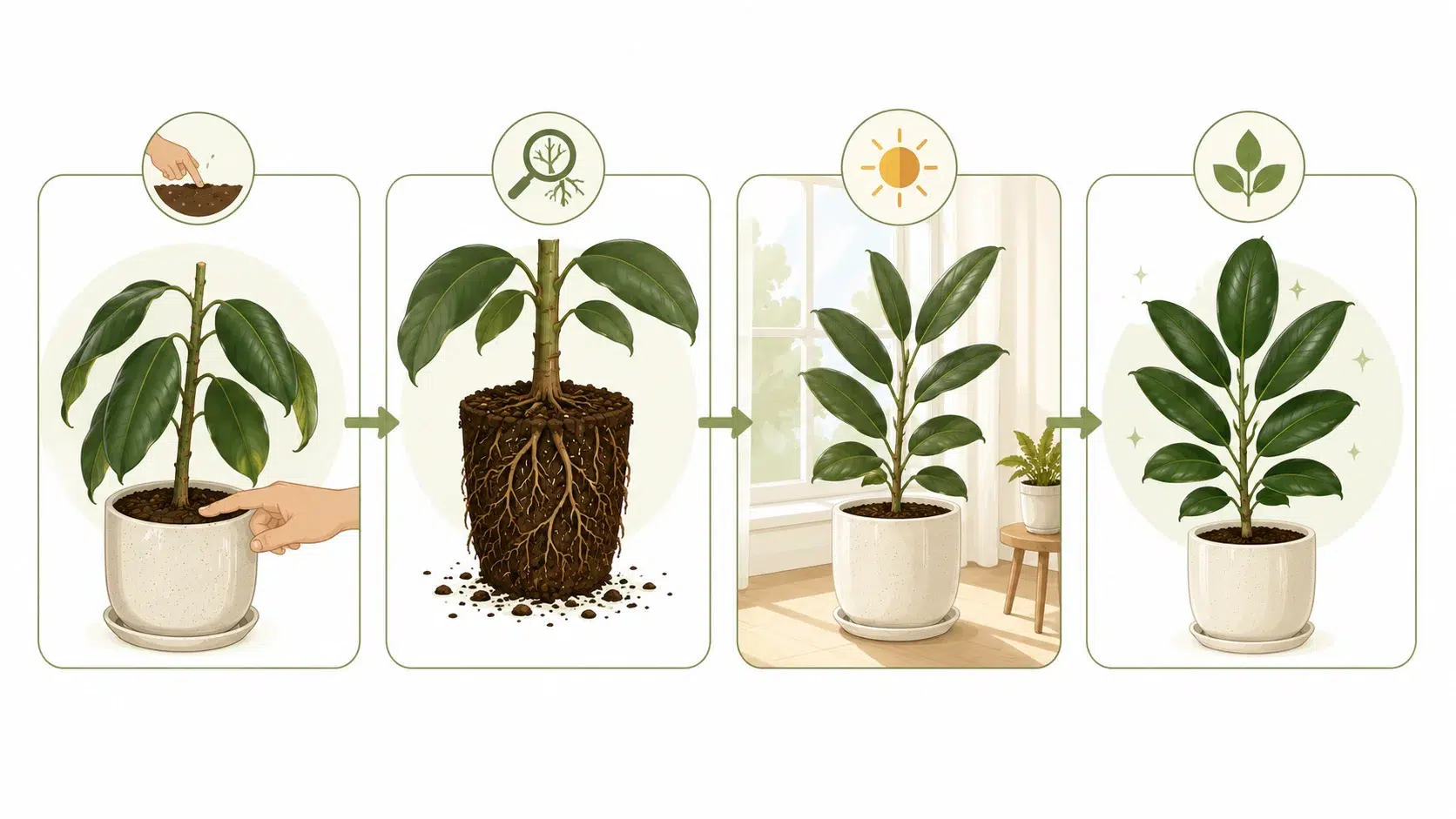
Step 1: Diagnose Before Acting
Always diagnose before applying a treatment. Watering a root-rotted plant or repotting a dehydrated plant can worsen symptoms.
Check:
- Soil moisture
- Root condition
- Light exposure
Step 2: Correct the Watering Immediately
For overwatering:
- Allow soil to dry
- Inspect roots
- Repot if rot is present
For underwatering:
- Water deeply until drainage occurs
- Empty excess water
- Resume watering based on soil moisture
Step 3: Optimize Light and Placement
Provide bright indirect light near an east- or west-facing window.
For best results:
- Rotate the plant regularly
- Avoid vents and drafts
- Protect from harsh midday sun
Step 4: Support Drooping Stems Structurally
Some plants develop structural drooping because they become top-heavy.
Support options include:
- Bamboo canes
- Stakes
- Soft plant ties
Pruning can also improve balance.
How Long Does Recovery Take?
- Watering correction: 1–7 days
- Repotting recovery: 2–4 weeks
- Root rot recovery: 4–8 weeks
- Severe decline: propagation may be necessary
How to Revive a Dying Rubber Plant
Signs a Rubber Plant Is Dying vs Just Struggling
Plants that are struggling often retain firm stems and viable roots.
Serious warning signs include:
- Mushy stem bases
- Extensive root rot
- Persistent decline despite correction
The scratch test is useful. Lightly scrape bark with a fingernail. Green tissue underneath indicates living growth.
Can a Leafless Rubber Plant Grow Back?
Yes, a leafless rubber plant can recover if:
- Roots remain healthy
- Stems are firm
- Adequate light is available
- Temperatures remain warm
Recovery may take several weeks or months.
Propagating from Cuttings as a Recovery Strategy
If the parent plant cannot be saved, propagation can preserve the plant.
Basic process:
- Take a healthy stem cutting.
- Allow the cut to callous.
- Place in water or moist soil.
- Wait for root development.
Rubber Plant Care Guide: Preventing Drooping Before It Starts
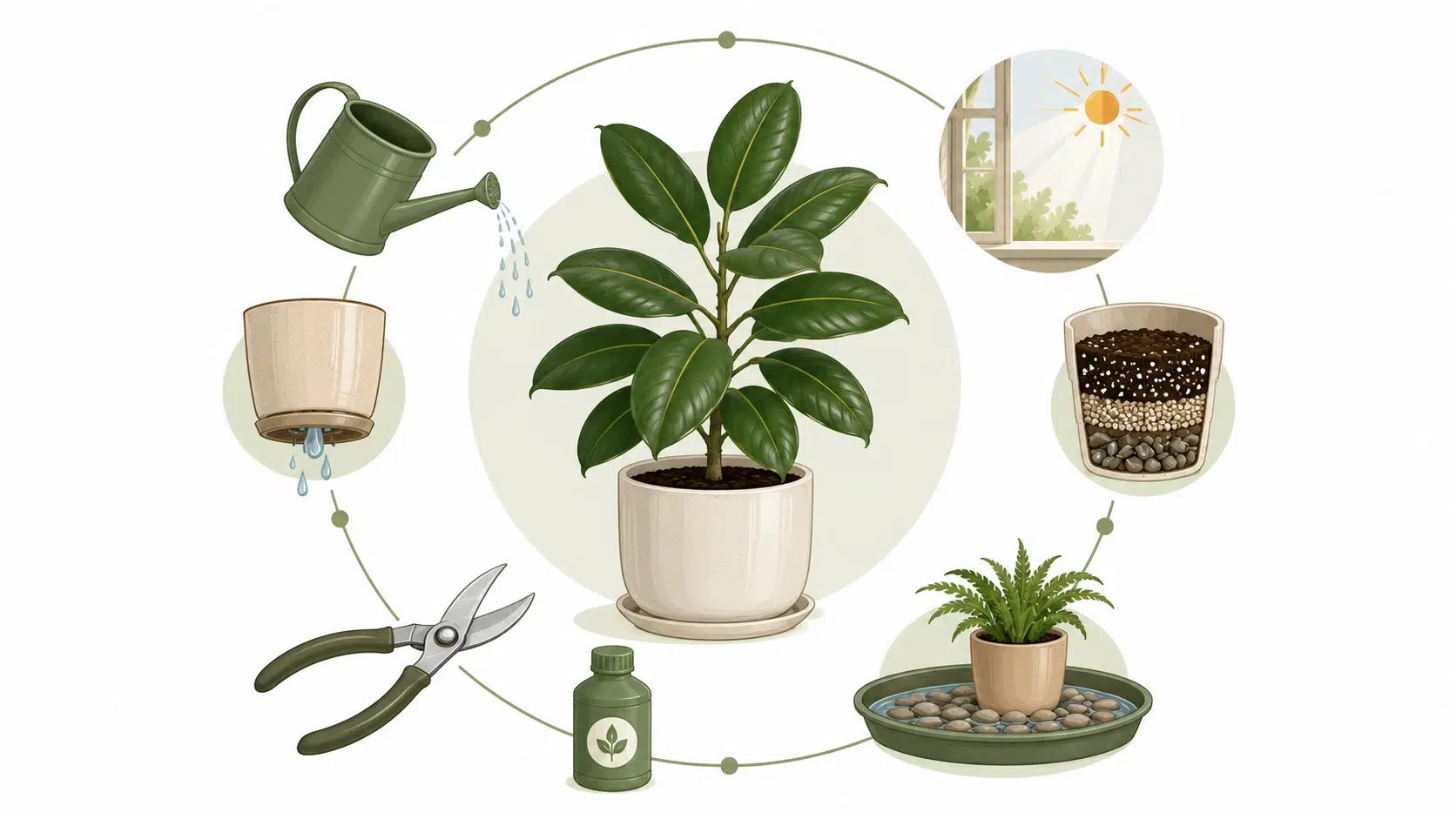
For a complete overview of watering, lighting, soil, pruning, and long-term maintenance, see our detailed Caring for a Ficus Elastica: Complete Indoor Care Guide.
Watering — Frequency and Method
Use the drench-and-dry method.
- Water thoroughly until drainage occurs.
- Allow the top two inches of soil to dry before watering again.
- Reduce watering during winter.
Like rubber plants, many tropical houseplants such as Alocasia Amazonica Care Indoors require balanced humidity, proper light, and careful watering to avoid stress symptoms.
Light Requirements
Bright indirect light is ideal.
- Burgundy varieties tolerate lower light.
- Tineke varieties require brighter conditions to maintain variegation.
Soil and Drainage
Use a well-draining mix containing:
- Potting soil
- Perlite
- Pine bark
Poor drainage is a major contributor to chronic drooping.
Fertilizing — Including Miracle-Gro
Feed during spring and summer.
A balanced fertilizer, including Miracle-Gro, can be used at half strength. Avoid fertilizing during winter dormancy.
Humidity and Temperature
Ideal conditions:
- Humidity: 40–60%
- Temperature: 60–85°F (15–29°C)
Ways to increase humidity:
- Pebble trays
- Plant grouping
- Humidifiers
Pruning and Maintaining Upright Growth
Pruning encourages branching and reduces top-heaviness.
Rubber plants produce milky latex sap when cut, so gloves are recommended.
Rubber Plant Size, Growth Rate, and Lifespan
Normal growth characteristics include:
- Indoor height: 6–10 feet
- Outdoor height: up to 100 feet in tropical climates
- Growth rate: moderate to fast in spring and summer
- Winter growth: very slow
- Lifespan: 10–25 years indoors
Fast seasonal growth may temporarily cause stems to lean or droop under the weight of new leaves. Understanding growth patterns can help plant owners set realistic expectations for size and development. You can estimate plant growth progress and track future growth stages using our Plant Growth Calculator.
Common Rubber Plant Problems and How to Fix Them
Leaves Turning Yellow
Usually caused by overwatering. Improve drainage and reduce watering frequency.
Brown Leaf Edges
Common causes include:
- Underwatering
- Low humidity
- Fertilizer salt buildup
White crust on soil often indicates salt accumulation.
Leaf Drop Without Prior Yellowing
Environmental shock is usually responsible.
Potential triggers:
- Moving locations
- Repotting
- Cold exposure
Pest Identification and Treatment
Treatment options include:
- Neem oil
- Insecticidal soap
- Manual removal
Early intervention prevents severe damage.
Slow or Stalled Growth
Possible causes:
- Root-bound roots
- Insufficient light
- Winter dormancy
Growth often resumes naturally during spring.
Rubber Plant Varieties: Do Different Types Droop Differently?
Different cultivars vary slightly in growth habit and drooping tendency.
Comparison Table — Ficus Elastica Varieties
| Variety | Leaf Characteristics | Drooping Tendency | Special Care Notes |
| Burgundy | Deep red-green, thick leaves | Low | Tolerates lower light |
| Tineke | Cream and green variegated | Moderate | Needs bright light to maintain color |
| Robusta | Large, glossy green | Low | Most forgiving of beginners |
| American (Decora) | Broad, dark green | Moderate | Classic houseplant variety |
Beginner Mistakes That Cause Rubber Plant Leaves to Droop
- Placing the plant in direct harsh sunlight, especially against a south-facing window
- Watering on a fixed weekly schedule rather than checking soil moisture first
- Using decorative pots with no drainage holes
- Misting leaves instead of improving room humidity
- Moving the plant frequently
- Fertilizing during autumn or winter dormancy
- Repotting into an oversized pot that retains excess moisture
Beginners often overwater indoor plants because different species have different moisture needs. Comparing care requirements with low-maintenance plants like the ZZ Plant Growing Tips: Zamioculcas Zamiifolia Care Guide can help develop better watering habits.
Conclusion
Rubber plant leaves drooping is usually a symptom rather than a disease. In most cases, the underlying cause can be traced to watering issues, light problems, root stress, environmental shock, or poor growing conditions. Checking soil moisture and evaluating light exposure first resolves many cases quickly. Most rubber plants recover within a few weeks once the correct adjustment is made. With consistent care, proper drainage, and a stable environment, Ficus elastica remains a resilient and long-lived houseplant that can thrive indoors for decades.
FAQ
Q1: Why are my rubber plant leaves drooping even though I just watered it?
Drooping after watering often indicates overwatering rather than underwatering. Saturated soil reduces oxygen availability and damages roots, preventing normal water transport.
Q2: How long does it take for drooping rubber plant leaves to recover?
Watering-related issues may improve within 1–7 days. Repotting stress often resolves within 1–3 weeks. Root rot recovery can require 4–8 weeks.
Q3: Can I use Miracle-Gro on a rubber plant?
Yes. A balanced all-purpose fertilizer such as Miracle-Gro can be used during active growth at half strength. Avoid feeding during winter.
Q4: Is it better to overwater or underwater a rubber plant?
Underwatering is easier to correct. Overwatering can lead to root rot, which is significantly more damaging and harder to reverse.
Q5: Will a rubber plant with no leaves grow back?
Yes, if the roots and stem remain alive. A successful scratch test showing green tissue under the bark indicates potential for recovery.



One Response