
Introduction
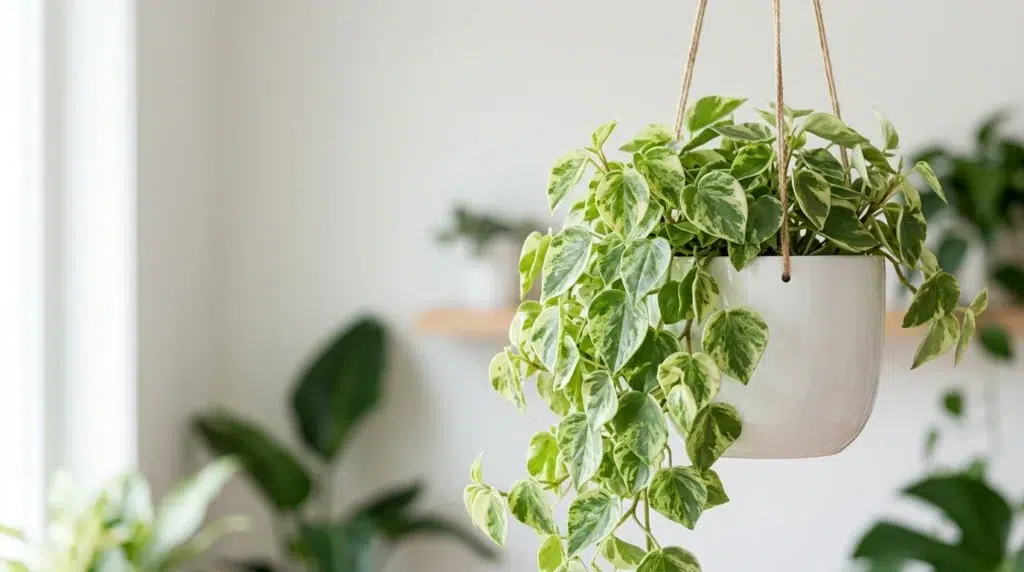
Variegated Cupid Peperomia is a decorative cultivar of Peperomia scandens, also known as Cupid Peperomia, a trailing houseplant recognized for its heart-shaped leaves with attractive cream-and-green marbling. This vining peperomia is popular because it combines an elegant appearance with simple care requirements. It grows well in hanging baskets, shelves, or trained supports and adapts easily to indoor environments. This article explains its botanical identity, growth habits, care needs, propagation methods, common problems, and placement tips to help growers maintain a healthy and attractive plant. Houseplant lovers can explore more detailed care information, plant types, and growing tips in our complete Plants: Benefits and Guides (Complete Care, Types & Growing Tips) resource.
Quick Summary
- Variegated Cupid Peperomia is a cream-and-green leaf cultivar of Peperomia scandens with a trailing growth habit.
- It is a low-maintenance indoor plant that grows best in bright indirect light and well-draining soil.
- Proper watering, moderate humidity, and occasional pruning help maintain healthy growth and variegation.
- Stem cuttings provide an easy way to propagate new plants.
What Is Variegated Cupid Peperomia?
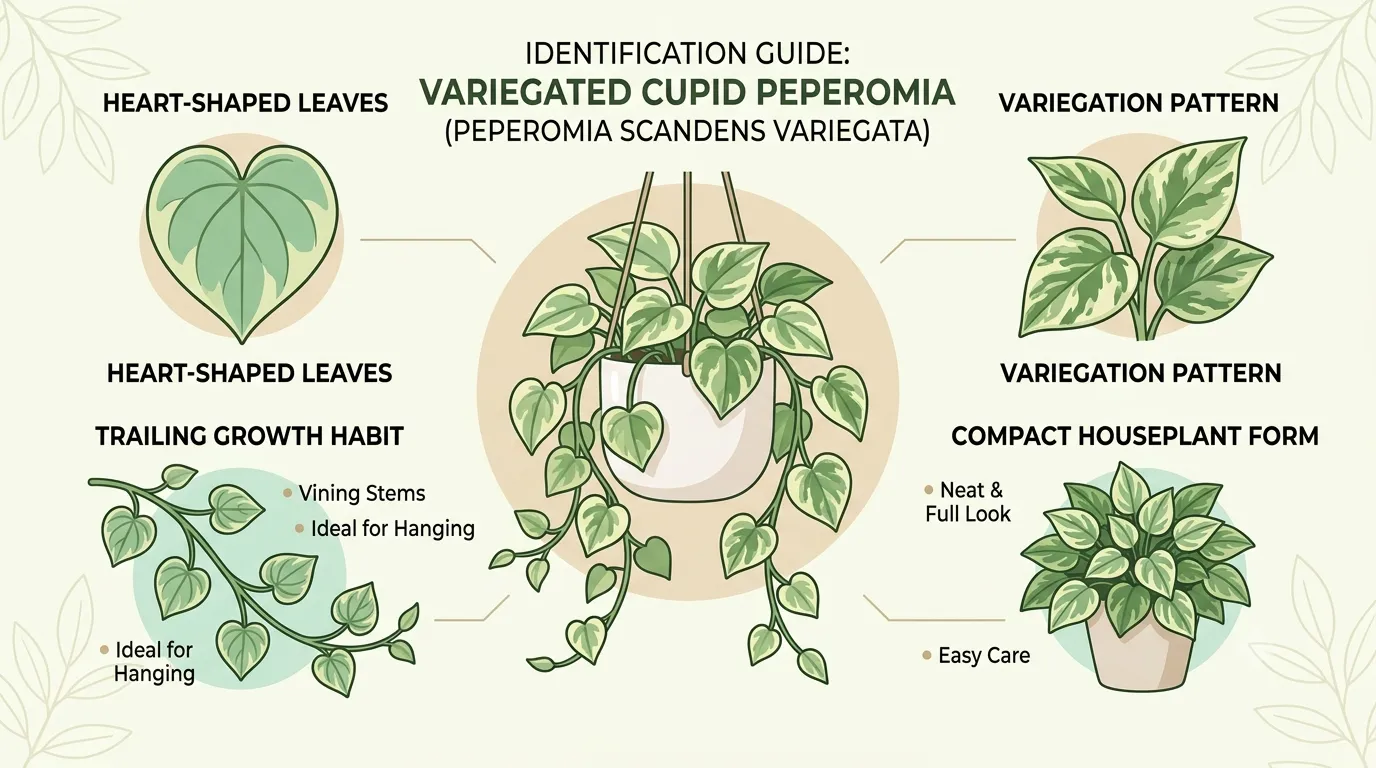
Variegated Cupid Peperomia (Peperomia scandens variegata) is a cultivated form of Peperomia scandens, a tropical trailing plant in the pepper family. It is commonly called Cupid Peperomia, Peperomia Cupid, or incorrectly spelled variations such as “pepperomia cupid.” The variegated form differs from the standard plant because its leaves display irregular cream, yellow, and green patterns instead of being completely green. Variegated Cupid Peperomia belongs to the large Peperomia genus, which contains many tropical and subtropical ornamental plants.
This plant belongs to the genus Peperomia, which contains many compact tropical plants valued as indoor ornamentals. Variegated Cupid Peperomia naturally develops flexible vines that can spill over containers or grow along supports. Growers wanting deeper botanical context beyond this guide can consult our trailing and vining peperomia reference database, which catalogs species-level details, native habitats, and identifying traits across the Peperomia genus. It’s a useful companion for confirming Cupid Peperomia’s place within the wider trailing peperomia family.
- Botanical name: Peperomia scandens variegata
- Common names: Variegated Cupid Peperomia, Cupid Peperomia
- Plant family: Piperaceae
- Native origin: Tropical regions of Central and South America
- Growth habit: Trailing and semi-vining
Cupid Peperomia vs. Standard Peperomia Scandens
The main difference between variegated Cupid Peperomia and standard Peperomia scandens is leaf coloration. The variegated cultivar requires slightly brighter light because insufficient light can reduce visible patterns.
| Feature | Variegated Cupid Peperomia | Standard Peperomia Scandens |
| Leaf color | Cream and green variegation | Solid green |
| Light needs | Slightly higher to maintain variegation | Moderate |
| Growth rate | Slightly slower | Moderate |
Does Cupid Peperomia Climb or Trail?
Cupid Peperomia naturally grows as a trailing plant, but it can also climb when provided with support. Its soft stems attach loosely around small trellises, moss poles, or decorative supports rather than climbing aggressively like true climbing plants.
Indoors, it is commonly grown in hanging baskets where vines cascade downward. Outdoors in warm climates, stems may spread across surfaces or grow through nearby vegetation.
- Trailing behavior: Long stems naturally spill over pots and shelves.
- Climbing option: Small trellises can guide stems upward.
- Stem growth: Flexible vines become longer over time and benefit from occasional pruning.
How Big Do Peperomia Cupid Plants Get?
Peperomia Cupid usually remains a compact houseplant, producing trailing vines that typically reach around 1–3 feet long under indoor conditions. The final size depends on container size, light exposure, pruning habits, and growing environment.
Plant Size
| Growing Condition | Expected Size |
| Indoor container | Compact vines around 1–3 feet long |
| Outdoor warm climate | Can spread more widely |
| Small pot | Limited growth due to restricted roots |
Factors affecting plant size include:
- Bright indirect light encourages healthier growth.
- Larger containers allow more root development.
- Regular pruning creates a fuller appearance.
- Low light can produce thinner, slower-growing vines.
Growth Rate of Variegated Cupid Peperomia
Variegated Cupid Peperomia is considered a slow-to-moderate grower. The presence of less chlorophyll in variegated leaves can slightly reduce growth speed compared with fully green varieties.
Growth Rate
Growth patterns typically include:
- Spring and summer: Active growth with new leaves and longer vines.
- Fall and winter: Slower growth due to reduced light and cooler temperatures.
- Ideal conditions: Bright indirect light, proper watering, and occasional feeding improve growth.
For a side-by-side look at mature sizes across trailing peperomia types, check our peperomia size and growth data spreadsheet, which logs vine length, pot size correlation, and light exposure benchmarks recorded from real growing conditions. It’s a handy reference if you’re tracking your own plant’s progress against typical growth patterns.
How to Care for Variegated Cupid Peperomia
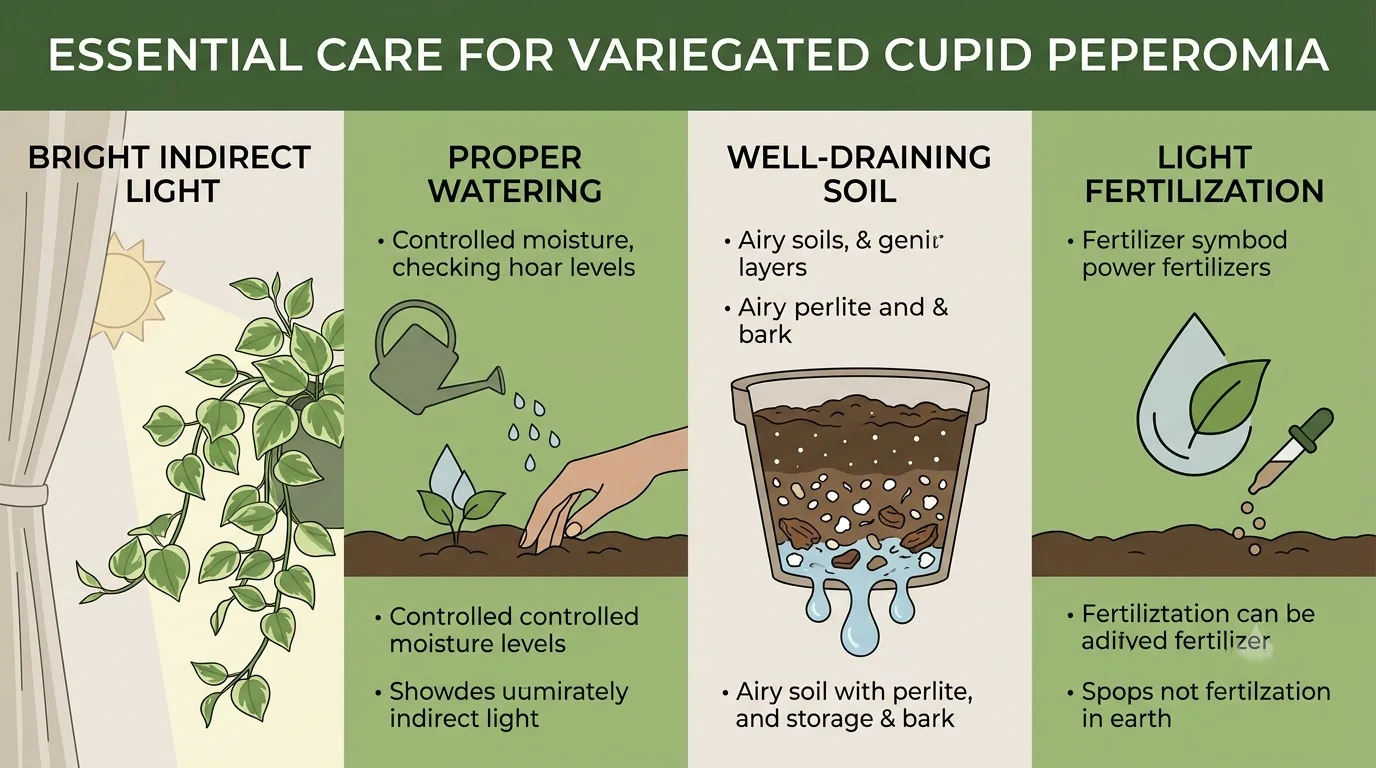
Variegated Cupid Peperomia care is simple when its basic tropical requirements are met. It prefers bright indirect light, moderate watering, and soil that drains quickly. Understanding the difference between bright indirect light and direct sunlight is important because variegated plants can lose color or suffer leaf damage when exposed to unsuitable lighting conditions.
Care Guide
Watering: Allow the top portion of soil to dry before watering again. Overwatering is one of the most common causes of root problems.
Do you water Peperomia from top or bottom?
Both methods work. Top watering is easier for regular care, while bottom watering can encourage even moisture absorption in dry soil.
Light: Bright indirect light helps maintain strong variegation. Direct afternoon sun may scorch leaves.
Soil: Use a loose, aerated mix containing materials such as peat, coco coir, perlite, or orchid bark.
Fertilization: Feed lightly during spring and summer with a balanced houseplant fertilizer.
Pruning: Trim long vines to encourage branching and a bushier shape.
Climate tolerance: It prefers average indoor temperatures and does not tolerate frost.
Do Peperomia Like Deep Pots?
No, Peperomia plants generally do not need deep pots. They have relatively shallow root systems and perform better in containers with good drainage rather than oversized, deep pots.
A shallow pot helps prevent excess moisture retention, which can lead to root rot.
How to Make a Peperomia Bushy
To make Cupid Peperomia fuller:
- Pinch growing tips regularly.
- Prune long, bare stems.
- Propagate healthy cuttings and place them back into the same pot.
- Provide enough indirect light to prevent weak growth.
Are Coffee Grounds Good for Peperomia Plants?
Coffee grounds are not recommended as a primary fertilizer for Peperomia. Fresh coffee grounds can compact soil and increase moisture retention. If used, only small amounts of fully composted grounds should be mixed into organic compost rather than applied directly.
Where to Place Variegated Cupid Peperomia at Home
The best location for Variegated Cupid Peperomia is a bright area away from harsh direct sunlight. It can adapt to different rooms as long as lighting conditions are suitable. Although Cupid Peperomia adapts well to average indoor humidity, improving moisture levels can benefit many tropical houseplants. Learn practical methods for increasing humidity naturally with our guide on increasing humidity for indoor plants without a humidifier.
- Bathroom: Suitable if the room has enough natural light and moderate humidity.
- Living room or office: Often ideal near an east or north-facing window.
- Bedroom: Safe to keep indoors; claims about plants causing bedroom problems are generally myths when plants are properly maintained.
Why Are Peperomia Called Radiator Plants?
Peperomia plants are called radiator plants because they became associated with warm indoor environments near radiators and heating areas. The nickname reflects their ability to tolerate dry indoor air better than many tropical plants, although they still prefer moderate humidity and consistent care.
Common Cupid Peperomia Problems and Solutions
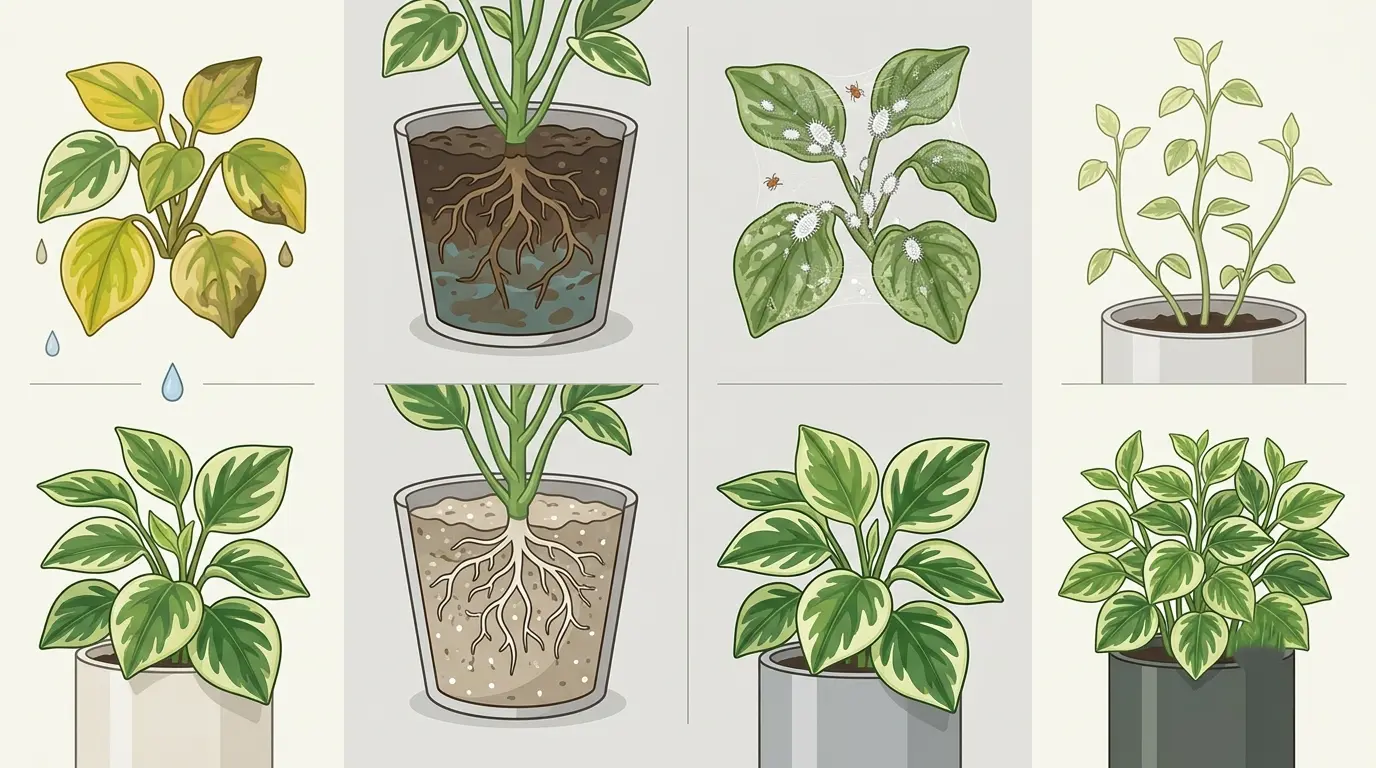
Cupid Peperomia problems usually occur because of watering mistakes, insufficient light, or environmental stress. Leaf drop is another common concern among peperomia growers. Understanding the causes of peperomia leaves falling off can help prevent watering and environmental mistakes.
Yellow leaves
- Cause: Overwatering, poor drainage, or sudden light changes.
- Fix: Allow soil to dry more between watering and improve drainage.
Overwatering issues
- Cause: Constantly wet soil prevents oxygen from reaching roots.
- Fix: Use the soil dry-back method and water only when needed.
- Prevention: Choose a draining pot and soil mix.
Pest infestations
- Common pests: Mealybugs and spider mites.
- Treatment: Remove pests manually and use insecticidal soap if needed.
- Prevention: Inspect new plants before adding them to your collection.
Slow growth
- Cause: Low light, nutrient shortages, or cool temperatures.
- Fix: Improve lighting and provide light feeding during active growth.
Benefits of Growing Cupid Peperomia
Cupid Peperomia offers several benefits as an indoor plant:
- Low-maintenance care requirements.
- Attractive trailing foliage for home decoration.
- Suitable for small spaces and hanging displays.
- Generally considered non-toxic to pets according to common pet safety references.
While many houseplants are described as air-purifying, their practical impact on indoor air quality is limited compared with proper ventilation. Like many decorative foliage plants with thick, attractive leaves, Cupid Peperomia is valued for its unique texture and appearance. Other examples can be found in our guide to house plants with waxy leaves.
Is Peperomia Considered a Lucky or Money Plant?
Peperomia is sometimes associated with good luck and positive symbolism in plant traditions, but these beliefs are cultural rather than scientific. Peperomia is not a money tree. The plant commonly called money tree is Pachira aquatica, which is a completely different species.
Peperomia Lifespan
A healthy Peperomia can live for many years with proper care. Its lifespan depends on watering habits, lighting, soil quality, and protection from pests.
Good care practices that extend lifespan include:
- Avoiding overwatering.
- Providing suitable light.
- Repotting when necessary.
- Removing damaged growth.
How to Propagate Variegated Cupid Peperomia
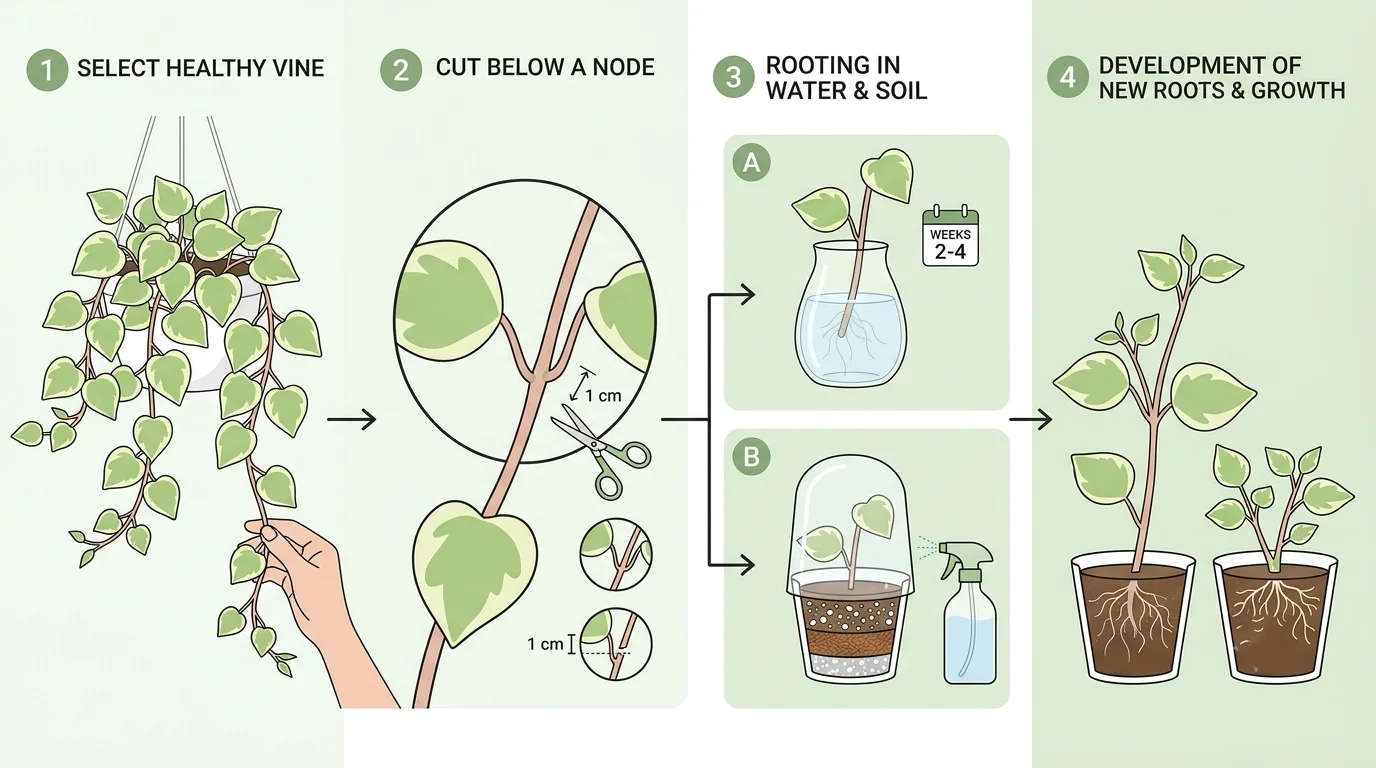
Variegated Cupid Peperomia propagation is usually done through stem cuttings.
Steps:
- Select a healthy stem with several leaves.
- Cut below a leaf node.
- Place the cutting in water or moist soil.
- Keep it in bright indirect light.
- Wait for roots and new growth to appear.
Successful propagation usually occurs when temperatures are warm and moisture levels are controlled.
Common Propagation Mistakes
Common mistakes include:
- Using weak or damaged cuttings.
- Keeping rooting soil too wet.
- Providing insufficient light during root development.
Beginner Mistakes to Avoid with Cupid Peperomia
Common beginner errors include:
- Watering too frequently.
- Placing the plant in strong direct sunlight.
- Using a deep container without drainage.
- Applying excessive fertilizer.
Where to Find Variegated Cupid Peperomia for Sale
When identifying an authentic Variegated Cupid Peperomia, look for healthy leaves with stable cream-and-green patterns. A quality plant should have firm stems, pest-free foliage, and active growth.
Variegation can vary naturally, so plants with stronger patterns may require brighter light to maintain their appearance.
Content Differentiation — Cupid Peperomia vs. Similar Trailing Peperomias
Variegated Cupid Peperomia differs from other trailing peperomia varieties mainly through its leaf patterns and care requirements. Another popular trailing peperomia with similar growth habits is Peperomia rotundifolia, which has its own unique care requirements and compact trailing appearance.
| Feature | Variegated Cupid Peperomia | Similar Trailing Peperomias |
| Leaf pattern | Cream and green marbling | Often solid green or different markings |
| Variegation stability | Requires suitable light | Usually more stable in green forms |
| Care intensity | Slightly higher due to variegation | Often easier |
For growers weighing multiple trailing varieties side by side, our interactive trailing peperomia comparison tool breaks down leaf shape, variegation stability, and growth rate across cultivars. It’s a quick way to visually confirm how Cupid Peperomia’s marbling differs from closely related trailing species.
Conclusion
Variegated Cupid Peperomia is an attractive, easy-care trailing houseplant valued for its heart-shaped cream-and-green leaves and adaptable growth habit. With bright indirect light, careful watering, well-draining soil, and occasional pruning, it can remain healthy for many years. Proper propagation and avoiding common care mistakes make this plant suitable for beginners and experienced growers alike.
FAQs
How do you care for Peperomia Cupid variegated?
Variegated Cupid Peperomia care requires bright indirect light, moderate watering after the soil partially dries, well-draining soil, and occasional feeding during active growth.
Does Cupid Peperomia climb?
Cupid Peperomia can climb with support, but it naturally grows as a trailing plant with flexible vines that cascade from containers.
What are common cupid Peperomia problems?
Common problems include yellow leaves, overwatering damage, pests such as mealybugs or spider mites, and slow growth caused by low light.
How big do Peperomia Cupid get?
Peperomia Cupid typically produces compact trailing vines around 1–3 feet long indoors, depending on light, pot size, and pruning.
Do Peperomia like deep pots?
No, Peperomia prefers shallow containers with drainage because its roots are relatively small and sensitive to excess moisture.
What is the lifespan of a Peperomia?
A Peperomia can live for many years with proper care, especially when watering, lighting, and soil conditions are managed correctly.


2 Responses