
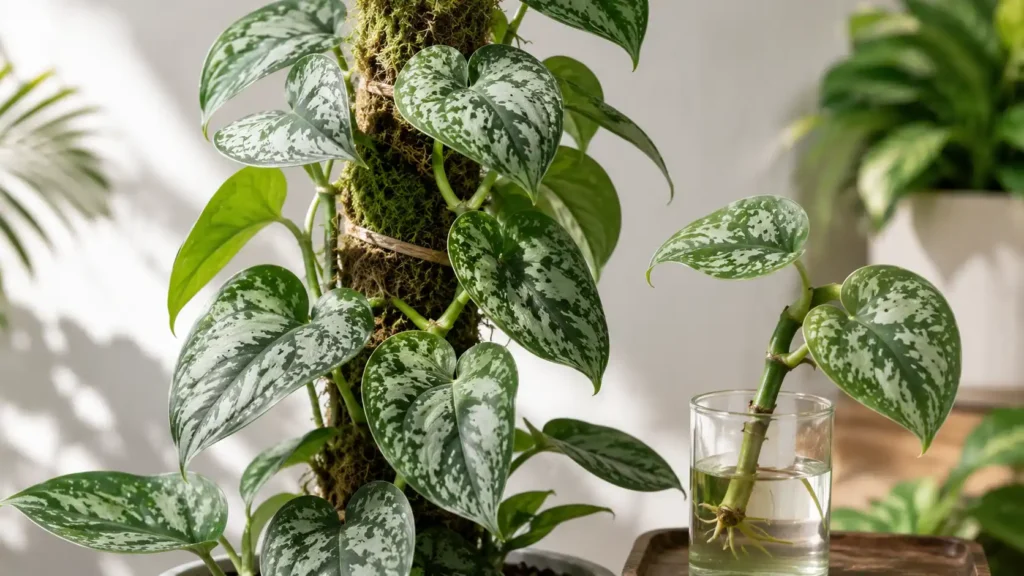
Introduction
Silver satin pothos propagation is the process of creating new plants from stem cuttings of the Silver Satin Pothos, scientifically known as Scindapsus pictus ‘Argyraeus’. Although commonly called a pothos, this plant is not a true pothos (Epipremnum); it belongs to the Scindapsus genus. However, its propagation methods and care requirements are very similar to common pothos plants. This guide explains how to propagate Silver Satin Pothos successfully using water, soil, or sphagnum moss while covering rooting techniques, timing, mistakes, and aftercare. Silver Satin Pothos is one of many popular indoor plants that benefit from proper care routines, propagation knowledge, and suitable growing conditions. Explore more plant care information in our complete Plants: Benefits and Guides resource.
Quick Summary
- Silver Satin Pothos propagates best through stem cuttings containing at least one healthy node.
- Water and sphagnum moss are reliable propagation methods, with rooting usually taking 2–6 weeks.
- Soil propagation allows cuttings to establish directly without transplanting later.
- Supporting the plant with a moss pole or trellis encourages climbing growth and larger leaves.
- Personal propagation of Silver Satin Pothos is generally not restricted; commercial restrictions usually involve patented cultivars.
What Is Silver Satin Pothos?
Silver Satin Pothos is the common name for Scindapsus pictus ‘Argyraeus’, a tropical climbing aroid known for its green leaves covered with silver-gray markings. Other names include scindapsus argyraeus, scindapsus pictus, silver satin plant, satin leaf pothos, silver pothos, pictus plant, and satin pothos plant. Silver Satin Pothos belongs to the Scindapsus genus of tropical flowering plants in the Araceae family. More botanical background about the species can be found on the Scindapsus pictus Wikipedia page.
Despite its popular name, Silver Satin Pothos is botanically a Scindapsus, not an Epipremnum. Names such as “epipremnum pictus” and “epipremnum silver satin” are common naming mistakes caused by its similar appearance and care needs. For complete growing requirements beyond propagation, see this Scindapsus Pictus care guide covering light, watering, soil, and growth habits.
This plant naturally grows as a climbing vine in tropical forests. Indoors, it can be trained to climb supports or allowed to trail from hanging baskets.
Scindapsus vs. True Pothos (Epipremnum)
Scindapsus and Epipremnum belong to the same plant family, Araceae, but they are different genera.
| Feature | Scindapsus pictus | Epipremnum pothos |
| Common example | Silver Satin Pothos | Golden Pothos |
| Leaf texture | Velvety, matte surface | Smooth, glossy surface |
| Growth habit | Climbing or trailing | Climbing or trailing |
| Propagation method | Stem cuttings | Stem cuttings |
| Care needs | Similar | Similar |
Both plants require nodes for successful propagation and respond well to warm temperatures, bright indirect light, and well-draining soil.
Understanding Pothos Nodes and Cuttings
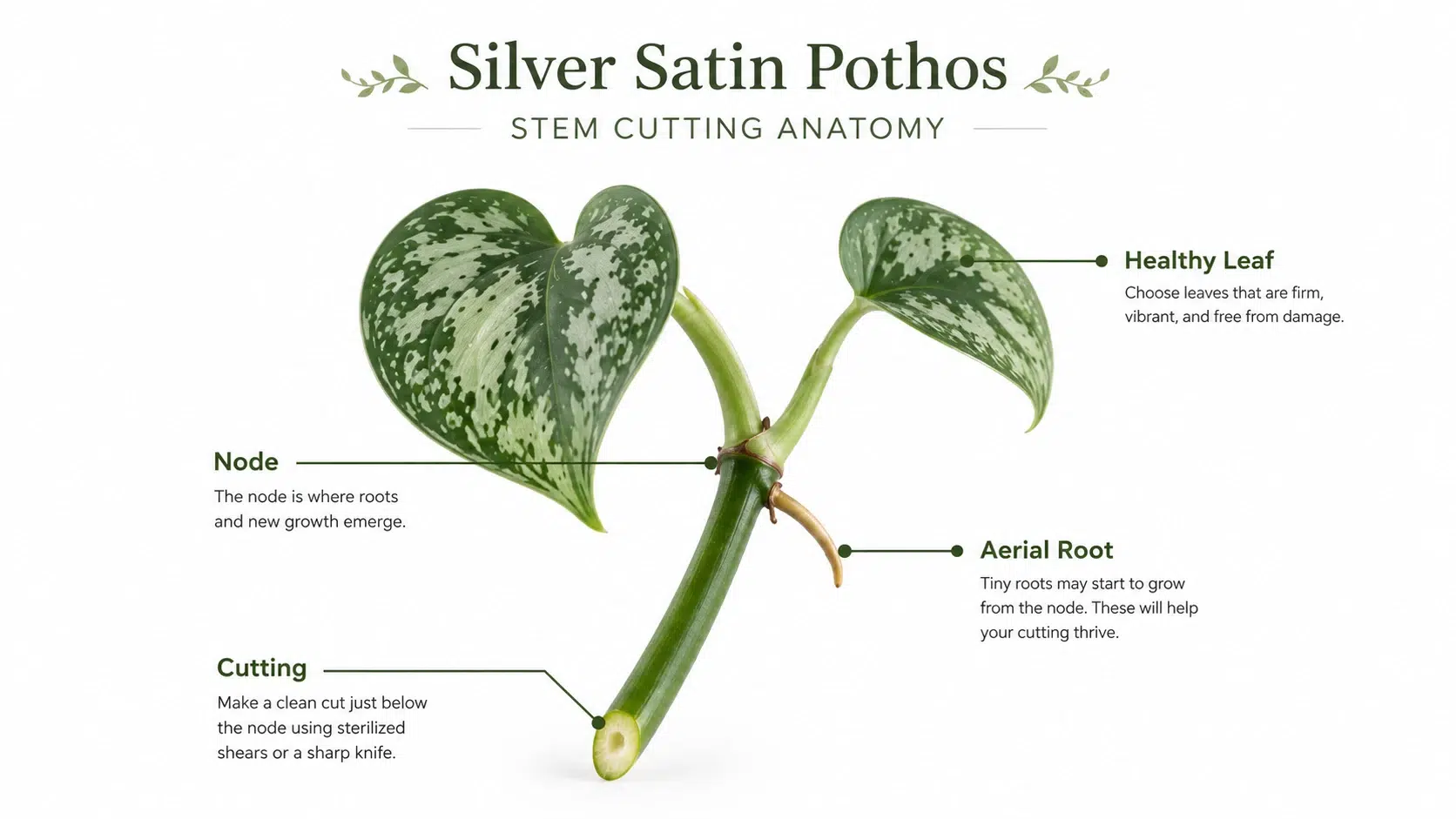
A pothos node is the small point on a stem where leaves, roots, and new growth can develop. For Silver Satin Pothos propagation, the node is the most important part of the cutting because roots grow from this area. Understanding where to make cuts is essential for successful propagation; this same principle is explained in detail in the guide on where to cut pothos to encourage growth.
A healthy cutting should include:
- At least one visible node
- One or two healthy leaves
- An aerial root if available
- A firm, green stem without damage
Cuttings without nodes usually cannot produce new roots because the plant’s growth points are missing.
How to Propagate Satin Pothos in Water
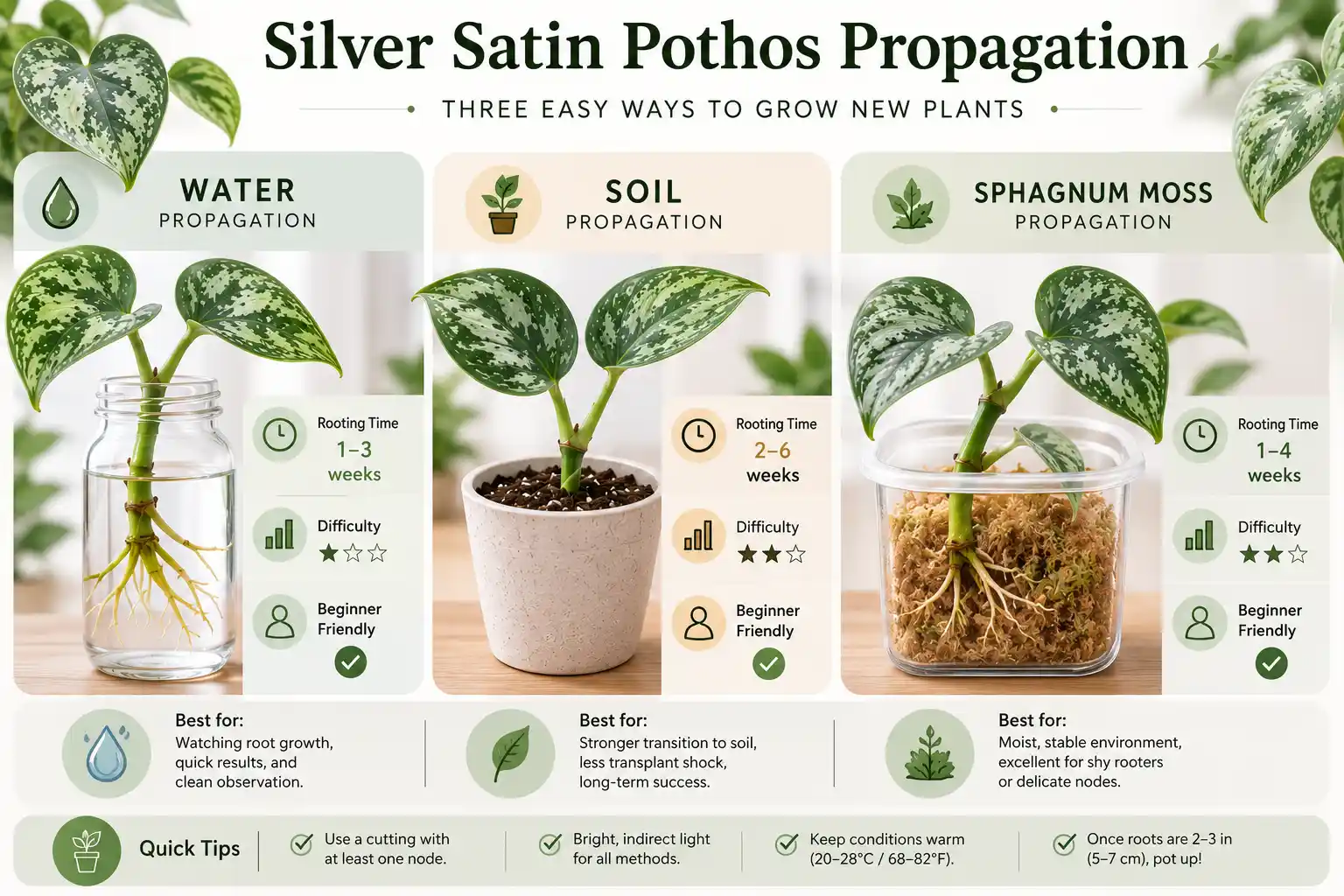
Silver Satin Pothos can be propagated in water by placing a node-containing stem cutting into clean water until roots develop. Similar propagation techniques are also used for other popular aroids, such as the Heartleaf Philodendron propagation method, which also relies on healthy stem cuttings and nodes.
Steps:
- Cut a healthy stem below a node using clean scissors.
- Remove lower leaves that would sit underwater.
- Place the node below the water surface while keeping leaves above water.
- Keep the cutting in bright indirect light.
- Change the water every few days to prevent bacterial growth.
- Transfer to soil when roots are several centimeters long.
Water propagation is popular because root development is easy to observe. Rooting usually takes 2–6 weeks depending on temperature, light, and plant health.
Can Silver Satin Pothos Live in Water Long-Term?
Silver Satin Pothos can survive in water for extended periods, but it usually grows better when transferred to soil. Long-term water growth requires regular water replacement and occasional nutrients because water alone does not provide complete plant nutrition.
How to Propagate Satin Pothos in Soil
Silver Satin Pothos cuttings can be rooted directly in soil. This method reduces transplant stress because the cutting develops roots in its permanent growing medium. Many indoor plants require similar propagation practices, including careful cutting selection and moisture control, as explained in this Prayer Plant propagation guide.
Steps:
- Prepare a lightweight, well-draining soil mix.
- Insert the node into moist soil.
- Keep humidity slightly elevated using a clear cover if needed.
- Place the cutting in bright indirect light.
- Maintain consistent moisture without waterlogging.
Rooting hormone is optional. It may speed up root development but is not required for healthy Silver Satin Pothos cuttings.
Propagating Satin Pothos in Sphagnum Moss
Sphagnum moss is an effective propagation medium because it holds moisture while allowing oxygen around developing roots. Many Scindapsus growers prefer moss because it can encourage faster, stronger root growth than water.
For moss propagation:
- Moisten the moss but avoid making it soggy.
- Place the node directly into the moss.
- Maintain warmth and humidity.
- Check moisture levels regularly.
This method works especially well for growers who already maintain higher humidity conditions.
Comparison — Water vs. Soil vs. Moss Propagation
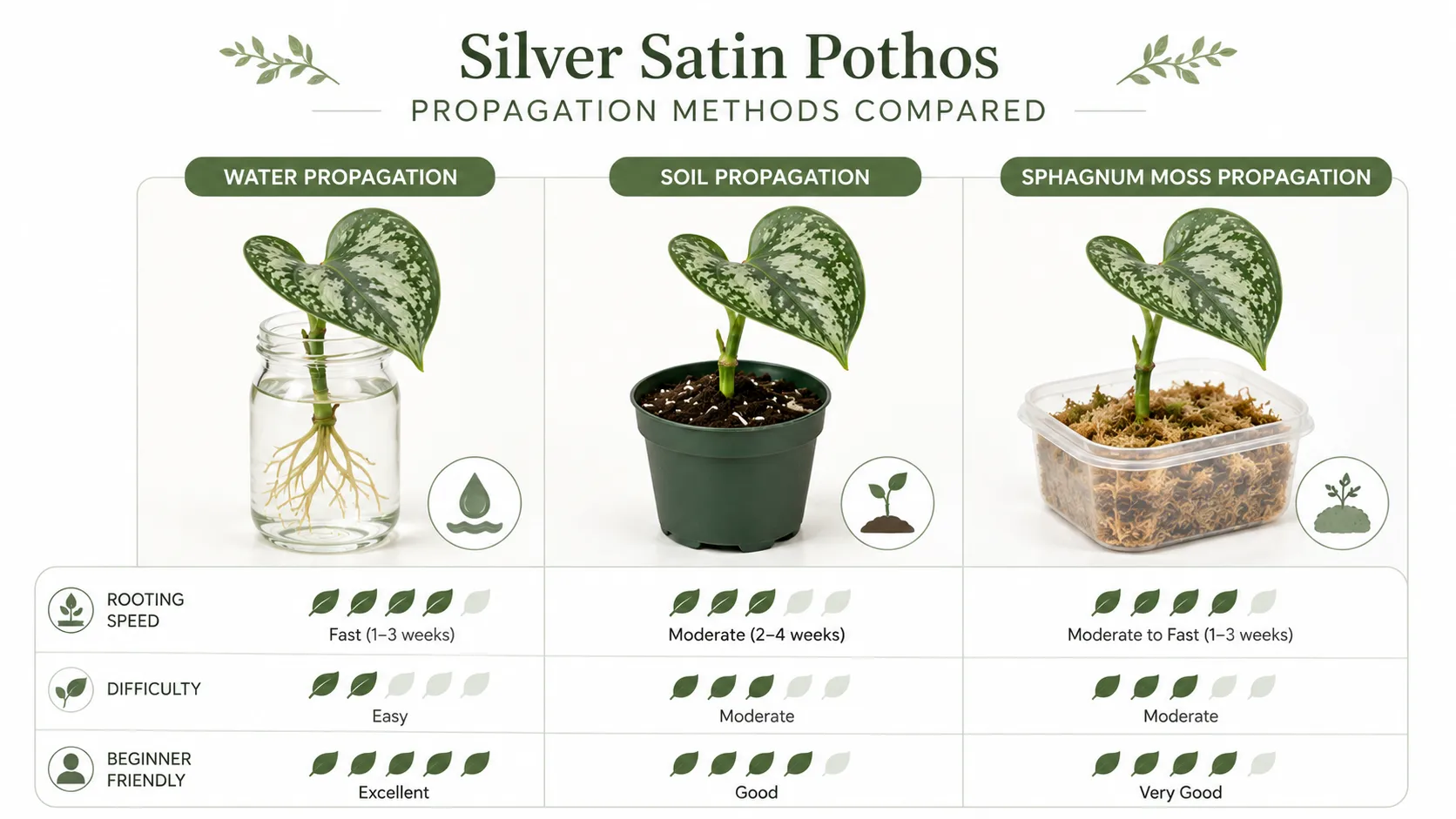
| Method | Speed | Difficulty | Best For |
| Water | Moderate | Easy | Beginners and visible root monitoring |
| Soil | Slower initial rooting | Moderate | Long-term convenience |
| Sphagnum Moss | Fastest | Moderate | Experienced growers and humidity lovers |
The fastest propagation method depends on conditions, but sphagnum moss often produces quick root development when moisture and humidity are controlled.
Best Time of Year to Propagate Pothos
The best time to propagate pothos is during spring and summer when plants enter active growth. Warm temperatures and longer daylight hours encourage faster root formation.
Propagation during colder months may still work, but growth slows because the plant naturally reduces activity during dormancy.
Common Satin Pothos Propagation Mistakes
Common propagation problems include:
- Using a cutting without a node: The cutting cannot produce roots.
- Keeping stagnant water: Dirty water increases the risk of rot.
- Providing insufficient light: Low light slows root development.
- Moving cuttings to soil too quickly: Weak roots may struggle after transfer.
- Using an oversized pot: Excess soil stays wet and increases root problems.
Satin Pothos Care After Propagation
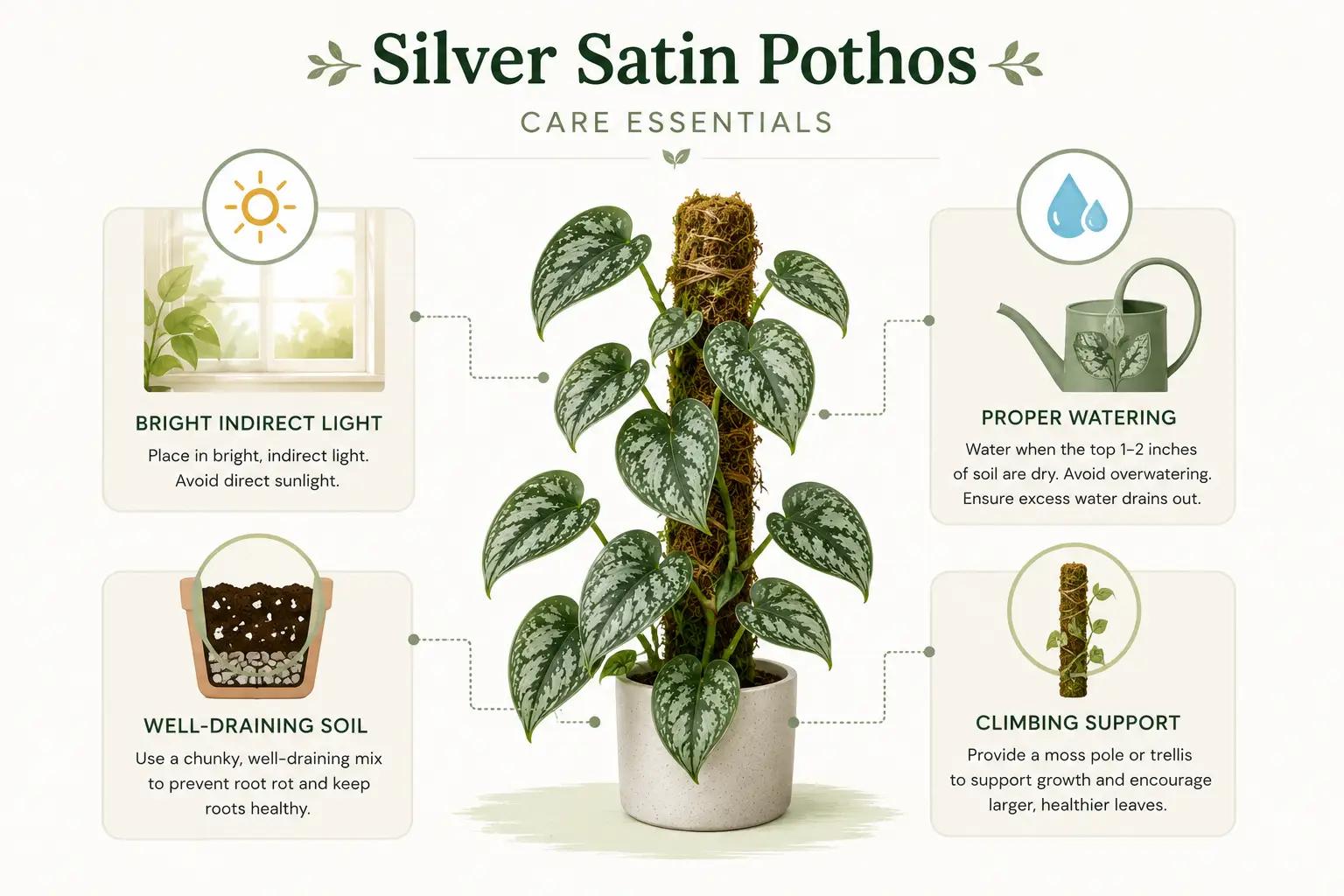
After rooting, Silver Satin Pothos requires stable care conditions to continue healthy growth.
Light, Watering, and Soil Preferences
Silver Satin Pothos prefers bright indirect light but can tolerate moderate light levels. Direct sunlight may scorch its leaves.
Watering guidelines:
- Allow the top layer of soil to dry slightly before watering.
- Avoid keeping roots constantly wet.
- Reduce watering during cooler months.
A well-draining soil mix containing peat, coco coir, perlite, or orchid bark supports healthy roots.
Do Pothos Like Deep or Shallow Pots?
Pothos plants generally prefer moderately sized pots rather than very deep containers. Their root systems are not extremely deep, and oversized pots can hold excess moisture.
A pot slightly larger than the root system encourages balanced growth.
Does Satin Pothos Go Into Shock After Repotting?
Silver Satin Pothos may experience mild transplant shock after repotting. Symptoms can include temporary drooping or slower growth.
To reduce stress:
- Repot gently without damaging roots.
- Keep light consistent.
- Avoid overwatering after transplanting.
What Do Coffee Grounds Do for Pothos?
Coffee grounds add organic material and small amounts of nitrogen to soil. However, excessive use can compact soil, increase acidity, and attract pests. Small amounts mixed into compost are safer than applying large quantities directly.
Climbing vs. Trailing — Do Satin Pothos Like to Climb or Hang?
Silver Satin Pothos naturally climbs in its native environment. It can grow on moss poles, trellises, or other supports.
Climbing plants often develop larger leaves because the support mimics natural growth conditions. Hanging baskets encourage trailing vines but usually maintain smaller leaves.
How to Make Satin Pothos Fuller
To create a fuller Silver Satin Pothos:
- Prune long, bare vines.
- Propagate cuttings and plant them back into the same pot.
- Pinch growing tips to encourage branching.
- Provide adequate light to support new growth.
Troubleshooting Common Satin Pothos Problems
Yellowing leaves: Usually caused by overwatering or low light. Reduce watering frequency and improve lighting.
Root rot: Often results from poor drainage or constantly wet soil. Remove damaged roots and refresh the growing medium.
Slow growth: Can occur from low light, seasonal dormancy, or nutrient shortages. Improve conditions and fertilize during active growth.
Pests: Spider mites and mealybugs may appear. Remove pests manually and treat with appropriate methods while improving airflow.
Is It Illegal to Propagate Certain Pothos Varieties?
Some plant varieties are protected by patents or plant variety rights, which can restrict commercial propagation and selling without permission. These rules mainly apply to businesses producing plants for sale.
Personal, non-commercial propagation of common houseplants is generally allowed. Silver Satin Pothos (Scindapsus pictus ‘Argyraeus’) is not commonly known as a restricted cultivar for personal propagation.
Why Is Pothos Called “Devil’s Ivy”?
Pothos is called Devil’s Ivy because it is extremely resilient and can remain green in low-light conditions. The nickname also comes from its vigorous growth and ability to spread quickly in suitable environments.
Satin Pothos Varieties and Lookalikes
Scindapsus pictus includes several varieties with different silver patterns, including:
- Scindapsus pictus ‘Argyraeus’
- Scindapsus pictus ‘Exotica’
- Other satin leaf pothos cultivars
They may look similar but differ in leaf size, silver markings, and growth patterns.
How Long Does a Satin Pothos Live?
A healthy Satin Pothos can live for many years with proper care. Lifespan depends on factors such as light quality, watering habits, soil health, pest prevention, and regular maintenance.
Conclusion
Silver Satin Pothos propagation is a simple way to create new plants using water, soil, or sphagnum moss. Stem cuttings with healthy nodes provide the best chance of success, while proper timing and aftercare improve rooting results. Beginners often prefer water propagation for visibility, while experienced growers may choose moss for faster development. Choosing the right method based on patience, environment, and experience level helps ensure successful Silver Satin Pothos growth.
FAQs
Can you propagate a Satin Pothos in water?
Yes, Satin Pothos can be propagated in water by placing a stem cutting with at least one node into clean water until roots develop.
Which pothos are illegal to propagate?
Certain patented plant cultivars may have restrictions on commercial propagation and selling. Personal propagation of most common houseplants is generally not restricted.
Can I root pothos cuttings directly in soil?
Yes, pothos cuttings can root directly in soil when planted with a healthy node and kept in suitable moisture and light conditions.
Do Satin Pothos like to climb or hang?
Satin Pothos naturally prefers climbing but can also grow successfully as a trailing plant in hanging baskets.
What is the fastest way to propagate pothos?
Sphagnum moss often provides fast rooting when humidity and moisture levels are properly maintained.
What month is best to propagate pothos?
Spring and summer are generally the best months because pothos plants grow actively during warmer seasons.
Do pothos propagate faster in water or soil?
Water propagation is often easier to monitor, while sphagnum moss may produce faster roots. Soil propagation is usually slower initially but avoids transplanting later.



One Response