
Introduction
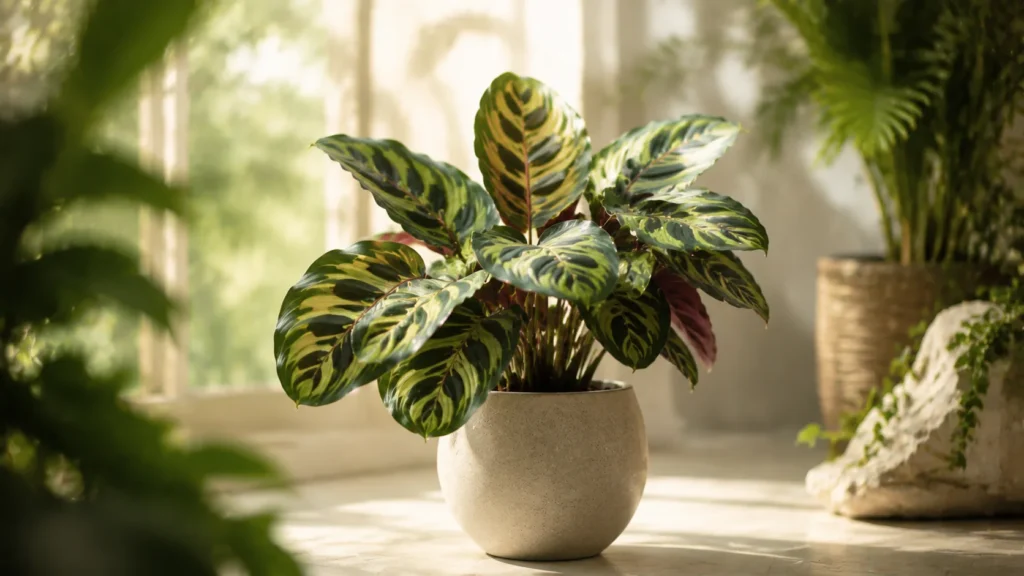
Calathea peacock plant care refers to maintaining Calathea makoyana, a tropical foliage houseplant known for its feather-like patterned leaves and high sensitivity to light, humidity, and water quality. The peacock plant is widely grown indoors for its striking ornamental appearance and dynamic leaf movement throughout the day.
Successful care depends on stable humidity, indirect light, and careful watering practices. When these conditions are met consistently, the plant remains healthy and produces vibrant, patterned foliage that makes it highly desirable for indoor plant collections.
Quick Summary
- Calathea makoyana needs bright, indirect light, consistently moist soil, and high humidity to thrive.
- Yellow leaves are most often caused by overwatering, low humidity, or tap water minerals.
- It is a non-toxic, pet-safe plant valued for decorative foliage.
- Propagation is done by root division, not leaf or stem cuttings.
What Is a Calathea Peacock Plant?
Calathea makoyana, commonly known as the peacock plant or peacock’s tail plant, belongs to the Marantaceae (prayer-plant family). It is a tropical perennial grown for its decorative leaves, which feature intricate patterns resembling feathers.
Calathea makoyana belongs to the Marantaceae family, commonly known as the prayer plant family, which includes species known for their unique leaf movement and tropical origins (see Marantaceae on Wikipedia for botanical classification details).
Calathea makoyana belongs to the broader group of ornamental tropical foliage plants often featured alongside other decorative indoor species and collections found in Australian Native Garden Plants style landscaping inspirations.
A defining characteristic of this plant is its nyctinastic movement, where leaves fold upward at night and reopen during the day. This natural rhythm gives it the nickname “prayer plant” and adds to its ornamental appeal indoors.
Why Is It Called the “Peacock Plant”?
The plant is called the peacock plant because its leaves display symmetrical markings that resemble peacock feathers. The combination of light and dark green patterns creates a tail-like visual effect, leading to names such as “peacock’s tail plant” or “plant that looks like peacock feathers.”
Is the Peacock Plant Hard to Keep Alive?
The peacock plant is considered moderately difficult to maintain due to its sensitivity to humidity, water quality, and environmental stability. However, it is manageable when care routines are consistent.
- Sensitive to chlorinated tap water
- Leaves curl or droop when humidity is too low
- Recovers quickly once environmental conditions improve
With proper adjustments, most common issues are reversible without long-term damage.
Where Is the Best Place to Put a Peacock Plant?
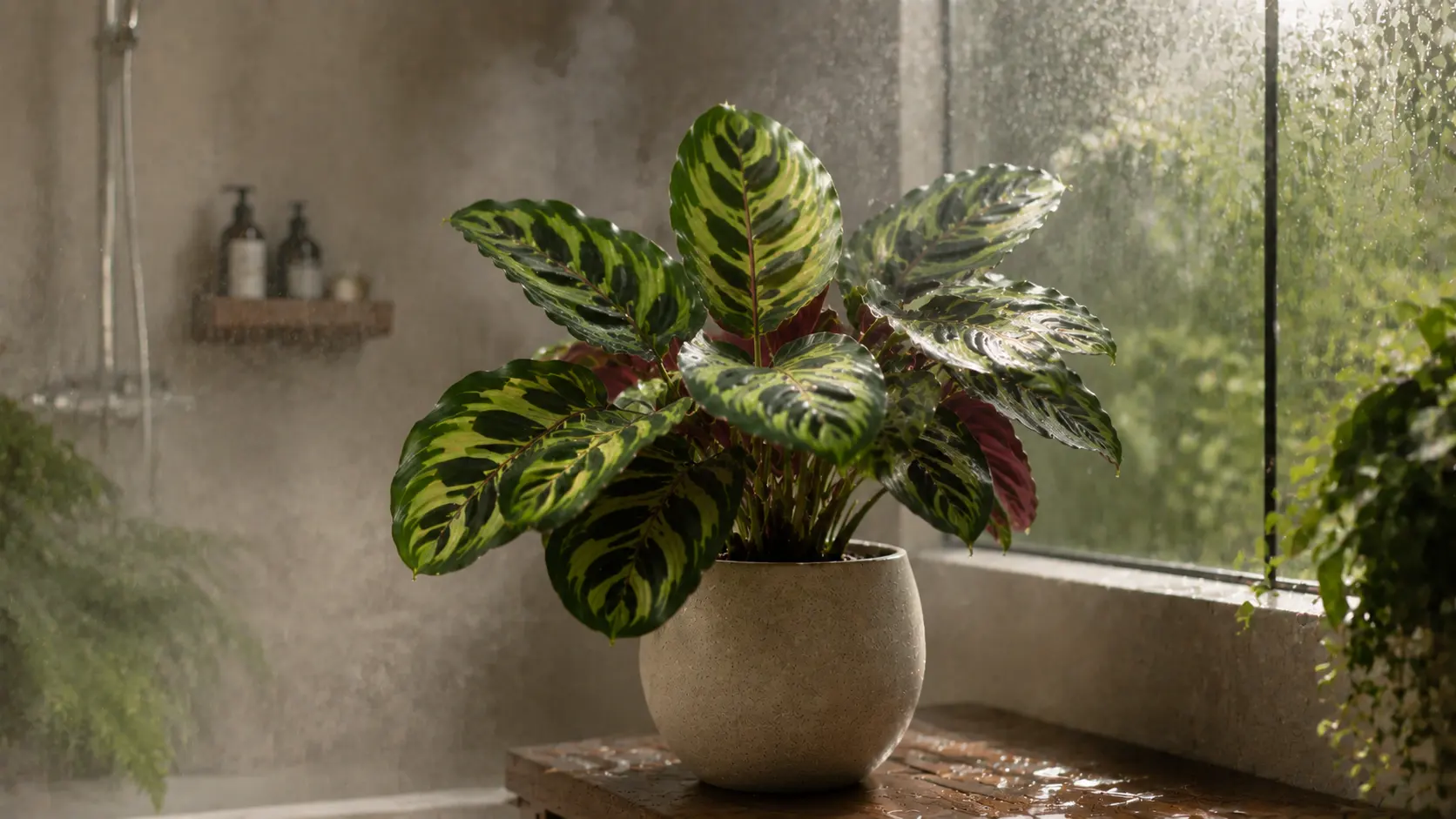
The best placement for a peacock plant is a location with bright, indirect light, stable temperature, and high humidity. It should always be kept away from direct sunlight, heaters, and cold drafts that stress the plant.
Stable indoor temperatures are just as important as in Peace Lily Temperature Range, where fluctuations can cause similar stress symptoms.
Calathea Peacock Plant Care Indoors
Indoors, the plant thrives in bathrooms, kitchens, or living rooms with filtered light. Humidity can be increased using:
- Humidifiers
- Pebble trays filled with water
- Grouping plants together
Calathea Peacock Plant Care Outdoors
Outdoors, it survives only in warm, tropical or subtropical climates. It must be placed in full shade under tree cover or patios. In most regions, it is grown exclusively as an indoor plant due to temperature sensitivity.
Light Requirements
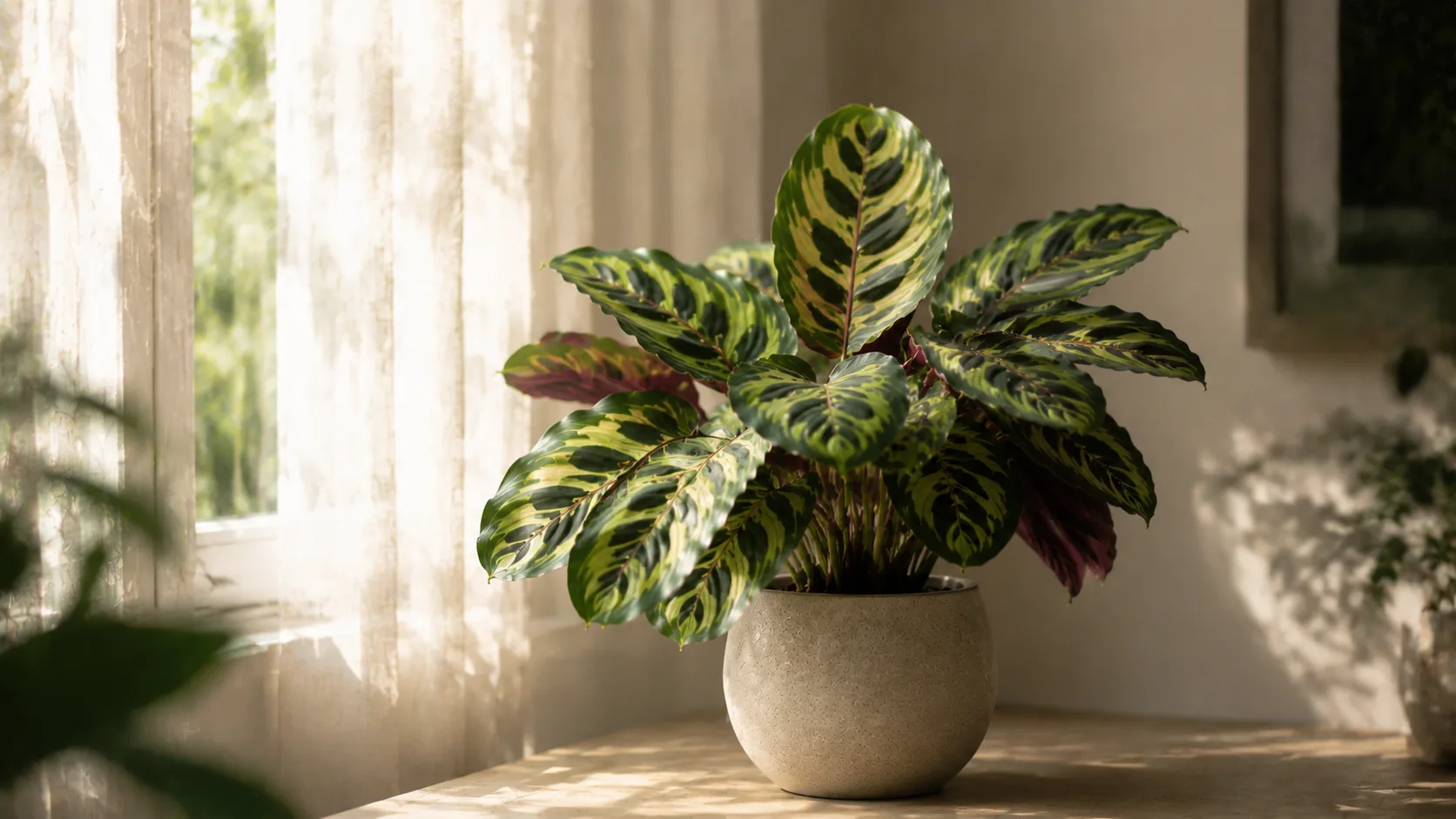
Calathea makoyana requires bright, indirect light to maintain healthy growth and vivid leaf patterns. Direct sunlight damages foliage, causing scorched or faded patches. Low light conditions are tolerated but lead to slower growth, smaller leaves, and reduced vibrancy. The plant performs best in conditions similar to a shaded rainforest understory.
Calathea peacock plant has similar light sensitivity to plants like Alocasia Amazonica Care Indoors, which also require filtered light to avoid leaf burn.
How Often to Water a Peacock Plant
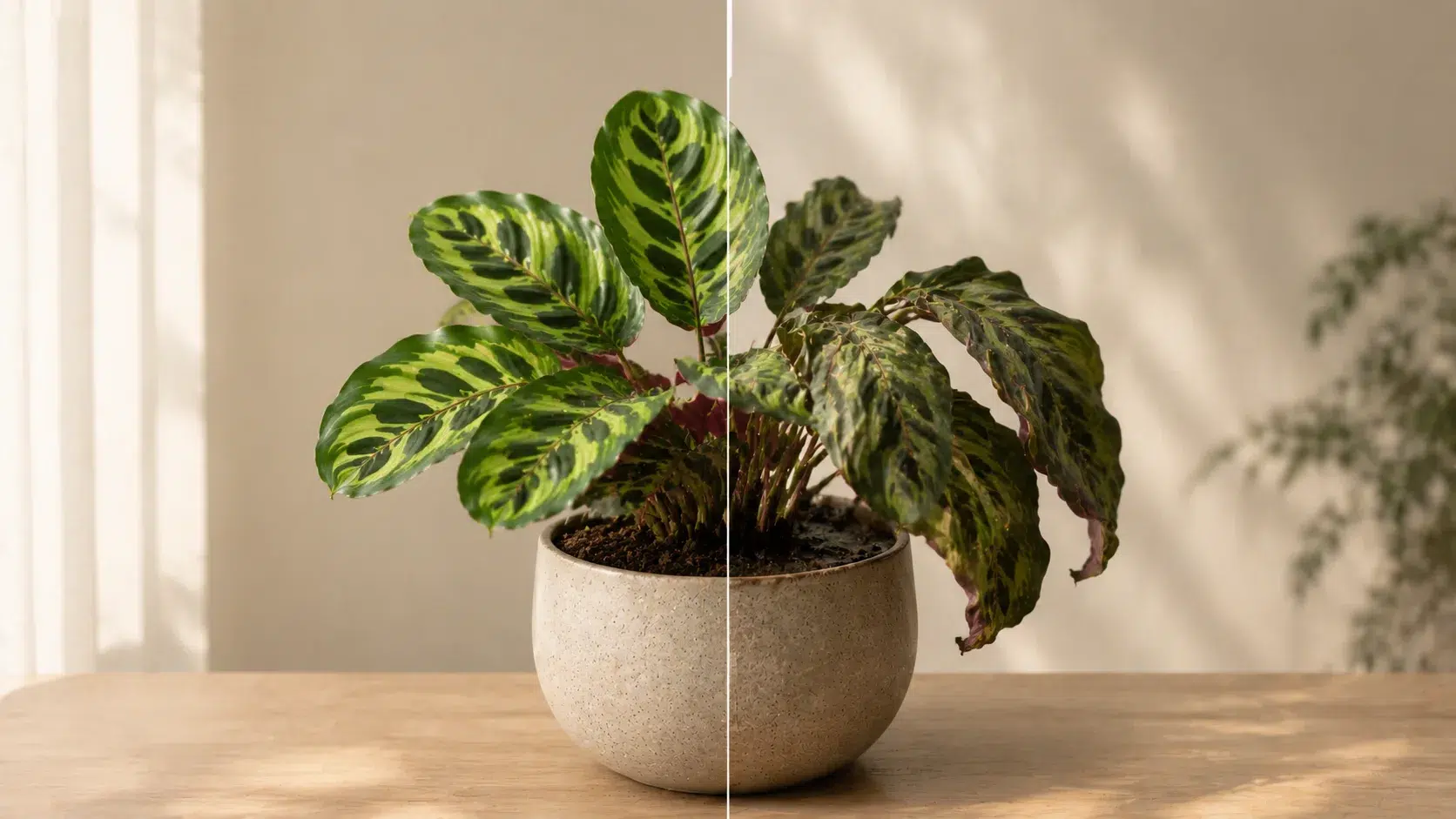
Peacock plant watering requires maintaining consistent moisture without waterlogging the soil. It is sensitive to both drought stress and overwatering.
Filtered, distilled, or rainwater is strongly preferred to prevent mineral buildup that can damage leaves.
| Season | Frequency | Soil Condition |
| Spring/Summer | 2–3 times per week | Lightly moist |
| Fall/Winter | 1 time per week or less | Slightly moist, not wet |
Signs of imbalance include:
- Curling leaves = underwatered or dry air
- Yellow leaves = overwatering or root stress
Soil and Fertilizer Needs
Peacock plant soil should be well-draining yet moisture-retentive. A peat-based mix with perlite or coconut coir works best for maintaining balanced moisture levels.
Fertilization should be minimal:
- Use diluted balanced liquid fertilizer
- Apply only during spring and summer
- Avoid feeding in winter dormancy
Overfertilization can cause salt buildup and leaf damage.
Growth Rate and Mature Size
Calathea makoyana grows at a moderate rate under ideal indoor conditions. Growth slows significantly in cooler months or low-light environments.
- Mature size: 12–24 inches indoors
- Growth pattern: clumping foliage
- Influencing factors: humidity, light, pot size, and temperature
Healthy plants produce dense, patterned foliage when environmental conditions remain stable.
Does the Peacock Plant Flower?
The peacock plant rarely flowers indoors. In its natural habitat, it may produce small, inconspicuous flowers, but these are not the main ornamental feature.
Its value as a houseplant comes primarily from its decorative foliage rather than its blooms.
How to Keep Your Peacock Plant Happy
A happy peacock plant depends on consistent environmental care rather than complex maintenance.
- Maintain humidity above 50%
- Rotate pot for even light exposure
- Wipe leaves regularly to remove dust
- Avoid cold drafts and air conditioning vents
Consistency is more important than intensive care.
Calathea Peacock Plant Care: Yellow Leaves and Common Problems
Why Are My Peacock Plant’s Leaves Turning Yellow?
Yellow leaves are most commonly caused by overwatering, poor water quality, or low humidity. Overwatering leads to root stress, while hard tap water introduces mineral buildup that damages foliage. Natural aging may also cause older leaves to yellow and drop.
Other Common Peacock Plant Problems
- Curling leaves: caused by low humidity or underwatering; increase humidity and adjust watering schedule
- Brown crispy edges: caused by dry air or chemical buildup; use filtered water and increase humidity
- Pests (spider mites): appear in dry conditions; treat with neem oil and improve humidity
- Slow growth: linked to low light or nutrient deficiency; adjust lighting and fertilization
Pests such as spider mites and soil insects are also discussed in Bugs in Indoor Plant Soil, especially in dry indoor conditions.
How to Propagate a Peacock Plant
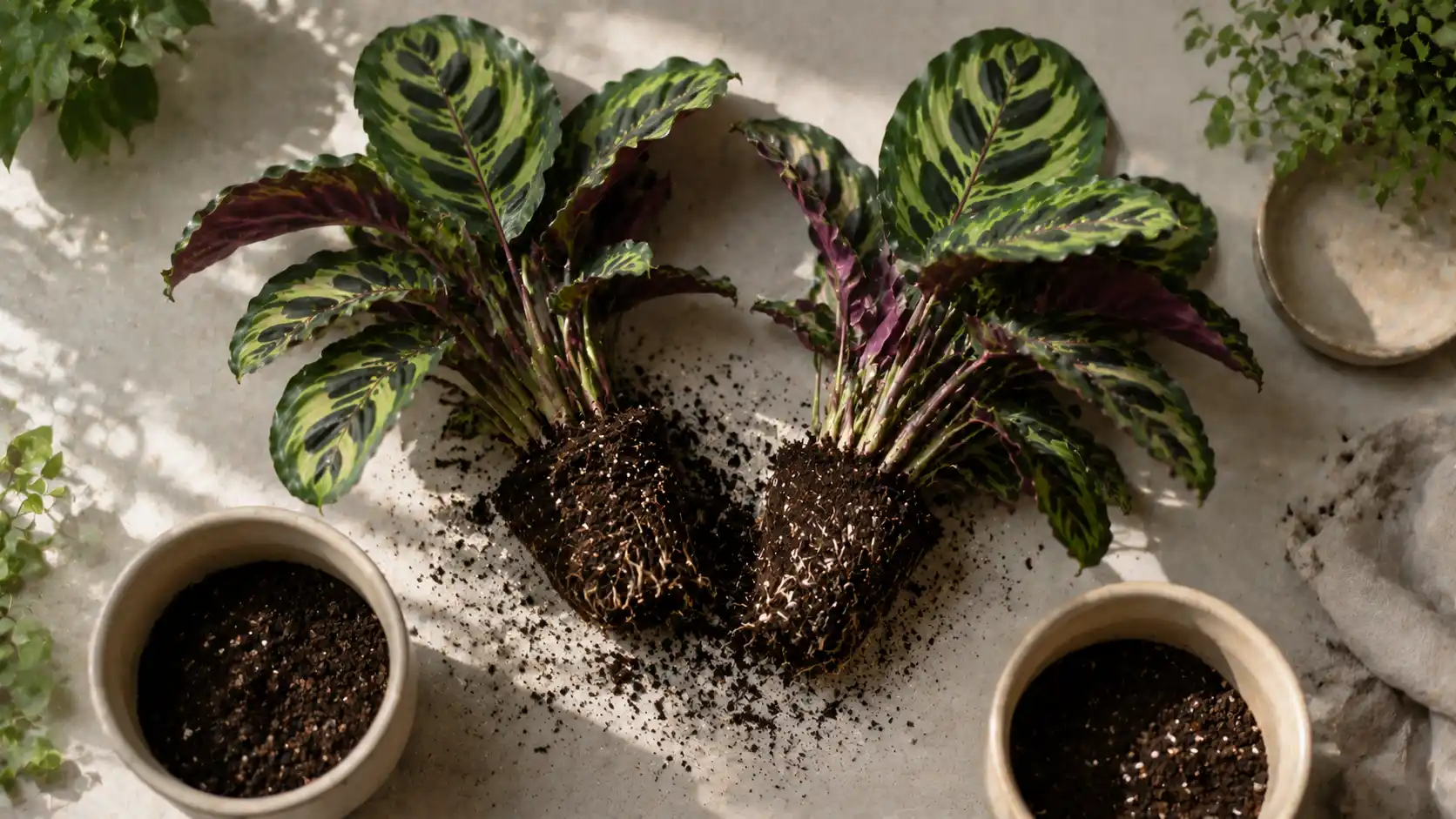
Peacock plant propagation is done through root division, not leaf or stem cuttings, because Calathea makoyana does not develop nodes suitable for cutting propagation.
- Best season: spring or early summer
- Method: carefully divide root clumps during repotting
- Post-care: maintain high humidity and indirect light
After division, plants may temporarily slow growth as they adjust to new conditions.
Calathea Peacock Plant Benefits
Calathea peacock plants offer both aesthetic and environmental benefits. They are widely used in indoor plant styling due to their striking foliage and air-quality contributions.
- Non-toxic and pet-safe
- Improves indoor visual environment (biophilic design value)
- Helps increase humidity slightly in indoor spaces
- Enhances decorative plant collections
Calathea Makoyana vs. Other Calathea Varieties
| Variety | Leaf Pattern | Light Need | Difficulty Level |
| Calathea makoyana | Feather-like, peacock pattern | Bright indirect | Moderate |
| Calathea orbifolia | Broad silver-striped leaves | Medium indirect | Moderate |
| Calathea ornata | Pink pinstripes | Bright indirect | Moderate to high |
| Calathea white fusion | White-green marbled leaves | Bright filtered | High |
Calathea makoyana is generally considered one of the more visually detailed but moderately easier Calathea varieties compared to high-maintenance hybrids. Compared to other species such as Calathea Orbifolia Care Guide, Calathea makoyana has more intricate leaf patterns but similar humidity requirements.
Beginner Mistakes With Peacock Plant Care
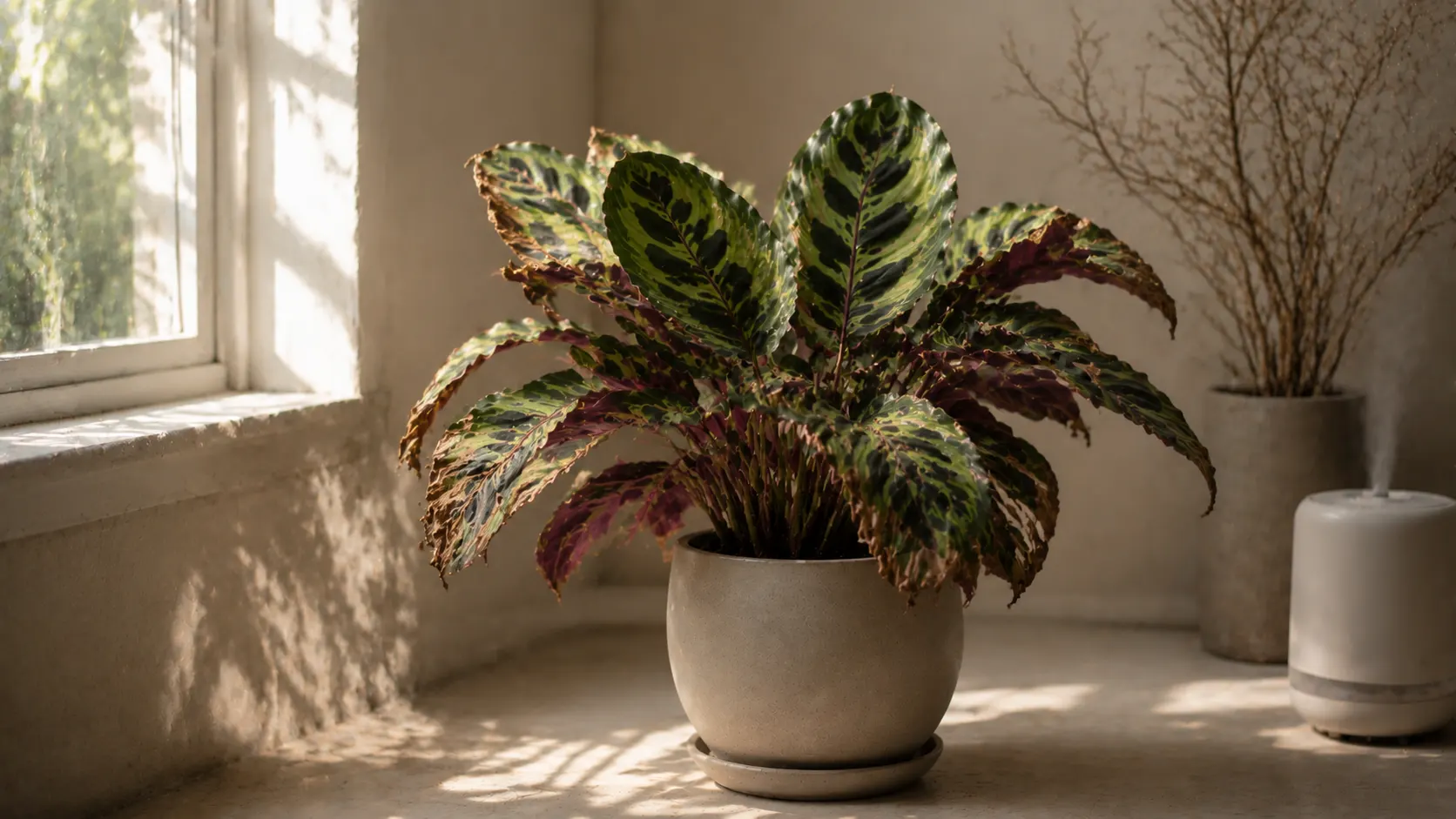
Common mistakes often result from misunderstanding humidity and water sensitivity:
- Using untreated tap water without filtration
- Placing plant in direct sunlight
- Overwatering due to fear of dryness
- Ignoring humidity levels in dry indoor environments
Avoiding these mistakes significantly improves plant survival and appearance. Mistakes like low humidity stress are also common in Calathea Roseopicta Medallion Care Guide, showing how sensitive Calathea species are overall.
Conclusion
Calathea peacock plant care depends on consistent humidity, indirect light, and careful watering rather than complex maintenance routines. The Calathea makoyana rewards stable conditions with vibrant, patterned foliage and healthy growth. When environmental needs are met, it remains a long-lasting and visually striking indoor plant.
FAQs
How do I keep my peacock plant happy?
Keep it in bright indirect light, maintain humidity above 50%, water with filtered water, and avoid drafts or direct sun exposure.
Where is the best place to put a peacock plant?
The best place is indoors near filtered natural light, such as bathrooms or living rooms with stable humidity and no direct sunlight.
Are peacock plants hard to keep alive?
They are moderately difficult because they are sensitive to humidity and water quality, but they thrive with consistent care routines.
Why are my calathea peacock plant's leaves turning yellow?
Yellow leaves usually result from overwatering, poor water quality, or low humidity, though older leaves may naturally fade.
How often should I water a peacock plant?
Water 1–3 times per week depending on season, keeping soil consistently moist but never waterlogged.
Can I propagate a peacock plant from a leaf cutting?
No, it cannot be propagated from leaf cuttings; it must be divided at the root clump during repotting.
Is the peacock plant safe for pets?
Yes, Calathea makoyana is non-toxic and safe for cats and dogs.



One Response