
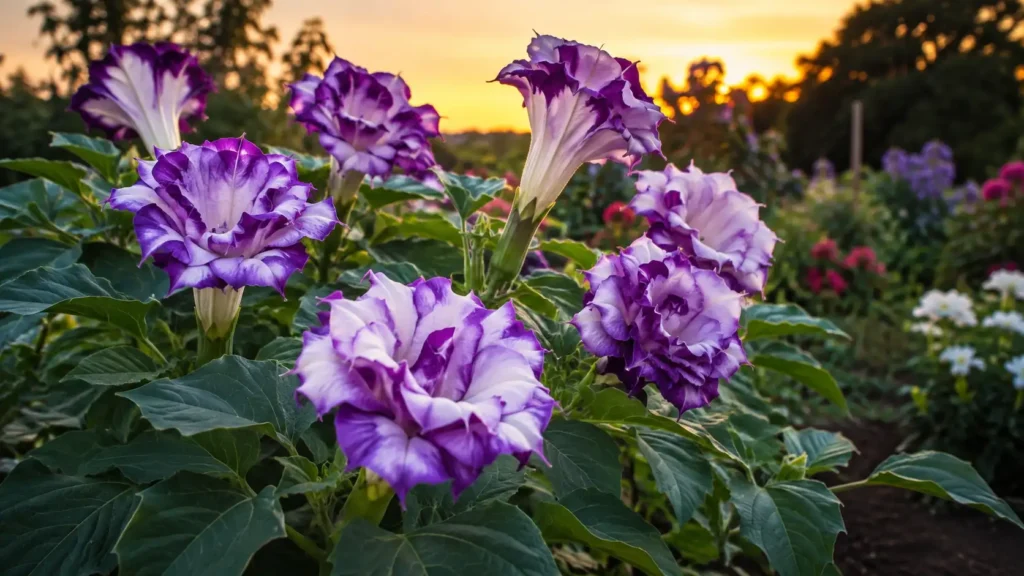
According to Manuela Nogueira, Ballerina Purple datura thrives in full sun with well-drained, moderately fertile soil, needing deep watering roughly once weekly and drying out between sessions. It grows 2-4 feet tall, producing double purple trumpet blooms from summer through fall. All plant parts are toxic, so keep it away from children and pets.
In climates below USDA zone 9, Ballerina Purple is typically grown as a warm-season annual or overwintered indoors in containers. Its blooms open at dusk and release a strong fragrance that draws night-flying moths, while regular deadheading helps extend flowering further into early autumn.
Quick Summary
- Ballerina Purple Datura is a compact, fast-growing Datura metel cultivar with ruffled, double purple flowers and an upright growth habit.
- Full sun, fertile well-drained soil, moderate moisture, and warm temperatures provide the conditions most favorable for vigorous growth and flowering.
- It can be grown in garden beds or large containers; container plants are easier to move when frost threatens.
- Datura is highly toxic because it contains tropane alkaloids such as atropine, hyoscyamine, and scopolamine throughout its plant tissues.
- In cold climates it is normally grown as an annual, while plants in sufficiently warm, frost-free conditions may persist longer.
What Is Ballerina Purple Datura?
Ballerina Purple Datura is a cultivated form of Datura metel recognized for its compact habit and double, ruffled flowers. The cultivar belongs to the Ballerina series, whose flowers have a layered, tutu-like appearance that distinguishes them from the simpler trumpet flowers of many other daturas. The University of Wisconsin–Madison Extension describes the Ballerina series as compact plants reaching about 3 feet tall and wide, with ruffled flowers available in purple, yellow, white, and mixed colors.
For a broader botanical overview of the genus, see Datura.
Its vivid purple flowers also make it relevant to broader discussions of purple flowering plants, although Ballerina Purple Datura itself is not an Australian native species.
Botanically, Datura metel belongs to:
| Classification | Details |
| Kingdom | Plantae |
| Order | Solanales |
| Family | Solanaceae |
| Genus | Datura |
| Species | Datura metel |
| Cultivar | ‘Ballerina Purple’ |
| Common group | Ballerina Datura |
| Common name | Devil’s trumpet |
Kew currently accepts Datura metel as a species in the Solanaceae family. Its Plants of the World Online record gives Mexico as its native range as a cultigen and notes that it is now introduced across many tropical and subtropical regions.
The name Ballerina Purple is a horticultural cultivar name rather than a separate botanical species. “Ballerina” refers to the flower form: the layered petals resemble a small ruffled skirt or tutu. “Purple” identifies the principal flower color of this cultivar.
Datura is sometimes confused with Brugmansia, another Solanaceae genus with trumpet-shaped flowers. They are not the same plant. Datura generally produces upright or upward-facing flowers, while Brugmansia is known for much larger, pendulous flowers.
Ballerina Purple vs. Other Datura Ballerina Varieties
The Ballerina series is available in several flower colors. Purple, White, and Yellow forms share the same basic compact, double-flowered concept, but their ornamental appearance differs primarily by flower color.
| Feature | Purple Ballerina | White Ballerina | Yellow Ballerina |
| Flower color | Purple | White | Yellow |
| Flower form | Double, ruffled | Double, ruffled | Double, ruffled |
| Growth habit | Compact and bushy | Compact and bushy | Compact and bushy |
| Main ornamental difference | Rich purple color | Bright white color | Warm yellow color |
| Fragrance | May be noticeable, but cultivar intensity varies | May be noticeable, but cultivar intensity varies | May be noticeable, but cultivar intensity varies |
There is not strong horticultural evidence establishing a reliable fragrance ranking between the three Ballerina colors, so claims that one color is universally more fragrant should be treated cautiously.
Unique Features of Ballerina Purple Datura
The main features that distinguish Ballerina Purple Datura include:
- Double, layered and ruffled trumpet flowers.
- Purple coloration that can contrast strongly with the foliage.
- A relatively compact growth habit compared with some larger datura forms.
- Upright flowers characteristic of Datura rather than the pendant flowers of Brugmansia.
- Rapid growth during warm weather.
- Toxic foliage, flowers, roots, fruits, and seeds because Datura tissues contain tropane alkaloids.
Ballerina Purple Datura Plant Size and Growth Habit
Ballerina Purple Datura has a bushy, upright growth habit and is generally smaller than some sprawling or very vigorous datura types. Under favorable outdoor conditions, the Ballerina series can reach approximately 3 feet (0.9 m) tall and wide. Container restrictions, limited light, cool temperatures, and root competition can produce smaller plants.
How Big Does a Datura Plant Get?
A useful planning range for Ballerina Purple Datura is about 2–3 feet tall and 2–3 feet wide, although actual size depends heavily on growing conditions.
Outdoor plants usually have more room for roots and can become broader. Container-grown plants generally remain smaller, especially when the pot is relatively small.
Size is influenced by:
- Amount of direct sunlight.
- Root-zone volume.
- Soil fertility.
- Temperature.
- Water availability.
- Length of the warm growing season.
- Pruning and staking.
- Whether the plant is grown in the ground or a container.
Avoid crowding plants simply to save space. Better airflow around the foliage reduces prolonged leaf wetness and makes routine inspection for pests easier.
How Long Does Datura Take to Grow?
Datura is considered a fast-growing ornamental when temperatures, sunlight, moisture, and nutrition are favorable. It can make substantial vegetative growth during a single warm season and may begin flowering within the same growing season when started early enough.
Growth is usually fastest during warm weather. Cool conditions can slow germination, leaf production, branching, and flower development.
Ballerina Purple Datura Care Requirements
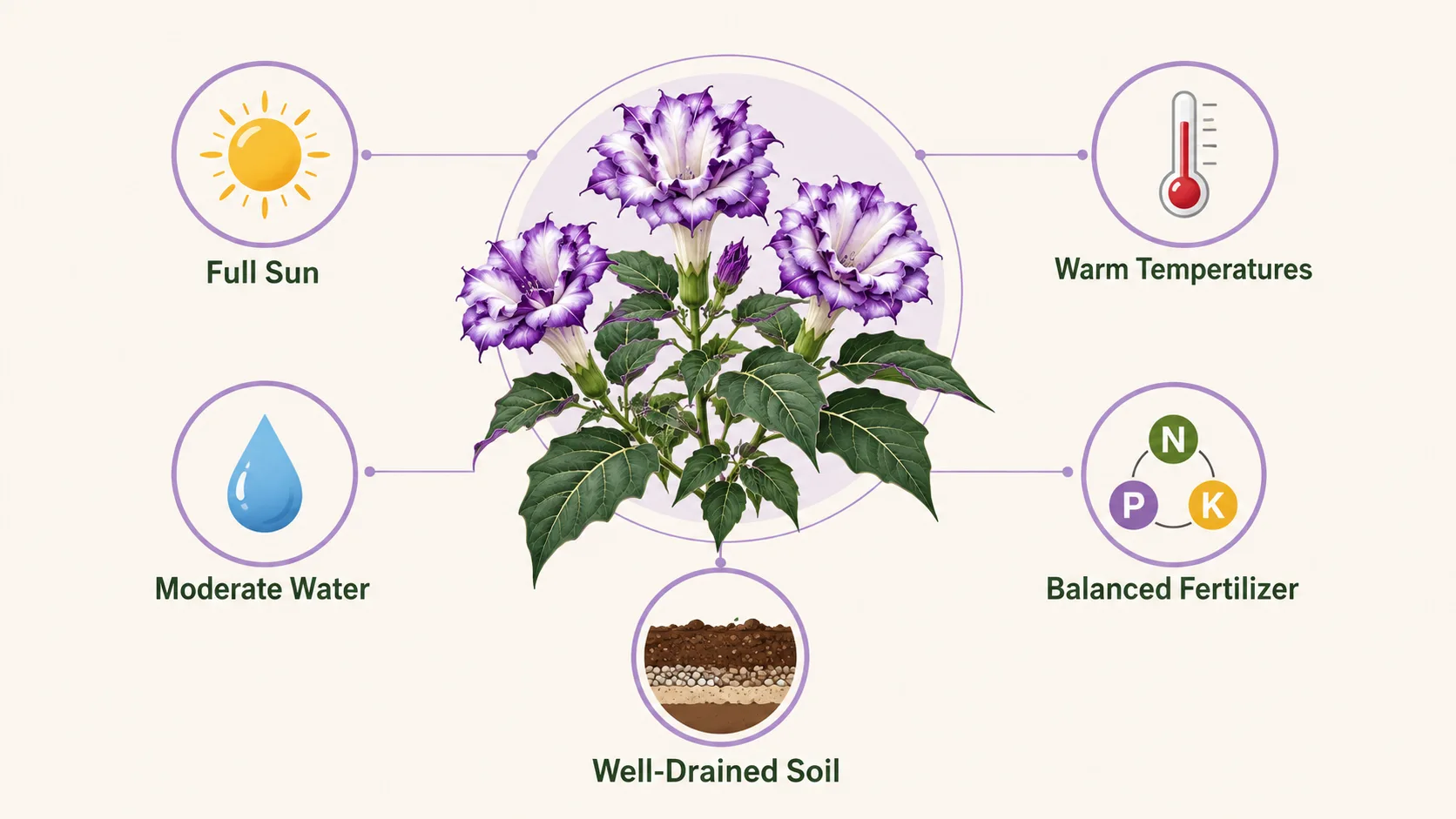
The basic Ballerina Purple Datura care formula is straightforward: provide abundant sunlight, fertile but well-drained soil, consistent moderate moisture, warmth, and enough space for the plant to branch.
For broader guidance on choosing growing conditions, understanding plant requirements, and maintaining healthy plants, see our plant care and growing guides.
| Care factor | Recommended condition |
| Light | Full sun |
| Soil | Fertile, well-drained soil |
| Water | Moderate and consistent; avoid waterlogging |
| Fertilizer | Balanced fertilizer during active growth |
| Temperature | Warm conditions |
| Frost | Protect from freezing temperatures |
| Container | Large pot with drainage holes |
| Toxicity | Highly toxic; all parts require caution |
Light and Soil Needs
Ballerina Purple Datura performs best in full sun. Several hours of direct sunlight each day supports compact growth and abundant flowering. Insufficient light can produce weaker, stretched growth and fewer flowers.
A fertile, well-drained growing medium is equally important. Datura tolerates several soil textures, but roots should not remain saturated for extended periods. The goal is soil that holds enough moisture for active growth while allowing excess water to drain away.
If planting in heavy clay, improve drainage before planting rather than relying on frequent corrective watering.
Understanding the difference between direct sunlight for plants and bright indirect light is important here because Ballerina Purple Datura performs best with strong direct sun rather than the lower-intensity light preferred by many indoor plants.
Watering and Fertilizing
Water Ballerina Purple Datura when the upper portion of the soil has begun to dry rather than keeping the root zone constantly saturated. During hot weather, plants in containers may require water more frequently than plants growing in the ground.
A practical approach is:
- Check the soil before watering.
- Water thoroughly when the plant needs moisture.
- Allow excess water to drain completely.
- Avoid leaving a container standing in water.
- Reduce watering when temperatures fall and growth slows.
During active growth, a balanced fertilizer can support foliage and flowering. Excessive nitrogen, however, can encourage leafy growth at the expense of a balanced flowering display.
Climate and Hardiness
Datura generally prefers warm growing conditions and is sensitive to frost. Datura metel is treated botanically by Kew as an annual species, while horticultural plants may survive longer in climates where freezing conditions are absent.
For gardeners in cold climates, the safest assumption is that an outdoor plant will behave as an annual. In warm, frost-free climates, plants may persist or regenerate, depending on local conditions and the individual plant.
Growing Ballerina Purple Datura Outdoors, in Pots, and Indoors
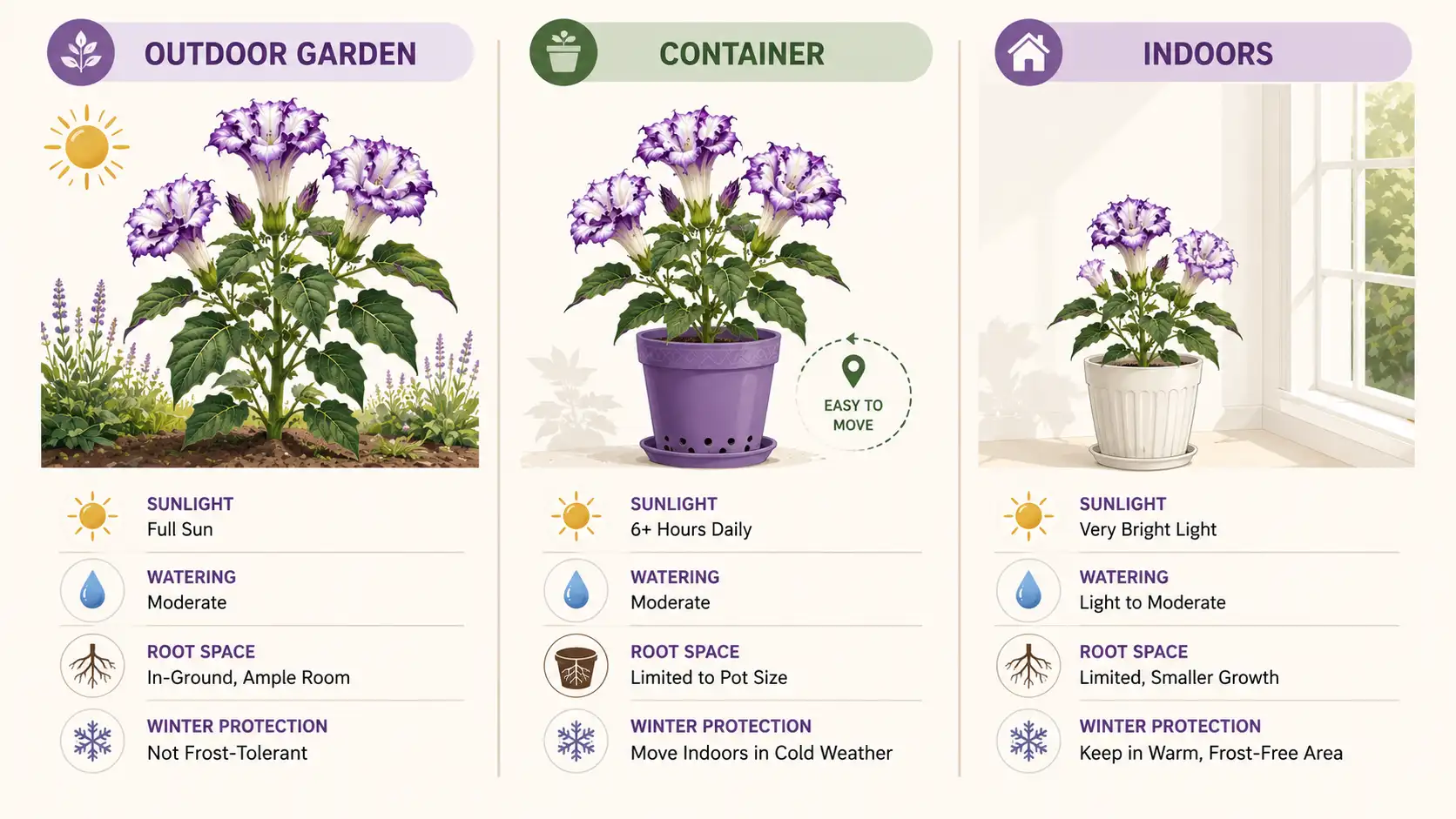
Ballerina Purple Datura can be grown in different settings, but its needs do not change fundamentally. The biggest differences involve available light, root space, watering frequency, and winter protection.
| Growing setting | Light | Watering | Size | Winter handling |
| Outdoor ground | Full sun | Moderate | Largest potential size | Protect from frost or treat as annual |
| Container outdoors | Full sun | More frequent checks | Usually smaller | Easy to move before frost |
| Indoors | Very bright direct light | Check soil carefully | Usually more compact | Easier temperature control |
Outdoor cultivation is generally the easiest because the plant receives stronger natural light and has better airflow. Large containers are useful where winters are too cold for permanent outdoor growth.
Indoor cultivation is possible, but it is more demanding. A bright, sunny window may not provide enough light for vigorous flowering, particularly during winter. Good ventilation and careful watering are also important.
Container Care Specifics
Choose a container with adequate drainage and enough root volume for a vigorous seasonal plant. A very small pot dries rapidly and can restrict growth, while a poorly drained pot creates a greater risk of root problems.
Container care should include:
- Use a pot with drainage holes.
- Select a well-draining growing medium.
- Place the plant in the brightest practical location.
- Monitor moisture more frequently during hot weather.
- Do not allow water to collect beneath the pot.
- Move the container to a protected location before freezing temperatures arrive.
Because Datura is toxic, moving an indoor or overwintering plant also requires keeping it away from children and pets.
Datura Bloom Time, Duration, and Fragrance
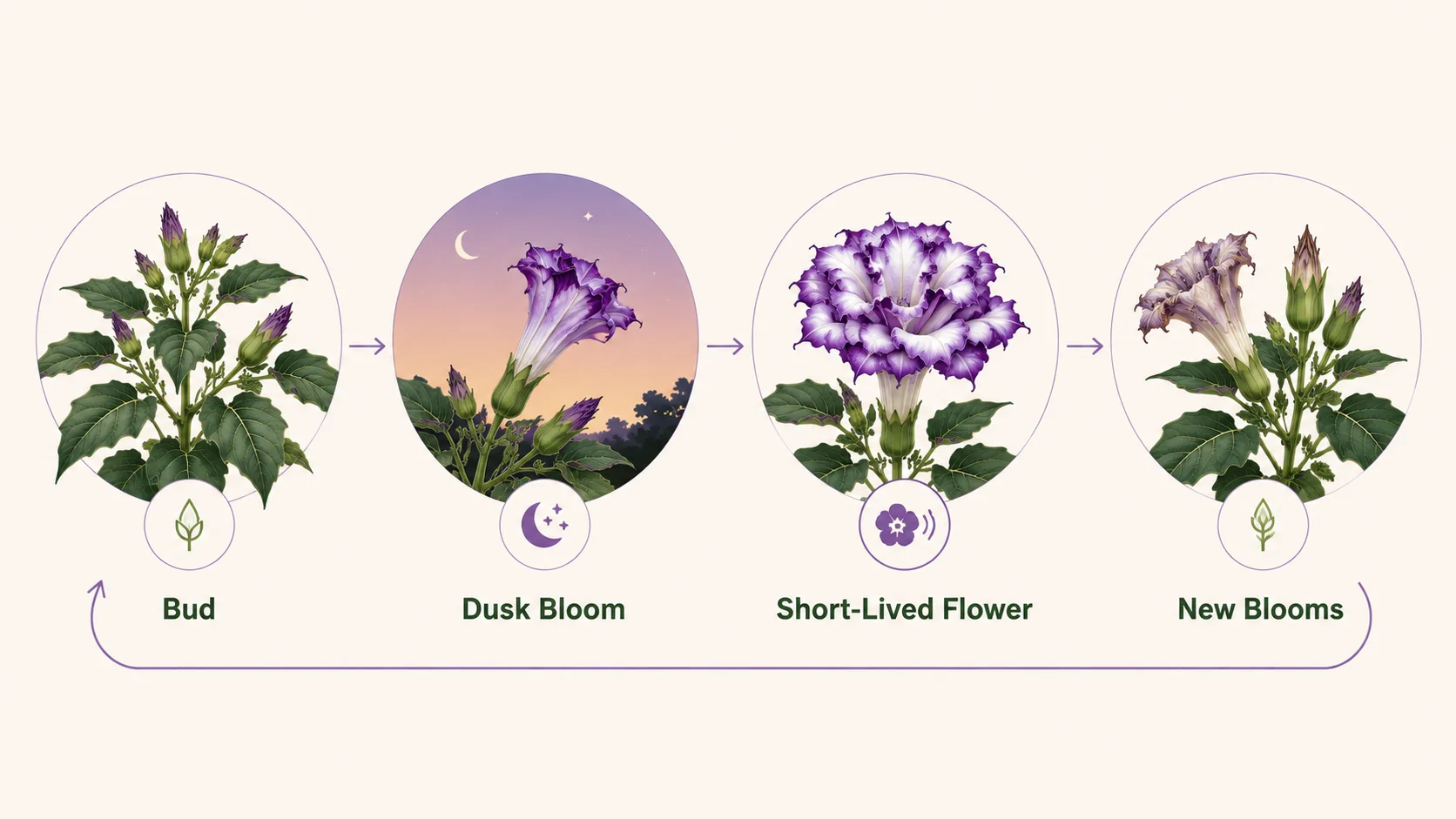
Ballerina Datura generally flowers during the warm growing season. Once established and exposed to suitable light and temperatures, the plant can continue producing flowers over an extended summer period.
What Time of Year Does Datura Bloom?
Datura generally flowers from summer into the first frost in climates where it is grown as a warm-season annual. The exact timing depends on when the plant was started, temperature, sunlight, and local climate.
Long, warm growing seasons can produce a longer flowering period than short, cool summers.
How Long Do Datura Blooms Last?
Individual Datura flowers are relatively short-lived compared with the overall flowering season. New flowers can continue to appear as older flowers fade, allowing the plant to maintain a display even though individual blooms do not remain fresh indefinitely.
The exact opening and closing behavior can vary by species and cultivar. Some Datura flowers are strongly associated with evening opening and nocturnal fragrance, but the University of Wisconsin–Madison notes that the Ballerina series can differ from other daturas and that its flowers may remain open during the day.
What Does Datura Smell Like?
Fragrance varies among Datura species and cultivars. Many daturas are fragrant, with a sweet, noticeable floral scent that can become more apparent around the evening hours.
Like other night-associated flowering plants such as moonflower plants, Datura is often discussed in connection with evening flowering and fragrance. However, fragrance should not be used as the primary way to identify Ballerina Purple Datura. Flower shape, cultivar characteristics, foliage, and botanical identification are more reliable.
Is Datura a Perennial or Annual? Does It Come Back Every Year?
Datura is generally grown as an annual in climates with freezing winters, although plants can persist for multiple years in sufficiently warm, frost-free conditions. Therefore, whether it comes back each year depends mainly on climate and winter temperatures rather than the word “Datura” alone.
Overwintering Datura
Container-grown plants have the advantage of being movable. Before freezing weather arrives, a container can be transferred to a protected area where temperatures remain above damaging frost levels.
During overwintering:
- Keep the plant in a bright location.
- Water less frequently as growth slows.
- Avoid keeping the soil continuously wet.
- Keep the plant inaccessible to children and pets.
- Wear suitable gloves when handling plant material.
Plants left outside in freezing conditions may suffer severe tissue damage or die back completely.
Does Datura Self-Seed?
Yes, Datura can reproduce by seed. After flowering, plants can develop distinctive seed capsules containing numerous seeds. If capsules mature and release their contents, seedlings may appear around the original planting area.
This can make an annual plant seem as though it has “come back” the following year. In that situation, the new plant may be a seedling rather than the original plant surviving winter.
Is Datura Invasive or Does It Grow in the UK?
Datura can grow in the UK, but it is not native there and is generally treated as a cultivated ornamental rather than a native garden plant. The RHS lists Datura metel as not native to Great Britain and Ireland.
The distinction between self-seeding and invasive is important. A plant producing seedlings does not automatically mean that it is invasive. Invasiveness depends on whether a species establishes, spreads, and causes ecological impacts in a particular environment.
In the UK, the main horticultural challenges are cool temperatures, limited growing-season warmth, and frost rather than simply whether Datura can grow at all.
Local regulations should always be checked before deliberately establishing a potentially naturalizing plant, particularly where a species has known weed behavior.
Datura Toxicity, Narcotic Properties, and Cultural Use
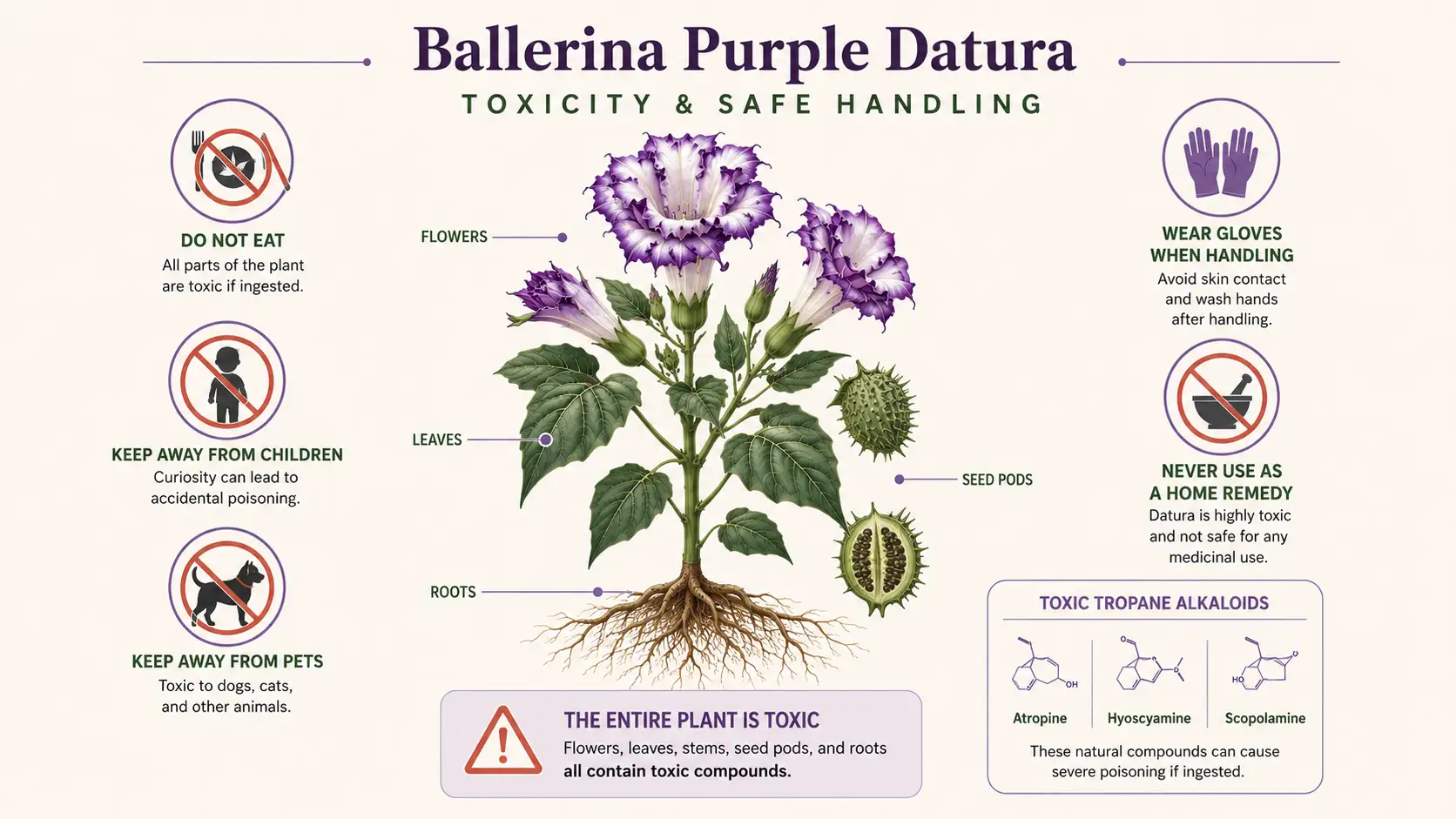
Datura requires much more caution than its attractive flowers might suggest. The plant contains potent tropane alkaloids, including atropine, hyoscyamine, and scopolamine. These compounds occur in different plant organs, and concentrations can vary by species, plant part, developmental stage, and environmental conditions.
Is Datura a Narcotic? Is Datura Toxic?
Datura is highly toxic, and ingestion can cause severe anticholinergic poisoning. It is more accurate to describe its major active compounds as toxic tropane alkaloids than to treat Datura as a conventional recreational “narcotic.”
All major plant organs can contain these compounds. Scientific reviews document atropine, hyoscyamine, and scopolamine in Datura tissues, and poisoning can produce serious neurological and cardiovascular effects.
For this reason:
- Never eat any part of Datura.
- Do not make teas, extracts, or preparations from it.
- Do not smoke or otherwise consume the plant.
- Keep seeds away from children and pets.
- Wash hands after routine handling.
- Do not use Datura medicinally without appropriate professional and regulatory oversight.
Datura in Native American and Traditional Use
Datura species have a long history of traditional and ceremonial use in several cultures. Historical ethnobotanical records describe medicinal, ritual, and culturally significant uses, but these historical practices should not be interpreted as evidence that the plant is safe for modern self-treatment.
The toxicology is especially important because alkaloid concentration can vary considerably among plants and plant parts.
What Do Datura Flowers Symbolize?
Symbolic meanings assigned to Datura vary by culture and historical context. The plant’s association with night, altered states, danger, mystery, and traditional ritual has contributed to symbolic themes such as:
- Transformation
- Dreaming
- Mystery
- Danger
- Deception
- The boundary between beauty and toxicity
These meanings are cultural interpretations rather than botanical characteristics.
Should You Grow Datura at Home? Safety Considerations
Datura can be appropriate for a home garden when its toxicity is understood and the planting location can be managed safely. Its large flowers, fast growth, and unusual double forms make it an effective ornamental plant.
The main reasons to reconsider it are household safety and accessibility.
Datura is less suitable for gardens where:
- Young children can easily access the plant.
- Pets routinely chew garden plants.
- Seeds or fallen plant material could be mistaken for something edible.
- Gardeners cannot reliably distinguish it from edible plants.
The key issue is not that simply having a Datura plant nearby automatically causes poisoning. The major concern is ingestion and unsafe handling of plant material, especially seeds and other tissues containing tropane alkaloids.
Common Ballerina Purple Datura Problems and Fixes
Most Ballerina Purple Datura problems can be traced to insufficient light, inappropriate moisture, temperature stress, poor drainage, or pests.
| Problem | Likely cause | Fix | Prevention |
| No flowers | Insufficient sunlight, cool weather, excess vegetative growth | Increase direct light and correct watering | Grow in full sun |
| Yellow leaves | Overwatering, root stress, nutrient imbalance | Check drainage and soil moisture | Avoid constantly wet soil |
| Whiteflies | Sap-feeding pest infestation | Inspect undersides of leaves and manage early | Regular plant inspection |
| Mealybugs | Sap-feeding insects | Remove visible infestations and treat appropriately | Avoid overcrowding |
| Spider mites | Hot, dry, stressful conditions | Improve plant conditions and monitor foliage | Avoid severe drought stress |
| Stunted growth | Low light, restricted roots, cool temperatures | Improve light and growing conditions | Provide warmth and adequate root space |
| Sudden dieback | Frost or severe root-zone problems | Protect from cold and correct drainage | Prevent freezing and waterlogging |
Datura generally has relatively few serious pest problems, although extension guidance specifically identifies whiteflies, mealybugs, and spider mites as pests that can occur.
Why isn’t my Datura flowering? The first thing to check is sunlight. A plant receiving inadequate direct light may produce leaves without developing the abundant flowering expected from a healthy, sun-grown Datura.
Why are the leaves yellow? Yellow leaves are often associated with excessive moisture and root stress, although underwatering and nutrient problems can also contribute. Check the soil before increasing or decreasing watering.
What kills Datura? Freezing temperatures, prolonged waterlogging, severe root damage, and serious environmental stress can kill a Datura plant.
Regularly checking the foliage for common garden bugs can help you identify pest problems before they cause significant plant stress.
Datura Plant Lifespan
The lifespan of Ballerina Purple Datura depends strongly on climate.
In regions with cold winters, it is normally cultivated as a one-season annual. The plant grows rapidly, flowers during the warm season, produces seeds, and eventually declines when temperatures become unsuitable.
In frost-free climates, Datura may persist for longer and behave more like a short-lived perennial or semi-perennial ornamental depending on the species, growing conditions, and individual plant.
A second-year plant can therefore represent either:
- Survival of the original plant in a warm climate, or
- Germination of self-sown seed from the previous season.
Beginner Mistakes to Avoid With Ballerina Purple Datura
Avoid these common care and safety mistakes:
- Overwatering: Datura needs moisture but does not perform well when roots remain saturated.
- Insufficient sunlight: Full sun is one of the most important conditions for strong flowering.
- Ignoring toxicity: Every part of the plant should be considered poisonous and kept away from children and pets.
- Planting too closely: Crowding reduces airflow and makes pest monitoring more difficult.
- Using a tiny container: Restricted roots can limit growth and increase watering fluctuations.
- Leaving containers exposed to frost: Move potted plants to protection before freezing conditions arrive.
- Assuming all Datura behaves identically: Flowering time, fragrance, size, and persistence vary among species and cultivars.
- Confusing Datura with Brugmansia: Their trumpet-shaped flowers look similar, but they are distinct genera with different growth habits.
Conclusion
Ballerina Purple Datura is a fast-growing ornamental Datura metel cultivar valued for its compact form and distinctive double, ruffled purple flowers. The essential Ballerina Purple Datura care requirements are full sun, fertile well-drained soil, moderate and consistent moisture, adequate root space, and protection from frost. It can perform well in garden beds or large containers, while containers provide greater control over winter protection. The most important consideration is toxicity: Datura contains potent tropane alkaloids throughout the plant and should never be consumed or used as a home remedy.
FAQs
Does Ballerina Purple Datura come back every year?
Ballerina Purple Datura can return for multiple years in sufficiently warm, frost-free climates, but it is generally grown as an annual where winter temperatures cause freezing. New plants may also appear from self-sown seed.
Can Ballerina Purple Datura be grown in pots or indoors?
Yes, Ballerina Purple Datura can be grown in containers, and containers make winter protection easier. Indoor cultivation is possible with very strong light, adequate ventilation, careful watering, and enough root space, although flowering indoors can be less reliable than in full outdoor sun.
Is Datura dangerous to touch or grow at home?
Datura is dangerous primarily because all parts can contain toxic tropane alkaloids and ingestion can cause severe poisoning. Growing it at home requires careful handling, keeping plant material away from children and pets, and never consuming any part of the plant.
Why is my Datura not flowering?
The most common reasons are insufficient sunlight, cool conditions, excessive moisture, or an imbalance that encourages vegetative growth. Moving the plant to a full-sun location and maintaining well-drained soil are important first steps.
How long do Datura blooms last?
Individual Datura flowers are relatively short-lived, but the plant can continue producing new flowers throughout the warm growing season. Flower opening and longevity vary among Datura species and cultivars, so the exact duration should not be assumed to be identical for every variety.
Does Datura self-seed on its own?
Yes. Datura can produce seed capsules containing numerous seeds, and mature capsules can release seeds that germinate around the original plant. This can make an annual plant appear to return the following year even when the original plant has died.