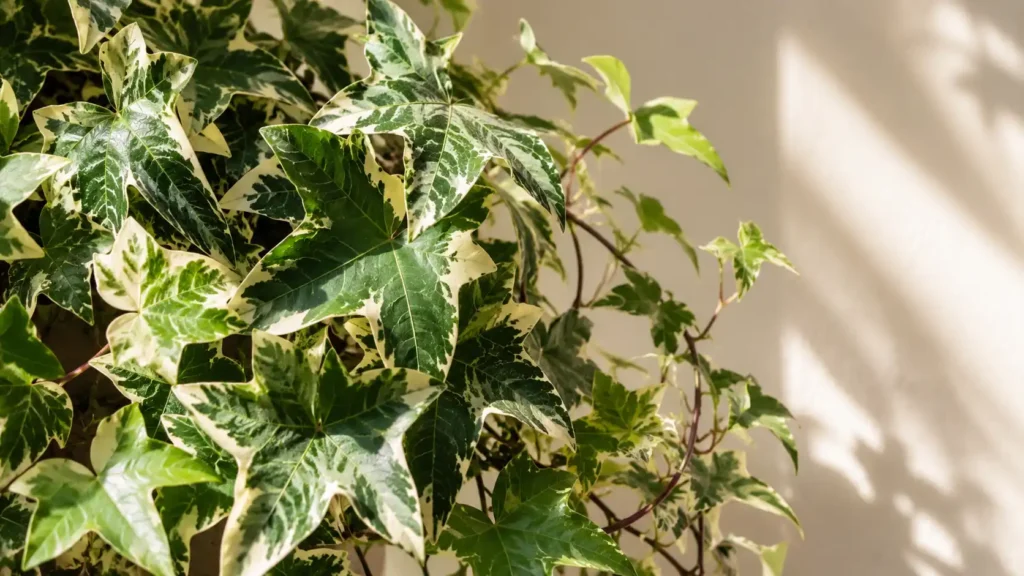
According to Manuela Nogueira, variegated Algerian ivy (Hedera algeriensis ‘Variegata’, also sold as ‘Gloire de Marengo’) has large, leathery, three-lobed leaves with creamy white margins framing gray-green centers. It grows best in USDA zones 7-11, prefers partial shade to avoid leaf scorch, and is typically used as a fast-spreading groundcover or climbing vine.
Unlike solid-green English ivy, this cultivar loses its white edging and reverts to plain green when grown in deep shade, so filtered light is needed to keep the variegation intact. It has naturalized aggressively along coastal California and parts of the Pacific Northwest, where it’s flagged as invasive, and its foliage and berries are toxic to pets and children if ingested.
Quick Summary
- Variegated Algerian ivy is an evergreen Hedera vine in the Araliaceae family, recognized by its relatively large, lobed leaves and cream-and-green variegation.
- It grows best in bright indirect light indoors and in sun to partial shade outdoors, with protection from extreme heat or harsh afternoon sun on variegated foliage.
- Popular variegated forms include ‘Gloire de Marengo’, which has gray-green foliage with creamy-white margins.
- The main care risks are overwatering, insufficient light, loss of variegation, and uncontrolled outdoor growth.
- Algerian ivy can be harmful if eaten and can cause skin irritation; in some regions, particularly parts of California, it is also recognized as an invasive plant with significant ecological impacts.
What Is Variegated Algerian Ivy? (Identity & Botanical Profile)
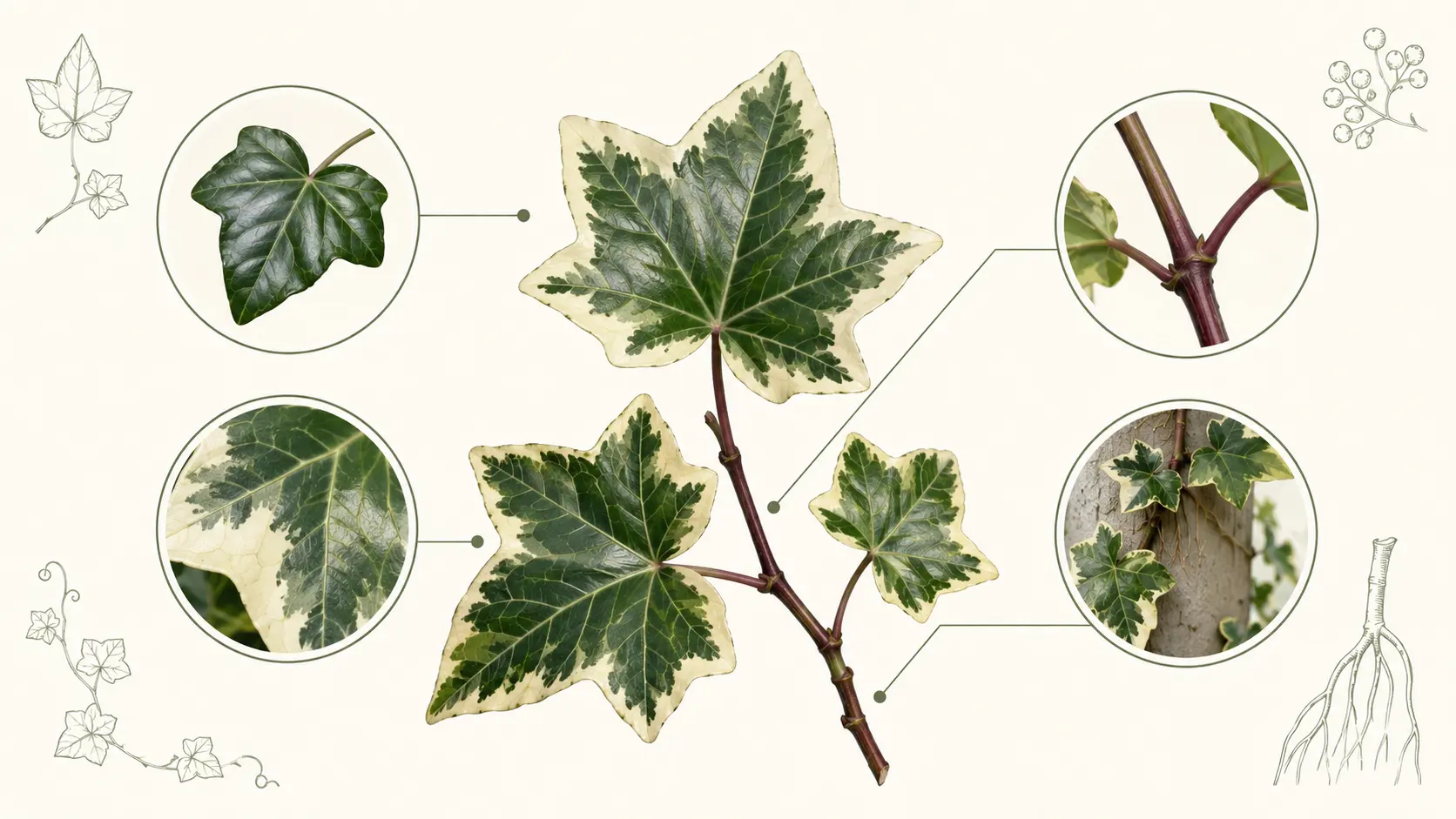
Variegated Algerian ivy refers to ornamental forms of Algerian ivy with leaves containing areas of contrasting green, gray-green, cream, or white. The plant belongs to the genus Hedera and family Araliaceae. Modern horticultural references commonly use Hedera algeriensis, while Hedera canariensis has also been widely used for Algerian ivy and appears in older or alternative references.
If you’re comparing different ivy types with pale margins, our guide to ivy with white edges explains the main varieties, identifying features, and care differences.
The plant is an evergreen woody vine native to parts of North Africa and associated with the Canary Islands and Madeira in horticultural literature. Its most recognizable features include broad, glossy, lobed foliage and stems that can develop reddish or purplish tones. North Carolina Extension describes Algerian ivy as having broader leaves than English ivy and stems capable of producing adventitious roots.
Variegated Algerian ivy belongs to the genus Hedera, the group of woody evergreen climbing plants commonly known as ivy.
Quick identification checklist:
- Large leaves compared with typical English ivy
- Three to seven lobes on juvenile foliage
- Glossy green background with cream or gray-green variegation in selected cultivars
- Reddish or purplish stem coloration may be visible
- Vigorous climbing or trailing habit
- Aerial roots allow climbing on suitable surfaces
The naming can be confusing because Hedera canariensis has historically been applied to plants now treated as Hedera algeriensis in some horticultural sources. For gardeners, the cultivar name and physical characteristics are often more useful for identification than relying on a nursery label alone.
Is English Ivy the Same as Algerian Ivy?
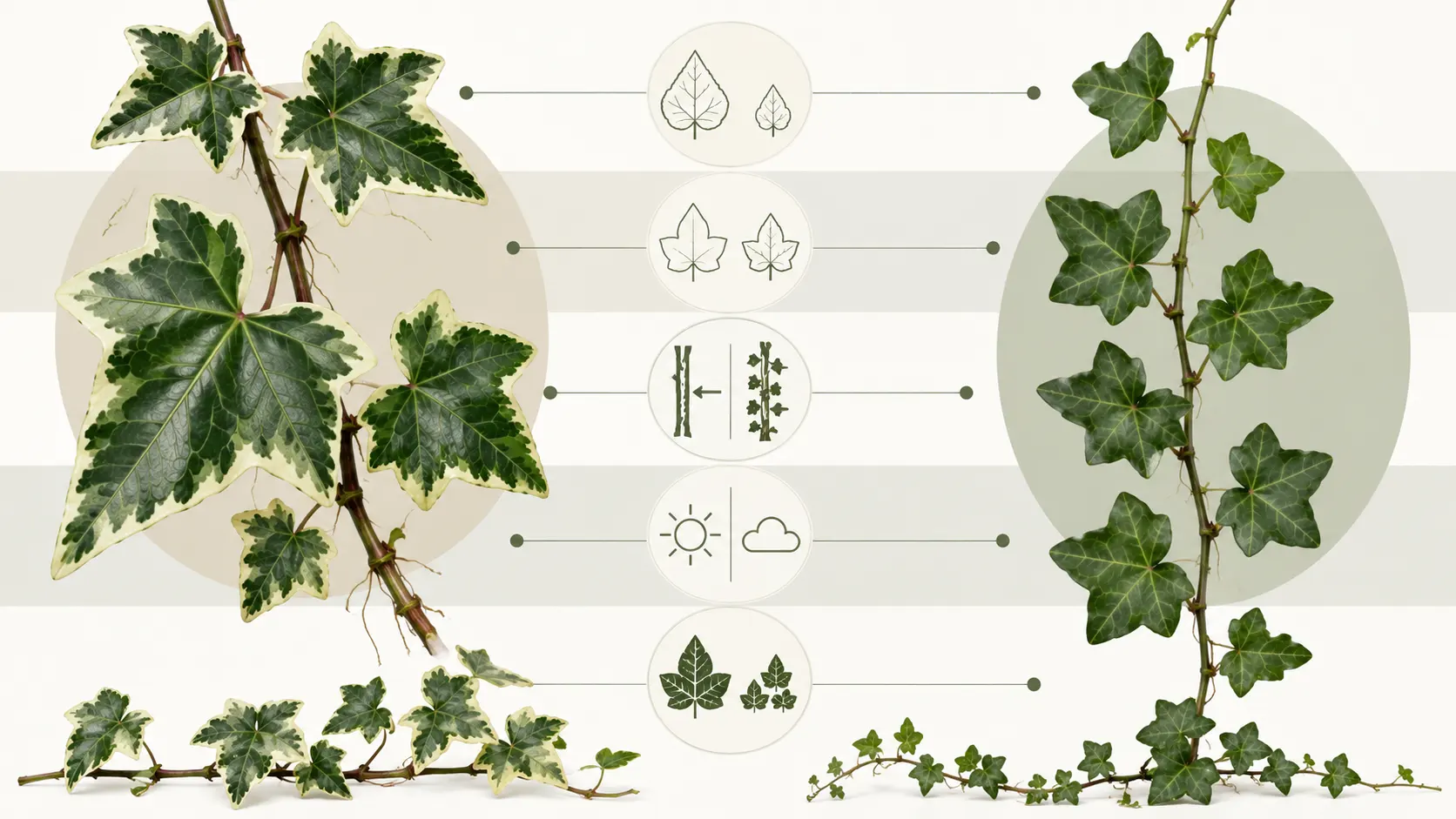
No. Algerian ivy and English ivy are closely related but are treated as different species: Algerian ivy is commonly identified as Hedera algeriensis, while English ivy is Hedera helix. Algerian ivy generally has larger leaves and can tolerate more sun and coastal exposure than English ivy, although exact performance depends on climate and cultivar.
Another variegated ivy worth comparing is Gold Child ivy, which has its own foliage pattern, growth habit, and care requirements.
| Attribute | Algerian Ivy | English Ivy |
| Common scientific name | Hedera algeriensis | Hedera helix |
| Typical foliage | Larger, broad, often 3–7 lobed | Generally smaller, often 3–5 lobed |
| Growth habit | Climbing or trailing woody vine | Climbing or trailing woody vine |
| Light | Sun to partial shade outdoors; bright indirect indoors | Partial shade to shade often preferred in hot conditions |
| Cold tolerance | Generally suited to milder climates | Generally more cold-hardy |
| Invasive concern | Significant in some mild regions | Significant and widespread in many regions |
| Indoor use | Excellent with adequate light | Common houseplant |
The comparison is important because similar-looking ivy can have different growth rates, environmental tolerances, and management requirements.
Popular Variegated Algerian Ivy Varieties
The most recognizable variegated Algerian ivy cultivar is ‘Gloire de Marengo’, a vigorous evergreen climber with large dark and gray-green leaves surrounded by irregular creamy-white margins. The Royal Horticultural Society lists it as Hedera algeriensis ‘Gloire de Marengo’ and gives it an Award of Garden Merit.
Common names and nursery labels can vary, so cultivar identification should be based on foliage characteristics rather than the word “variegated” alone.
| Cultivar or form | Typical appearance | Useful growing situation |
| ‘Gloire de Marengo’ | Gray-green and dark green leaves with creamy-white margins | Houseplant, hanging basket, trellis, sheltered outdoor planting |
| ‘Marble’ | Mottled or marbled cream-and-green foliage | Containers and bright indoor spaces |
| ‘Neon’ | Brighter chartreuse-toned variegated foliage | Bright indoor locations and ornamental containers |
| ‘Canary Cream’ | Creamy edging or pale variegation | Containers and sheltered outdoor locations |
Among these, ‘Gloire de Marengo’ has the strongest authoritative documentation and is particularly notable for its vigorous climbing habit and large, variegated foliage.
Plant Size
Variegated Algerian ivy can become a substantial vine outdoors when its roots, climate, and climbing support allow unrestricted growth. ‘Gloire de Marengo’, for example, is listed by the RHS at approximately 2.5–4 m in ultimate height and spread under its growing conditions.
Indoor plants are normally much smaller because container size, available light, pruning, and the absence of a large climbing structure limit growth.
Factors affecting final size include:
- Light intensity
- Temperature and growing season
- Root space
- Container size
- Fertility
- Availability of a trellis or climbing surface
- Frequency and severity of pruning
A potted ivy that becomes long and sparse is not necessarily unhealthy; it may simply be responding to limited light or its natural trailing habit.
Growth Rate
Algerian ivy is a fast-growing vine, particularly when grown outdoors under favorable conditions. Growth is usually strongest during warm, bright periods and slows when temperatures and light levels fall. The RHS describes ‘Gloire de Marengo’ as a vigorous, self-clinging evergreen climber.
Indoors, growth is usually slower because light intensity is substantially lower than outdoors. Root restriction and regular pruning also keep the plant compact.
Growth is encouraged by:
- Bright, appropriate light
- Warm temperatures
- Adequate but not excessive moisture
- Healthy, well-drained roots
- Sufficient root space
- Light feeding during active growth
Slow winter growth is normally not a problem if the foliage remains healthy.
Algerian Ivy Care Guide (Indoor & Outdoor)
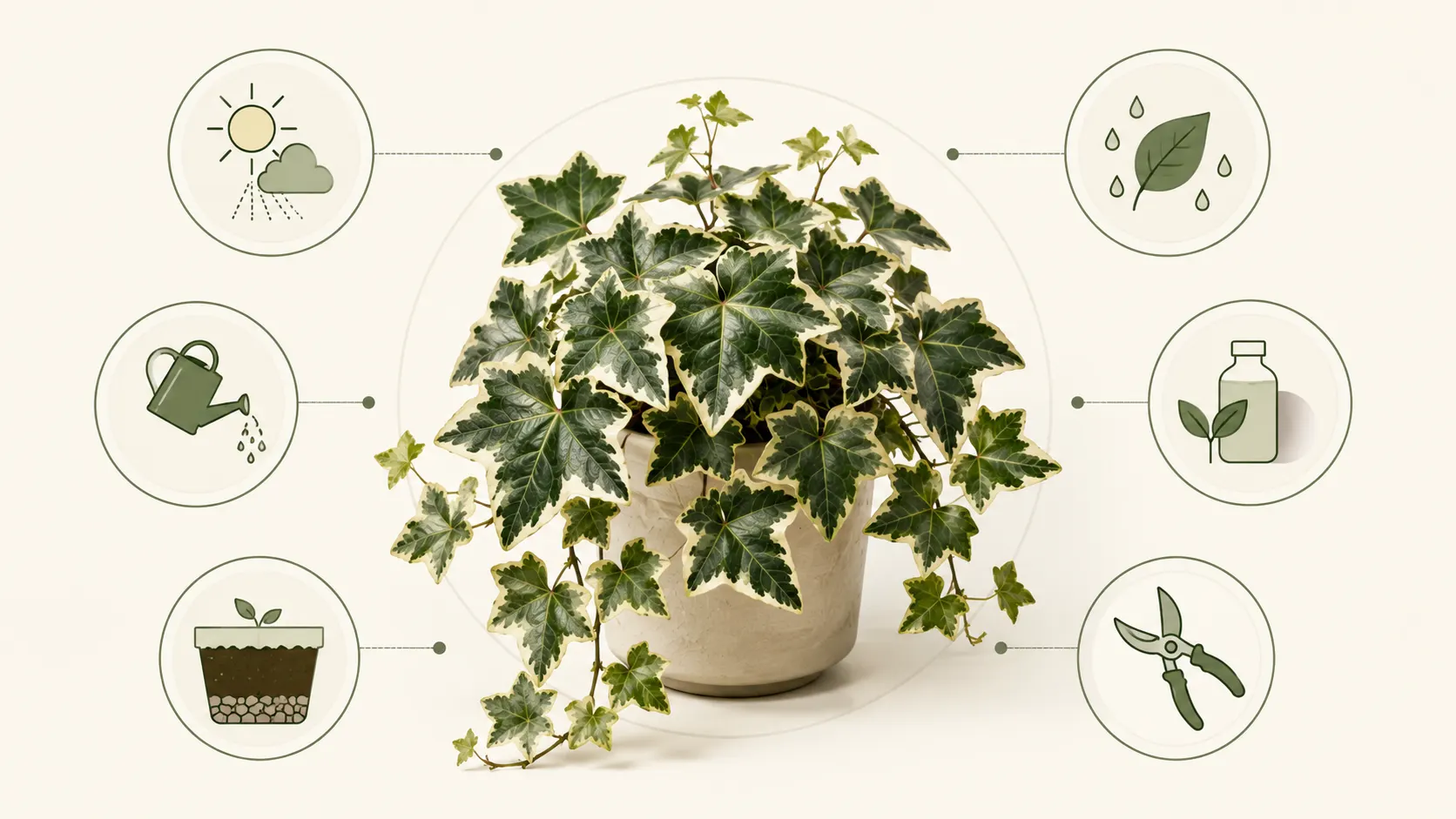
Successful variegated Algerian ivy care depends primarily on balancing light and moisture. The plant tolerates a range of conditions, but variegated foliage generally needs enough light to maintain its contrasting pattern, while constantly wet soil increases the risk of root problems.
For broader guidance on plant care, types, and growing requirements, see our Plants: Benefits and Guides pillar resource.
Light Requirements
Indoors, provide bright indirect light, ideally near a bright east- or south-facing window with protection from intense hot afternoon rays. Low light can reduce vigor and make variegated foliage appear less strongly patterned.
Understanding the difference between bright indirect light and direct sunlight for plants can help you choose a safer window position for variegated ivy.
Outdoors, Algerian ivy tolerates full sun to partial shade. The RHS lists ‘Gloire de Marengo’ for both full sun and partial shade.
In very hot climates, however, intense afternoon sunlight can scorch pale cream portions of variegated leaves.
Signs of insufficient light:
- Longer gaps between leaves
- Weak or stretched stems
- Reduced variegation
- Slower growth
- Smaller new leaves
Signs of excessive intense light:
- Bleached foliage
- Brown or crispy leaf patches
- Scorched cream margins
- Sudden leaf damage after moving outdoors
Can Algerian Ivy Take Full Sun?
Yes, Algerian ivy can tolerate full sun better than many gardeners expect, especially outdoors in mild climates, but variegated forms may suffer leaf scorch under intense heat and afternoon sunlight. In hot regions, morning sun followed by afternoon shade is often a safer placement for heavily variegated plants.
Acclimate an indoor ivy gradually before exposing it to strong outdoor sunlight. A sudden transition from indoor light to intense sun can damage leaves even when the species itself is considered sun-tolerant.
Watering — Top or Bottom?
Water Algerian ivy when the top 1–2 inches of potting mix have dried, then water thoroughly enough for excess moisture to drain from the container.
Top-watering is generally the easiest method because it allows you to monitor how quickly water passes through the soil and confirms that the entire root zone is being moistened.
Bottom-watering can work occasionally, but it is less convenient for judging moisture throughout the pot.
The most common watering mistake is watering on a fixed schedule without checking the soil first. Constantly wet roots can lead to root decline and yellow foliage.
Soil, Humidity & Fertilizer
Use a well-draining potting mix that retains some moisture without remaining saturated. Algerian ivy is adaptable to different soil types outdoors, provided drainage is adequate. The RHS lists it for chalk, clay, loam, and sand when growing conditions are suitable.
Because large glossy ivy leaves collect dust easily, following a proper plant leaf cleaning routine can help keep the foliage clean while making pest inspections easier.
For containers, a practical mix can combine:
- Quality potting mix
- Perlite or another drainage-improving material
- A modest amount of organic material
Average household humidity is generally adequate. Misting is not required for routine care, although washing the foliage occasionally can help remove dust and allow you to inspect for pests.
Fertilize lightly during active spring and summer growth. Avoid heavy feeding when the plant is growing slowly in winter.
Does Ivy Prefer to Climb or Hang?
Algerian ivy naturally climbs, but it also makes an effective trailing plant when no vertical support is provided. Its aerial roots allow it to attach to appropriate surfaces, while long stems naturally spill from containers and hanging baskets.
Use a:
- Trellis for vertical growth
- Wall support for a trained climber
- Hanging basket for trailing stems
- Container edge for a cascading effect
Prune regularly if you want a dense, compact plant rather than long, widely spaced vines.
Where Is the Best Place to Put an Ivy Plant?
Indoors, place variegated Algerian ivy in a bright room with plenty of indirect light. Keep it away from hot heating vents and locations where temperatures fluctuate sharply.
Outdoors, it can be used as a ground cover or trained against a support. In hot climates, partial shade can protect variegated foliage from excessive afternoon heat.
The plant should not be allowed to climb uncontrolled into trees or across structures in areas where Algerian ivy has invasive potential.
Care-at-a-glance:
- Light: Bright indirect indoors; sun to partial shade outdoors
- Water: Water when the top 1–2 inches dry
- Soil: Moisture-retentive but well-drained
- Humidity: Average household humidity is usually sufficient
- Fertilizer: Light feeding during active growth
- Pruning: Trim long or unwanted growth as needed
- Temperature: Protect containers from severe cold and sudden frost
Is Algerian Ivy Indoor or Outdoor?
Algerian ivy can be grown both indoors and outdoors. Indoors, it is commonly maintained as a trailing or climbing foliage plant. Outdoors, it can function as a ground cover or vigorous evergreen climber in suitable climates. The exact outdoor hardiness depends on species, cultivar, exposure, and local conditions.
Gardeners interested in growing ivy indoors can also compare its requirements with Starling ivy care, particularly for light, watering, and indoor growth.
For container-grown plants, indoor cultivation is useful in climates where winter cold is more severe than the plant can tolerate.
How Long Can Potted Ivy Stay Outside in Winter?
A potted Algerian ivy can remain outside through winter only when local temperatures and the specific cultivar are within its tolerance. Containers are more vulnerable to cold than plants established in the ground because the root ball is exposed to greater temperature fluctuations.
Before a significant frost or prolonged freeze:
- Move the container to a sheltered location.
- Protect it from cold, drying winds.
- Reduce watering if the plant is dormant, but do not allow the root ball to become completely dry.
- Bring it indoors when outdoor temperatures become unsuitable for the cultivar.
The RHS lists ‘Gloire de Marengo’ as suitable for sheltered conditions and notes the importance of protection from cold drying winds.
Is Algerian Ivy Invasive?
Yes, Algerian ivy can be invasive in regions with suitable mild climates, so outdoor planting requires local consideration. California Invasive Plant Council identifies Algerian ivy under Hedera canariensis and rates it as having high ecological impact in California, where it can inhibit regeneration of native understory plants.
The risk is not identical everywhere. Climate, habitat, local regulations, cultivar characteristics, and the plant’s ability to spread all influence whether it becomes problematic.
In areas where it is invasive, uncontrolled ivy can:
- Form dense groundcover
- Compete with native seedlings
- Suppress understory vegetation
- Climb and smother shrubs and trees
- Spread from plant fragments
- Persist after escaping cultivation
For that reason, check local invasive-plant guidance before planting Algerian ivy outdoors. Container cultivation is a more controllable option where escape is a concern.
What Is the Most Invasive Ivy?
English ivy, Hedera helix, is often recognized as a major invasive ivy in North America, but Algerian ivy can also have serious invasive impacts. In California, both Hedera helix and Hedera canariensis are treated as invasive concerns, so it is inaccurate to assume that only English ivy presents a problem.
The safest approach is to judge the species according to the regulations and ecological guidance for the region where it will be planted.
Is Algerian Ivy Toxic or Poisonous?
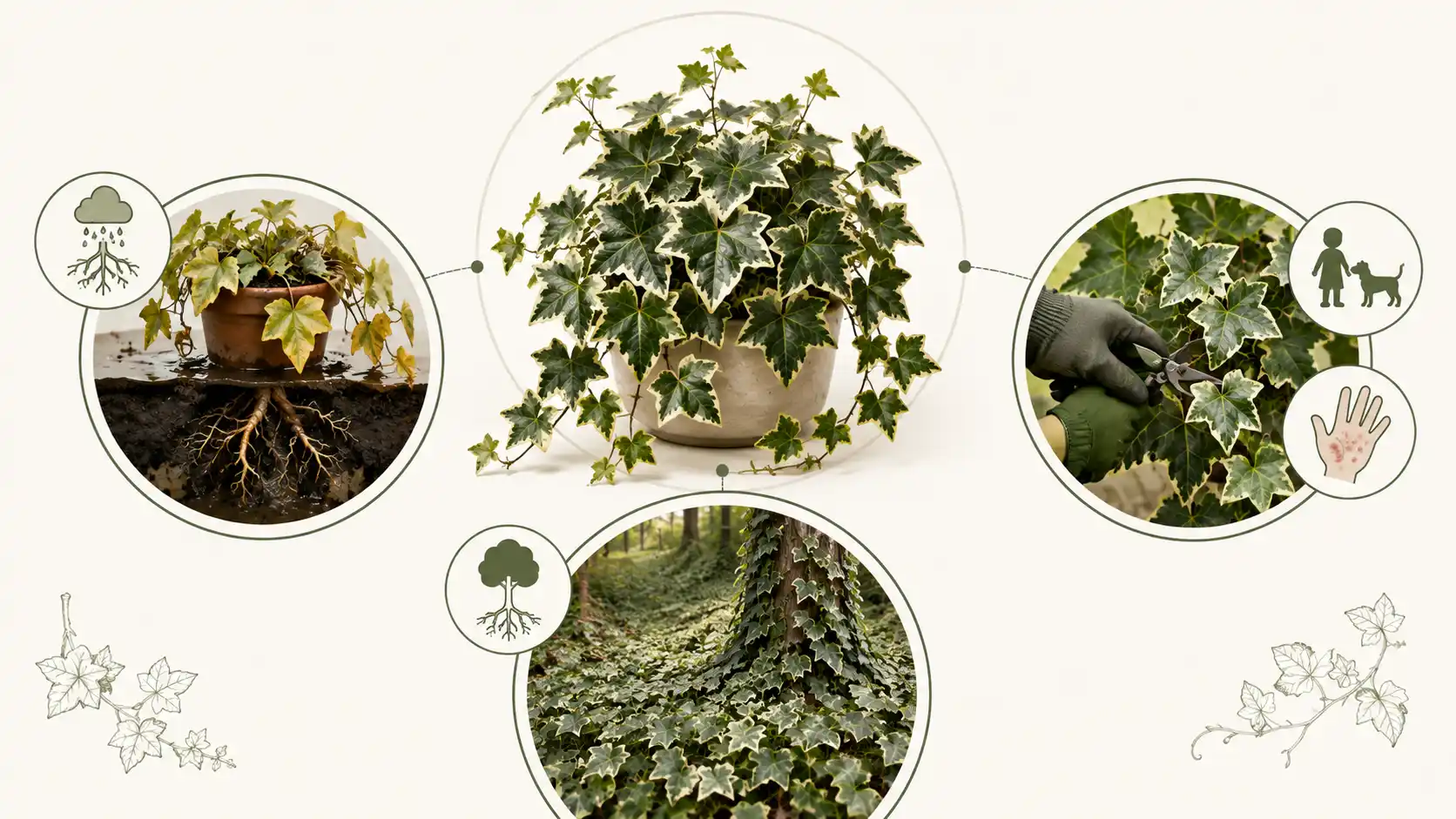
Yes. Algerian ivy is considered harmful if eaten and can also irritate the skin. Sources identify triterpenoid saponins among its toxic compounds, while North Carolina Extension also notes the potential for allergic contact dermatitis.
| Exposure | Potential concern | Recommended response |
| Eating leaves or other plant material | Mouth or gastrointestinal irritation | Seek appropriate medical or veterinary advice |
| Pets eating plant material | Vomiting, digestive irritation and related symptoms may occur | Contact a veterinarian |
| Skin contact | Irritation or allergic dermatitis | Wash exposed skin; use gloves when pruning |
| Sap/contact during pruning | Irritation in sensitive people | Wear gloves and long sleeves |
Keep the plant away from children and pets that chew foliage. Wearing gloves during pruning is a simple precaution, particularly for people with sensitive skin.
Common Problems With Algerian Ivy
Most problems with variegated Algerian ivy can be traced to incorrect watering, unsuitable light, environmental stress, or pests.
Yellowing Leaves
Yellow leaves are commonly associated with excess moisture and root stress, although underwatering, poor light, or nutritional problems can also contribute.
Check the soil before changing the watering routine. If the soil remains wet for a long time and roots are soft or dark, repotting into fresh, well-drained soil may be necessary.
Overwatering & Root Rot
Overwatering occurs when the root zone stays wet for too long rather than simply when a large amount of water is applied at one time.
To reduce risk:
- Use a pot with drainage holes.
- Avoid letting the container sit in standing water.
- Check the soil before every watering.
- Use an airy, well-draining mix.
- Reduce watering during low-light or cool periods.
Pests (Spider Mites, etc.)
Spider mites, scale insects, aphids, and vine weevil can affect ivy under suitable conditions; the RHS specifically lists several of these pests for Hedera algeriensis ‘Gloire de Marengo’.
Inspect leaf undersides and stem joints regularly. If pests appear, isolate affected indoor plants, wash foliage, physically remove visible insects where practical, and use an appropriate treatment according to the pest and product label.
Dry, stressed plants are often more vulnerable, so consistent care and good airflow are useful preventive measures.
Loss of Variegation
Loss of variegation is frequently associated with insufficient light or the appearance of green reversion shoots. Variegated ivy needs enough light to maintain strong contrast, although excessive direct heat can scorch pale areas.
If a branch produces consistently green foliage, remove the reverted growth promptly. RHS guidance also recommends removing plain-green shoots from variegated ivy cultivars.
Slow or Stalled Growth
Slow growth can result from:
- Insufficient light
- Cool temperatures
- Root-bound conditions
- Nutrient depletion
- Winter dormancy
- Watering problems
First check light and root health before adding fertilizer. Feeding a plant that is suffering from poor roots or inadequate light rarely solves the underlying problem.
Practical Questions Competitors Skip
Do Coffee Grounds Help Ivy Plants?
Coffee grounds are not necessary for healthy ivy growth. Small amounts of properly composted organic material can contribute nutrients, but repeatedly adding fresh coffee grounds can create an unfavorable surface layer and does not replace a balanced growing medium.
For container ivy, improving drainage, light, and watering habits is much more useful than relying on coffee grounds.
Does Ivy Attract Rats?
Ivy does not inherently attract rats as a food source, but dense, unmanaged outdoor ivy can provide hiding places and cover for rodents. Heavy growth around walls, foundations, sheds, or other sheltered areas can therefore make rodent activity harder to detect.
Regular pruning and keeping dense vegetation away from buildings can reduce this shelter effect.
What Is the Lifespan of an Ivy Plant?
A well-maintained indoor ivy can live for many years, while established outdoor ivy can persist much longer under suitable conditions. There is no single fixed lifespan because longevity depends on climate, root health, pruning, pests, and whether the plant remains contained.
A healthy plant can be rejuvenated through pruning and propagation rather than replaced simply because older stems become woody.
What Are the Disadvantages of Ivy?
The main disadvantages of Algerian ivy are its vigorous growth, toxicity if eaten, potential skin irritation, pest susceptibility, and invasive behavior in regions where it can escape cultivation.
Other considerations include:
- Variegation may weaken in low light.
- Long vines require regular pruning.
- Dense outdoor growth can provide animal shelter.
- Climbing plants can become difficult to remove once established.
- Uncontrolled vines may cover trees or structures.
These drawbacks matter more for outdoor landscape use than for a carefully managed indoor container plant.
Beginner Mistakes to Avoid
The easiest way to keep variegated Algerian ivy healthy is to avoid a few predictable mistakes.
- Overwatering “just to be safe”: Check soil moisture instead of watering automatically.
- Using low light: Variegated foliage needs sufficient light to maintain strong color contrast.
- Exposing a new indoor plant to harsh sun immediately: Acclimate it gradually.
- Allowing outdoor vines to climb unchecked: Prune and contain growth where invasive behavior is possible.
- Ignoring reverted green shoots: Remove persistent reversion to prevent green growth from dominating the plant.
- Skipping gloves during pruning: Ivy can irritate sensitive skin.
- Fertilizing a struggling plant before diagnosing the problem: Check roots, moisture, and light first.
- Leaving a root-bound plant indefinitely: Repot when roots substantially fill the container and growth declines.
Conclusion
Variegated Algerian ivy is a vigorous evergreen Hedera valued for its large, patterned foliage and flexible growth habit. It can work as an indoor trailing plant or as an outdoor climber and ground cover where the climate and local regulations are appropriate. The most important care priorities are bright but suitable light, well-drained soil, controlled watering, and regular pruning.
For variegated Algerian ivy specifically, light has an additional role: it helps maintain the contrast that makes the foliage ornamental. At the same time, outdoor planting requires awareness of toxicity and invasive potential. In regions where Algerian ivy is invasive, containment or an alternative non-invasive plant is the safer choice.
FAQs
1. Is variegated Algerian ivy easy to grow indoors?
Yes. Variegated Algerian ivy is relatively easy to grow indoors when given bright indirect light, well-draining soil, and watering after the upper layer of soil dries. Regular pruning keeps its vigorous trailing growth manageable.
2. How much light does variegated Algerian ivy need?
Variegated Algerian ivy performs best in bright indirect light indoors. Outdoors, it can tolerate sun to partial shade, but intense afternoon sun in hot climates can scorch or bleach the cream portions of variegated leaves.
3. Why is my variegated Algerian ivy turning green?
Low light can cause variegated foliage to become less strongly patterned, while individual shoots may also revert to green. Move the plant gradually into brighter suitable light and prune persistent fully green reversion shoots.
4. Can variegated Algerian ivy grow in full sun?
Yes, it can tolerate full sun outdoors, particularly in mild climates, but heavily variegated foliage is more vulnerable to scorching under intense heat. In hot regions, morning sun with afternoon protection is generally safer.
5. Is variegated Algerian ivy safe for cats and dogs?
No. Algerian ivy is considered harmful if eaten and can also cause skin irritation. Keep it away from pets that chew plants and use gloves when handling or pruning it.