
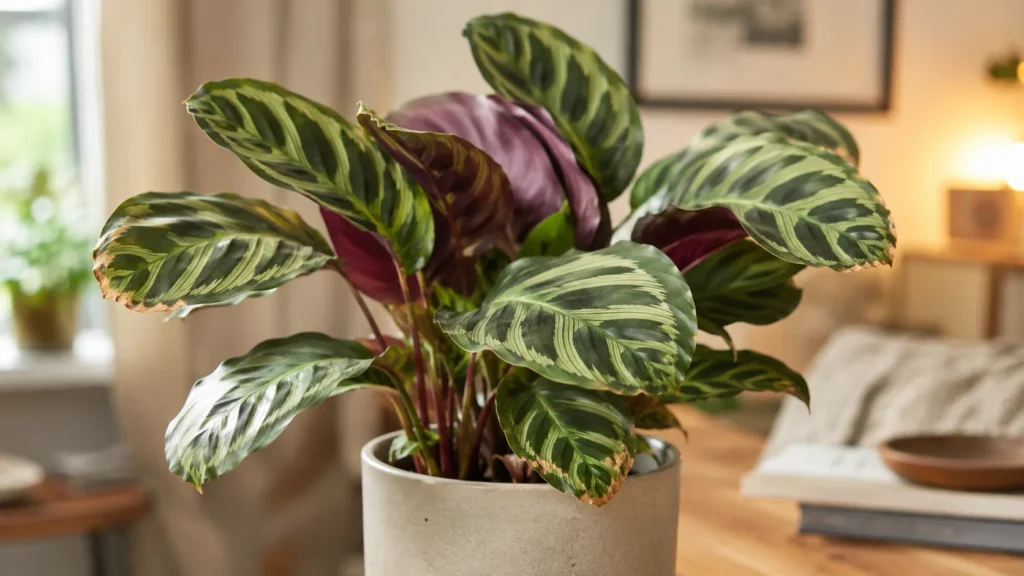
According to Manuela Nogueira, brown leaf tips on calathea plants are most often caused by low humidity, tap water fluoride and chlorine, or inconsistent watering. She recommends watering with distilled or filtered water, keeping humidity above 50%, and trimming affected tips at an angle to preserve the leaf’s natural shape.
Nogueira notes that overfertilizing can mimic the same symptom by causing salt buildup in the soil, so flushing the pot with water every few months helps prevent this. Brown tips rarely reverse, but new growth typically emerges healthy once the underlying cause is corrected.
Quick Summary
- Brown tips are usually caused by a combination of tap water minerals/chlorine, low humidity, inconsistent watering, or fertilizer salt buildup — rarely just one factor alone.
- Existing brown tissue is dead. You can’t reverse it, only prevent new tips from developing it.
- Trim only the dead brown portion when possible; if removing whole leaves, stay under roughly 25–30% of total foliage at once.
- Orbifolia, Ornata, and Lancifolia brown more easily than Freddie or Roseopicta — this can be a varietal trait, not a sign you’re doing something wrong.
Calathea is specifically named among the houseplant genera most sensitive to fluoride buildup from tap water, which is why water quality is one of the first things to rule out.
Where Is the Brown, and What Does It Look Like?
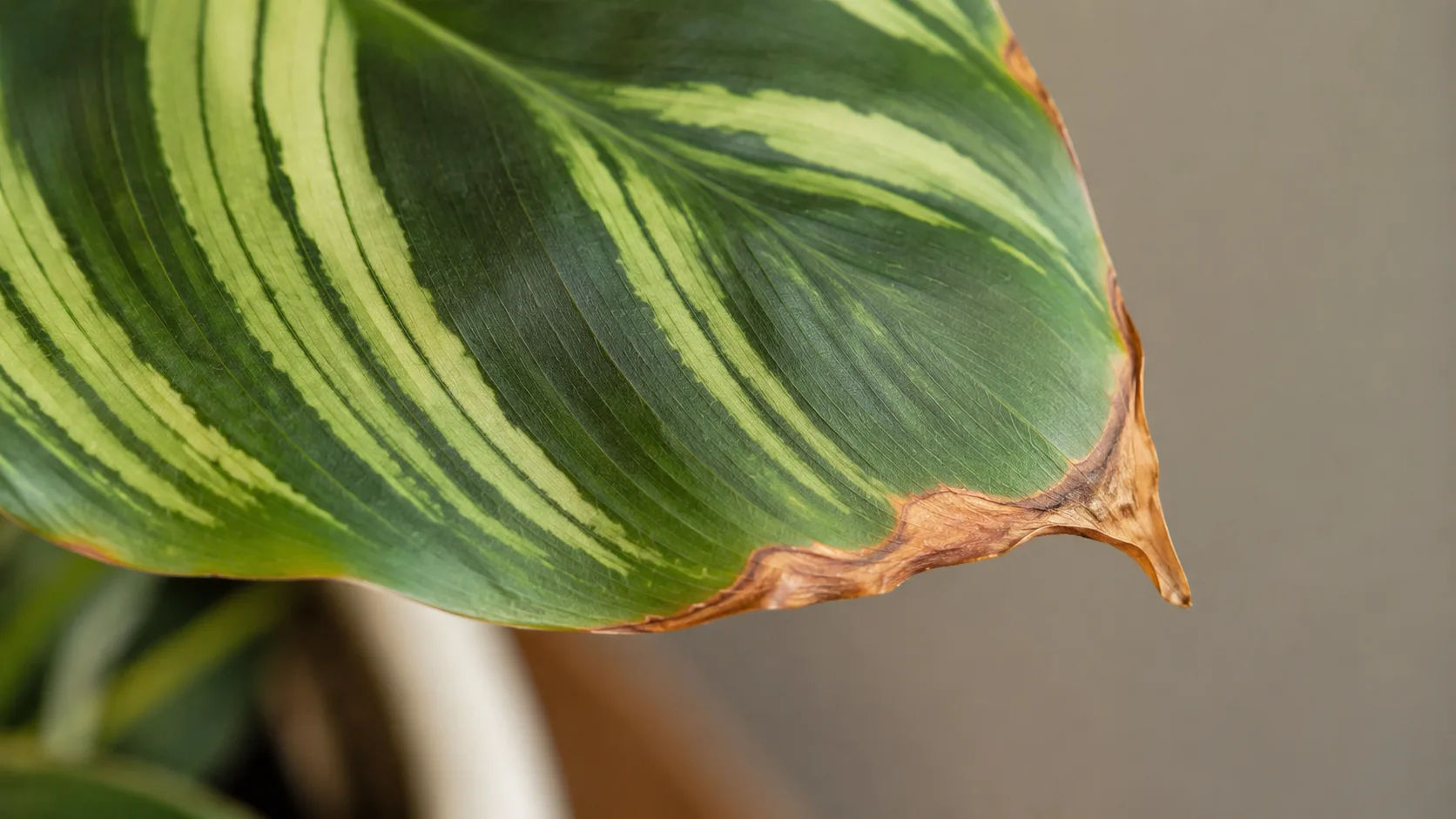
Before treating anything, it helps to identify exactly what pattern you’re seeing, since different patterns point to different causes.
Dry, crispy tips or a thin brown outline along the edge is the classic sign, and it’s most often tied to water quality or humidity. Here’s why tips are affected first: as a Calathea moves water up from the roots, minerals and salts travel with it and concentrate wherever water evaporates last — which is the leaf tip, the farthest point from the root system. Chlorine, fluoride, and dissolved mineral salts build up there faster than anywhere else on the plant, damaging the tissue before symptoms appear elsewhere.
Soft, mushy, or dark brown patches that aren’t confined to the tip are a different problem entirely — usually overwatering, cold damage, or early root rot, not a water-quality issue.
Isolated brown spots in the leaf interior, especially with a yellow halo, typically point to fungal or bacterial spotting or sunburn rather than the tip-browning issue this article focuses on.
| Symptom Pattern | Location | Accompanying Signs | Most Likely Cause |
| Thin, crispy brown edge | Tip/margin | Curling, dry texture | Water quality / low humidity |
| Soft, dark patches | Anywhere on leaf | Mushy stems, yellowing | Overwatering / root rot |
| Isolated round spots | Leaf interior | Yellow halo, spreading | Fungal/bacterial disease |
| Pale or bleached patches | Sun-facing side | Crispy, papery texture | Direct sun/heat scorch |
| Fine white webbing | Leaf undersides | Tiny moving dots | Spider mites |
What’s Actually Causing the Browning?
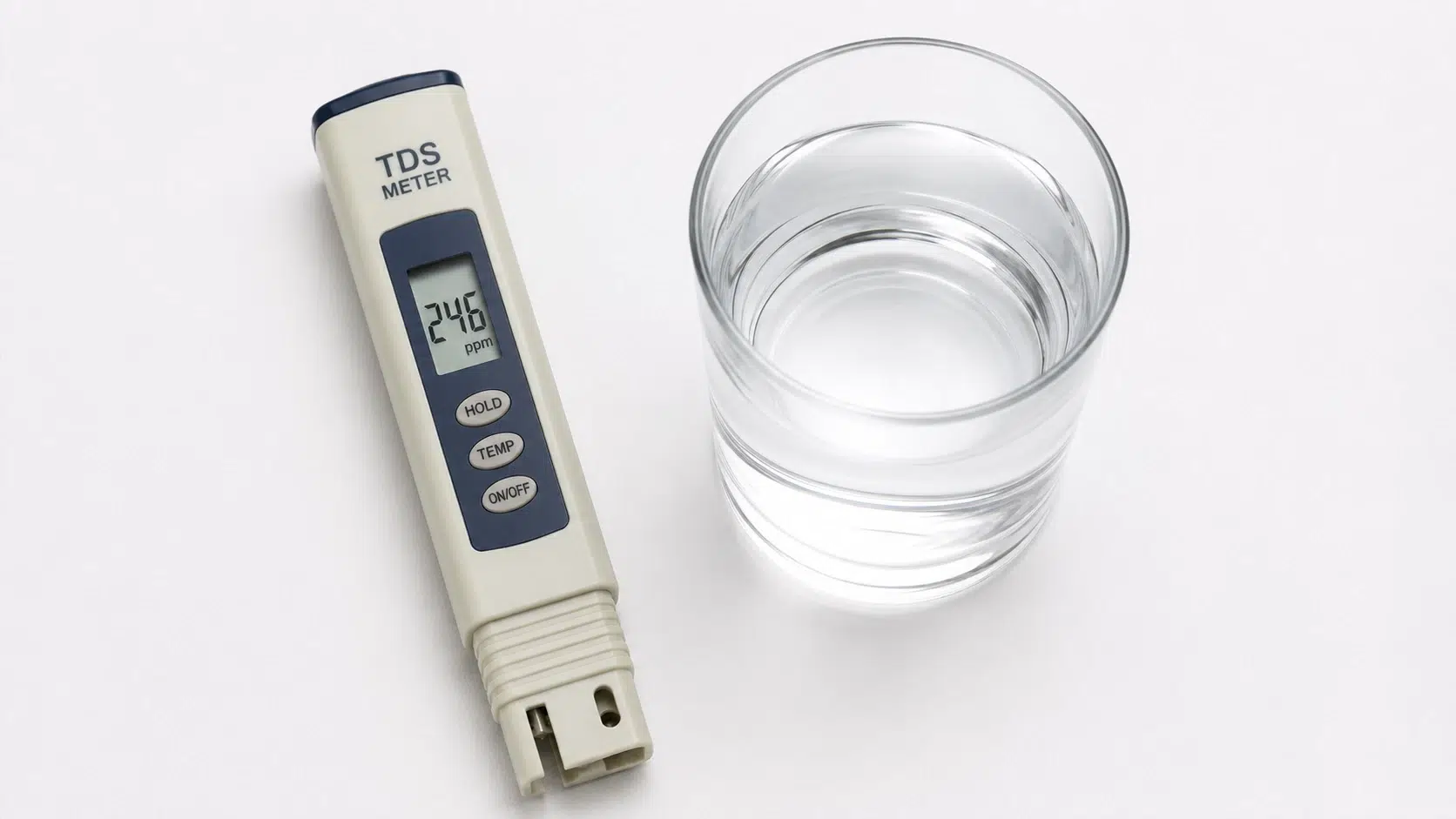
Tap water minerals, chlorine, and fluoride are the most frequently cited cause, and the translocation-distance explanation above is why tips show it first — they’re essentially where the plant’s water “runs out” and leaves its dissolved salts behind. University research on fluoride sensitivity in houseplants supports this pattern, showing tip and margin necrosis as the characteristic symptom of fluoride accumulation in sensitive species.
Low or inconsistent humidity compounds the problem. Calatheas are native to humid tropical understories, and most homes sit well below the 50–60% humidity range they prefer, especially in winter with heating running.
Inconsistent watering — letting the soil fully dry out, then overcorrecting with a heavy soak — stresses the plant’s ability to regulate water evenly, showing up as tip damage over time.
Fertilizer salt buildup accumulates in the soil with regular feeding and, like tap water minerals, concentrates at the leaf tips.
Direct sun or heat exposure, including proximity to heating vents or radiators, dries leaf margins faster than the plant can compensate for.
Is It Something More Serious?
Most brown-tip cases are environmental, but a few signs suggest you’re dealing with something else:
- A mushy, foul-smelling base or stem — likely root rot, not tip browning.
- Rapid, whole-leaf collapse rather than gradual tip/edge browning.
- Visible pests or fine webbing on leaf undersides.
If you see any of these, the fix is different from the water/humidity adjustments below — root rot needs repotting and root inspection, and pests need targeted treatment. If you spot pests in the soil rather than on the leaves, our guide to bugs in indoor plant soil will help you identify and treat them.
How to Fix It
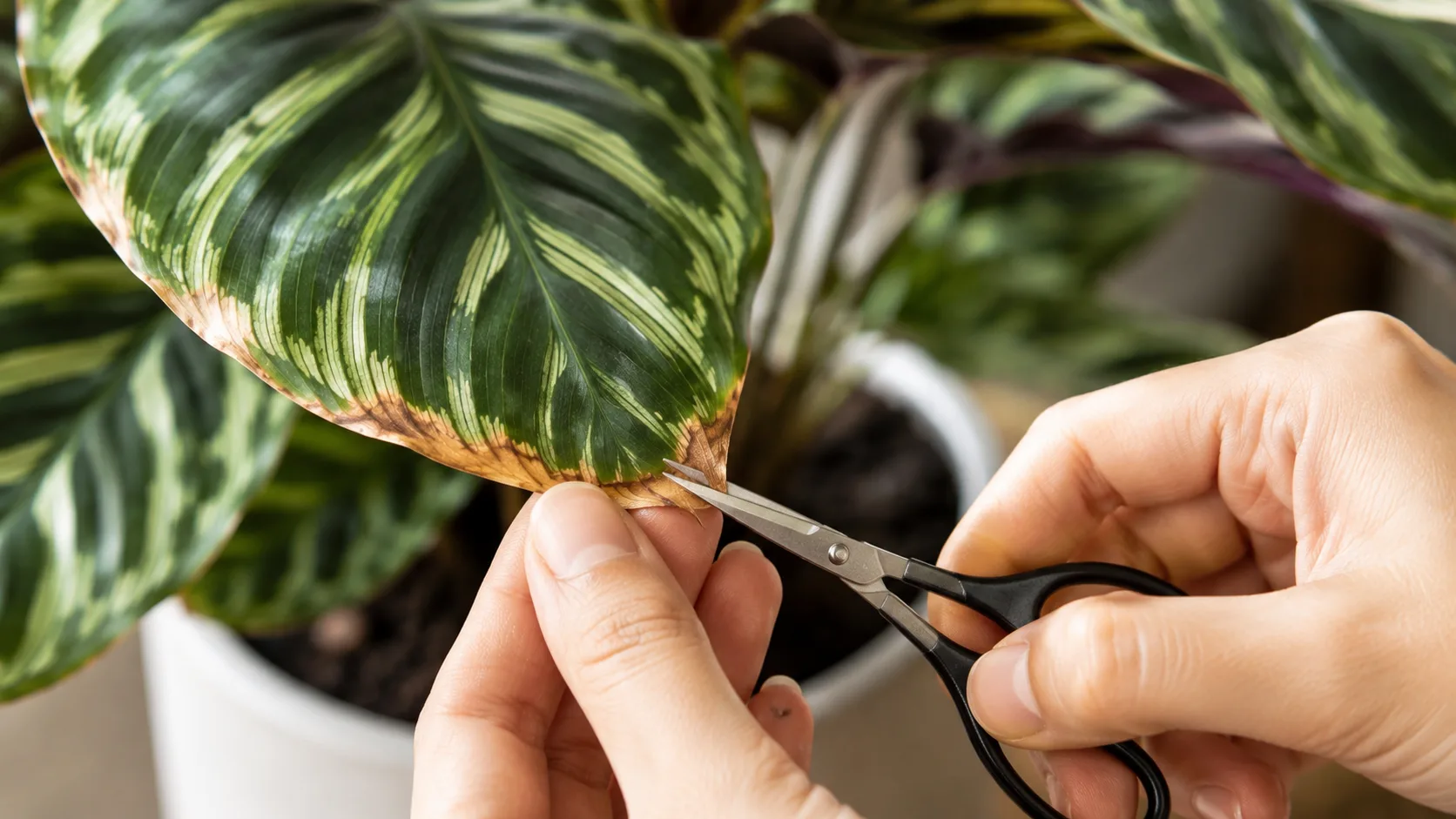
Should you cut off brown tips? Trim only the dead, brown tissue itself when you can, following the natural leaf shape rather than cutting straight across. If a leaf is more brown than green, remove the whole leaf — but cap total removal at roughly a quarter of the plant’s foliage at any one time. Competing sources online disagree here, with some suggesting up to a third of foliage is safe to remove at once. A more conservative quarter-of-foliage limit is the safer reasoning: removing too much at once strips away photosynthetic capacity faster than new growth can replace it, which shocks the plant rather than helping it recover. For a full walkthrough of pruning technique and tools, see our guide on how to prune a prayer plant — Calathea belongs to the same Marantaceae family and follows the same method.
A simple water-prep routine makes a measurable difference. Tap water left out uncovered overnight lets some chlorine evaporate — low effort, low cost, but only a partial fix for fluoride and mineral salts. Distilled water is the most reliable option and eliminates the mineral issue entirely, at a higher ongoing cost. Rainwater is free and ideal but not always practical to collect consistently. A filtered pitcher sits in the middle — moderate cost and effort, and a meaningful improvement over straight tap water.
Fixing humidity has a similar tradeoff curve. A humidifier is the most effective and consistent option but requires the most upfront cost and maintenance. A pebble tray under the pot raises humidity modestly around the plant for near-zero cost but needs regular topping up. Misting offers a brief, temporary boost but doesn’t meaningfully change the surrounding air over time. If a humidifier isn’t an option right now, our guide on how to increase humidity for indoor plants without a humidifier covers other realistic ways to close the gap. Penn State Extension’s research confirms pebble trays and misting have minimal real-world effect on relative humidity, since the evaporated moisture diffuses into the whole room rather than staying concentrated around the plant.
Recovery Timeline — What to Expect
Existing brown tissue will not turn green again, so don’t judge progress by old leaves. Instead, watch new growth. In the first 1–2 weeks after correcting water and humidity, expect little visible change — the plant is adjusting. By weeks 3–6, new leaves should emerge with less or no tip browning if the underlying cause has actually been addressed. Occasional minor tip browning on older leaves is normal and not a sign of failure; a pattern of worsening browning across multiple new leaves means it’s worth reassessing your setup.
Do Some Calathea Varieties Brown More Easily?
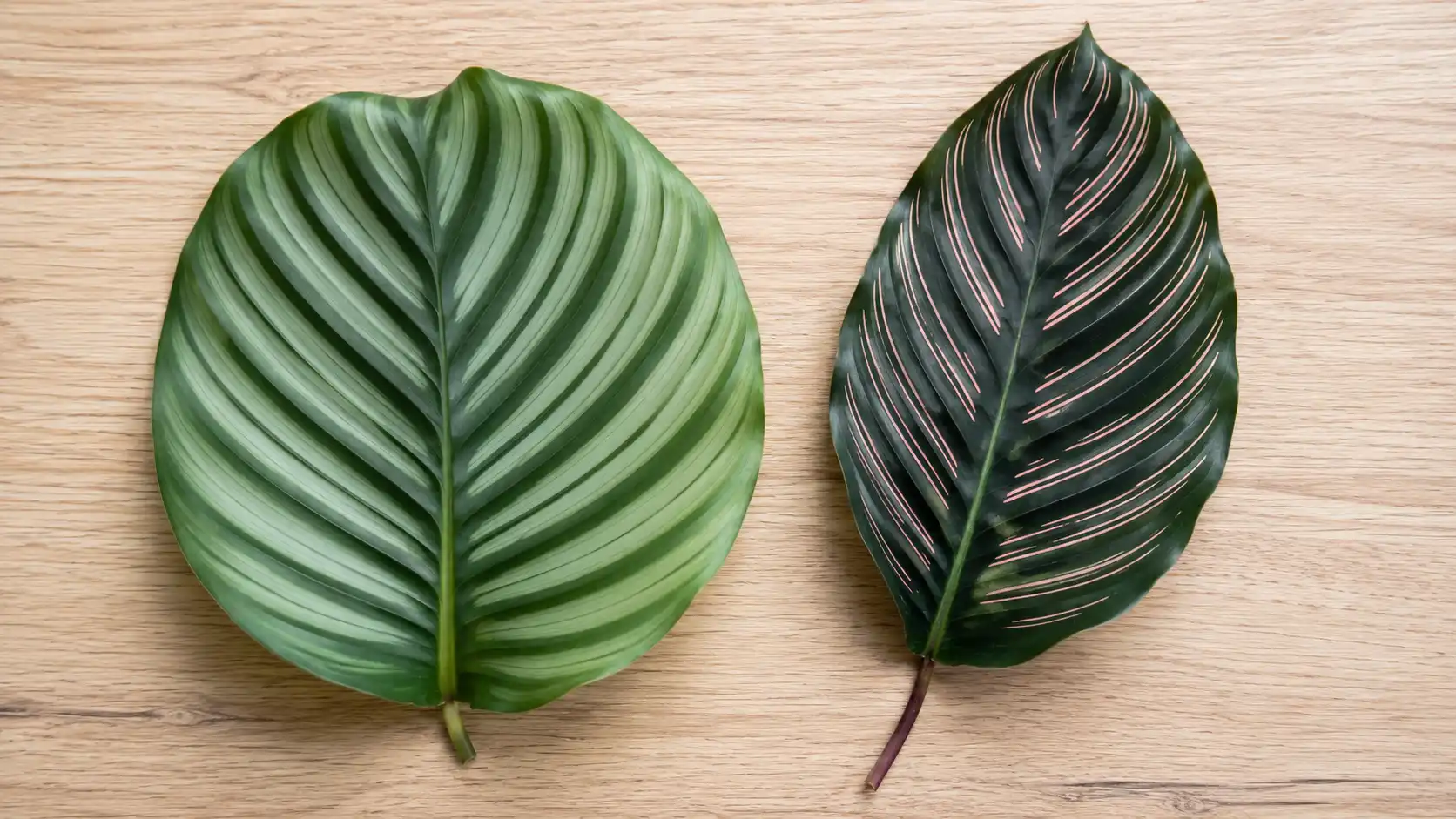
Not all Calatheas are equally prone to this issue. Orbifolia, Ornata, and Lancifolia tend to develop brown tips more readily, even under reasonably good care — their broader, thinner leaves seem more sensitive to water quality and humidity swings. Freddie and Roseopicta tend to tolerate imperfect conditions better. If you own one of the more sensitive varieties, some occasional tip browning may be near-unavoidable rather than a sign your care routine is wrong. If you own an Orbifolia specifically, it’s worth pairing this guide with our Calathea Orbifolia Care Guide for its exact light and watering needs.
Roseopicta types like Medallion tend to be more forgiving — see our Calathea Roseopicta Medallion Care Guide for its specific care baseline.
Preventing Brown Tips Going Forward
- Water on a consistent schedule rather than letting soil fully dry out between waterings.
- Build the water-prep step (overnight rest, filtering, or distilled water) into your routine rather than treating it as optional.
- Maintain a humidity baseline in the 50–60% range where practical.
- Dilute fertilizer and reduce feeding frequency, especially in lower-light winter months.
- Keep the plant away from direct sun and heating vents.
- Adjust your humidity strategy seasonally — winter heating dries indoor air significantly more than most people expect.
Conclusion
Brown Calathea tips are almost always fixable at the root cause, even though the already-brown tissue itself won’t reverse. Start by identifying the pattern — tip/edge browning points to water and humidity, while soft patches or spots suggest something else entirely. From there, adjust your water source, raise humidity, prune conservatively, and give the plant several weeks to show the results in new growth. With consistent care, brown calathea leaf tips become far less frequent, even on the more sensitive varieties. For more on keeping tropical houseplants healthy indoors, explore our full Indoor Green Living Hub.
FAQs
Will Calathea brown tips turn green again?
No. The affected tissue is dead. Focus on preventing new tips from browning rather than trying to reverse existing damage.
How much of my Calathea can I trim at once?
Trim only the dead portion where possible. If removing whole leaves, stay under roughly a quarter of the plant’s total foliage at one time to avoid shocking it.
Is tap water really the main cause of brown tips?
It’s a leading factor, but it usually combines with low humidity or inconsistent watering rather than acting alone.
How do I tell brown tips apart from root rot or pests?
Brown tips are dry and confined to the leaf edge. Root rot shows up as a soft, mushy, foul-smelling base. Pests often bring visible webbing or insects on leaf undersides.
Do certain Calathea varieties get brown tips more often?
Yes. Orbifolia, Ornata, and Lancifolia are more prone to browning than Freddie or Roseopicta.
How long until my Calathea recovers after fixing the cause?
Existing brown tissue won’t reverse, but new leaves typically show visible improvement within 3–6 weeks of corrected care.