
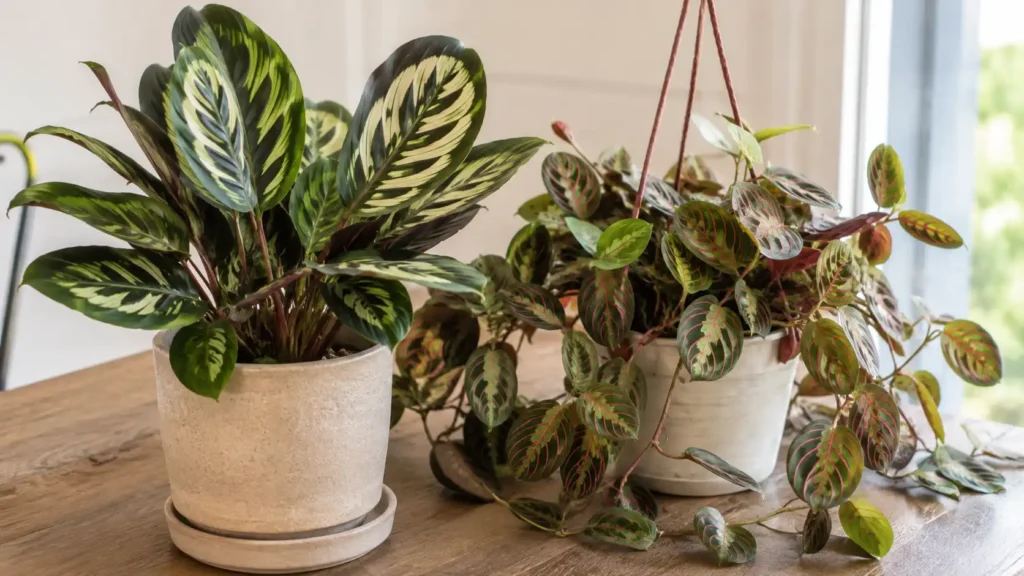
You purchased a “prayer plant” and now don’t know if it’s a Calathea or Maranta, and you’re not the only one.You went out and bought a “prayer plant” but you’re not the only one who is wondering if it’s a Calathea or Maranta! The great thing about them is that if you know what to look for, you can tell them apart in about ten seconds, and most of all the “my plant is dying” problems that people look for can be traced back to a single mismatch between the plant they have and the care they are supplying their plant.
Quick Summary
- Calathea and Maranta are both nicknamed “prayer plants,” but they’re different genera in the same family (Marantaceae) — not the same plant.
- Maranta tolerates tap water and inconsistent humidity far better than Calathea, which is prone to brown, crispy edges from mineral buildup.
- The fastest way to identify which one you own is leaf pattern and growth habit, not the leaf-folding behavior — both plants fold their leaves at night.
- Most Calathea species were reclassified into the genus Goeppertia back in 2012, but “Calathea” stuck around on plant tags, which is a big reason for the labeling confusion at nurseries.
Are Calathea and Maranta the Same Plant?
No. They’re closely related but genuinely different genera within the plant family Marantaceae, sometimes called the “prayer plant family.”
Both share a few traits that make them easy to confuse at a glance: patterned foliage, a tropical understory origin (they evolved growing under a rainforest canopy, which explains their low-light tolerance and love of humidity), and nyctinasty — the nightly leaf-folding movement that gives the family its “prayer plant” name. But genus-level differences show up in growth habit, leaf shape, and — most importantly for care — tolerance for water quality and humidity swings.
Why Your Plant Tag Might Say the Wrong Name
Here’s the detail almost no other article mentions: in 2012, botanists reclassified most Calathea species into a different genus, Goeppertia, based on updated flower structure research. Botanically, the correct name for most of the plants sold as “Calathea” today is technically Goeppertia.
Retail never caught up. Growers, nurseries, and big-box garden centers kept using “Calathea” because it’s the name shoppers recognize, so you’ll see the same plant labeled two different ways depending on where you bought it — and sometimes labeled as the wrong genus entirely. One of the most commonly mislabeled varieties is Calathea Orbifolia, which is frequently sold under a handful of different tag names despite having very distinct, large round leaves.
10-Second Identification Checklist
Skip the leaf-folding test — both plants do it, so it won’t tell you anything. Instead, check these four things in order:
| Trait | Calathea (Goeppertia) | Maranta |
|---|---|---|
| Leaf pattern | Bold, high-contrast markings, often with dramatic color changes on the underside | Subtler pattern, frequently with red or pink veining |
| Growth habit | Upright, clumping rosette | Trailing or mounding, spills over pot edges |
| Typical use | Displayed upright as a statement plant | Popular in hanging baskets |
The “bold, high-contrast” end of the spectrum is best illustrated by varieties like Calathea Warscewiczii, with its velvety dark-green leaves and dramatic light-colored feathering, or Calathea Zebrina, named for its bold zebra-striped pattern. Rounder, softer patterning shows up in varieties like Calathea Roseopicta Medallion, where pink and cream markings radiate out from the center of each leaf. If your plant is spilling over the pot edge with subtler, red-veined leaves instead, you likely have a Maranta, not a Calathea.
What Nursery Tags Get Wrong
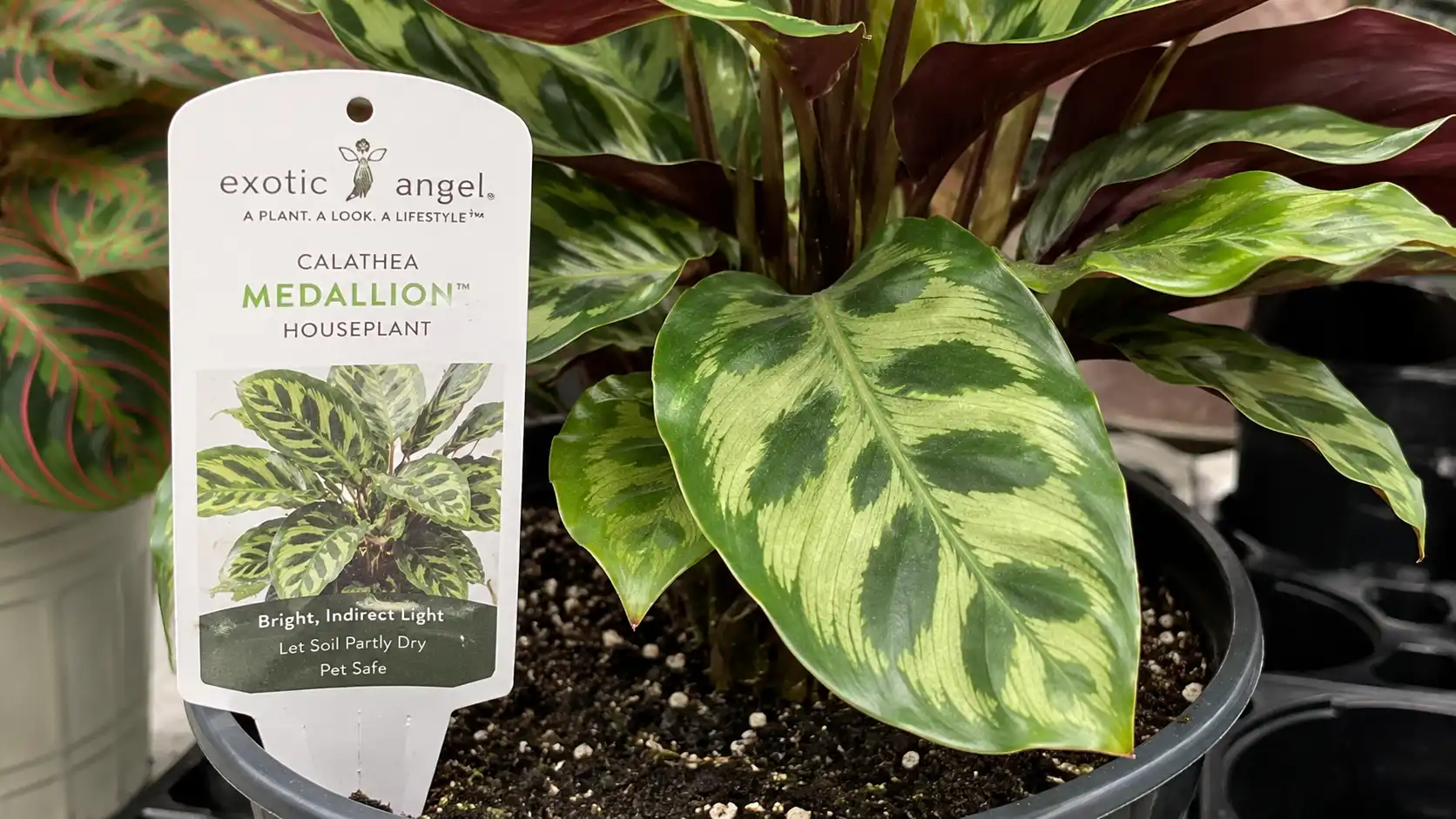
Because Calathea, Maranta, and a third look-alike genus called Ctenanthe are frequently displayed next to each other and sourced from the same wholesale suppliers, mislabeling is common — especially on younger plants that haven’t developed their full mature leaf pattern yet. Fuzzy-leaved varieties like the Furry Feather Calathea are particularly prone to this, since their texture doesn’t read clearly on a small nursery tag photo. Combine that with the Goeppertia naming shift, and it’s easy to walk out of a store with a plant tagged incorrectly.
If you’re not sure what you own, the identification checklist above is more reliable than any tag.
Why Is My Plant’s Leaves Curling, Browning, or Not Folding at Night?
Symptom: Brown, Crispy Leaf Edges
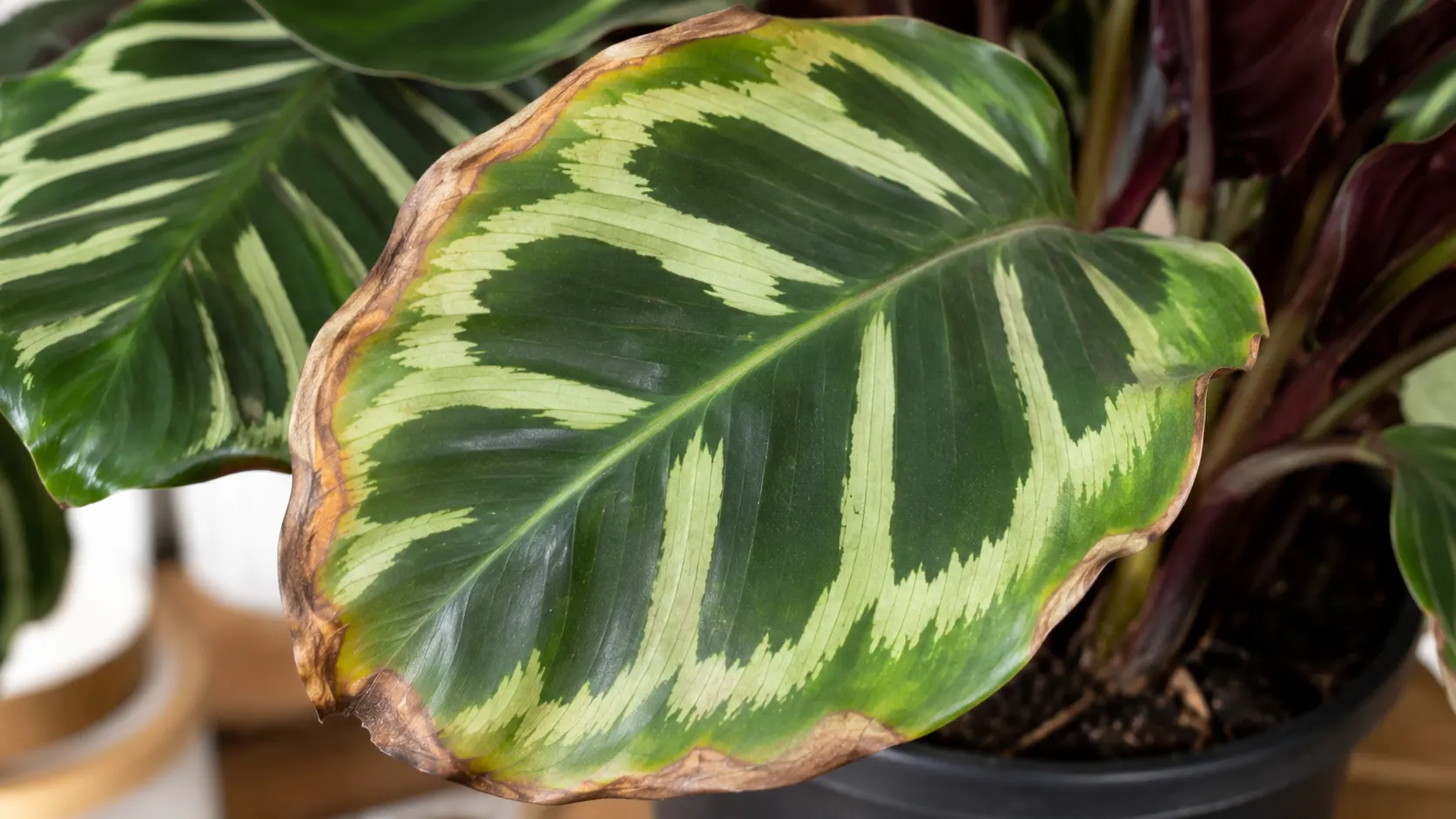
Cause: This is almost always tap water sensitivity — chlorine, fluoride, or dissolved minerals building up in the soil and leaf tissue. Calathea is noticeably more sensitive to this than Maranta. Diagnosis: Check what water source you’ve been using and how dry the air around the plant tends to get. Fix: Switch to filtered water or rainwater, and let tap water sit out for 24 hours if that’s all you have available. Raise ambient humidity. Prevention: Stay consistent with water source — switching back and forth makes the problem harder to diagnose later. For a full breakdown of causes and fixes, see our dedicated guide on Calathea brown leaf tips.
Symptom: Leaves Curling or Drooping
Cause: Usually underwatering or low humidity, though root stress from overwatering can look similar. Diagnosis: Check soil moisture with a finger test before assuming it needs water — curling from too little water and curling from root rot look almost identical from a distance. Fix/Prevention: Establish a consistent watering rhythm rather than watering on a fixed calendar; adjust for season.
Symptom: No Nighttime Leaf Movement
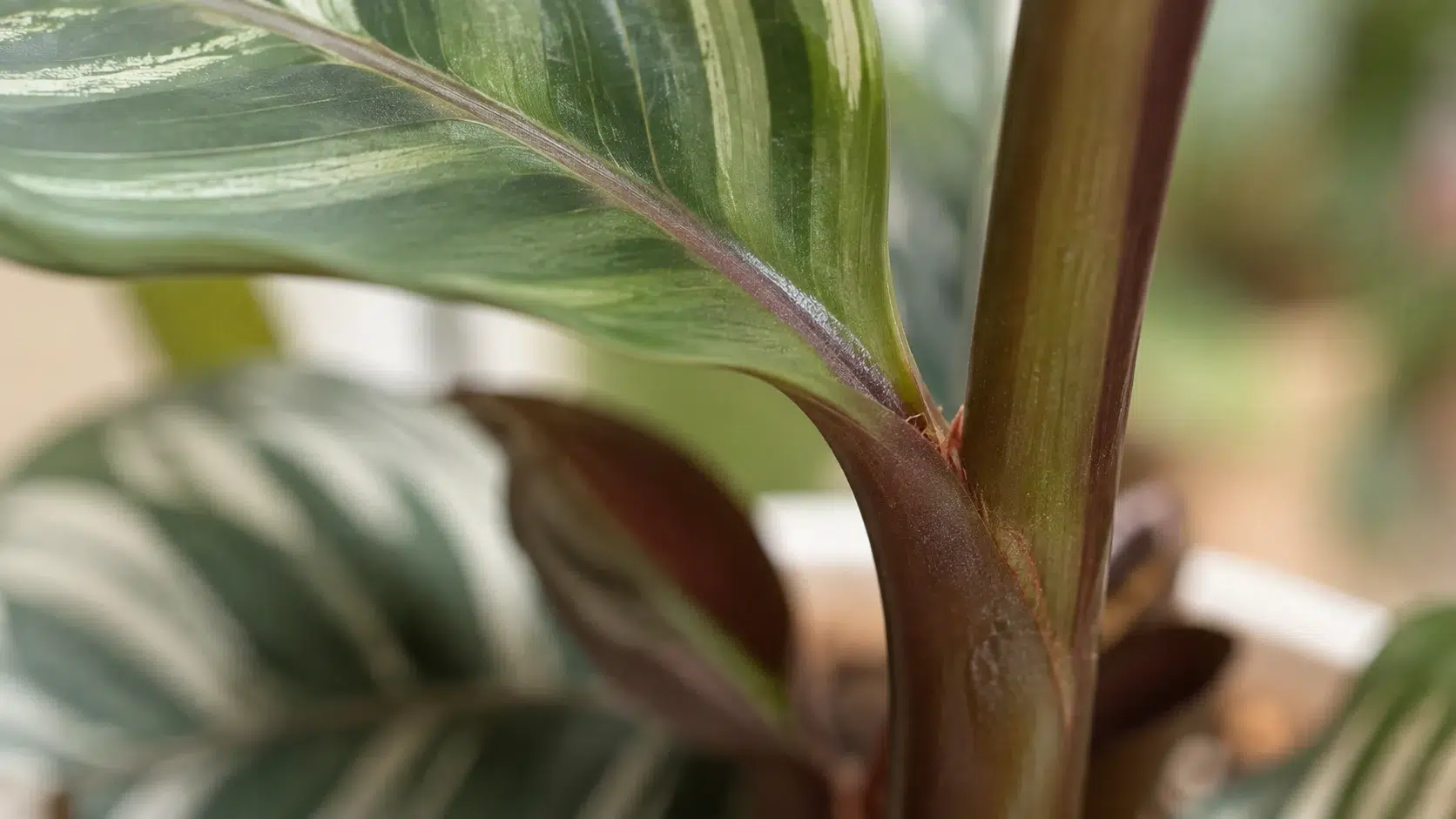
Cause: Nyctinasty is a normal circadian response driven by a pulvinus at the base of each leaf. A healthy plant folds its leaves up at night and opens them during the day. When that movement stops, it usually signals stress — inconsistent light exposure or root problems — rather than the plant simply “not doing it anymore.” Diagnosis/Fix: Check whether the plant is getting a consistent day/night light cycle, and rule out root issues if the soil has stayed wet for extended periods.
Symptom: Slow or Stalled Growth
Cause: Usually insufficient light, nutrient deficiency during active growing season, or normal seasonal slowdown in fall/winter. Diagnosis/Fix/Prevention: Cross-check light levels against the plant’s needs — many owners assume these plants need constant shade, but as we cover in Are Calathea Low-Light Plants?, too little light is one of the most common causes of stalled growth. Confirm you’re feeding during spring and summer, not year-round.
Calathea vs. Maranta Care Comparison
| Factor | Calathea | Maranta |
| Water type | Filtered or rainwater strongly preferred | Tolerates regular tap water |
| Light | Bright, indirect; more shade-tolerant than most houseplants | Medium to bright, indirect |
| Humidity | High — struggles below roughly 50% | Moderate; more forgiving of average home humidity |
| Beginner-friendliness | Lower | Higher |
| Best format | Potted, displayed upright | Hanging baskets, trailing arrangements |
Even within Calathea, humidity and light tolerance shift slightly by variety — the Calathea Peacock in particular is known for being a bit more demanding about consistent humidity than some of its relatives, so it’s worth checking variety-specific notes once you’ve confirmed which plant you own.
Which One Should You Buy or Keep?
Match the plant to your actual conditions rather than the one that looks nicer in photos:
- Only have tap water and average home humidity? Choose Maranta.
- Can commit to filtered water and a humidifier or pebble tray? Either works, though Calathea will reward the extra effort with more dramatic foliage — varieties like Calathea Flamestar and Calathea Majestica White Star are good examples of the bold, statement-piece look you get in exchange for the extra care.
- Want a hanging or trailing display? Maranta is built for it.
- Want a bold, upright statement plant? Calathea is the better pick.
How to Repot Each One Differently
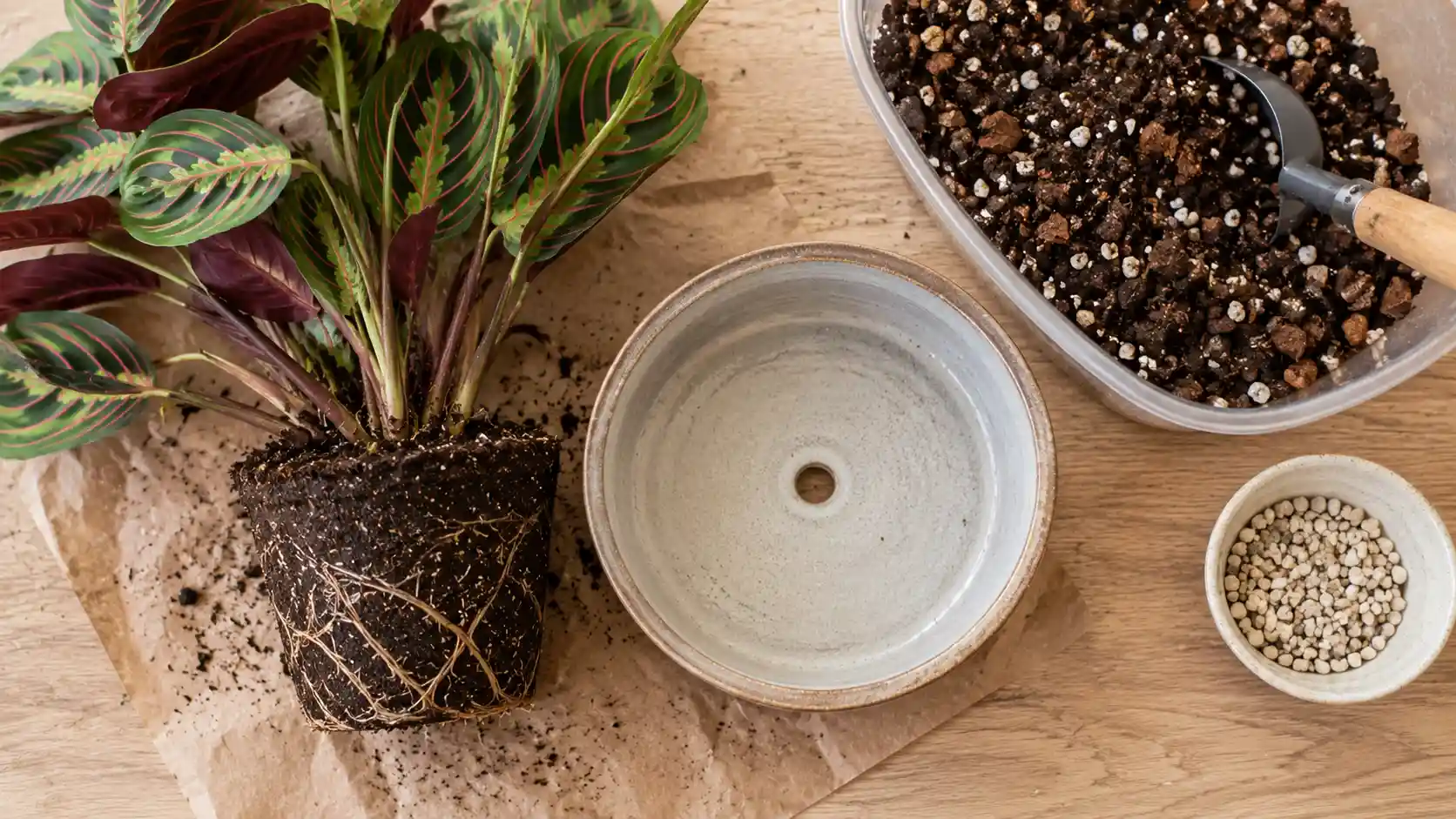
Both plants want a shallow, wide pot rather than a deep one, since their root systems spread outward, and both need a well-draining, chunky mix rather than dense potting soil. Once repotted, healthy plants of either genus are also good propagation candidates via division — our step-by-step guide on how to propagate a prayer plant walks through the process for both.
Conclusion
Calathea and Maranta share a family, a nickname, and a nightly leaf-folding habit — but they part ways on water sensitivity, growth habit, and how forgiving they are of beginner mistakes. The fastest path to fixing a struggling plant is identifying which one you actually have using leaf pattern and growth habit, then matching your water source and humidity setup accordingly. If your plant’s tag doesn’t match what you’re reading, the 2012 Goeppertia reclassification is very likely why — not a mistake on your part. Once you’ve confirmed which one you own, the variety-specific guides linked throughout this article will get you the rest of the way to a thriving plant.
FAQs
Is a prayer plant a Calathea or a Maranta?
It can be either — “prayer plant” is a common nickname applied to both genera because they share the nyctinasty leaf-folding trait.
Why do Calathea and Maranta leaves fold up at night?
It’s called nyctinasty, a circadian movement controlled by a small joint (pulvinus) at the base of each leaf, thought to help the plant regulate light exposure and moisture loss.
Can I use tap water for my Calathea?
It’s not recommended. Calathea is sensitive to chlorine, fluoride, and mineral buildup from tap water, which often shows up as brown, crispy leaf edges. Filtered water or rainwater is safer.
Which is easier for beginners, Calathea or Maranta?
Maranta, mainly because it tolerates tap water and average home humidity much better than Calathea does.
Why does my Calathea have brown tips but my Maranta doesn’t?
Calathea’s leaf tissue is more sensitive to water quality, so it shows mineral and chemical buildup as brown, crispy edges far sooner than Maranta does under the same conditions.
Is Calathea the same as Goeppertia?
Botanically, most plants sold as “Calathea” were reclassified into the genus Goeppertia in 2012. Retail and casual use never fully caught up, so you’ll see both names used for the same plants.



One Response