
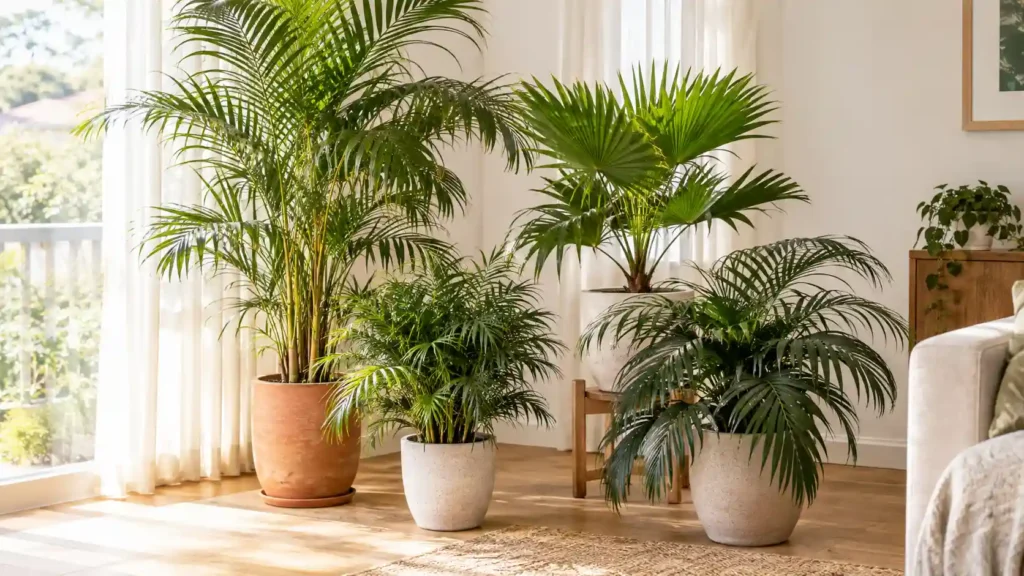
If you’re trying to work out which types of indoor palm plants will actually survive in your home, you’re not alone — most palm shopping goes wrong not because a species is hard to grow, but because it’s the wrong match for the light, space, or pets already in the room. There are hundreds of palm species worldwide, but only a handful are genuinely suited to indoor life. This guide organises them the way you actually shop: by how much light you have, how big you want the plant to get, and whether you share your home with a cat or dog — then helps you identify exactly what you’ve bought or are about to buy.
Quick Summary
- Most home growers choose from around 8–10 common indoor palm species: Parlor, Areca, Kentia, Sentry, Cat, Majesty, Pygmy Date, Chinese Fan, and Golden Cane palms.
- Not everything sold as a “palm” is a true palm. Ponytail palm and sago palm are two commonly mislabeled palm like plants — and the sago palm is toxic to pets.
- Most true indoor palms (Parlor, Areca, Kentia, Cat Palm) are non-toxic to cats and dogs.
- Light needs vary widely: Parlor, Cat, and Kentia palms tolerate low light; Areca, Majesty, and Chinese Fan palms need brighter, indirect light.
- Mature size ranges from desk-height (Parlor Palm) to ceiling-height statement plants (Majesty, Kentia, Golden Cane).
- General palm plant care is fairly consistent across species: bright indirect light, water only once the top inch of soil is dry, and moderate humidity.
What Counts as an “Indoor Palm”? True Palms vs. Palm-Like Plants
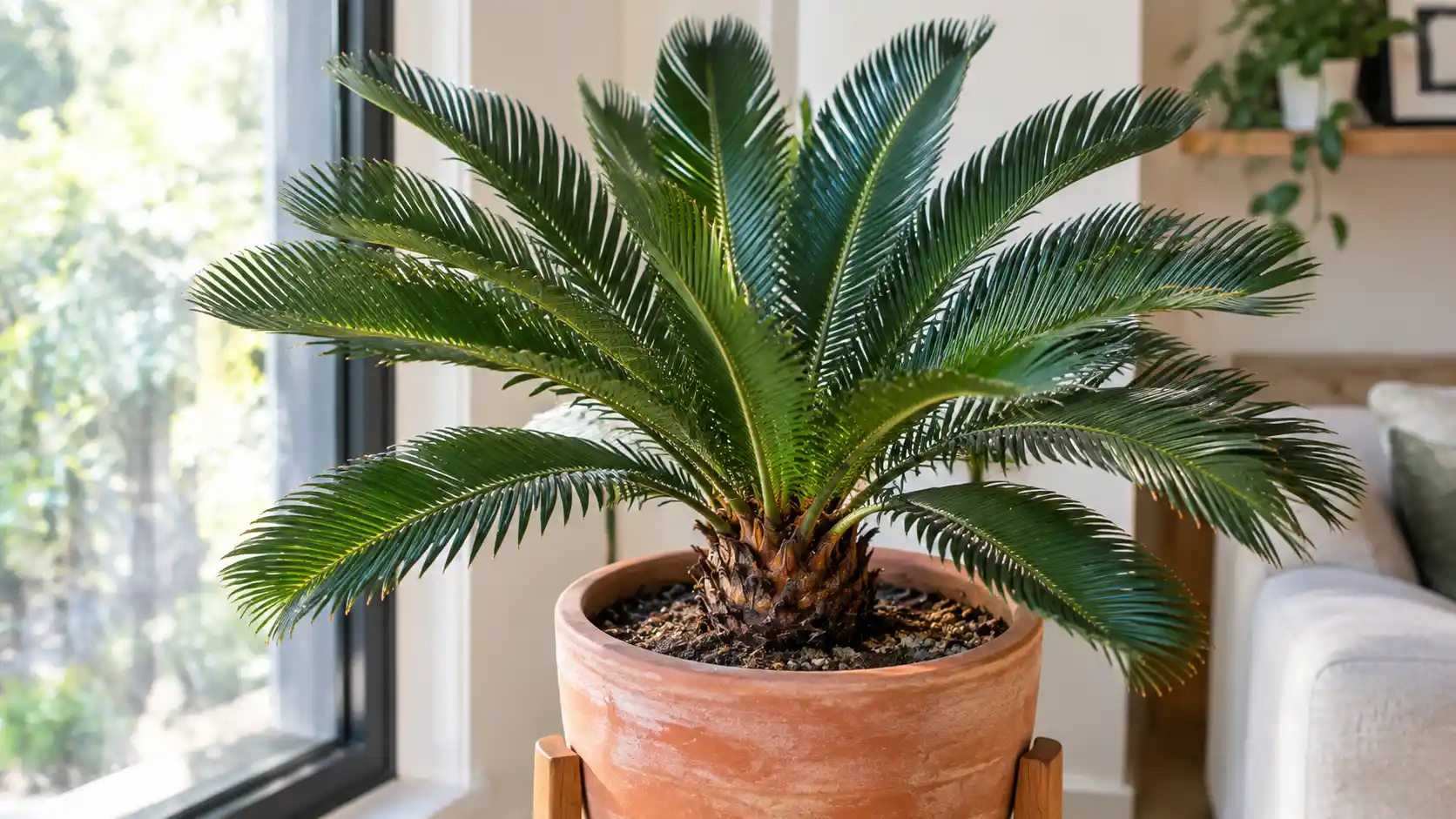
True palms belong to the botanical family Arecaceae, and this is the group most people mean when they search for types of palm trees or types of palms suitable for indoor growing. But nurseries and plant shops routinely sell “palms” that aren’t in this family at all — a mix-up that matters for both care and safety.
Two mislabeled palm like plants come up constantly:
- Sago palm (Cycas revoluta) is not a palm — it’s a cycad, an ancient group of plants entirely unrelated to Arecaceae. This matters because sago palm is highly toxic to pets, and every part of the plant, especially the seeds, can cause severe liver damage or death if ingested by a dog or cat.
- Ponytail palm (Beaucarnea recurvata) is also not a true palm — it belongs to the asparagus family, Asparagaceae, and is more closely related to agaves and yuccas. Sydney’s Centennial Parklands plant profile on Beaucarnea confirms it is “not a true palm” despite the common name, which explains why it’s cared for more like a succulent (infrequent, deep watering) than a tropical palm. If you already own one and want outdoor-growing guidance for warmer Australian climates, see our guide to ponytail palm outdoors in Australia.
Understanding this distinction upfront changes how you’ll read the rest of this guide: true palms generally want consistent moisture and humidity, while palm-like succulents want the opposite.
How to Choose the Right Indoor Palm for Your Space
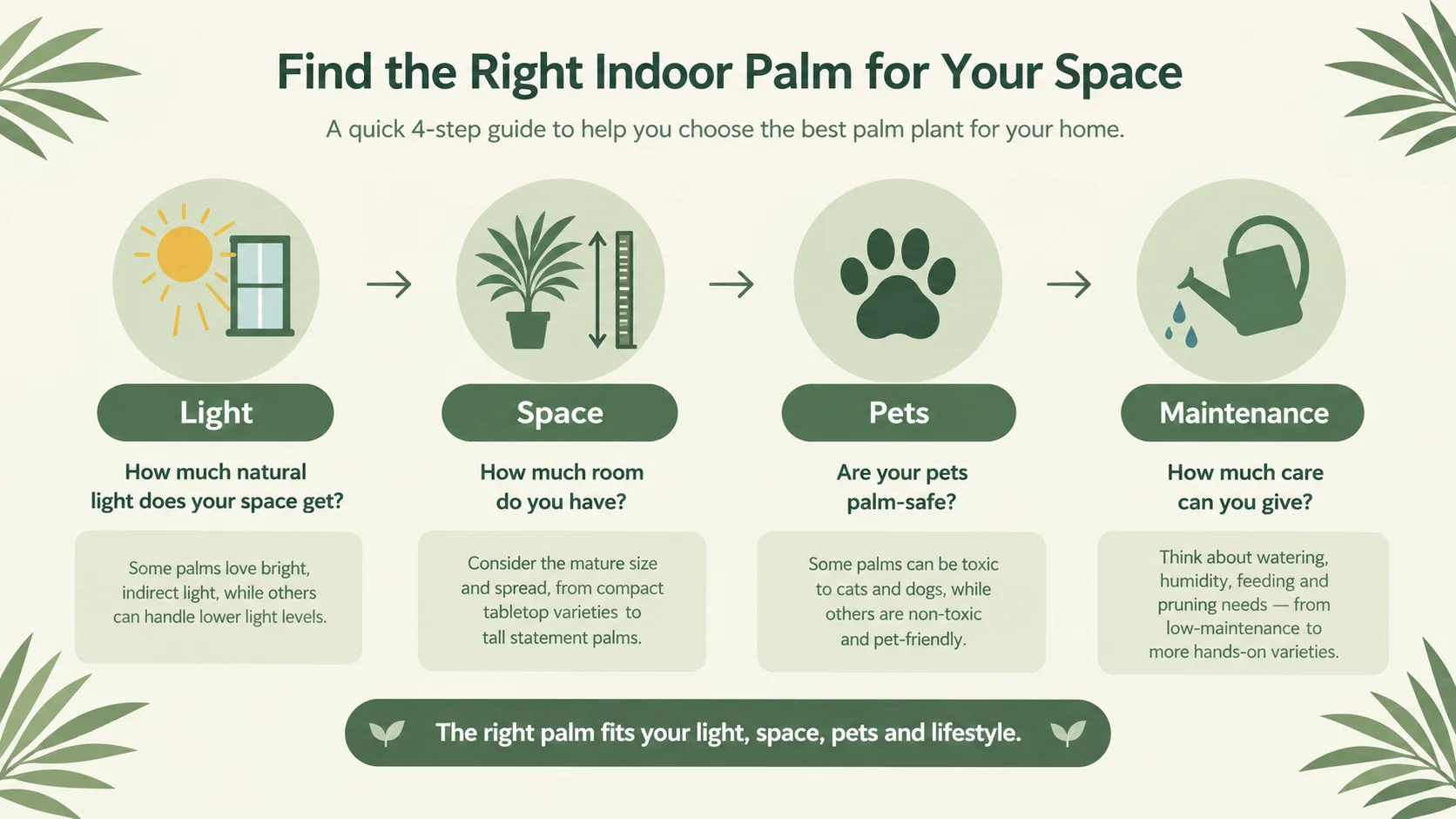
Before comparing individual species, it helps to narrow the field using four practical factors:
- Available light — is the spot bright and sunny, moderately bright, or genuinely low light (a few metres from the nearest window)?
- Mature size and available space — do you want a desk-sized accent or a floor-to-ceiling statement plant?
- Pets in the household — do you need every plant in the room to be non-toxic?
- Maintenance appetite — are you happy to mist, monitor humidity, and repot regularly, or do you want something closer to “water occasionally and forget”?
The sections below group the most common types of indoor palm trees by these exact criteria, so you can jump to the one that matches your situation.
Types of Indoor Palm Plants by Light Requirement
Low-Light and No-Direct-Sun Palms
Parlor Palm, Cat Palm, and Kentia Palm are the standard picks for rooms without strong natural light. “Low light” in practice means a spot a few feet back from a north-facing window or in a naturally dim hallway — not a windowless room. These species will survive there, though growth will be slower and fronds may be slightly less lush than in brighter conditions.
Bright, Indirect-Light Palms
Areca Palm, Majesty Palm, and Chinese Fan Palm need noticeably more light to stay full and green. Without it, they tend to grow leggy, with pale, sparse fronds reaching toward the nearest light source. These are better suited to a spot within a metre or two of a bright, unobstructed window.
How Much Light Does a Palm Plant Need?
Most indoor palms want bright, indirect light — meaning they should be near a window that receives good daylight, but shielded from several hours of direct, intense sun, which can scorch fronds. A useful benchmark from the New York Botanical Garden’s guide to growing palms indoors is that a palm indoors should get the light equivalent of standing beneath the canopy of a taller tree: bright, but filtered rather than direct — with an east- or south-facing room in the Southern Hemisphere (or a similarly bright, non-scorching aspect) usually working well. Exact light needs still vary by species, as shown in the comparison table further below.
For a full breakdown of light, watering, and humidity needs across common species, see our dedicated indoor palm care guide.
Pet-Safe Indoor Palms (and Which Ones to Avoid)
Most true palms sold as houseplants — Areca, Parlor, Kentia, and Cat Palm among them — are non-toxic to cats and dogs, which is one reason they remain such popular choices for pet-owning households. The major exception is the sago palm discussed above: because it’s a cycad rather than a true palm, it carries a serious toxicity risk that doesn’t apply to the true-palm species covered in this guide. Ponytail palm, despite also not being a true palm, is generally considered non-toxic.
That said, “non-toxic” doesn’t mean “consequence-free.” Even pet-safe palms can cause mild digestive upset if a cat or dog chews through a large quantity of fronds, so it’s still worth discouraging pets from treating any houseplant as a snack.
Compact Indoor Palms for Small Spaces, Apartments, and Desks
If floor space or ceiling height is limited, a handful of species stay genuinely manageable indoors:
- Parlor Palm is the classic tabletop or desk-sized palm plant, often staying under a metre for years given its slow growth rate. If you already have one, it’s also one of the easier species to propagate — see our guide to Parlor Palm propagation if you’d like to grow more from an existing plant rather than buying additional pots.
- Cat Palm has a naturally compact, clumping habit that suits smaller rooms without needing frequent pruning.
- Dwarf or juvenile specimens of larger species (such as a young Kentia Palm) can also work as a compact option for the first several years, provided you’re prepared to eventually repot or relocate the plant as it matures.
Statement and Tree-Sized Indoor Palms
At the other end of the scale, several species are popular precisely because they become large, dramatic focal points:
- Majesty Palm and Kentia Palm both develop substantial height and spread at maturity, making them well suited to rooms with high ceilings.
- Golden Cane Palm (also known as Areca Palm) can grow into a genuinely tree-sized indoor specimen given enough light and space. If you’re deciding whether this species will suit a room long-term, it’s worth seeing what a full-grown Golden Cane Palm actually looks like indoors before committing, since young nursery specimens give little indication of their eventual scale.
- Chinese Fan Palm also reaches a considerable size indoors, with broad, fan-shaped fronds that need generous floor space to display properly.
As these species mature, expect to repot every couple of years into a larger container to accommodate root growth.
The Most Common Indoor Palm Species, Explained
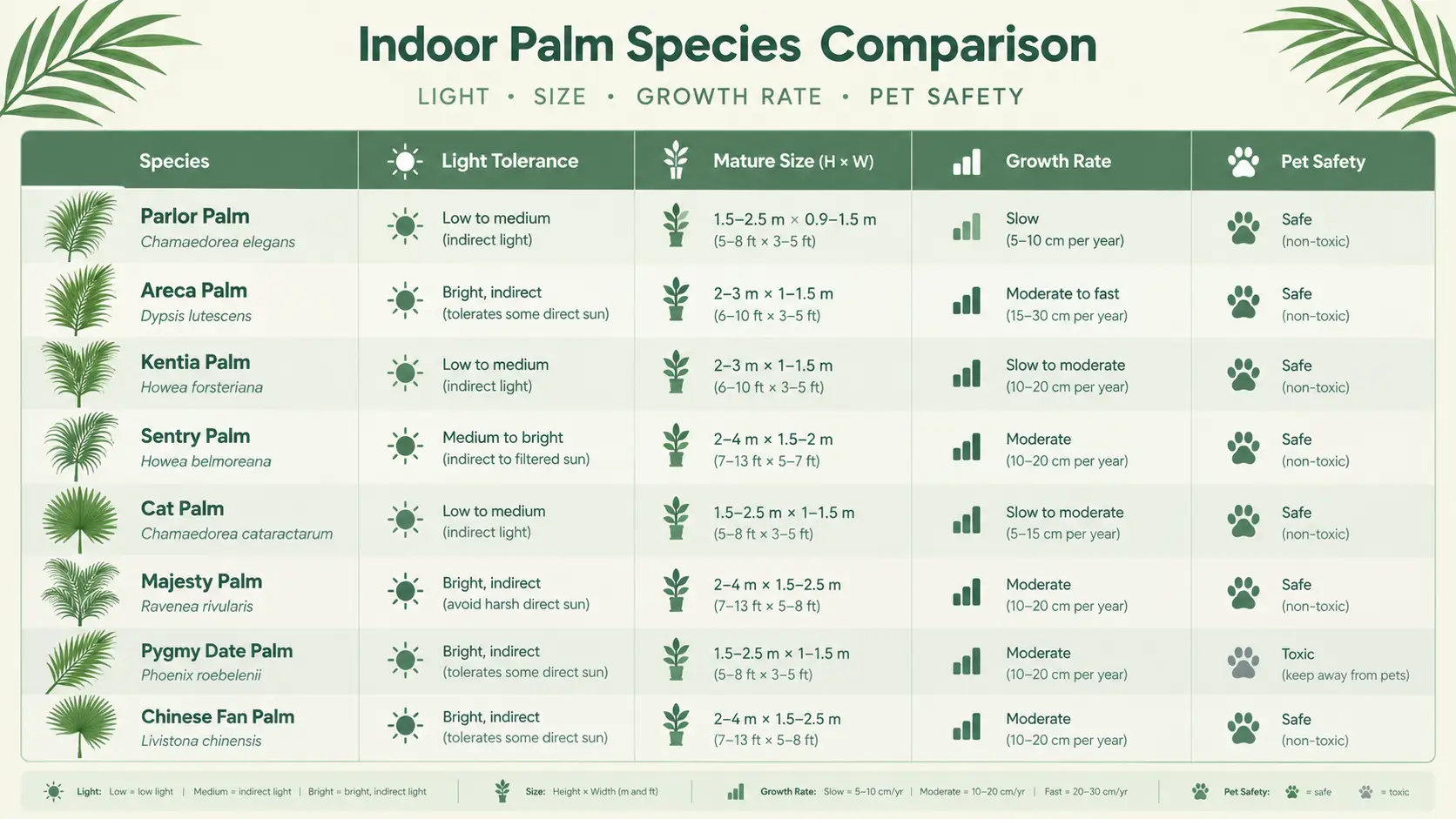
The species introduced above by use-case are, in practice, the same handful of palm plant varieties that dominate nurseries and online plant retailers across Australia. Here’s a quick-reference rundown of each, along with a scannable comparison table.
| Species | Light Tolerance | Mature Indoor Size | Growth Rate | Pet-Safe? |
| Parlor Palm (Chamaedorea elegans) | Low to bright indirect | Small (under 1.2 m) | Slow | Yes |
| Areca / Golden Cane Palm (Dypsis lutescens) | Bright indirect | Large (2–3+ m) | Moderate–fast | Yes |
| Kentia Palm (Howea forsteriana) | Low to bright indirect | Large (up to several metres) | Slow | Yes |
| Sentry Palm (Howea belmoreana) | Low to bright indirect | Medium–large | Slow | Yes |
| Cat Palm (Chamaedorea cataractarum) | Low to bright indirect | Small–medium, clumping | Moderate | Yes |
| Majesty Palm (Ravenea rivularis) | Bright indirect | Large | Moderate | Yes |
| Pygmy Date Palm (Phoenix roebelenii) | Bright indirect | Medium | Slow | Caution advised near sharp spines; check current guidance for specific toxicity status |
| Chinese Fan Palm (Livistona chinensis) | Bright indirect | Large | Moderate | Yes |
Note: always confirm current pet-safety guidance for the exact species and cultivar you own, as classifications are occasionally updated.
For a broader rundown that also covers outdoor and landscape palm varieties beyond the indoor-focused species above, see our guide to common palm trees.
Two species in this table deserve a closer, side-by-side look, because they’re the source of most identification confusion at the nursery — covered next.
Look-Alike Palms: Telling Confusingly Similar Species Apart
Kentia Palm vs. Sentry Palm
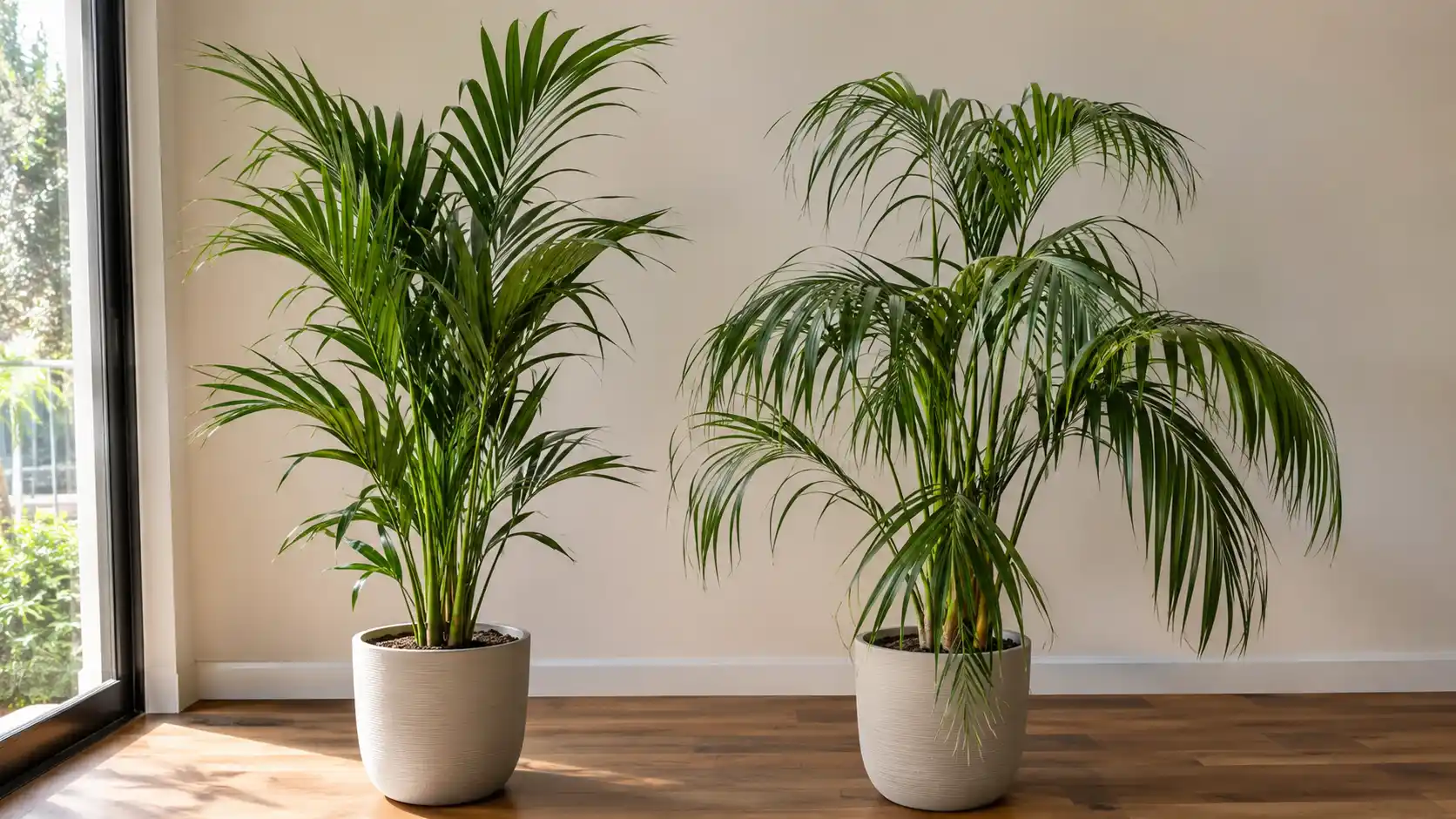
Kentia Palm (Howea forsteriana) and Sentry Palm (Howea belmoreana) are frequently confused, and for good reason: they’re two species in the same genus, both native to Lord Howe Island, Australia. According to Macquarie University’s plant profile on Lord Howe Island palms, both species are endemic to the island and were historically exported from there as popular ornamental palms from the 1870s onward.
In practice, Kentia Palm tends to have straighter, more upright fronds and grows somewhat larger over time, while Sentry Palm’s fronds arch more noticeably and it generally stays a little more compact. Kentia Palm is also more widely available commercially and tends to be the faster-growing of the two, despite both being considered slow-growing overall. If you already own one and it’s showing brown tips or stalled growth, our Kentia Palm problems guide covers troubleshooting in depth.
Areca Palm vs. Cat Palm
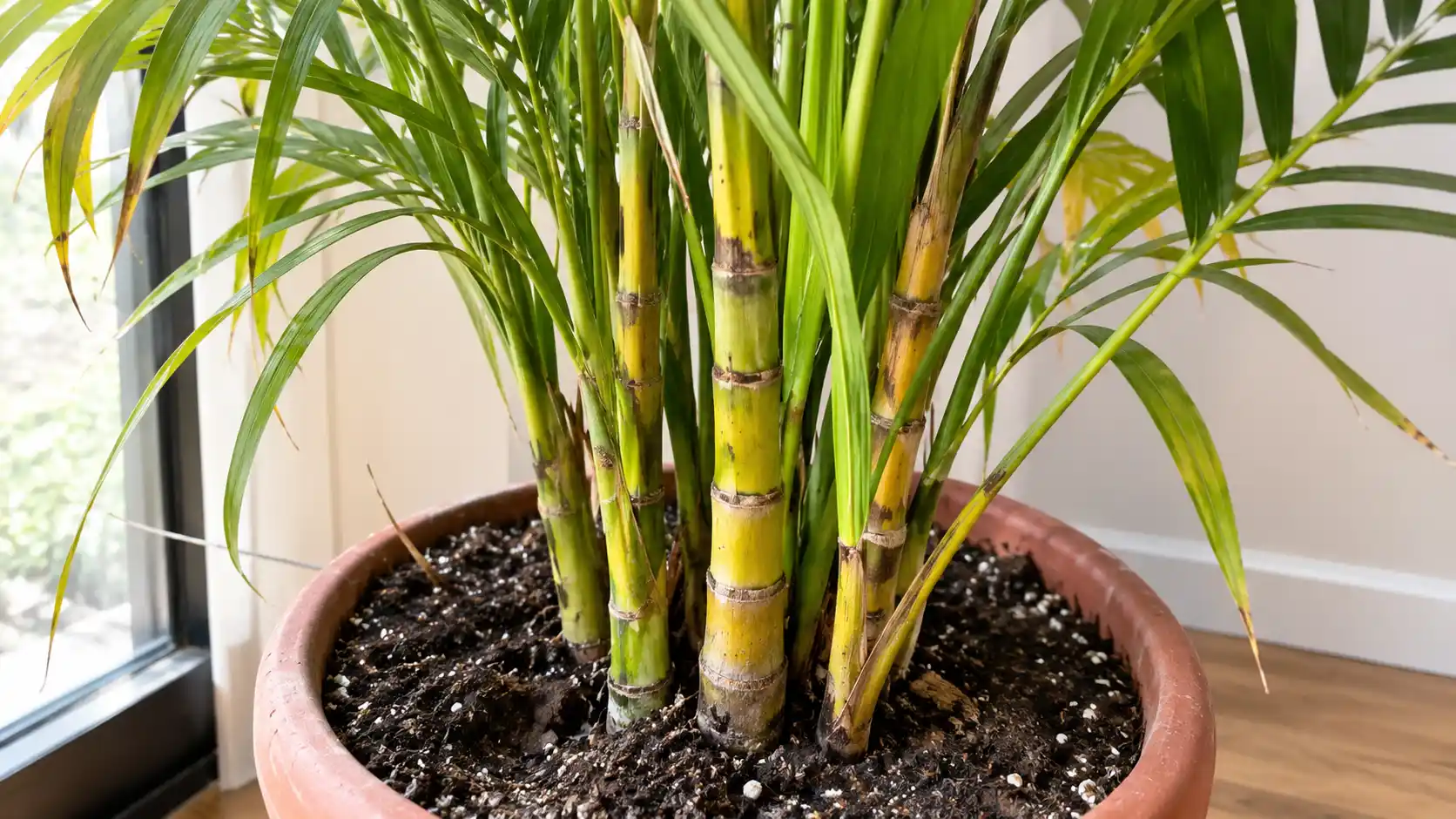
Areca Palm (Dypsis lutescens) and Cat Palm (Chamaedorea cataractarum) are often mixed up because both have multiple slender stems and feathery, arching fronds. The clearest distinguishing feature is the stem itself: Areca Palm has visible, ringed, cane-like stems (hence its other common name, Golden Cane Palm), while Cat Palm has no visible canes and instead grows as a low, dense clump directly from the soil. Areca Palm also tends to need slightly more light and reaches a considerably larger mature size than Cat Palm. For full cat palm care and Areca-specific guidance once you’ve confirmed which one you have, see our Areca Palm care guide.
Cat Palm vs. Parlor Palm
A third common mix-up is cat palm vs parlor palm, since both are popular low-light, compact choices. Cat Palm grows in a dense clump with no visible trunk and prefers slightly more consistent moisture and humidity than Parlor Palm, which tolerates drying out between waterings more comfortably. Parlor Palm also has a more upright, singular growth habit per stem, whereas Cat Palm’s stems fan out from the base in a fuller, bushier shape. For beginners, Parlor Palm is generally considered the more forgiving of the two if watering is likely to be inconsistent.
General Indoor Palm Care Basics
While each species has its own preferences, most indoor palm care follows the same broad principles:
- Watering: Most palms prefer to dry out slightly between waterings rather than sitting in constantly damp soil. Overwatering, not underwatering, is the more common cause of problems.
- Light: As covered above, bright indirect light suits most species, though several (Parlor, Cat, Kentia) tolerate genuinely low light.
- Humidity: Many indoor palms originate from humid, tropical environments, so average household humidity can sometimes lead to dry, browning frond tips — occasional misting or a nearby humidity tray can help.
- Soil and drainage: A well-draining potting mix is important, since palm roots are prone to rot in waterlogged soil.
- Repotting: Most indoor palms only need repotting every one to three years, once roots become visibly crowded.
- Common symptoms: Brown frond tips are usually linked to low humidity or underwatering, while yellowing fronds more often point to overwatering.
For general growing conditions relevant to palms in Australian outdoor and semi-outdoor settings as well, the Northern Territory Department of Agriculture and Fisheries’ guide to growing palms also notes that regular feeding, watering, and an occasional hose-down help keep palms healthy over the long term.
This overview only scratches the surface — for complete, step-by-step how to care for palm plants guidance covering watering schedules, feeding, and seasonal adjustments, see our full indoor palm care guide.
Adjacent Large-Leaf Plants Sometimes Confused With Palms
Because palms are often shopped for alongside other big, tropical-looking foliage, it’s worth noting that plants like fiddle leaf figs, elephant ears, banana plants, and bird-of-paradise (Strelitzia) are popular companions to palms in an indoor “jungle” aesthetic but are not palms themselves. If you’re building out a broader tropical-foliage collection rather than specifically hunting for a palm, our ferns and large foliage guide covers this wider category in depth.
Conclusion
Choosing the right indoor palm ultimately comes down to matching a species to your actual light, space, and household conditions — not finding a single “best” palm in the abstract. Whether you land on a compact Parlor Palm for a dim corner or a statement Kentia Palm for a bright living room, the same core principle applies: get the light and watering roughly right, and most indoor palms will reward you with years of low-maintenance greenery. If you’ve identified your species from the sections above, our indoor palm care guide and species-specific guides linked throughout this article are the natural next stop for deeper, ongoing care instructions.
FAQs
What is the most common type of indoor palm plant?
Parlor Palm and Areca Palm are among the most widely sold indoor palm plants, largely because both adapt well to typical home conditions and are readily available at nurseries and garden centres.
Which indoor palm plants tolerate low light?
Parlor Palm, Cat Palm, and Kentia Palm are the most reliable low-light performers among common indoor palms, though all three will grow more slowly than they would in brighter conditions.
Are indoor palm plants safe for cats and dogs?
Most true palms, including Areca, Parlor, Kentia, and Cat Palm, are considered non-toxic to cats and dogs. The main exception is the sago palm, which is not a true palm but a cycad, and is highly toxic to pets.
What’s the difference between a Kentia Palm and a Sentry Palm?
Both are native to Lord Howe Island and belong to the genus Howea. Kentia Palm tends to have straighter fronds and grows a little larger and faster, while Sentry Palm’s fronds arch more and it stays slightly more compact. If your Kentia Palm is showing brown tips or slow growth, see our dedicated troubleshooting guide.
Is a ponytail palm actually a palm?
No. Despite the common name, ponytail palm belongs to the asparagus family (Asparagaceae) and is more closely related to agaves than to true palms, which affects how it should be watered.
How big do indoor palm plants get?
This varies significantly by species — Parlor Palm typically stays under 1.2 metres indoors, while Majesty Palm, Kentia Palm, and Golden Cane Palm can grow into substantial, ceiling-height specimens over time.
How much light does a palm plant need indoors?
Most indoor palms need bright, indirect light — comparable to standing beneath the dappled canopy of a taller tree — though a few species, including Parlor, Cat, and Kentia palms, tolerate lower light levels.
What’s the difference between a Cat Palm and a Parlor Palm?
Cat Palm grows as a dense, trunkless clump and prefers more consistent moisture, while Parlor Palm has a more upright habit per stem and tolerates drying out between waterings more comfortably, making it slightly more forgiving for beginners.