
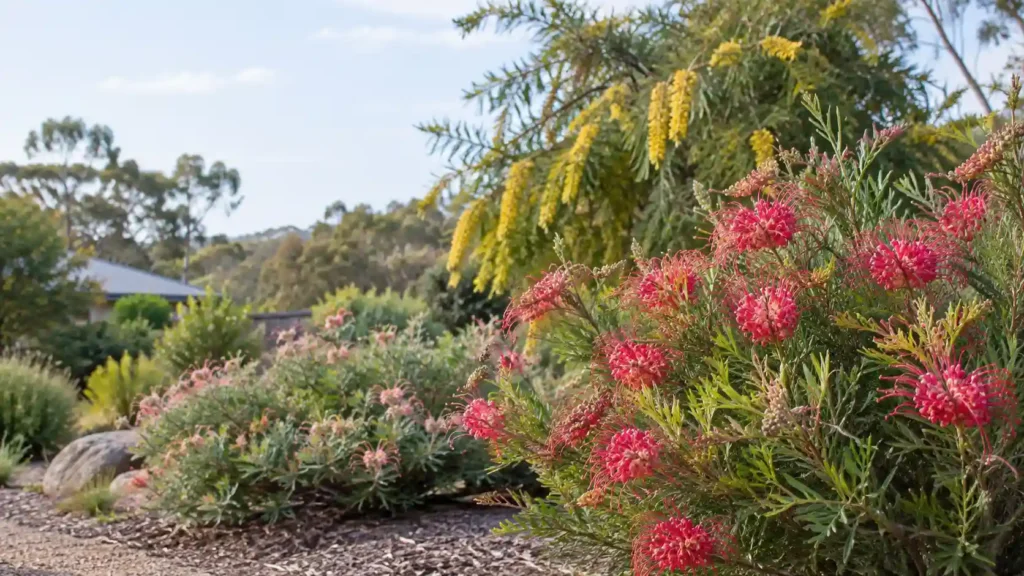
Which Grevillea Suits Your Space? Start With the Choice Problem
A useful grevillea varieties comparison starts with five practical factors: mature size, growth habit, flowering season, climate tolerance and garden use. Grevillea is a large Australian-led genus in the Proteaceae family, ranging from ground-hugging plants to substantial trees, so flower colour alone is a poor way to choose one. Australian references give slightly different species counts because taxonomy changes, but the genus contains hundreds of species as well as numerous hybrids and named cultivars.
For Australian gardens, start with the space and climate, then choose the colour and flower form. A low, spreading cultivar can be ideal for a small garden while a plant such as Grevillea robusta belongs in a very different category of planting.
Quick Summary
- Size and growth habit usually determine suitability more than flower colour.
- Grafting is used to place difficult cultivars on hardier rootstocks, but it does not make every grevillea suitable for every climate or soil.
- Grevilleas generally perform best in full sun, good drainage and low-phosphorus conditions.
- Lifespan varies considerably: some grevilleas can be relatively short-lived, while published conservation material cites roughly 10–30 years for many species.
Explore Greenery Nest’s Australian native garden plants guide
What Are the Different Types of Grevillea?
Grevilleas are easiest to compare by habit rather than flower colour. In practical garden terms, they range from groundcovers and low shrubs to medium or large shrubs and trees. Gardening Australia describes the genus as ranging from small shrubs to large trees, while botanical references also recognise spider-like, toothbrush-like and larger brush-type flower forms.
Examples include the compact Grevillea lanigera forms, medium shrubs such as ‘Robyn Gordon’, larger cultivars such as ‘Honey Gem’ and ‘Moonlight’, and the tall Grevillea robusta or Silky Oak.
Species vs Hybrid Cultivars vs Grafted Plants
A species is a naturally occurring botanical entity such as Grevillea juniperina or Grevillea robusta. A cultivar is a selected cultivated plant maintained for particular characteristics, while many named grevilleas are hybrids produced from crosses between species.
Named cultivars generally need vegetative propagation such as cuttings or grafting to retain their characteristics; seedlings from hybrids are not necessarily true to type.
Grafting joins a desirable flowering cultivar, or scion, to a selected rootstock. Grevillea robusta, the Silky Oak, is a commonly used rootstock because it is vigorous and adaptable, although compatibility is not universal. Grafting can therefore improve reliability for some difficult plants, but the resulting plant still needs conditions appropriate to the cultivar and rootstock.
For a related explanation of grafted tree-form plants, see our standard grevillea guide.
What Spider, Toothbrush and Large-Flowered Types Mean in Practice
The flower-form terms describe how the inflorescences appear rather than separate botanical groups.
- Spider-flowered types have more compact clusters with prominent protruding styles. They are often associated with species and hybrids used as colourful low or medium shrubs.
- Toothbrush types have flowers arranged predominantly along one side of a raceme, giving the familiar brush appearance.
- Large raceme or brush types produce longer, showier cylindrical or brush-like flower spikes. ‘Honey Gem’, ‘Moonlight’ and ‘Golden Lyre’ are examples of cultivars with large flowering structures.
Flower form can help identify a cultivar, but it should come after checking the plant’s mature dimensions and climate suitability.
Grevillea Varieties Comparison Table
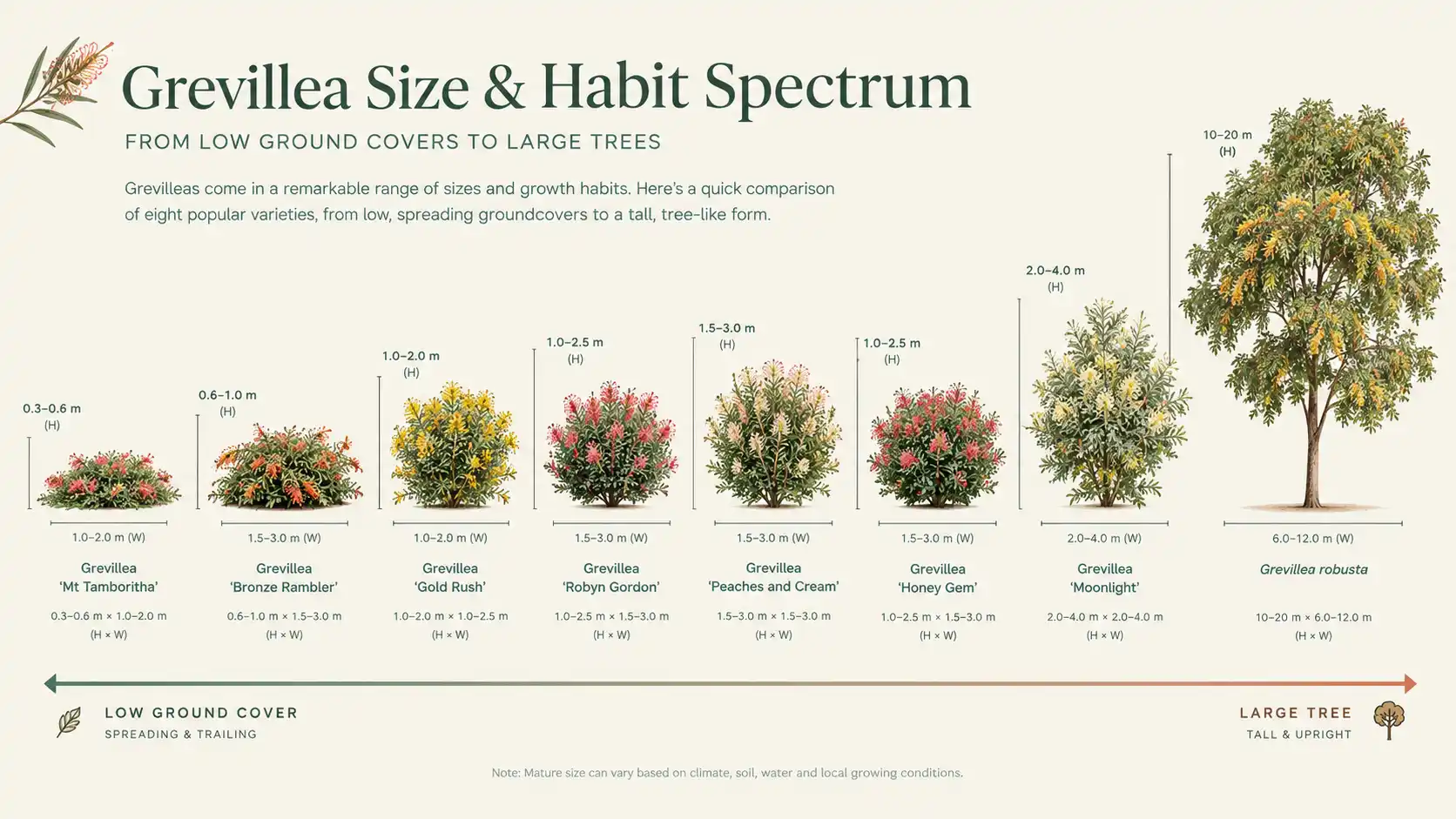
The table below compares 18 representative grevilleas using published horticultural data. Sizes are garden expectations rather than guaranteed dimensions: pruning, soil, rainfall, rootstock, climate and site can materially change mature form.
| Cultivar/species | Height × width | Habit | Flower colour and type | Main flowering months | Frost tolerance | Humidity tolerance | Best use | Lifespan expectation | Overall score |
| ‘Robyn Gordon’ | ~2 × 2 m | Dense shrub | Deep red, spider/brush-like | Year-round in many districts | Moderate | Moderate; site dependent | Feature, low hedge, bird garden | Moderate/variable | 4.4/5 |
| ‘Superb’ | ~2 × 2 m | Dense shrub | Pink, orange and red tones | Much of the year | Moderate | Moderate | Feature, hedge, screen | Moderate/variable | 4.4/5 |
| ‘Dorothy Gordon’ | ~1.2 × 1 m registered form | Medium compact shrub | Deep mauve-pink spikes | March; July/Aug.; December in Queensland | Thought moderately frost hardy | Variable | Feature, mass planting | Not established | 4.0/5 |
| ‘Honey Gem’ | ~4 × 3 m to 6 × 5 m in published sources | Large, open shrub | Golden-yellow long racemes | Most of year; strong late winter/spring flush | Moderate | Variable; drainage critical | Screen, large feature, bird garden | Moderate/variable | 3.8/5 |
| ‘Peaches and Cream’ | ~2 × 2 m | Bushy shrub | Pink, cream and yellow large flowers | Extended/seasonal flowering | At least moderate frost | Variable | Feature, mixed native border | Moderate/variable | 4.3/5 |
| ‘Golden Lyre’ | ~2–3 × 4–6 m in warm areas | Large spreading shrub | Deep yellow long racemes | Late summer–autumn reported | Frost-sensitive in cold sites | Better suited to warmer conditions | Large feature, screen | Not established | 3.4/5 |
| ‘Amber Blaze’ | ~1–3 × 2.5–3 m | Dense spreading shrub | Amber/deep orange brushes | Spring–summer to much of year depending source | Reported frost tolerant | Variable | Groundcover, screen, feature | Not established | 3.9/5 |
| ‘Coastal Gem’ | ~0.3 × 1.2–1.5 m; some Australian listings broader | Prostrate groundcover | Pink-red and cream spider flowers | Cooler months / extended | Hardy | Coastal suitability reported; humid-tolerance not consistently published | Banks, edges, coastal gardens | Not established | 4.3/5 |
| ‘Mt Tamboritha’ (G. lanigera form) | ~0.2 × 1 m | Compact groundcover | Pink/red and cream spider flowers | Winter–spring | Very frost tolerant; reported to at least −11°C | Variable | Small gardens, rockeries, groundcover | Moderate/variable | 4.7/5 |
| ‘Bronze Rambler’ | ~0.2–0.5 × 2–5 m+ | Prostrate/spreading | Burgundy-red toothbrush flowers | Winter–spring / mainly spring | Frost tolerant | Moderate; good drainage important | Banks, walls, erosion control | Not established | 4.4/5 |
| G. lanigera | ~0.3–1.5 m high depending form | Mounding to prostrate | Red/pink/cream spider flowers | Mainly winter–spring | At least moderate frost | Variable | Low shrub, groundcover | Moderate/variable | 4.5/5 |
| G. juniperina | Up to ~3 m; form dependent | Upright to spreading | Green-yellow, yellow, apricot, pink or red spider flowers | Seasonal; varies by form | Generally hardy | Moderate/variable | Bird refuge, native shrub, screening | Moderate/variable | 4.1/5 |
| G. rosmarinifolia | Usually ~2 m | Dense prickly shrub | Red flowers | Seasonal | Suited to temperate/cooler areas | Moderate; climate dependent | Hedge, bird refuge, temperate gardens | Moderate/variable | 3.8/5 |
| ‘Moonlight’ | ~5 × 4 m | Large spreading shrub | Cream-yellow cylindrical racemes | Most of year | Frost tolerant in reported cultivation | Variable | Tall screen, feature, bird garden | Moderate/variable | 4.0/5 |
| ‘Ned Kelly’ | ~2 × 3 m | Medium spreading shrub | Orange-red large racemes | Year-round | At least moderate frost | Moderate | Feature, low screen, bird garden | Moderate/variable | 4.2/5 |
| G. robusta | ~20–30 m mature tree potential | Large tree | Orange-yellow horizontal racemes | Spring–early summer | Climate dependent | Suited to warmer eastern conditions; variable elsewhere | Large properties, street/tree-scale planting, grafting rootstock | Long-lived tree form | 3.2/5 for ordinary home gardens |
| ‘Gold Rush’ | ~1 × 0.8–1 m | Compact shrub | Golden-yellow spider flowers | Spring–summer | Frost tolerant once established | Variable | Pots, borders, small gardens | Not established | 4.6/5 |
| ‘White Wings’ | ~2–3 × 3 m+ | Spreading shrub | White flowers | Spring with additional flowering | Frost hardy | Variable | Screen, barrier, bird refuge | Moderate/variable | 4.1/5 |
How to read the table: the score is an editorial comparison, not a scientific measurement or independently validated rating. It averages the five criteria in the brief—size suitability, hardiness, flowering length, maintenance and lifespan—using the available published evidence. A high score therefore means the available evidence suggests a generally versatile garden role, not that the cultivar is universally suitable.
Why some figures conflict: ‘Honey Gem’ is a good example. ANPSA describes it at about 4 × 3 m, while the Australian Plants Society gives 6 × 5 m. Both are published sources, so a gardener should allow for the larger potential footprint rather than planning around a single minimum figure.
‘Honeybird Yellow’ is mentioned in the original brief, but I have not treated it as a data-table entry because sufficiently detailed, high-confidence current evidence for mature size, flowering period and climate tolerances was not established during verification.
Which Grevillea Should You Choose? A Decision Path by Situation
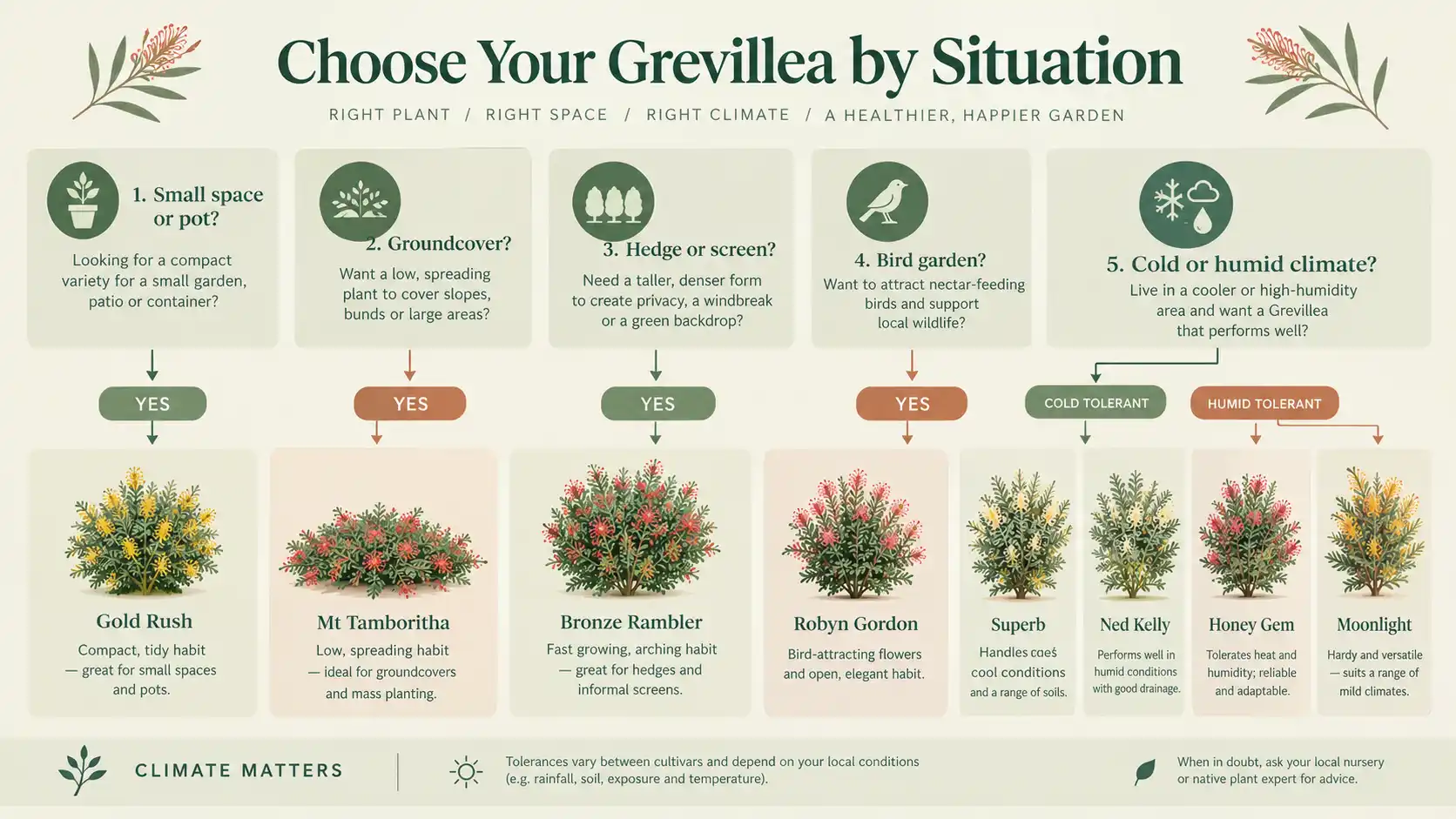
Choose the constraint first and the colour second. A grevillea that fits the site can be pruned or positioned creatively; a plant that naturally wants five metres of spread cannot be made into a genuinely one-metre shrub indefinitely.
Small Gardens and Pots (Plants That Stay Around 1 Metre)
Look first at compact types such as ‘Gold Rush’, ‘Mt Tamboritha’ and other small forms of G. lanigera. ‘Gold Rush’ is listed around 1 × 0.8–1 m, while the commonly sold ‘Mt Tamboritha’ form of G. lanigera can stay around 20 cm high and about 1 m across.
Grevilleas can be grown in containers, but pots dry faster and restrict the root zone. Use a free-draining mix, a container with adequate drainage holes and a plant whose natural mature habit already fits the pot. Grevilleas remain outdoor plants; growing one in a pot does not make a typical garden grevillea an indoor plant.
Groundcovers, Hedges and Screens
For banks and cascading coverage, ‘Bronze Rambler’ and ‘Coastal Gem’ are especially relevant. ‘Bronze Rambler’ is strongly prostrate and can spread several metres, while ‘Coastal Gem’ forms a much lower, ground-hugging plant.
For a medium screen, ‘Robyn Gordon’, ‘Superb’, ‘Ned Kelly’ and ‘White Wings’ offer upright-to-spreading habits that tolerate shaping. Larger plants such as ‘Honey Gem’ and ‘Moonlight’ require considerably more room.
Bird Gardens and Colour Choices
Grevilleas are widely used in wildlife-friendly Australian gardens because many produce nectar that attracts honeyeaters and other nectar-feeding visitors.
For red and red-toned flowers, ‘Robyn Gordon’ and ‘Ned Kelly’ are obvious comparison points. ‘Superb’ provides pink, orange and red tones.
For yellow flowers, ‘Golden Lyre’, ‘Gold Rush’ and yellow-flowering cultivars such as ‘Honeybird Yellow’ can be considered, but the latter should be checked against current nursery and cultivar information before purchase. ‘Golden Lyre’ is notably much larger than ‘Gold Rush’.
There is no objectively “most beautiful grevillea”. Beauty depends on flower form, colour, foliage, growth habit and how well the plant fits its setting. An author’s personal pick is not supplied in the brief, so none is fabricated.
Cold Winters, Humid Coasts and Heat
Climate matching matters because grevilleas from different parts of Australia can respond very differently to humidity, rainfall and frost. ANPSA notes that many Western Australian grevilleas are difficult to maintain in areas with high summer humidity and rainfall on the eastern coast, while eastern species may struggle in western conditions.
| Climate situation | What to prioritise | Examples to investigate |
| Cold or frost-prone | Proven frost tolerance and compact habit | ‘Mt Tamboritha’, ‘Bronze Rambler’, G. lanigera, ‘Gold Rush’ |
| Humid coastal / subtropical | Cultivars with a proven track record in warm, humid areas; very good drainage | ‘Robyn Gordon’, ‘Superb’, ‘Ned Kelly’, suitable Queensland-origin hybrids |
| Dry heat / inland | Drought tolerance after establishment and sun exposure | Many G. juniperina forms, G. lanigera, suitable established cultivars |
| Large warm garden | Space for vigorous roots and canopy | ‘Honey Gem’, ‘Moonlight’, ‘Golden Lyre’ |
Gardening Australia similarly stresses matching grevilleas to climate, avoiding heavy compacted soils and maintaining moisture during establishment.
Lookalike Grevilleas: ‘Robyn Gordon’ vs ‘Superb’ vs ‘Dorothy Gordon’
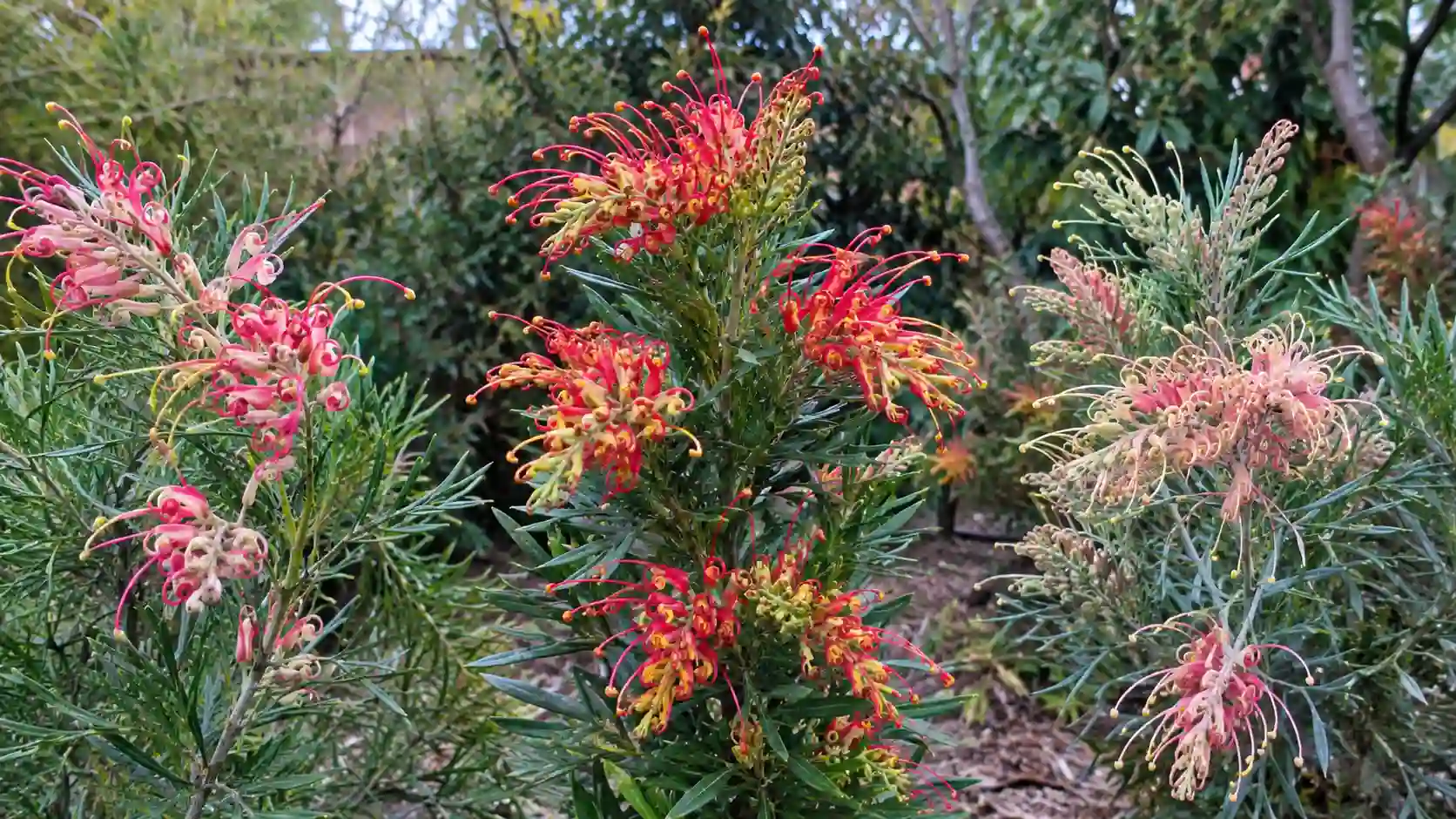
‘Robyn Gordon’, ‘Superb’ and ‘Dorothy Gordon’ can be confused because all produce showy flowering displays and have been associated with the broader world of cultivated hybrid grevilleas. But they are not interchangeable.
| Feature | ‘Robyn Gordon’ | ‘Superb’ | ‘Dorothy Gordon’ |
| Approx. mature size | ~2 × 2 m | ~2 × 2 m | Registered ACRA form ~1.2 × 1 m |
| Flower colour | Deep red | Pink/orange/red | Deep mauve-pink |
| Habit | Dense, compact | Dense, vigorous | Moderately dense, medium shrub |
| Flowering | Year-round in many districts | Much of the year | March, July/August, December in Queensland |
| Key distinction | Widely grown, strong sustained flowering | Similar shape, often more vigorous | More compact registered form and mauve-pink flowers |
‘Robyn Gordon’ resulted from G. banksii × G. bipinnatifida, while ‘Superb’ was a deliberate cross involving white-flowered G. banksii. ‘Dorothy Gordon’ is registered by the Australian Cultivar Registration Authority at 1.2 m high × 1 m wide, with deep mauve-pink flowers.
The apparent size discrepancy for ‘Dorothy Gordon’ is worth noting: some commercial listings describe substantially larger plants, so provenance and pruning history should be checked rather than assuming every plant sold under the name will remain at the registered dimensions.
Author-provided comparative photographs were not supplied, so no first-hand photo evidence is claimed.
Grevillea vs Hakea
Grevillea and Hakea are closely related Proteaceae genera and can look remarkably similar. One of the most useful identification clues is the fruit.
Hakea generally develops hard, woody, persistent fruits, whereas Grevillea fruits are usually thinner-walled and less woody. PlantNET’s family key also separates Hakea by its woody, thickened follicles, while Grevillea generally has thinner, leathery follicles.
The flowers can also differ, but fruit structure is often easier to use when an unfamiliar plant is not in bloom.
Plant Size and Growth Rate Explained
Mature Size
Grevillea mature size varies enormously. A compact groundcover such as ‘Mt Tamboritha’ can remain around 20 cm high, while ‘Honey Gem’ can become a large shrub and G. robusta can become a substantial tree.
Do not plan only for the height you see in a nursery pot. Soil depth, rainfall, irrigation, sunlight, pruning and rootstock can all influence the finished plant.
For pots, the root zone and container volume can constrain growth, but the plant’s genetic growth habit does not disappear. A large grevillea cultivar remains a large grevillea even when grown in a container.
Growth Rate
There is no single grevillea growth rate. Fast-growing large cultivars can put on substantial extension growth during favourable conditions, while compact or naturally slow forms remain smaller.
Sunlight, water availability, temperature, soil drainage and establishment all affect apparent growth rate. Gardening Australia notes that many grevilleas can flower quickly after planting, while other sources describe specific cultivars such as ‘Honey Gem’ and ‘Misty Pink’ as quick growing.
A personalised author measurement log was not provided, so no invented annual growth figure is included.
Grevillea Care Guide: Where and How to Grow
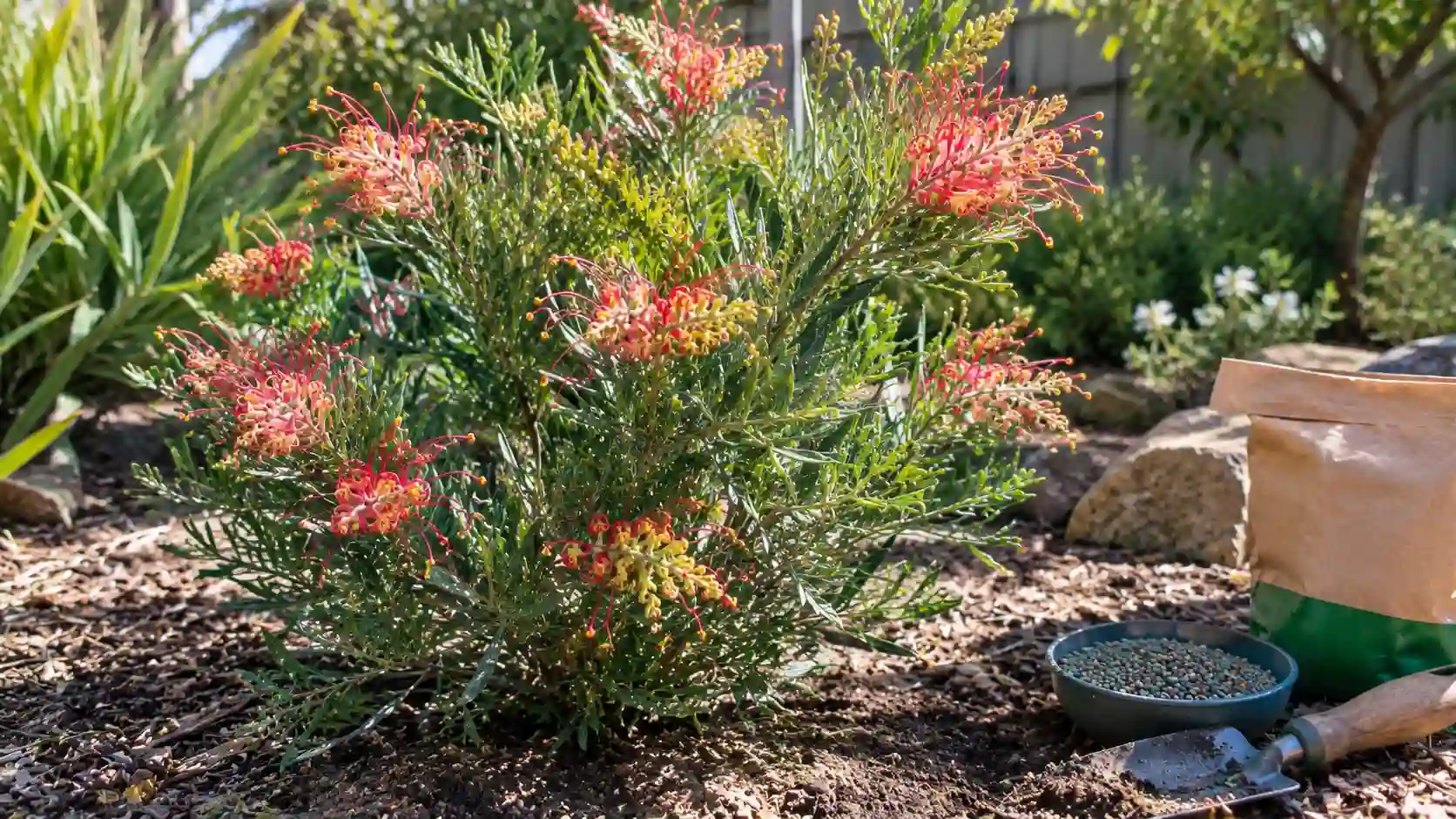
Grevilleas are generally easiest to grow when their basic ecological preferences are respected: sun, drainage, moderate establishment watering and low-phosphorus nutrition. Gardening Australia recommends a sunny position and light, free-draining soil low in phosphates.
Placement and Light
Most garden grevilleas prefer full sun, although some cultivars tolerate part shade. More sunlight generally supports stronger flowering and denser growth.
Choose a site that has excellent drainage. Heavy clay or compacted soil can cause establishment and root problems, so raised beds or improved drainage may be preferable rather than continually trying to compensate with extra watering.
For additional Australian native planting ideas, see our Australian native garden plants guide.
Soil and Fertiliser
Grevilleas belong to Proteaceae and have specialised root systems adapted to nutrient-poor soils. Excess phosphorus can therefore be harmful. ANPSA recommends avoiding high-phosphorus fertilisers and, when fertilising is necessary, using a low-phosphorus slow-release product.
The practical answer to “What is the best fertiliser for grevilleas?” is not the strongest general-purpose fertiliser. Choose a fertiliser specifically formulated for Australian natives with low phosphorus and follow its label rate.
Read the Australian Native Plants Society guidance on Grevillea cultivation
Watering and Climate
Established grevilleas are often drought tolerant, but drought tolerance should not be confused with “never water”. New plants need adequate moisture while roots establish. Gardening Australia specifically identifies inadequate moisture during establishment as a common planting failure.
Once established, watering should reflect rainfall, season, soil and plant condition. In heavy summer rainfall or humid districts, drainage and airflow become particularly important.
Pruning
Should you prune grevilleas after flowering? Often yes, but the amount depends on the cultivar.
Light tip pruning can encourage compact branching. Larger cultivars such as ‘Honey Gem’ can tolerate much harder renovation pruning when they become overgrown. Gardening Australia demonstrates substantial pruning of ‘Honey Gem’ and recommends low-phosphorus native fertiliser after pruning.
Avoid automatically applying a hard prune to every grevillea. Some plants respond well, while others have more limited useful regrowth from old wood. Check the specific cultivar before cutting deeply.
Roots
The question “Do grevillea trees have invasive roots?” needs a species-specific answer. Grevilleas as a genus should not simply be labelled as having invasive roots. Planting risk depends on mature size, site, soil, moisture and species.
Grevillea robusta is the important exception for planning purposes in an ordinary suburban garden—not because a unique “invasive-root” mechanism has been established, but because it can become a very large tree. It can also naturalise outside its native range in some areas.
That makes mature dimensions and local environmental-weed advice more important than a blanket root label.
Why Are My Grevilleas Dying? Common Problems and Fixes
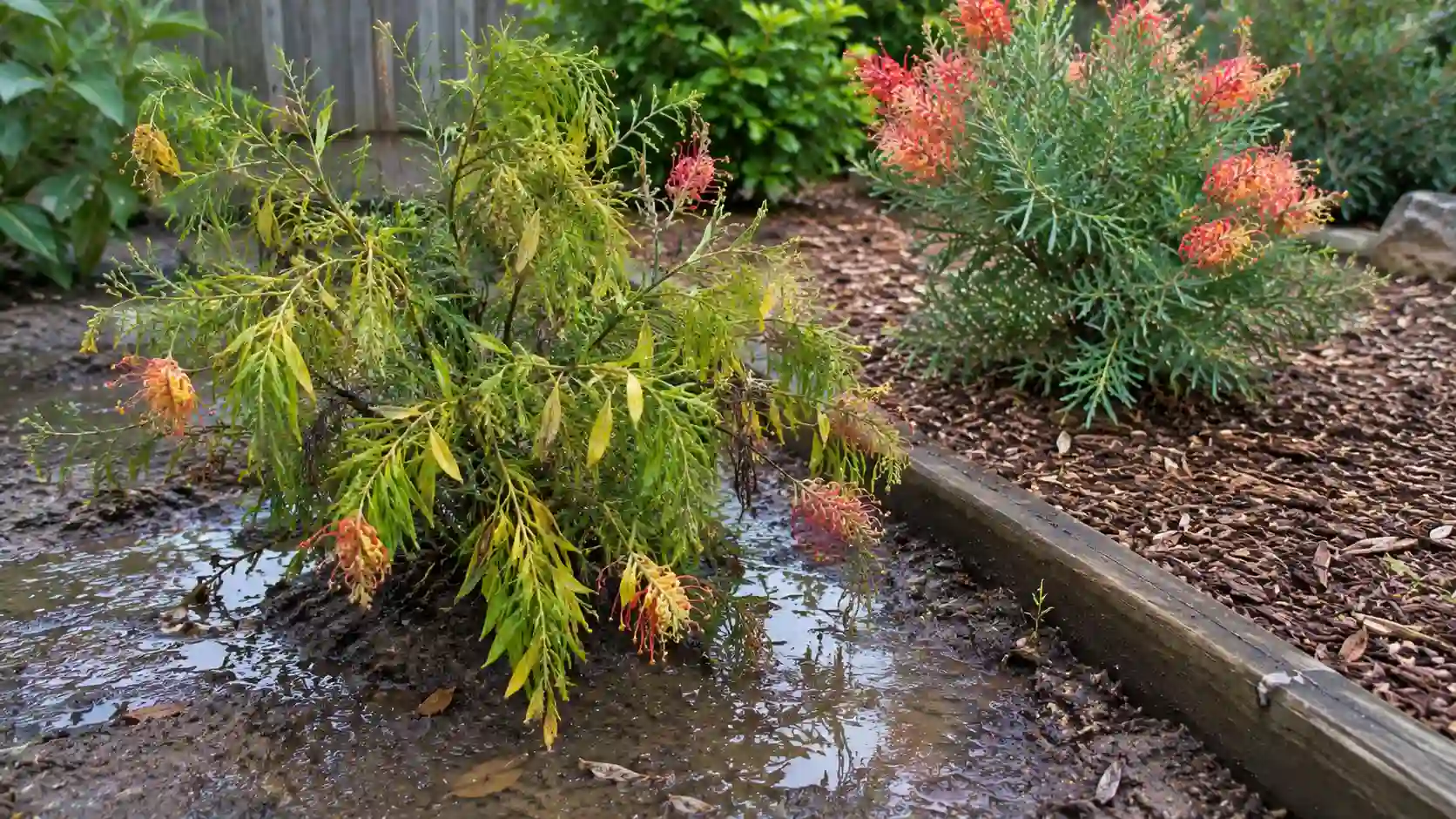
Overwatering, Poor Drainage and Root Rot
Why it happens: roots remain excessively wet, especially in compacted clay, poorly drained pots or sites exposed to prolonged waterlogging.
How to fix: reduce unnecessary irrigation, improve drainage and consider a raised planting position where natural drainage is poor.
How to prevent: choose cultivars suited to the site and never assume drought-tolerant means tolerant of permanently wet roots. Gardening Australia specifically recommends free-draining soil and raised beds where drainage is inadequate.
Phosphorus Toxicity From the Wrong Fertiliser
Why it happens: a conventional high-phosphorus fertiliser is applied to a plant adapted to low-phosphorus soils.
How to fix: stop the inappropriate fertiliser and avoid repeated high-phosphorus applications. Severe symptoms require assessment of the plant, soil and site rather than simply adding another nutrient.
How to prevent: use a low-phosphorus native fertiliser when feeding is necessary. This is one of the most consistent cultivation recommendations across Australian grevillea references.
Yellowing Leaves and Slow Growth
Why it happens: yellow leaves are a symptom, not a diagnosis. Poor drainage, root stress, nutrient imbalance, seasonal water stress or heavy rain can all contribute.
How to fix: check the soil moisture and drainage first, then inspect the root zone and consider whether recent fertilising or unusual weather explains the change.
How to prevent: maintain appropriate drainage and avoid treating every yellow leaf as a fertiliser deficiency. Gardening Australia has also documented yellowing in grevilleas in subtropical conditions associated with heavy rain and nutrient availability.
Pests, Dieback and Short Lifespan
Why it happens: lifespan varies by species, cultivar and growing conditions. Some grevilleas are naturally short lived, while others can persist for many years. A NSW scientific review cites Olde and Marriott’s estimate that many grevilleas live around 10–30 years, while particular species can have considerably shorter or longer lifespans.
How to fix: distinguish ordinary ageing from root problems, environmental stress, disease or an inherently short-lived plant.
How to prevent: choose a cultivar suited to the climate, do not overwater, avoid unsuitable fertilisers and replace naturally short-lived plants as part of the garden plan when appropriate.
A useful lesson is that “died after two years” does not automatically mean the gardener killed the plant. Some species and forms have inherently limited longevity, while others fail because their climate or soil does not match their needs.
Two especially common beginner mistakes are planting a moisture-sensitive grevillea into poorly drained clay and applying general fertiliser because the plant looks hungry. A third is pruning a plant as if every cultivar responds identically to severe cutting.
For another Greenery Nest perspective on a specific cultivar, see the Dorothy Gordon grevillea care guide.
Conclusion
A useful grevillea varieties comparison starts with size, habit, climate, flowering pattern and garden use, then considers colour. Check the plant’s realistic mature footprint before planting, provide excellent drainage and use low-phosphorus nutrition when feeding is necessary. The right grevillea is the one whose natural requirements match the site—not simply the one with the most attractive flower in the nursery.
Frequently Asked Questions
Can grevillea be grown in pots?
Yes. Compact grevilleas are particularly suitable for containers, provided the pot drains freely and the plant receives adequate sunlight. ‘Gold Rush’ and compact G. lanigera forms are more appropriate for small pots than naturally large cultivars. Container plants also dry out faster than plants in the ground and may need closer moisture monitoring.
What varieties of grevillea grow to 1 metre tall?
Several compact forms approach this size, including ‘Gold Rush’, which is commonly listed around 1 m high and 0.8–1 m wide, and the compact G. lanigera ‘Mt Tamboritha’ form, which is much lower and spreads to around 1 m. Exact dimensions vary with conditions and pruning.
What is the lifespan of a grevillea plant?
There is no single lifespan for all grevilleas. Published Australian conservation material cites an estimate of roughly 10–30 years for many grevilleas, while some specific species or forms can be short lived. Treat lifespan as a species- and site-dependent characteristic rather than a fixed genus-wide number.
Do grevillea trees have invasive roots?
Not as a universal genus characteristic. Root behaviour varies by species and growing conditions, and large trees naturally require more space than compact shrubs. Grevillea robusta can reach very large dimensions and has also naturalised in some regions, so its placement deserves much more consideration than that of a small groundcover grevillea.
Should you prune grevilleas after flowering?
Usually light pruning after flowering is useful for maintaining a compact shape and encouraging branching, but the correct severity depends on the cultivar. Some large-flowered cultivars such as ‘Honey Gem’ tolerate heavy renovation pruning, while other plants should not automatically be cut deeply into old wood.
What is the difference between a hakea and a grevillea?
The clearest general difference is the fruit. Hakeas generally produce harder, woody and persistent fruits, while Grevillea fruits are usually thinner-walled and less woody. The plants can have superficially similar flowers, so mature fruit is often useful for identification.
Do grevilleas prefer sun or shade?
Most cultivated grevilleas prefer full sun, although some tolerate part shade. Good light generally supports flowering, while free-draining soil is equally important. Gardening Australia recommends a sunny position with light, well-drained soil for grevilleas generally.
What is the best fertilizer for grevilleas?
A low-phosphorus fertiliser formulated for Australian native plants is the usual choice when fertilising is necessary. Grevilleas and other Proteaceae are adapted to low-phosphorus soils, so conventional high-phosphorus fertilisers can cause problems.