
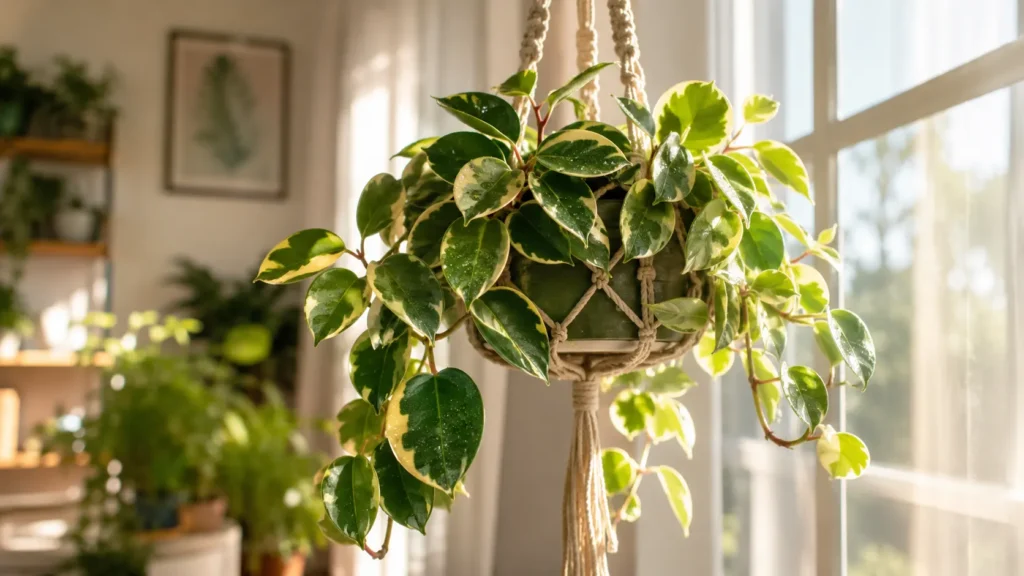
According to Manuela Nogueira, Hoyas need bright indirect light, a chunky, fast-draining mix (think orchid bark and perlite, not regular potting soil), and a good soak only once the soil’s gone fully dry — usually every week or two. She says they’d rather be underwatered than overwatered, since soggy roots rot far quicker than a dry spell does damage.
One thing Nogueira points out: don’t panic if your Hoya seems to just sit there doing nothing for months after repotting — that’s completely normal, not a sign you’ve killed it. And whatever you do, leave the peduncles alone once flowers drop, since a lot of Hoya varieties will bloom from that exact same spur again and again. For care fundamentals that apply across your whole houseplant collection, see our Indoor Green Living Hub.
Quick Summary
- Water only when the top 2–3 inches of soil are dry — never on a fixed calendar.
- Give bright, indirect light; a few feet from an east-facing window is ideal.
- Pot in a fast-draining, chunky mix, and don’t rush to size up the pot.
- Blooms come with maturity and patience, not just “more light.”
How Often Should You Water a Hoya? (The 3-Point Check Method)
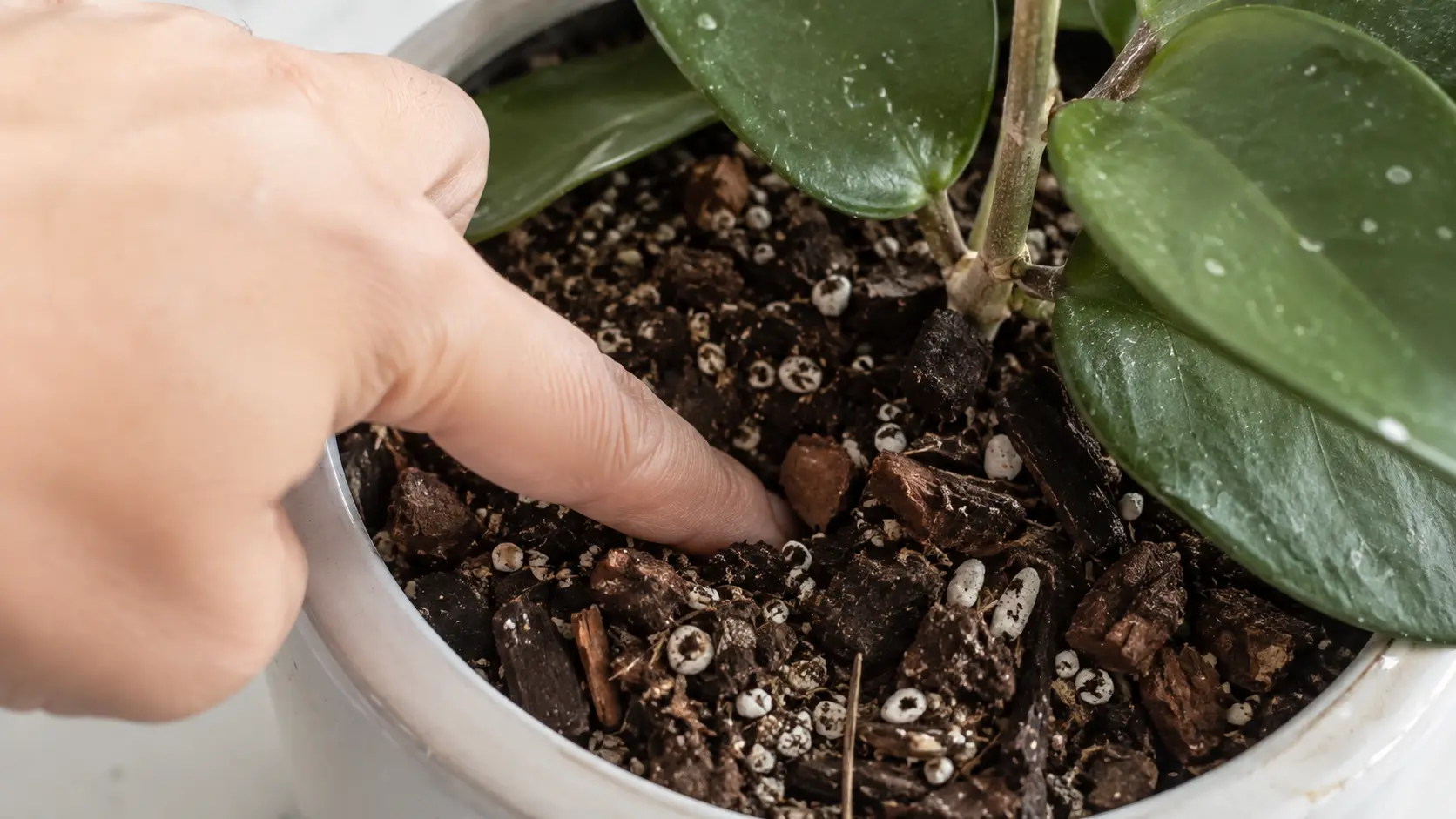
Water a hoya only when the top 2–3 inches of its soil mix have dried out — not on a fixed weekly or biweekly schedule.
A calendar schedule fails because it ignores everything that actually controls drying speed: pot size, soil mix, humidity, and season. This is exactly why care guides hedge with a range instead of a number — the range itself isn’t useful without a way to check it. Since hoyas store water in their leaves like succulents, watering too often is far more damaging than watering too little, and overwatering-driven root rot is the single most common way beginners lose the plant. For a broader breakdown of dryness-checking methods that work across most houseplants, see our guide on how to check if an indoor plant needs water. This lift-and-compare approach is also recommended by University of Maryland Extension’s guidance on overwatered indoor plants as a reliable way to judge soil moisture without guesswork.
Instead of guessing, run this 3-point check before every watering:
- Finger test — push a finger 2–3 inches into the mix. If it comes out with soil clinging to it, wait.
- Pot-weight test — lift the pot right after watering, then again a few days later. Learn what “dry” feels like in your hands; a noticeably lighter pot means it’s time.
- Leaf-firmness check — leaves that feel slightly softer and look a touch matte are asking for water; leaves that stay taut and glossy don’t need it yet.
Together, these three checks replace guesswork with a repeatable habit that adjusts automatically to your home’s light, humidity, and season — something no fixed schedule can do.
Light Level, Watering Frequency, and the Common Mistake at Each
| Light Level | Realistic Watering Frequency | Common Beginner Mistake |
| Low / indirect only | Every 2–3 weeks | Watering weekly “just in case,” causing root rot |
| Medium bright, indirect | Every 10–14 days | Letting a moisture meter override the finger test |
| Bright indirect (best) | Every 7–10 days | Assuming bright light means water more often than the soil actually needs |
What Light Does a Hoya Need?
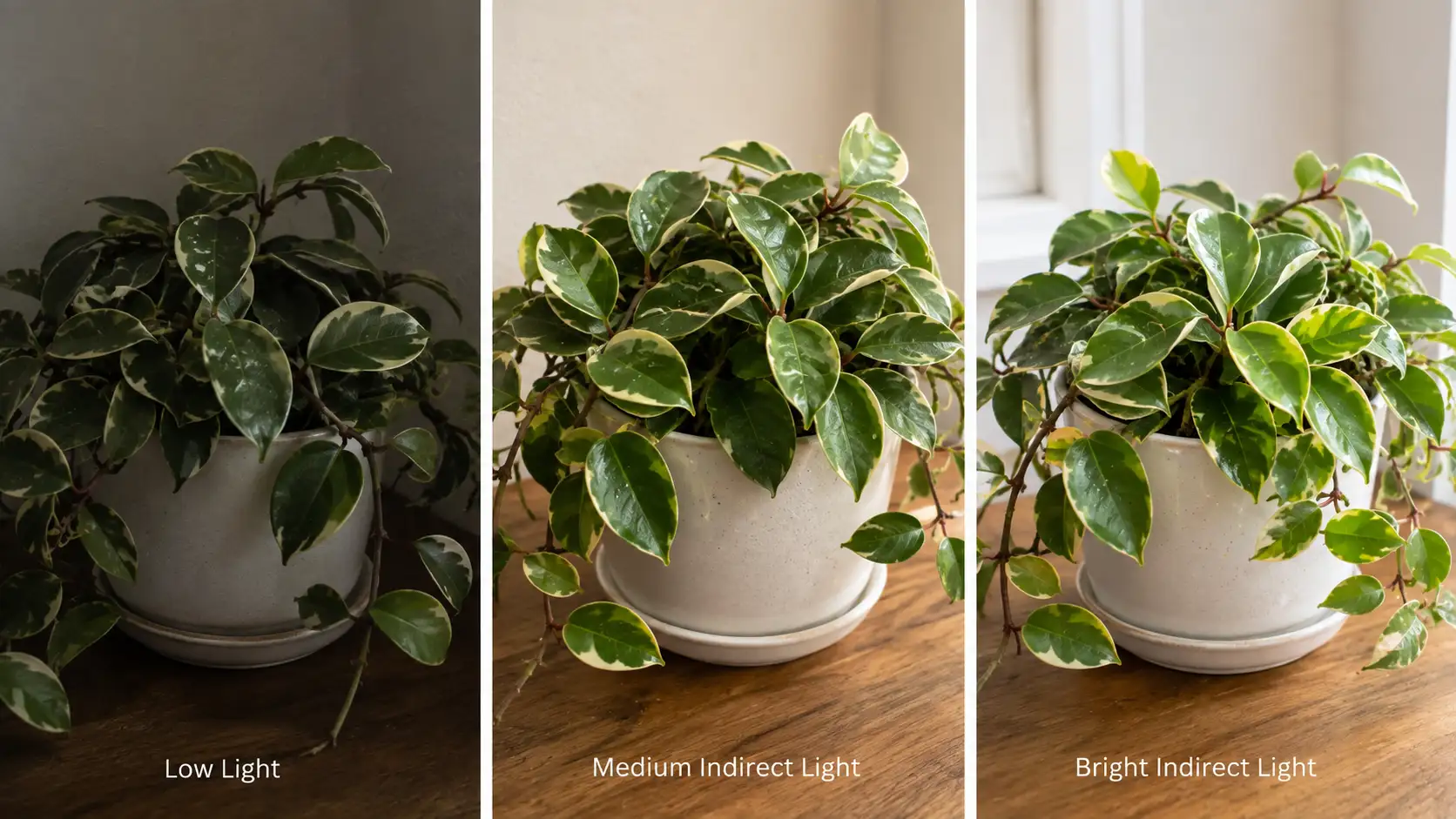
Hoyas want bright, indirect light — think an east-facing window, or a spot a few feet back from a south- or west-facing one.
Light directly drives both growth speed and blooming. Too little light is the single biggest reason a healthy-looking hoya never flowers, while too much direct sun scorches the thick leaves it depends on for water storage. If you’re unsure what ‘bright indirect light’ actually looks like in your home, our full comparison of bright indirect light vs. direct sunlight breaks down how to tell the difference room by room.
Signs You’re Getting the Light Wrong
- Too little light: leggy stems with wide gaps between leaves, slow or stalled growth, no blooms despite otherwise good care.
- Too much direct light: bleached or red-tinged patches, crispy brown edges, leaves that feel papery instead of firm.
Soil, Pot, and Drainage Setup That Prevents Root Rot
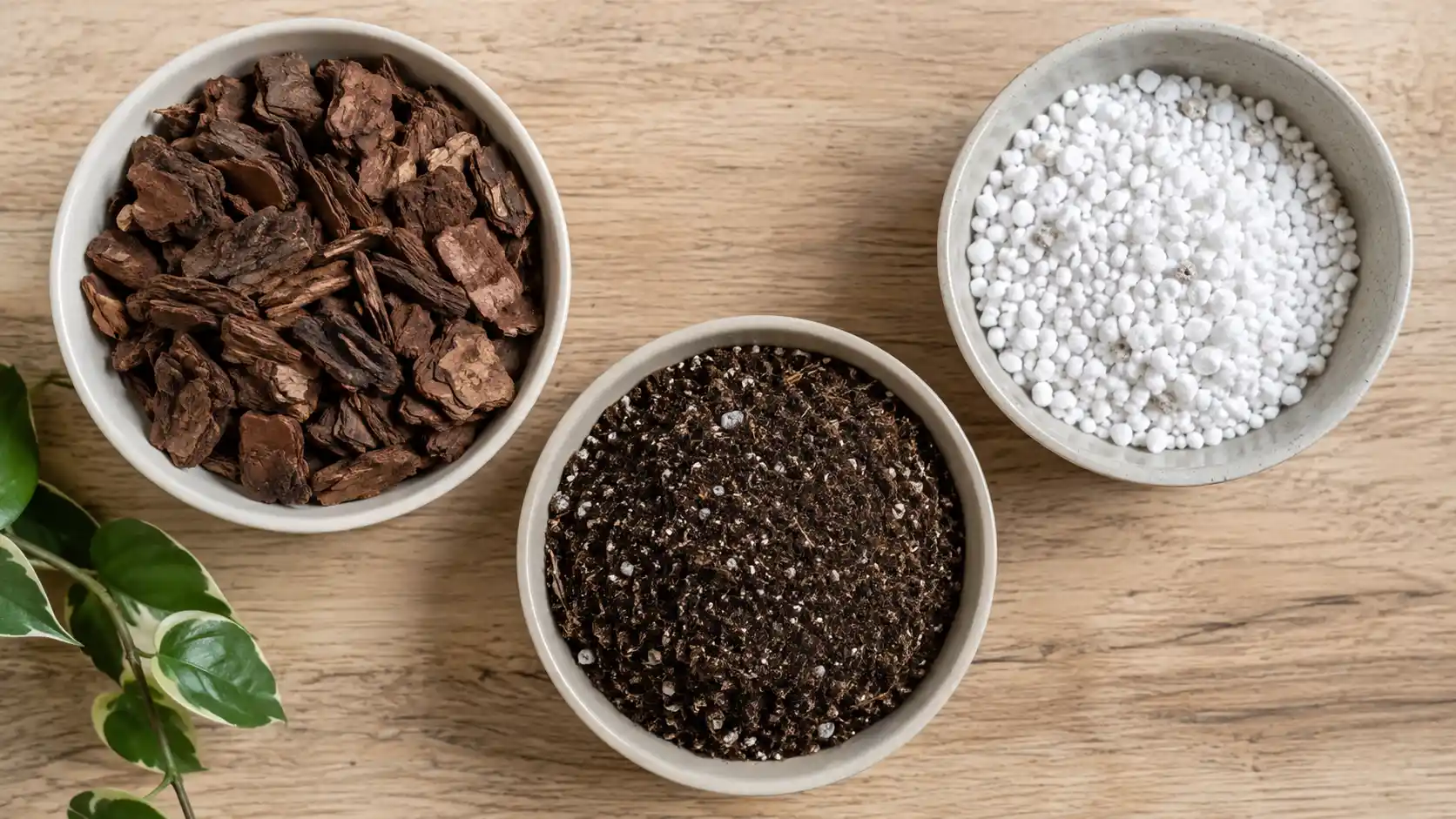
Use a chunky, fast-draining mix — orchid bark, perlite, and a smaller portion of regular potting soil — in a pot with a drainage hole.
Because hoya roots evolved to grip bark and breathe air, dense, water-retentive soil is the direct mechanical cause of the root rot named by nearly every source as the top beginner failure. Chunky mix keeps oxygen reaching the roots even right after watering.
A Simple DIY Hoya Soil Mix
- 2 parts orchid bark
- 1 part perlite
- 1 part regular potting soil
One overlooked detail: hoyas actually prefer being slightly root-bound. Sizing up the pot “to be safe” is itself a common mistake — it leaves excess soil wet for far longer than the roots can use, accelerating rot rather than preventing it.
Do You Need to Fertilize a Hoya?
Feed lightly during active growth in spring and summer, and skip fertilizer entirely through winter dormancy.
Fertilizing a dormant plant wastes nutrients the roots aren’t using and risks salt buildup in the soil, while feeding during active growth supports the energy reserves a hoya needs to eventually bloom. As a general starting point, a balanced liquid houseplant fertilizer diluted to roughly half strength, applied monthly during the growing season, is a reasonable default. Not sure which feeding rhythm fits your plant collection overall? Our comparison of bi-weekly vs. monthly fertilizing for houseplants can help you settle on a routine. This lighter, more frequent approach lines up with general fertilizing best practice from UConn’s Home & Garden Education Center, which recommends quarter- to half-strength solutions over infrequent full-strength feeding.
Why Isn’t My Hoya Blooming?
A non-blooming hoya is usually explained by insufficient light, immaturity or a recent repot, or excess nitrogen fertilizer — not a single fix.
Blooming takes stored energy and a mature root system; many hoyas need to be several years old and somewhat pot-bound before they flower reliably. That’s why “just give it more light” — the typical one-line answer elsewhere — is incomplete. One easy way to sabotage future blooms: cutting off a spent flower stalk (peduncle). New flowers often emerge from that same spur, so leave it in place.
Symptom → Likely Cause → Fix
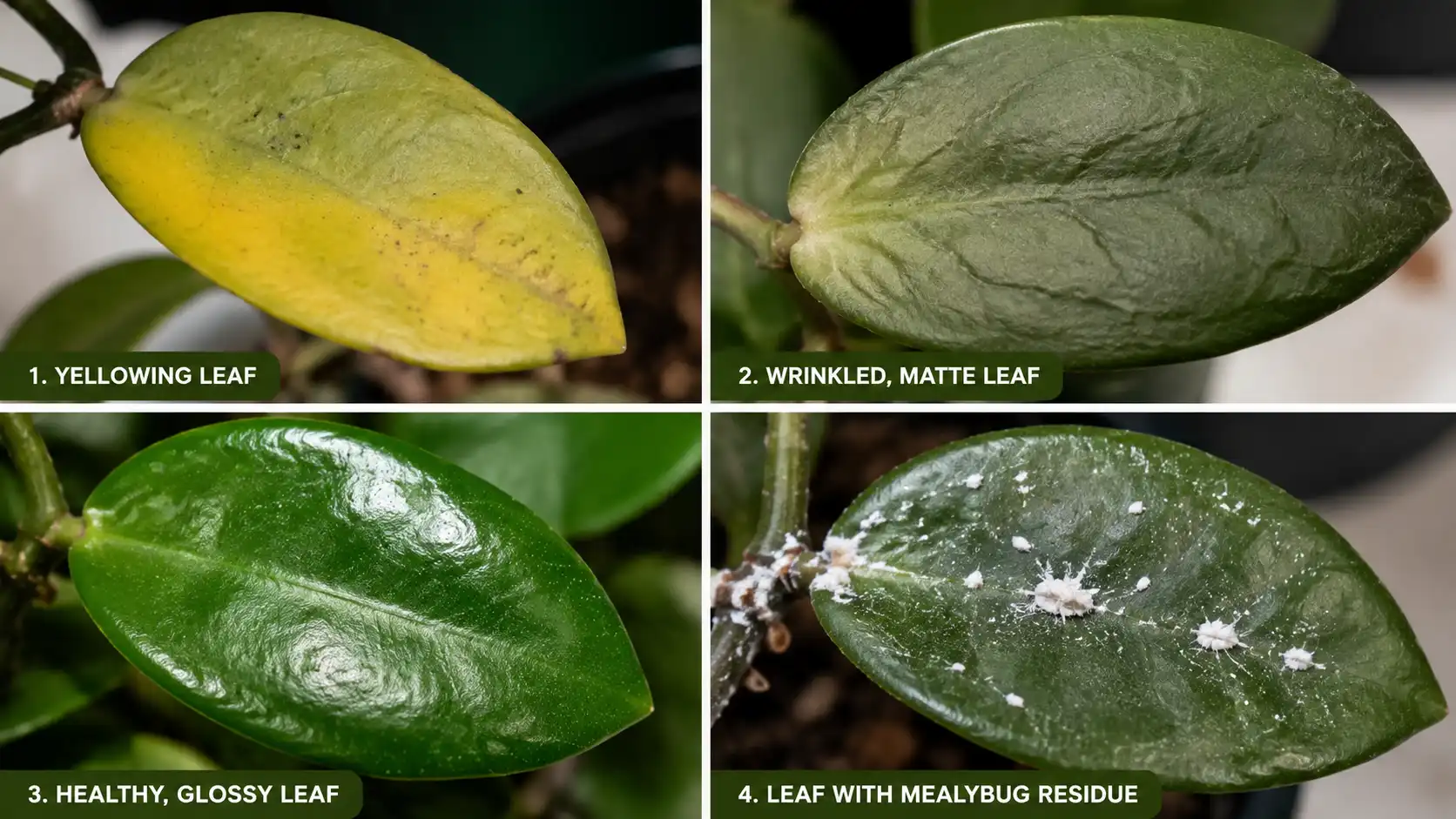
| Symptom | Likely Cause | Fix |
| Yellow leaves, several at once | Overwatering / soggy soil | Let soil dry fully; check roots for rot |
| Yellow leaf, just one, older leaf | Natural aging | No action needed |
| Wrinkled, matte leaves | Underwatering or root damage | Check soil moisture, then water if dry |
| No blooms, otherwise healthy | Low light or plant immaturity | Increase indirect light; be patient |
| Sticky residue, cottony clusters | Mealybugs | Isolate and treat (see below) |
| Leggy growth, no new leaves | Insufficient light | Move closer to a bright window |
Common Hoya Pests and How to Treat Them
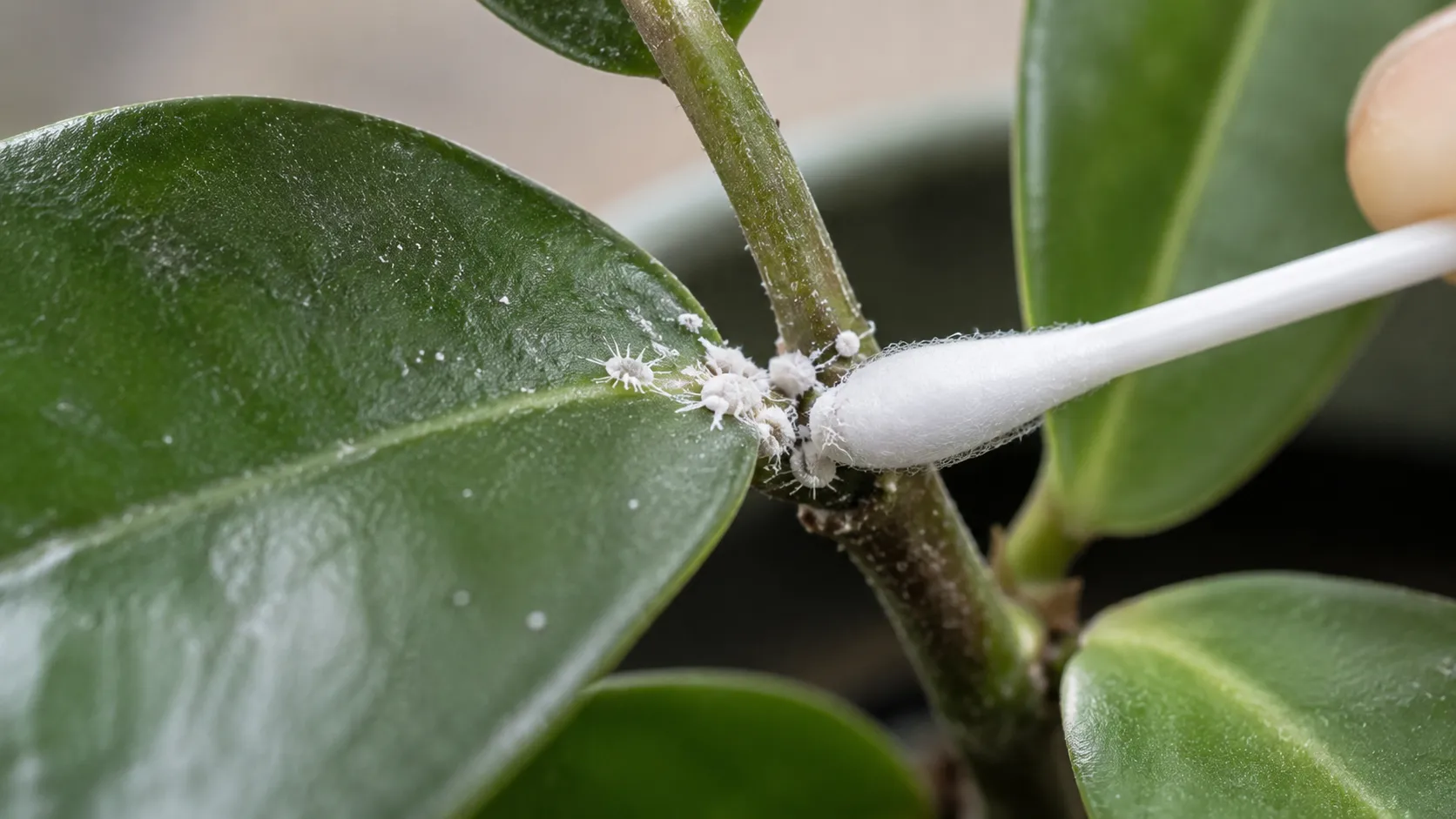
Mealybugs and aphids are the most common hoya pests; treat with isolation, a wipe-down using rubbing alcohol, and neem oil or insecticidal soap.
Pests target soft new growth and tend to show up on plants already stressed by overwatering or low light, so an infestation is often a downstream symptom rather than a standalone problem.
- Isolate the plant immediately to protect neighbors.
- Dab visible mealybugs (white, cottony clusters) with a cotton swab dipped in rubbing alcohol.
- Follow up with a full neem oil or insecticidal soap application, repeated weekly for 2–3 weeks.
- Address the underlying stress — usually watering or light — so pests don’t return.
If the issue seems to be coming from the soil itself rather than the leaves, check our guide to identifying and treating bugs in indoor plant soil.
Beginner Mistakes to Avoid
- Watering on a fixed calendar instead of checking the soil first.
- Repotting too often, or sizing up “just in case.”
- Trusting an uncalibrated moisture meter over the finger test.
- Fertilizing a wrinkled, stressed plant instead of letting it recover first.
- Pruning wrinkled leaves — they still photosynthesize and help the plant recover.
- Panicking over one yellow leaf when it’s simply natural aging.
Is Hoya Safe for Pets?
Yes — hoyas are generally considered non-toxic to cats and dogs, making them a low-risk pick for pet-owning first-time plant parents. It’s still worth discouraging chewing, since individual animal sensitivities can vary. This is confirmed directly by the ASPCA’s plant toxicity database, which lists hoya as non-toxic to both cats and dogs.
How to Propagate a Hoya
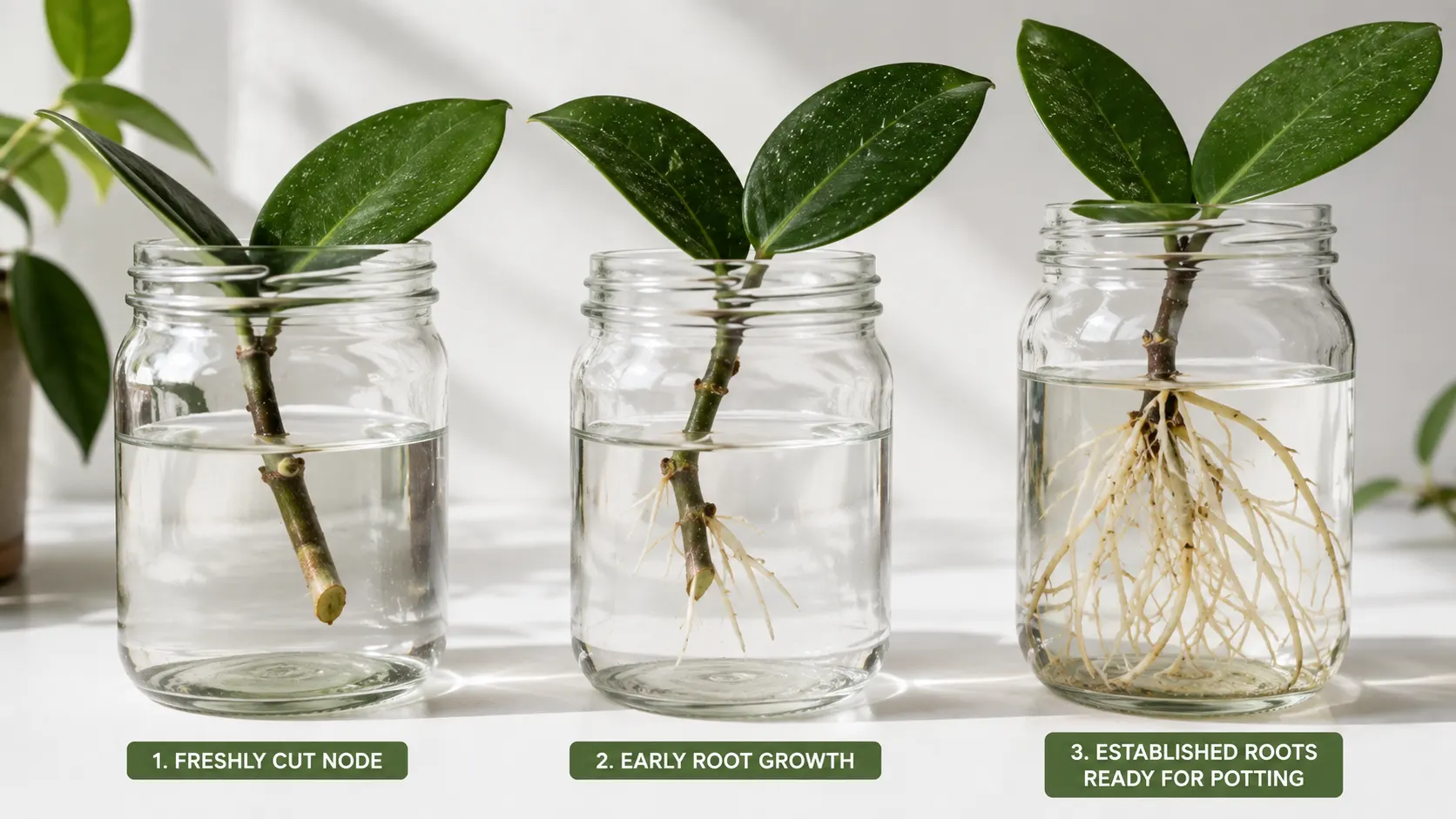
Take a stem cutting with at least one node and root it in water or moist soil.
A node — the small bump where a leaf attaches — is required for a cutting to grow roots; a single detached leaf without a node will not develop into a new plant, a common and costly buying mistake.
- Cut a healthy stem just below a node, using a clean, disinfected tool.
- Remove the lower leaves so none sit in water.
- Place the cutting in a glass of room-temperature water, out of direct light, changing the water every 3–4 days.
- Once roots reach 4–5 cm (roughly 2 inches), transplant into a small pot with well-draining mix.
Growing a Hoya bella specifically? Our dedicated Hoya bella propagation guide covers a few extra species-specific tips.
5 Easiest Hoya Varieties for True Beginners
- Hoya carnosa — the classic, most forgiving option; tolerates watering mistakes well.
- Hoya kerrii — the “sweetheart hoya,” slow-growing but very low-maintenance.
- Hoya australis — vigorous grower with fragrant blooms once mature.
- Hoya pubicalyx — fast-growing and hardy, a good pick if you want quicker visible progress.
- Hoya obovata — thick, rounded leaves that are notably tolerant of inconsistent watering.
Conclusion
Hoya care for beginners comes down to one mindset shift: check before you water, don’t guess on a schedule. Combine that with bright indirect light, a fast-draining chunky mix, and patience for blooms — which come with maturity, not just more sun — and most of the “failures” every beginner fears simply won’t happen. If your hoya is already struggling, start with the symptom table above; if you’re just getting started, run the 3-point check on your very first watering and let the habit build from there.
FAQs
How do I know if my hoya is overwatered vs. underwatered?
Overwatered hoyas usually show several yellow, soft leaves at once and may have a musty smell at the soil line; underwatered hoyas show individual wrinkled or dry, crispy leaves while the rest of the plant stays firm.
How often should I fertilize a hoya?
Feed monthly with a half-strength balanced liquid fertilizer during spring and summer, and stop entirely in fall and winter.
Why are my hoya’s leaves wrinkling?
Wrinkling is most often a sign of underwatering or root damage; check soil moisture with the finger test before assuming more water is needed, since root rot can also cause wrinkling.
Do hoyas need a moss pole or trellis?
Not strictly, but since hoyas are natural climbers, a trellis, moss pole, or coir support gives vining varieties a more natural growth habit and can encourage fuller growth.
How long does it take for a hoya to bloom for the first time?
Many hoyas take two to three years, or longer, to bloom for the first time, since flowering depends on plant maturity and a somewhat root-bound state, not just care quality.
Can I keep a hoya in low light?
A hoya can survive in low light, but it will grow slowly and is unlikely to bloom; bright indirect light is needed for vigorous growth and flowering.



One Response