
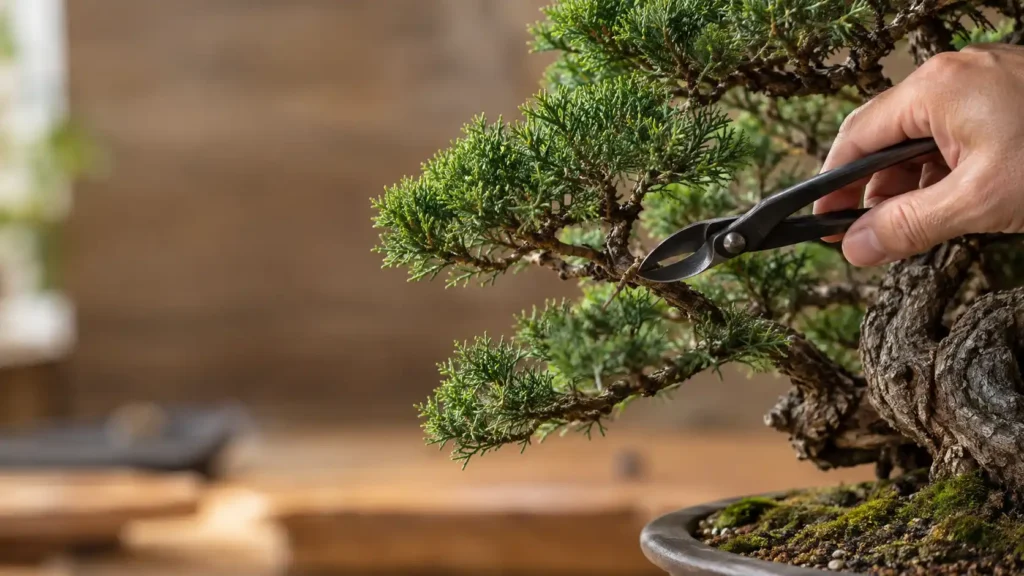
According to Manuela Nogueira, bonsai pruning combines maintenance pruning—trimming new shoots back to one or two leaves during active growth—with structural pruning, done in late winter or early spring before buds swell, to remove thick branches and shape the silhouette. Always cut just above a node with sharp, disinfected shears, sealing large wounds with cut paste.
Deciduous species tolerate structural cuts best while dormant, whereas pines require candle-pinching in spring rather than indiscriminate branch removal. Nogueira points out that over-pruning conifers can trigger die-back, since they lack the latent buds many broadleaf trees use to regenerate foliage.
Quick Summary
- Bonsai pruning splits into two types — maintenance (light, frequent) and structural (heavy, seasonal) — and mixing up which one you’re doing is the root of most mistakes.
- Timing depends on species and dormancy cycle, not the calendar alone.
- Never remove more than about one-quarter to one-third of a tree’s foliage in a single session.
- What you do in the 2–4 weeks after a hard prune determines whether the tree recovers well or stalls.
Which Type of Cut Does Your Tree Need?
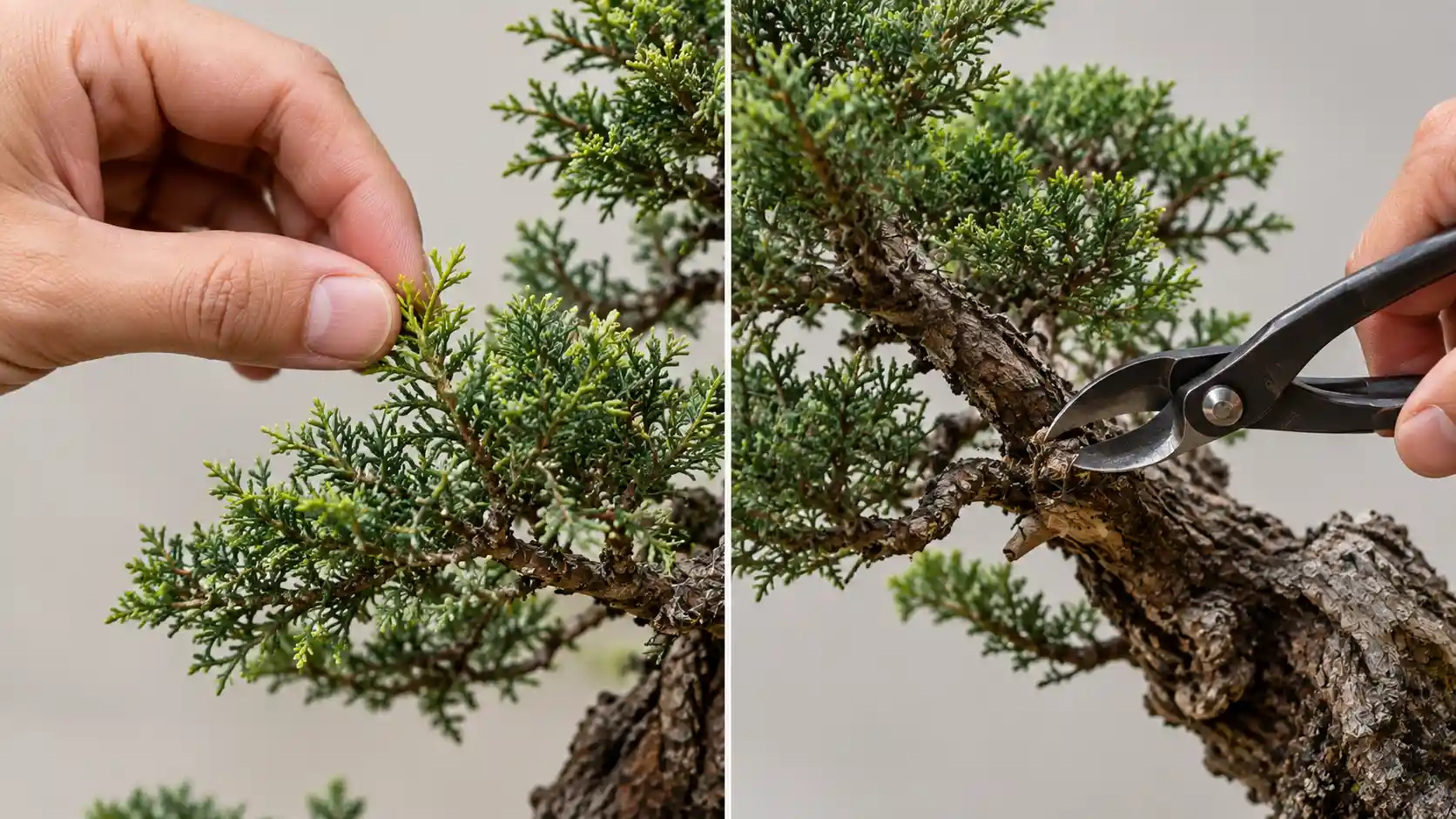
Before you touch a branch, name what you’re actually doing. Maintenance pruning is the light, repeated trimming of new shoots to keep an already-established shape tidy and dense. Structural pruning is the heavier work of removing whole branches to change the tree’s design — correcting a bad line, removing a competing leader, or opening up the silhouette.
The distinction matters because the two carry completely different risk levels. Maintenance pruning removes a small amount of new, low-value growth, so a tree tolerates it repeatedly through the growing season with almost no setback. Structural pruning removes wood the tree has already invested energy into, so it’s more like minor surgery — it needs the right seasonal window to heal without excessive sap loss or stress.
A simple self-check: if you’re shortening a shoot that grew this season, that’s maintenance. If you’re removing a branch that’s been part of the tree’s structure for a year or more, that’s structural — treat it with the seasonal caution below.
The Pruning Decision Framework
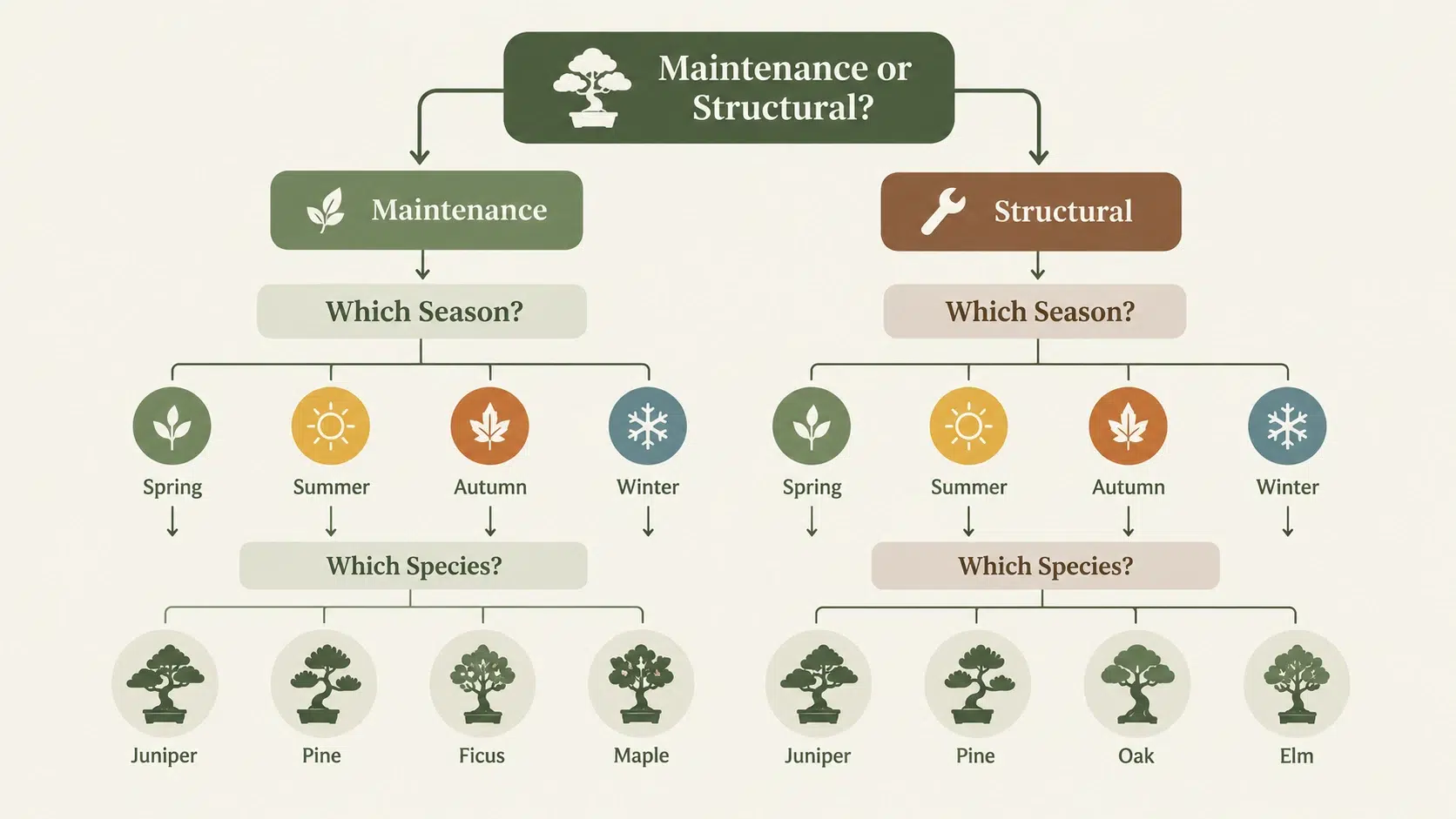
Once you know your cut type, check it against species and season. This is the step most guides skip, forcing you to dig through a separate species page mid-project.
| Cut Type | Best Season | Applies To | Risk if Timed Wrong |
| Maintenance / pinching | Throughout active growth (spring–early autumn) | Most species | Minor — usually just a slightly rougher silhouette |
| Structural (deciduous) | Early spring, before bud break — or right after leaf-drop in autumn | Maple, elm, zelkova | Heavy sap “bleeding,” slower wound closure |
| Structural (conifers) | Late winter into early spring | Juniper, pine | Weaker back-budding, possible branch dieback |
| Structural (flowering) | Immediately after flowering finishes | Azalea and similar | Cuts off next year’s flower buds |
The logic behind each row is physiological, not arbitrary. Deciduous trees pruned in full leaf are actively pumping sap through the cut site, which can bleed for days and slow healing. Conifers pruned too late into spring lose energy they’d otherwise put into producing new buds on older wood. Flowering species set next year’s flower buds almost immediately after this year’s bloom, so pruning “whenever” can quietly erase a season of flowers before you even notice.
How Much Can You Safely Remove?
The widely cited rule — remove no more than roughly a quarter to a third of a tree’s foliage per session — exists for a specific reason: foliage is how the tree produces the energy that fuels root growth and recovery. Strip too much of it at once, and you can leave the root system with more capacity than the canopy can currently support, which shows up as stalled growth or dieback weeks later, well after the pruning session itself.
Be more conservative than the standard third if your tree was recently repotted, is recovering from pests or disease, or has looked visibly weak (thin new growth, pale foliage) over the last few months. Stacking two stresses — a hard prune on top of an already-stressed tree — is the single fastest way to lose a bonsai that was otherwise fine.
Species Quick-Reference
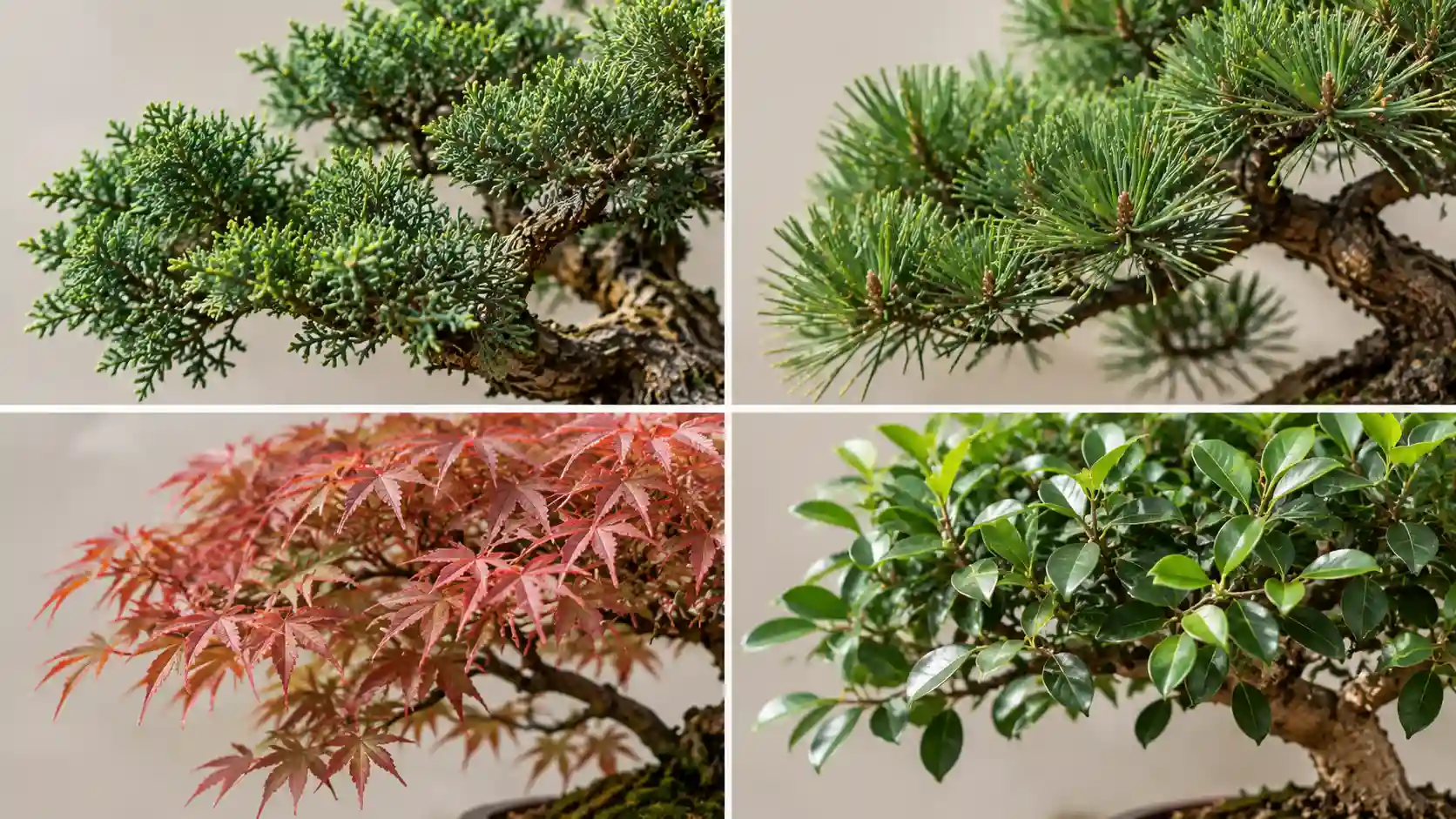
Species-specific detail is usually where beginners get stuck clicking between five different pages. Here it is consolidated:
| Species | Maintenance Approach | Structural Timing | Key Note |
| Juniper | Pinch and pluck by hand — avoid scissors on foliage tips | Late winter–early spring | Doesn’t reliably back-bud from bare old wood, so don’t cut back further than you’re prepared to lose permanently |
| Pine | Candle-pinching in spring | Late winter | Two-flush species need candles thinned, not just shortened (For a deeper dive into candle-pinching technique and styling, our Pinus Mugo Bonsai guide covers pine-specific pruning in more detail.) |
| Maple / Elm | Pinch new shoots back to 1–2 leaf pairs | Early spring (pre-bud-break) or after leaf-fall | Cutting mid-summer in full leaf causes heavy sap bleeding (If elm is your species specifically, see our Chinese Elm Bonsai Care Guide for growth habits and pruning specifics beyond this general framework.) |
| Ficus (tropical) | Prune or pinch nearly year-round if kept warm | Flexible — no strict dormancy | Among the most forgiving species for structural work (Ficus owners can find species-specific care and growth notes in our Ficus Ginseng Bonsai guide.) |
| Azalea (flowering) | Light shaping right after bloom | Immediately post-flowering | Pruning too late removes next year’s flower buds |
Tools That Actually Matter
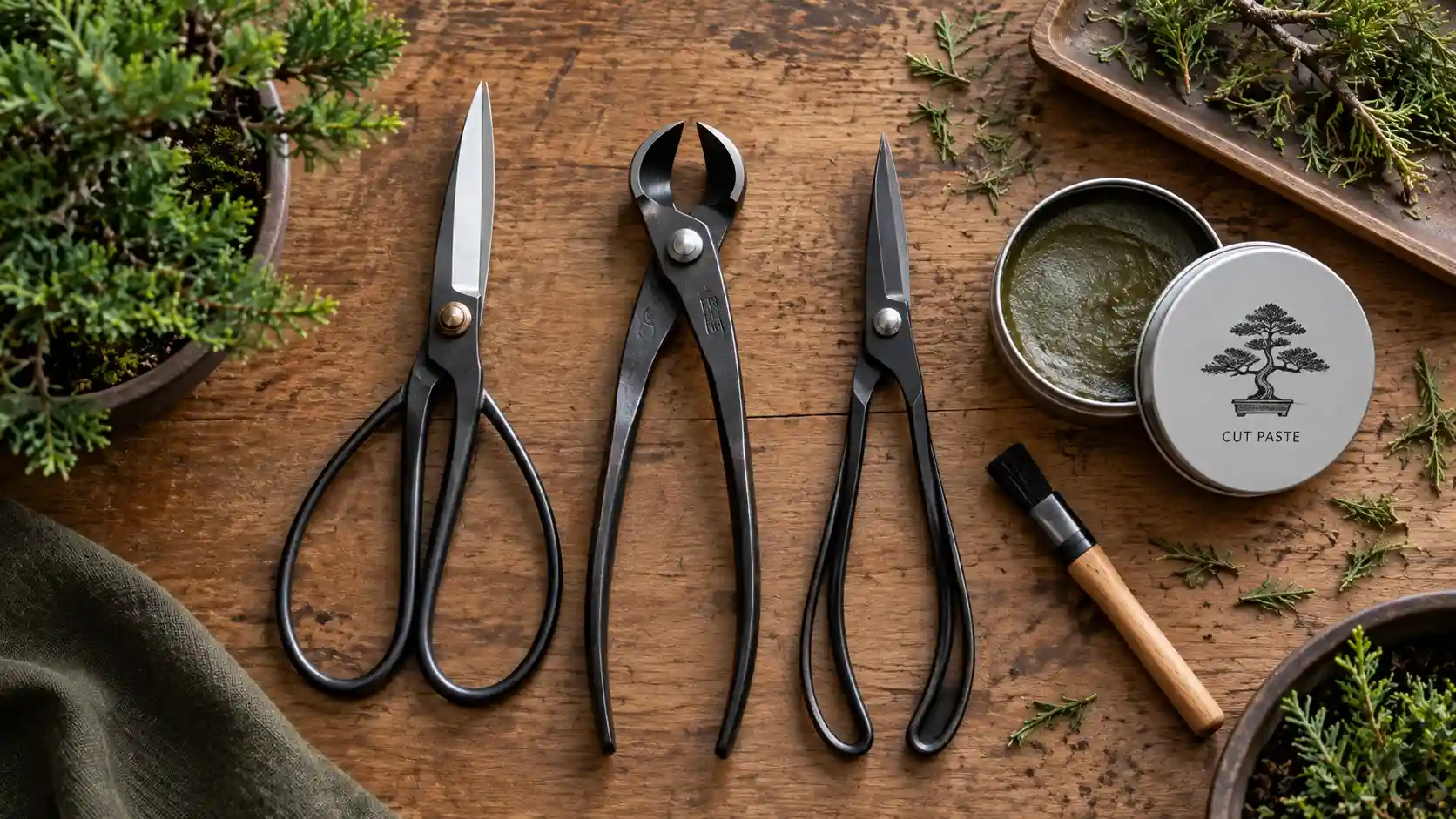
You don’t need an elaborate kit, but two things affect healing more than any other tool choice: sharpness and the type of edge.
- Bonsai scissors or shears — for shoots, thin growth, and maintenance work.
- Concave branch cutters — for structural cuts, because they leave a slightly recessed wound that calluses flush with the trunk rather than protruding.
- Cut paste or sealant — used on larger structural wounds to slow moisture loss and reduce infection risk while the tree calluses over.
A dull or dirty blade crushes plant tissue instead of slicing it cleanly, and crushed tissue heals slower and is more vulnerable to disease — which is why tool quality shows up in recovery speed, not just in how the cut looks immediately.
Aftercare: The First 2–4 Weeks After a Hard Prune
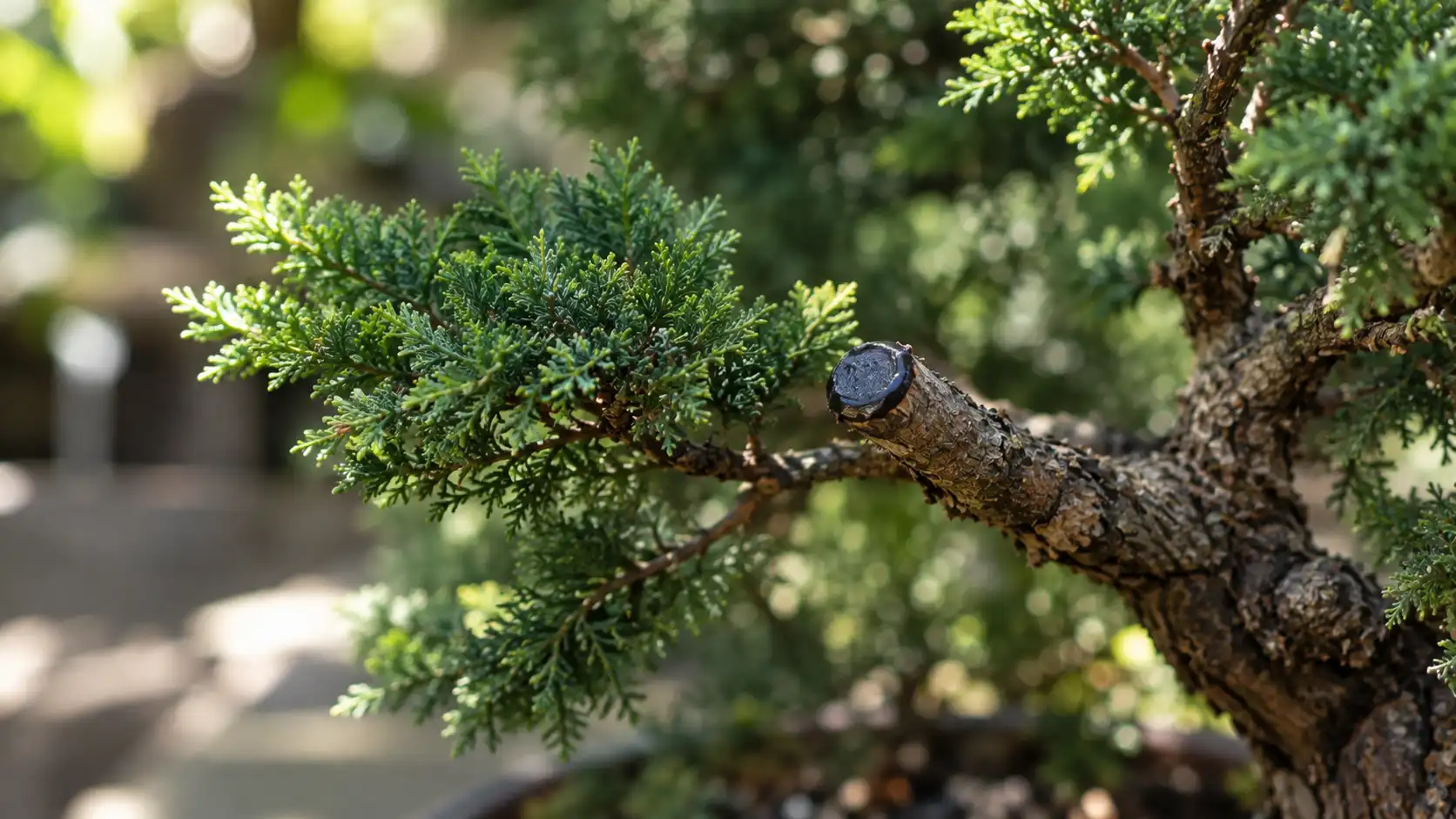
This is the step almost every competing guide mentions in a single sentence and moves on from — treat it instead as the second half of the pruning process, not an afterthought:
- Seal significant wounds with cut paste in the same session, while the cut is still fresh.
- Move the tree out of harsh direct sun and wind for several days to reduce moisture stress while it has less foliage to regulate itself.
- Keep watering consistent — don’t let the tree dry out, but also don’t fertilize immediately after a hard structural cut; wait until you see active new growth.
- Watch for back-budding over the following weeks. New buds appearing near the cut are the clearest sign the tree is recovering well.
- Hold off on repotting or major wiring until you see that new growth. Stacking a second major stressor on top of a fresh structural prune is a common way to lose an otherwise-recovering tree.
Common Beginner Mistakes (and Why They Happen)
- Over-pruning. Usually driven by wanting to see the “finished” shape immediately. The fix is patience: small, repeated maintenance cuts compound into good structure over seasons, not one session.
- Wrong-season structural cuts. Most often deciduous trees pruned mid-summer because that’s when they’re most visibly overgrown. The tree is in full leaf and actively bleeding sap at exactly the wrong time.
- Dull or crushed cuts. A pinch-cut with dull scissors looks fine at first, then browns at the edges days later as the crushed tissue dies back slightly beyond the cut line.
- Applying one universal rule across species. A cut that a ficus shrugs off can seriously set back a juniper, which won’t reliably back-bud from old wood the way a ficus will.
- Skipping aftercare. Treating the cut itself as the finish line, rather than the start of a multi-week recovery window that determines whether the work actually pays off.
A Note on Advanced Technique: Leaf Cutting and Defoliation
Once you’re comfortable with the basics, some deciduous species — particularly maple and zelkova — respond well to defoliation: removing individual leaves (not shoots) during peak growth to force the tree to push a second, smaller flush of leaves. This is used to reduce leaf size and increase ramification (the fine branching that makes a bonsai look mature). It’s an advanced technique, not a beginner one — it should only be done on a healthy, vigorous tree, never on one that’s stressed, newly repotted, or already recovering from a structural prune. Succulent-style bonsai like jade have their own pruning rhythm — see our Ripple Jade Bonsai Care guide if you’re working with one.
Conclusion
Pruning a bonsai well isn’t about memorizing a single rule — it’s about running the same short decision sequence every time: identify whether you’re doing maintenance or structural work, check that timing against your species’ dormancy cycle, stay within the foliage limit, and follow through with real aftercare instead of walking away once the cut is made. That sequence is what separates a tree that develops well over years from one that gets set back every time someone reaches for the scissors. Beyond technique, bonsai carry their own symbolism — if you’re curious, we cover that in Are Bonsai Trees Good Luck? If you want to see structural pruning decisions applied to decades-old specimens, the National Bonsai & Penjing Museum at the U.S. National Arboretum is worth a look. This guide is part of our broader Plants: Benefits and Guides hub covering care and growing tips across every plant type.
FAQs
How often should I prune my bonsai?
Maintenance pinching can happen every couple of weeks through the active growing season on most species. Structural pruning is far less frequent — typically once a year for deciduous trees, sometimes less for conifers.
Can I prune my bonsai indoors year-round?
Tropical species like ficus, kept warm, can tolerate pruning nearly year-round since they lack a strict dormancy period. Temperate species (maple, juniper, pine) still follow a seasonal cycle even when grown indoors and shouldn’t be structurally pruned outside their dormant window.
What happens if I prune my bonsai at the wrong time of year?
For deciduous species, cutting during full leaf typically causes heavy sap bleeding and slower wound closure. For conifers, late structural cuts can reduce back-budding. It’s rarely fatal on its own, but it adds unnecessary stress on top of the cut.
Do I need to seal every cut I make?
No — small maintenance pinches don’t need sealant. Larger structural cuts, especially on species prone to dieback around wounds, benefit from cut paste to reduce moisture loss while they callus.
How long does it take for a bonsai to recover after structural pruning?
It varies by species, season, and how much was removed, but the first visible sign of recovery is new bud growth near the cut site, usually appearing within a few weeks during the growing season.
Can pruning encourage a bonsai to grow back-buds on old wood?
Sometimes, but it depends heavily on species — some trees reliably back-bud on older wood, while others (junipers in particular) may not. Never remove a branch assuming back-budding will happen; treat it as a possibility, not a guarantee.