
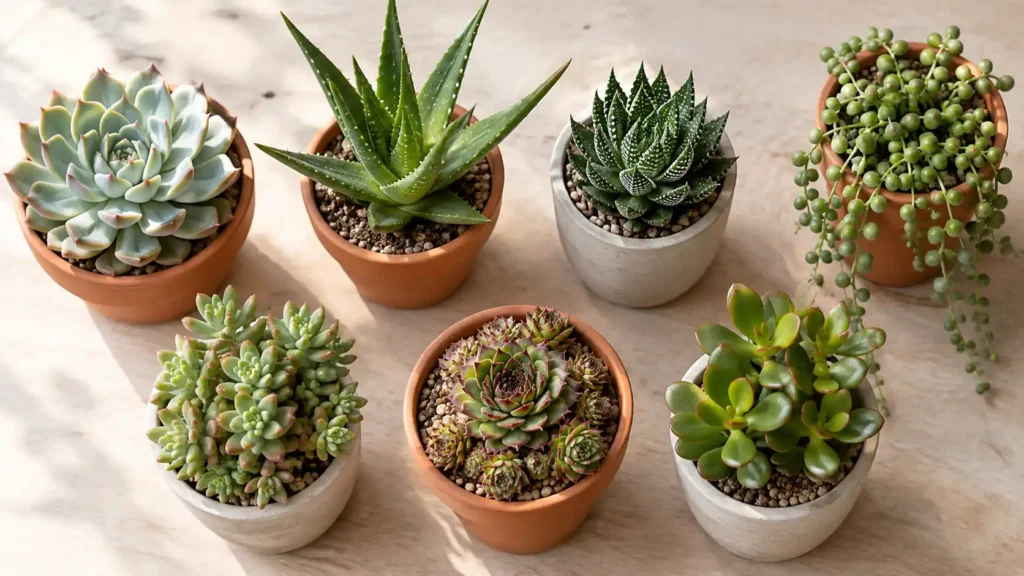
By Elemo Baker | Plant Care & Gardening Expert
Last Updated: September 2026
Quick Summary
- Succulents that look nearly identical — same rosette shape, same plump leaves — can need opposite light and water routines, which is why misidentifying the genus is the hidden cause behind most stretching, rot, and slow decline.
- Color is one of the least reliable ways to identify a succulent, since it shifts with light exposure, season, and stress. Leaf shape, growth form, and stem structure hold steady and tell you far more.
- You almost never need an exact species name. Getting the genus right is usually enough to nail watering, light, and soil.
- Stretching, translucent leaves, mushy stems, and crispy tips aren’t random bad luck — each one points to a specific mismatch between the plant’s actual needs and the care you’re giving it.
The Real Reason Generic Succulent Advice Isn’t Working
“Water sparingly, give it bright light” is the advice almost every new succulent owner hears — and it’s also why so many succulents quietly decline within a few months. That advice treats “succulent” as one plant. It isn’t. It’s a loose category covering thousands of species across dozens of genera, each shaped by a different native climate. If you’re just starting out, our best succulents for beginners guide is a good starting point for hardy, forgiving picks — but even beginner-friendly succulents split into different genera with different needs once you own more than one or two.
An Echeveria native to rocky Mexican hillsides and a Haworthia adapted to filtered shade under South African rock ledges do not want the same light, the same watering rhythm, or the same soil drainage — even though they can sit side by side on a windowsill looking similarly “succulent.” If your plant is stretching, sitting mushy at the base, or just not growing, the underlying question usually isn’t “what am I doing wrong” — it’s “what genus am I actually dealing with.” Fix the identification, and the care advice that follows becomes obvious.
Reliable vs. Unreliable ID Traits
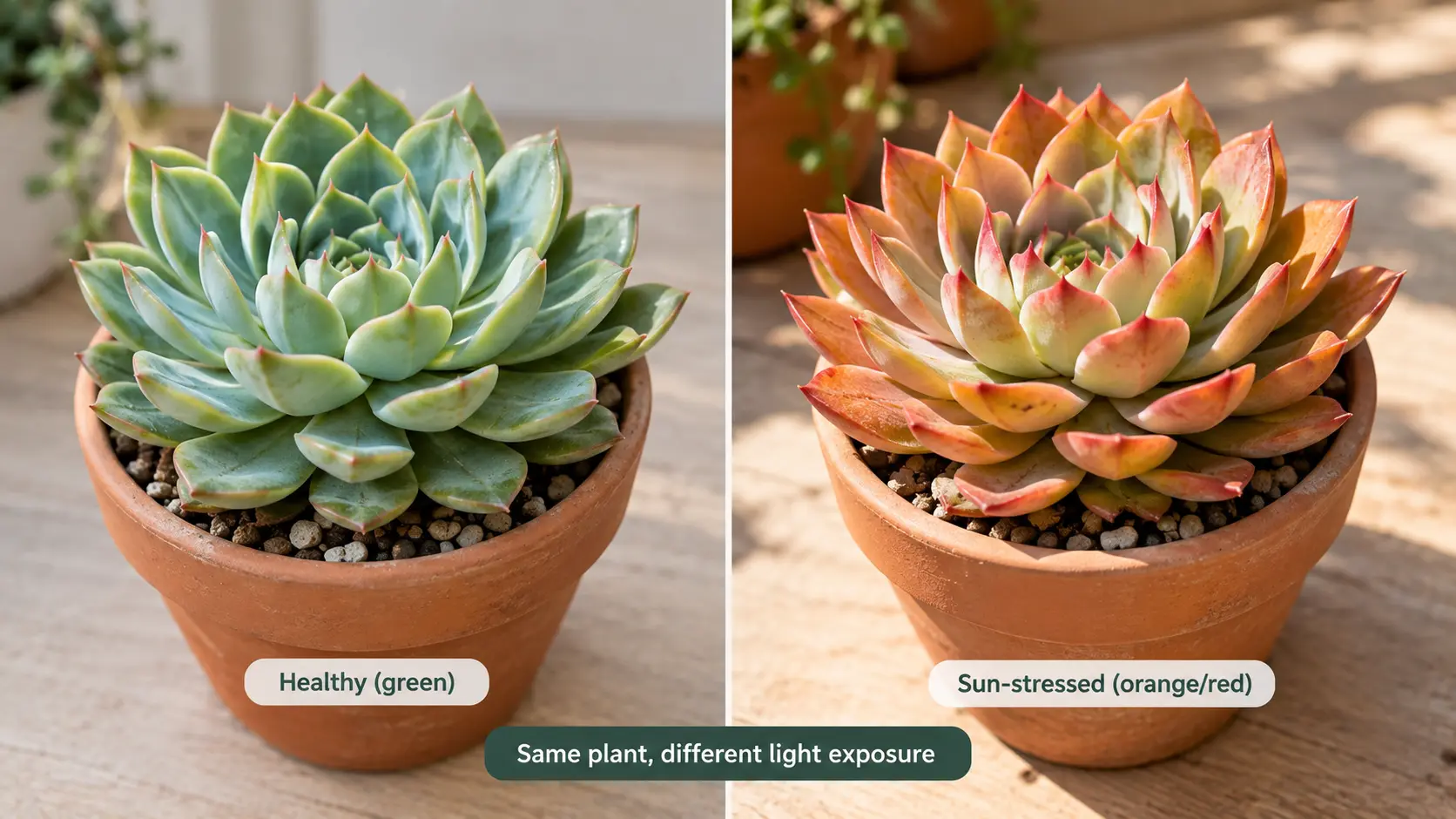
Before comparing genera, it helps to know which visual clues actually mean something.
| Trait | Reliability | Why |
| Leaf shape and thickness | Reliable | Fixed by genetics; doesn’t change with conditions |
| Growth form (rosette, trailing, clumping) | Reliable | Structural and stable across seasons |
| Stem structure | Reliable | Consistent within a genus |
| Color | Unreliable | Shifts with light intensity, season, and stress |
| Overall size | Unreliable | Varies with pot size, age, and indoor vs. outdoor growing |
Color is the trap most beginners fall into, and some succulents make it even trickier on purpose. Mesembs like Titanopsis calcareum and Dorotheanthus bellidiformis have evolved to mimic stone or blend into bright, flower-like color displays specifically to avoid being noticed — which makes them a perfect example of why color and surface appearance are the wrong things to key off of when identifying a plant. A succulent that turns fiery orange or deep purple isn’t necessarily a different variety — it’s often just stressed by intense sun or cold, and it will shift back to green once conditions change.
For a deeper look at how botanists classify succulents beyond visual guesswork, UF/IFAS Extension’s succulent identification and care fact sheet breaks down the structural traits used for accurate classification.
4-Question Framework to Identify Your Succulent’s Genus
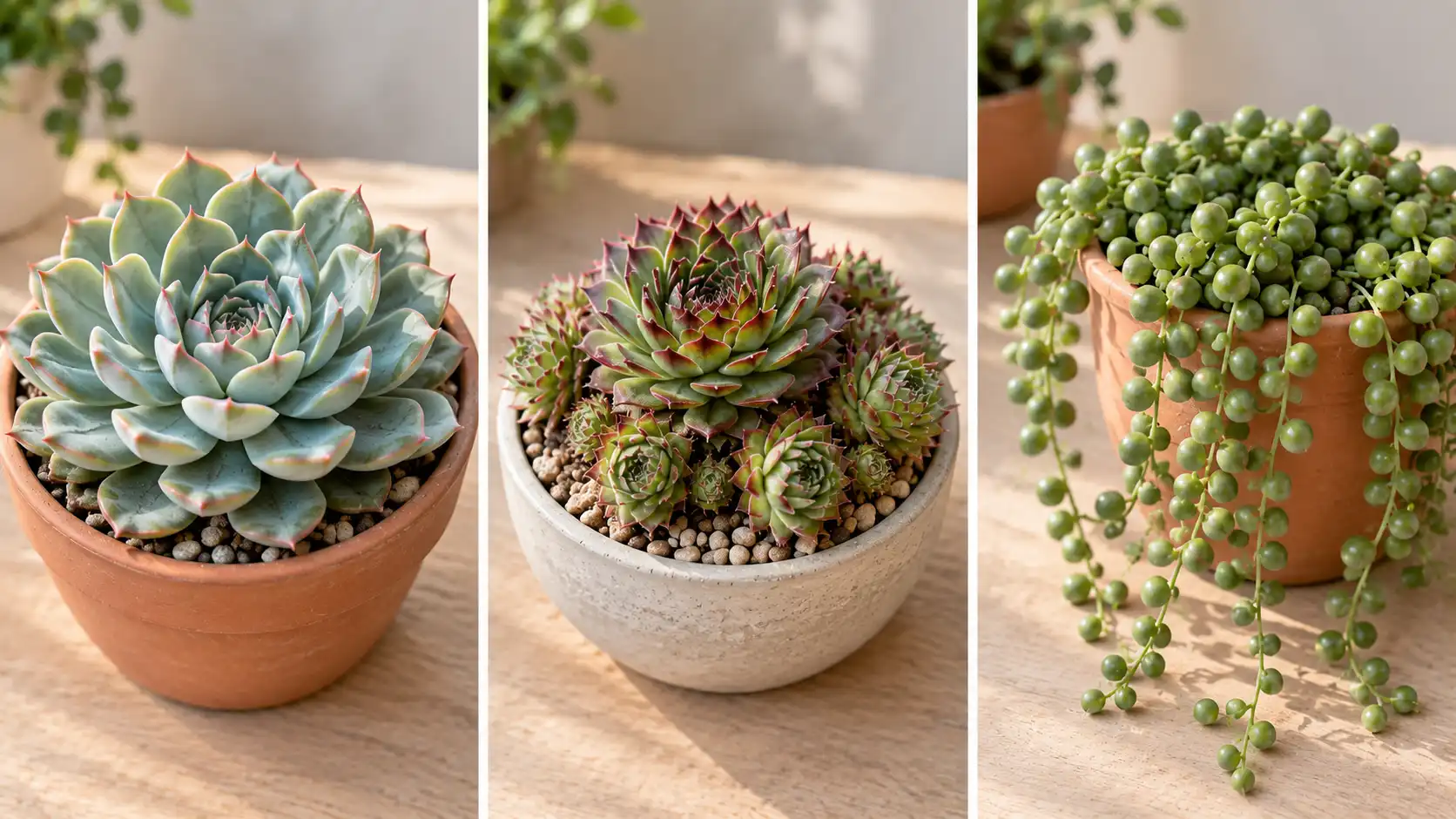
Run through these in order — most succulents can be narrowed to a genus in under a minute.
1. What’s the growth form?
Does it grow as a single tight rosette, sprawl and trail over the pot’s edge, or clump into multiple small rosettes (“chicks”) around a central plant? Trailing form points toward genera like Sedum or Senecio; tight rosettes point toward Echeveria, Haworthia, or Aloe.
2. What’s the leaf shape and thickness?
Flat, tapered leaves with a slightly waxy finish suggest Echeveria. Thick, almost translucent-windowed leaves suggest Haworthia. Long, spiky, toothed leaves suggest Aloe.
3. How is the stem structured?
A visible, elongating central stem often means the plant has been reaching for light over time — common in Sedum and some Echeveria. A stemless rosette sitting flush to the soil is more typical of Haworthia and Sempervivum. Some succulents take stem structure to the extreme: the desert star plant develops a swollen, water-storing caudex base that looks nothing like a typical rosette, which is a useful reminder that stem structure alone can point to a completely different growth strategy.
4. Does it produce offsets?
Plants that constantly throw off small “pups” around the base are frequently Sempervivum (literally “hens and chicks”) or certain Echeveria varieties. Solitary growers without offsets often point toward Haworthia or Gasteria.
Genus and Species Pairs Beginners Confuse Most
Echeveria vs. Sempervivum
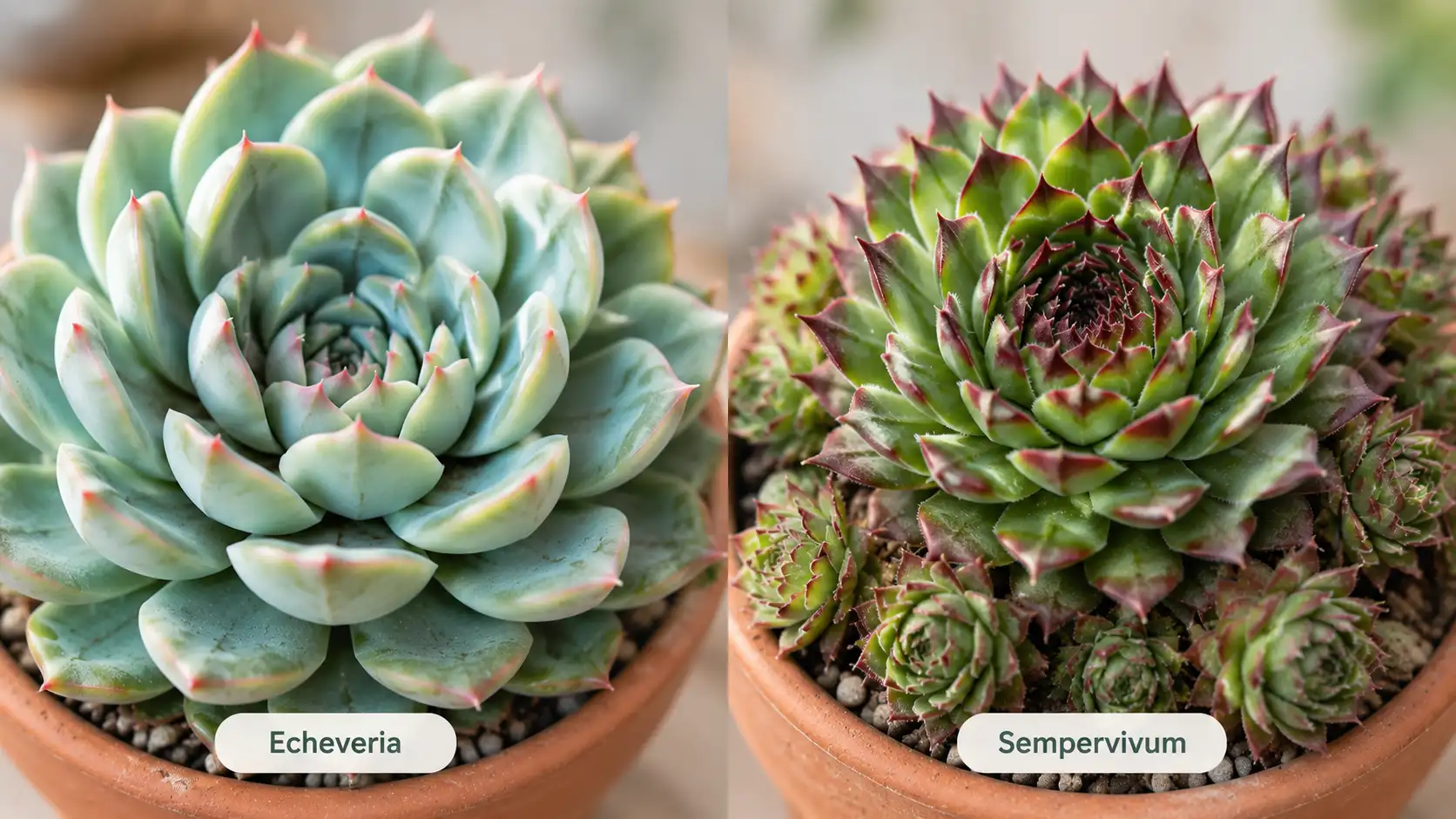
Both form neat rosettes, which is why they’re constantly mixed up. Sempervivum is more cold-hardy and often grown outdoors year-round in temperate climates, while Echeveria is frost-tender and typically grown indoors or brought in for winter. Sempervivum also produces offsets on short runners, while Echeveria’s offsets tend to cluster tightly around the base.
Haworthia vs. Aloe
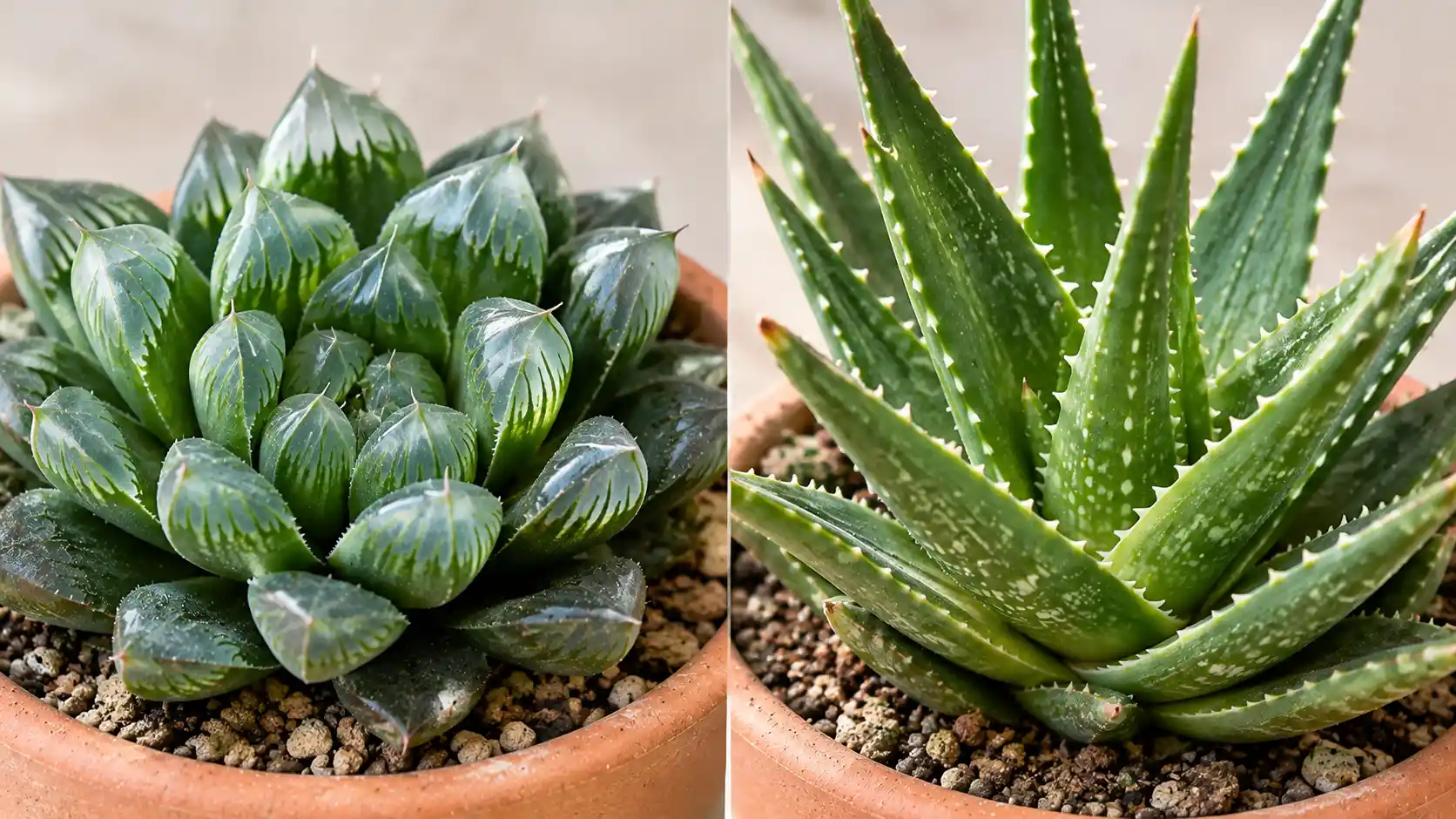
Both have thick, pointed leaves in a rosette, but Haworthia stays compact (rarely more than a few inches across) and tolerates lower light, while Aloe grows larger, has more pronounced marginal teeth, and wants brighter light to stay compact rather than stretched.
Rose of Jericho vs. False Rose of Jericho
Confusion isn’t limited to true succulents. The true Rose of Jericho vs. the false Rose of Jericho is one of the clearest examples of how a shared common name can mask two completely different plants with different care needs — proof that name-based ID is just as unreliable as color-based ID, and structural traits matter more than what a plant is casually called.
Do You Need Species-Level ID, or Is Genus Enough?
For care purposes, genus-level identification is almost always enough. Watering frequency, light tolerance, and soil drainage needs are largely consistent within a genus — species-level differences mostly affect leaf pattern, color, or mature size rather than the actual care routine. Chasing an exact species name is a rabbit hole worth skipping unless you’re specifically collecting or trading.
What Your Succulent’s Stress Signals Are Telling You
Stretching (etiolation)
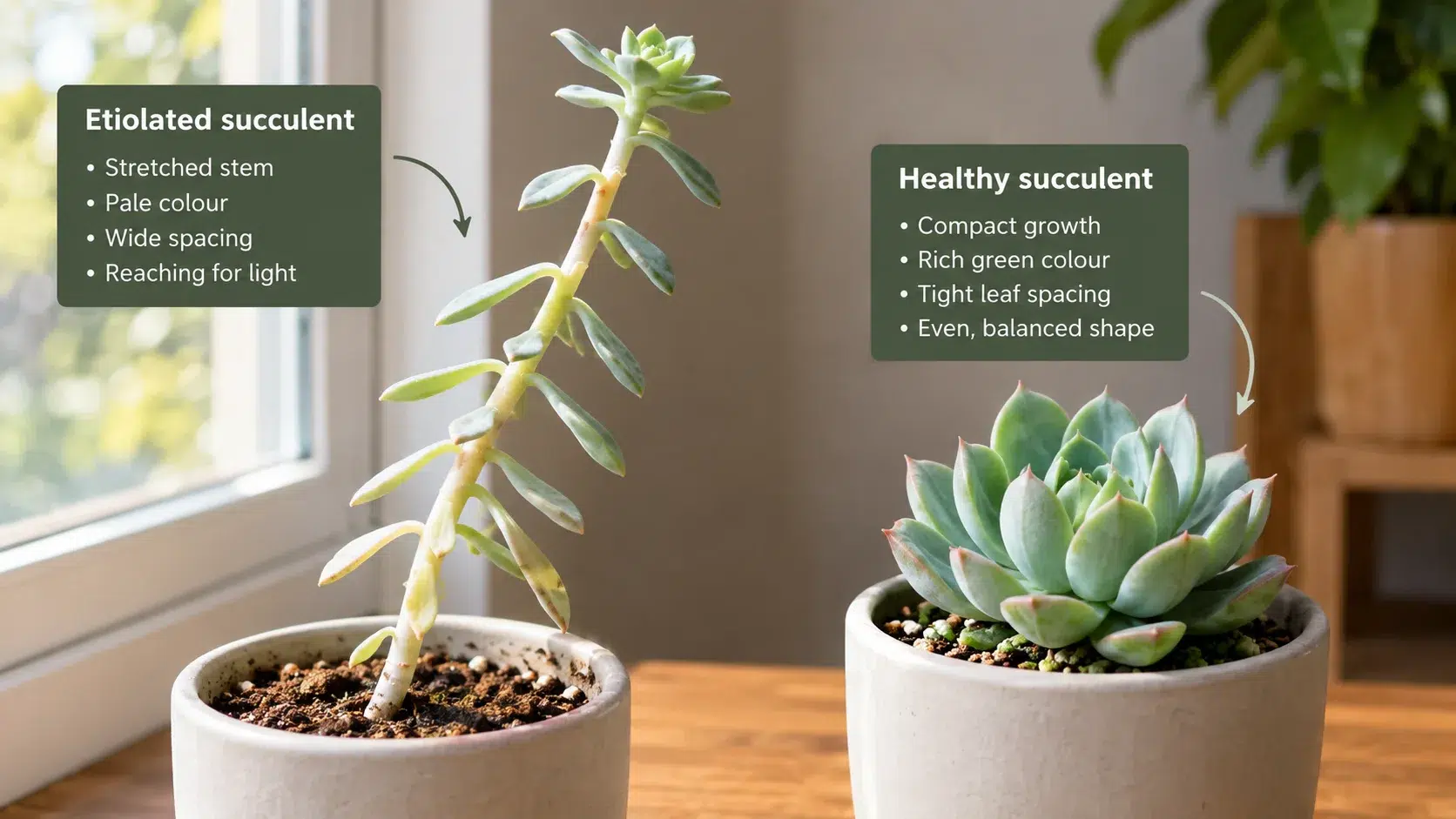
Why it happens: The plant isn’t getting enough light and is physically growing taller and thinner to reach more of it.
Fix: Move it to a brighter spot gradually (sudden full sun can scorch a stretched plant).
Prevent: Match light intensity to genus — Echeveria and Sempervivum generally want more direct light than Haworthia.
Translucent, glassy leaves
Why it happens: Usually overwatering combined with a genus that stores water efficiently and doesn’t need frequent watering.
Fix: Let the soil dry out completely before watering again.
Prevent: Confirm your genus’s actual watering interval instead of watering on a fixed calendar — our guide on how often to water succulents breaks this down by conditions rather than a one-size-fits-all schedule.
Mushy or rotting stems
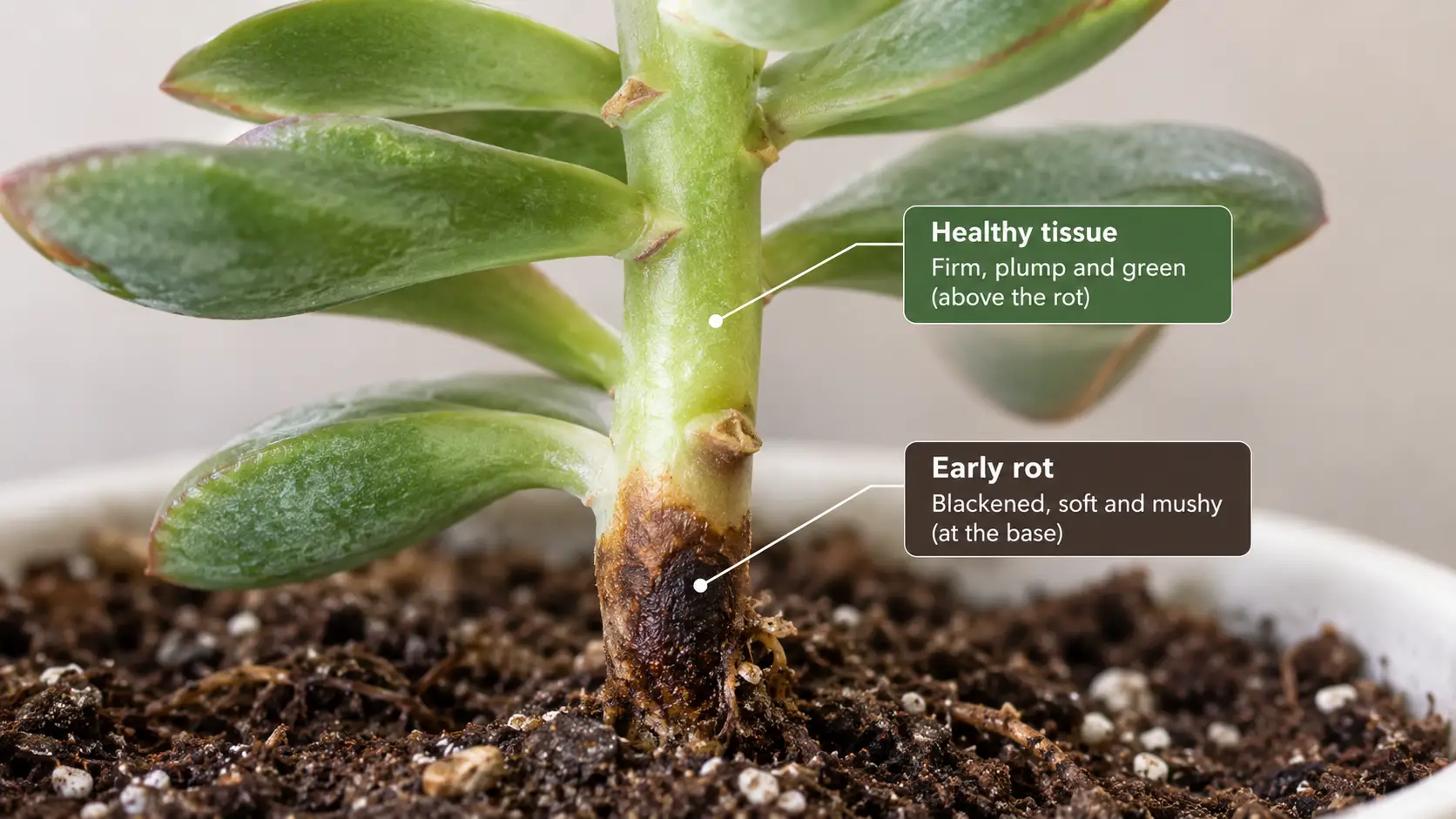
Why it happens: Root or stem rot from prolonged soil moisture, often worsened by poor drainage.
Fix: Remove the plant, cut away any mushy tissue, let it callus, and repot in fast-draining succulent soil.
Prevent: Use a well-draining mix and a pot with drainage holes matched to the genus’s water needs.
Browning or crispy tips
Why it happens: Underwatering, low humidity, or too much direct sun for that particular genus.
Fix: Adjust watering frequency and check whether the plant’s current light level suits its genus.
Prevent: Reassess light and water together — crispy tips paired with fast-draining soil often means underwatering, not sun damage.
Genus-Specific Light, Water, and Soil Basics
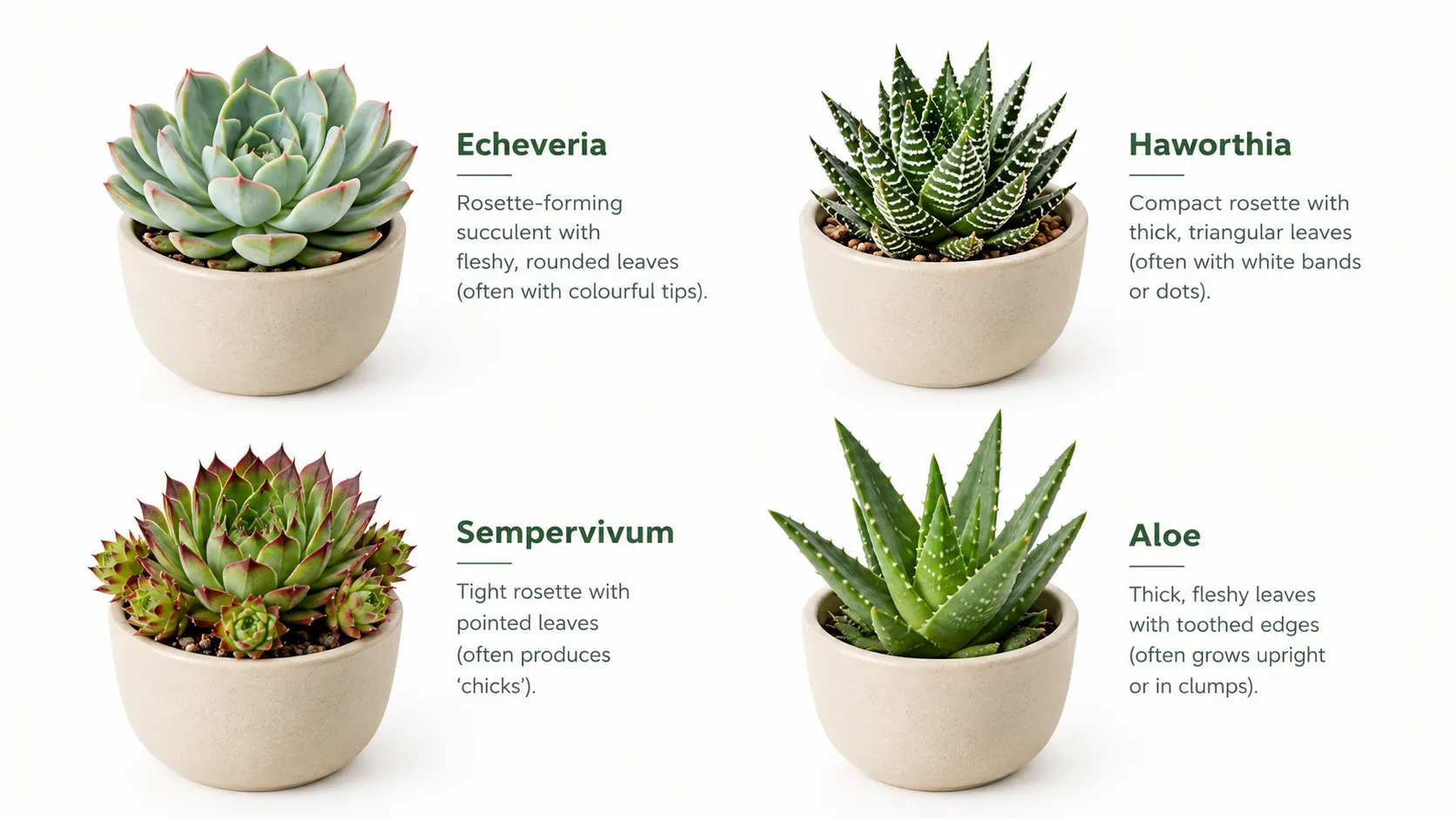
Once you know the genus, apply its specific needs rather than a blanket rule:
- Echeveria: Bright, direct light; water only when soil is fully dry; fast-draining mineral-heavy soil.
- Haworthia: Bright but indirect light; more tolerant of infrequent watering; slightly more organic matter in soil is fine.
- Sempervivum: Full sun, cold-hardy, minimal watering; gritty, well-draining soil essential.
- Aloe: Bright light; deep but infrequent watering; sandy, fast-draining soil.
For exact watering intervals based on your home’s light and humidity, see our full breakdown on how often to water succulents rather than relying on a fixed weekly schedule. If you want a research-backed baseline for light and watering thresholds before adjusting by genus, SDSU Extension’s guide on how to care for succulents indoors is a solid reference point.
Succulent-Adjacent Plants That Often Get Mislabeled
Not everything sold or searched for as a “succulent” technically is one — and this mislabeling causes its own care mistakes. Snake plants are frequently grouped in with succulents because of their thick, water-storing leaves, but varieties like the whale fin snake plant, Sansevieria Fernwood Mikado, and Sansevieria Laurentii belong to a different plant family with their own leaf-shape and watering quirks depending on the cultivar. The same goes for the ZZ plant (Zamioculcas zamiifolia), which stores water in underground rhizomes rather than in its leaves — meaning the “let it dry out” rule still applies, but for a completely different structural reason than it does for an Echeveria or Haworthia. If your plant falls into one of these categories, genus-level succulent identification won’t apply the same way, and it’s worth checking the plant-specific care guide instead.
Cacti get lumped into the same “succulent” bucket too, but as University of Minnesota Extension notes in its guide to cacti and succulents, water requirements differ enough between the two that treating them identically causes the same kind of care mismatch.
When to Stop Guessing: Apps and Communities
If you’ve run through the framework above and you’re still unsure, stop guessing — misidentifying a genus and applying the wrong care for months does more damage than a short delay. A plant-ID app or an active succulent community/forum can usually narrow it down from a couple of clear photos, and this is a normal, expected step rather than a failure. Some genera and hybrids are genuinely difficult to pin down even for people who’ve been growing succulents for years.
Beginner Mistakes That Make Identification and Care Harder
- Treating color as a reliable identifying feature.
- Applying one watering schedule to an entire mixed succulent collection.
- Not photographing an unlabeled plant at purchase, making later comparison harder.
- Repotting immediately without checking whether the soil actually suits the (still unknown) genus.
- Waiting until damage is advanced before acting on early stress signals.
- Assuming every thick-leaved plant sold near the succulent section — like snake plants or ZZ plants — follows succulent-genus care rules.
Conclusion
Most succulent care failures trace back to one root issue: treating every succulent as if it belongs to a single, generic category. Once you identify the genus — using growth form, leaf shape, and stem structure rather than color — the right watering, light, and soil routine becomes far more obvious, and stress signals like stretching or mushy stems become diagnosable rather than mysterious. Run the 4-question framework before troubleshooting symptoms, and you’ll fix the cause instead of just reacting to it.
FAQs
How can I identify my succulent if it didn’t come with a label?
Look at growth form, leaf shape, and stem structure rather than color, and run through a simple genus-level framework — most succulents can be narrowed down in under a minute without needing an exact species name.
Is it normal for succulent color to change over time?
Yes. Color shifts with light intensity, season, and stress, and it’s one of the least reliable ways to identify a plant or judge its health on its own.
Do I need to know the exact species to care for my succulent correctly?
No. Genus-level identification is almost always enough, since watering, light, and soil needs are typically consistent within a genus.
Why is my succulent stretching toward the light?
Stretching (etiolation) means the plant isn’t getting enough light for its genus and is growing taller and thinner to compensate. Moving it to brighter light gradually usually resolves it.
What does it mean if my succulent’s leaves feel mushy or translucent?
This usually signals overwatering, particularly in genera that store water efficiently and need infrequent watering. Letting the soil dry out fully and adjusting your schedule to the genus’s actual needs is the fix.
How can I tell Echeveria and Sempervivum apart?
Sempervivum is cold-hardy and often grown outdoors year-round, producing offsets on short runners, while Echeveria is frost-tender, typically grown indoors, and clusters its offsets tightly at the base.



One Response