
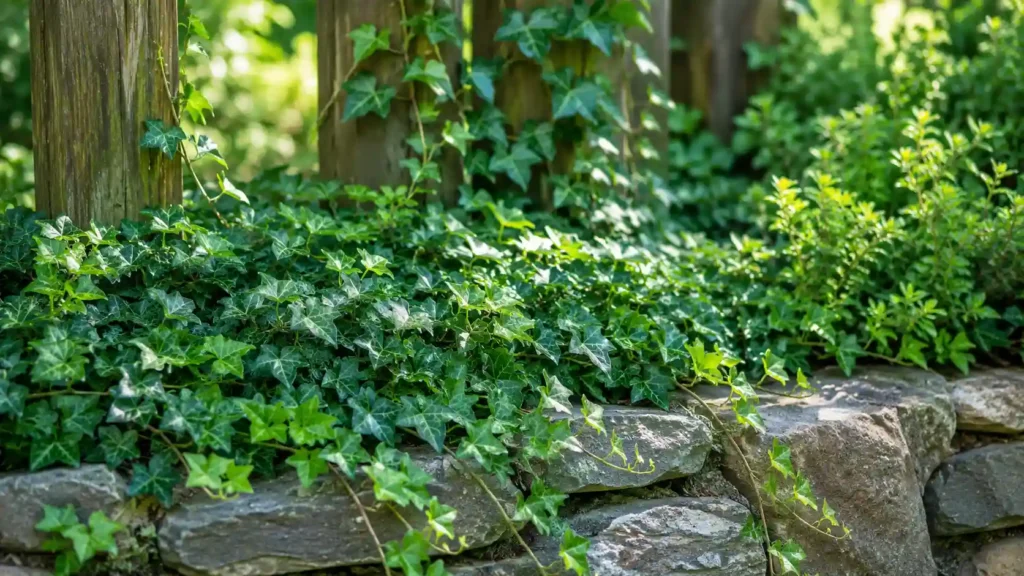
You’ve got a patch of yard where nothing seems to grow. Maybe it’s shaded under a big oak, maybe it’s a slope that erodes every time it rains, maybe it’s just too root-choked to mow anymore. Somebody suggested ivy. Now you’re staring at a dozen articles that either tell you ivy is a miracle plant or a monster that will eat your trees — and none of them actually tell you which one is true for your yard.
Here’s the short version: ivy and other ground-trailing vines spread horizontally across soil and root wherever their stems touch down, which is exactly what makes them useful as low-maintenance ground cover. But that same growth habit is also what lets English ivy climb trees, fences, and siding if it’s left unmanaged — and that’s where most of the “invasive nightmare” stories come from. The plant isn’t inherently good or bad. The outcome depends on which vine you plant, where, and whether you contain it from day one.
For a broader look at growth habits and placement across all trailing types, see what is a trailing houseplant.
Quick Summary
- Ground-trailing vines spread horizontally and root at the stem, which is different from clinging vines that grow upward on structures
- English ivy works well as ground cover but is considered invasive in many U.S. regions and can smother trees if left unchecked
- Vinca minor, creeping Jenny, Virginia creeper, and pachysandra all solve the same bare-ground problem with different trade-offs
- Containing spread before you plant is far easier than removing an overgrown vine later
Is It a Ground Cover or a Climbing Vine?
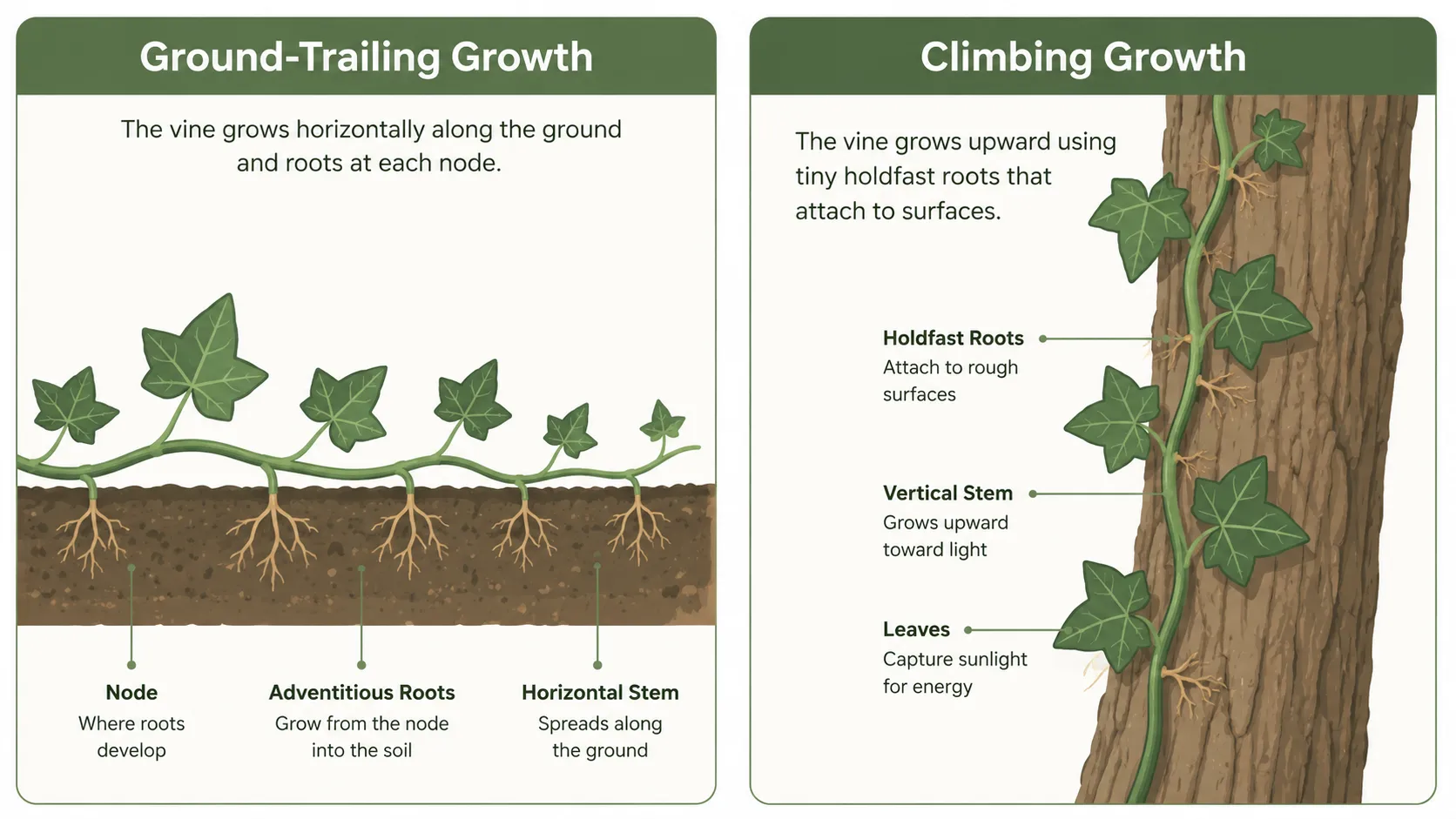
Before you pick a species, it helps to understand what you’re actually asking the plant to do — because “ivy” can do two different things depending on what it touches.
Trailing-rooting growth (true ground cover)
When a vine’s stems run along the ground, they put down small roots wherever a node makes contact with soil. This is the behavior that fills in bare patches, holds soil on a slope, and spreads without you replanting anything. English ivy, Vinca minor, and creeping Jenny all grow this way. This is the exact growth pattern arborists describe as a trailing-rooting ground cover — stems spread horizontally and root wherever they touch soil, without ever needing to climb.
Clinging/climbing growth (not what you want near trees)
The same English ivy vine, when it reaches something vertical — a tree trunk, a fence post, a brick wall — switches modes. It attaches with small aerial roots called holdfasts and climbs upward instead of spreading outward. This is the growth pattern that eventually shades out tree leaves and interferes with photosynthesis, which is how “ivy killed my tree” stories start. It’s the same plant, just a different surface.
Knowing this distinction up front tells you the real question isn’t “is ivy good or bad” — it’s “will this spot let ivy climb something, and do I want it to?”
Is English Ivy Actually Invasive?
Yes, in a lot of places — but not uniformly everywhere, which is why the advice online feels contradictory. English ivy is listed as invasive or restricted in numerous U.S. states and regions, particularly in the Pacific Northwest and parts of the Southeast, where it escapes cultivation into wooded areas and outcompetes native undergrowth. In other regions it’s less of a concern. Because this varies by state and even by county, the one non-negotiable step before planting it near a wooded area or property line is checking with your local extension service or state invasive species list — a five-minute search that can save years of removal work later. English ivy’s aggressive, vining nature means it can climb and eventually kill the trees it grows on, which is why several state extension programs — including NC State’s plant database — list it as an invasive species rather than a simple ornamental.
If you’re planting in a fully enclosed garden bed nowhere near trees or natural areas, the invasiveness risk is lower and more manageable. Proximity to trees and wild spaces is really what raises the stakes.
Choosing the Right Vine for Your Space
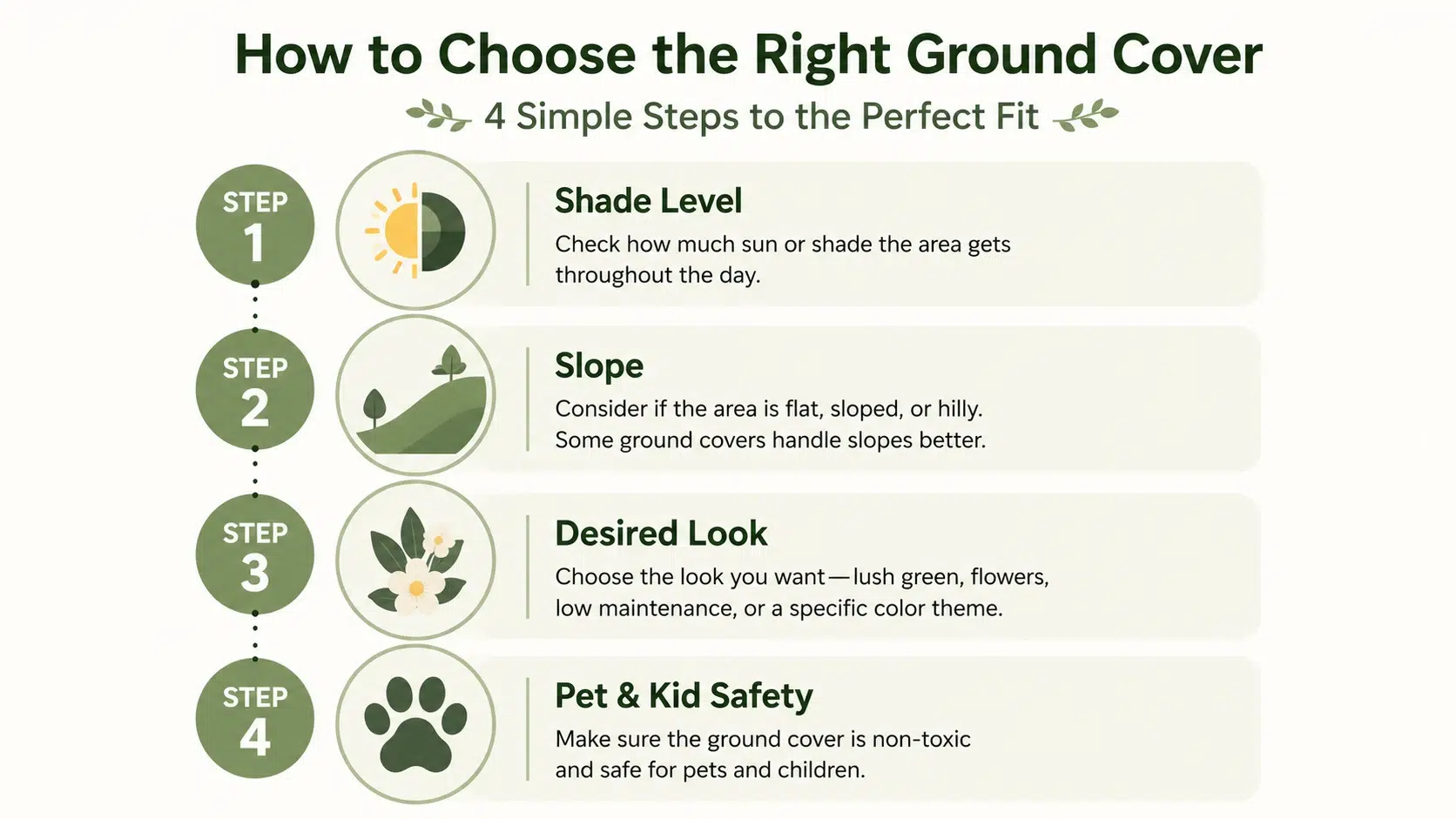
Instead of jumping straight to “here’s how to grow ivy,” answer these four questions first — they’ll point you toward the right plant faster than any single-species guide will.
- Shade level — Full shade, part shade, or full sun?
- Slope — A flat bed, or an erosion-prone incline?
- Look — Do you want a glossy evergreen carpet, or something that flowers?
- Pets or kids — Will this area get chewed on or rolled around in?
How the main options compare
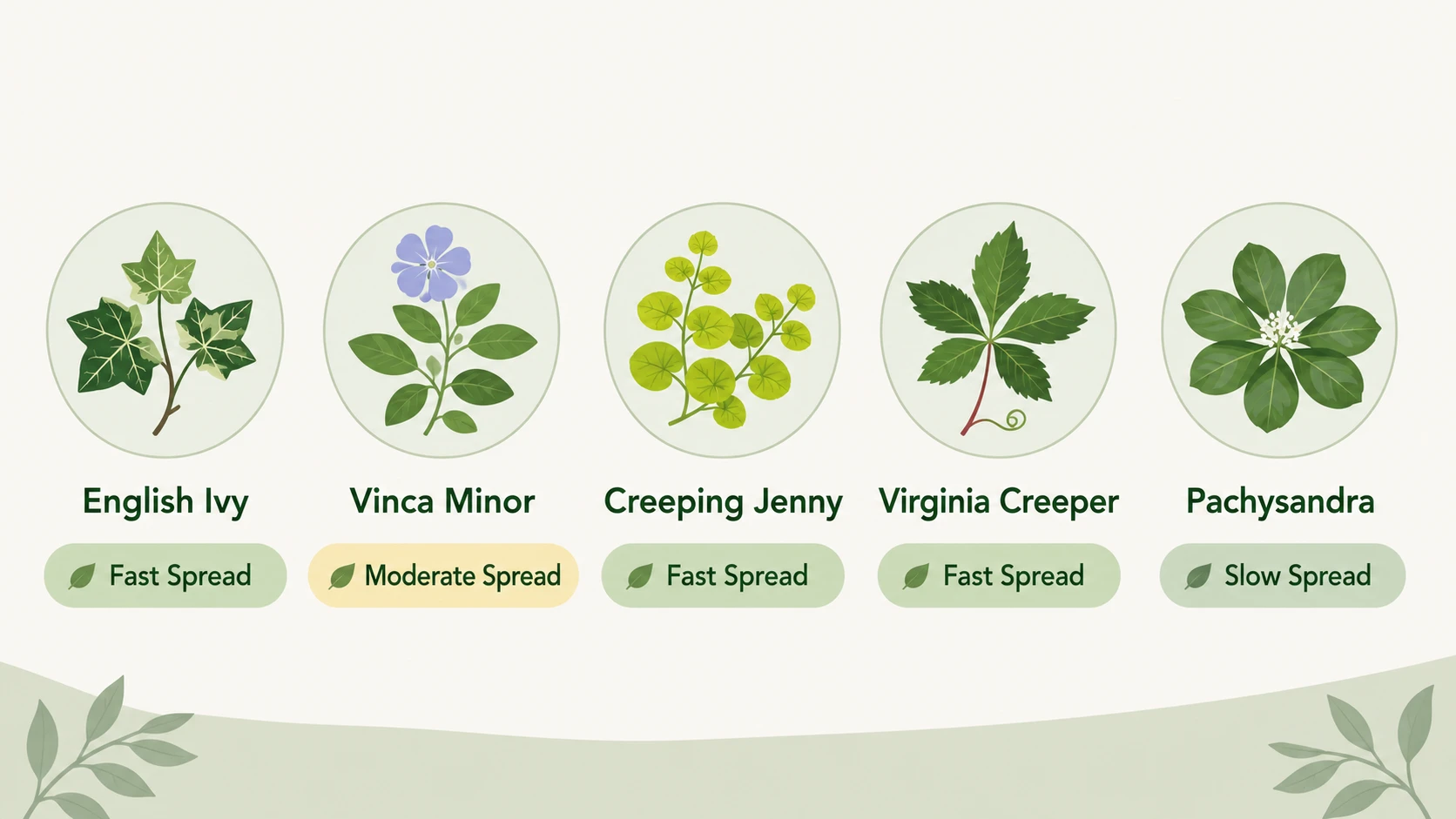
| Plant | Spread Rate | Sun Needs | Invasiveness Risk | Toxicity Note |
| English ivy (Hedera helix) | Fast, aggressive | Shade to part sun | High in many regions | Mildly toxic if ingested; sap can irritate skin for some people |
| Vinca minor (periwinkle) | Moderate | Shade to part sun | Moderate in some regions | Mildly toxic if ingested |
| Creeping Jenny | Fast | Part sun to full sun | Can be invasive near waterways | Low toxicity, but keep an eye on pets that dig |
| Virginia creeper | Fast, trails and climbs | Full sun to part shade | Low (native to much of the U.S.) | Berries mildly toxic to humans; sap can irritate skin |
| Pachysandra (Japanese) | Slow to moderate | Full shade | Low to moderate | Low toxicity |
If your space gets real sun, skip the shade-lovers — creeping Jenny and Virginia creeper will actually perform, where ivy and pachysandra will sulk. If pets dig and chew in the area, treat every option in this table as “supervise, don’t assume,” and check current pet-safety guidance for the specific species before planting. English ivy’s foliage contains compounds that are toxic to dogs, cats, and horses if ingested, with foliage carrying more risk than the berries.
If you land on English ivy, the species itself still comes in a range of variegated and solid-color cultivars with different growth habits — see our guides to Hedera Gold Child and ivy with white edges if you want a specific look rather than plain green.
How Fast It Spreads — and How to Contain It
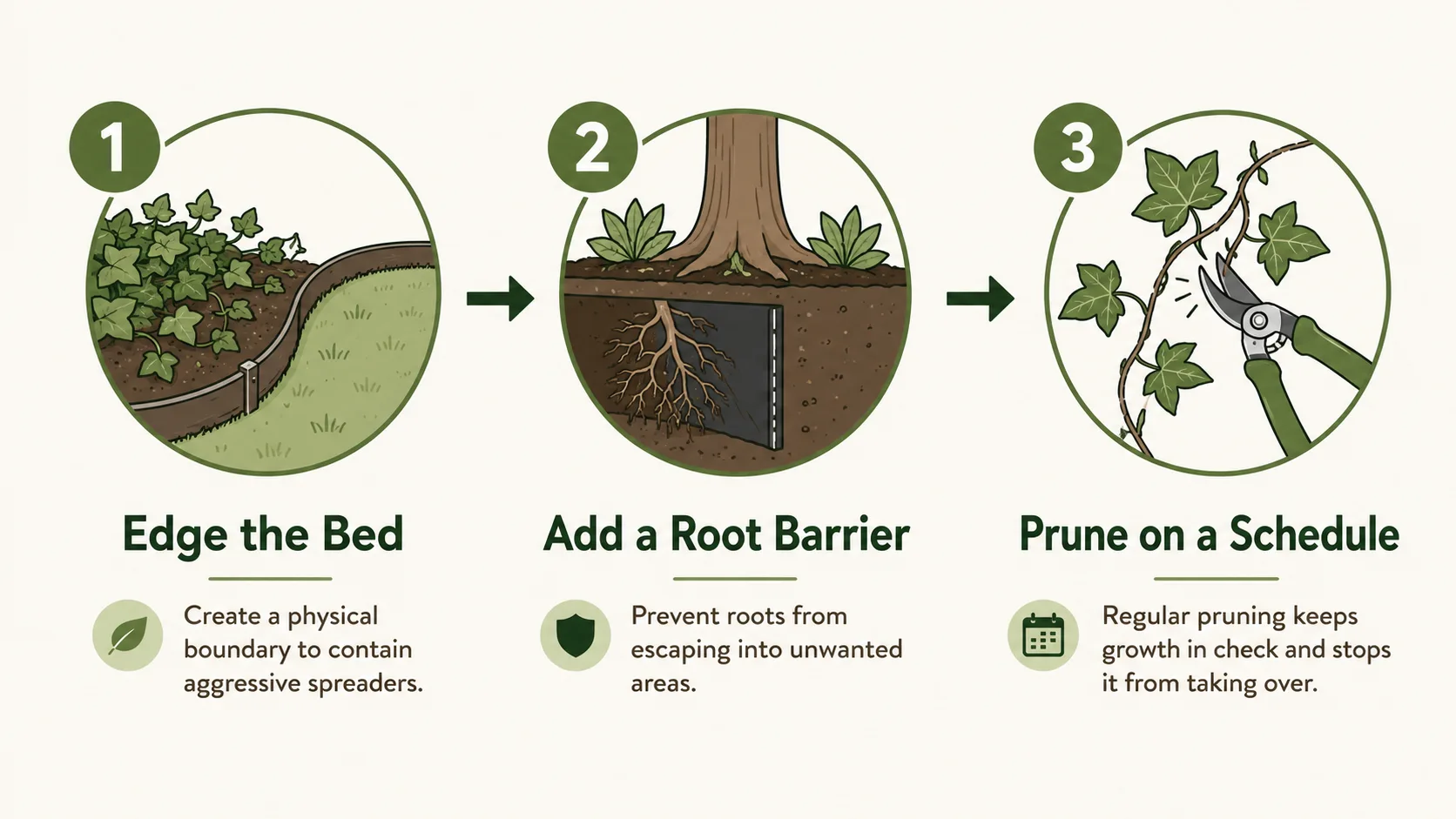
The fix for “ivy took over my yard” stories isn’t removal advice, it’s planning ahead of time.
A simple containment protocol handles this:
- Edge the bed. Sink metal or plastic landscape edging several inches into the soil around the planting area so stems can’t creep past the border unnoticed.
- Add a root barrier near trees. If the bed is anywhere near a trunk, bury a barrier between the ivy and the tree base so climbing growth never gets the chance to start.
- Prune on a schedule, not a whim. Cut back any stems reaching upward at the start and end of each growing season — before they reach bark, not after they’ve attached.
If ivy has already started climbing something, cut the stems at the base first and let the upper growth die back on its own before pulling it away. Yanking live, attached vines off bark can strip it along with the plant.
Planting and Propagation Timeline
Autumn and spring are the best windows for putting any of these vines in the ground — cooler temperatures mean less transplant stress while roots establish. For propagation, cuttings from most of these species will root in a jar of water before you ever put them in soil, which is an easy, low-cost way to fill a large bed without buying dozens of starter plants. For a closer look at the day-to-day watering, light, and pruning routine once a cutting is established, our Starling ivy care guide breaks it down variety by variety.
Plant Size and Growth Rate
Ground-trailing vines are not judged by their height; rather they are judged by their spread that is several feet wide every growing season, though usually a few inches above the ground. Growth is highest when temperatures are high in the spring and fall and lower in the summer heat and winter dormancy. English ivy, creeping Jenny, and Virginia creeper are more fast-growing of the above; of course, pachysandra is a little slower to grow but still grows noticeably faster than a low maintenance bed of lower growing plants. Variegated cultivars like Variegated Algerian ivy tend to grow a touch slower than solid-green varieties, since the lighter leaf portions photosynthesize less efficiently.
Common Mistakes (and How to Fix Them)
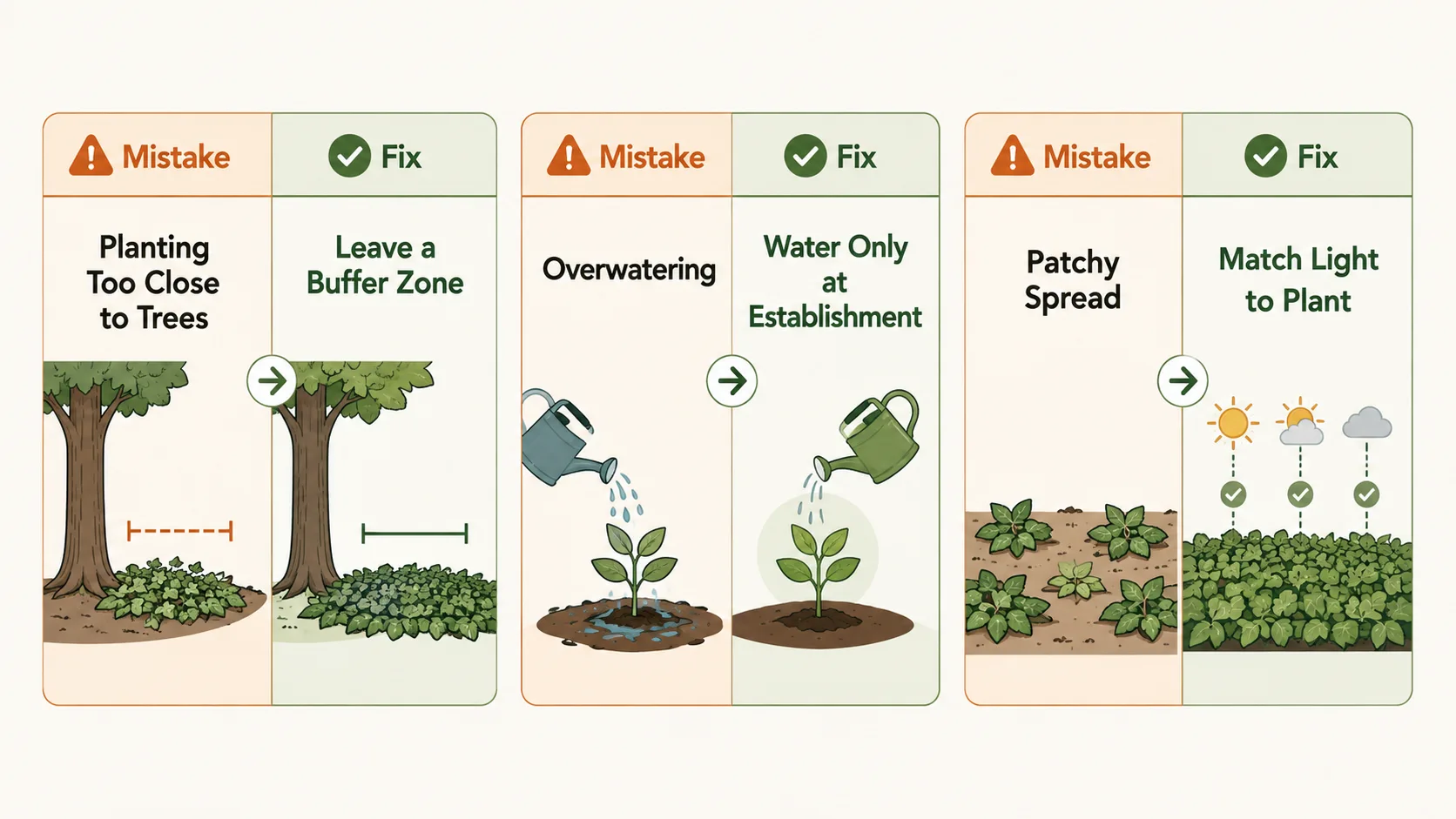
Planting ivy right at the base of a tree. It looks tidy at first, then it climbs. Leave a bare buffer zone around trunks, or use a non-climbing option like pachysandra near trees instead.
Overwatering. Once established, most of these vines tolerate drought well. Treat them like a garden bed, not a lawn — water heavily at planting, then back off.
Patchy, uneven spread. Usually means the light doesn’t match the plant (too much sun for a shade-lover) or the stems aren’t making solid soil contact. Match the species to the light using the framework above, and press trailing stems down so nodes actually touch dirt.
What Makes This Guide Different
Most articles you’ll find on this topic are single-plant profiles — “how to grow English ivy” — that never help you decide whether ivy is even the right growth habit for your space in the first place. This guide starts with that decision, compares five real alternatives side by side, and treats containment as something you plan for at planting time, not a cleanup job for later.
Conclusion
A bare, shaded, or sloped patch of yard is a solvable problem — the trick is matching the vine’s growth habit and invasiveness risk to your specific space before you plant, not after. English ivy is fast and effective, but it comes with real regional caveats. Vinca minor, creeping Jenny, Virginia creeper, and pachysandra all cover the same bare ground with different trade-offs in spread rate and risk. Whichever one you choose, containment planned from day one — edging, root barriers, a pruning schedule — is what separates a low-maintenance ground cover from a landscaping regret.
FAQs
Is English ivy the same thing as a ground cover vine?
Not exactly — English ivy can behave as either a trailing ground cover or a climbing vine depending on what it touches, which is why it gets confused with plants that are ground-cover-only.
What’s the least invasive alternative to English ivy?
Pachysandra and Vinca minor are commonly recommended as lower-risk options, though invasiveness classification still varies by region, so it’s worth a quick local check either way.
How do I stop ivy from climbing my tree?
Cut the stems at the base first and let the upper growth die back before removing it, then keep a bare buffer or edging barrier around the trunk going forward.
Does ivy grow in full sun?
Most ivy varieties prefer shade to part sun. For a genuinely sunny spot, creeping Jenny or Virginia creeper will perform better.
Is ivy ground cover safe around pets and kids?
Several common ground-trailing vines carry some level of toxicity if ingested, so it’s worth checking current pet-safety guidance for the specific plant before planting it somewhere pets or kids spend time unsupervised.
How fast does ivy spread once established?
It spreads aggressively season over season, which is exactly why edging and root barriers work best installed at planting time — not after the spread has already become a problem.



One Response