
Introduction
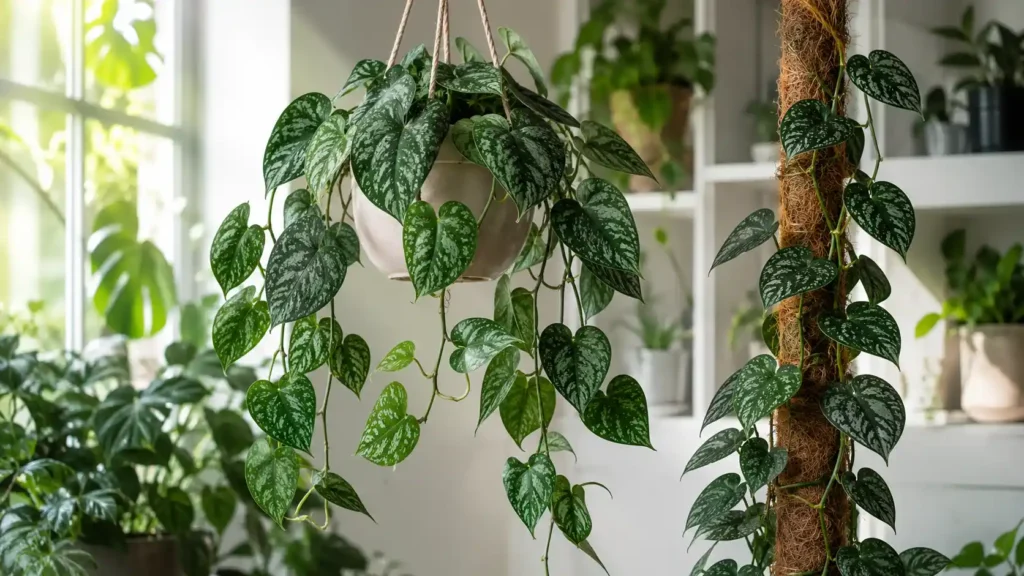
Scindapsus pictus is a popular tropical houseplant known for its striking silver-patterned foliage and easy-care nature. Commonly called satin pothos, silver satin plant, or silver pothos, it originates from the humid rainforests of Southeast Asia. Despite its common names, it is not a true pothos. Its velvety heart-shaped leaves and adaptable growth habit make it a favorite among both beginners and experienced plant collectors. This guide explains everything you need to know about Scindapsus pictus, including light requirements, watering, soil, humidity, propagation, growth habits, and solutions to common plant care problems.
Scindapsus pictus is one of many popular houseplants featured in our comprehensive Plants Benefits and Guides resource, which explores plant care, growth habits, and maintenance techniques for indoor gardeners.
Quick Summary
- Scindapsus pictus thrives in bright indirect light, well-draining soil, and humidity levels of 40–60%.
- Water only when the top 1–2 inches of soil become dry to prevent root rot.
- The plant contains calcium oxalate crystals and is toxic if ingested by pets or humans.
- Popular varieties include Scindapsus pictus argyraeus and Scindapsus pictus exotica.
- Proper light, drainage, and humidity are the keys to healthy growth and vibrant silver foliage.
What Is Scindapsus Pictus?
Scindapsus pictus is a tropical vine belonging to the genus Scindapsus and the Araceae family. Native to Southeast Asia, it naturally grows in warm, humid rainforest environments where it climbs trees using aerial roots. Its distinctive velvety foliage also makes it a natural addition to our guide on Plants with Soft Velvety Leaves: 7+ Proven Easy Care Guide.
The plant is admired for its matte, heart-shaped leaves decorated with silver spots and patches. Its trailing or climbing growth habit makes it suitable for hanging baskets, shelves, and moss poles. Because of its attractive foliage and low-maintenance requirements, it has become one of the most widely grown indoor plants worldwide. Readers interested in the broader botanical classification of the genus can explore the Wikipedia article on Scindapsus for additional taxonomic information.
Is Scindapsus Pictus a Pothos?
No, Scindapsus pictus is not a true pothos. Although it is commonly called satin pothos or silver pothos, it belongs to a different genus than traditional pothos plants.
True pothos plants belong to the genus Epipremnum, while Scindapsus pictus belongs to the genus Scindapsus. Both plants are members of the Araceae family and share similar care needs, but Scindapsus generally prefers slightly higher humidity and benefits from more aerated soil conditions.
Scindapsus Pictus Varieties: Argyraeus vs. Exotica
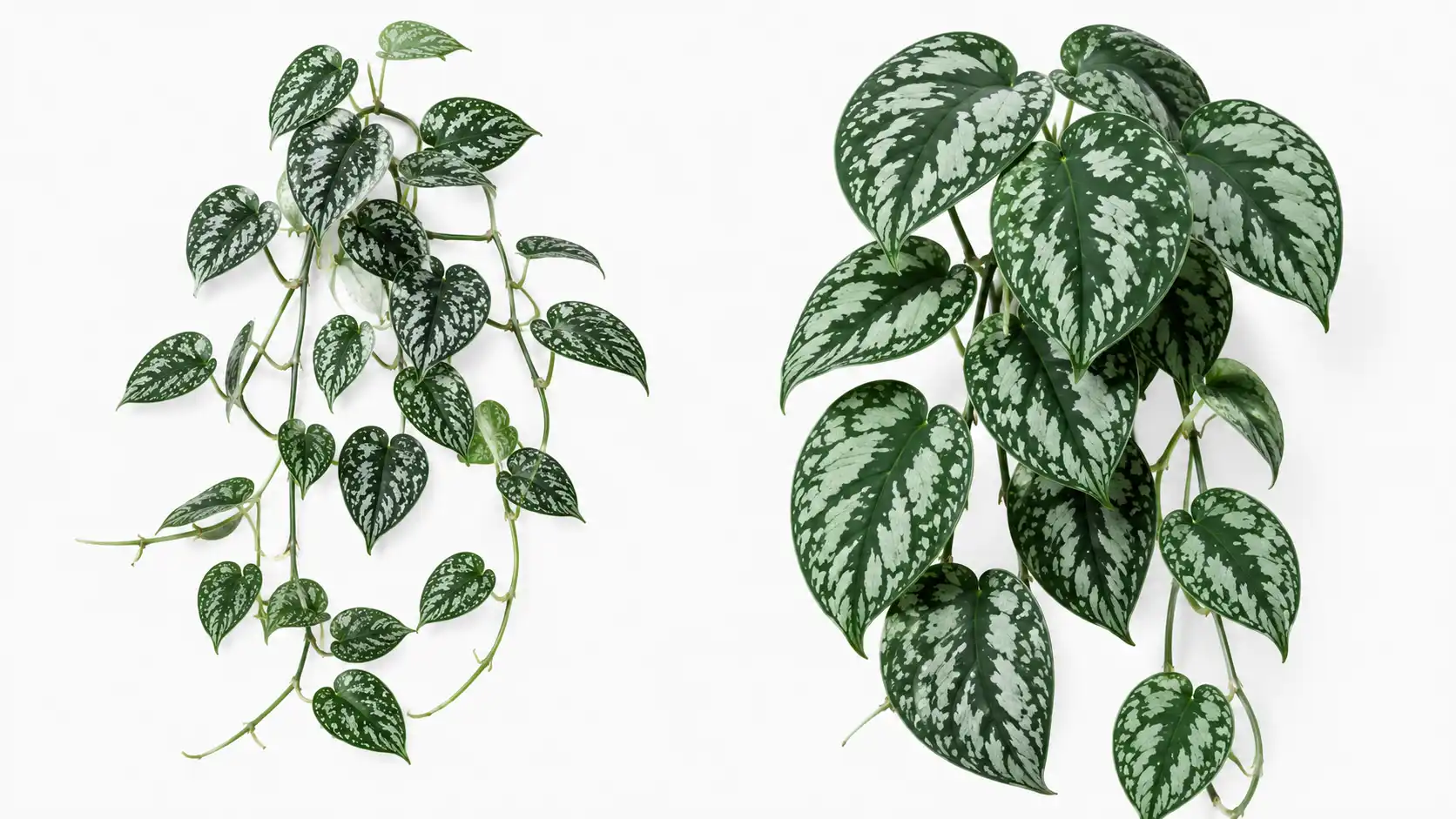
The two most popular Scindapsus pictus cultivars are Argyraeus and Exotica.
| Feature | Argyraeus | Exotica |
| Leaf Size | Smaller | Larger |
| Silver Coverage | Fine silver spots | Large silver patches |
| Growth Rate | Moderate | Moderate to Fast |
| Light Preference | Bright indirect light | Brighter indirect light |
| Ideal Placement | Shelves and baskets | Moss poles and statement displays |
Argyraeus produces compact foliage covered in delicate silver speckles. Exotica develops larger leaves with bold silver blotches that cover much of the leaf surface. Additional names such as Silver Splash and Silver Satin are sometimes used informally to describe similar-looking forms.
Scindapsus Pictus Light Requirements
What Kind of Light Does Scindapsus Pictus Need?
Scindapsus pictus grows best in bright indirect light.
- Ideal location: East-facing or north-facing windows
- Suitable: Bright rooms with filtered sunlight
- Tolerated: Moderate indirect light
- Avoid: Direct afternoon sun
- Avoid: Deep shade for extended periods
Scindapsus pictus exotica especially benefits from brighter indirect light because stronger light helps maintain its large silver variegated patches. If you enjoy low-maintenance indoor plants, compare these lighting needs with our Zamioculcas Zamiifolia Care Guide: ZZ Plant Growing Tips.
How Light Affects Scindapsus Pictus Variegation
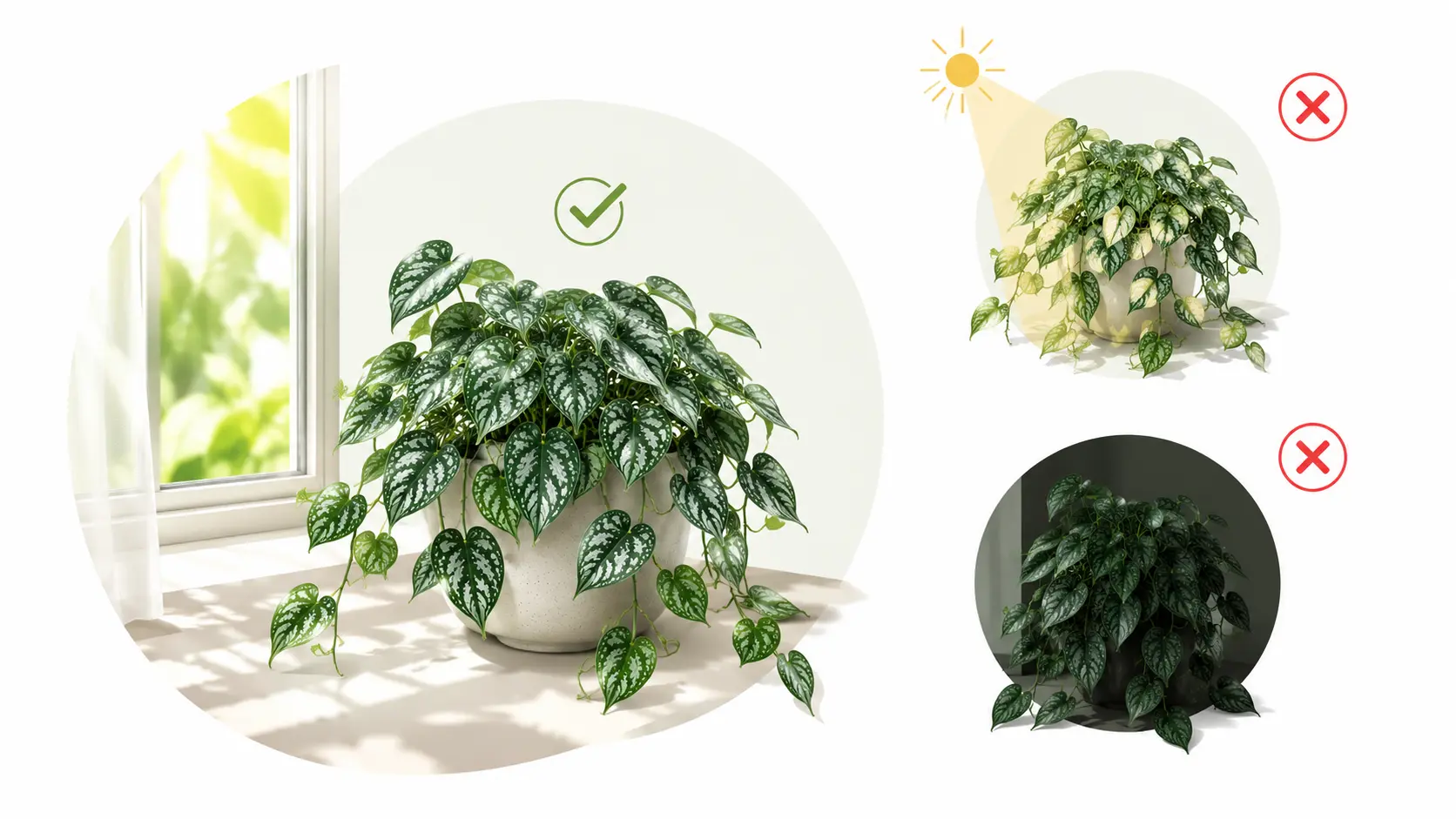
Light directly influences the plant’s silver markings. When grown in insufficient light, leaves may develop less silver coloration and appear greener over time. Bright indirect light encourages strong variegation, healthier growth, and larger foliage. Excessive direct sunlight, however, can scorch leaves and cause brown patches. Proper lighting is also essential for maintaining attractive foliage patterns, as explained in our Begonia Maculata Care Guide for Healthy Growth.
How to Water Scindapsus Pictus
How Often to Water Scindapsus Pictus
Water Scindapsus pictus when the top 1–2 inches of soil feel dry.
- Spring and summer: Approximately every 7–10 days
- Fall and winter: Approximately every 14–21 days
- Always check soil moisture before watering
- Use a moisture meter if available
- Lift the pot to gauge moisture levels
Watering schedules should be based on soil dryness rather than a fixed calendar. Similar watering principles used for Scindapsus pictus can also be found in our Japanese Money Plant Care: Light, Watering & Propagation Guide, where soil moisture management plays a major role in plant health.
Signs of Overwatering vs. Underwatering
| Condition | Symptoms | Soil Condition | Corrective Action |
| Overwatering | Yellow leaves, mushy stems | Wet and soggy | Reduce watering and improve drainage |
| Underwatering | Curling leaves, crispy edges | Dry soil | Water thoroughly and maintain moisture consistency |
Overwatering is the most common cause of Scindapsus pictus decline.
Scindapsus Pictus Soil Requirements
What Is the Best Soil Mix for Scindapsus Pictus?
Scindapsus pictus requires a loose, well-draining soil mix.
Recommended mix:
- 60–70% quality potting soil
- 20–30% perlite
- 10–20% orchid bark or coco coir
Additional requirements:
- Slightly acidic to neutral pH (6.0–7.0)
- Good aeration
- Fast drainage
Avoid heavy clay-based or compacted soils that trap moisture.
Why Drainage Matters for Scindapsus Soil
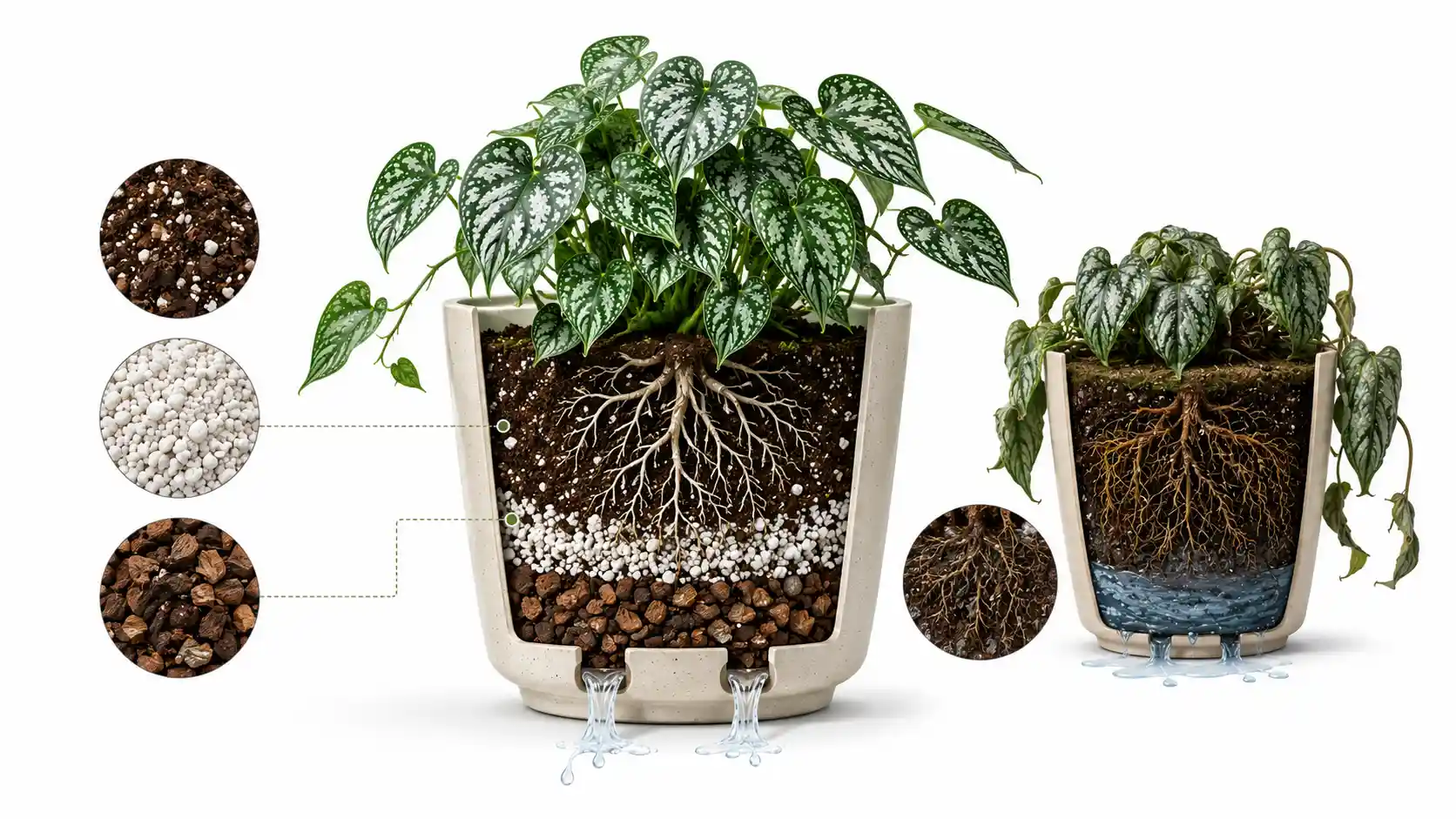
Proper drainage prevents root rot, one of the most common causes of plant failure. Using pots with drainage holes allows excess water to escape. Terra cotta containers can further improve moisture control by allowing water to evaporate through the pot walls.
Choosing the right container is equally important, and our Best Pot for Monstera: 7+ Proven Size & Material Tips explains how pot materials affect moisture retention and drainage.
Scindapsus Pictus Humidity and Temperature
How Much Humidity Does Scindapsus Pictus Need?
Scindapsus pictus prefers humidity levels between 40% and 60%. Like Scindapsus pictus, plants discussed in our Alocasia Amazonica Care Indoors guide thrive when humidity levels are kept consistently elevated.
Ways to increase humidity include:
- Using a humidifier
- Grouping plants together
- Placing pots on pebble trays
- Occasional light misting
- Keeping plants away from dry heating vents
While average household humidity is often acceptable, higher humidity promotes healthier foliage and faster growth. Many tropical houseplants, including those covered in our Peperomia Rotundifolia Care Guide, benefit from similar humidity levels and stable indoor temperatures.
Ideal Temperature Range for Scindapsus Pictus
The ideal temperature range is 60–85°F (15–29°C).
Important considerations:
- Avoid temperatures below 55°F (13°C)
- Protect from cold drafts
- Keep away from air-conditioning vents
- Never expose to frost
Complete Scindapsus Pictus Care Guide
Fertilizing Scindapsus Pictus
Feed the plant once monthly during spring and summer using a balanced liquid fertilizer diluted to half strength.
Recommendations:
- Use balanced fertilizers such as 10-10-10
- Fertilize only during active growth
- Avoid fertilizing during fall and winter
- Flush soil occasionally to prevent salt buildup
Over-fertilization can cause leaf burn and root damage.
How to Prune Scindapsus Pictus
Pruning helps maintain shape and encourage bushier growth.
- Use sterilized pruning tools
- Cut above a node
- Remove yellow or damaged leaves
- Trim leggy stems
- Prune during spring or early summer
Repotting Scindapsus Pictus
Repot every 1–2 years or when roots emerge from drainage holes.
Signs repotting is needed:
- Root-bound growth
- Rapid soil drying
- Stunted development
- Roots circling the pot
Move up only one or two pot sizes and use fresh soil during repotting.
Plant Size and Growth Rate
How Big Does Scindapsus Pictus Grow Indoors?
Indoor vines commonly reach 3–10 feet in length depending on care and support. Gardeners who enjoy trailing vines may also appreciate our Ultimate Hanging Monstera Guide: Care, Varieties & Tips for additional indoor climbing plant ideas.
Typical leaf sizes:
- Argyraeus: 2–4 inches
- Exotica: 4–6 inches or larger
Plants trained on moss poles often develop larger leaves than trailing specimens.
Growth Rate of Scindapsus Pictus
Scindapsus pictus is a moderate grower.
Growth factors include:
- Bright indirect light
- Warm temperatures
- High humidity
- Consistent watering
Growth is strongest during spring and summer and slows significantly during colder months.
How to Propagate Scindapsus Pictus in Water
Step-by-Step Water Propagation Guide
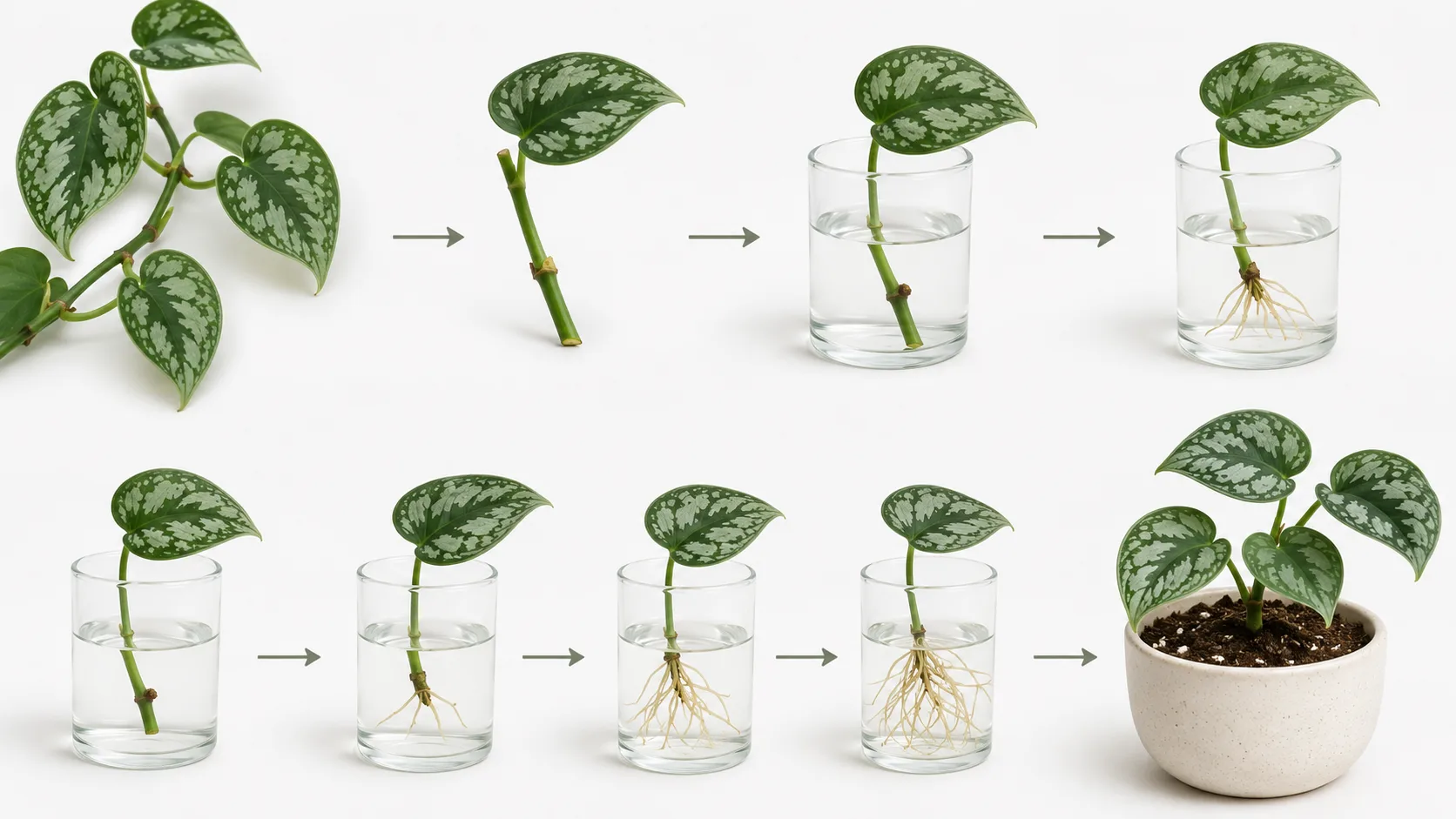
- Select a healthy stem with at least one or two nodes.
- Remove lower leaves from the cutting.
- Place the cutting in room-temperature water with nodes submerged.
- Position the container in bright indirect light.
- Change water every 5–7 days.
- Wait 2–4 weeks for roots to develop.
- Transfer to soil when roots reach 1–2 inches long.
Can You Propagate Scindapsus Pictus in Soil?
Yes. Soil propagation is also effective.
Place cuttings into moist, well-draining soil and maintain consistent humidity. A clear plastic covering can help retain moisture while roots develop. Water propagation allows easier monitoring of root growth, while soil propagation reduces transplant shock.
Is Scindapsus Pictus Toxic?
Scindapsus Pictus Toxicity to Pets and Humans
Yes, Scindapsus pictus is toxic if ingested.
The plant contains calcium oxalate crystals that can cause:
- Oral irritation
- Excessive drooling
- Vomiting
- Difficulty swallowing
- Mouth discomfort
Keep the plant away from children, cats, and dogs. If ingestion occurs, contact a medical professional or veterinarian immediately.
Common Scindapsus Pictus Problems and How to Fix Them
Scindapsus Pictus Yellow Leaves: Causes and Solutions
- Overwatering → Yellow leaves → Reduce watering
- Poor drainage → Root stress → Improve soil mix
- Low light → Weak growth → Move to brighter location
- Nutrient deficiency → Pale leaves → Fertilize appropriately
- Natural aging → Older lower leaves yellow → Remove as needed
Scindapsus Pictus Leaves Curling: Why It Happens
Curling leaves usually indicate environmental stress.
Common causes include:
- Underwatering
- Low humidity
- Root-bound conditions
- Temperature fluctuations
Inward curling often indicates underwatering or dry air, while downward curling may suggest overwatering.
Scindapsus Root Rot: Signs, Treatment, and Prevention
Signs include:
- Yellow leaves
- Wilting
- Mushy roots
- Foul-smelling soil
Treatment:
- Remove affected plant
- Trim damaged roots
- Replace soil
- Repot into a clean container
Prevention:
- Water correctly
- Use drainage holes
- Maintain a well-draining soil mix
Does Scindapsus Pictus Flower?
Scindapsus pictus rarely flowers indoors. In ideal tropical conditions, mature plants may produce spathe-type blooms similar to other members of the Araceae family. However, the plant is grown almost exclusively for its decorative foliage rather than its flowers.
Beginner Mistakes When Caring for Scindapsus Pictus
- Watering on a fixed schedule instead of checking soil moisture
- Keeping the plant in low light and expecting strong variegation
- Using dense, poorly draining soil
- Ignoring humidity requirements
- Treating Scindapsus exactly like pothos despite different humidity preferences
Avoiding these mistakes significantly improves plant health and appearance.
Scindapsus Pictus vs. Similar Plants
| Feature | Scindapsus Pictus | Epipremnum Aureum (Pothos) | Scindapsus Pictus Exotica |
| Leaf Texture | Matte, velvety | Glossy | Matte, velvety |
| Variegation | Silver spots and patches | Yellow or white streaks | Large silver blotches |
| Humidity Needs | Moderate to High | Low to Moderate | Moderate to High |
| Growth Speed | Moderate | Fast | Moderate to Fast |
| Pet Safe | No | No | No |
Conclusion
Scindapsus pictus is a beautiful tropical houseplant that combines attractive silver-patterned foliage with relatively simple care requirements. Success depends on providing bright indirect light, well-draining soil, proper watering habits, and moderate humidity. Understanding the differences between popular varieties such as Argyraeus and Exotica can help growers choose the best plant for their space. By avoiding common mistakes such as overwatering, poor drainage, and insufficient light, gardeners can enjoy healthy growth and vibrant foliage for years. With the right care routine, Scindapsus pictus remains one of the most rewarding indoor plants to grow.
Frequently Asked Questions
How often should I water my Scindapsus pictus?
Water when the top 1–2 inches of soil are dry. This is typically every 7–10 days during active growth and every 14–21 days during winter.
Why are my Scindapsus pictus leaves turning yellow?
Yellow leaves are most commonly caused by overwatering. Other causes include poor drainage, low light, nutrient deficiencies, and natural leaf aging.
Is Scindapsus pictus safe for cats and dogs?
No. Scindapsus pictus contains calcium oxalate crystals and is toxic to pets and humans if ingested.
What is the difference between Scindapsus pictus argyraeus and exotica?
Argyraeus has smaller leaves with delicate silver spotting, while Exotica produces larger leaves with bold silver patches.
Why are my Scindapsus pictus leaves curling?
Leaf curling is usually caused by underwatering, low humidity, temperature stress, or root-bound conditions.
Can I grow Scindapsus pictus in water permanently?
It can survive in water for extended periods, but long-term growth is usually stronger when rooted plants are transferred into soil.
Does Scindapsus pictus need humidity?
Yes. It prefers humidity levels between 40% and 60%. Additional humidity often improves growth and reduces leaf curling.