
Introduction — What Is Calathea Majestica White Star?
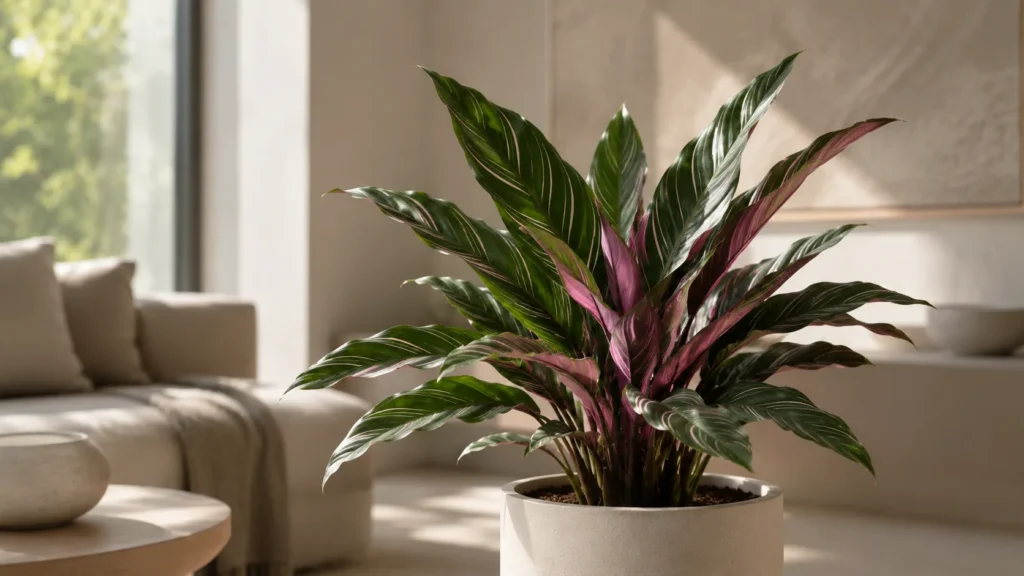
The calathea majestica white star is a tropical foliage plant known for its striking ornamental leaves and indoor adaptability. Scientifically linked to Goeppertia majestica, it is prized for long, lance-shaped leaves decorated with fine white pinstripes and soft pink to purple undersides. Native to tropical rainforest environments, this plant is widely grown as a decorative houseplant.
The calathea majestica white star is primarily valued for identification, care guidance, and troubleshooting due to its popularity among indoor plant enthusiasts. This guide explains its origins, appearance, growth behavior, care requirements, and common issues to help users maintain healthy foliage in home environments. For beginners exploring similar easy indoor foliage plants, the Dracaena fragrans Care Guide: Complete Indoor Growing Tips offers a useful comparison of low-maintenance tropical houseplants.
Quick Summary
- The calathea majestica white star is a tropical indoor foliage plant from the Marantaceae family
- Native to Brazilian rainforests with high humidity and indirect light conditions
- Known for long green leaves with white pinstripe variegation and pink-purple undersides
- Requires humidity-rich environments and filtered water for optimal growth
- Distinguished by its nyctinasty (night leaf movement), a trait of prayer plants
Origin and Botanical Background of Calathea Majestica White Star
Native Habitat and Origin
The calathea majestica white star originates from the tropical rainforests of Brazil in South America, where it grows under dense canopy conditions with filtered sunlight and high humidity. These natural conditions explain its preference for indirect light and moist environments indoors. The plant belongs to the Marantaceae family, commonly known as prayer plants, which are documented in botanical taxonomy as tropical flowering plants.
Botanical Classification
This plant belongs to the Marantaceae family, commonly known as the prayer plant family. It is closely related to other ornamental calatheas and marantas, which exhibit similar leaf movement behaviors. Other members of the prayer plant group such as those covered in the Calathea Roseopicta Medallion Care Guide share similar movement and humidity requirements.
Scientific Naming and Synonyms
The accepted botanical name for this plant is Goeppertia majestica, previously classified under the genus Calathea. Despite taxonomic updates, the name Calathea majestica white star remains widely used in horticulture.
RHS Recognition and Cultivar Status
The Royal Horticultural Society (RHS) recognizes several calathea cultivars for ornamental use, and the White Star is often listed among prized decorative foliage varieties due to its unique variegation.
How Calathea Majestica Differs from Related Species
The calathea majestica white star differs from other members of the majestica group through its refined variegation pattern and leaf structure. Plants like the Monstera Adansonii Hanging or Climbing also share decorative leaf appeal, though their structure differs significantly from calatheas.
Cultivar Differences Within Majestica Group
Within the Goeppertia majestica group, variations occur in stripe density, leaf brightness, and growth habits. The White Star cultivar is characterized by more defined white striping compared to darker green relatives.
Comparison with Other Variegated Calatheas
Unlike broader variegated calathea types, the white star displays narrow, linear striping rather than irregular or patchy patterns. This makes it more visually structured and symmetrical.
What Does the Calathea White Star Look Like? (Identification Guide)
Leaf Shape and Pattern
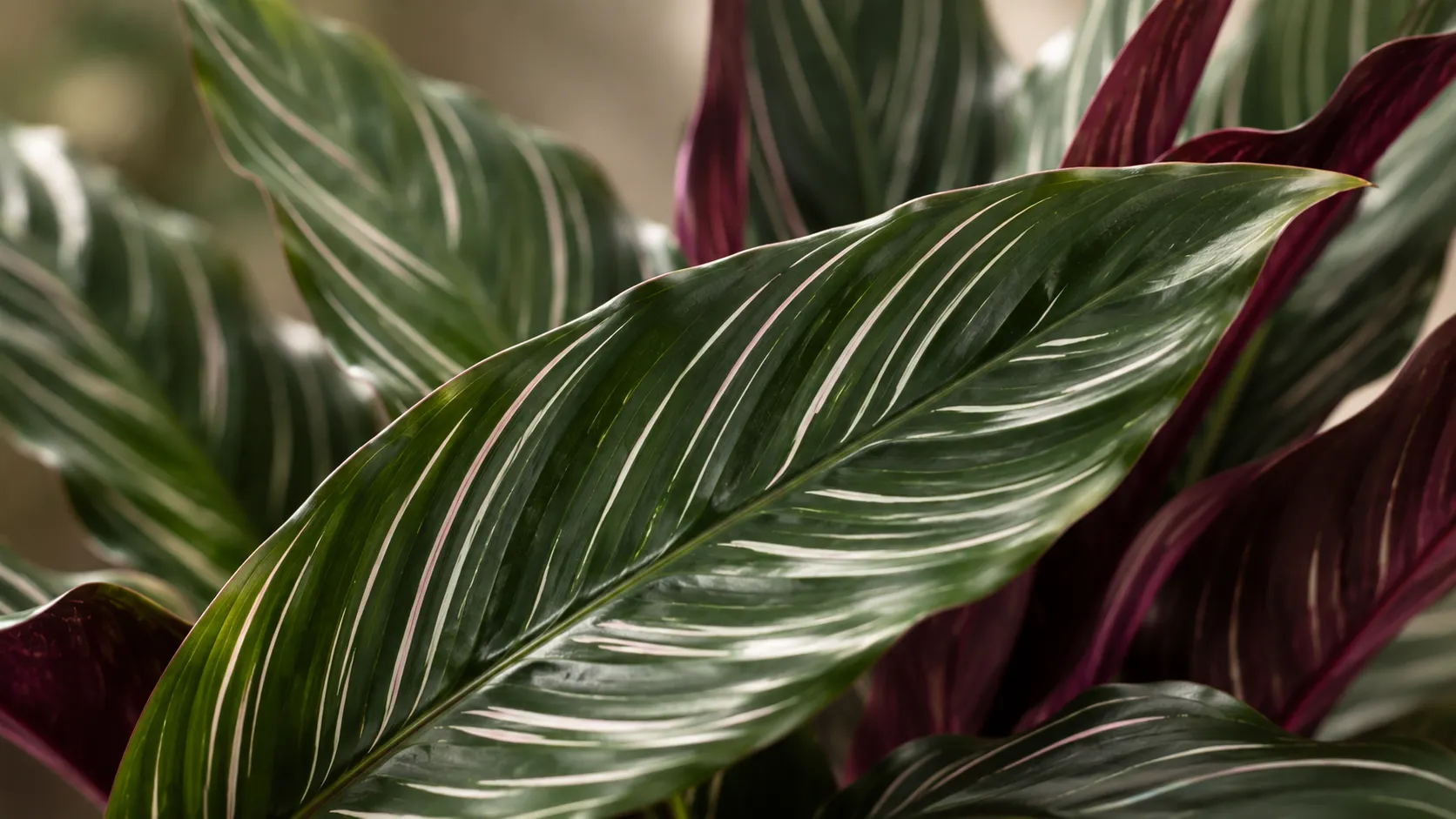
The calathea white star plant features elongated, lance-shaped leaves that grow upright in a structured form. Each leaf displays a deep green base with crisp white to cream pinstripes running parallel along the veins.
Underside Color and Movement
The underside of each leaf is typically pinkish-purple or burgundy. Like other prayer plants, it exhibits nyctinasty, meaning leaves gently move upward at night and lower during the day.
Air-Purifying Qualities
The calathea majestica white star is often considered an air-purifying indoor plant, contributing to improved indoor air quality in enclosed spaces when grown in clusters.
Calathea Majestica White Star Size: How Big Does It Grow?
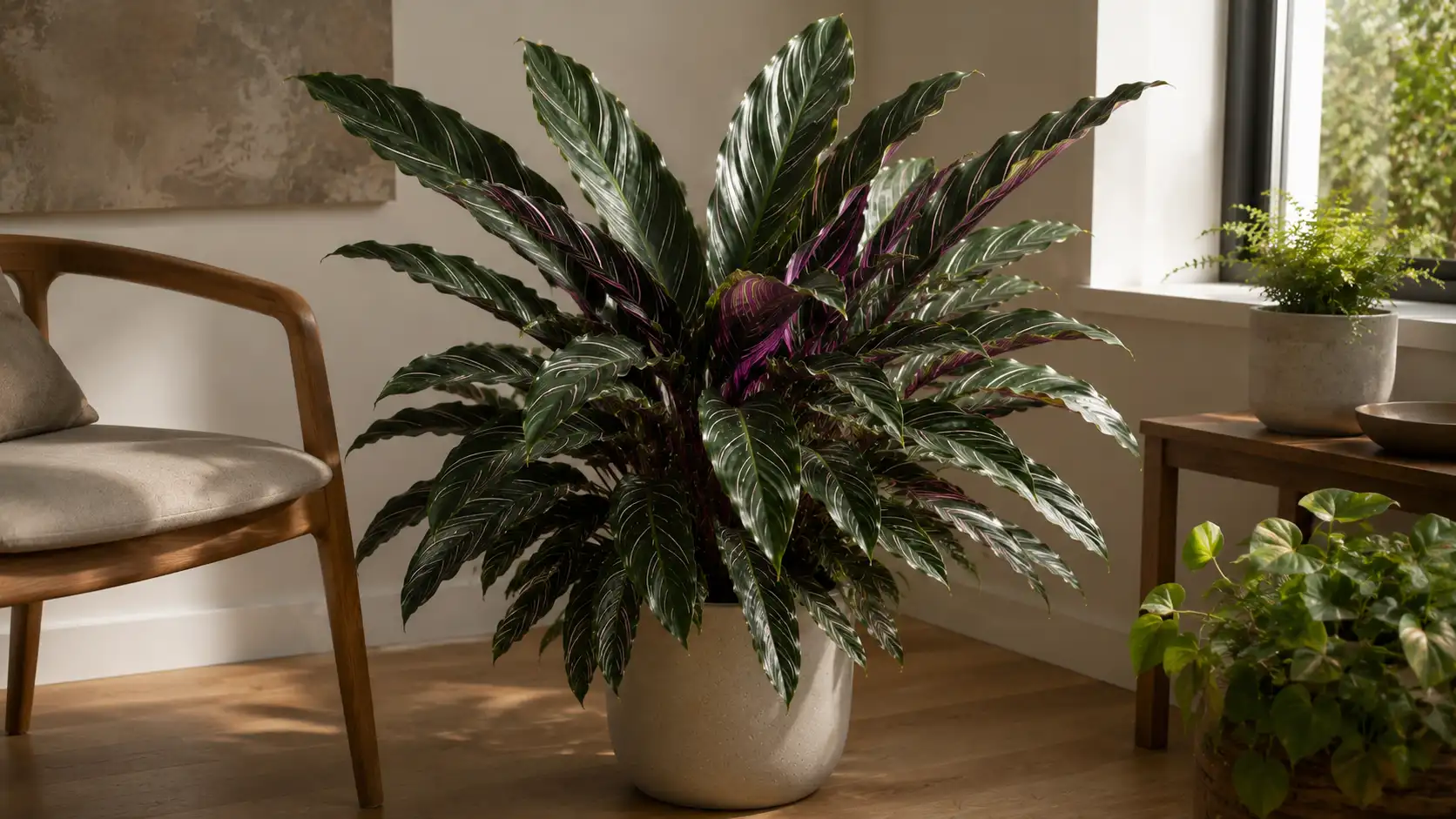
The calathea majestica white star typically grows to a moderate indoor size, making it suitable for homes and offices.
Indoor Size Expectations
Indoors, it usually reaches 60–90 cm in height with a similar spread depending on pot size and care conditions.
Retail Size and Growth Conditions
Most nursery plants are sold at around 45 cm height, but growth expands over time with proper humidity, light, and nutrition.
Environmental Influence on Size
Humidity levels, pot size, and soil quality significantly influence overall plant size. Higher humidity and stable temperatures promote fuller growth.
Growth Rate of the White Star Calathea
The calathea majestica white star is a slow to moderate grower.
Seasonal Growth Behavior
Growth is most active during spring and summer when light and temperature conditions are optimal.
Factors Affecting Growth Speed
- Light quality (indirect bright light improves growth)
- Humidity levels (higher humidity accelerates leaf development)
- Temperature stability (warm environments encourage steady growth)
For contrast in indoor plant scaling, the Sansevieria Laurentii Care Guide: Complete Indoor Tips highlights more compact structural growth habits.
Calathea Majestica White Star Care Guide
Overview of Care Needs
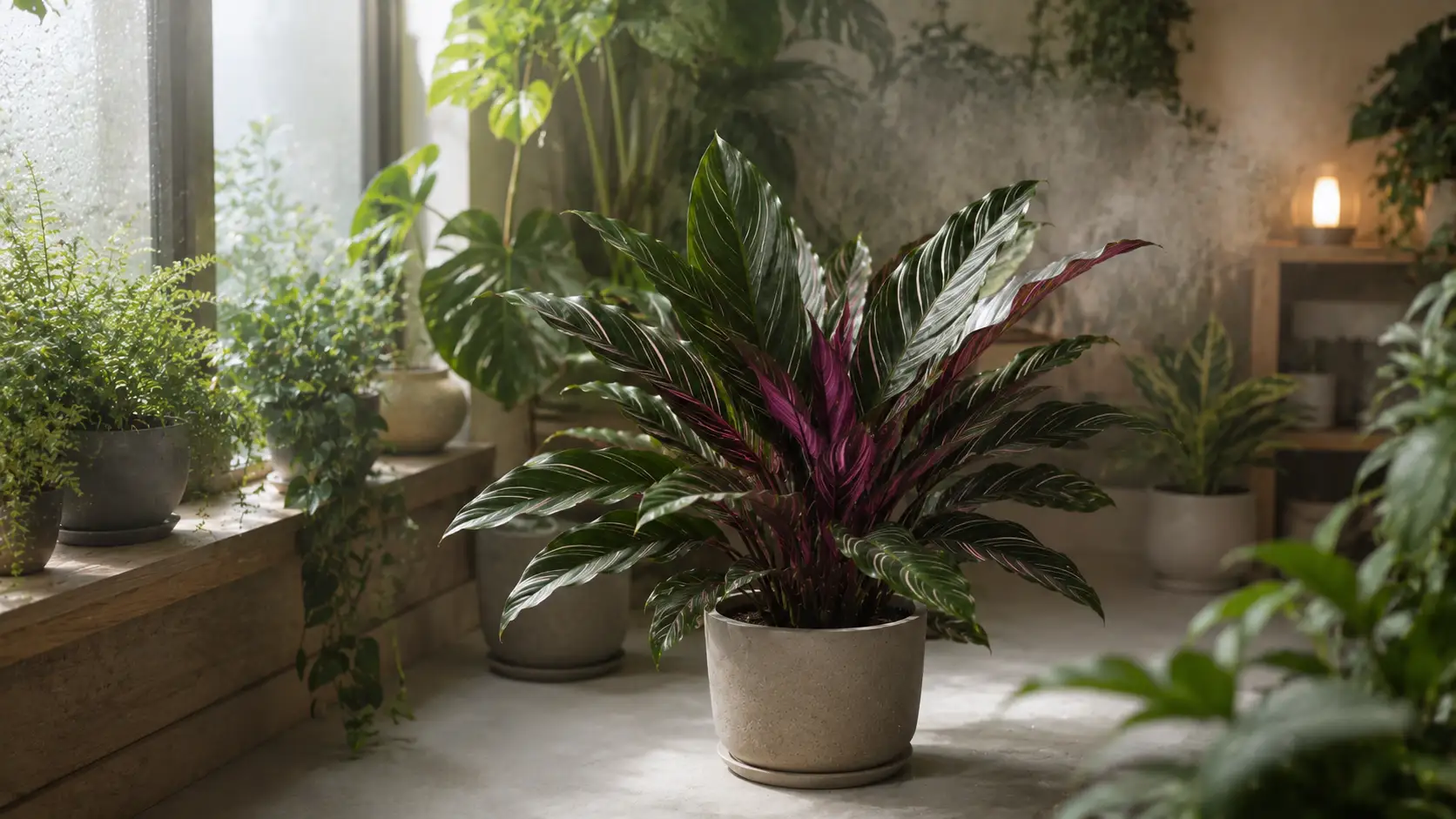
The calathea white star care routine requires consistent humidity, filtered water, and stable indoor conditions. It is sensitive to environmental fluctuations and chemical impurities in water.
Light Requirements for Calathea White Star
Bright, indirect light (no direct sun exposure required for optimal growth)\text{Bright, indirect light (no direct sun exposure required for optimal growth)}Bright, indirect light (no direct sun exposure required for optimal growth)
The plant thrives in bright indirect light. Direct sunlight can cause leaf fading and scorch marks, while very low light reduces variegation intensity. Ideal placement is near north or east-facing windows.
Watering the White Star Plant
Watering should be consistent but controlled. The soil should remain slightly moist, allowing the top 1–2 cm to dry before rewatering. Use filtered, distilled, or rainwater to avoid fluoride sensitivity.
Humidity and Temperature Needs
This plant requires 60% or higher humidity. Ideal temperature ranges between 18–27°C. Dry air causes brown tips and stress, while cold drafts can damage foliage. Similar humidity-sensitive species like those in the Chamaedorea Elegans Dry Leaves Causes & Fix guide demonstrate how tropical plants react to dry indoor air.
Soil, Potting, and Fertilization
| Care Factor | Recommendation |
| Soil | Well-draining peat-free mix + perlite |
| Light | Bright indirect light |
| Water | Filtered water, moist soil |
| Humidity | 60%+ preferred |
| Fertilizer | Monthly diluted feed (growing season) |
| Temperature | 18–27°C stable |
Pruning and Repotting
Prune only yellow or damaged leaves to maintain appearance. Repot every 1–2 years in spring when roots become crowded or growth slows.
Calathea White Star Problems: Common Issues and How to Fix Them
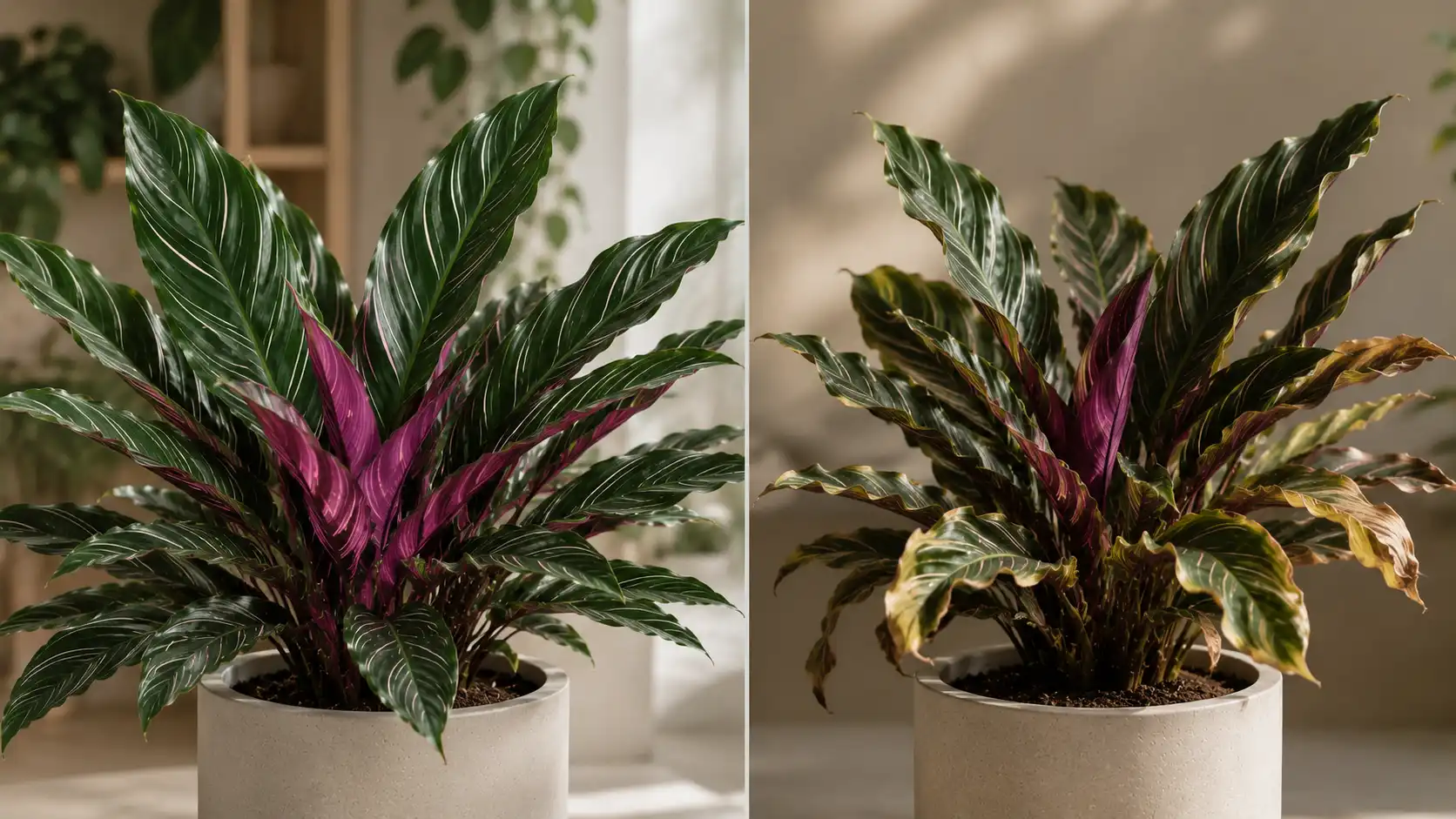
Brown Leaf Tips and Edges
Caused by low humidity or fluoride in tap water. Fix by switching to filtered water and increasing humidity levels.
Yellow Leaves
Usually results from overwatering or poor drainage. Improve soil aeration and reduce watering frequency. Overwatering issues are also common in plants such as described in Peperomia Leaves Falling Off: Causes, Fixes, and Prevention, highlighting the importance of soil balance.
Leaves Not Moving (Loss of Nyctinasty)
A stress signal linked to low humidity or temperature instability. Restore environmental balance to recover movement.
Pests: Spider Mites and Fungus Gnats
Spider mites thrive in dry air; fungus gnats occur in overwatered soil. Use neem oil for mites and sticky traps for gnats.
Common Beginner Mistakes When Growing Calathea Majestica White Star
- Using untreated tap water
- Placing plant in direct sunlight
- Relying only on leaf misting instead of proper humidity control
- Over-repotting or frequent environmental changes
- Allowing soil to dry out completely
Calathea Majestica White Star vs. Similar Cultivars
White Star vs. Calathea White Fusion
| Feature | White Star | White Fusion |
| Leaf pattern | Fine pinstripes | Irregular white marbling |
| Care difficulty | Moderate | High |
| Humidity need | High | Very high |
| Growth form | Upright, structured | Softer, more chaotic |
White Star vs. Beauty Star Calathea
The Beauty Star features broader pink and green tones, while the White Star has sharper white striping and a more structured leaf appearance.
Is Calathea Majestica White Star Safe for Pets and Children?
The calathea majestica white star is non-toxic to cats, dogs, and humans according to widely accepted horticultural safety references such as ASPCA plant safety guidelines. It is suitable for households with pets and children.
Propagating Calathea Majestica White Star
Division Method Only
Propagation is done through root division during repotting.
Steps:
- Remove plant from pot gently
- Separate root clusters carefully
- Ensure each division has healthy roots and leaves
- Replant in fresh soil mix
- Maintain high humidity after propagation
Calatheas cannot be propagated by cuttings because they lack nodes that root effectively.
Conclusion: Growing Calathea Majestica White Star Successfully
The calathea majestica white star is a visually striking tropical plant that thrives in stable, humid, and indirect-light environments. Success depends on maintaining consistent moisture, using filtered water, and avoiding environmental stress. When properly cared for, it becomes a long-lasting decorative foliage plant that enhances indoor spaces with its elegant striped leaves. For more detailed plant insights and care frameworks, explore our Plants Benefits and Guides pillar covering a wide range of indoor and outdoor plant knowledge.
FAQs
1. How much light does a Calathea White Star need?
It requires bright indirect light. Direct sunlight damages leaves, while low light reduces variegation quality.
2. Why are my Calathea White Star leaves curling?
Leaf curling is usually caused by low humidity or underwatering, signaling environmental stress.
3. How big does a Calathea Majestica White Star get?
It typically grows 60–90 cm tall indoors with a similar spread under ideal conditions.
4. What is the difference between Calathea White Star and White Fusion?
White Star has structured white pinstripes, while White Fusion has irregular marbled patterns and higher care demands.
5. Why does my Calathea White Star have brown tips?
Brown tips are commonly caused by fluoride in tap water or low humidity levels.
6. Is the Calathea Majestica White Star the same as Goeppertia majestica?
Yes, Goeppertia majestica is the accepted botanical name, while Calathea is the older classification.
7. How often should I water my Calathea White Star?
Water when the top 1–2 cm of soil becomes dry, using filtered or distilled water for best results.