
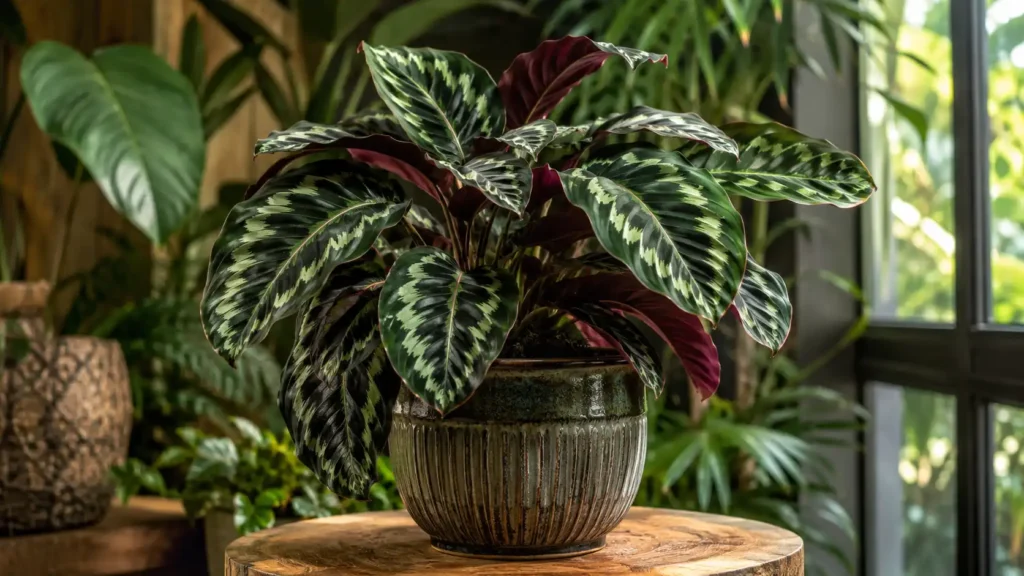
Introduction — What Is Calathea Warscewiczii?
Calathea warscewiczii care revolves around recreating the warm, humid conditions of a tropical rainforest. Native to Costa Rica and Nicaragua, this striking prayer plant is admired for its velvety dark green leaves marked with light green feather-like patterns and rich burgundy undersides. Also known as the Jungle Velvet plant, Jungle Velvet Calathea, Velvet Calathea, or by its updated botanical name Goeppertia warszewiczii, it belongs to a group of plants known for their nyctinastic movement. This means the leaves gently raise and lower between day and night, resembling hands in prayer. While slightly more demanding than many common houseplants, its dramatic foliage makes it a highly rewarding indoor specimen.
For gardeners building an indoor collection, exploring different indoor plants to grow can help create a healthier and more diverse home environment.
Quick Summary
- Calathea warscewiczii (syn. Goeppertia warszewiczii) is a tropical prayer plant valued for its velvet-textured, dark green leaves with light green feathering.
- It thrives in bright indirect light, consistently moist soil, high humidity, and warm temperatures.
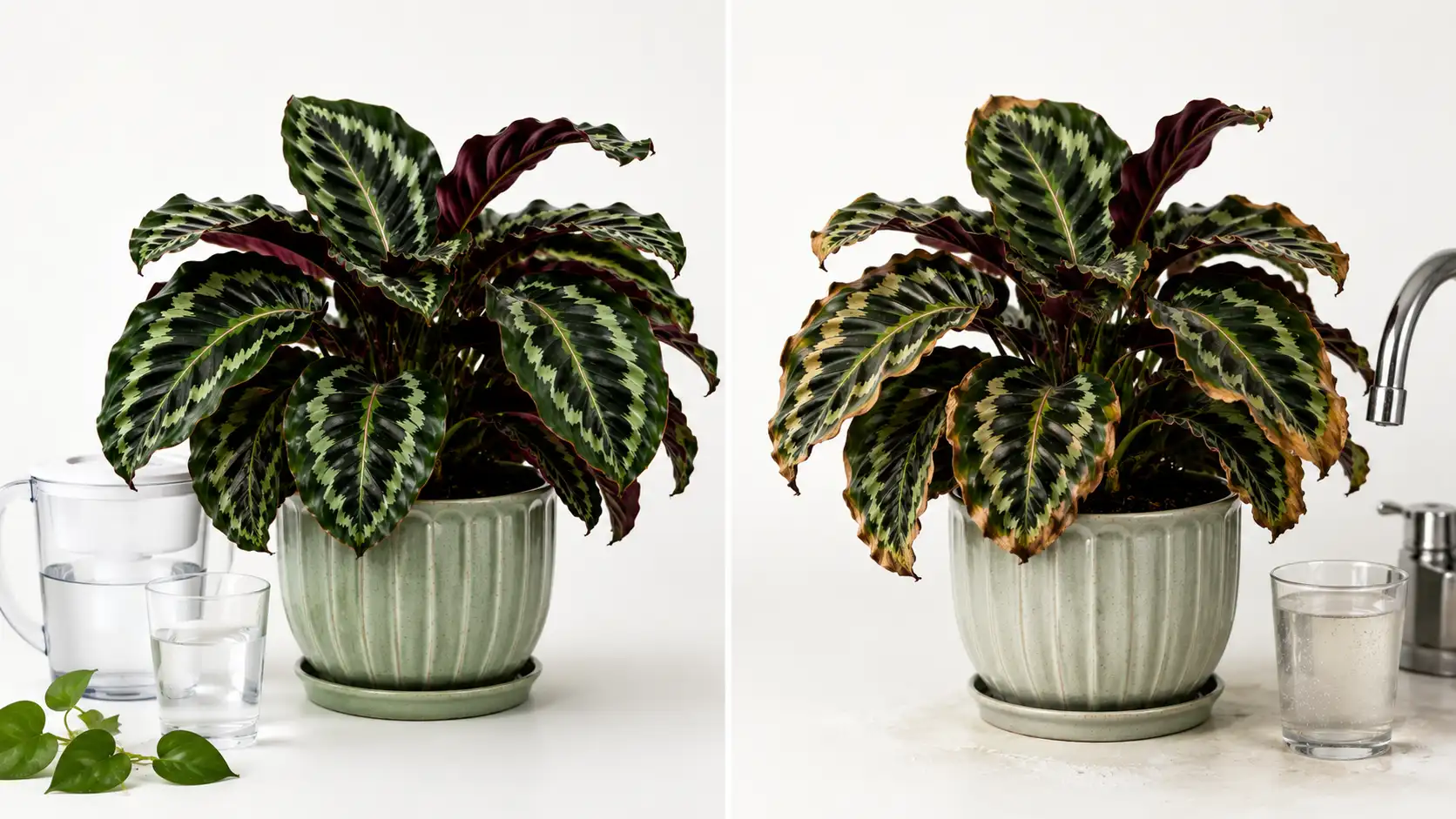
- Filtered, distilled, or rainwater is preferred because fluoride and chlorine can damage leaf edges.
- Common issues include yellow leaves, brown tips, curling leaves, and drooping caused by environmental stress.
- Propagation is achieved through rhizome division during repotting, not through stem cuttings or water propagation.
Is Calathea Warscewiczii Rare and Where Does It Come From?
Plant Origin and Botanical Classification
Calathea warscewiczii originates from the tropical forests of Costa Rica and Nicaragua, where it grows beneath the rainforest canopy in consistently warm and humid conditions. These shaded environments explain why the plant performs best in bright indirect light rather than direct sun.
The plant belongs to the Marantaceae family, commonly known as the prayer plant family. Members of this family are recognized for their decorative foliage and daily leaf movements.
Botanically, the species was once classified as Calathea warscewiczii. Taxonomic revisions later moved it into the genus Goeppertia, making the accepted scientific name Goeppertia warszewiczii. The genus classification and botanical history of these plants are discussed further in botanical references such as Wikipedia’s overview of Calathea.
However, the older Calathea name remains widely used among gardeners, nurseries, and houseplant enthusiasts.
Common names include:
- Jungle Velvet
- Jungle Velvet Calathea
- Velvet Calathea
- Velvet Leaf Calathea
- Calathea Jungle Velvet
The botanical name is commonly pronounced as:
go-PER-tee-uh war-she-VICH-ee-eye
Because both Calathea and Goeppertia names appear in plant catalogs and care guides, understanding that they refer to the same species helps avoid confusion.
How Rare Is Calathea Warscewiczii?
Calathea warscewiczii is moderately rare compared to many common houseplants. It is generally available through specialty nurseries, tropical plant growers, and online plant retailers, but it is less frequently found in large garden centers and big-box stores.
Several factors contribute to its higher price and limited availability:
- Slower production compared to common foliage plants
- Specific humidity and growing requirements
- High demand among Calathea collectors
- Distinctive velvet foliage that is difficult to replicate in other species
Collectors often seek the warscewiczii calathea because of its luxurious leaf texture and dramatic coloration. While not exceptionally rare, it is considered a premium foliage plant and is typically less common than species such as Calathea makoyana or Calathea ornata.
Why Is Calathea Warscewiczii Considered Hard to Care For?
Calathea warscewiczii is considered difficult to care for because it reacts quickly to environmental stress. Unlike many adaptable houseplants, it prefers stable humidity, consistent moisture, filtered water, and warm temperatures. Small changes in growing conditions often appear as visible leaf damage. Similar care challenges can also be found in other prayer plants, and a detailed Calathea care guide can help understand humidity, watering, and lighting requirements across related varieties.
Sensitivity to Environmental Conditions
One of the main reasons calatheas are challenging indoor plants is their sensitivity to environmental fluctuations.
In their native rainforest habitat, they experience:
- Consistently high humidity
- Stable temperatures
- Filtered sunlight
- Even soil moisture
- Protection from strong winds
Indoor environments are often very different. Air conditioning systems, heaters, drafts, and seasonal temperature changes can create stress that manifests as:
- Brown leaf edges
- Curling leaves
- Drooping foliage
- Reduced growth
- Loss of leaf color intensity
Low humidity is particularly problematic. Homes commonly maintain humidity levels between 30% and 50%, while a Jungle Velvet plant prefers humidity levels above 60%.
Because of this, many growers consider humidity management the most challenging aspect of velvet calathea care.
Water Quality Sensitivity
Water quality is another major factor in calathea warscewiczii care indoors.
Many municipal water supplies contain:
- Fluoride
- Chlorine
- Dissolved salts
- Mineral deposits
Over time, these substances can accumulate in the soil and damage sensitive roots. The first visible symptom is often brown leaf tips or browned leaf margins.
If you water calathea with tap water regularly, you may notice:
- Crispy leaf edges
- Gradual browning
- Reduced plant vigor
- Leaf discoloration
For best results, use:
- Distilled water
- Filtered water
- Rainwater
Allowing tap water to sit overnight may reduce chlorine levels, but it does not remove fluoride. This is why filtered or distilled water remains the preferred option for long-term plant health.
Calathea Warscewiczii Plant Size and Growth Rate
Mature Size Indoors vs Outdoors
Calathea warscewiczii typically reaches a mature height of 2–4 feet indoors when provided with proper care. Its spread is often similar to its height, creating a full and lush appearance.
Indoor size depends on several factors:
- Available light
- Pot size
- Root space
- Humidity levels
- Overall plant health
In tropical outdoor environments, plants can sometimes exceed their typical indoor dimensions due to higher humidity and unrestricted root development.
The following table summarizes typical size expectations:
| Growing Environment | Height | Spread |
| Indoors | 2–4 ft | 2–4 ft |
| Tropical Outdoors | 3–5 ft+ | 3–5 ft+ |
Pot selection also influences growth. A container that is too small may restrict root expansion, while an excessively large pot can retain excess moisture and increase the risk of root rot.
Growth Rate and Seasonal Patterns
Calathea warscewiczii has a moderate growth rate under favorable conditions.
Most active growth occurs during:
- Spring
- Early summer
- Mid-summer
Growth naturally slows during autumn and may nearly stop during winter when daylight hours decrease.
Seasonal growth patterns generally follow this cycle:
| Season | Growth Activity |
| Spring | Active growth |
| Summer | Strong growth |
| Autumn | Slowing growth |
| Winter | Semi-dormant |
Pot depth is another common consideration. Calatheas generally prefer pots that are wider rather than excessively deep because their rhizomes spread horizontally. A moderately shallow container with excellent drainage often supports healthier root development than a very deep pot.
Gardeners who want to make a calathea bushy should focus on:
- Maintaining high humidity
- Providing bright indirect light
- Removing damaged foliage
- Feeding lightly during active growth
- Dividing mature plants when necessary
Healthy rhizome growth naturally encourages fuller foliage production over time, creating the dense, lush appearance that makes the Jungle Velvet Calathea so desirable.
Complete Calathea Warscewiczii Care Guide
Light Requirements
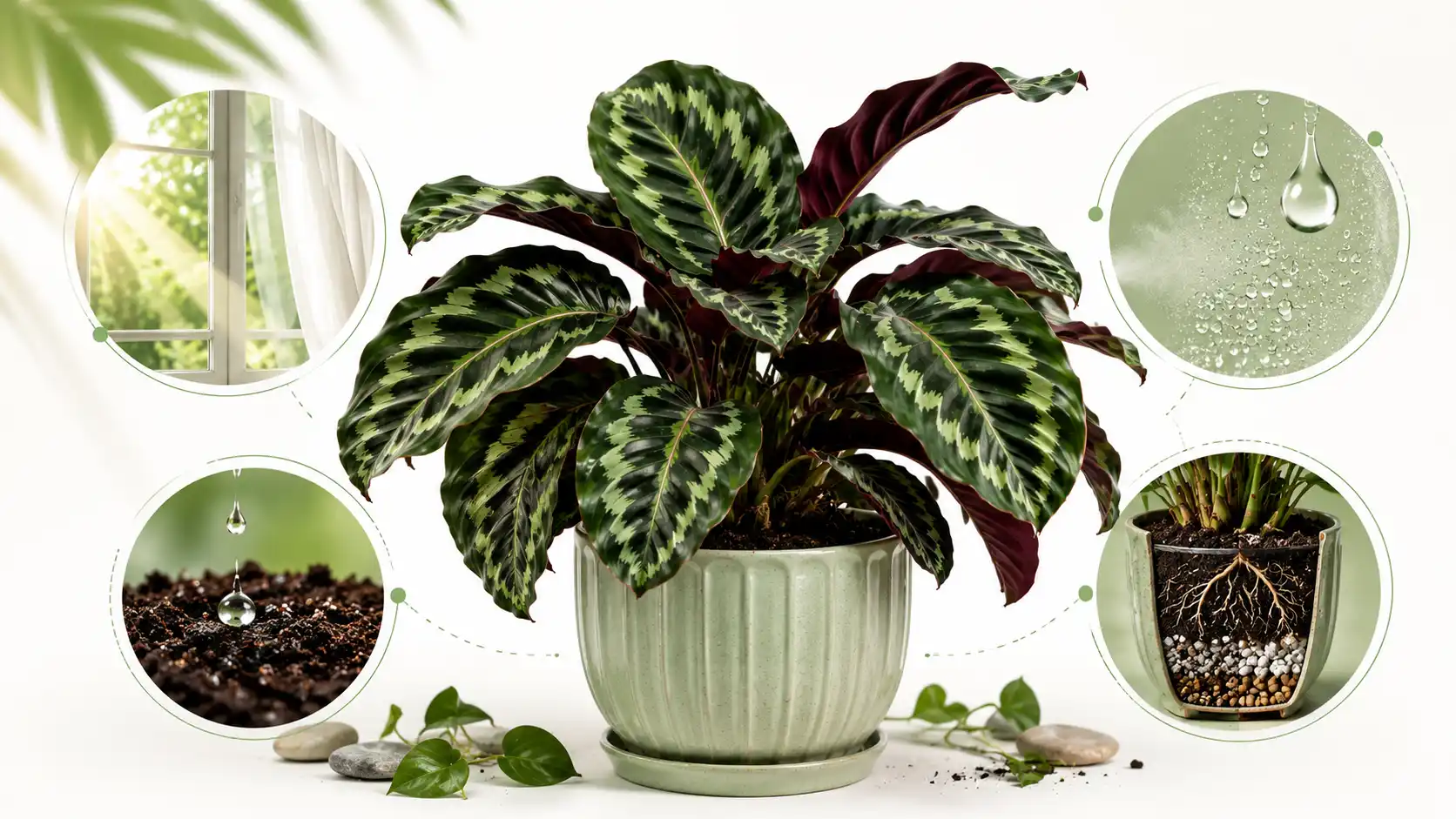
Calathea warscewiczii grows best in bright indirect light. This lighting condition closely mimics the filtered sunlight it receives beneath the rainforest canopy in its native habitat. Direct sunlight should be avoided because it can scorch the plant’s delicate velvet-textured leaves, causing faded coloration, dry patches, and permanent leaf damage.
Ideal indoor locations include:
- Near an east-facing window
- Near a north-facing window
- Several feet away from a bright south-facing window with a sheer curtain
- Well-lit rooms with filtered natural light
Signs the plant receives too much light include:
- Faded leaf patterns
- Brown or crispy leaf edges
- Scorched leaf surfaces
Signs of insufficient light include:
- Slower growth
- Smaller new leaves
- Reduced leaf coloration
- Leggy growth
A common question is, “Where is the best place to put a Calathea?” The answer is a bright location with indirect sunlight and stable temperatures. Bathrooms with good natural light can be excellent locations because they often provide higher humidity levels.
Another frequent question is, “Should I put my Calathea in the bathroom?” If the bathroom receives sufficient natural light, the higher humidity can make it an ideal environment for healthy growth.
Watering Needs and Schedule
Calathea warscewicii prefers consistently moist soil but does not tolerate waterlogged conditions. In most indoor environments, watering every 1–2 weeks is appropriate, although actual frequency depends on temperature, humidity, pot size, and seasonal growth.
Instead of watering on a fixed schedule, check the soil first. Water when the top inch of soil feels slightly dry.
General watering guidelines:
| Season | Typical Watering Frequency |
| Spring | Every 7–10 days |
| Summer | Every 7–10 days |
| Autumn | Every 10–14 days |
| Winter | Every 10–14+ days |
Signs of underwatering include:
- Curling leaves
- Dry soil
- Crispy leaf edges
- Drooping foliage
Signs of overwatering include:
- Yellow leaves
- Persistently wet soil
- Mushy stems
- Foul-smelling roots
Many growers ask whether top watering or bottom watering is better.
Top Watering
- Flushes excess salts from soil
- Allows thorough hydration
- Easy to monitor drainage
Bottom Watering
- Encourages even moisture absorption
- Reduces disturbance of soil surface
- Helps avoid splashing foliage
Bottom watering can be beneficial for Calatheas, but excess water should always be discarded after the soil has absorbed sufficient moisture.
If your calathea appears underwatered, water thoroughly until moisture drains from the bottom of the container, then allow excess water to drain completely.
Soil and Pot Requirements
The ideal soil for calathea warscewiczii balances moisture retention with drainage. The roots prefer consistent moisture but require oxygen access to remain healthy.
A suitable soil mix may contain:
- Coco coir or peat moss
- Perlite
- Fine orchid bark
- Compost or organic matter
A commonly used mix consists of:
- 50% coco coir or peat-based potting mix
- 25% perlite
- 25% orchid bark
This combination provides:
- Moisture retention
- Air circulation
- Improved drainage
- Reduced risk of compaction
Pot selection is equally important.
Recommended pot features:
- Drainage holes
- Moderate width
- Stable construction
- Breathable materials when possible
Understanding Calathea repotting needs is important because choosing the correct pot size helps prevent root stress and moisture problems.
Terracotta pots dry faster and may require more frequent watering, while plastic pots retain moisture longer.
Regarding the common question, “Do calatheas like deep or shallow pots?” they generally perform best in moderately shallow, wider containers because their rhizomes spread horizontally rather than growing deeply.
Avoid oversized pots because excess soil can remain wet for extended periods, increasing the risk of root rot.
Humidity and Temperature
Humidity is one of the most important aspects of jungle velvet plant care.
Calathea warscewiczii prefers humidity levels above 60%, with many plants thriving best between 60% and 80%.
When humidity is too low, symptoms often include:
- Brown leaf tips
- Brown margins
- Leaf curling
- Reduced growth
Practical methods to increase humidity include:
- Using a humidifier
- Placing the plant on a pebble tray
- Grouping plants together
- Positioning the plant in a humid bathroom
- Keeping it away from heating vents
A humidifier generally provides the most consistent results.
Temperature requirements are equally important.
Ideal temperatures range between:
65–85°F (18–29°C)
Avoid exposing the plant to:
- Cold drafts
- Air-conditioning vents
- Heating vents
- Sudden temperature fluctuations
- Temperatures below 60°F (16°C)
Stable warmth helps maintain healthy foliage and supports steady growth throughout the growing season.
Fertilization
Calathea warscewiczii benefits from light feeding during active growth but is sensitive to excessive fertilizer.
Feed during:
- Spring
- Summer
- Early autumn
A balanced liquid houseplant fertilizer diluted to half strength is usually sufficient.
Typical feeding schedule:
| Season | Fertilizer Frequency |
| Spring | Every 4–6 weeks |
| Summer | Every 4–6 weeks |
| Autumn | Reduce feeding |
| Winter | Do not fertilize |
Many growers ask, “Can I use Miracle-Gro on Calathea?”
A diluted balanced Miracle-Gro product can be used cautiously, but excessive application may burn sensitive roots. Calatheas are generally less tolerant of strong fertilizer concentrations than many common houseplants.
High-nitrogen fertilizers can lead to:
- Root stress
- Salt buildup
- Brown leaf tips
- Reduced plant health
Organic alternatives include:
- Worm castings
- Compost tea
- Fish emulsion (diluted)
- Seaweed extract
Another common question is, “Are coffee grounds good for calathea plants?”
Fresh coffee grounds are generally not recommended because they can compact soil, alter moisture retention, and create nutrient imbalances. Properly composted organic matter is a safer option.
Pruning
Pruning helps maintain appearance and encourages healthy growth.
Learning the correct method for pruning a prayer plant helps maintain healthy foliage and improves the overall appearance of indoor specimens.
The primary goals of pruning are:
- Removing damaged leaves
- Eliminating yellow foliage
- Improving airflow
- Encouraging fresh growth
Prune whenever you notice:
- Yellow leaves
- Severely damaged leaves
- Pest-damaged foliage
- Diseased tissue
To prune calathea warscewiczii:
- Sterilize pruning scissors or snips.
- Locate the damaged leaf at its base.
- Cut cleanly near the soil line.
- Avoid removing excessive healthy foliage at one time.
- Dispose of diseased material away from the plant.
Pruning does not force branching like some woody plants, but removing old or damaged leaves allows the plant to direct energy toward healthy new growth and helps maintain a fuller appearance.
Regular grooming also improves the overall look of the velvet calathea and allows early detection of pests or disease problems.
Calathea Warscewiczii Care Requirements — Quick Reference Table
| Care Factor | Requirement |
| Light | Bright indirect light |
| Water frequency | Every 1–2 weeks (check soil first) |
| Water type | Filtered, distilled, or rainwater |
| Soil mix | Well-draining, moisture-retentive |
| Humidity | 60% or above |
| Temperature | 65–85°F (18–29°C) |
| Fertilizer | Diluted balanced liquid, spring/summer only |
| Pot type | Well-draining with drainage holes |
Calathea Warscewiczii Flower — What to Expect
What the Bloom Looks Like
Calathea warscewiczii can produce attractive flowers, although most growers cultivate it primarily for its foliage. The bloom consists of a white to cream-colored cone-shaped inflorescence that emerges from the center of the plant.
The flowers typically appear:
- In late winter
- During spring
- On mature, healthy plants
Characteristics of the bloom include:
- Cream or white coloration
- Cone-like flower structure
- Compact growth habit
- Long-lasting display compared to many tropical houseplants
The flowers contrast beautifully against the dark green velvet foliage, making a blooming Jungle Velvet Calathea particularly striking.
Indoor flowering is less common than outdoor flowering in tropical climates, but it can occur when growing conditions closely match the plant’s natural environment.
How to Encourage Flowering Indoors
The best way to encourage flowering is to provide consistent care and allow the plant to reach maturity. Flower production is often a sign that the plant is healthy and growing under favorable conditions.
Conditions that support blooming include:
- Bright indirect light
- Stable temperatures
- High humidity
- Proper watering
- Consistent fertilization during the growing season
Conditions that suppress flowering include:
- Low humidity
- Poor lighting
- Chronic underwatering
- Nutrient deficiencies
- Frequent environmental stress
Even under excellent care, indoor blooms remain relatively uncommon. Growers should view flowering as a bonus rather than an expectation.
How to Propagate Calathea Warscewiczii
Division Method — The Only Reliable Approach
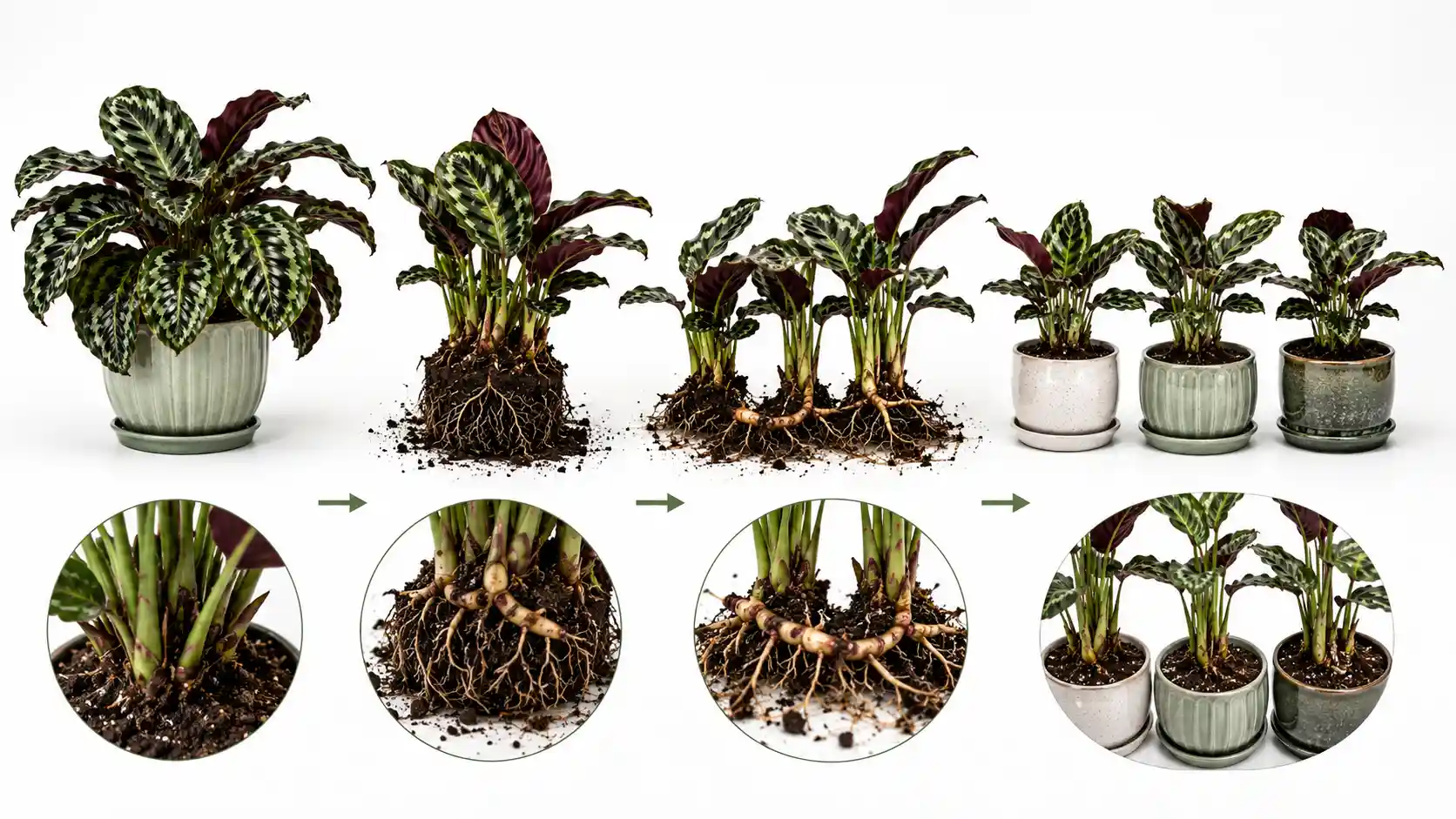
Calathea warscewiczii propagation is accomplished through rhizome division. Unlike many houseplants, it cannot be reliably propagated from stem cuttings.
The best time to divide the plant is during spring repotting when active growth is beginning.
Tools needed:
- Clean pruning shears
- Fresh potting mix
- Pots with drainage holes
- Gloves (optional)
Steps for rhizome division:
- Carefully remove the plant from its pot.
- Gently loosen soil around the roots.
- Identify natural clumps connected by healthy rhizomes.
- Separate sections that contain roots and foliage.
- Use sterilized shears if necessary.
- Plant each division in fresh soil.
- Water thoroughly after planting.
- Place divisions in warm, humid conditions.
A viable division should have:
- Healthy roots
- At least one growth point
- Several leaves when possible
Post-division care includes maintaining higher humidity and avoiding direct sunlight while the plant establishes itself.
Stem cuttings do not work because calatheas lack the stem nodes required to produce roots from cut sections.
Can Calathea Warscewiczii Be Propagated in Water?
No, Calathea warscewiczii cannot be effectively propagated in water.
Many houseplants root successfully because they possess nodes capable of producing new roots. Calatheas grow differently. Their growth originates from underground rhizomes rather than stem nodes.
This means:
- Water propagation is generally unsuccessful.
- Stem cuttings do not produce new plants.
- Leaf cuttings do not generate roots.
Rhizomes are thick underground structures that store energy and produce both roots and shoots. Some gardeners refer to these structures as calathea bulbs, although rhizome is the more accurate botanical term.
The only reliable propagation method remains division of healthy rhizomes during repotting.
As a result, Calathea warscewiczii cannot live permanently in water in the same way some hydroponic houseplants can.
Common Calathea Warscewiczii Problems and How to Fix Them
Yellow Leaves — Causes and Solutions
Yellow leaves are most commonly caused by overwatering. Excess moisture reduces oxygen around the roots and can eventually lead to root rot.
Other possible causes include:
- Low light
- Nutrient deficiencies
- Natural aging of older leaves
- Poor drainage
Diagnosis process:
- Check soil moisture.
- Inspect drainage holes.
- Evaluate lighting conditions.
- Examine root health if necessary.
- Determine whether only older leaves are affected.
Solutions:
- Allow soil to partially dry before watering.
- Improve drainage.
- Move the plant to brighter indirect light.
- Remove severely damaged leaves.
Prevention:
- Water based on soil moisture, not a schedule alone.
- Use a well-draining soil mix.
- Avoid oversized containers.
Brown Edges and Brown Tips
Brown leaf edges and tips are among the most common Calathea warscewiczii problems.
Primary causes include:
- Low humidity
- Fluoride in tap water
- Chlorine exposure
- Fertilizer buildup
Humidity-related browning usually appears as dry, crispy margins throughout multiple leaves.
Fertilizer burn often presents as:
- Rapid tip browning
- White crust on soil
- Reduced overall vigor
Solutions:
- Increase humidity above 60%.
- Use distilled, filtered, or rainwater.
- Flush soil occasionally to remove excess salts.
- Reduce fertilizer frequency if necessary.
Preventative measures:
- Monitor indoor humidity.
- Avoid excessive feeding.
- Use high-quality water sources.
Drooping Leaves
Drooping leaves are usually caused by watering imbalances.
Common causes:
- Underwatering
- Overwatering
- Root damage
- Environmental shock
Underwatered plants often display:
- Dry soil
- Leaf curling
- Limp foliage
Overwatered plants may exhibit:
- Wet soil
- Yellowing leaves
- Soft stems
It is important to distinguish drooping from natural prayer plant movement.
Calathea warscewiczii naturally raises and lowers its leaves throughout the day and night. This movement is normal and should not be confused with stress-related drooping.
Warning signs of serious problems include:
- Continuous drooping
- Yellowing foliage
- Persistent wet soil
- Unpleasant root odor
Address the underlying watering issue as soon as possible to prevent long-term root damage.
Leaves Curling and Shriveling
Leaves curl inward primarily because the plant is attempting to conserve moisture.
Common causes include:
- Underwatering
- Low humidity
- Heat stress
- Excessive airflow
Curling inward often signals dehydration, while leaves curling downward may indicate broader environmental stress.
Shriveling leaves usually suggest:
- Prolonged drought stress
- Root dysfunction
- Severe humidity deficiency
Quick remediation steps:
- Check soil moisture immediately.
- Water if the soil is dry.
- Increase ambient humidity.
- Move the plant away from heat sources.
- Monitor recovery over several days.
Healthy leaves typically begin to recover once moisture and humidity levels stabilize.
Pest Infestations
Although generally resilient, Calathea warscewiczii can experience pest problems.
Many indoor growers also benefit from learning how to identify and manage common indoor plant pest problems before they affect plant health.
Most common pests include:
- Spider mites
- Mealybugs
- Fungus gnats
Spider Mites
- Tiny pests often found on leaf undersides
- Cause stippling and discoloration
- Thrive in dry conditions
Mealybugs
- White cotton-like clusters
- Feed on plant sap
- Common around leaf joints
Fungus Gnats
- Small flying insects
- Associated with consistently wet soil
- Usually indicate overwatering
Treatment options include:
- Neem oil
- Insecticidal soap
- Manual removal
- Improved cultural conditions
Maintaining proper humidity and avoiding plant stress significantly reduces pest susceptibility.
Calathea Warscewiczii vs Similar Calathea Varieties
| Feature | C. warscewiczii | C. zebrina | C. makoyana | C. ornata | C. roseopicta |
| Leaf texture | Velvety | Smooth | Smooth | Smooth | Smooth |
| Leaf pattern | Light green feathering | Zebra stripes | Peacock markings | Pink pinstripes | Medallion rings |
| Humidity needs | Very high | High | High | High | High |
| Difficulty | High | Moderate | Moderate | Moderate | Moderate–High |
| Indoor flower | Rare | Rare | Very rare | Very rare | Rare |
Calathea warscewiczii stands out because of its velvet foliage texture. While many Calathea varieties display striking patterns, relatively few combine dramatic coloration with a soft, velvety leaf surface. Gardeners comparing different prayer plants may also explore another Calathea variety to understand differences in leaf patterns, growth habits, and care needs.
Common Beginner Mistakes When Caring for Calathea Warscewiczii
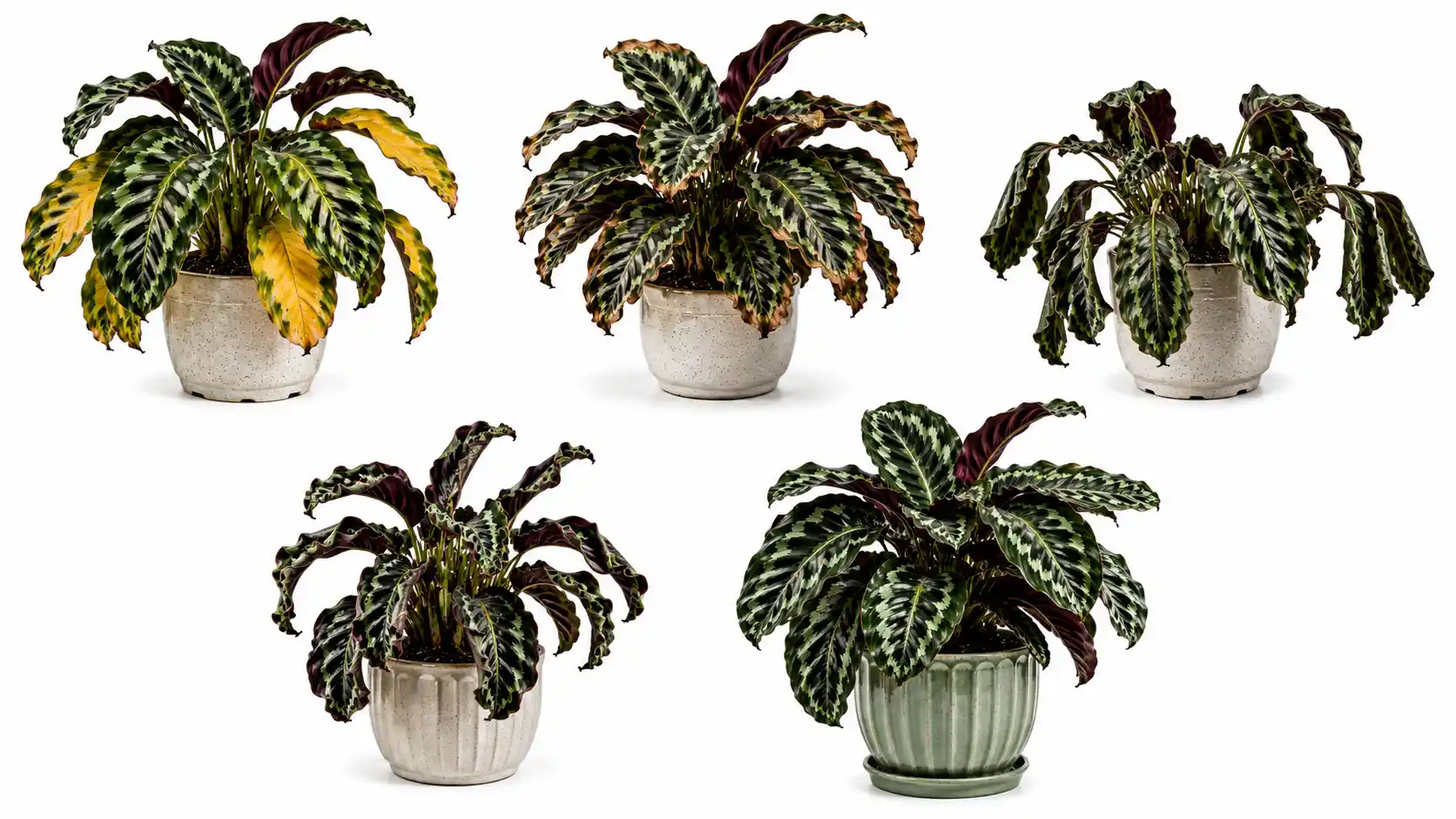
Many care problems stem from avoidable mistakes rather than difficult growing requirements.
Common mistakes include:
- Using unfiltered tap water — Fluoride and chlorine can damage leaf edges and tips. Use filtered, distilled, or rainwater instead.
- Placing the plant in direct sunlight — Direct sun can scorch velvet leaves and fade their coloration. Choose bright indirect light.
- Watering on a rigid schedule without checking soil moisture first — Environmental conditions vary. Always inspect the soil before watering.
- Neglecting humidity needs and relying on watering alone — Adequate humidity is just as important as proper watering.
- Repotting too frequently — Excessive root disturbance can slow growth and increase stress.
- Using an oversized pot — Excess soil retains water longer and increases the risk of root rot.
Avoiding these common errors often resolves many recurring calathea care issues.
How Long Do Calathea Plants Last Indoors?
Calathea warscewiczii is a perennial plant that can thrive indoors for many years when provided with proper care.
A healthy specimen may live indefinitely because it continually regenerates through its rhizome system.
Factors that shorten lifespan include:
- Chronic overwatering
- Persistent low humidity
- Repeated drought stress
- Severe pest infestations
- Root rot
- Long-term poor lighting
Signs of a thriving plant include:
- Regular new leaf production
- Strong leaf coloration
- Upright growth habit
- Active seasonal growth
- Healthy root development
Signs of decline include:
- Repeated yellowing
- Extensive browning
- Weak growth
- Persistent drooping
- Root damage
Because the plant grows from rhizomes, mature specimens often renew themselves over time, producing fresh growth even after older foliage is removed.
Conclusion — Caring for Your Jungle Velvet Calathea
Calathea warscewiczii care requires consistency, attention to detail, and an understanding of the plant’s tropical origins. While it is often considered more demanding than average houseplants, the reward is a stunning display of velvety foliage that few indoor plants can match.
Calathea warscewiczii belongs to a group of decorative foliage plants admired for their unique textures, including many plants with soft velvety leaves.
The three most important factors for success are maintaining high humidity, using quality water free of fluoride and chlorine, and providing bright indirect light. When these conditions are met, the Jungle Velvet Calathea can grow into a lush, long-lived specimen with vibrant foliage and occasional blooms.
For best results, monitor soil moisture regularly, avoid environmental extremes, and focus on creating stable rainforest-like conditions indoors. With proper care, Calathea warscewiczii can remain a beautiful centerpiece plant for many years.
Calathea warscewiczii is one of many popular houseplants covered in complete plant care resources, including guides on plant benefits, growing requirements, and indoor plant maintenance.
FAQs
Q1. Where is the best place to put a Calathea warscewiczii indoors?
A spot with bright indirect light, away from direct sun and cold drafts, is ideal. North-facing or east-facing windows often provide suitable lighting. A naturally humid bathroom with adequate light can also be an excellent location.
Q2. How often should I water my Calathea warscewiczii?
Approximately every 1–2 weeks, but always check the top inch of soil before watering. Actual frequency depends on humidity, temperature, pot size, and seasonal growth. Water less frequently during winter.
Q3. Why are my Calathea warscewiczii leaves curling or drooping?
Curling usually indicates underwatering, low humidity, or heat stress. Drooping may result from either underwatering or overwatering. Check soil moisture first and evaluate recent care conditions to identify the underlying cause.
Q4. Should I bottom water my Calathea, and does it make a difference?
Yes, bottom watering can benefit Calatheas because it promotes even moisture absorption throughout the root zone. However, excess water should always be drained away, and soil moisture should still be monitored regularly.
Q5. What are the most common Calathea warscewiczii problems and how do I fix them?
The most common issues include yellow leaves, brown edges, drooping foliage, and curling leaves. These problems are usually linked to watering imbalances, low humidity, poor water quality, or environmental stress. Correcting the underlying condition typically resolves the issue.