
Introduction
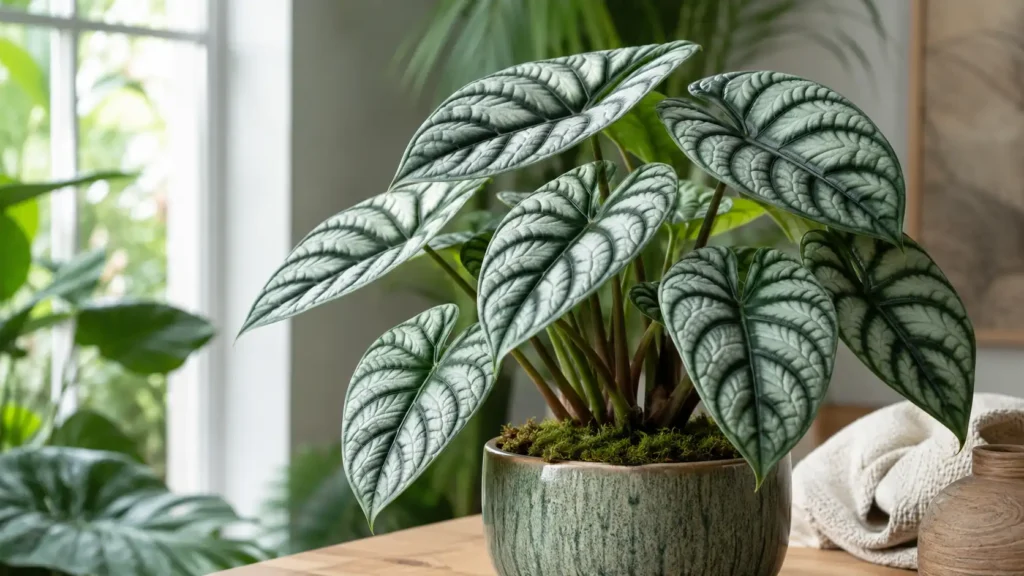
The dragon scale plant, also known as Alocasia dragon scale, is a popular ornamental houseplant admired for its unusual, textured foliage. Its botanical name is Alocasia baginda, a compact aroid with thick, silvery-green leaves that resemble the layered scales of a dragon. The plant is valued for its dramatic appearance, dark vein patterns, and manageable indoor size. This guide explains how to identify an alocasia dragon scale, provide proper care, encourage healthy growth, and solve common problems. Whether you are a beginner or an experienced plant collector, understanding its light, water, humidity, and propagation needs is essential for long-term success.
Quick Summary
- The dragon scale plant (Alocasia baginda) is a compact tropical aroid known for silver-green leaves with raised, scale-like textures and dark veins.
- It grows best in bright indirect light, well-draining soil, warm temperatures, and humidity levels above 60%.
- Alocasia dragon scale is considered moderately challenging because it is sensitive to overwatering, dry air, and root problems.
- It differs from similar varieties like Silver Dragon and Dragon’s Breath through leaf texture, appearance, and botanical classification.
What Is the Dragon Scale Plant?
Key Physical Characteristics
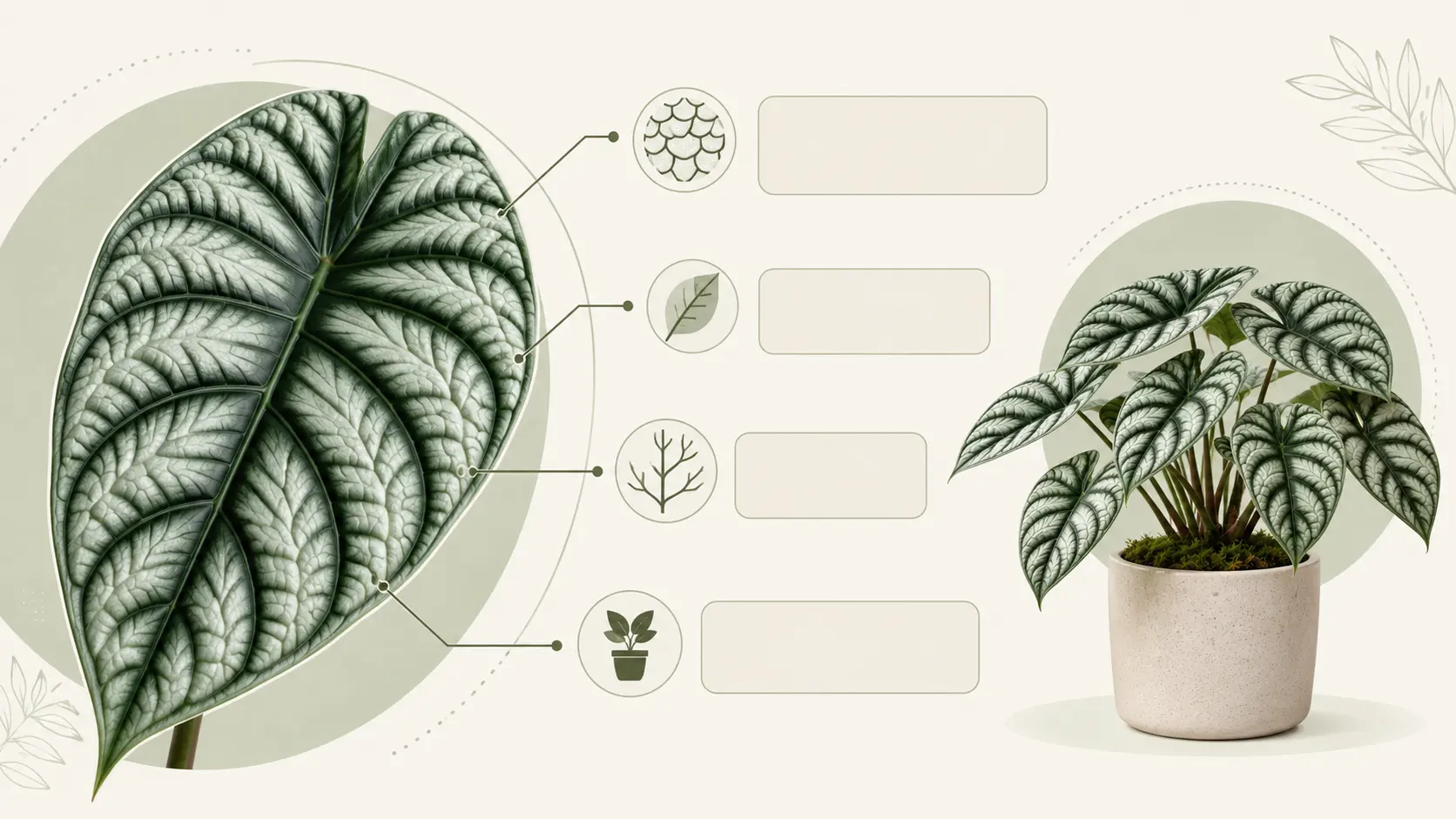
The dragon scale plant is a cultivar of Alocasia baginda, a tropical species from Borneo that belongs to the Araceae (aroid) family. It is called “dragon scale” because its leaves have a raised, textured surface that creates a reptile-scale appearance. The dragon scale plant belongs to the Araceae family, a large group of flowering plants that includes many popular ornamental aroids grown indoors.
The plant is recognized by:
- Thick, oval to heart-shaped leaves
- Silvery-green leaf surfaces
- Deep green or almost black vein patterns
- Compact, clumping growth habit
- Short stems compared with larger Alocasia species
Unlike many large elephant ear plants, Alocasia baginda remains relatively compact, making it suitable for indoor collections.
Alocasia Dragon Scale Varieties and Related Types
Common Varieties
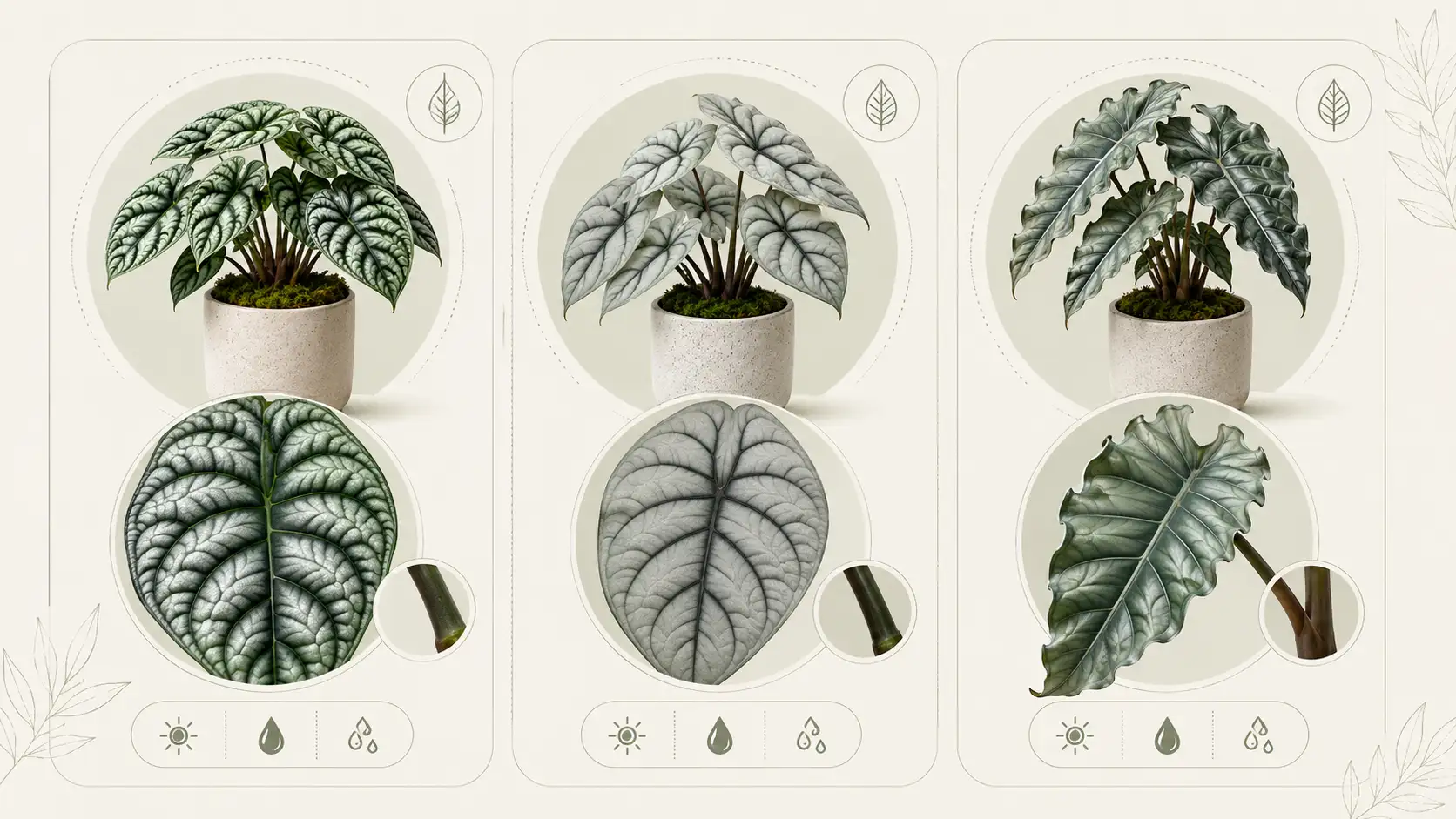
Alocasia dragon scale varieties have developed through selective cultivation, producing different colors and patterns.
Alocasia Dragon Scale Mint features lighter green or mint-toned leaves with similar raised textures. It is valued by collectors because of its softer coloration.
Variegated Dragon Scale contains areas of lighter pigmentation caused by reduced chlorophyll. Variegation patterns can range from small patches to large sections across the leaves.
Albo Variegated Dragon Scale is a highly sought-after form with white or cream-colored variegation. Because stable variegation is less common, these plants may require more careful lighting management.
| Feature | Alocasia Dragon Scale | Alocasia Silver Dragon | Alocasia Dragon’s Breath |
| Leaf texture | Deep raised veins and scale-like texture | Smoother silvery appearance | Slightly ruffled edges |
| Botanical name | Alocasia baginda | Alocasia baginda ‘Silver Dragon’ | Alocasia heterophylla |
| Growth habit | Compact | Compact | Slightly taller |
The Alocasia Silver Dragon and Dragon Scale are closely related but not identical. Both belong to Alocasia baginda cultivars, but Dragon Scale usually has stronger raised texture, while Silver Dragon has a smoother silver appearance. Alocasia heterophylla, sometimes called Dragon’s Breath, is a separate species. For a deeper dive into how Dragon Scale stacks up against dozens of other Alocasia and aroid species, browse our complete Alocasia and Aroid houseplant care database. It’s organized by species, so you can quickly compare care needs across the whole Alocasia family.
How to Care for a Dragon Scale Plant
Light Requirements
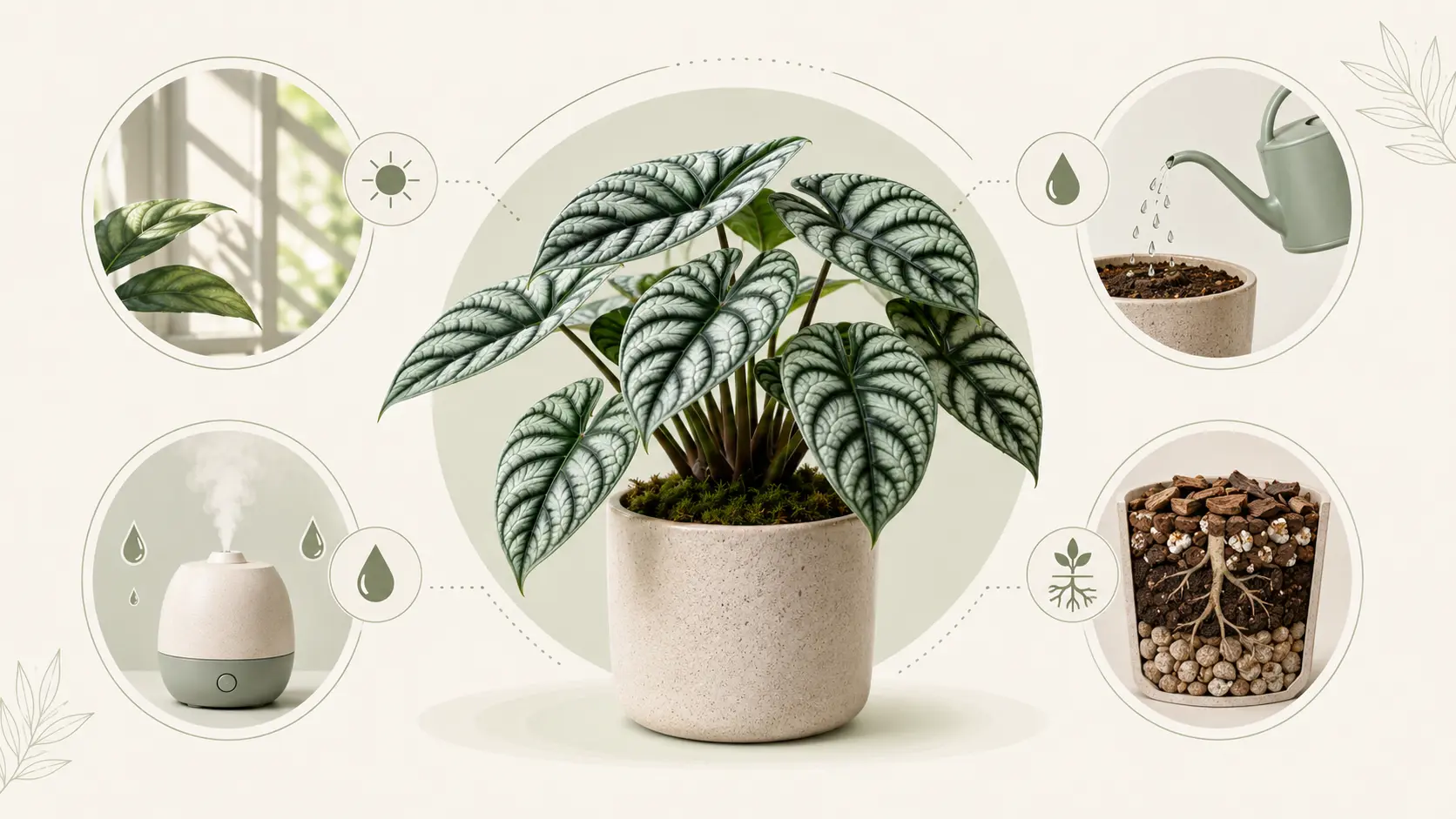
A dragon scale plant grows best in bright, indirect light. Strong filtered light helps maintain healthy leaves and encourages steady growth. Understanding the difference between bright indirect light vs direct sunlight is important because many tropical houseplants, including Alocasia dragon scale, can suffer leaf damage when exposed to intense direct rays. If you’d rather not memorize every requirement, our interactive Dragon Scale Alocasia care finder tool lets you input your home conditions and get personalized recommendations instantly. It’s a quick way to double-check your light, water, and humidity setup against your plant’s exact needs.
Avoid direct sunlight because intense rays can scorch the delicate foliage, causing:
- Brown leaf patches
- Faded colors
- Crispy edges
A spot near an east-facing window or behind a sheer curtain is usually ideal. Like other popular Alocasia varieties, the dragon scale plant benefits from bright indirect light and stable indoor conditions. Learning about Alocasia Amazonica care indoors can also help growers understand the general lighting and humidity needs of tropical aroids.
Watering Needs
Alocasia dragon scale prefers consistently light moisture but does not tolerate soggy soil. Allow the top layer of soil to dry slightly before watering again.
Overwatering can lead to:
- Yellow leaves
- Root rot
- Fungal issues
Alocasia cannot normally grow permanently in just water. While water propagation may help develop roots temporarily, mature plants require soil or a suitable growing medium for nutrients and stability.
Soil and Potting Mix
A well-draining, chunky aroid mix is best for Alocasia baginda care. The soil should hold some moisture while allowing excess water to escape.
A suitable mix may include:
- High-quality potting soil
- Orchid bark
- Perlite or pumice
- Coco coir
Miracle-Gro potting mix can be used, but it often benefits from added materials like bark or perlite to improve drainage.
Humidity and Temperature
Dragon scale plants prefer warm, humid environments similar to their tropical origins. If indoor air is too dry, growers can explore methods to increase humidity for indoor plants without a humidifier to create a more suitable environment for humidity-loving plants like Alocasia baginda.
Ideal conditions include:
- Humidity above 60%
- Temperatures between 65–85°F (18–29°C)
- Protection from cold drafts
Low humidity may cause curling, browning edges, or slower growth.
Fertilizing
A balanced liquid fertilizer during active growth can support healthy foliage. Apply fertilizer at reduced strength every few weeks during spring and summer.
Coffee grounds are not a complete fertilizer solution. They may provide small amounts of nitrogen, but excessive use can affect soil structure and moisture balance.
Growing Dragon Scale Plants Indoors
Different Alocasia species have unique growth habits and care preferences. Comparing the dragon scale plant with an Alocasia Zebrina care guide can help indoor growers understand how various Alocasia types differ in size, appearance, and maintenance needs.
Expected Size and Growth Rate
A mature Alocasia dragon scale indoors usually reaches around 1–2 feet in height and width, depending on conditions. Outdoor plants in suitable tropical climates may grow slightly larger.
Its growth rate is generally slow to moderate. Growth increases during warm months and may slow or stop during cooler seasons when the plant enters a partial dormancy period.
Is the Dragon Scale Plant Hard to Grow?
The dragon scale plant is considered moderately difficult because it reacts quickly to environmental changes. It is not impossible to grow, but it requires consistent care.
Common reasons Alocasia can be difficult include:
- Sensitivity to overwatering
- Need for higher humidity
- Risk of root rot
- Stress from sudden temperature changes
Maintaining stable conditions is the key to keeping the plant healthy.
How to Propagate a Dragon Scale Plant
Besides rhizome division, some growers also learn how to propagate Alocasia corms because many Alocasia species can produce small underground growth structures that develop into new plants.
Step-by-Step Division Process
Dragon scale plants are usually propagated through rhizome division rather than leaf cuttings.
Steps include:
- Remove the plant carefully from its pot.
- Locate healthy rhizome sections or offsets near the roots.
- Separate sections with healthy roots attached.
- Plant each division into fresh, well-draining soil.
- Keep humidity high and avoid heavy watering until new growth appears.
Propagation is best performed during active growing seasons.
Common Dragon Scale Plant Problems (Problem-Solution Coverage)
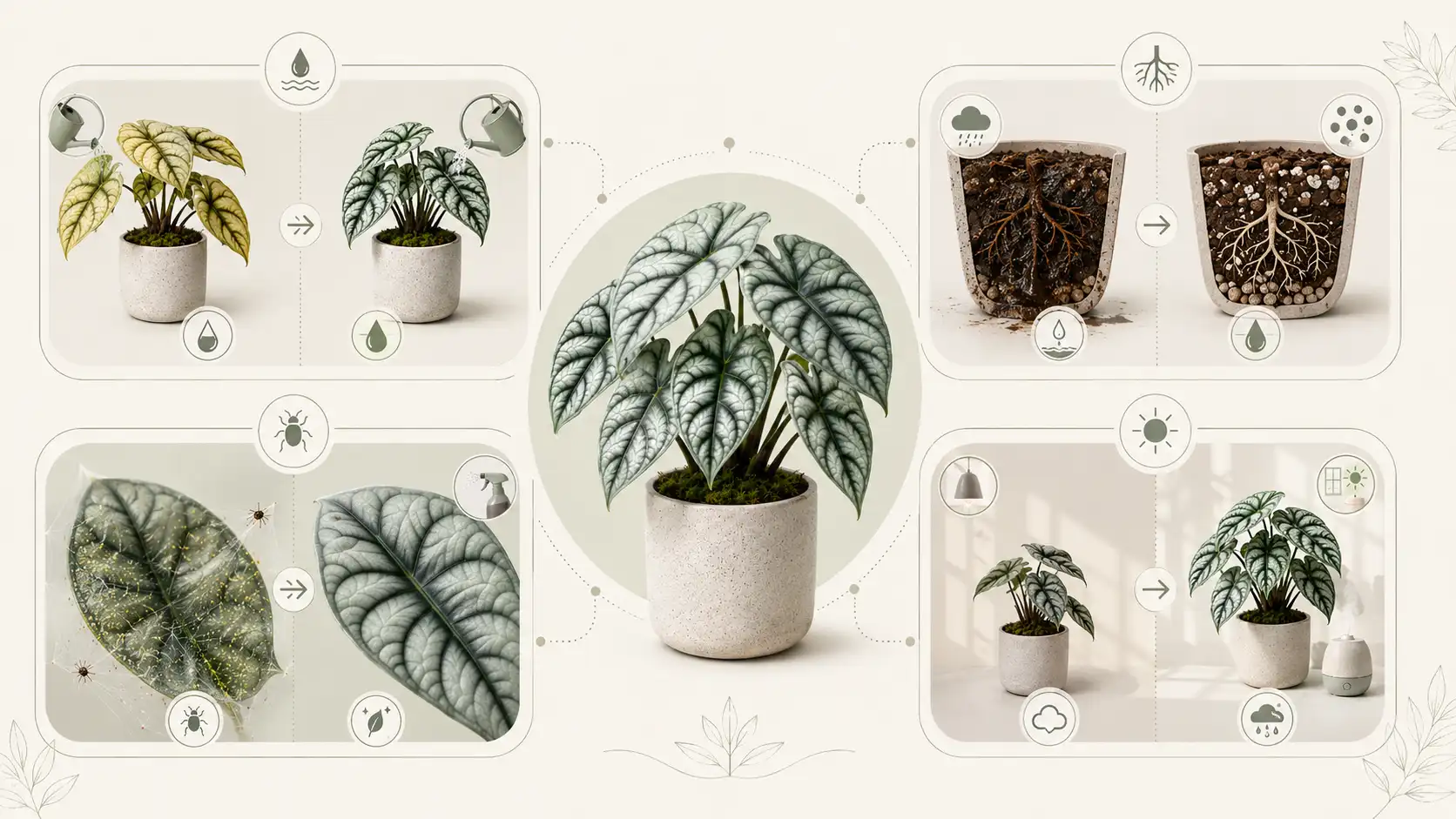
Yellowing Leaves
Yellow leaves are commonly caused by overwatering, poor drainage, or nutrient imbalance.
Solutions:
- Check soil moisture before watering
- Improve drainage
- Provide balanced fertilization
Overwatering and Root Rot
Root rot occurs when roots remain wet for too long and begin to decay.
Prevention includes:
- Using breathable soil
- Choosing pots with drainage holes
- Avoiding frequent watering schedules
Pest Infestations (Spider Mites, Aphids)
Spider mites and aphids can damage leaves by feeding on plant tissue.
Treatment methods include:
- Cleaning leaves regularly
- Using insecticidal soap
- Increasing humidity to discourage spider mites
Slow or Stunted Growth
Slow growth may result from insufficient light, low humidity, or seasonal dormancy.
Improving:
- Light quality
- Humidity levels
- Soil nutrition
can encourage healthier growth.
Handling and Safety — Can You Touch Alocasia Leaves?
Alocasia leaves can be touched safely, but the plant contains calcium oxalate crystals that may irritate skin, mouth, or digestion if ingested.
Keep the plant away from pets and children who may chew on leaves.
Pruning and Leaf Care
You do not need to cut all leaves off a healthy Alocasia. Remove only damaged, yellow, or dead leaves using clean scissors.
During dormancy, some leaf loss can be normal. Healthy rhizomes may regrow when conditions improve.
Dragon Scale Plant Lifespan
A dragon scale plant is a perennial that can live for many years with proper care.
Its lifespan depends on:
- Water management
- Humidity
- Soil quality
- Prevention of pests and disease
Seasonal dormancy is a natural part of its growth cycle.
Do Dragon Scale Plants Flower?
Dragon scale plants can flower, but indoor blooming is uncommon. When flowering occurs, the plant produces a typical aroid flower structure called a spathe and spadix.
The flowers are usually less noticeable than the decorative foliage.
Are Alocasia Dragon Scales Rare?
Alocasia dragon scales are not impossible to find, but certain forms are considered rare due to limited availability and collector demand.
Variegated versions, especially Albo Variegated Dragon Scale, are usually more expensive because stable variegation is less common.
Availability varies by region, including markets such as Australia and the UK.
To track real-time pricing trends and availability across sellers, check our Alocasia Dragon Scale price and availability tracker. The spreadsheet is updated with regional listings, so you can compare costs before buying a variegated or rare form.
Conclusion
The dragon scale plant is a unique Alocasia prized for its textured silver-green leaves and compact tropical appearance. Successful care depends on bright indirect light, controlled watering, well-draining soil, and consistent humidity. Although Alocasia dragon scale can be sensitive, understanding its needs makes it much easier to grow. Before troubleshooting problems, check the plant’s humidity, soil moisture, and root health to identify the real cause. The dragon scale plant is one example of a popular tropical houseplant featured in broader Plants Benefits and Guides, where different indoor plants are explored for their care needs, growth habits, and unique characteristics.
Frequently Asked Questions
How do you take care of a dragon scale plant?
A dragon scale plant needs bright indirect light, well-draining soil, moderate watering, warm temperatures, and humidity above 60% for healthy growth.
Can you propagate dragon scale plants?
Yes, dragon scale plants can be propagated through rhizome division by separating healthy offsets with roots attached.
Is the Alocasia Dragon Scale hard to grow?
Alocasia Dragon Scale is moderately challenging because it is sensitive to overwatering, low humidity, and sudden environmental changes.
Is Alocasia Silver Dragon the same as Dragon Scale?
No. Alocasia Silver Dragon and Dragon Scale are closely related cultivars, but Dragon Scale has more raised texture while Silver Dragon has smoother silver leaves.
Are Alocasia Dragon Scales rare?
Alocasia Dragon Scales are available from many plant sellers, but rare forms like variegated varieties can be harder to find and more expensive.
Why is Alocasia so hard to keep alive?
Alocasia can be difficult because it requires stable humidity, careful watering, and good drainage to prevent stress and root problems.
Can Alocasia grow in just water?
Alocasia may survive temporarily in water, but mature plants need a proper growing medium for long-term health and nutrient availability.