
Introduction
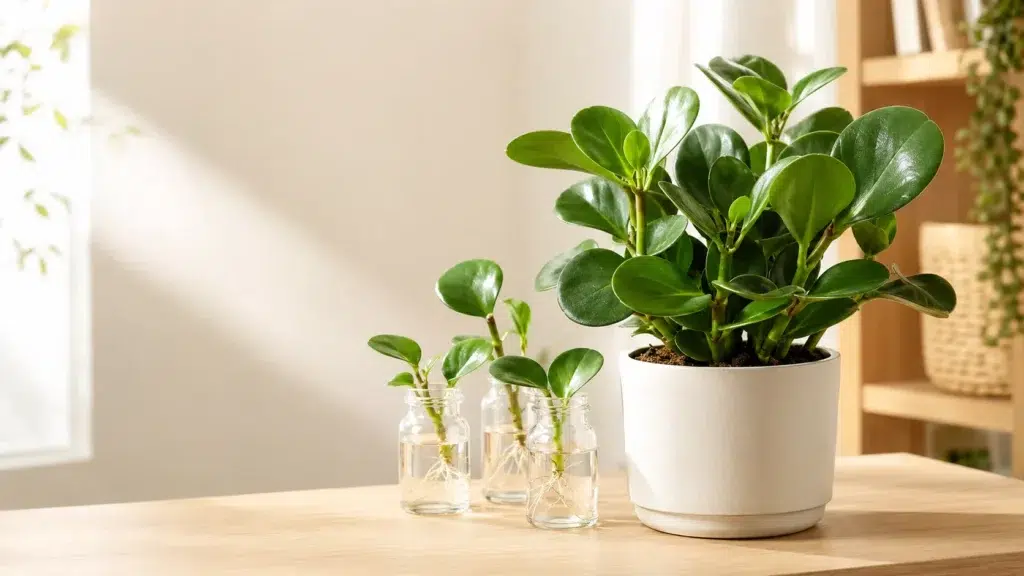
Learning how to propagate peperomia obtusifolia is a simple way to create new plants from an existing baby rubber plant. Peperomia obtusifolia is a popular tropical houseplant known for its thick, glossy leaves, compact growth, and easy-care nature. This peperomia plant can be propagated through leaf cuttings, stem cuttings, water propagation, soil propagation, or division. The best results come from choosing healthy plant material, providing bright indirect light, and maintaining suitable moisture levels. This guide explains the most reliable propagation methods, ideal conditions, rooting timelines, and aftercare steps to help growers successfully produce new peperomia plants.
Quick Summary
- Peperomia obtusifolia can be propagated through leaf cuttings, stem cuttings, division, water, or soil methods.
- Stem cuttings with a healthy node usually root faster and more reliably than leaf-only propagation.
- Root development commonly takes 2–8 weeks depending on conditions and propagation method.
- Bright indirect light, warm temperatures, and controlled moisture encourage faster rooting.
- Proper transplanting and aftercare help new peperomia cuttings develop into healthy mature plants.
What Is Peperomia Obtusifolia?
Peperomia obtusifolia, commonly called the baby rubber plant, is a tropical evergreen houseplant from the Piperaceae family. It is native to regions of Central America, South America, and the Caribbean. Unlike true rubber plants, it has thick succulent-like leaves that store moisture, making it tolerant of occasional missed watering. Like other members of the Peperomia genus, such as Peperomia rotundifolia, this plant is valued for its compact growth, low-maintenance care needs, and suitability for indoor environments. Peperomia obtusifolia is a member of the Piperaceae family and is widely cultivated as an ornamental houseplant.
Common names and identifying features
Peperomia obtusifolia is recognized by:
- Thick, rounded, spoon-shaped leaves
- Glossy green foliage or variegated patterns
- Compact bushy growth habit
- Upright stems with fleshy tissue
The plant is popular among beginners because it adapts well to indoor conditions and produces new growth easily when propagated correctly.
Why it’s a beginner-friendly plant to propagate
Peperomia obtusifolia propagation is beginner-friendly because its leaves and stems contain stored moisture, allowing cuttings to survive while developing roots. It also requires fewer specialized techniques compared with many tropical houseplants.
Best Time and Conditions to Propagate Peperomia Obtusifolia
The best time to propagate peperomia obtusifolia is during active growth periods when the plant has enough energy to produce new roots. Proper temperature, humidity, and lighting conditions significantly improve success rates.
Ideal Season for Propagation
Spring and early summer are the preferred seasons for propagation because warmer temperatures and increased daylight encourage active growth.
Propagation is possible throughout the year indoors, but rooting may take longer during colder months when plant growth naturally slows.
Light, Temperature, and Humidity Requirements
Peperomia cuttings root best under stable environmental conditions:
- Bright indirect light supports photosynthesis without causing leaf damage.
- Temperatures between 65–75°F (18–24°C) encourage faster rooting.
- Moderate humidity helps prevent cuttings from drying out.
Avoid placing fresh cuttings in direct sunlight because intense light can stress developing roots and leaves.
How to Propagate Peperomia Obtusifolia (Step-by-Step Methods)
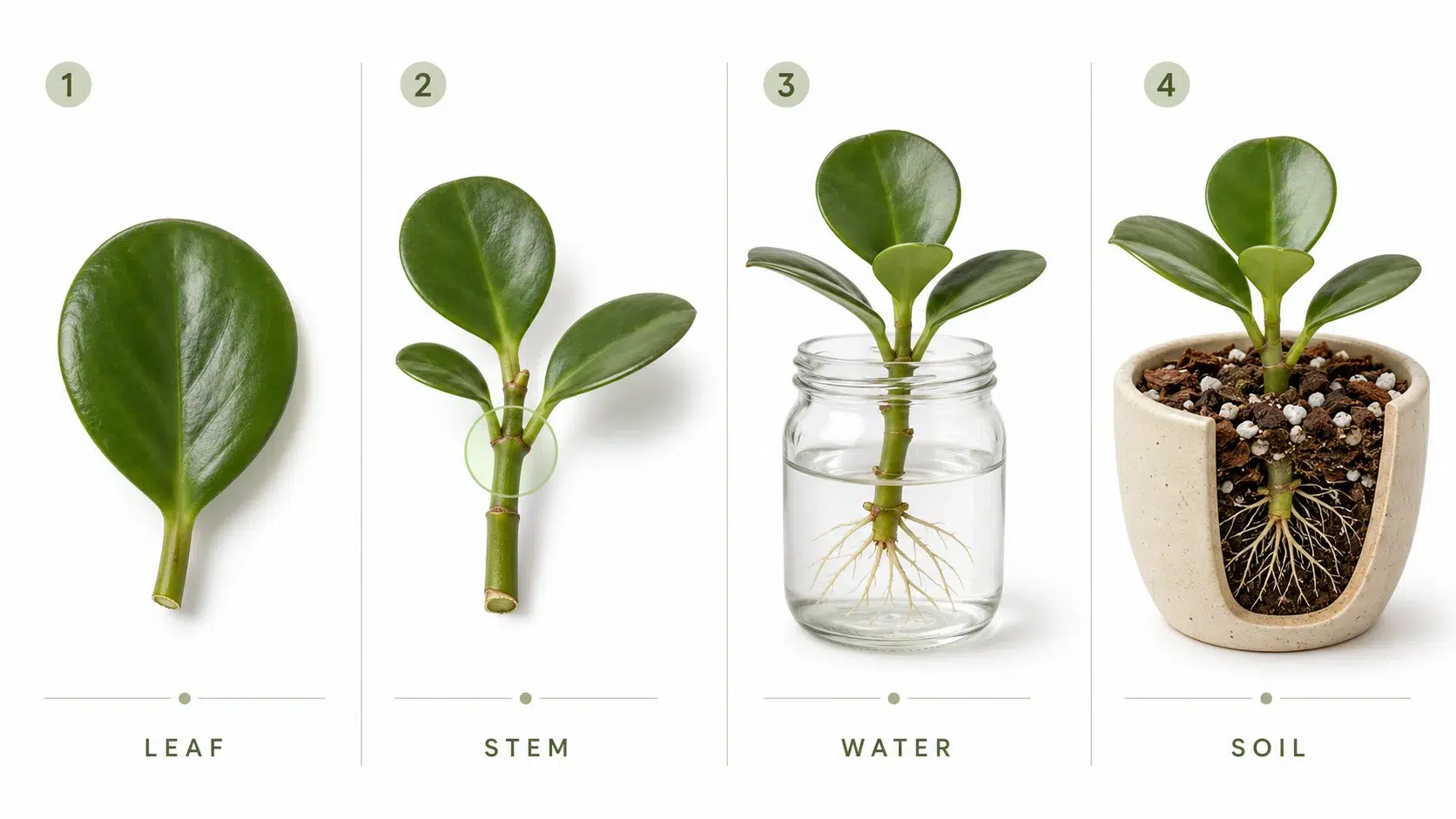
Peperomia obtusifolia can be propagated using several methods, but stem cuttings are usually the most dependable approach. The correct method depends on the available plant material and growing preferences.
How to Propagate Peperomia from Leaf Cuttings
Leaf propagation works by allowing a healthy leaf to develop new roots and sometimes new plantlets. It is slower than stem propagation but still effective.
Quick steps:
- Select a healthy, mature leaf without damage or disease.
- Cut the leaf with a small section of petiole if possible.
- Place the cutting in water or lightly moist soil.
- Keep it in bright indirect light.
- Wait for roots and new growth to appear.
For peperomia leaf propagation, leaves with attached petioles generally have better success because the connection point contains tissue needed for new growth.
How to Propagate Peperomia Obtusifolia from Stem Cuttings
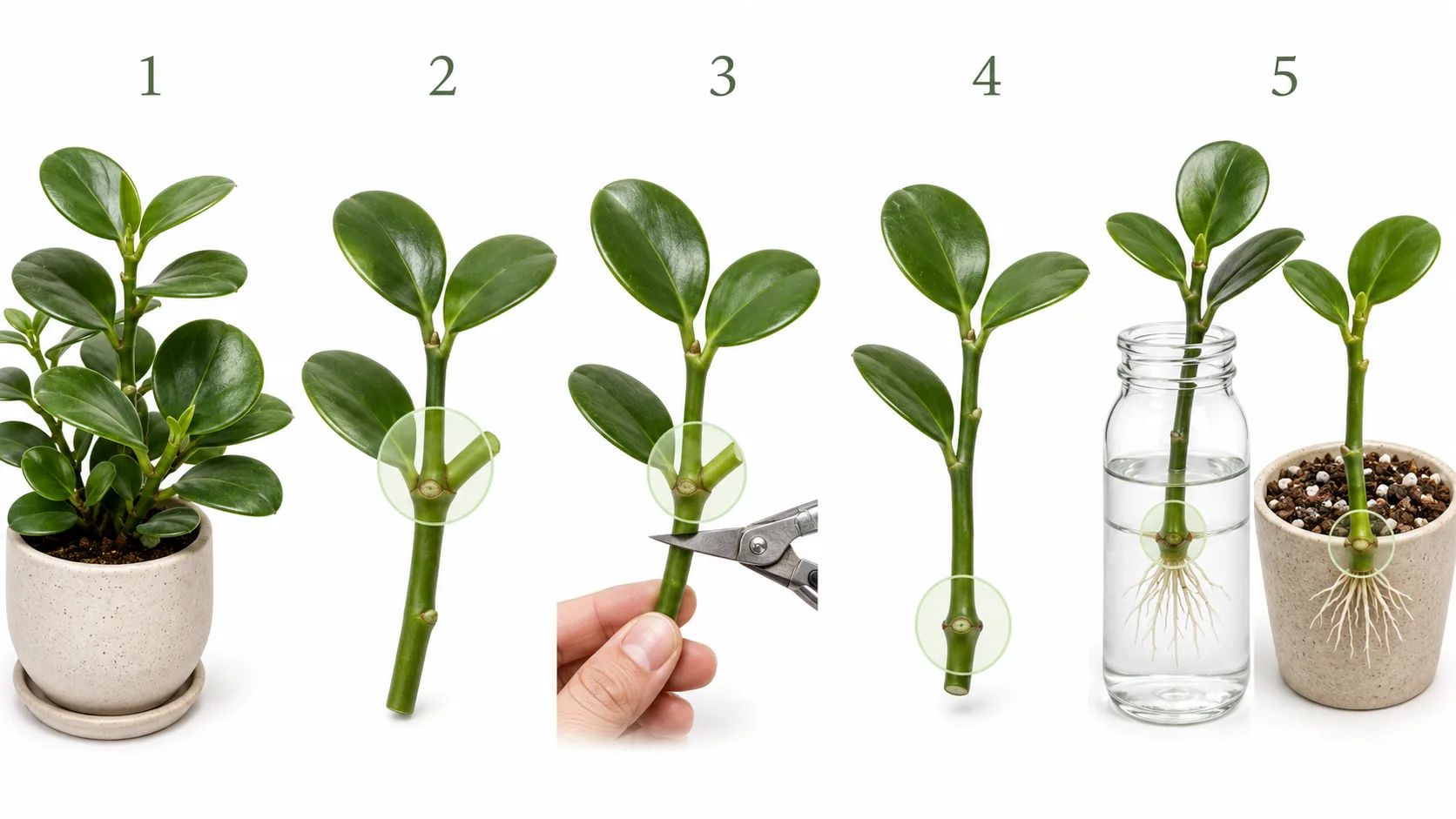
Stem cuttings are often the fastest and most reliable method because they contain nodes where new roots can form.
Quick steps:
- Choose a healthy stem with at least one visible node.
- Cut below the node using clean scissors.
- Remove lower leaves if needed.
- Place the cutting in water or soil.
- Maintain warmth and moisture until roots develop.
A node is essential because it contains growth tissue that allows the cutting to produce roots and new shoots.
How to Propagate Peperomia Obtusifolia in Water
Water propagation allows growers to observe root development clearly.
Quick steps:
- Cut a healthy stem section with a node.
- Remove leaves that would sit underwater.
- Place the cutting in clean water.
- Change water regularly to prevent bacterial growth.
- Transfer to soil once roots are established.
Signs of successful water propagation include small white roots, firm stems, and continued leaf health.
How to Propagate Peperomia Obtusifolia in Soil
Soil propagation allows roots to develop directly in their final growing environment.
Quick steps:
- Prepare a light, well-draining soil mix.
- Insert the cutting below the node.
- Keep soil slightly moist but not wet.
- Place in bright indirect light.
- Wait for new growth before transplanting.
Rooting hormone is optional but may help encourage faster root formation.
Water Propagation vs. Soil Propagation — Which Is Better?
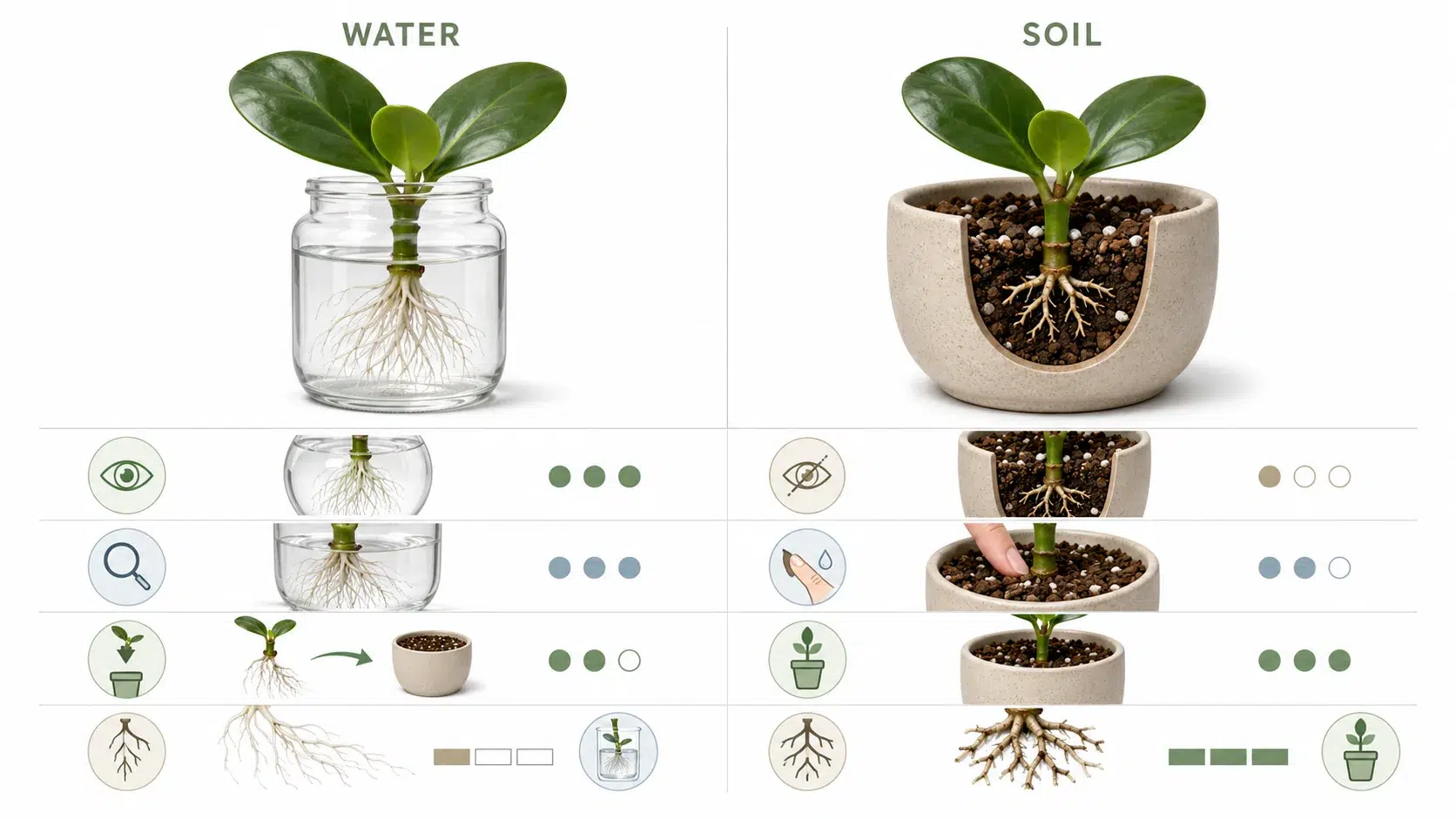
Both methods can successfully propagate peperomia obtusifolia. Water propagation provides visibility, while soil propagation often creates stronger initial root systems.
| Method | Root Visibility | Speed | Transplant Shock Risk | Best For |
| Water | Roots are visible and easy to monitor | Moderate | Higher after moving to soil | Beginners who want to observe progress |
| Soil | Roots are hidden | Moderate to fast | Lower | Growers wanting stronger direct establishment |
Propagating Peperomia Obtusifolia Variegata
Peperomia obtusifolia variegata propagation requires slightly more attention because variegated leaves contain less chlorophyll than fully green leaves. Variegated Peperomia varieties require careful light management because reduced green tissue can affect photosynthesis and growth, similar to other variegated Peperomia plants such as Variegated Cupid Peperomia.
Variegated cuttings need more green leaf tissue to support photosynthesis and root development. Completely white sections may struggle to survive.
Expected rooting is often slower because reduced chlorophyll can limit energy production.
How Long Does Peperomia Take to Root?
Peperomia obtusifolia cuttings usually take between 2 and 8 weeks to root depending on the method, temperature, and care conditions.
Water propagation commonly shows roots within 2–4 weeks, while soil propagation may take around 4–8 weeks.
Factors affecting rooting speed include:
- Light availability
- Cutting health
- Temperature stability
- Moisture balance
- Presence of a healthy node
Caring for New Peperomia Obtusifolia Cuttings and Transplants
Proper care after propagation helps young plants transition into healthy mature peperomia plants.
Watering, Light, and Soil Needs
New cuttings need consistent but controlled moisture. Keeping peperomia leaves clean also improves their appearance and helps maintain healthy indoor growth, especially for plants with thick glossy foliage.
Care requirements include:
- Water when the top layer of soil begins drying.
- Bright indirect light encourages compact growth.
- A well-draining mix with peat, coco coir, or perlite works well.
Regular potting soil can be used if improved with drainage materials because peperomia roots dislike constantly wet conditions.
Bottom watering can help evenly moisten soil while reducing disturbance to delicate roots.
Pot Size and Repotting Basics
Peperomia plants have shallow root systems and usually prefer shallow, wider pots rather than deep containers. Choosing the correct container size is important because pot size can influence root development, moisture retention, and overall plant growth.
A suitable pot should:
- Match the root size
- Include drainage holes
- Avoid excessive unused soil space
How to Repot Peperomia After Propagation
Repot rooted cuttings when roots are several inches long and the plant shows active growth.
Steps:
- Choose a slightly larger pot with drainage.
- Add a well-draining soil mix.
- Place the rooted cutting at the same depth.
- Water lightly after planting.
- Keep in indirect light during adjustment.
Avoid heavy watering immediately after repotting because new roots are sensitive to excess moisture. The same general principles used when repotting other indoor plants, such as selecting suitable soil and avoiding unnecessary root disturbance, also apply when moving rooted peperomia cuttings into permanent containers.
How to Prune Peperomia Obtusifolia for Bushier Growth
Pruning peperomia obtusifolia encourages branching and creates a fuller appearance.
Steps for bushier growth:
- Pinch growing tips above leaf nodes.
- Remove weak or stretched stems.
- Use healthy pruned sections as new propagation cuttings.
Pruning can be done several times during the growing season, but avoid excessive cutting that removes too much foliage.
Common Peperomia Propagation Problems and Fixes
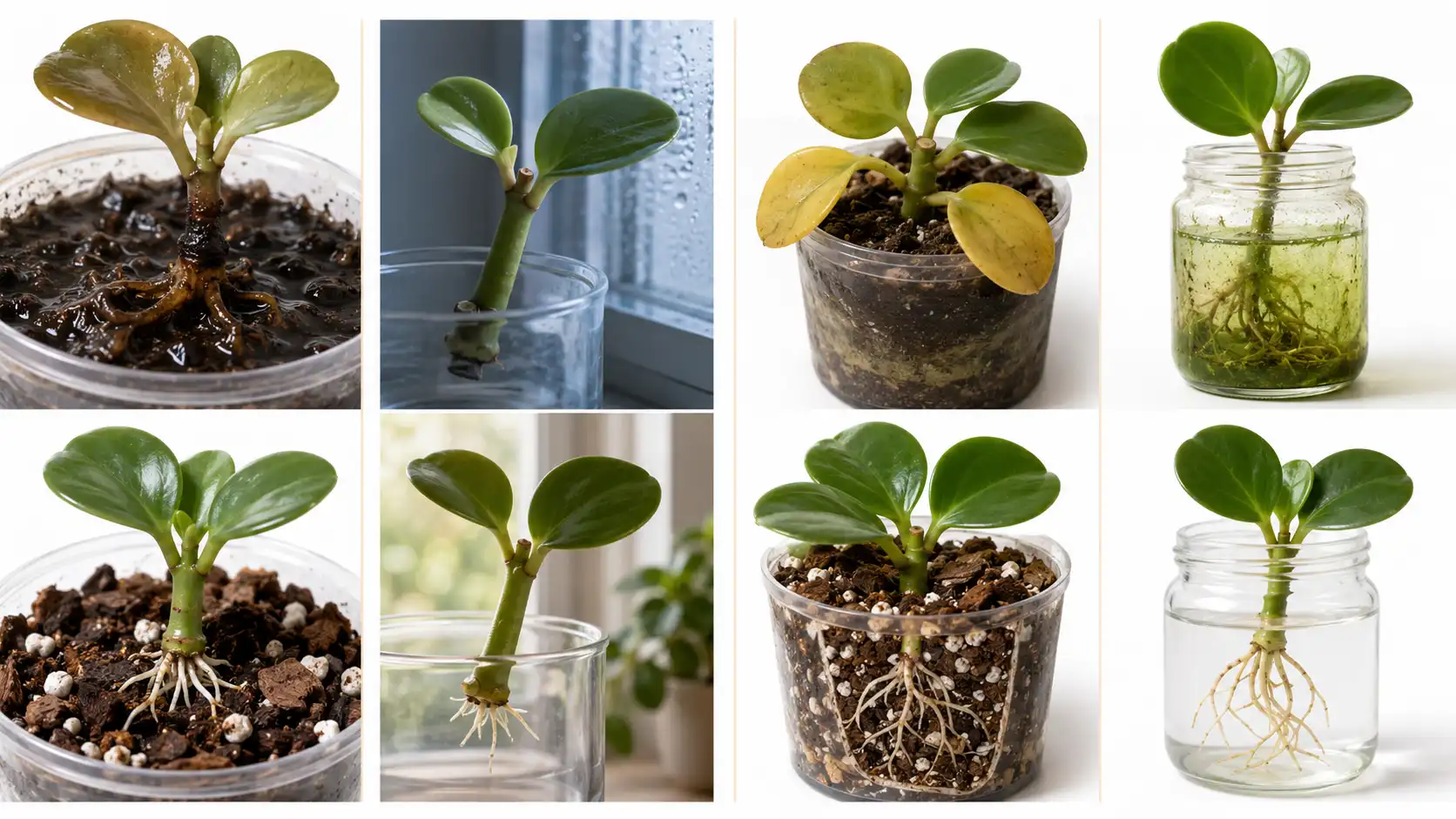
Cutting rots instead of roots
Root rot usually occurs from excessive moisture, poor drainage, or contaminated tools.
Solutions:
- Remove damaged sections.
- Use clean cutting tools.
- Reduce watering frequency.
No root growth after weeks
Slow rooting may result from low light, cold temperatures, or incorrect cutting placement.
Improve conditions by providing warmth, indirect light, and a cutting with a visible node.
Leaves turning yellow on cuttings
Yellow leaves can indicate overwatering, stress, or transplant shock.
Allow soil to dry slightly and avoid frequent disturbance.
Mold or algae in water propagation jars
Mold and algae develop when water remains stagnant.
Prevent problems by:
- Changing water regularly
- Cleaning containers
- Keeping leaves above the water line
Peperomia Obtusifolia Growth, Size, and Lifespan
A mature peperomia obtusifolia usually grows around 10–12 inches tall indoors, with a similar spread depending on conditions.
Its growth rate is slow to moderate. Growth increases during warm seasons with adequate light.
With proper care, a peperomia plant can live for many years indoors.
Where Does Peperomia Obtusifolia Grow Best?
Peperomia obtusifolia is sometimes called a radiator plant because many peperomia species tolerate warm indoor environments and originated in tropical regions.
Bathrooms can suit peperomia because humidity is often higher, but poor ventilation and low light can create problems.
Avoid:
- Cold drafts
- Direct harsh sunlight
- Constantly wet soil
Peperomia Obtusifolia vs. Other Peperomia Varieties
| Variety | Leaf Type | Propagation Ease | Care Needs |
| Peperomia obtusifolia | Thick rounded green leaves | Easy | Low maintenance |
| Peperomia obtusifolia variegata | Green and cream patterned leaves | Moderate | Requires brighter light |
| Watermelon Peperomia | Striped round leaves resembling watermelon skin | Moderate | Prefers careful moisture control |
Watermelon peperomia propagation is usually done through leaf or petiole cuttings, while obtusifolia commonly responds best to stem cuttings.
Conclusion
Peperomia obtusifolia propagation is a simple process when the correct cutting method and growing conditions are used. Stem cuttings with nodes usually provide the fastest results, while leaf cuttings offer another option for expanding a collection. Whether using water or soil, successful propagation depends on bright indirect light, warmth, and balanced moisture. Learning how to propagate peperomia obtusifolia allows growers to create healthy new baby rubber plants while developing better understanding of peperomia care and growth habits. Peperomia obtusifolia propagation is one part of broader indoor plant care practices, including choosing suitable houseplants, understanding growth habits, and maintaining healthy growing conditions.
Frequently Asked Questions
Can you propagate Peperomia obtusifolia from a single leaf?
Yes, Peperomia obtusifolia can be propagated from a single leaf, especially when the leaf includes a petiole. However, leaf propagation usually takes longer than stem cutting propagation.
Is it better to propagate Peperomia in water or soil?
Both methods work, but soil propagation often creates stronger roots with less transplant shock. Water propagation is useful for beginners because root development is easy to observe.
How long does it take for a Peperomia cutting to root?
A Peperomia cutting typically takes 2–8 weeks to root. Water cuttings may root within 2–4 weeks, while soil cuttings often require 4–8 weeks.
Can Peperomia grow in just water permanently, or does it need soil eventually?
Peperomia can survive in water for extended periods, but long-term growth is usually healthier in soil because it provides better nutrient availability.
Do Peperomia obtusifolia prefer deep or shallow pots?
Peperomia obtusifolia prefers shallow, wider pots because it develops a compact root system close to the soil surface.
How do you make Peperomia obtusifolia bushier after propagating?
Regular pruning and pinching growing tips encourage branching, resulting in a fuller and bushier Peperomia obtusifolia plant.