
Introduction
A pink princess philodendron node is the growth point on the stem where new leaves, aerial roots, and future shoots develop. The Pink Princess Philodendron belongs to the genus Philodendron, a group of tropical plants known for their climbing growth habits and aerial roots. In simple terms, a node is the small section of stem that allows a Philodendron erubescens ‘Pink Princess’ to grow, branch, and be propagated successfully. Understanding nodes is essential because they connect plant structure, pruning, propagation, and troubleshooting. This guide explains how to identify healthy nodes, use them for propagation, encourage stronger growth, and maintain the pink variegation that makes this climbing aroid highly valued among plant collectors.
Quick Summary
- A node is the small bump on the stem where leaves, aerial roots, and new growth emerge — it is essential for propagation.
- Pink princess philodendron is a natural climber that develops larger leaves and better structure with support like a moss pole.
- Successful propagation requires cutting below a node with at least one node and one leaf attached.
- Root rot, green reversion, and slow growth are common issues linked to overwatering, low light, or stress.
What Is a Pink Princess Philodendron Node?
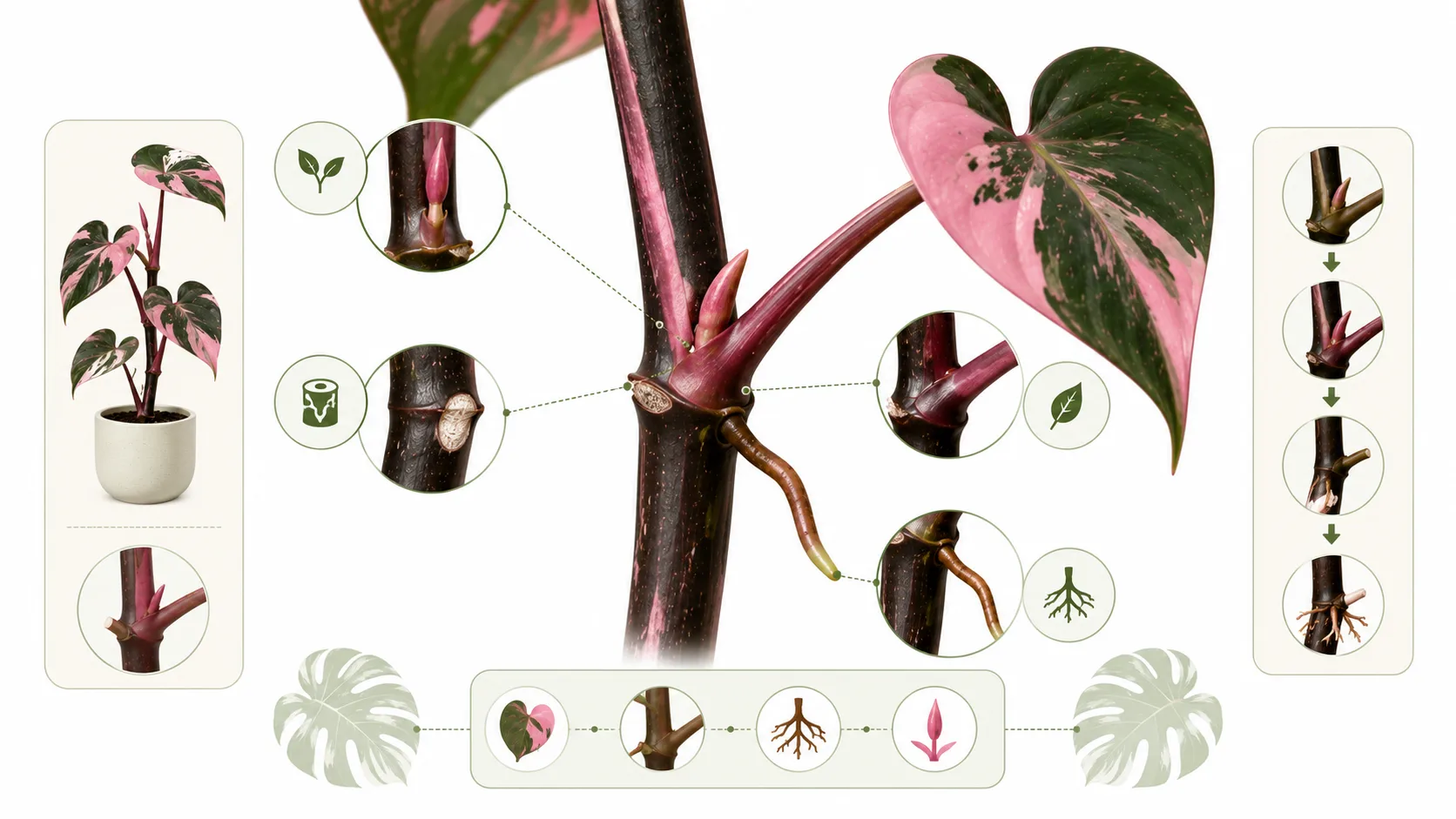
A pink princess philodendron node is the joint on the stem where the leaf petiole, leaf scar, and potential aerial root originate. This node contains growth tissue that allows the plant to produce new roots and stems, making it the most important part of a cutting used for propagation. Similar node structures are also important in other climbing aroids, such as Monstera plants, where nodes control propagation, aerial root development, and new growth points.
The node is the anchor point for the plant’s growth system. Without a healthy node, a cutting cannot develop into a new plant because it lacks the tissue needed for root and shoot formation.
A healthy node usually has:
- A visible bump or ring around the stem
- A small green or brown nub where an aerial root may emerge
- A nearby leaf scar or attached petiole
- A firm texture without softness, black spots, or mushiness
How to Identify a Healthy Node
A healthy pink princess node should look firm and active rather than damaged. On mature stems, nodes are often easier to locate because the spacing between leaves becomes more noticeable.
Signs of a healthy node include:
- Firm green stem tissue
- Visible growth point or raised area
- No signs of rot or discoloration
- An attached leaf or developing growth point
Node vs. Aerial Root — What’s the Difference?
A node and an aerial root are related but not the same. A node is the growth point, while an aerial root is a structure that grows from the node to help the plant climb and absorb moisture.
Not every node will have a visible aerial root. Some nodes remain dormant until conditions encourage new growth.
Is a Pink Princess Philodendron a Climber or a Crawler?
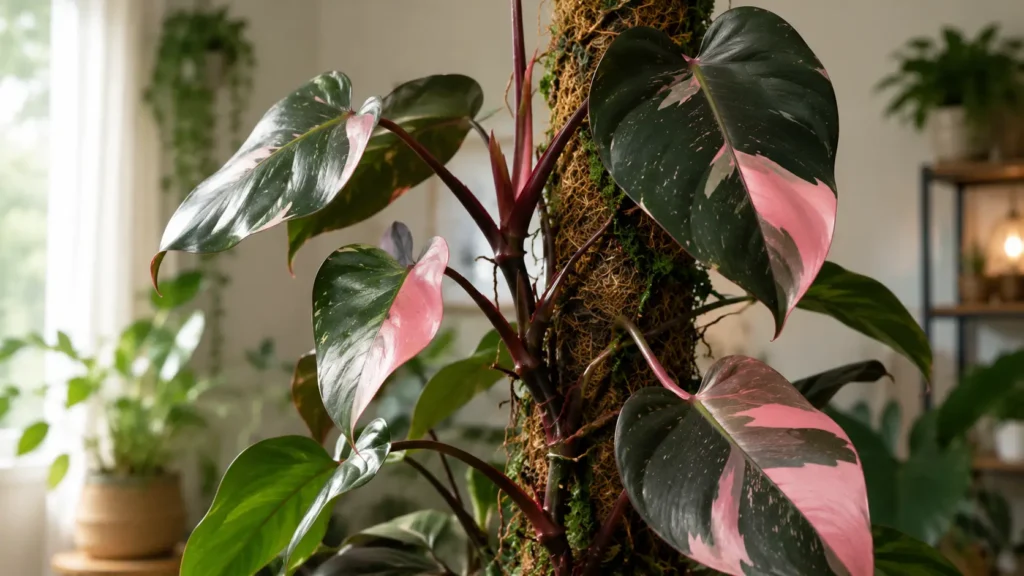
A Pink Princess Philodendron is a natural climber. It is an epiphytic vine that grows upward by attaching its aerial roots to nearby surfaces. When allowed to climb, it typically produces larger leaves, stronger stems, and more organized growth.
When unsupported, it may grow horizontally like a crawler. This often results in smaller leaves, shorter spacing between nodes, and less dramatic vertical growth.
Does a Pink Princess Philodendron Need a Trellis?
A moss pole or trellis is not strictly required, but it supports the plant’s natural climbing habit.
Providing support can improve:
- Leaf size and maturity
- Upright growth
- Stem stability
- Overall plant structure
A moss pole also allows aerial roots from nodes to attach and develop naturally.
Philodendron Pink Princess Care Guide
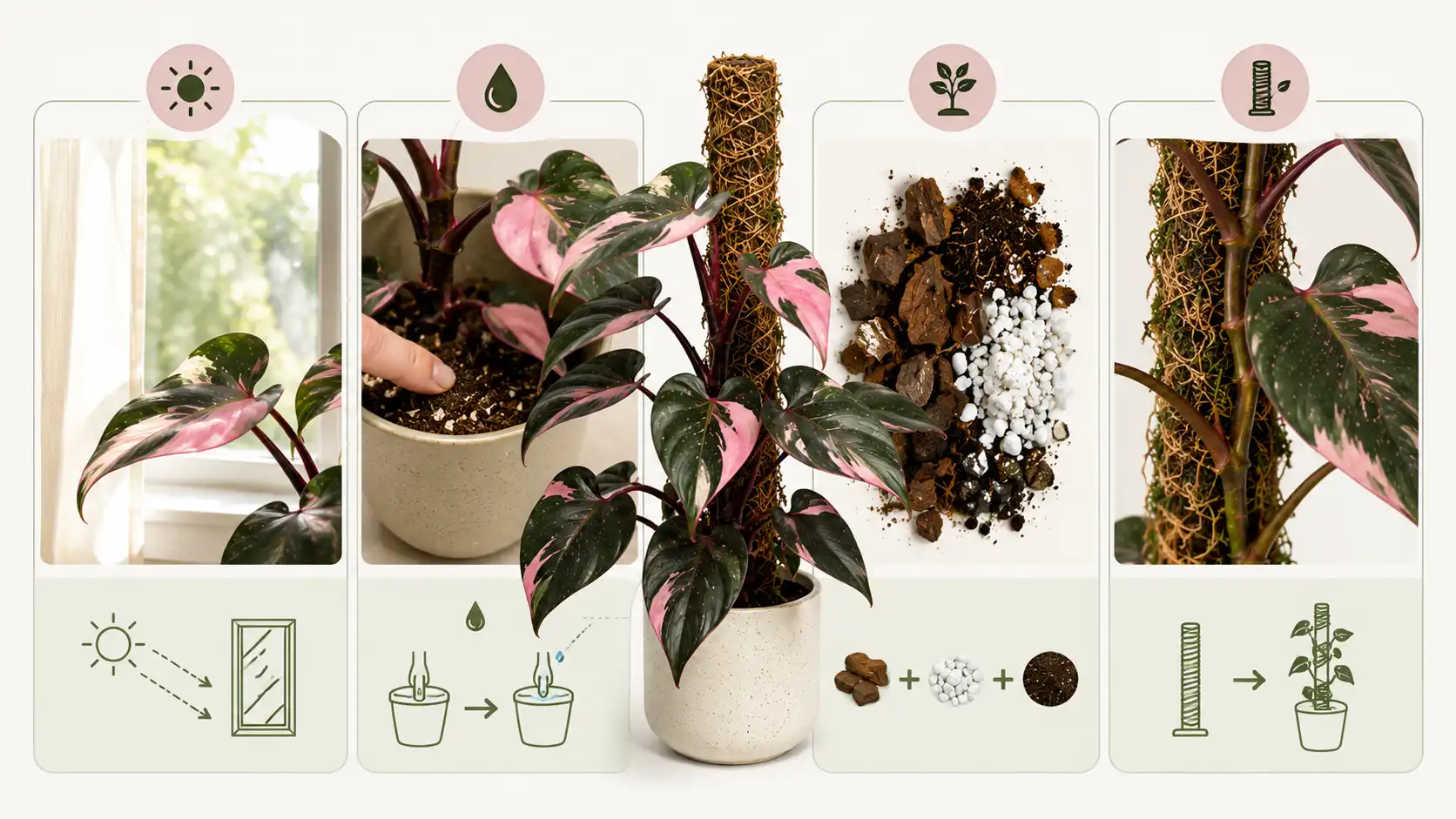
Proper care directly affects node health. A stressed plant produces weaker growth points, fewer leaves, and slower propagation success.
Light Requirements
Pink Princess Philodendrons grow best in bright, indirect light. Strong filtered light encourages healthy growth and helps maintain pink variegation.
Low light can reduce variegation because the plant may produce more green tissue to maximize photosynthesis.
Watering Needs
Allow the top layer of soil to dry before watering again. Overwatering is the most common cause of root rot because the roots require oxygen as well as moisture.
A practical watering approach:
- Check the top 1–2 inches of soil before watering
- Use less frequent watering in winter
- Avoid keeping the pot constantly wet
Best Soil for Pink Princess
Pink Princess Philodendrons prefer a chunky, well-draining aroid mix that provides airflow around the roots.
| Soil Component | Purpose |
| Perlite | Improves drainage and prevents compaction |
| Orchid bark | Adds airflow and structure |
| Coco coir | Helps retain moderate moisture |
| Peat moss | Supports moisture retention |
The best soil for pink princess should balance moisture retention with excellent drainage.
Do Philodendrons Like Deep or Shallow Pots?
Philodendrons generally prefer shallow-to-medium pots because their roots naturally spread outward rather than growing deeply. A pot that is too large can hold excess moisture and increase root rot risk. Choosing the correct container size is also important for climbing aroids because pot material, drainage, and root space can influence overall plant health.
Do Pink Princesses Like to Be Root Bound?
Pink Princess Philodendrons can tolerate mild root-bound conditions, but they should not remain crowded for too long. Repot when roots circle tightly around the container or drainage holes become blocked.
Fertilization and Climate Tolerance
Feed lightly during active growing months with a balanced houseplant fertilizer. Avoid heavy fertilization, which can damage roots.
Pink Princess Philodendrons prefer temperatures above 60°F (15°C) and should be protected from cold drafts.
How to Propagate a Pink Princess Philodendron (Node-Based Method)
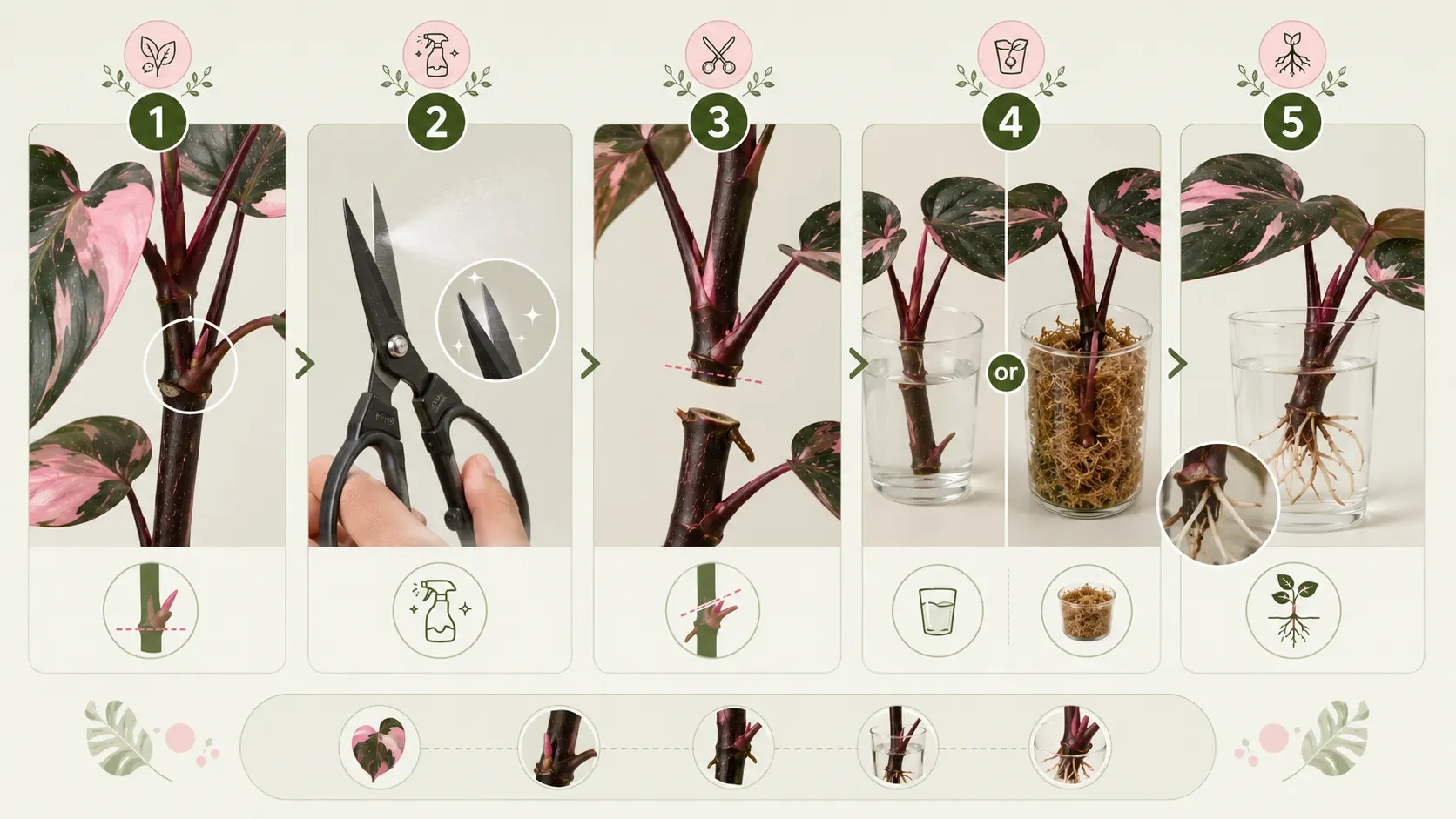
Pink Princess propagation depends on the node because roots and new growth develop from this section of the stem. The same node-based propagation principles used for Pink Princess Philodendron also apply to other popular philodendron varieties, including heartleaf philodendrons.
Do You Cut Above or Below the Node?
Cut below the node when propagating. The cutting should keep the node attached because roots emerge from this growth point.
Can You Propagate Without a Node?
No. A leaf or stem section without a node cannot produce a new Pink Princess Philodendron because it lacks the tissue required for new growth.
Step-by-Step Node Propagation Process
- Locate a healthy node on the stem.
- Sterilize pruning scissors or a knife.
- Cut below the node, leaving the node on the cutting.
- Place the cutting in water or moist sphagnum moss.
- Wait for roots to develop.
- Transfer the rooted cutting into an appropriate aroid mix.
Different philodendron cultivars may vary in growth speed and appearance, but successful propagation generally depends on selecting a healthy stem section with an active node.
Propagating Pink Princess Philodendron in Water
Water propagation is a common beginner-friendly method. Place the node underwater while keeping the leaf above the surface. Change the water regularly to prevent bacterial buildup.
Roots typically begin forming within 3–6 weeks depending on temperature, light, and cutting health.
Pink Princess Philodendron Propagation from a Leaf
A leaf alone cannot create a new plant. A Pink Princess leaf without a node may remain green and alive temporarily but will not develop roots or new growth.
How Long Does It Take for a Pink Princess Philodendron to Grow (Roots)?
A Pink Princess Philodendron cutting usually develops roots within 3–6 weeks. Slower rooting may occur in cooler temperatures or when the cutting has weak growth tissue.
Why Is It Illegal to Propagate Certain Plants?
Some plants are protected under plant patents or breeder rights laws. These protections may restrict commercial propagation and selling of certain cultivars without permission.
Pink Princess Philodendron is generally not known as a patented cultivar, but many rare plants have legal protections designed to protect breeders and their introductions.
How to Prune Pink Princess Philodendron
Pruning encourages branching and helps maintain a balanced shape. The key is understanding node placement because new growth develops from nodes.
How to Make a Pink Princess More Bushy
Cutting above a healthy node can encourage dormant growth points to activate, creating additional stems and a fuller appearance.
Where to Cut Pink Princess Philodendron
For pruning or propagation, make cuts near nodes while keeping the desired growth points intact.
How to Encourage More Pink on a Pink Princess
Pink variegation depends on genetics, light exposure, and plant health. Bright indirect light helps maintain stronger coloration, but variegation is naturally unstable. Like other highly variegated houseplants, such as variegated Monstera varieties, Pink Princess coloration depends on genetics, light conditions, and overall plant health.
A reverted green section may become dominant because green tissue produces energy more efficiently.
Common Pink Princess Philodendron Problems (Problem-Solution Section)
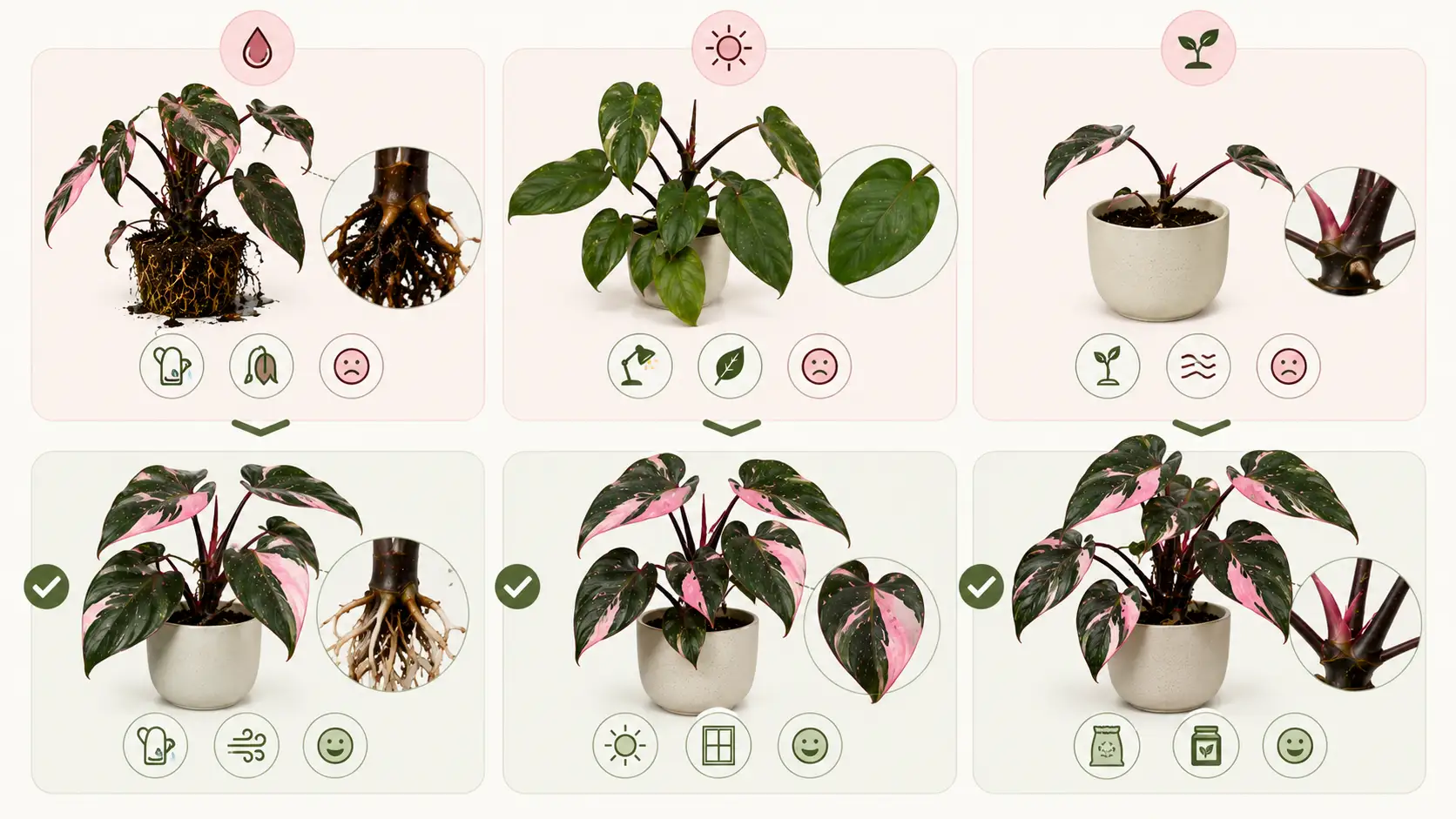
Pink Princess Root Rot
Root rot usually occurs because of overwatering or poorly draining soil.
Fix it by:
- Removing damaged roots
- Cutting away rotten sections
- Repotting into fresh, airy soil
Prevent it with proper watering habits and drainage.
Leaves Reverting to Green
Reversion happens when the plant produces mostly green leaves due to genetics, stress, or insufficient light.
Pruning reverted growth above a node may encourage more desirable variegated growth.
Slow or Stalled Growth
Slow growth can result from:
- Low light
- Root problems
- Poor nutrition
- Weak nodes
Improve conditions by adjusting light, soil, and watering routines.
Are Pink Princesses Hard to Grow?
Pink Princess Philodendrons are moderately challenging because their variegation can change and they are sensitive to overwatering. However, they are manageable with consistent care.
Beginner Mistakes with Pink Princess Philodendron
Common mistakes include:
- Propagating without a node
- Overwatering
- Providing insufficient light
- Ignoring green reversion
- Growing without climbing support
Philodendron Pink Princess vs. Similar Varieties (Comparison Block)
| Feature | Pink Princess | White Princess | White Knight |
| Variegation Color | Pink and green | White and green | White with darker stems |
| Leaf Shape | Heart-shaped | Narrower heart shape | Similar elongated leaves |
| Stem Color | Pink tones | Green stems | Dark purple/burgundy tones |
| Rarity | Highly collected | Rare | Rare |
What Is the “Holy Grail” of Philodendrons?
The phrase “Holy Grail” of philodendrons often refers to extremely rare cultivars such as Philodendron ‘Florida Ghost’ or highly variegated collector plants. Pink Princess is considered a highly desirable cultivar because of its unique pink variegation.
Lifespan and Long-Term Growth of a Pink Princess Philodendron
With proper care, philodendrons can live for many years or even decades as houseplants. A healthy Pink Princess can continue producing new leaves, nodes, and climbing growth throughout its lifespan.
Conclusion
Understanding the pink princess philodendron node is the foundation of successful propagation, pruning, and long-term plant care. Nodes control where new roots, leaves, and stems develop, making them essential for maintaining a healthy and well-variegated plant. By providing proper light, suitable soil, balanced watering, and climbing support, growers can encourage stronger nodes and healthier Pink Princess Philodendrons. Pink Princess Philodendron is one example of how understanding plant biology, care requirements, and growth patterns helps indoor gardeners successfully maintain a wide range of houseplants.
FAQs
Do you cut above or below the node to propagate a pink princess philodendron?
Cut below the node when propagating a Pink Princess Philodendron because the node contains the growth tissue needed for root development.
Can you propagate a pink princess philodendron without a node?
No. A Pink Princess Philodendron cannot be successfully propagated without a node because leaves alone do not contain the growth point required for new roots and stems.
Is a pink princess philodendron a climber or a crawler?
A Pink Princess Philodendron is a natural climber that grows best when supported by a moss pole or trellis.
What causes pink princess philodendron root rot?
Root rot is mainly caused by overwatering, poor drainage, and soil that stays wet for too long.
How long does it take for a pink princess philodendron cutting to root?
A Pink Princess Philodendron cutting usually takes about 3–6 weeks to develop roots under suitable conditions.
How do you encourage more pink variegation on a pink princess philodendron?
More pink variegation can be encouraged with bright indirect light and healthy growth conditions, but the amount of pink is ultimately controlled by genetics.