
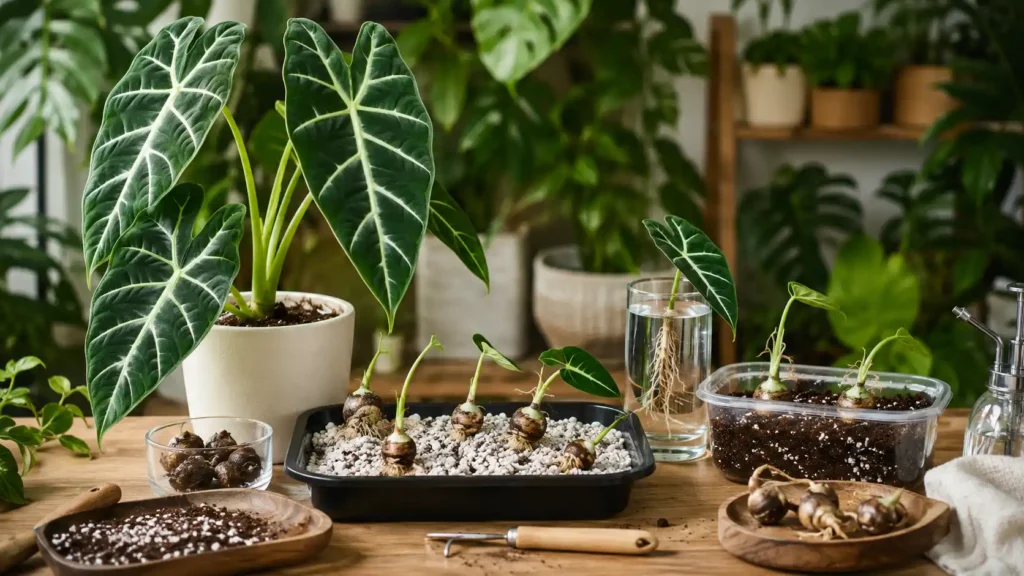
Alocasia Frydek propagation is the process of creating new plants from an existing Alocasia frydek, a velvet-leaf aroid recognized for its deep green foliage, striking white veins, and botanical name Alocasia micholitziana ‘Frydek’. This tropical plant can be propagated through corms, stem sections with growth points, and water-based rooting methods. Unlike many common houseplants, Alocasia frydek cannot grow from a leaf alone because new growth requires a node, corm, or active plant tissue. Successful propagation depends on warmth, humidity, proper moisture control, and patience.
Alocasia frydek belongs to the genus Alocasia, a group of tropical flowering plants in the family Araceae that are known for their ornamental foliage.
Quick Summary
- Alocasia frydek propagation is mainly done through corm division, stem sections, or water rooting methods.
- Corm propagation is the most reliable method because new plants develop from the plant’s natural storage structures.
- Water propagation allows growers to observe root development but may require careful transition to soil.
- Alocasia frydek is a moderate grower and requires patience during rooting and recovery.
- Bright indirect light, humidity, and a well-draining aroid mix improve propagation success.
What Is Alocasia Frydek Propagation?
Why Propagate Alocasia Frydek?
Alocasia frydek propagation is the process of producing new Alocasia frydek plants from parts of a mature plant, such as corms, viable stem sections, or established growth points. In plant propagation, the goal is to encourage new roots and shoots from living plant tissue rather than simply replanting leaves.
For Alocasia plant propagation, the most important distinction is between dividing an existing mature plant and growing a new plant from corms. A mature Alocasia frydek already contains developed structures that can produce new growth, while corm propagation involves encouraging dormant growth points to activate and form a separate plant.
Propagation allows growers to:
- Create additional Alocasia frydek plants from one parent plant.
- Preserve rare or variegated forms.
- Rescue plants that have become weak, damaged, or leggy.
- Share healthy propagation material with other plant collectors.
For collectors growing rare Alocasia varieties, including Alocasia frydek variegated forms, propagation is also a way to maintain valuable plant characteristics. However, successful reproduction depends on using healthy plant material and providing proper growing conditions.
Why Propagate Alocasia Frydek?
Reasons Growers Choose Propagation
Many plant enthusiasts propagate Alocasia frydek because the plant can be expensive or difficult to replace, especially rare Alocasia forms. Propagation helps expand a collection while keeping the original plant healthy.
Common reasons include:
- Multiplying a mature plant: A healthy Alocasia can produce multiple corms that develop into new plants.
- Saving damaged plants: Propagation can help recover a plant suffering from root problems or leaf loss.
- Sharing plants: Corms and divisions can be shared with other growers.
- Maintaining rare varieties: Propagation helps preserve uncommon characteristics in collectible plants.
Propagation is also useful when an Alocasia frydek becomes crowded in its pot. Separating naturally produced corms allows each new plant to grow with improved access to nutrients, moisture, and space.
Can You Propagate Alocasia Frydek From a Cutting?
Stem Cutting Method
Yes, you can propagate Alocasia frydek from a cutting, but the cutting must contain a viable growth point or node. A leaf alone cannot create a new Alocasia because the plant’s growth tissues are located in structures such as corms and nodes.
Unlike pothos or philodendrons, Alocasia does not easily root from ordinary stem cuttings. The cutting must come from a section that contains active meristematic tissue capable of producing roots and new shoots.
The general stem cutting process includes:
- Select a healthy section: Choose a plant section with an active node or growth point.
- Make a clean cut: Use sterilized scissors or a knife to reduce the risk of infection.
- Allow the cut surface to callus: Let the cut area dry slightly before placing it into a rooting medium.
- Provide a humid environment: Maintain warmth and humidity to encourage root development.
- Monitor root formation: Keep the medium lightly moist but avoid excessive water.
Stem-based propagation of Alocasia frydek is less commonly used than corm propagation because suitable stem material is limited. Most successful growers rely on corms because they naturally contain the energy needed for new plant development.
Can You Propagate Alocasia Frydek From a Cutting?
Leaf Cutting Method — What Actually Works
Alocasia frydek propagation from leaf cuttings is a common misconception. A single Alocasia leaf placed in water or soil usually cannot produce a new plant because it does not contain the necessary growth point.
A leaf may remain green for some time after being removed, but survival does not mean it can develop into a complete plant. Without a node, corm, or connected plant tissue, the leaf cannot create new roots and shoots.
When people search for “how to propagate Alocasia from leaf,” they often expect a method similar to pothos or monstera propagation. However, Alocasia follows a different growth pattern.
A successful propagation piece needs:
- A corm or part of the underground structure.
- A stem section containing viable growth tissue.
- An active division from the parent plant.
Understanding this difference prevents wasted effort and helps growers focus on methods that match Alocasia biology.
Can You Propagate Alocasia Frydek in Water?
Alocasia Frydek Propagation in Water
Yes, Alocasia frydek can be propagated in water when using suitable plant material such as a viable cutting or corm setup. Water propagation allows growers to observe root development clearly, making it useful for monitoring progress.
The process involves:
- Place the viable propagation piece in clean water.
- Keep only the necessary portion submerged.
- Change water regularly to prevent bacterial growth.
- Provide bright indirect light and warm temperatures.
- Move the plant to soil once roots are established.
Water propagation can take several weeks depending on temperature, humidity, and plant health. Root development is usually slower in cooler conditions because Alocasias naturally prefer warm tropical environments.
When transferring a water-rooted Alocasia frydek into soil, gradual adjustment is important. Young water roots are adapted to constant moisture and may need time to adapt to a soil-based environment.
A suitable transition process includes:
- Using a loose, well-draining aroid mix.
- Keeping the soil slightly moist during early adjustment.
- Avoiding fertilizer immediately after transplanting.
- Monitoring for stress-related leaf changes.
Can You Use Tap Water for Alocasia?
Water Quality Considerations
Yes, Alocasia can survive with tap water in many areas, but water quality can influence plant health. Some tap water contains chlorine, fluoride, or high mineral levels that may contribute to leaf stress in sensitive plants.
For propagation, growers often prefer:
- Filtered water.
- Rainwater.
- Distilled water when mineral buildup is a concern.
If using tap water, allowing it to sit for several hours before use may help reduce chlorine levels, although this does not remove all dissolved minerals.
Signs that water quality may be affecting Alocasia include:
- Brown leaf edges.
- Mineral deposits on soil surfaces.
- Reduced root development.
- General leaf stress.
Maintaining clean water is especially important during water propagation because stagnant or contaminated water increases the risk of rot.
How to Propagate Alocasia Frydek From Corms
Understanding Alocasia Corm Propagation
Corm propagation is the most reliable method for Alocasia frydek propagation because corms are natural storage structures designed to support new growth. A corm is a bulb-like underground structure located near the base of the plant that stores energy and contains the potential to develop roots and shoots.
Corm propagation is one of the most reliable ways to multiply Alocasia plants because the underground storage structure already contains the energy needed for new growth. Learn more about the complete process in our How to Propagate Alocasia Corms Guide.
Alocasia corm propagation involves removing these small structures from the parent plant and encouraging them to activate under controlled conditions.
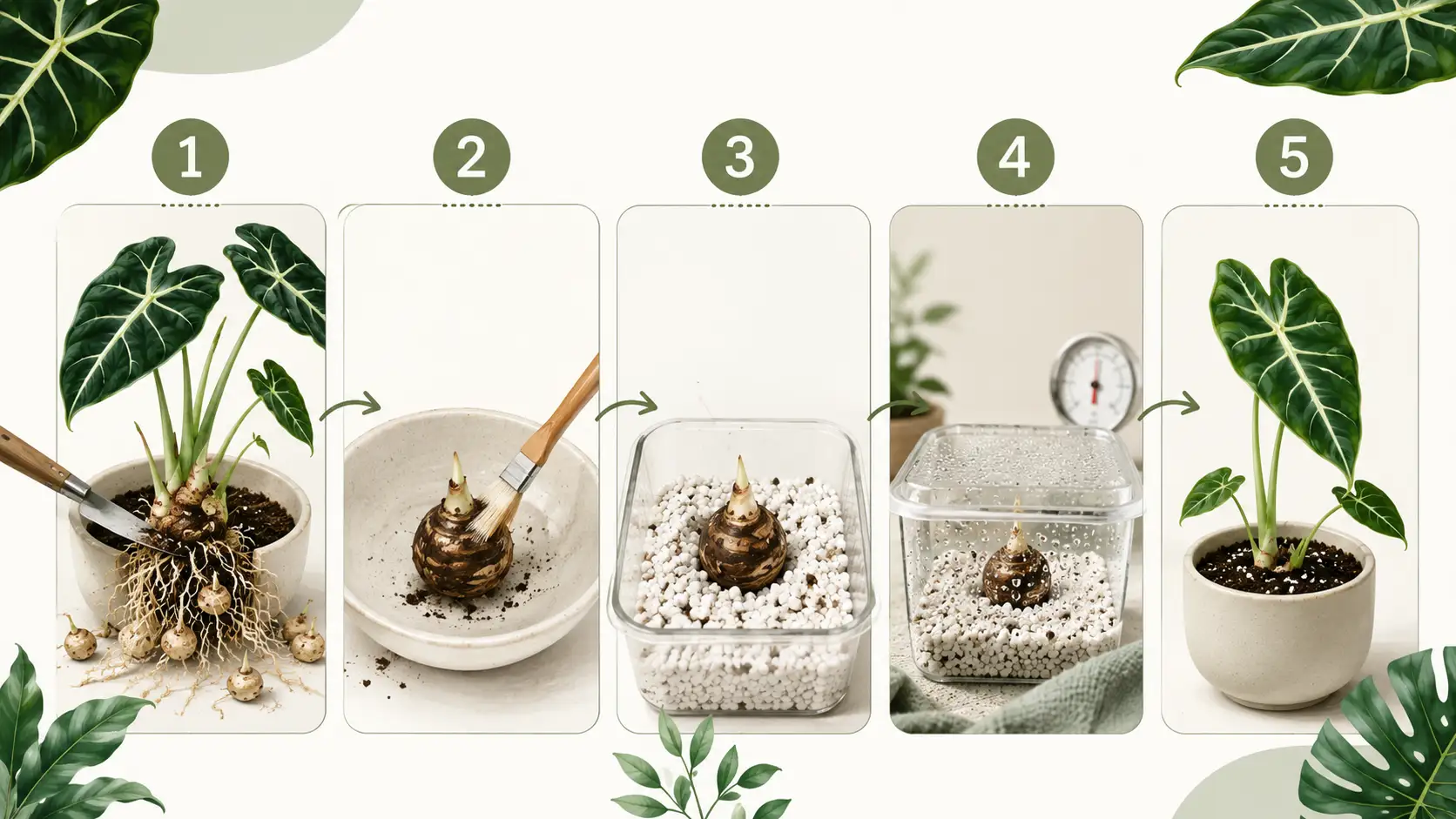
The basic process includes:
- Remove the plant carefully from its pot.
- Locate small corms attached around the root system.
- Separate healthy corms from the parent plant.
- Clean away excess soil while avoiding damage.
- Place corms into a suitable growing medium.
- Maintain warmth, humidity, and consistent moisture.
Alocasia frydek corms may remain dormant before producing visible growth. This dormancy period is normal and does not always indicate failure.
Factors that improve corm development include:
- Temperatures above normal household cool conditions.
- High humidity.
- Indirect bright light.
- Moist but not saturated growing media.
Corm propagation is often preferred by beginners because it works with the plant’s natural reproductive structure rather than relying on difficult stem rooting.
What Do You Do With Corms From Alocasia?
When you remove corms from an Alocasia, separate them carefully, allow damaged areas to dry slightly, and plant them in a suitable medium with the correct orientation. Healthy corms can develop into independent Alocasia plants when provided with warmth and moisture.
The steps include:
- Separate corms from the parent plant.
- Remove excess soil gently.
- Allow freshly separated areas to callus if needed.
- Place the corm into perlite, moss, or an airy soil mix.
- Keep conditions warm and humid.
Alocasia corms are sometimes compared with rhizomes or tubers because they serve similar storage functions, but they are botanically different structures. The corm stores energy that supports new leaf and root development.
A healthy corm should generally feel firm rather than soft or mushy. Softness often indicates rot caused by excessive moisture or poor airflow.
Growing Alocasia Corms in Perlite vs. Soil
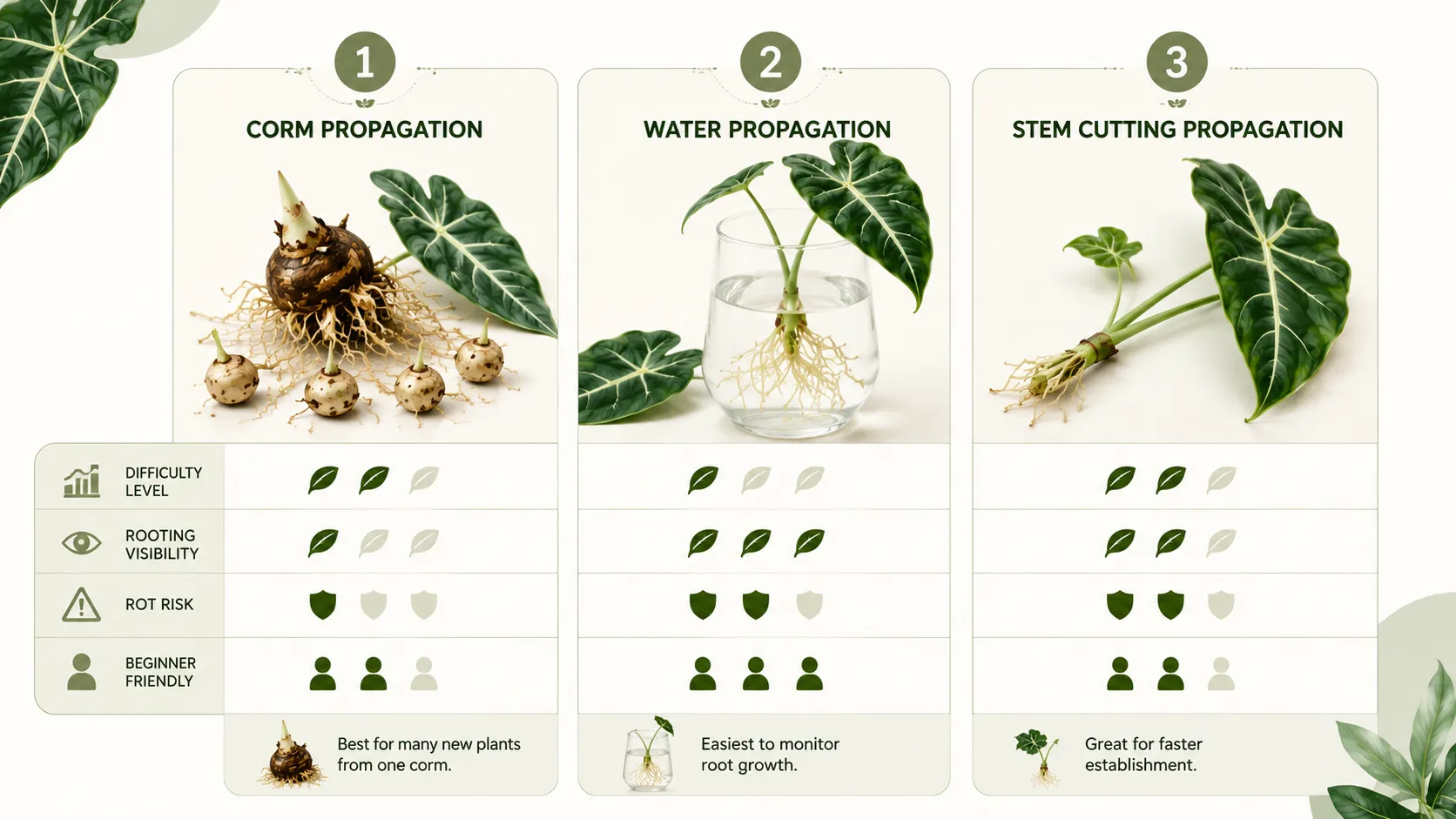
Alocasia corms can be propagated in both perlite and soil-based mixes. The best choice depends on the grower’s experience, humidity level, and ability to monitor moisture.
Perlite propagation:
- Provides excellent airflow.
- Makes root development easier to observe.
- Reduces the risk of waterlogged conditions.
- Requires regular moisture monitoring.
Soil propagation:
- Creates a more natural growing environment.
- Allows roots to develop directly in a permanent medium.
- Requires a well-draining mix to prevent rot.
Comparison: Perlite vs. Soil vs. Water Propagation
| Propagation Method | Humidity Retention | Root Visibility | Rot Risk | Best For |
| Perlite | Moderate to high | High | Lower when managed correctly | Beginners and monitoring growth |
| Soil Mix | Moderate | Low | Depends on drainage | Direct transition to long-term growth |
| Water | High | Very high | Higher if water becomes stagnant | Watching root development |
Propagation Method Comparison
| Propagation Method | Difficulty | Time to Root | Risk of Rot | Best For |
| Corm Propagation | Easy to moderate | Several weeks to months | Moderate | Beginners and reliable results |
| Stem Cutting | Moderate to difficult | Several weeks | Moderate to high | Experienced growers |
| Water Propagation | Moderate | Several weeks | Higher without maintenance | Root observation |
Which Way to Plant Alocasia Corms
Alocasia corms should be planted with the growth point or “eye” facing upward because this is where new shoots emerge. The rounded portion of the corm generally sits lower while the active growth area should remain positioned toward the surface.
Plant the corm:
- Partially buried rather than deeply buried.
- In a moist but airy medium.
- With enough space for new roots to develop.
Planting too deeply can increase moisture retention around the corm and raise the risk of rot. Proper orientation helps the developing shoot reach the light more easily.
Do Alocasias Multiply on Their Own?
Alocasias can multiply naturally by producing corms and offsets around the base of the mother plant. These small underground structures develop as part of the plant’s normal growth cycle and can eventually become independent Alocasia plants when separated.
Many Alocasia species, including Alocasia zebrina, can produce underground growth structures that allow growers to expand their collections through division and propagation.
Unlike plants that spread through runners or vines, Alocasias multiply through underground growth structures. A mature Alocasia frydek may produce new corms when it receives consistent care, sufficient nutrients, and appropriate environmental conditions.
Natural multiplication depends on factors such as:
- Plant maturity.
- Root health.
- Growing season conditions.
- Light availability.
- Temperature and humidity.
A crowded pot does not always mean the plant is unhealthy. In many cases, it indicates that the Alocasia has produced new underground growth. Separating these corms during repotting is one of the easiest ways to expand an Alocasia collection.
What Pot and Soil Does Alocasia Frydek Need?
Alocasia frydek requires a pot and soil combination that supports healthy roots while preventing excess moisture buildup. The plant prefers an airy, well-draining medium because its underground structures are sensitive to prolonged wet conditions.
Choosing the Right Pot and Soil Mix
Alocasia frydek generally performs best in a chunky aroid soil mix containing materials that improve drainage and airflow.
A suitable mix may include:
- High-quality indoor potting soil for nutrients.
- Perlite or pumice for drainage.
- Orchid bark for structure and airflow.
- Coco coir or peat moss for moisture retention.
The ideal soil should hold some moisture while allowing excess water to drain quickly.
For pot selection:
- Choose a container with drainage holes.
- Avoid oversized pots that hold excess moisture.
- Match pot depth to the root and corm structure.
Alocasias do not always require extremely deep pots. A moderately sized pot that provides enough room for roots and corm development is usually more suitable than a large container filled with unused wet soil.
A shallow-to-medium depth pot can work well when the plant has a compact root system, while a deeper pot may be useful for mature plants with larger underground growth.
Is Alocasia Frydek Fast Growing?
Alocasia frydek is a moderate-growing plant rather than a fast-growing houseplant. Under ideal tropical-like conditions, it can produce new leaves regularly, but indoor growth is often slower due to lower humidity, seasonal changes, and limited light intensity.
Growth speed depends on:
- Bright indirect light.
- Warm temperatures.
- High humidity.
- Proper watering.
- Adequate nutrients.
During active growing seasons, especially spring and summer, Alocasia frydek may produce new leaves more consistently. During cooler months or periods of reduced light, growth can slow significantly or the plant may enter partial dormancy.
Factors that encourage faster growth include:
- Humidity above average indoor levels.
- Stable temperatures.
- Regular but controlled fertilization during growth.
- A healthy root system.
Newly propagated plants usually grow slowly at first because they must establish roots before producing larger foliage. Patience is important, especially with corm-grown Alocasias.
Is Alocasia Frydek Hard to Care For?
Alocasia frydek is considered moderately challenging because it is sensitive to environmental changes, especially inconsistent watering and low humidity. It is not impossible to care for, but it requires more attention than many beginner-friendly houseplants.
Alocasia frydek requires balanced watering, humidity control, and proper lighting to thrive. For broader information about growing different Alocasia varieties, see our complete Alocasia Plant Care Guide, which covers essential care practices for healthy growth.
Common reasons Alocasias struggle include:
- Overwatering that causes root or corm rot.
- Dry indoor air that affects leaves.
- Poor drainage.
- Sudden changes in temperature or location.
- Insufficient light.
Many Alocasia problems happen because growers treat them like drought-tolerant plants or keep their soil constantly wet. The goal is balanced moisture: enough hydration for tropical growth without creating waterlogged roots.
Alocasia Frydek Care Guide
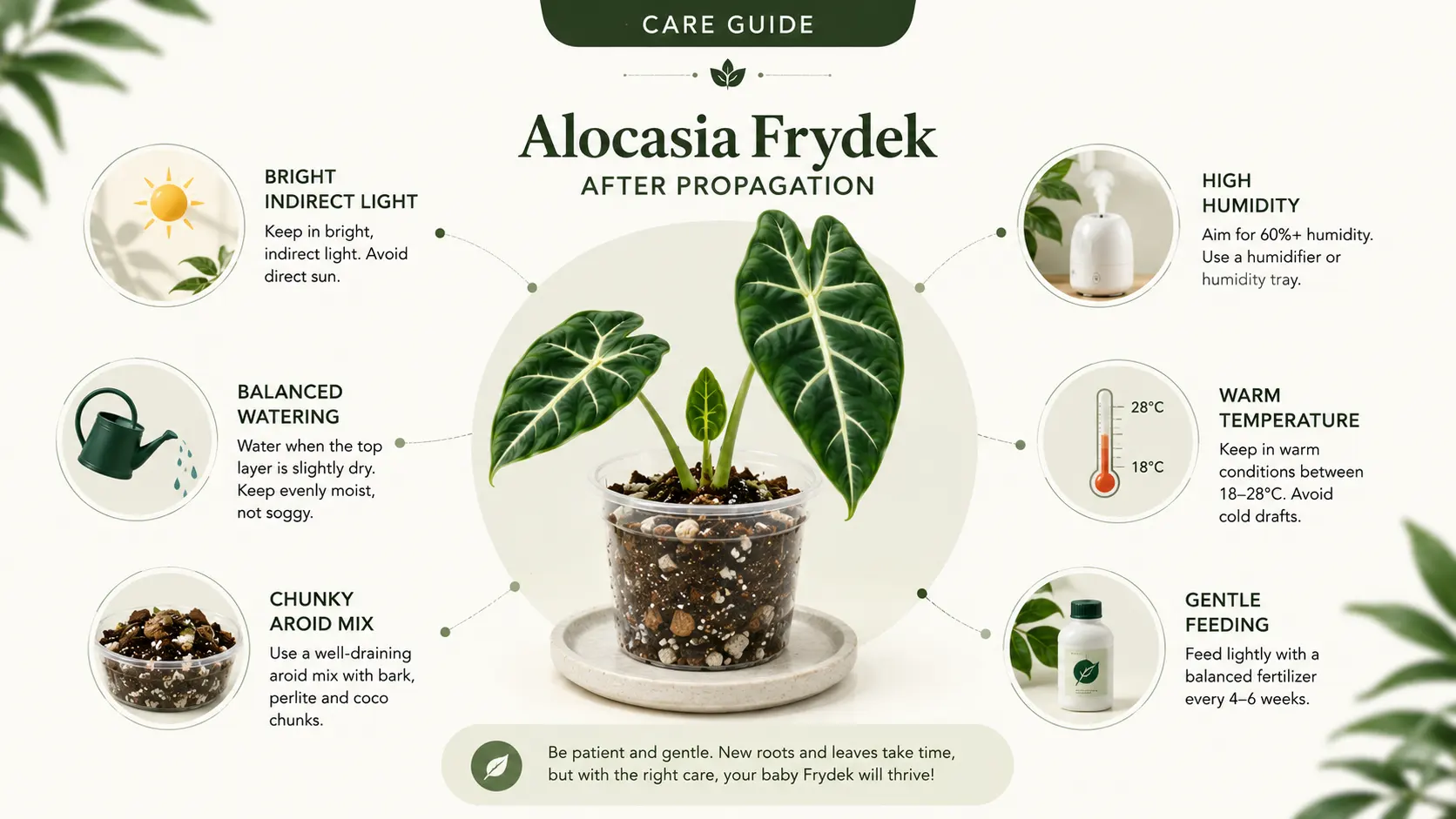
Watering Requirements
Alocasia frydek prefers evenly moist soil but does not tolerate constantly saturated conditions. Allow the upper portion of the soil to dry slightly before watering again.
A practical watering approach:
- Check soil moisture before watering.
- Water thoroughly until excess drains from the pot.
- Remove standing water from saucers.
- Reduce watering frequency during slower winter growth.
Overwatering is one of the most common causes of Alocasia failure because wet conditions reduce oxygen around roots and increase the chance of fungal problems.
Light Requirements
Alocasia frydek grows best in bright indirect light. Strong filtered light supports larger leaves, stronger growth, and healthier coloration.
Suitable lighting conditions include:
- Near an east-facing window.
- Several feet away from intense direct sunlight.
- Under grow lights when natural light is limited.
Too little light can result in slow growth, weak stems, and prolonged dormancy. Direct harsh sunlight can damage the velvet texture of the leaves and cause burns.
Soil Preferences
A well-draining aroid mix is essential for Alocasia frydek. The soil should balance moisture retention with airflow.
An ideal mix should:
- Drain excess water quickly.
- Allow oxygen to reach roots.
- Prevent corms from staying wet for long periods.
Heavy garden soil or compact potting mixes should be avoided because they restrict airflow and increase rot risk.
Fertilization Practices
Alocasia frydek benefits from regular feeding during active growth periods. A diluted balanced fertilizer can support leaf production and root development.
Recommended practices:
- Fertilize during spring and summer growth.
- Use diluted fertilizer rather than concentrated applications.
- Reduce or stop feeding during dormancy.
Overfertilizing can damage roots and create mineral buildup in the soil.
Pruning Considerations
Pruning Alocasia frydek mainly involves removing damaged, yellowing, or dying leaves. Healthy leaves should not be removed unnecessarily because they provide energy through photosynthesis.
When pruning:
- Use clean, sterilized tools.
- Cut damaged leaves close to the base.
- Avoid removing multiple healthy leaves during propagation recovery.
A plant with fewer leaves may have reduced energy reserves, making recovery slower.
Climate Tolerance
Alocasia frydek prefers warm, humid environments similar to tropical regions.
Ideal conditions include:
- Warm temperatures around 18–29°C (65–85°F).
- Moderate to high humidity.
- Protection from cold drafts.
- Stable environmental conditions.
Cold temperatures can slow growth and trigger dormancy or leaf loss.
Common Alocasia Frydek Propagation Mistakes & Problems
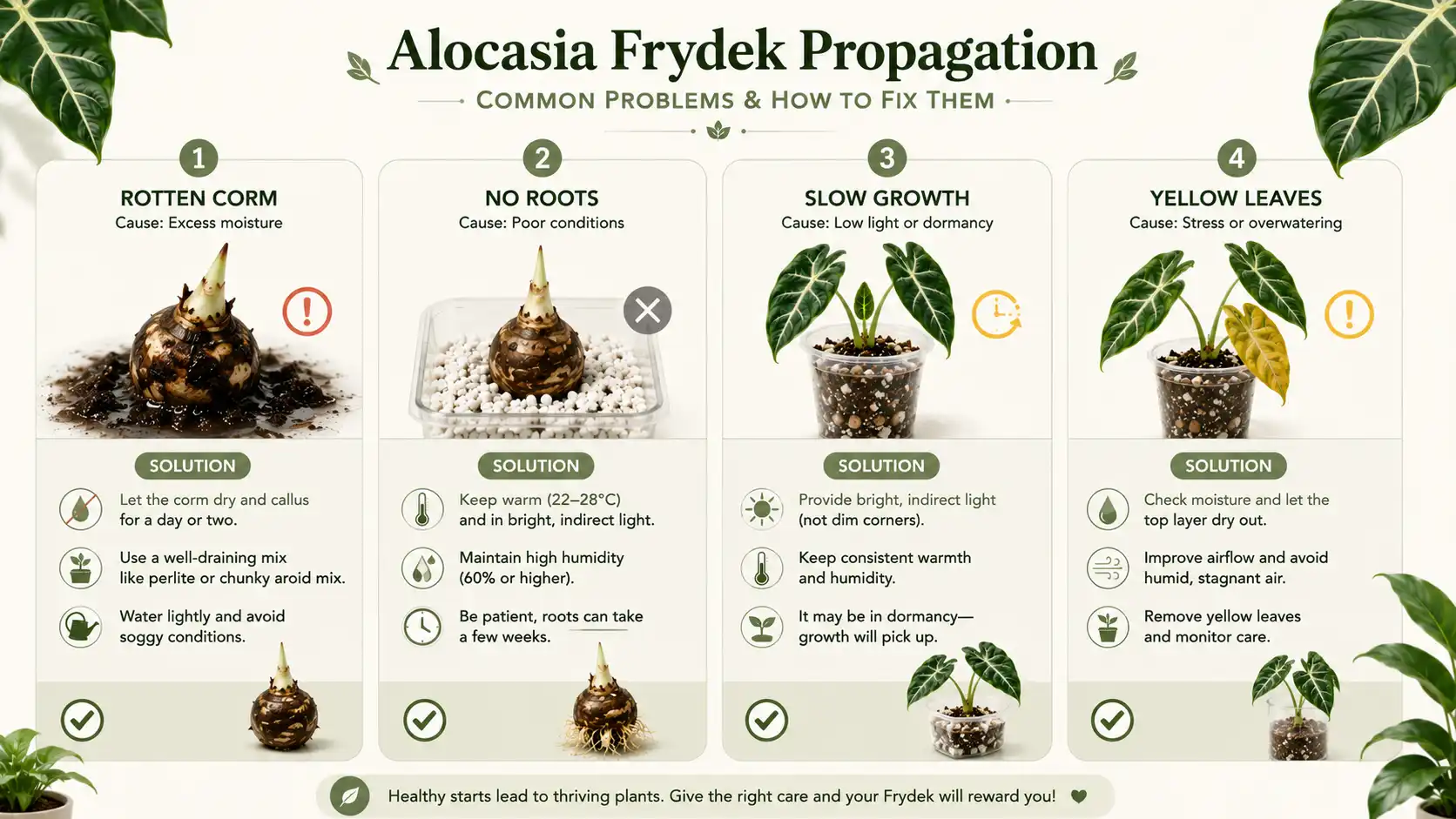
Corm or Cutting Rot
Corm rot is one of the most common propagation problems. It usually occurs when the propagation medium stays too wet, airflow is poor, or the corm has been damaged.
Causes include:
- Overwatering.
- Poor drainage.
- Using contaminated tools.
- Planting damaged material before it heals.
To prevent rot:
- Use clean tools.
- Choose firm, healthy corms.
- Use airy propagation materials.
- Avoid keeping the medium constantly soaked.
If rot occurs, remove affected tissue, allow healthy areas to dry, and restart propagation using cleaner conditions.
No Root Development
A lack of root growth usually means the propagation material does not have suitable growth tissue or environmental conditions are not ideal.
Common causes include:
- Missing node or growth point.
- Low temperatures.
- Low humidity.
- Dormant corms.
- Excess moisture stress.
Providing warmth and stable humidity often encourages delayed growth.
Slow or Stalled Growth
Slow development is normal for Alocasia frydek, especially when grown from corms. New plants may spend weeks or months establishing underground growth before producing large leaves.
Slow growth can also result from:
- Low light.
- Cool temperatures.
- Winter dormancy.
- Nutrient deficiency.
Yellowing Leaves During Propagation
Yellowing leaves can occur naturally as the plant redirects energy toward new root or shoot development. However, widespread yellowing may indicate stress.
Possible causes include:
- Overwatering.
- Root damage.
- Natural leaf aging.
- Environmental changes.
Checking the roots and moisture level helps determine the cause.
Can I Cut All the Leaves Off My Alocasia?
You can cut leaves from an Alocasia, but removing all leaves is generally not recommended unless necessary. Leaves provide energy through photosynthesis and help the plant recover after stress.
Removing all foliage may slow recovery, especially after propagation or repotting.
It may be acceptable to remove all leaves when:
- Leaves are severely damaged.
- The plant is recovering from serious stress.
- The corm remains healthy and capable of producing new growth.
Healthy leaves should be preserved whenever possible.
Can I Touch Alocasia Leaves?
Alocasia leaves can be touched, but handling should be done carefully because the plant contains calcium oxalate crystals that may cause irritation if sap contacts sensitive skin or is ingested.
Propagation handling precautions include:
- Wash hands after handling plant tissue.
- Avoid touching eyes after working with the plant.
- Keep plant material away from pets and children.
The irritation risk comes mainly from the plant’s sap rather than normal contact with intact leaves.
Alocasia Frydek vs. Alocasia Polly Corm Propagation
Alocasia frydek and Alocasia Polly are both popular members of the Alocasia group, and both can be propagated through corms. However, they differ in appearance, growth habit, and propagation characteristics.
Different Alocasia varieties have similar tropical requirements but can vary in leaf shape, growth habits, and care sensitivity. Another popular indoor variety is Alocasia Amazonica, which also benefits from high humidity and well-draining soil.
| Feature | Alocasia Frydek | Alocasia Polly |
| Leaf Appearance | Velvet dark green leaves with white veins | Glossy green leaves with contrasting veins |
| Corm Propagation | Reliable when healthy corms are available | Reliable and commonly practiced |
| Growth Habit | More compact, velvet-textured foliage | More upright with arrow-shaped leaves |
| Difficulty | Moderate care requirements | Moderate care requirements |
| Best Propagation Method | Corm division | Corm division |
Both plants benefit from similar propagation conditions:
- Warm temperatures.
- High humidity.
- Airy growing media.
- Careful moisture management.
Alocasia Polly corm propagation is often discussed because Polly is widely available, while Alocasia frydek is especially valued for its distinctive velvet foliage.
How Long Does Alocasia Frydek Live?
Alocasia frydek can live for many years indoors when provided with suitable care. Individual leaves naturally age and eventually decline, but the plant can continue producing new foliage from healthy roots and underground structures.
The lifespan of an Alocasia depends on:
- Growing environment.
- Root health.
- Proper watering.
- Temperature stability.
- Protection from pests and diseases.
Because Alocasias can produce new corms, the plant’s genetic line can continue even when older leaves or stems die back. With proper care, a mature Alocasia frydek can regenerate repeatedly through its underground growth system.
Conclusion
Alocasia frydek propagation can be achieved through corms, suitable stem sections, and water-based methods, but corm propagation remains the most reliable approach for most growers. Corms naturally contain stored energy and growth potential, making them easier to establish than leaf-based attempts or unsuitable cuttings.
For consistent results, choose healthy corms, provide a well-draining aroid mix, maintain warmth and humidity, and avoid excessive moisture. Water propagation offers visibility during root development, while soil and perlite methods often encourage stronger long-term root systems. Understanding the plant’s natural growth structure is the key to successful alocasia frydek propagation. Alocasia frydek propagation is one part of successful indoor plant care, which includes understanding plant growth habits, maintenance routines, and propagation techniques covered in our Plants Benefits and Guides collection.
FAQs
Can you propagate an Alocasia from a cutting?
Yes, Alocasia can be propagated from a cutting if the cutting contains a viable growth point or node. A leaf alone cannot produce a new plant because Alocasia requires active growth tissue, such as a corm or node, to develop roots and shoots.
Can I propagate an Alocasia in water?
Yes, Alocasia can be propagated in water when using suitable plant material. Water propagation allows growers to monitor root development, but the plant should eventually be moved to a well-draining soil mix for long-term growth.
What do you do with corms from Alocasia?
Corms from Alocasia should be separated carefully, placed in a suitable propagation medium, and kept warm and humid until roots and shoots develop. Healthy corms can grow into independent plants.
Do Alocasia like deep or shallow pots?
Alocasia generally prefers pots that match its root and corm structure rather than extremely deep containers. A moderately sized pot with good drainage is usually better because it prevents excess moisture retention.
Is Alocasia frydek fast growing?
Alocasia frydek is a moderate grower, not a fast-growing plant. Growth is faster in warm, humid conditions with bright indirect light and slower during cooler seasons or dormancy periods.
Can I touch Alocasia leaves?
Yes, you can touch Alocasia leaves, but avoid contact with sap because the plant contains calcium oxalate crystals that may cause skin irritation. Wash hands after handling plant tissue.