
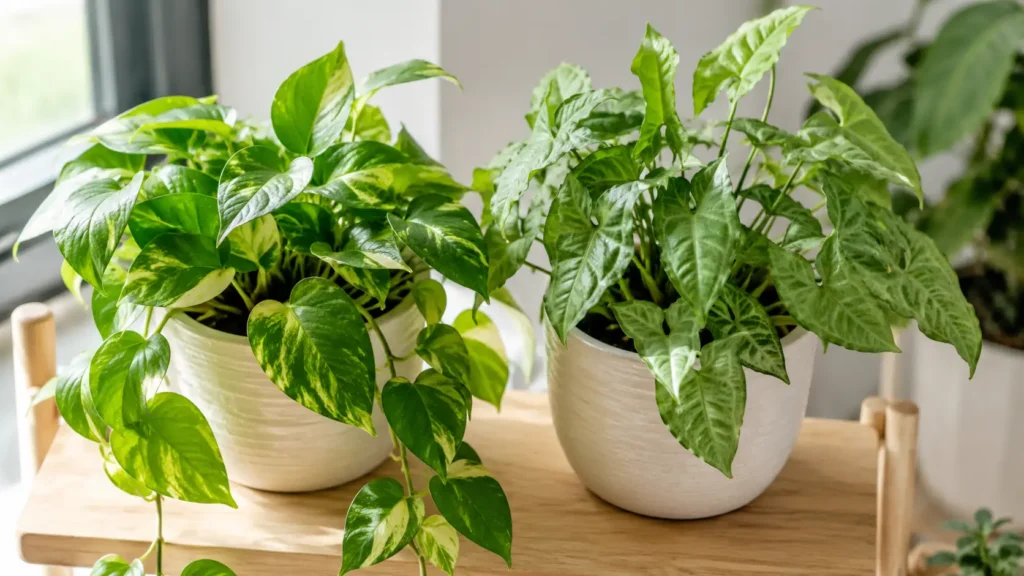
Pothos and Syngonium are both easy-care trailing aroids often confused for one another, but they differ in leaf shape, mature growth habit, and how quickly they climb. Pothos (Epipremnum aureum) has thick, glossy, heart-shaped leaves that stay a single shape throughout its life, while Syngonium (Syngonium podophyllum) starts with arrow-shaped juvenile leaves that split into lobed segments as the plant matures. Both belong to the Araceae family, tolerate similar indoor light and watering routines, and are popular for beginners, but their differences matter when choosing between them.
Quick Summary
- Pothos (Epipremnum aureum) and Syngonium (Syngonium podophyllum) are both Araceae-family vines with similar bright, indirect light and drying-between-waterings needs.
- The clearest identification difference is leaf shape: pothos stays heart-shaped, while Syngonium leaves change from simple arrowhead shapes to deeply lobed leaves as the plant matures.
- Pothos generally grows faster and produces longer, thicker vines than most Syngonium cultivars.
- Both propagate readily from stem cuttings with a node, rooting in water or moist soil within two to four weeks.
- Both are toxic to cats and dogs if ingested because they contain insoluble calcium oxalate crystals, so placement around pets matters equally for either plant.
Pothos vs Syngonium: Quick Comparison Table
| Feature | Pothos (Epipremnum aureum) | Syngonium (Syngonium podophyllum) |
| Leaf shape | Heart-shaped, consistent through maturity | Arrowhead-shaped as juvenile, lobed as mature |
| Growth rate | Moderate to fast | Moderate, generally slower than pothos |
| Light needs | Bright, indirect; tolerates low light | Bright, indirect; tolerates medium light |
| Watering | Allow soil to dry between waterings | Allow soil to dry between waterings |
| Mature size (indoor) | Long trailing/climbing vines, several feet | More upright to semi-climbing, moderate spread |
| Propagation | Stem cutting with a node | Stem cutting with a node |
| Toxicity | Toxic to cats and dogs (calcium oxalate) | Toxic to cats and dogs (calcium oxalate) |
What Is Pothos? (Botanical Overview)
Pothos is the common name for Epipremnum aureum, a climbing vine in the Araceae family native to French Polynesia and naturalized in many tropical regions. It is recognized by its thick, waxy, heart-shaped leaves, which in golden and marble varieties display yellow or white variegation — cultivars compared in detail in our Golden Pothos vs Marble Queen guide and our Manjula vs Snow Queen comparison. Not every plant sold as “pothos” is a true Epipremnum either — Silver Satin Pothos, for example, is botanically a Scindapsus, though it’s propagated the same way. In our beginner-focused pothos care guide, we cover its light, watering, and propagation needs in depth, and the same fundamentals apply here.
Pothos climbs using aerial roots that attach to bark or other rough surfaces in its native habitat, which is why mature leaves in the wild can grow far larger than the juvenile leaves typically seen indoors.
What Is Syngonium? (Botanical Overview)
Syngonium, commonly called arrowhead plant or arrowhead vine, is Syngonium podophyllum, also a member of the Araceae family, native to Central and South America. Unlike pothos, Syngonium undergoes a visible leaf transformation as it ages: young plants produce simple arrow-shaped leaves, while mature plants develop deeply lobed, almost hand-shaped foliage on longer, climbing stems. More botanical background on the genus is available on the Syngonium Wikipedia page
Popular cultivars such as the dark-toned Syngonium Black Panther share this same maturation pattern, and the plant can also be propagated in water, as covered in our guide on growing Syngonium in water.
Leaf Shape and Growth Habit Differences
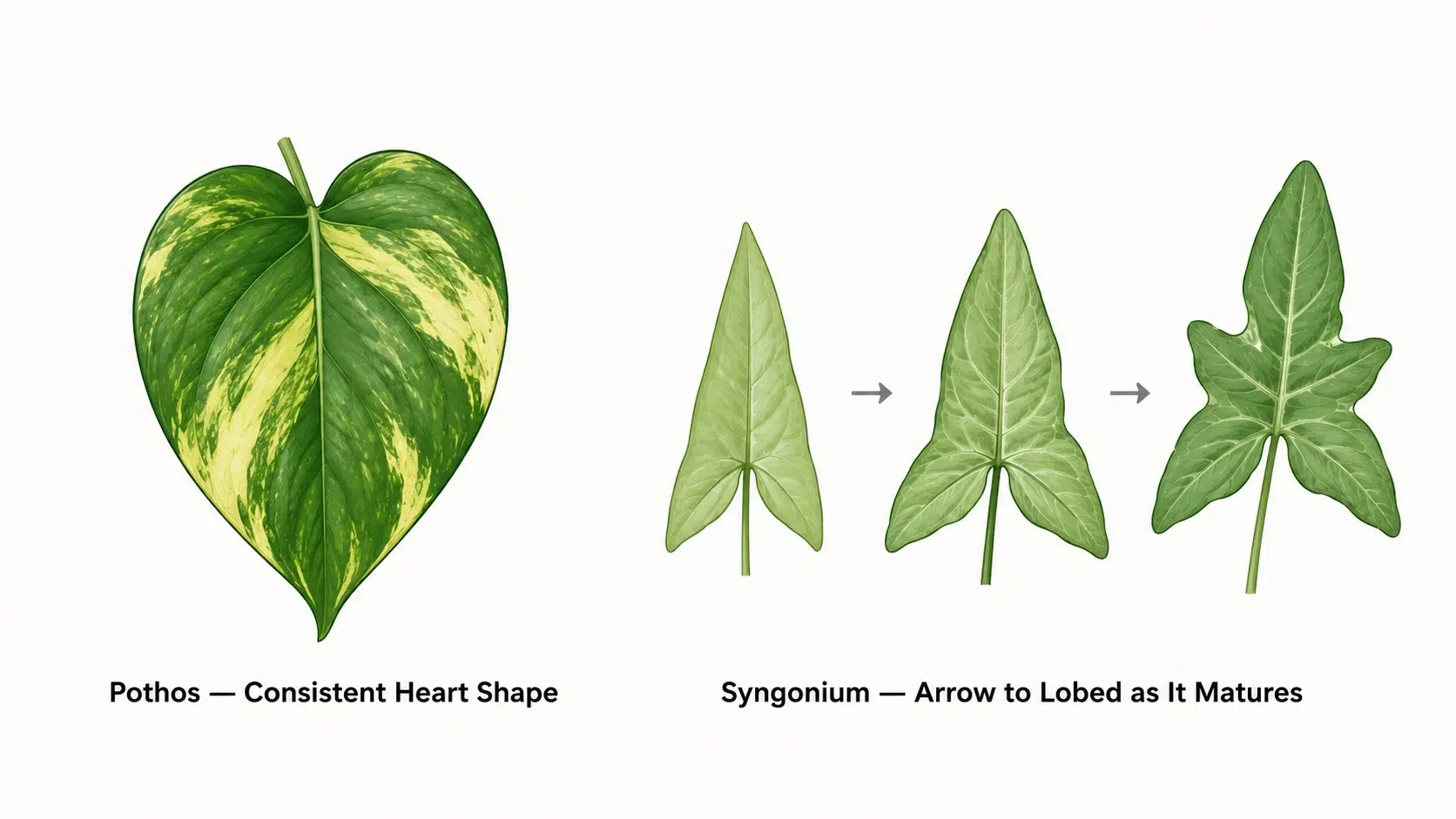
The fastest way to tell pothos and Syngonium apart is by leaf shape and how that shape changes over time.
Key identification points:
- Pothos leaves are consistently heart-shaped from cutting to maturity, with a thick, slightly rubbery texture.
- Syngonium leaves start as simple arrowheads and become lobed with three to five segments as the plant matures and begins climbing.
- Pothos stems are typically thicker and more rigid than young Syngonium stems.
- Both produce aerial roots at nodes, which helps them climb rough surfaces such as moss poles.
In our experience growing both side by side, the leaf-shape change in Syngonium is the single most reliable way to confirm plant identity, since variegation patterns can look similar across both genera under certain lighting. Pruning also plays a role in shape for both plants — for the exact cut point that keeps pothos full rather than leggy, see our guide on where to cut pothos to encourage growth.
Light Requirements Compared
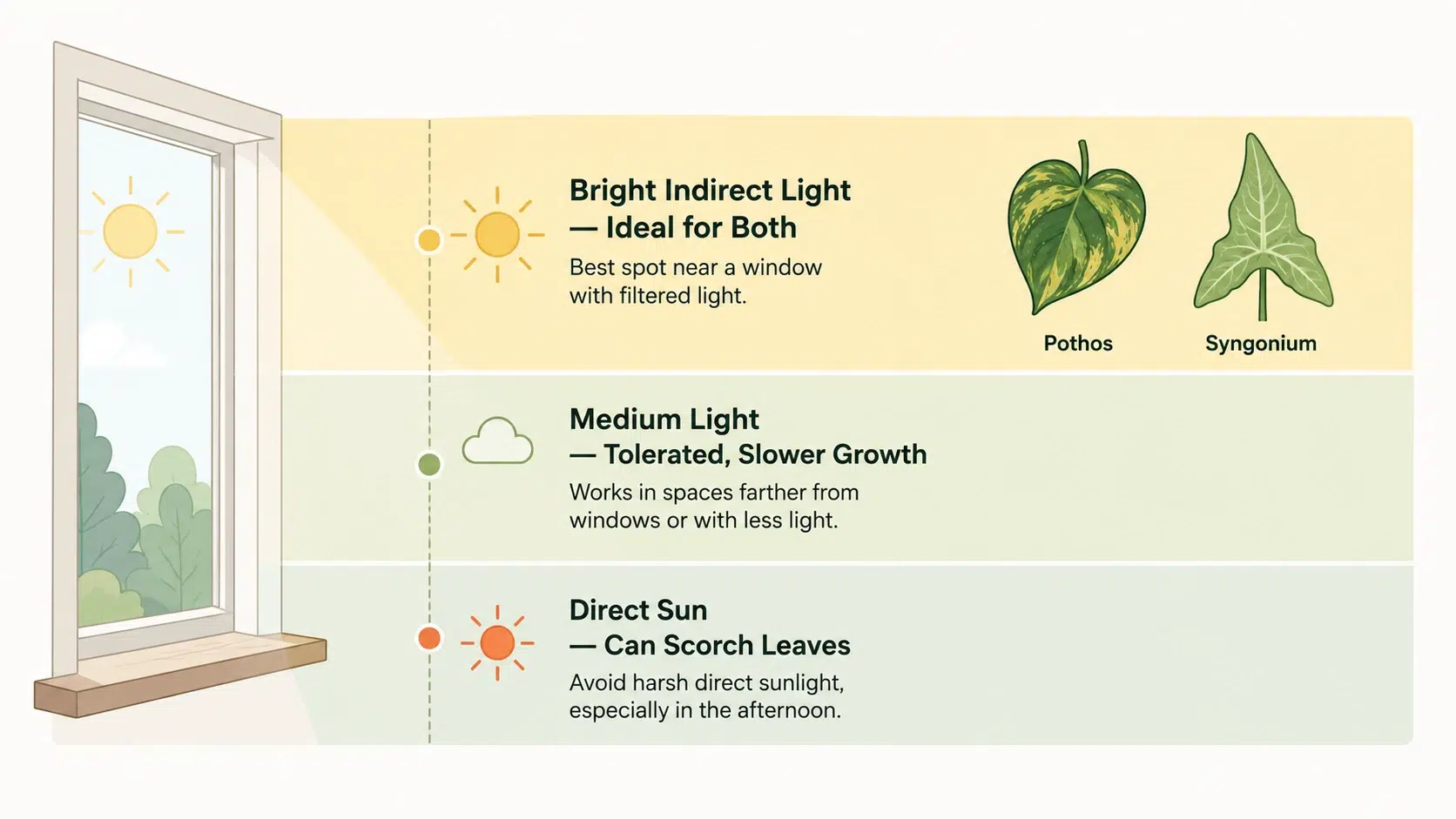
Both plants perform best in bright, indirect light and tolerate lower light with reduced growth. Pothos generally tolerates dimmer conditions slightly better than Syngonium without losing leaf health, though variegated cultivars of either plant lose pattern intensity in low light.
Direct, intense midday sun can scorch the leaves of both plants, so an east-facing window or a filtered south- or west-facing exposure works well for either one. For pothos-specific brightness thresholds, see our Neon pothos light requirements guide, since lighter cultivars generally need stronger light to hold their color.
Watering and Soil Needs Compared
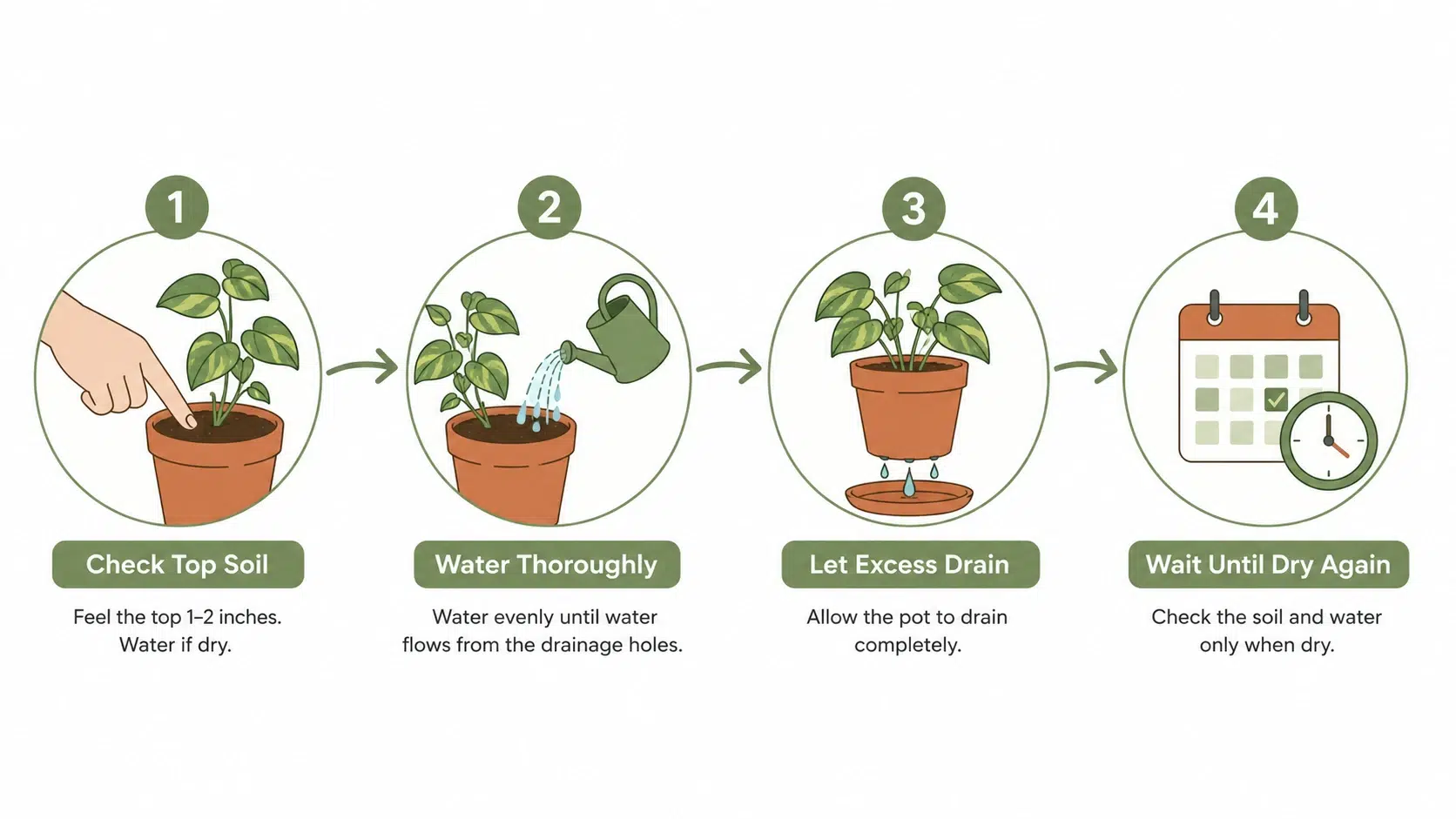
Pothos and Syngonium share nearly identical watering principles: allow the top portion of the potting mix to dry before watering thoroughly, then let excess water drain completely.
Practical watering guidance for both:
- Check soil moisture with a finger rather than a fixed calendar.
- Water thoroughly once the mix has dried to an appropriate depth.
- Empty any standing water from a saucer.
- Reduce frequency during cooler, lower-light months.
- Use a well-draining, airy potting mix for either plant.
Both plants appear on the ASPCA’s toxic and non-toxic plant list because of their calcium oxalate content.
As of late 2026, growers increasingly recommend checking moisture at a slightly deeper level for Syngonium than pothos, since its root mass is often less extensive relative to pot size in younger plants, making it a bit more sensitive to prolonged saturation.
Growth Rate and Mature Size Compared
Pothos is generally the faster grower of the two, particularly cultivars like Neon pothos, while Manjula pothos and most Syngonium varieties grow at a more moderate pace, as detailed in our Manjula pothos propagation guide.
Indoors, pothos tends to produce longer trailing or climbing vines over time, while Syngonium often stays more upright or semi-climbing until it matures and begins producing longer internodes. Providing a support such as a moss pole encourages larger, more lobed leaves in Syngonium and larger heart-shaped leaves in pothos, similar to the climbing method described in our N’Joy pothos training guide.
Propagation Differences
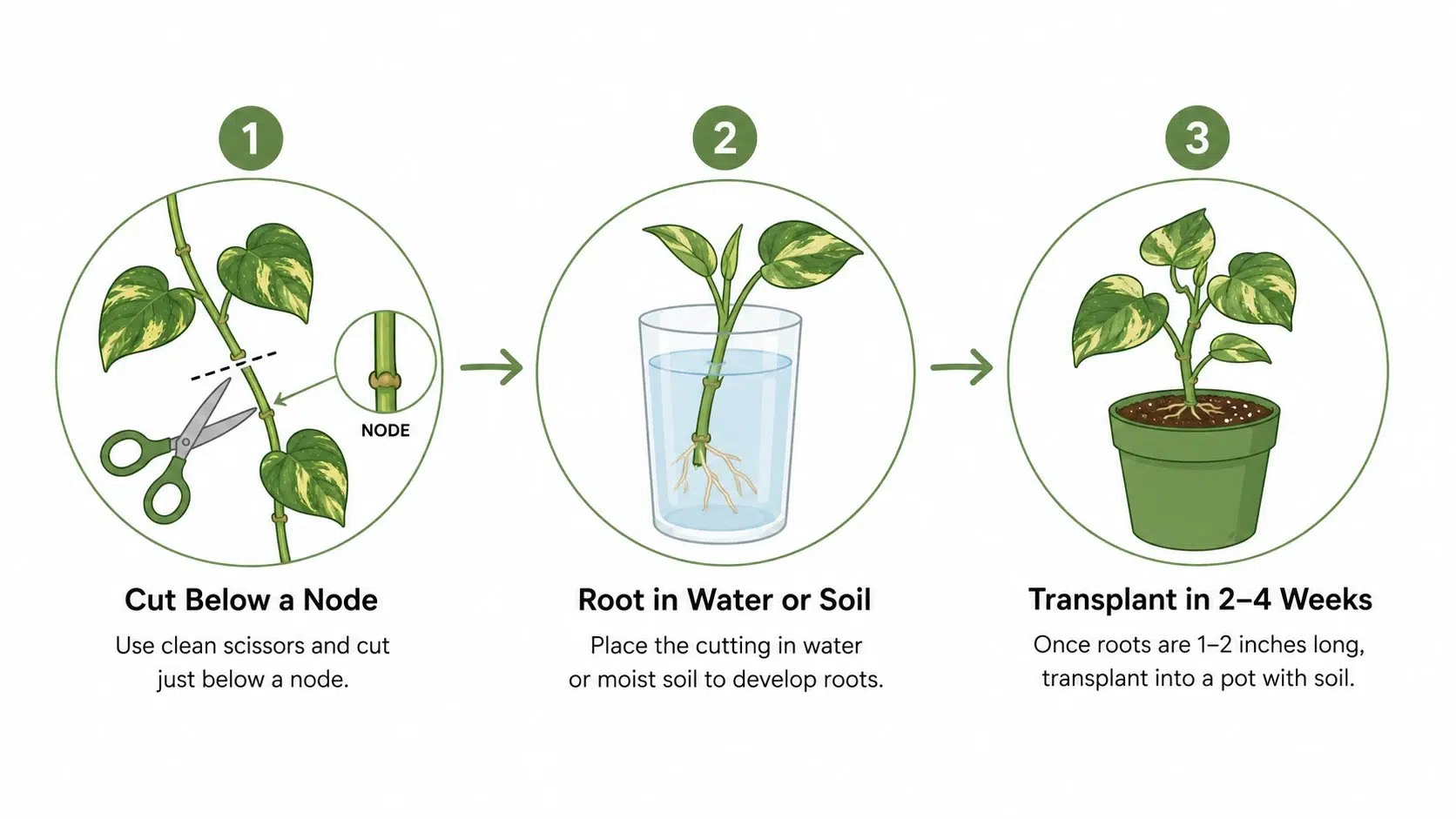
Both plants propagate the same way: cut a stem section containing at least one node, remove any leaves that would sit underwater or buried, and place the cutting in water or moist soil until roots form, typically within two to four weeks.
Pothos nodes and aerial roots are covered in detail in our pothos aerial roots propagation guide, and the same node-based principle applies directly to Syngonium, as shown in our Syngonium propagation guide. Elemo Baker recommends rooting cuttings of either plant in water first so root development can be monitored visually before transplanting to soil.
Toxicity and Pet Safety Compared
Both pothos and Syngonium are toxic to cats and dogs if chewed or ingested, because both contain insoluble calcium oxalate crystals that irritate the mouth, throat, and digestive tract. Symptoms in pets typically include drooling, oral irritation, and vomiting.
Neither plant is more dangerous than the other in this respect, and both should be kept out of reach of pets and small children who may chew on leaves or stems.
Which One Should You Choose?
Choose pothos if you want a faster-growing, low-maintenance trailing vine that tolerates lower light and infrequent attention. Choose Syngonium if you prefer a plant with a changing, more textured leaf shape as it matures and don’t mind slightly slower growth.
Many growers keep both, since their care overlaps closely enough that a single watering and light routine can support them side by side. Many growers keep both, since their care overlaps closely enough that a single watering and light routine can support them side by side — a foundational principle covered in more depth in our indoor green living hub.
Conclusion
Pothos and Syngonium are closely related Araceae vines that share nearly identical care needs but differ meaningfully in leaf shape, growth speed, and mature appearance. Pothos keeps a consistent heart-shaped leaf and generally grows faster, while Syngonium transforms from simple arrowhead leaves into lobed mature foliage at a more moderate pace. Both root easily from node cuttings, both need bright indirect light and soil that dries between waterings, and both carry the same calcium oxalate toxicity risk for pets. The clearest takeaway when comparing pothos vs Syngonium is that the choice comes down to growth speed and leaf preference rather than care difficulty, since either plant rewards a beginner-friendly routine of consistent light and proper drainage. This comparison is part of our complete guide to Plants: Benefits and Guides, covering care, types, and growing tips for houseplants of every kind.
Frequently Asked Questions
Is Syngonium the same plant as pothos?
No. Syngonium (Syngonium podophyllum) and pothos (Epipremnum aureum) are different genera within the same Araceae family. They share similar care needs but differ in leaf shape and maturation pattern.
Which grows faster, pothos or Syngonium?
Pothos generally grows faster than most Syngonium varieties, especially vigorous cultivars like Neon pothos, though growth rate depends heavily on light and care conditions for both.
Can Syngonium and pothos be grown in the same pot?
Yes, since both tolerate similar light, watering, and soil conditions, they can share a container, though each plant’s individual growth rate should be monitored so one doesn’t outcompete the other.
Are pothos and Syngonium equally toxic to pets?
Yes. Both contain insoluble calcium oxalate crystals and are considered similarly toxic to cats and dogs if chewed or ingested.
How do I tell a young Syngonium from a pothos cutting?
Young Syngonium leaves are arrow-shaped and thinner than pothos leaves, and they will develop lobes as the plant matures, while pothos leaves remain heart-shaped and thicker throughout the plant’s life.
Do pothos and Syngonium need the same pot size?
Both prefer a well-draining pot only modestly larger than their current root system, since oversized containers can keep the soil wet longer than either plant’s roots need.



One Response