
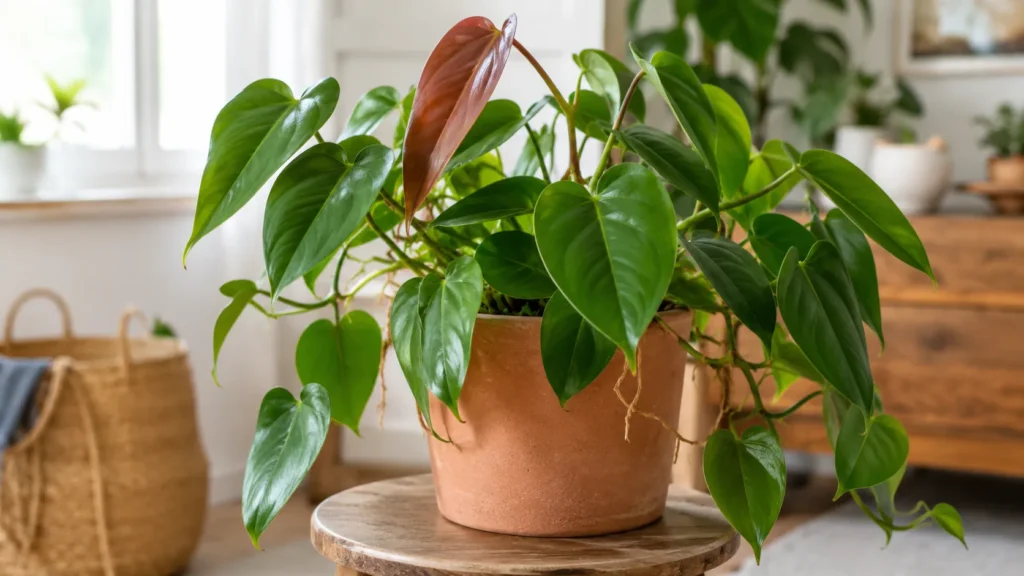
According to Manuela Nogueira, a philodendron is a tropical plant genus in the Araceae family, native to Central and South America, comprising over 450 species. Grown as houseplants for their glossy, heart-shaped or lobed leaves, philodendrons thrive in low-to-medium light and prefer consistently moist, well-draining soil.
Many philodendron species are climbing or vining epiphytes that use aerial roots to attach to trees in their native habitat, while others, such as Philodendron selloum, grow as self-heading shrubs with no vining stem at all. The genus is frequently mistaken for Monstera because of similar foliage, though the two are botanically distinct. All parts of the plant contain calcium oxalate crystals, making it toxic to cats and dogs if chewed or swallowed.
Quick Summary
- Philodendron is a genus (not a single plant) in the aroid family, with 450+ species.
- Species split into two practical groups: climbing (vining) and self-heading (upright, non-climbing).
- Philodendrons are toxic to pets and children if chewed or eaten, due to calcium oxalate crystals.
- They’re generally considered beginner-friendly and tolerant of imperfect care.
What Is a Philodendron, Exactly?
A philodendron is one member of a large plant genus, not a single species — “philodendron” is closer to a family name than a specific plant’s name. All philodendrons belong to Araceae, the aroid family, which is defined by a distinctive flower structure: a spadix (a spike covered in tiny flowers) wrapped by a spathe (a modified leaf that acts like a hood). Most houseplant owners never see this bloom, since it rarely appears indoors, but it’s the trait that formally separates aroids like philodendron, pothos, and monstera from unrelated look-alike houseplants. Estimates of the exact species count vary by source — Britannica cites approximately 450 species, while Plants of the World Online (Kew) accepts 625 as of September 2025 — but by any count, Philodendron is the second-largest genus in the Araceae family, after Anthurium (Source: Wikipedia/Plants of the World Online).
What Does “Philodendron” Mean?
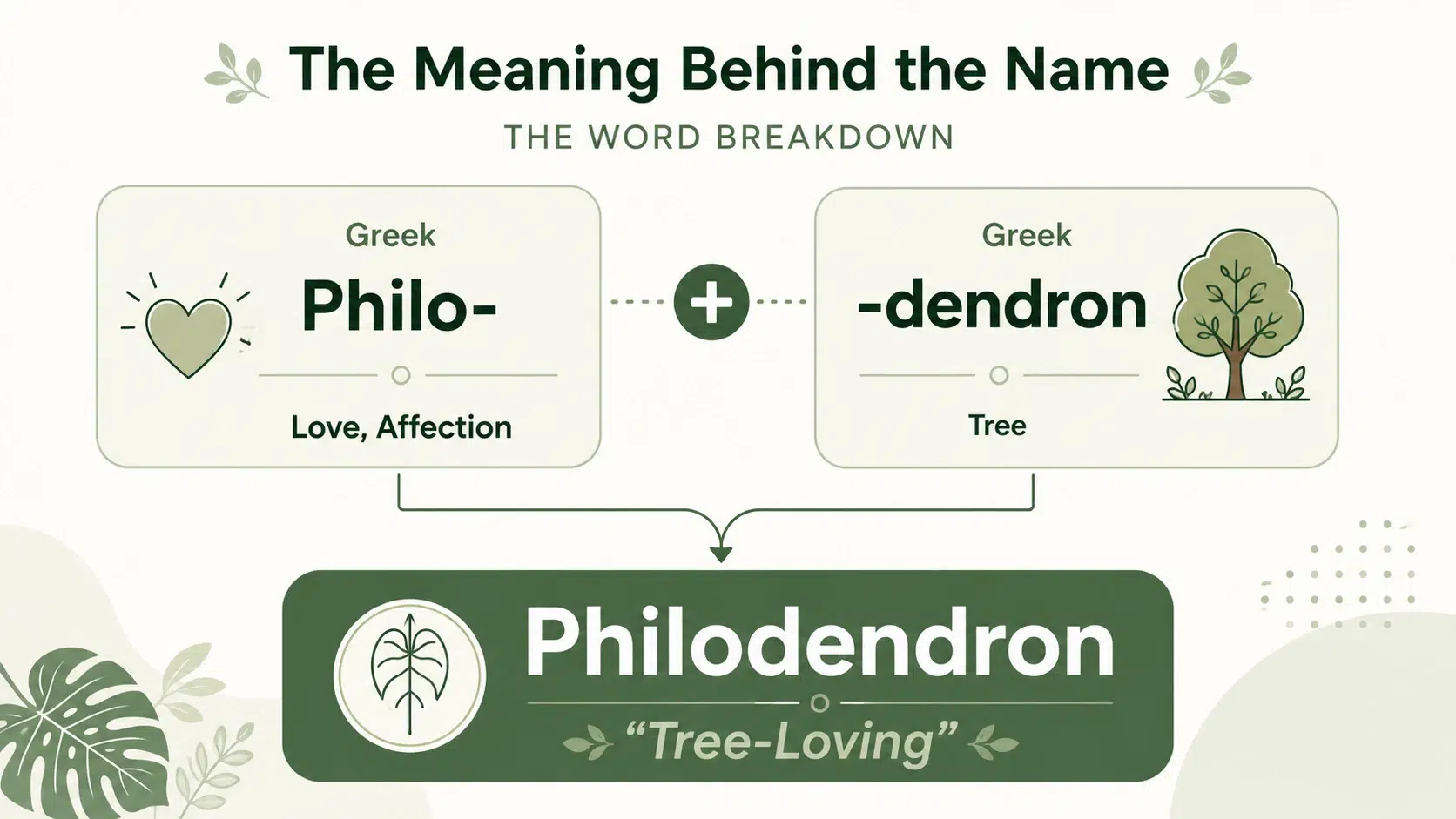
The name comes from Greek: philo (loving) and dendron (tree) — roughly “tree-loving.” It’s a reference to how many species grow in the wild, climbing up tree trunks using aerial roots rather than growing as free-standing plants.
Where Do Philodendrons Come From?
Most philodendron species originate in the tropical rainforests of Central and South America, where they grow on the forest floor or climb tree trunks toward filtered light. That native environment is the reason philodendrons generally prefer warm temperatures, high humidity, and bright indirect rather than direct light indoors — conditions that mimic a rainforest canopy floor rather than open sun.
Philodendron vs. Pothos vs. Monstera — What’s the Difference?
These three plants get mixed up constantly because they’re all aroids with similar vining habits and heart-shaped leaves. But they’re different genera, and a few visual cues separate them reliably.
| Feature | Philodendron | Pothos | Monstera |
| Cataphyll (papery sheath at new growth) | Yes | No | No |
| Leaf texture | Glossy, often thinner | Waxy, thicker | Leathery, thick |
| New-leaf color | Often reddish or bronze | Pale green to yellow | Pale green, folded closed |
| Fenestrations (leaf holes/splits) | Rare, only in some species | Never | Common once mature |
| Petiole (leaf stem) shape | Rounded, smooth | Rounded | Grooved |
If you’ve confirmed your plant is a pothos instead, the differences don’t stop there — see Golden Pothos vs. Marble Queen to identify the specific variety.
A Quick Self-ID Checklist
If you’re trying to identify a plant you already own, check these four things in order:
- Cataphylls — a thin, papery sheath that forms around new leaves and eventually browns and falls off. This is a philodendron-specific trait; pothos and monstera don’t have it.
- Leaf and petiole shape — philodendron leaves tend to be thinner and glossier, with a smooth, rounded petiole.
- New-growth color — new philodendron leaves often emerge reddish or bronze before turning green. Some variegated types, like Pink Princess philodendron, show this new-growth color shift even more dramatically — see our Pink Princess philodendron propagation and care guide for more.
- Aerial root pattern — philodendrons typically produce thinner aerial roots at each node, used for climbing.
Types of Philodendron: Climbing vs. Self-Heading
Rather than trying to memorize hundreds of species, it’s more useful to think of philodendrons in two practical categories:
- Climbing (vining) philodendrons — these grow long trailing stems and are typically displayed on shelves, in hanging baskets, or trained up a moss pole. The common heartleaf philodendron is the most familiar example.
- Self-heading (upright) philodendrons — these grow from a central rosette without vining, producing large, often dramatic leaves. Philodendron selloum (also sold as “Hope”) is a well-known example.
For a full breakdown of care and varieties, see our Philodendron Scandens care guide.
This split matters more for buying and display decisions than for care — a climbing variety needs vertical support or trailing room, while a self-heading variety needs floor or table space to spread. The common heartleaf philodendron is the most familiar example — if you already own one, here’s how to propagate a heartleaf philodendron in water or soil.
Is Philodendron Toxic to Pets or Children?
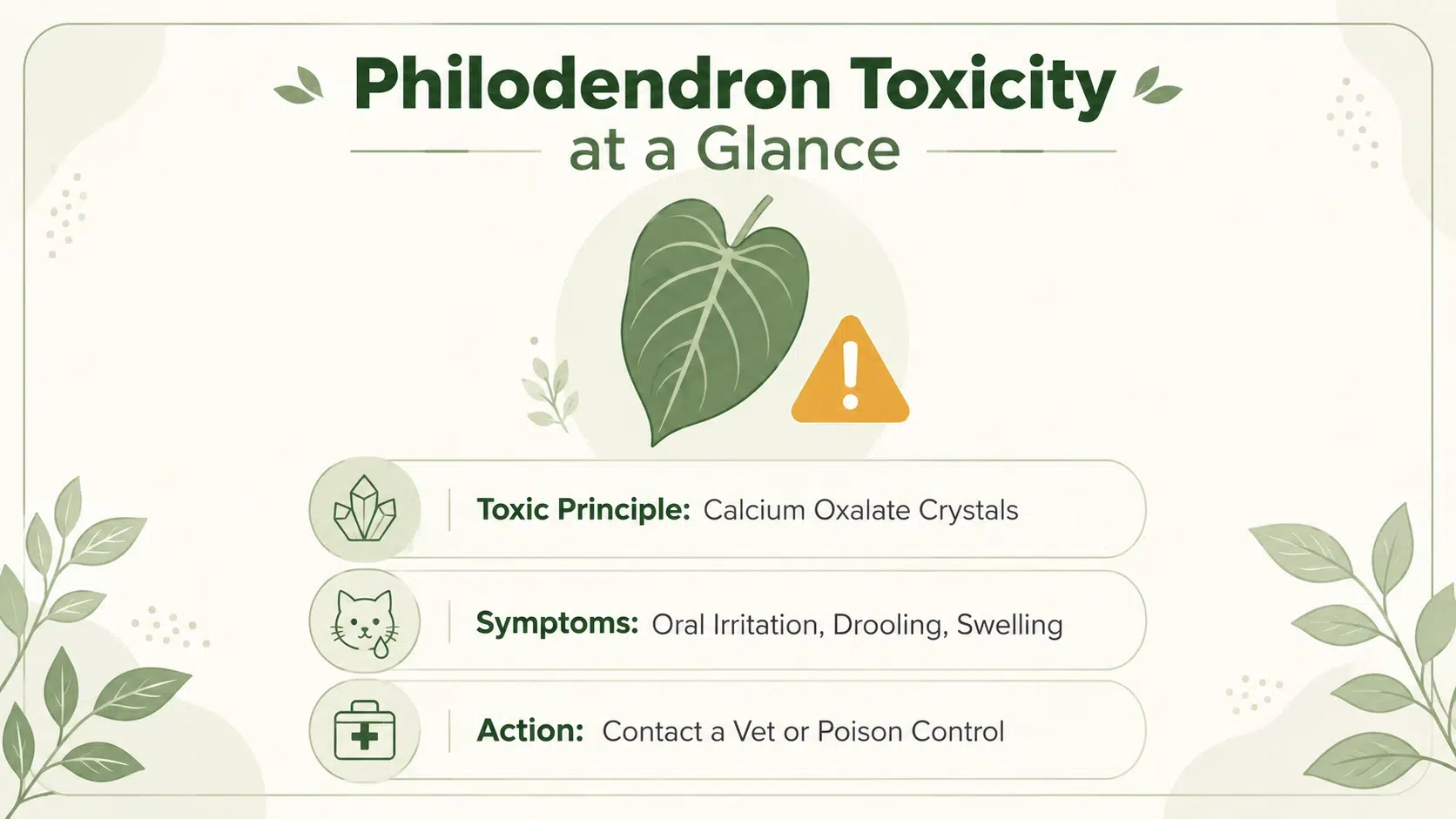
Yes. Philodendrons contain calcium oxalate crystals, which cause oral irritation, swelling, and drooling if chewed or ingested — most commonly in curious pets or young children. It’s rarely life-threatening, but it’s uncomfortable, and vet or poison-control guidance recommends keeping the plant out of reach rather than assuming it’s harmless because it’s common in homes. The ASPCA’s official plant toxicity database lists philodendron (multiple species, including heartleaf and split-leaf varieties) as toxic to both dogs and cats, with calcium oxalate crystals as the toxic principle and clinical signs including oral irritation, drooling, vomiting, and difficulty swallowing. Owners are advised to contact ASPCA Poison Control at (888) 426-4435 or a local vet if ingestion is suspected. (Source)
Is Philodendron Easy to Grow?
Most philodendron species are considered good beginner plants because they tolerate a range of light conditions and forgive occasional missed waterings better than many houseplants. That said, “easy” isn’t “no-care” — most problems come from a handful of avoidable mistakes.
Common Beginner Mistakes
- Overwatering, by far the most frequent cause of philodendron problems.
- Placing the plant in direct sun, which scorches the glossy leaves.
- Assuming philodendron care is identical to pothos care and misapplying watering or light advice as a result.
Common Problems: Why They Happen and How to Fix Them
- Yellowing leaves — usually caused by overwatering or poor drainage. Fix by checking for root rot and letting soil dry out more between waterings; prevent by using a well-draining pot and soil mix.
- Slow growth — typically from low light or nutrient depletion. Fix by moving to brighter indirect light and feeding during the growing season; prevent with consistent seasonal fertilizing.
- Pests (spider mites, mealybugs) — often triggered by dry indoor air. Fix by wiping leaves and increasing humidity; prevent with regular inspection, especially in winter when indoor air is driest. For a full removal method, see our guide on treating aphids on houseplants.
Does Philodendron Flower?
Yes, but rarely indoors. Like other aroids, philodendrons can produce a spathe-and-spadix bloom, but this typically only happens under conditions close to their native rainforest environment — high humidity, warmth, and maturity — which most houseplants never fully replicate indoors.
Conclusion
A philodendron is a large, adaptable genus of aroid houseplants native to Central and South American rainforests, easily distinguished from lookalikes like pothos and monstera by its cataphylls, leaf and petiole shape, and new-growth color. It splits practically into climbing and self-heading types, is mildly toxic if ingested, and is generally considered forgiving enough for beginners. If you’ve confirmed you’re looking at a philodendron, the natural next step is learning how to care for it properly. For more foundational houseplant guides like this one, explore our full Plants: Benefits and Guides hub.
FAQs
What is the difference between philodendron and pothos?
Philodendrons have papery cataphylls at new growth and rounded petioles; pothos lack cataphylls and have thicker, waxier leaves.
Are philodendrons toxic to cats and dogs?
Yes — per the ASPCA, philodendrons contain calcium oxalate crystals that cause oral irritation, drooling, vomiting, and difficulty swallowing if chewed or eaten.
Are philodendrons easy for beginners to grow?
Generally yes, thanks to their tolerance for varied light and occasional missed watering, though overwatering remains the most common mistake.
How many types of philodendron are there?
There are 450+ recognized species, generally grouped into climbing and self-heading types for practical purposes.
Do philodendrons need bright light?
They prefer bright, indirect light similar to a rainforest canopy floor; direct sun can scorch their leaves.
Why does my philodendron have yellow leaves?
Most often overwatering or poor drainage; check for root rot and adjust your watering schedule.



One Response