
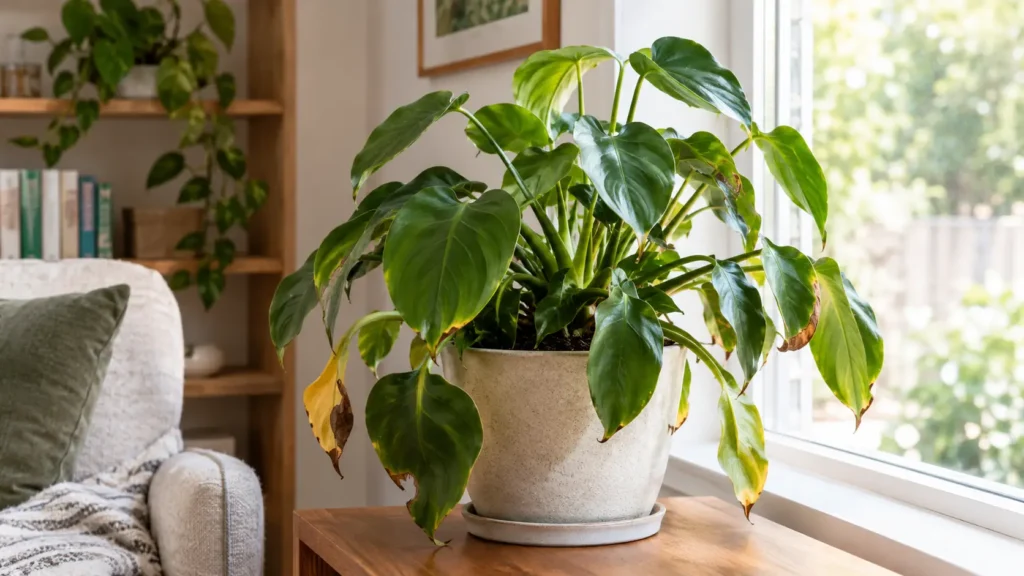
Philodendron yellowing, browning and drooping leaves usually point to a problem with moisture, light, roots or the growing environment rather than a mystery disease. Yellow leaves may follow wet soil, natural aging or poor light; brown tips can develop from dry conditions, salts or fertilizer stress; and drooping can occur when the plant is either thirsty or sitting in damaged, waterlogged roots. The quickest way to narrow it down is to check the soil first, then the roots, light and pests.
Quick Summary
- Yellow lower leaves can result from overwatering, poor drainage, low light or normal aging; crispy brown edges more often point toward moisture stress, dry air or salt/fertilizer buildup.
- Drooping does not automatically mean the plant needs water. Wet soil plus persistent wilting is a reason to inspect the roots.
- Diagnose in this order: soil moisture → roots and drainage → light and drafts → pests.
- Remove fully yellow or brown leaves after correcting the underlying problem; partially green leaves can continue contributing energy to the plant.
What Your Philodendron’s Leaves Are Telling You
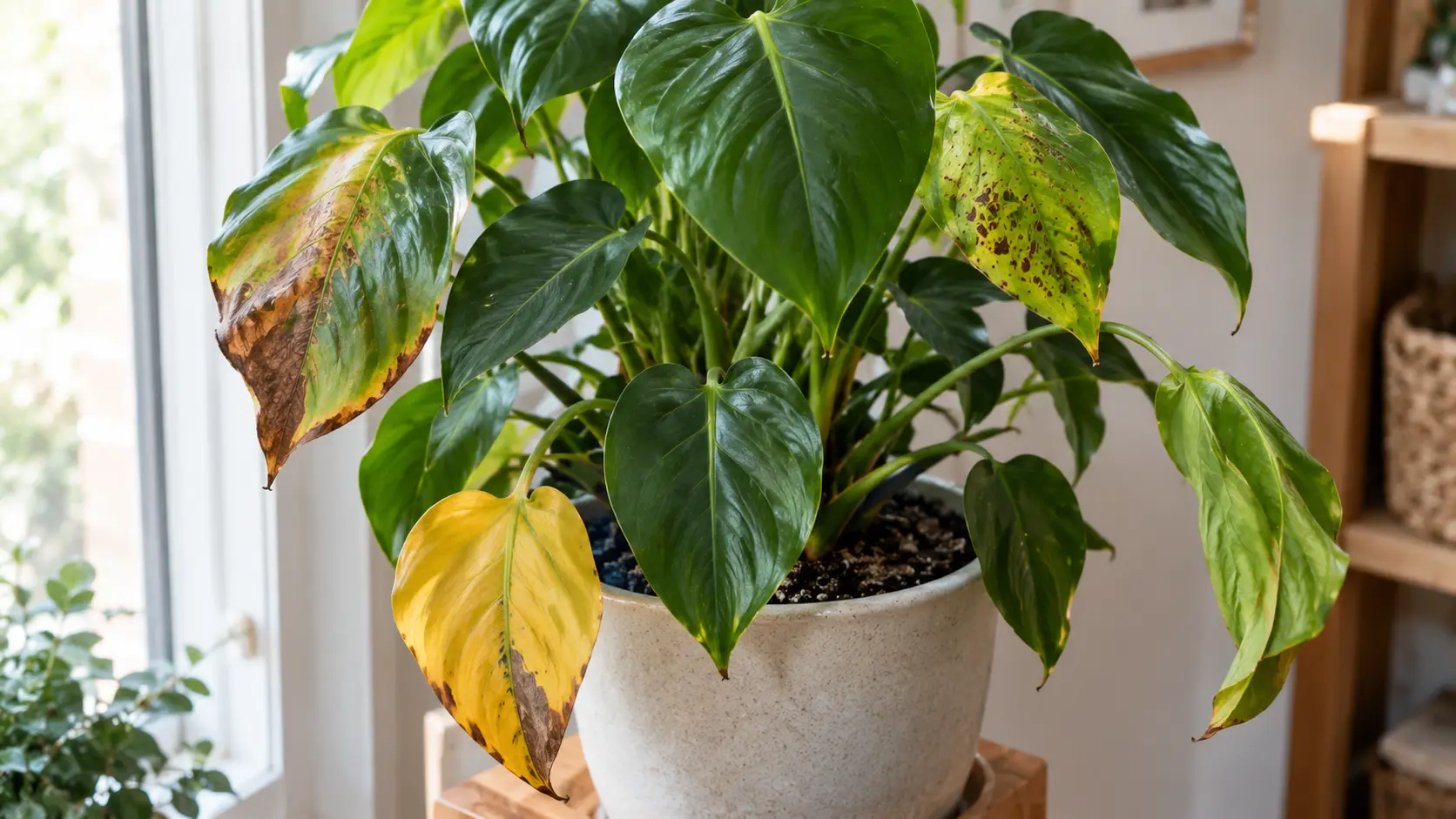
The location, texture and pattern of damage often tell you more than leaf colour alone. An older lower leaf that gradually yellows is different from several new leaves turning pale. Likewise, a dry brown margin points to a different problem from soft, dark spots developing in wet conditions.
| Symptom pattern | Possible cause | First check |
| Lower leaves yellow + soil stays damp | Overwatering, poor drainage or root stress | Soil moisture and drainage holes |
| Whole plant looks pale | Low light, nutrition or root problems | Light level and root condition |
| Brown crispy tips or edges | Dryness, inconsistent watering, salts or fertilizer stress | Soil moisture, air conditions and soil surface |
| Brown spots with yellow halos | Possible leaf-spot disease or other tissue damage | Whether spots are spreading and whether multiple leaves are affected |
| Limp leaves + dry soil | Underwatering or rapid moisture loss | Soil moisture and pot weight |
| Limp leaves + wet soil | Root damage or root rot | Roots, drainage and soil smell |
These symptoms are not self-contained diagnoses. University of Wisconsin guidance notes that houseplant disorders can have overlapping symptoms and recommends careful examination rather than assuming one symptom has one cause.
For examples of the same diagnostic logic on other foliage plants, compare Aspidistra leaves turning yellow and Syngonium leaves turning yellow.
Which Philodendron Do You Have, and Why It Matters
“Philodendron” refers to a large genus rather than one uniform houseplant. Some commonly grown types are climbing or vining, while others are self-heading, growing from a central crown. That difference affects where you see stress and how the plant physically supports its foliage. The Illinois Extension notes substantial variation in philodendron species and leaf form.
For a broader identification reference, see What Is a Philodendron? Types, Care & Pothos vs. Philodendron. Philodendrons vary considerably in plant and leaf form, and their indoor requirements can differ, so identifying the type you have is useful before changing care; the Illinois Extension philodendron guide provides a useful species and care overview.
10-Second Stem Test
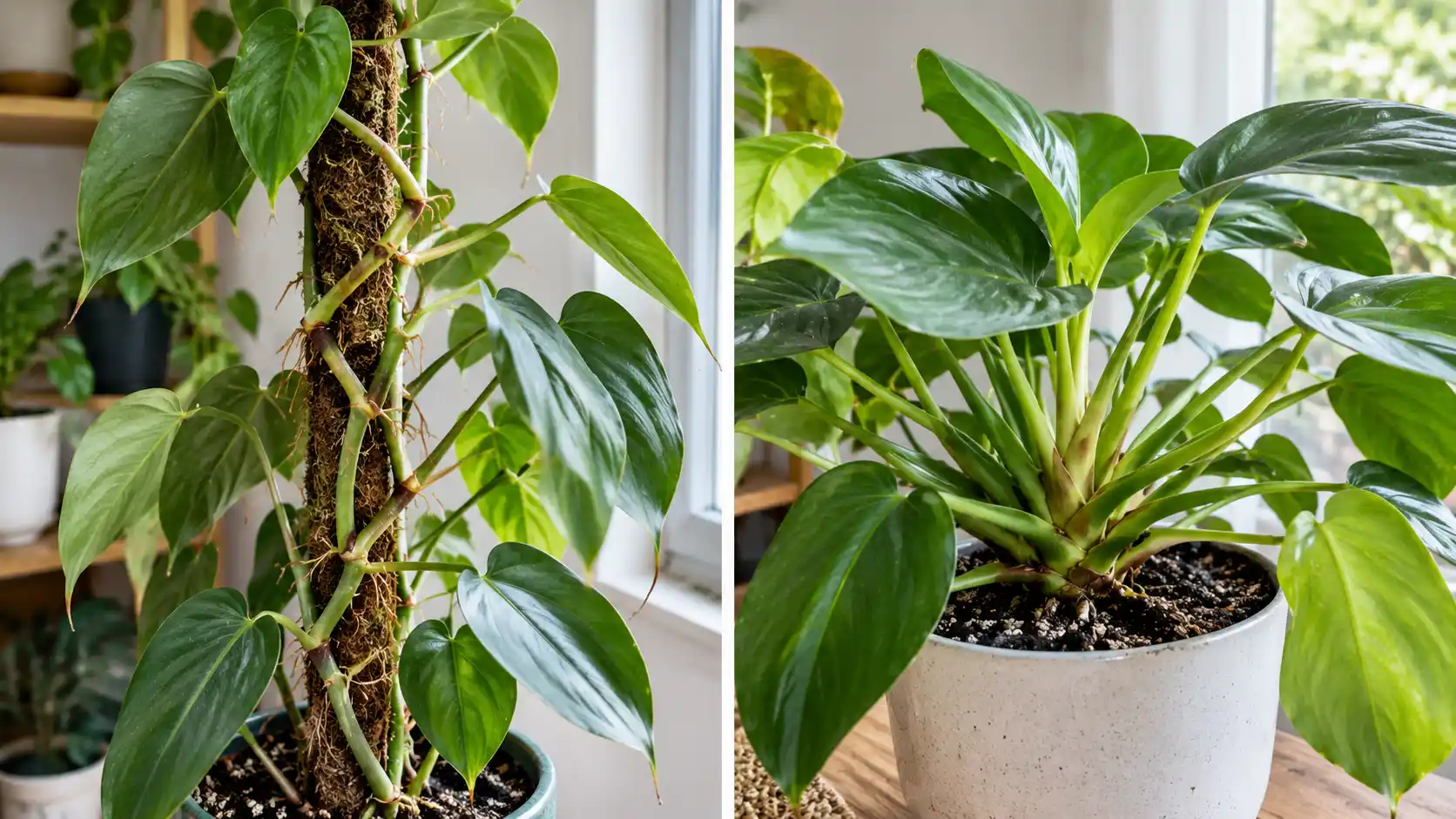
Look at the main growth point rather than the leaves alone.
A climbing philodendron usually has a distinct stem with nodes and may produce aerial roots along the vine. A self-heading type forms a thicker central crown, with petioles and leaves radiating outward rather than one long trailing stem.
The Thaumatophyllum Reclassification
There is a genuine taxonomic wrinkle behind some older care guides. In a 2018 research paper, the former Philodendron subgenus Meconostigma was proposed as the separate genus Thaumatophyllum based on molecular, morphological and cytological evidence.
However, classification databases do not all follow that treatment. Kew’s Plants of the World Online currently treats Thaumatophyllum as a synonym of Philodendron, so older and newer sources can use different names for plants historically sold as philodendrons.
That is why a label such as “Xanadu” or “Selloum” may not match the botanical name used by every care source.
The number of recognised species also changes as taxonomy is revised. The 2018 paper referred to 487 formally recognised Philodendron species at that time, while Kew’s current database lists 629 accepted species.
Comparison: Climbing vs. Self-Heading Philodendrons
| Feature | Climbing | Self-heading |
| Main growth form | Vine or climbing stem | Central crown |
| Typical structure | Nodes and aerial roots | Thick central stem/crown |
| Stress may appear as | Yellowing or drooping along older trailing foliage | Outer-leaf yellowing and drooping petioles |
| Support needs | May benefit from a pole, trellis or trailing space | Usually needs more horizontal floor/table space |
Philodendrons also contain insoluble calcium oxalates. The ASPCA lists multiple philodendron types as toxic to dogs and cats, with signs including oral irritation, drooling, vomiting and difficulty swallowing. Keep fallen, pruned and accessible foliage away from pets and young children.
Why Philodendron Leaves Turn Yellow
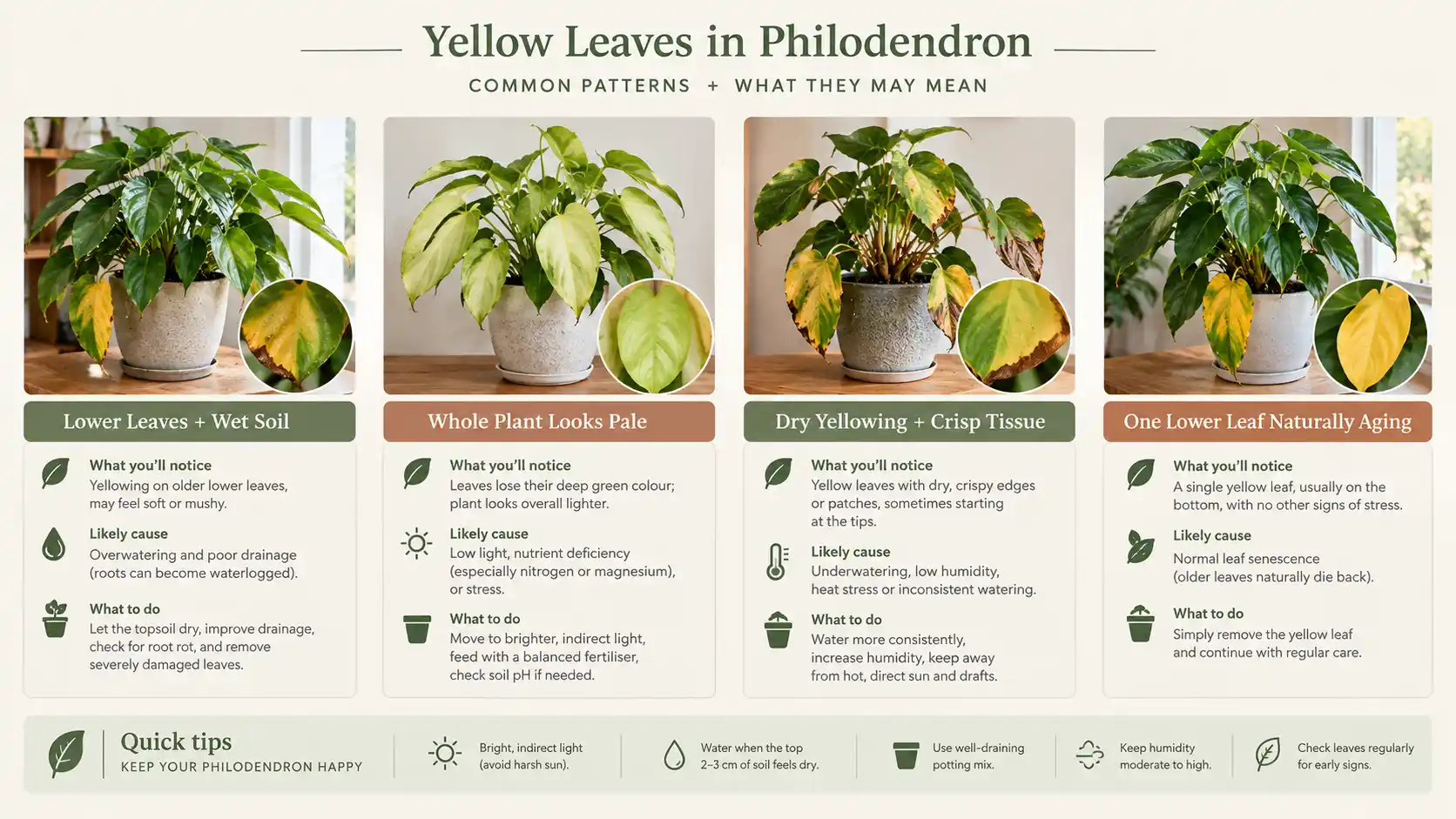
Yellowing is a symptom, not a diagnosis. Start with the root zone before assuming the plant needs fertilizer.
Overwatering and Poor Drainage
One of the most common patterns is yellowing combined with soil that remains wet for too long. Excess water reduces oxygen availability around roots and can contribute to root rot. University of Wisconsin guidance identifies persistent wet soil, yellowing and wilting despite moisture as important warning signs.
Use a pot with drainage holes and a loose, well-draining growing medium rather than a dense mix that stays saturated. For another example of this diagnostic pattern, see Pachira aquatica problems and fixes and overwatered coffee plant symptoms.
Underwatering and Low Light
Dry soil combined with limp, increasingly dry foliage points in the opposite direction: the plant may not be receiving enough available water. Low light can also slow growth and contribute to pale foliage because the plant is producing less energy.
Check the growing conditions before simply watering more. Illinois Extension recommends warm conditions, moderately moist soil and bright indirect light for philodendrons.
Nutrient Deficiency and Natural Aging
A whole plant that is unusually pale can have a nutritional or root-related problem, but one older leaf yellowing and eventually dropping can simply be part of normal leaf turnover.
A fully yellow leaf generally will not return to its previous green colour. The useful response is to correct the cause and assess the new growth rather than trying to restore the damaged tissue.
For comparison with another yellowing foliage plant, see Syngonium leaves turning yellow.
Why Philodendron Leaves Turn Brown
Brown tissue needs to be interpreted by location and texture.
Low Humidity and Dry Air
Crispy brown tips or margins can be associated with moisture loss from the foliage, especially when combined with dry soil, strong airflow or heating and air-conditioning. Humidity is a contributing factor rather than a universal explanation for every brown leaf.
Greenery Nest’s houseplant humidity chart places philodendrons within a moderate-humidity group rather than the very-high-humidity category required by some more sensitive tropical plants.
Fertilizer Burn and Mineral Buildup
Brown margins accompanied by a visible white crust on the soil surface can indicate accumulated mineral salts. Excess fertilizer can also damage roots and foliage.
Avoid repeatedly adding fertilizer in response to yellow leaves without identifying the cause first. Where salt accumulation is suspected, thorough watering that allows excess water to drain away can help leach soluble salts from the growing medium.
For another brown-leaf comparison, see Chinese Money Plant brown leaves or Umbrella Plant brown leaves.
Sunburn and Cold Drafts
Bleached or browned areas concentrated on the side exposed to strong direct light are more consistent with light injury than simple underwatering. Cold exposure can instead produce dark, damaged, water-soaked-looking tissue and sudden decline.
Do not assign a single universal temperature threshold to every philodendron: species and growing conditions differ. Move the plant away from cold drafts, sudden temperature swings and harsh direct sun, then monitor new growth.
Why Philodendron Leaves Droop
Drooping occurs when the foliage loses turgor, but the reason can be too little available water or too little functional root capacity.
Dry soil and a lightweight pot suggest dehydration. Wet soil combined with persistent drooping suggests that the roots may be damaged and unable to supply the foliage. Root rot commonly causes wilting even when soil is wet because damaged roots cannot function normally.
Other possibilities include transplant shock, heat stress, abrupt environmental changes and sap-feeding pests. Spider mites can cause stippling, yellowing, leaf drop and fine webbing, particularly under warm, dry conditions.
For a plant-specific example of the same symptom, see Rubber Plant leaves drooping.
How to Diagnose the Problem in 5 Minutes
The fastest diagnosis comes from checking the conditions that affect the entire plant rather than staring at one damaged leaf. Persistent wilting despite wet soil can be a warning sign of root rot; University of Wisconsin root-rot guidance notes that affected plants may wilt while the soil remains wet and that diseased roots are often soft and brown.
Because yellowing, browning and drooping can have several overlapping causes, the Garden Problems and Pests diagnostic guide can help you compare symptom patterns and rule out pests, watering problems, root issues, disease, and environmental stress.
Step-by-Step Checklist
- Check the soil. Feel the upper part of the mix rather than watering by calendar. About two inches is a useful practical checkpoint, but drying speed varies with pot size, mix, light and season.
- Check drainage. Confirm that water can leave the pot freely and that the container is not sitting in standing water.
- Check the roots if symptoms conflict with the soil. Healthy roots should be firm. Soft, brown, deteriorating roots are consistent with root rot.
- Check light and drafts. Look for a recent move, strong direct sun, an air-conditioner outlet, heater, cold window or other sudden environmental change.
- Inspect the undersides of leaves. Look for stippling, fine webbing, sticky residue or visible insects. Spider mites often hide beneath leaves.
Overwatered vs. Underwatered Philodendron
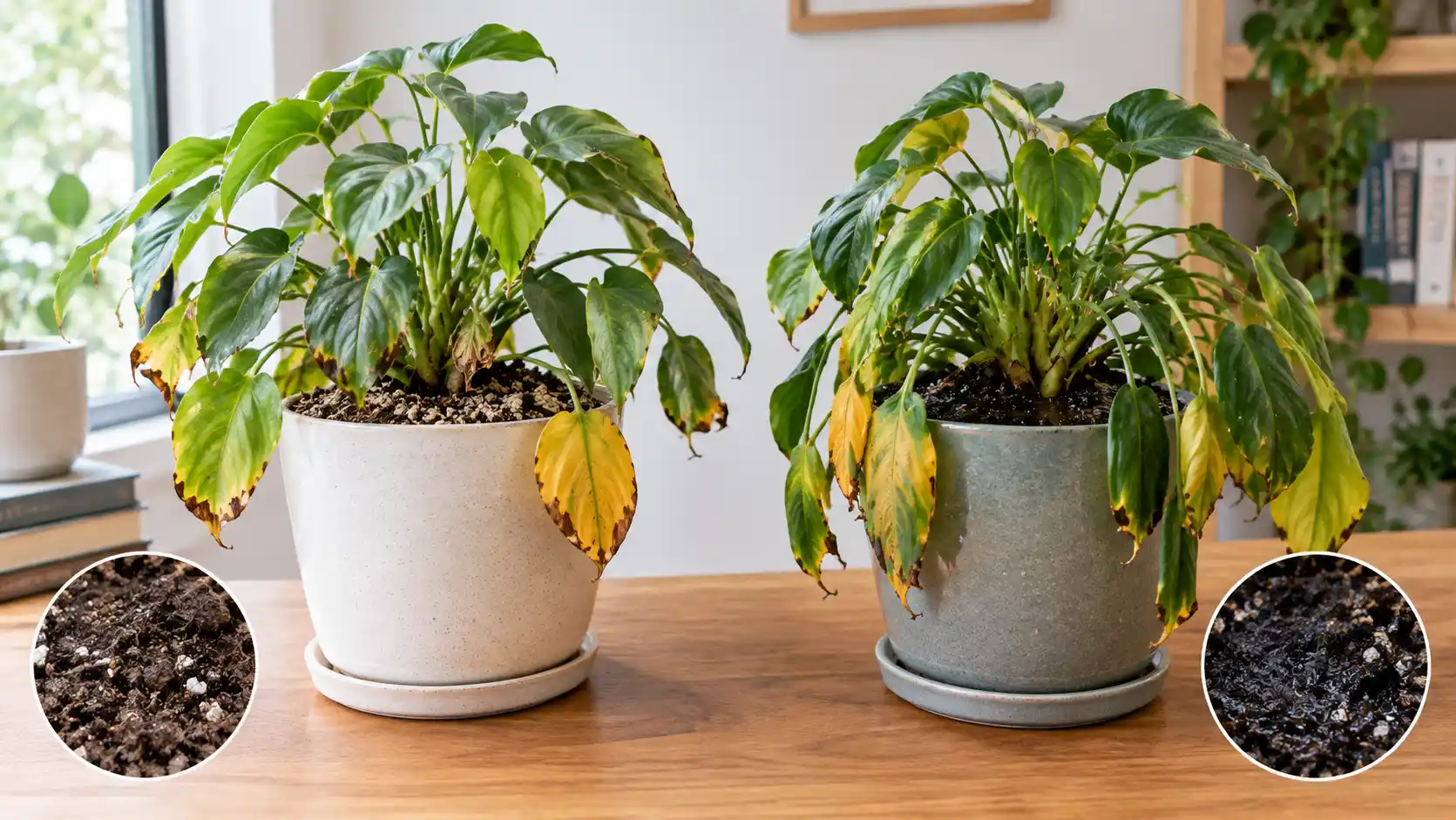
| Sign | Overwatered | Underwatered |
| Soil | Wet for too long | Dry well below the surface |
| Leaves | Soft or limp | Dry, thin or crisp |
| Yellowing | Often accompanies persistent wetness | Can develop as drought stress progresses |
| Drooping | May remain drooped despite wet soil | Often follows prolonged dryness |
| Roots | Brown, soft or deteriorating if rot is present | May be dry or shrivelled |
| Smell | Musty or unpleasant soil may occur with decay | Usually no rotting smell |
The most important distinction is the soil/root combination. Overwatered and underwatered plants can both droop, which is why adding more water without checking the soil can worsen a root problem.
How to Fix Each Problem
The fix should address the cause, not just the damaged leaf.
Fixing Overwatering and Root Rot
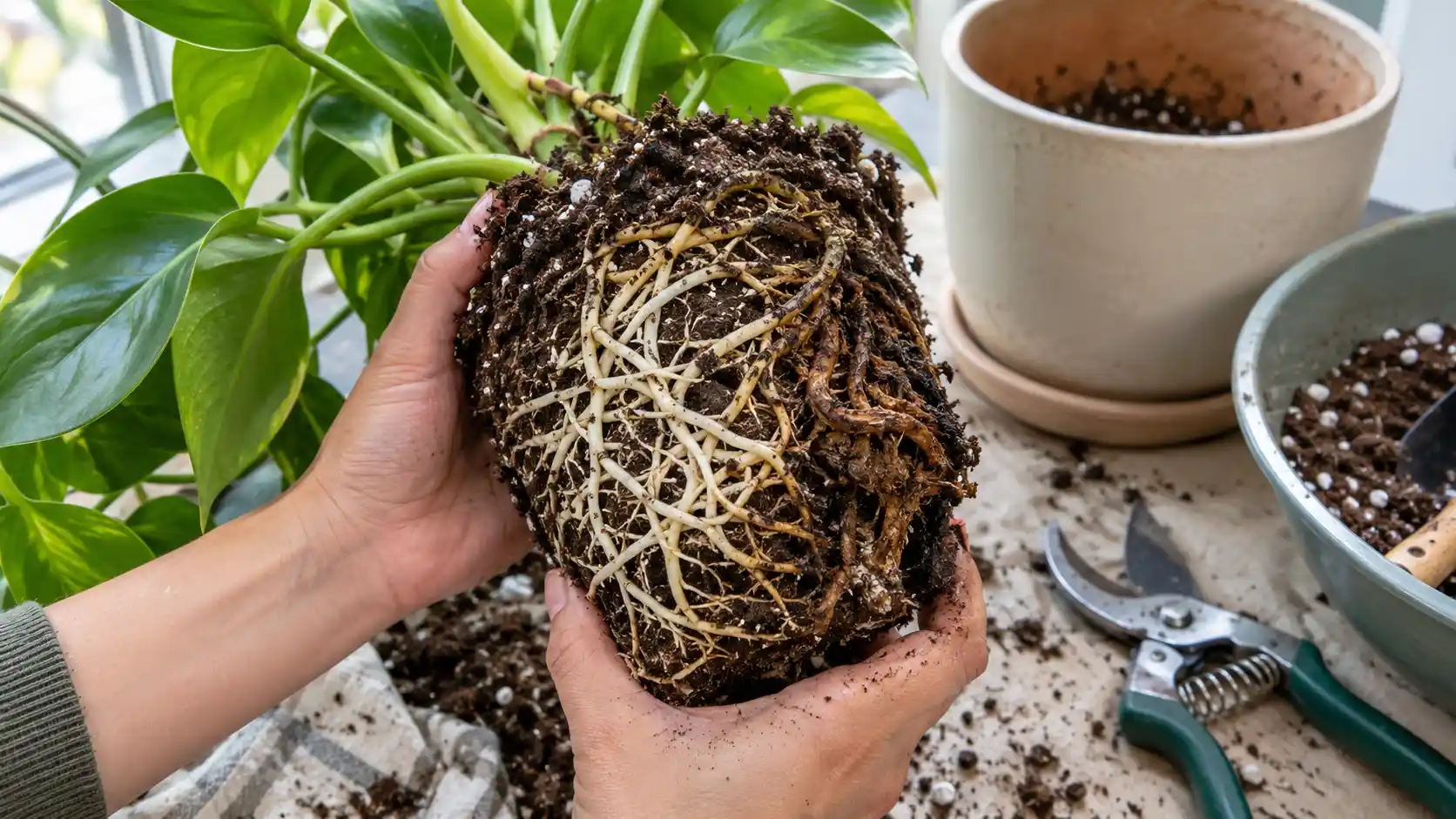
When root rot is suspected, remove the plant carefully, inspect the roots and cut away clearly rotten tissue with clean tools. Repot into fresh, well-draining mix and use a container with drainage holes.
Recovery is possible when enough functional root tissue remains, but severe root rot can be fatal. University of Wisconsin guidance stresses moisture control and good drainage as the key management principles.
Do not treat every brown root as automatically diseased without considering the species and root anatomy, and do not rely on a visual leaf symptom alone to identify a specific pathogen.
Fixing Underwatering, Dry Air and Salt Buildup
For genuinely dry plants, water thoroughly enough to rehydrate the root zone and allow excess water to drain. Then adjust the watering interval based on how quickly the pot dries rather than following a rigid weekly calendar.
For dry-air problems, reducing extreme airflow and improving the room environment may help. For suspected salt accumulation, thoroughly watering the pot so excess water drains away can help flush soluble salts.
Should You Cut Damaged Leaves?
Fully yellow or completely brown leaves can be removed because they are no longer contributing much useful green tissue. A partly green leaf is still photosynthetically active, so there is usually little reason to remove it simply because one section is damaged.
Prune with clean tools, and wear gloves if your skin is sensitive to plant sap. Keep removed foliage away from pets because philodendrons contain calcium oxalates. Philodendrons contain insoluble calcium oxalates that can irritate the mouth and gastrointestinal tract when chewed, so ASPCA’s philodendron toxicity guidance recommends treating accessible foliage as a pet-safety concern.
Preventing Problems: Care Baseline and Seasonal Changes
A prevention routine is simpler than trying to correct repeated leaf damage.
- Watering: Check soil moisture before watering rather than following a fixed schedule.
- Light: Bright, indirect light is a useful baseline for many indoor philodendrons; avoid prolonged harsh direct sun.
- Soil: Use a loose, well-draining houseplant or aroid-style mix and a container with drainage.
- Fertilizing: Feed conservatively during active growth and reduce feeding when growth naturally slows.
- Pruning: Remove dead or badly damaged foliage and manage long growth according to the plant’s growth habit.
- Climate tolerance: Keep the plant away from abrupt temperature changes, cold drafts and extreme heat.
Seasonal Problem Table
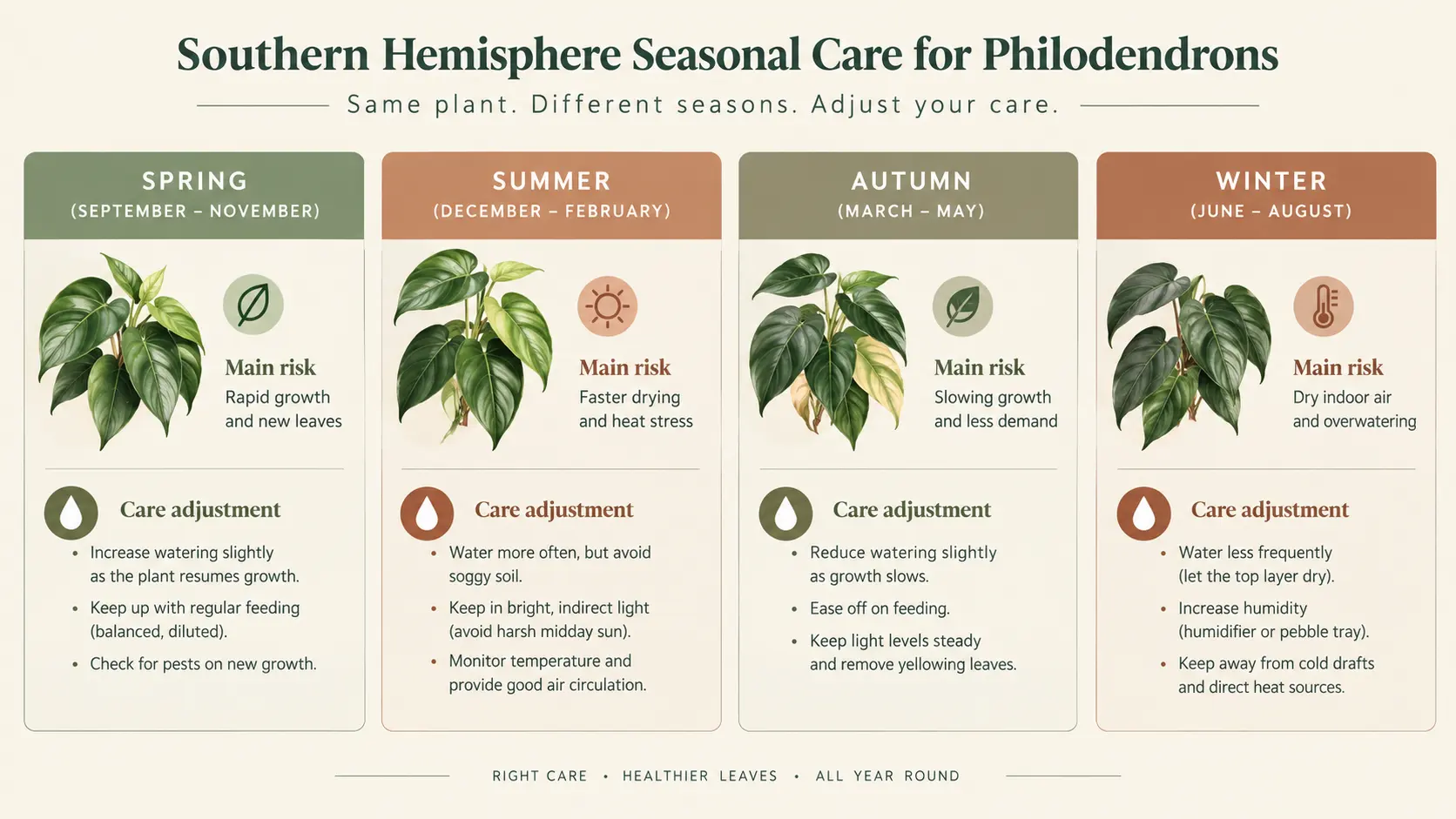
| Southern Hemisphere season | Common problem | Adjustment |
| Spring | Rapid growth exposes previous root or light limitations | Reassess light, drainage and feeding as growth increases |
| Summer | Faster drying, heat stress and pests | Check soil more often and watch plants near hot windows |
| Autumn | Slower drying and changing indoor light | Increase the interval between waterings when the mix stays wet longer |
| Winter | Overwatering from reduced growth, dry heated/air-conditioned air | Water less often when needed, reduce feeding and protect from drafts |
Winter growth slowing is not automatically a sign of decline. Indoor plant water requirements change with growth rate, pot size and environment; Wisconsin Extension specifically notes that actively growing plants need more water than plants in slow-growth periods such as winter.
Common Beginner Mistakes
- Watering every Saturday regardless of soil moisture.
- Using a pot with no drainage hole or leaving the pot standing in runoff.
- Moving the plant repeatedly after each new yellow leaf.
- Increasing fertilizer before checking roots, light and watering.
- Assuming every drooping plant needs more water.
- Treating “philodendron” as one identical plant when growth habits and environmental tolerances vary.
For species-specific care context, see the Philodendron Scandens care guide. For propagation after the plant has recovered and is growing strongly, see How to Propagate a Philodendron Birkin.
Conclusion
Philodendron yellowing, browning and drooping usually become easier to solve once the symptom is connected to the plant’s soil, roots, light and environment. Check soil first, then roots, light and pests before changing care. Correct the cause, give the plant stable conditions and then remove foliage that is fully damaged. For broader indoor-plant context, see the Indoor Green Living Hub.
FAQs
Why are my philodendron leaves turning yellow?
Common causes include overwatering, poor drainage, low light, underwatering and normal aging of older leaves. Check soil moisture and root health before adding fertilizer.
Why is my philodendron drooping even though I watered it?
Wet soil plus continued drooping can indicate damaged or rotting roots that cannot supply water normally. Inspect drainage and roots rather than watering again automatically.
Can yellow philodendron leaves turn green again?
Usually not once a leaf is fully yellow. Correct the underlying cause and judge recovery by healthy existing foliage and new growth.
What causes brown tips on philodendron leaves?
Dry conditions, inconsistent moisture, accumulated salts and excessive fertilizer can all cause brown tips. Check the soil and growing environment before choosing a remedy.
Will my philodendron recover from root rot?
Sometimes. Recovery depends on how much healthy root tissue remains and whether the plant can be moved into a better-drained, appropriately moist growing environment.
Are philodendron leaves toxic to pets?
Yes. The ASPCA lists philodendrons as toxic to cats and dogs because they contain insoluble calcium oxalates that can cause oral irritation, drooling, vomiting and difficulty swallowing.