
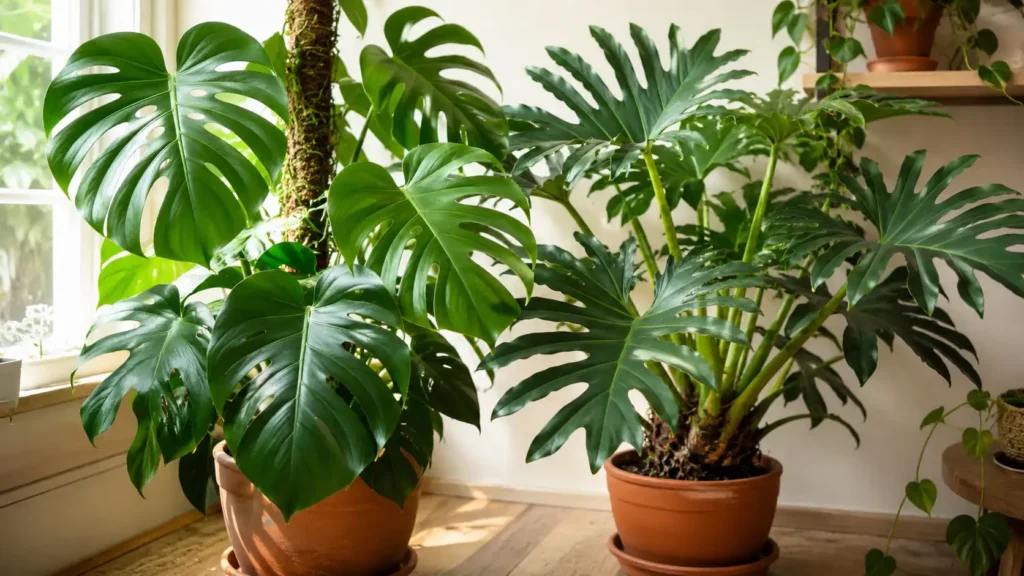
Monstera and Philodendron often get confused, but plant expert Manuela Nogueira points to a few reliable ways to tell them apart. The biggest giveaway is the leaves. A mature Monstera deliciosa develops those iconic holes and splits as it grows, while Philodendrons typically keep their leaves solid — usually heart-shaped or lobed, without any fenestration. Growth habit is another clue: Philodendrons tend to climb with thinner, more pliable stems and smaller aerial roots, whereas Monstera has a sturdier, bolder growth pattern.
One of Nogueira’s more useful tips is looking at the cataphylls — those papery sheaths that wrap around new leaves as they unfurl. Philodendrons hold onto these longer than Monstera does, which makes cataphylls a handy way to identify a young plant before it’s old enough to show (or not show) fenestration.
As for care, the two plants are close enough that you could easily mix up their needs — but they’re not identical. Philodendrons are a bit more sensitive; they don’t tolerate low light or inconsistent watering as well as Monstera, which is generally the hardier and more forgiving of the two.
Monstera and Philodendron often get confused, but plant expert Manuela Nogueira points to a few reliable ways to tell them apart. If you’re just starting to build out your plant collection, this comparison is one piece of a bigger picture — see our Indoor Green Living Hub for the full guide to plant care fundamentals, choosing plants, and propagation.
Quick Summary
- Monstera leaves develop true holes (fenestrations) as they mature; Philodendron leaves may split at the edges but rarely punch interior holes.
- The two are related but distinct genera — not variants of the same plant — despite frequent mislabeling at nurseries.
- Since they need basically the same care, mixing up the two rarely causes any real problems.
- Things get even messier with Rhaphidophora tetrasperma, the “Mini Monstera,” which isn’t actually a Monstera or a Philodendron at all despite the name.
The 5-Second ID Checklist
Before anything else, run your plant through this quick decision path:
- Leaf has interior holes, not just split edges? → Almost certainly Monstera.
- Leaf is deeply lobed or split but has no punched-through holes? → Almost certainly Philodendron (likely Split-Leaf, Philodendron bipinnatifidum).
- Leaves are small, thin, and delicately perforated on a slender, wiry vine? → Probably Rhaphidophora tetrasperma, not either genus.
Leaf Fenestrations (Holes)
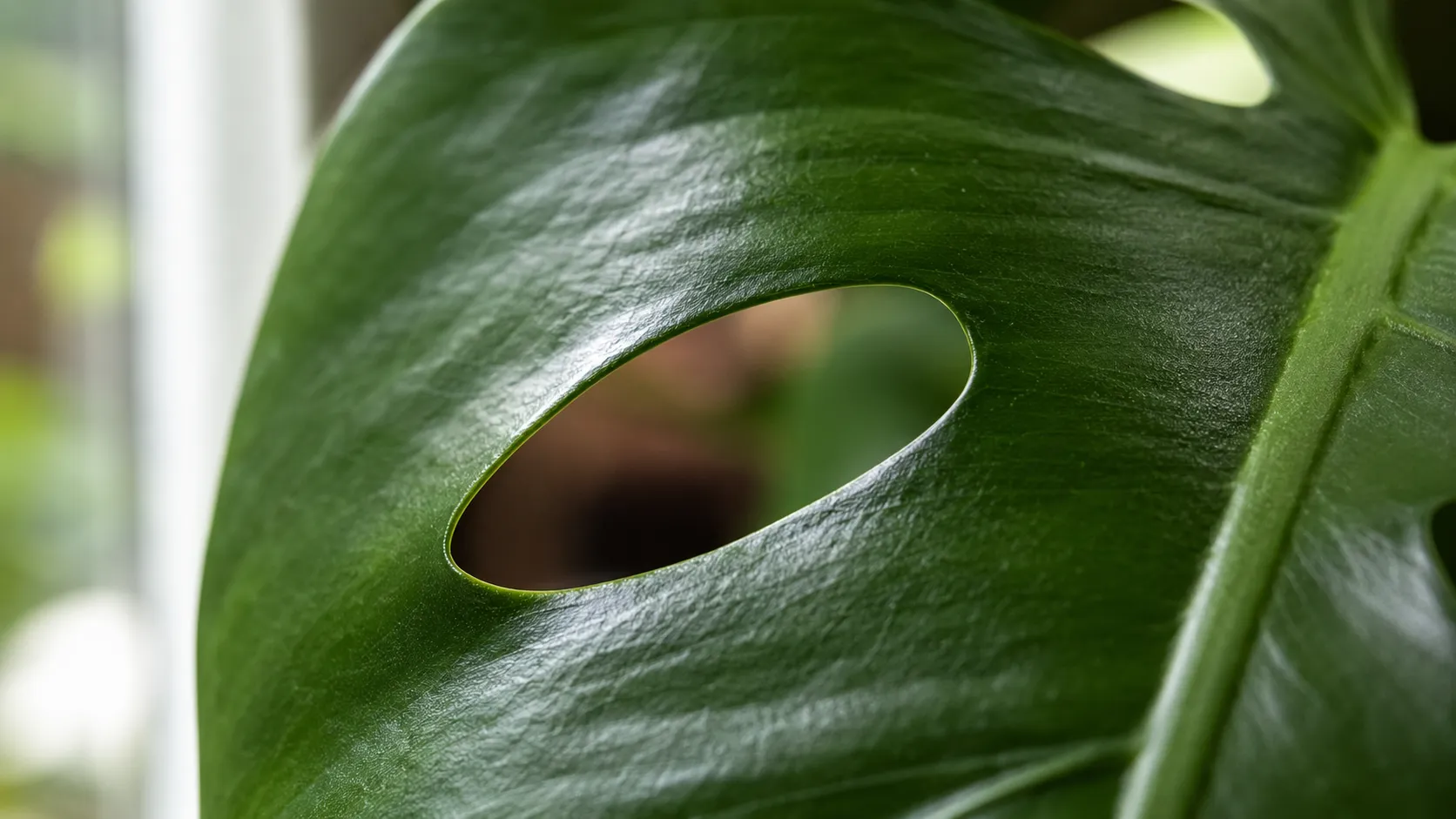
Only true Monstera species reliably develop interior holes as their leaves mature. This fenestration is thought to help the plant capture dappled light and shed rain or wind more efficiently in its native rainforest canopy. Philodendron leaves can look dramatically cut or lobed, but that cutting almost always runs in from the leaf margin — it doesn’t create the enclosed holes Monstera is known for. The genus name Monstera itself refers to the unusual, naturally-holed leaves that define this group of plants (source)
Leaf Texture and Sheen
Monstera leaves tend to be glossier and slightly waxier to the touch. Philodendron leaves, depending on species, are often more matte or softly velvety. This isn’t a perfect rule — variety matters — but paired with the hole check, it narrows things down fast.
Growth Habit
Monstera is what’s called hemi-epiphytic — in the wild, it climbs trees using aerial roots, and indoors it’ll do best if you give it a moss pole or trellis once it matures.
Philodendron is a mixed bag. Some varieties, like the trailing heartleaf philodendron, climb the same way Monstera does. Others, like Philodendron selloum (bipinnatifidum), are self-heading — they grow upright from a central rosette and don’t need anything to climb at all. If you’d rather let your Monstera trail instead of climb, our Hanging Monstera Guide covers varieties and care for that style.”
Are Monstera and Philodendron the Same Plant?
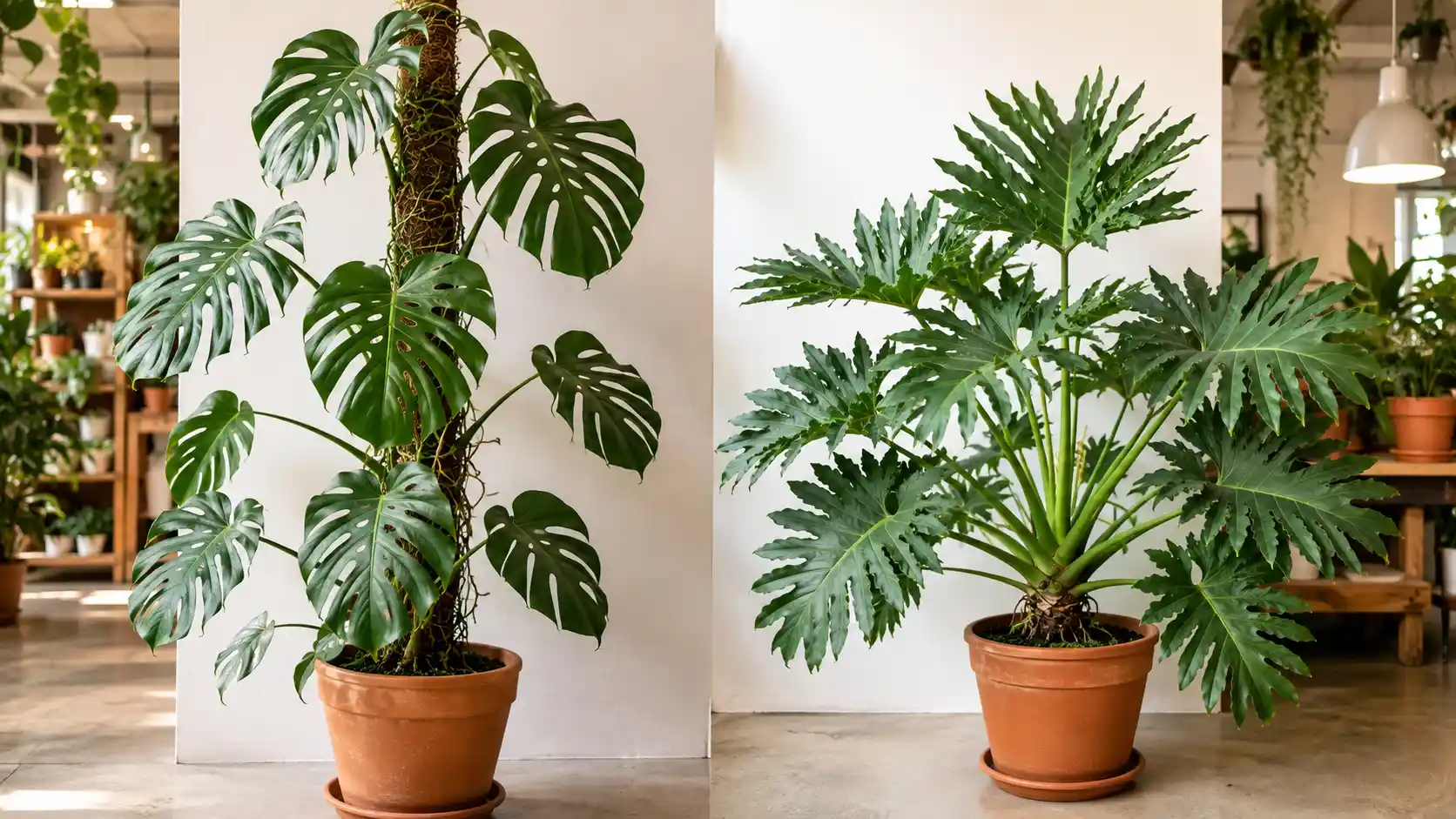
No. Both belong to the aroid family, Araceae, which makes them relatives — but Monstera and Philodendron are separate genera, roughly as distinct from each other as two different species of oak. For a deeper dive into what actually defines the Philodendron genus, see our full guide: What Is a Philodendron? Types, Care & Pothos vs. Philodendron.
Why Nurseries Mislabel Philodendron as “Monstera”
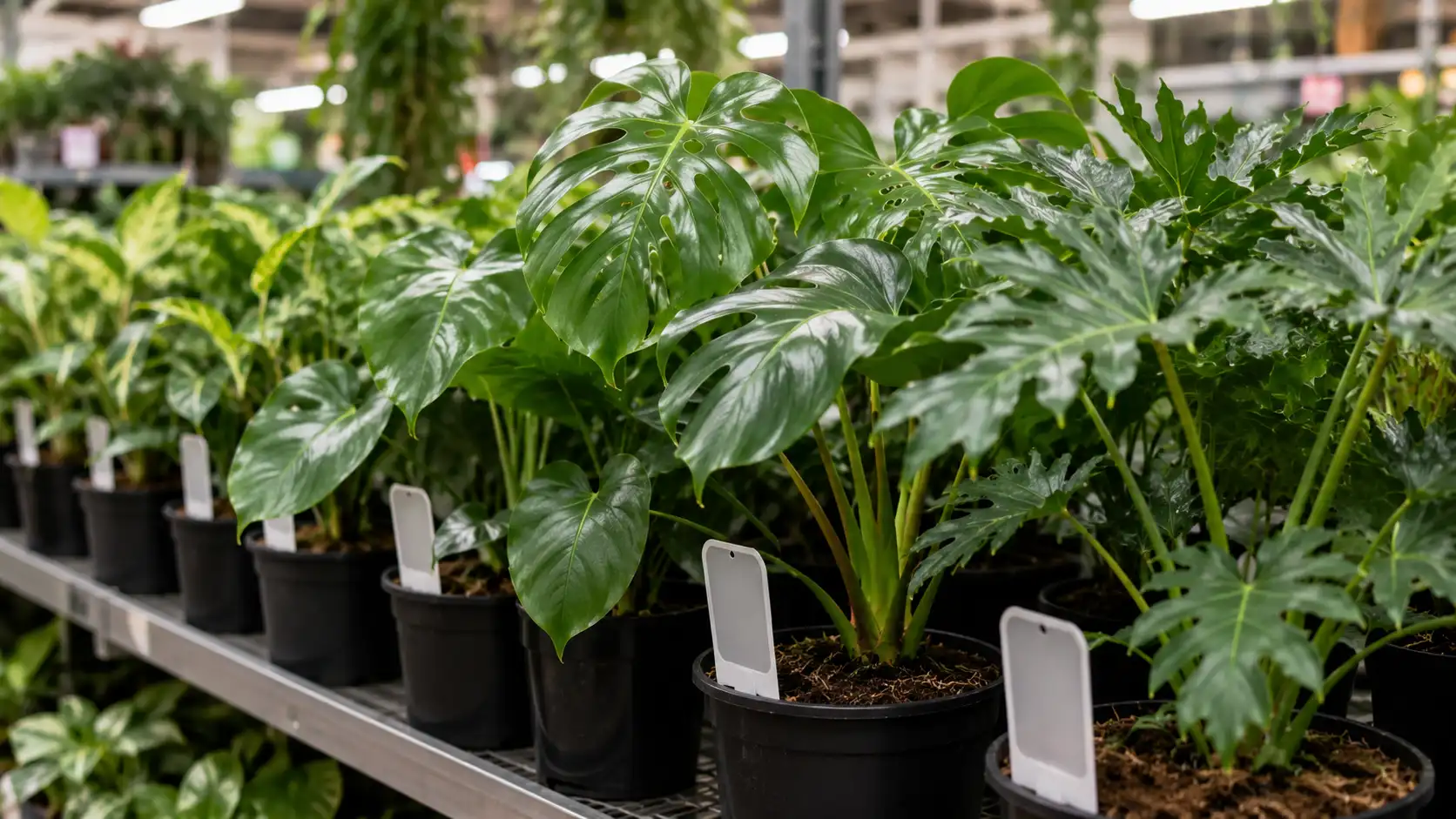
Much of the confusion is due to the language used in retail. Split-Leaf Philodendron is commonly nicknamed the “Swiss Cheese Plant” (a nickname which has been given to both genera historically due to their similar looking cut leaves). There is often a level of confusion surrounding the names given to plants, and a lot of this confusion is due to the use of a generic common name instead of a scientific name by big-box stores and by the use of plant tags.There is often a degree of confusion surrounding the names being given to plants, and much of this confusion comes from the common name being used rather than a botanical name by big box retailers, and from plant tags. If your plant turns out to be the Monstera commonly nicknamed the Swiss Cheese Plant, our Cheese Plant watering guide covers exactly how often to water it. Missouri Botanical Garden notes that Monstera deliciosa is commonly called split-leaf philodendron or Swiss cheese plant even though it isn’t a true Philodendron at all (Missouri Botanical Garden), which is exactly why the mix-up persists at retail.
The Third Impostor — Rhaphidophora tetrasperma
Just when the Monstera-vs-Philodendron question feels settled, a third plant muddies it further: Rhaphidophora tetrasperma, commonly sold as “Mini Monstera.” It isn’t a Monstera or a Philodendron at all. The giveaway is scale and structure — its leaves are noticeably smaller and thinner, with delicate perforations, growing on a slim, wiry vine that’s proportionally finer than either true Monstera or Philodendron stems. Monstera adansonii — the ‘Monkey Mask’ plant — gets swept into this confusion too; see our Monkey Mask Plant Care Guide if your leaves look more perforated than either profile above.
Care Comparison: Monstera vs Philodendron
Here’s the reassuring part: whichever one you have, the care instructions barely change. Since Monstera eventually needs real support and root space as it climbs, check our Best Pot for Monstera guide before repotting.
| Factor | Monstera | Philodendron |
| Light | Bright, indirect | Bright, indirect; more shade-tolerant |
| Water | Dry-down between waterings | Similar; slightly more drought-tolerant |
| Humidity | Prefers higher humidity | More adaptable to average home humidity |
| Mature size | Larger; needs vertical support | Variable — compact to large by species |
| Growth habit | Climbing | Climbing or upright, species-dependent |
| Propagation | Stem cutting with node + aerial root | Stem cutting, often faster to root |
| Toxicity to pets | Toxic (calcium oxalate crystals) | Toxic (calcium oxalate crystals) |
| Typical price range | Cheap cuttings to hundreds of dollars for variegated forms | Generally more affordable and widely available |
Which Is Easier for Beginners?
Philodendron can be a little bit more forgiving — many of the species are more tolerant of inconsistent watering and lesser humidity than Monstera. Monstera can be patient to produce some serious fenestrations, but will not be so forgiving when it comes to neglect, particularly in terms of humidity.
Pet Toxicity — Direct Comparison

Both genera have crystals of calcium oxalate, which are insoluble and toxic if chewed or eaten by dogs or cats. While the toxicity may be an argument for or against each plant, neither is noticeably safer than the other around pets. According to the ASPCA, Monstera deliciosa contains insoluble calcium oxalates and is listed as toxic to both dogs and cats, with symptoms including oral irritation and excessive drooling. (ASPCA source)
Common Mistakes and Problems
Leaves Turning Yellow
Why it happens: Overwatering or poor drainage, in either genus, is the most common cause.
Solution: Inspect roots; cut away damaged roots and repot in new, well-drained aroid mix if roots are mushy or dark.
Prevention: Allow to dry completely between waterings and ensure the pot has holes in the bottom.
No Fenestrations Developing (Monstera)
Why it happens: Usually insufficient light, or the plant is still too young/small to fenestrate.
How to fix it: Gradually increase indirect light exposure and give the plant time — fenestration is size- and maturity-dependent.
How to prevent it: Position new Monstera plants near a bright, indirect light source from the start rather than waiting to relocate later.
Slow or Leggy Growth
Why it happens: Low light or lack of a climbing support for vining types.
How to fix it: Add a moss pole or trellis, and move the plant to a brighter spot.
How to prevent it: Provide support early for any climbing species — Monstera or vining Philodendron — rather than after growth has already stretched out.
What Makes This Comparison Different
A few beginner mistakes are worth flagging directly:
- This does not take into account any deeply cut leaf that is actually a Monstera, nor does it consider the self-heading Philodendron species or the Rhaphidophora.
- Relies on the nursery tag without assessing it on the fenestration and texture growth habit checklist.
- The case of the “rare Monstera” being a great value, but actually a cuttings mislabelled as Monstera.
Conclusion
The aroids Monstera and Philodendron are. Not the same plant. The best way to tell Monstera from Philodendron is to look at the combination of fenestrations, leaf texture and growth habit not at a plant tag. They need close care so knowing which Monstera or which Philodendron you have is more important, than watering or lighting. If your plant does not fit either of the two profiles perfectly you may want to see if it is really the look‑alike Rhaphidophora tetrasperma. For more identification guides, care comparisons, and troubleshooting across your favorite houseplants, explore our full Plants: Benefits and Guides hub.
FAQs
Is it any surprise that a Split-Leaf Philodendron is the same as a Monstera?
No. Philodendron split-leaf (Philodendron bipinnatifidum) is a different genus, but often mislabelled retail Monstera.
Is Monstera and Philodendron poisonous for cats and dogs?
Yes. These both contain crystals of calcium oxalate and are toxic when eaten by pets.
What is Rhaphidophora tetrasperma? How is it different from both?
It is a distinct aroid species, sometimes marketed as “Mini Monstera,” with smaller and thinner leaves with perforations and a narrow climbing vine.
So, which is easier to take care of, Monstera vs. Philodendron?
The overall care is very similar, but Philodendron may be a little more tolerant of irregular watering and less humid conditions.
How is it that Monstera can cost more than Philodendron?
The price of variegated Monstera cultivars has risen considerably and common Philodendron cuttings are readily available and affordably priced.



One Response