
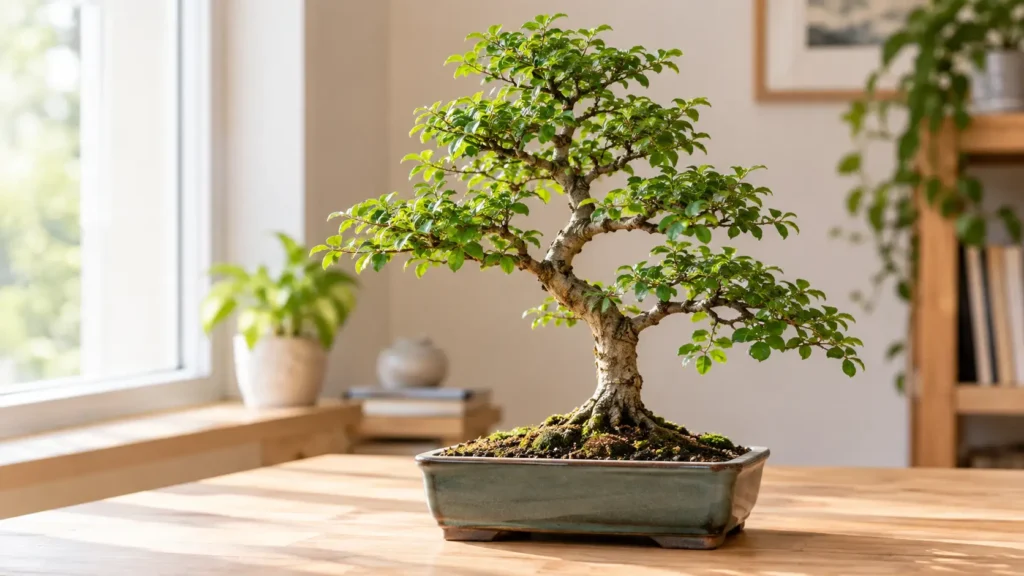
Bonsai has a reputation problem. Most people picture decades of monk-like patience before assuming they’re even allowed to touch a pair of scissors. That reputation is mostly myth. Bonsai is a growing technique — not a rare species — and a beginner who gets a few fundamentals right can have a healthy, good-looking miniature tree within a year, not a lifetime.
This guide skips the encyclopedic tour through bonsai history and styles that most beginner guides open with. Instead, it starts where you actually are: deciding whether your tree belongs indoors or outdoors, learning to check its soil the right way, and knowing what to expect week by week so you’re not guessing whether you’re doing it right.
Quick Summary
- Bonsai is a technique — container restriction, pruning, and wiring — applied to ordinary woody species, not a special miniature plant.
- The single biggest survival factor is matching your species to indoor or outdoor conditions before anything else.
- Overwatering, not underwatering, kills more beginner bonsai than anything else.
- Expect a genuinely presentable shape within the first year of consistent care — bonsai is neither instant nor a decades-long wait.
Is Bonsai a Special Tree or a Technique?
Bonsai is a cultivation method, not a plant species. Any woody-stemmed tree or shrub that tolerates pruning and root restriction can, in principle, be trained into bonsai form.
The confusion is understandable, because a well-shaped bonsai looks nothing like the plant it started as. In practice, growers pick species that respond well to small containers and don’t need years of untouched growth to develop character — which is why certain trees show up again and again in beginner recommendations while others rarely do.
You can see the same species living two completely different lives depending on how it’s grown. Pinus mugo, for example, can reach 15–20 feet as a landscape shrub, yet it’s one of the more popular outdoor bonsai choices because deliberate root and shoot management keeps it small for decades. Chinese elm shows the same pattern from the other direction: left alone, it grows into a 10–60 foot shade tree, but as a bonsai it’s considered one of the most forgiving species specifically because it tolerates the aggressive pruning that keeps it compact. The tree itself isn’t special — the training is.
The RHS confirms this directly, noting that bonsai is the art of growing dwarf trees and shrubs from seedlings or rooted cuttings, using training, pruning, and container restriction — the same core method regardless of species.
Common Misconception: “Bonsai Seeds”
Searching for “bonsai tree seeds” is a common first move, but seeds from any bonsai-suitable species grow into completely ordinary seedlings. There’s no genetic shortcut — a seed-grown tree still needs years of shaping before it looks like a bonsai, whether the seed came from a bonsai specimen or a full-sized tree of the same species.
This lines up with expert guidance too: bonsai practitioners generally prefer starting from partially grown material rather than seed, since Bonsai Cultivation and Care notes that growth from seeds is rarely used to obtain source material because it takes far longer to reach a usable trunk.
Indoor or Outdoor? The 30-Second Decision Path
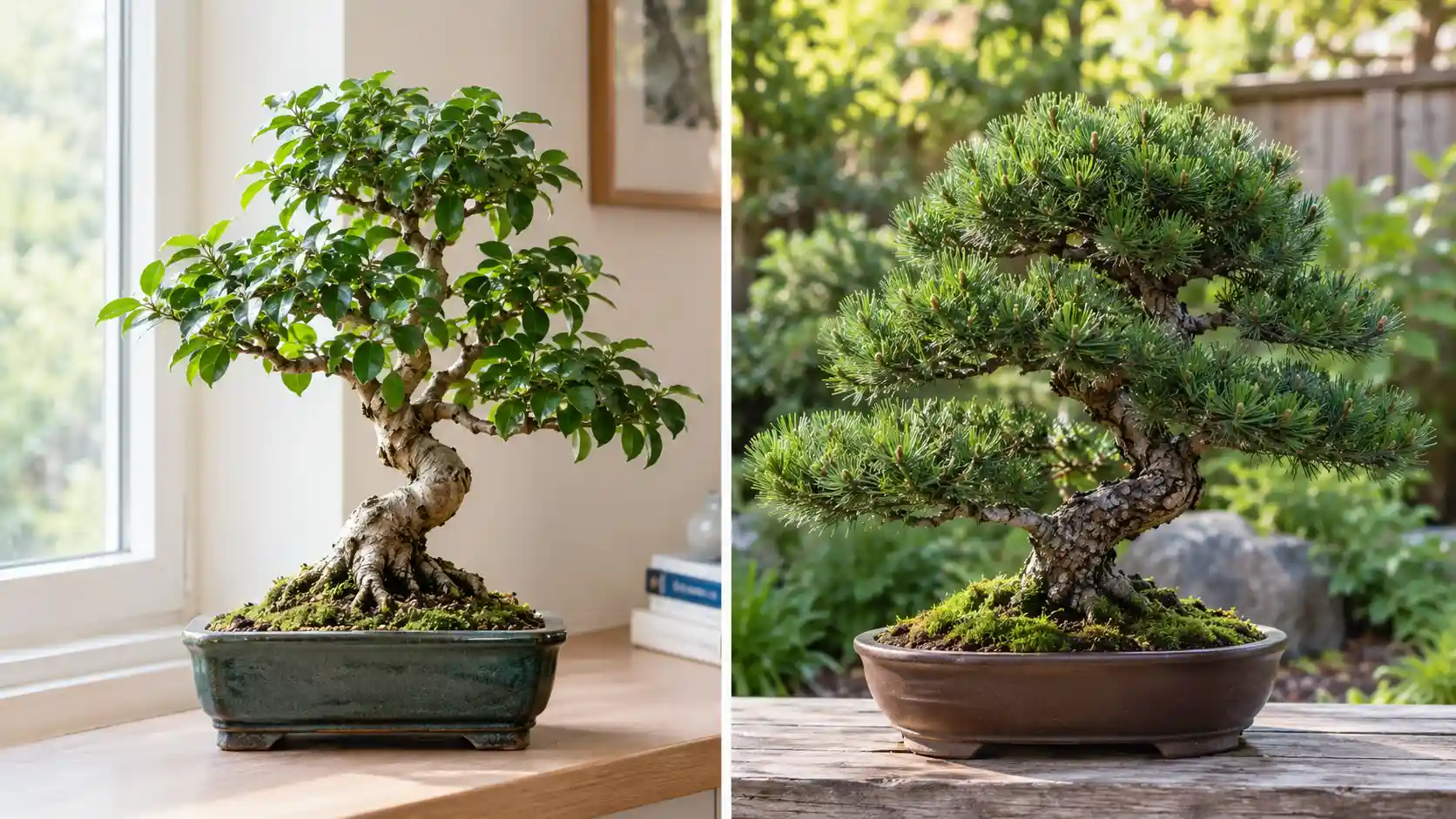
This single decision causes more beginner deaths than any watering mistake, because it happens before care even starts. Most novice bonsai losses come from treating an outdoor species like a permanent houseplant — not because the owner forgot to water, but because a tree that needs a real winter never gets one.
| Your situation | Path | Example species |
| No garden or patio, home only | Indoor, warm-climate species | Ficus, jade/succulent types |
| Outdoor space available, cold winters | Outdoor, needs seasonal dormancy | Chinese elm, mugo pine |
| Received one as a gift, species unknown | Identify the species first, then match it to the paths above | — |
Temperate species like Chinese elm and mugo pine rely on a real winter cold period to stay healthy long-term; keeping them permanently warm indoors doesn’t kill them immediately, but it steadily weakens them over months. Tropical and succulent species like ficus and jade don’t have that requirement, which is why they’re the default recommendation for anyone growing purely indoors. Our Ficus Ginseng Bonsai Care guide and Pinus Mugo Bonsai guide walk through each path in full.
Best Bonsai Trees for Beginners
Indoor-Friendly Species
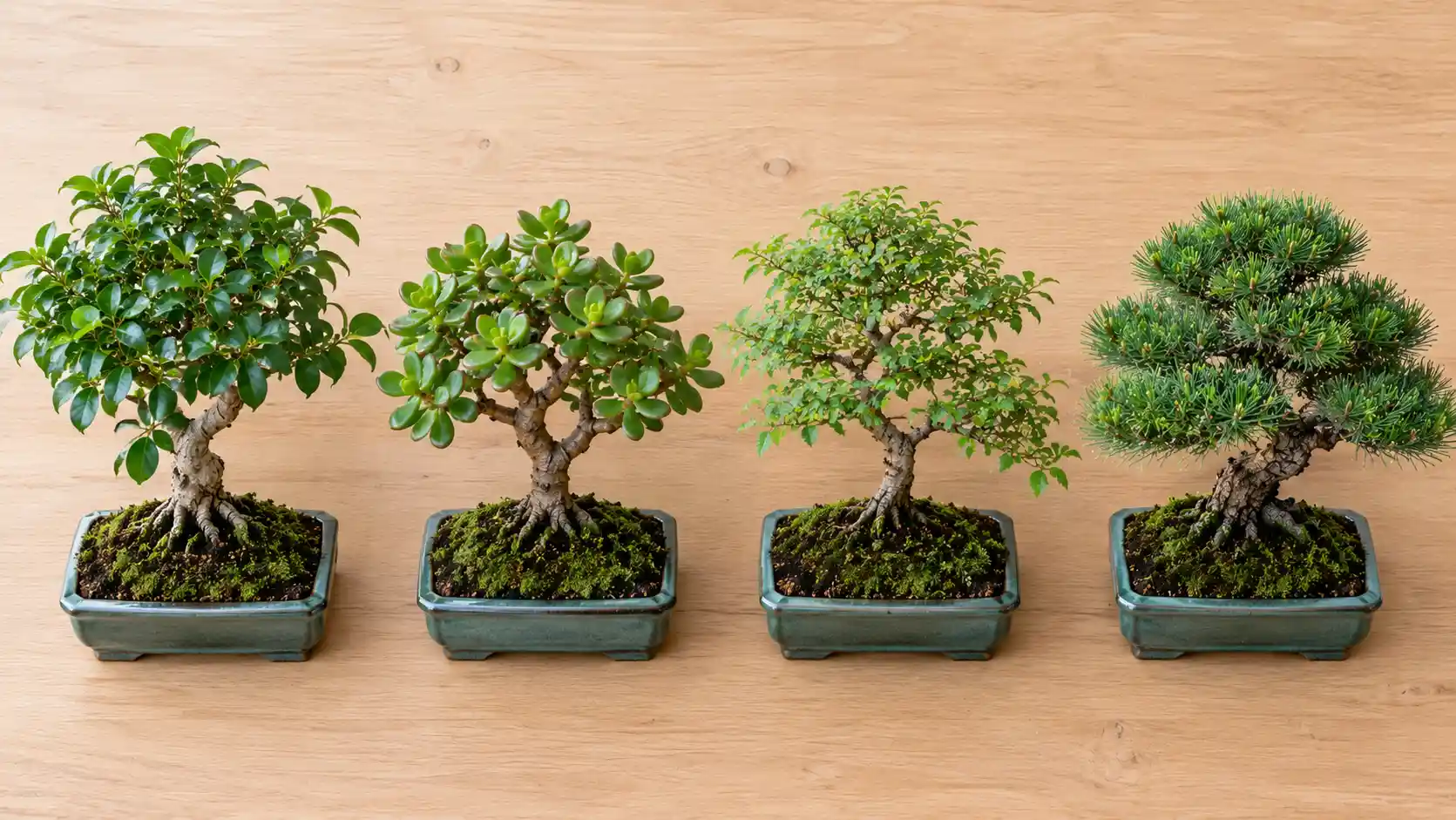
Ficus and jade-family succulents are the two most commonly recommended indoor starters, and for similar reasons: both tolerate warm, dry indoor air and forgive the occasional missed watering better than most houseplants. Our Ripple Jade Bonsai Care guide covers a succulent variety that’s especially drought-tolerant, which makes it a low-risk choice if you tend to underwater rather than overwater.
Outdoor-Friendly Species
Chinese elm is widely considered the single most forgiving outdoor bonsai species because it backbuds readily after pruning and tolerates a wide range of watering mistakes. Mugo pine is a step up in difficulty — it’s genuinely cold-hardy and suits colder climates, but it’s less forgiving of overwatering and shouldn’t be pruned using the same techniques as other pine species. See the full Chinese Elm Bonsai Care Guide and Pinus Mugo Bonsai Guide for species-specific detail.
The Missouri Botanical Garden is a useful independent reference here too, since it separately lists species like Pinus mugo among plants well suited to outdoor bonsai training.
How to Actually Check If Your Bonsai Needs Water
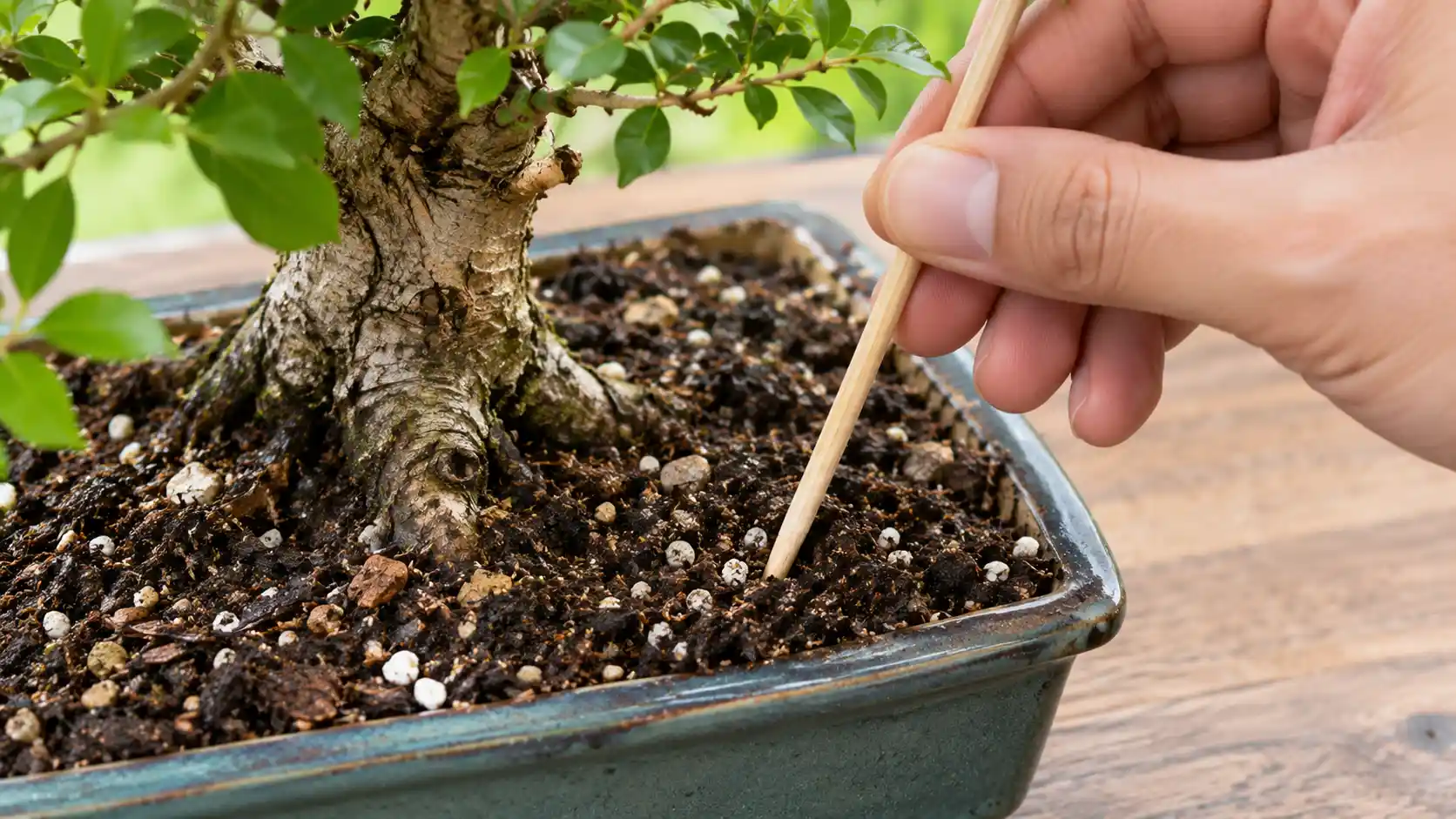
Skip the fixed schedule. Instead, push a finger or a wooden skewer about an inch into the soil. If that layer is dry, water thoroughly until it runs from the drainage holes; if it’s still damp, wait.
This matters more for bonsai than for ordinary houseplants because bonsai pots are shallow. A small soil volume dries out faster on the surface but also saturates faster at the roots, so “water when needed” without a real check is exactly how beginners overwater. The specific dryness threshold does vary by species — succulent bonsai like ripple jade should dry out almost completely between waterings, while Chinese elm prefers watering as soon as the top layer starts to dry rather than waiting for full dryness.
Overwatering signs: yellowing or soft leaves, a musty soil smell, persistently wet soil. Underwatering signs: wilting, crispy leaf edges, dry compacted soil.
What to Expect: A Realistic Timeline
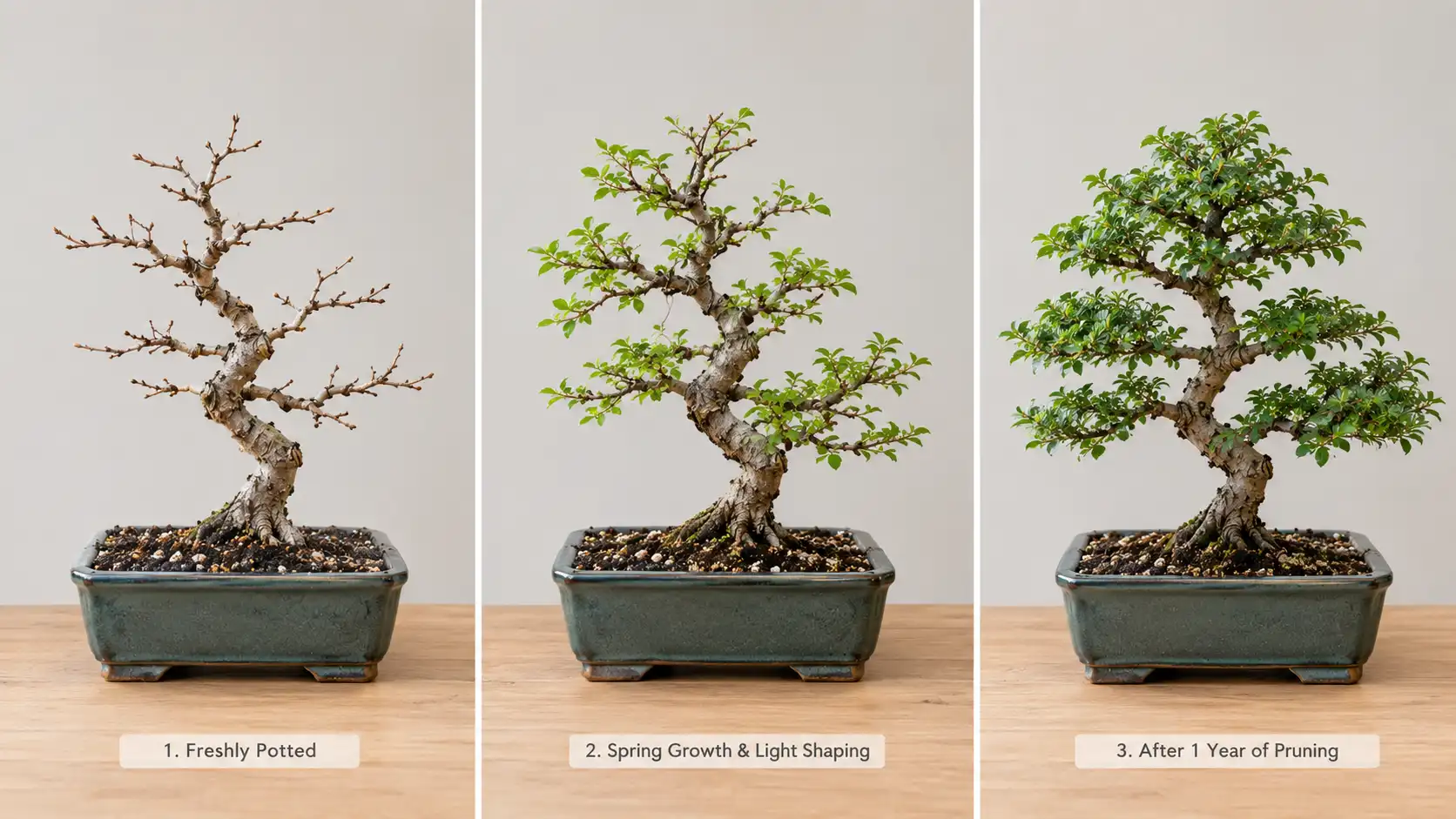
| Stage | What to do | What success looks like |
| Week 1 | Place it correctly (indoor/outdoor per the decision path), check moisture daily, don’t prune or repot | Leaves or needles stay put; no wilting |
| Month 1 | Settle into a watering rhythm using the moisture check; light maintenance pruning only | New growth appears; no yellowing |
| Year 1 | First structural pruning in the correct season for your species; first light wiring if desired | A noticeably cleaner, more intentional silhouette |
This resets expectations in both directions. A bonsai won’t look “finished” after a weekend, but it also doesn’t take a decade to look deliberately shaped — most of that first-year transformation comes from consistent basic care, not advanced technique.
Do I Need Special Tools and Soil?
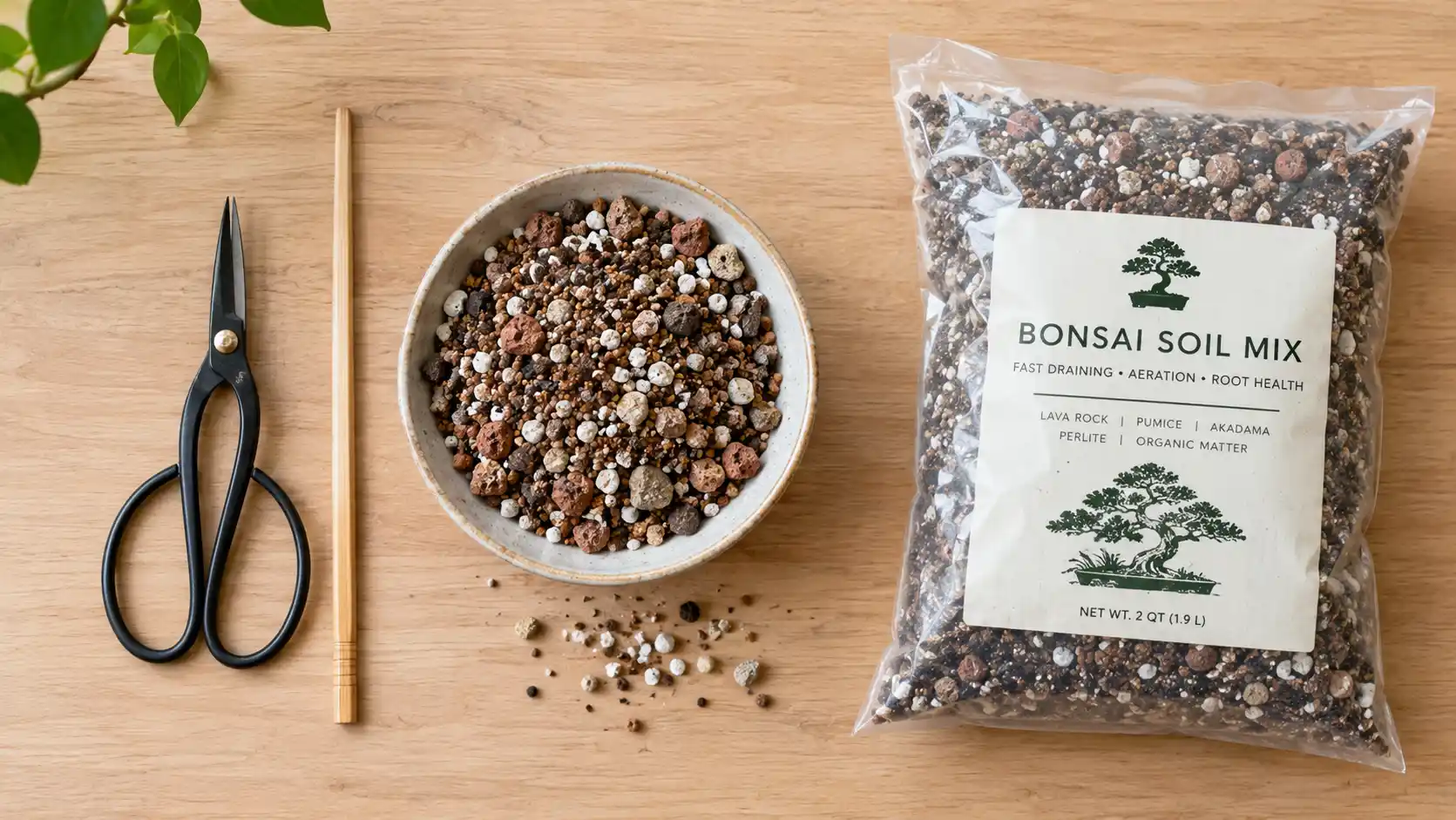
You don’t need an elaborate kit to start, but two things matter more than anything else you’ll buy: drainage and blade sharpness.
- Soil: Regular potting soil holds too much moisture for a shallow bonsai pot. A fast-draining mix — typically built from materials like perlite, pumice, or coarse sand — lets excess water escape before it can sit around the roots.
- Tools: A basic pair of bonsai shears covers most beginner maintenance pruning. Our Bonsai Pruning Guide breaks down the difference between light maintenance trimming and heavier structural cuts, along with how much foliage is safe to remove in a single session — worth reading before your first real cut.
The Most Common First-Month Killers
- Overwatering indoors. Beginners often equate frequent watering with good care. Fix it with the moisture-check method above, and prevent it with free-draining soil and a pot that actually drains.
- Wrong light for the species. An outdoor species placed on a dim windowsill will decline slowly. Match light to species using the decision path before you settle on a spot.
- Repotting or heavy pruning too soon. The urge to “finish” the shape immediately is strong, but stacking a hard prune or repot onto a tree that hasn’t established itself yet is one of the fastest ways to set it back. Wait for the Year 1 window described above.
Common Beginner Mistakes Beyond Watering
A few patterns show up across almost every species: applying one universal rule to every tree (a cut a ficus shrugs off can seriously stress a pine), pruning by the calendar instead of by the tree’s actual growth stage, fertilizing a tree that’s already stressed, and ignoring seasonal dormancy needs for temperate species kept indoors.
Beyond Care: What Bonsai Symbolizes
Care aside, part of bonsai’s appeal is what it represents — balance, patience, and harmony are common themes across the traditions associated with it. If that’s part of what drew you to the hobby, our guide on Are Bonsai Trees Good Luck? Meaning & Feng Shui Guide covers the symbolism in more depth.
Conclusion
Starting a bonsai comes down to the same short sequence every time: figure out whether your species belongs indoors or outdoors, check moisture properly instead of watering on autopilot, follow a realistic timeline instead of rushing the shape, and watch for the handful of mistakes that take down most beginner trees in month one. None of that requires years of prior study — it requires a houseplant’s worth of attention with a few extra rules. Get that sequence right, and a genuinely presentable bonsai is a one-year project, not a lifelong apprenticeship.
FAQs
Is bonsai a special species of tree?
No. Bonsai is a technique — container restriction, pruning, and wiring — applied to ordinary woody species like elm, pine, ficus, or jade.
How often should I water a bonsai tree?
There’s no fixed schedule. Check the soil an inch down and water only when that layer is dry; frequency depends on species, pot size, and season.
Can a bonsai tree live indoors year-round?
Tropical and succulent species like ficus and jade can. Temperate species like Chinese elm and mugo pine need an outdoor dormancy period and will gradually weaken if kept permanently warm.
How long does it take for a bonsai to look like a bonsai?
With consistent basic care, most beginners see a noticeably cleaner, more intentional shape within the first year. True refinement continues over several years of seasonal pruning.
What’s the most common reason beginner bonsai die?
Overwatering, closely followed by placing an outdoor species indoors without accounting for its need for winter dormancy.
Do I need special soil for a bonsai?
Yes. Regular potting soil retains too much moisture in a shallow bonsai pot. A fast-draining mix with materials like perlite or pumice is standard across most beginner species.