
Introduction
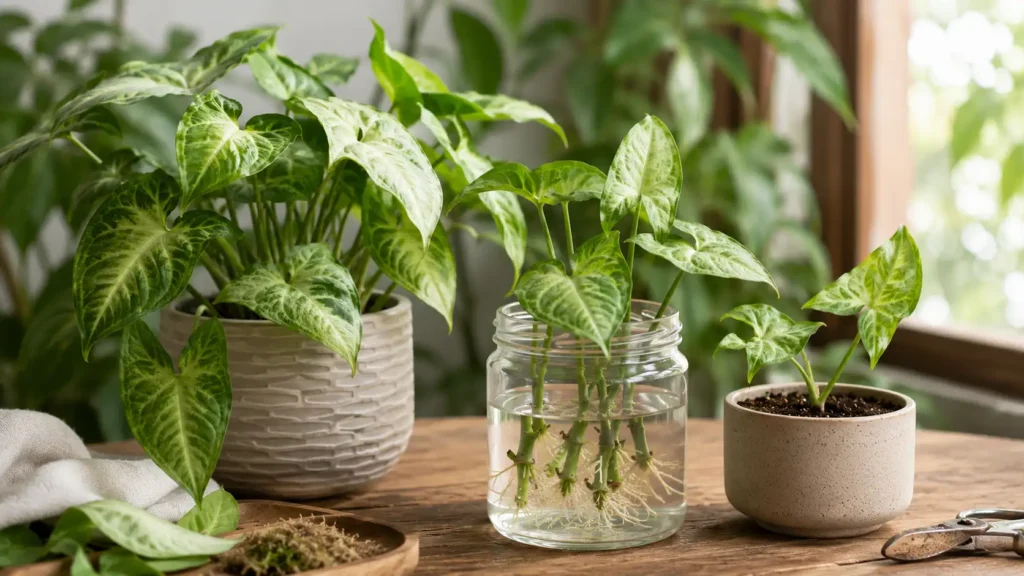
Learning how to propagate Syngonium is one of the easiest ways to grow more arrowhead plants from an existing plant. Syngonium propagation is the process of creating new plants from stem cuttings, usually by placing a node in water or soil until roots develop. This beginner-friendly technique works because Syngonium podophyllum, also called the arrowhead plant or nephthytis, produces stems with nodes and aerial roots that can grow into new plants. This guide explains propagation methods, where to cut, how to identify nodes, rooting timelines, and common problems that affect successful growth. Syngonium propagation is one of the easiest ways to expand your indoor plant collection, especially when combined with proper care practices covered in broader plant care and growing guides.
Quick Summary
- Water propagation is the easiest Syngonium propagation method for beginners because roots are easy to monitor.
- Always cut near a healthy node because Syngonium nodes contain the growth points needed for new roots.
- Most Syngonium cuttings develop roots within 2–6 weeks under suitable conditions.
- Syngonium propagation is beginner-friendly due to its fast-rooting stems and adaptable growth habit.
What Is Syngonium Propagation?
Syngonium propagation is the process of creating a new Syngonium plant from a section of a parent plant, usually a stem cutting containing at least one node. The cutting develops roots and eventually grows into an independent plant. Syngonium belongs to the Araceae family and includes several tropical species commonly grown as ornamental houseplants. The genus classification and botanical background are described in more detail on Wikipedia’s Syngonium plant genus page.
The most common species grown indoors is Syngonium podophyllum, a tropical aroid commonly known as:
- Arrowhead plant
- Arrowhead vine
- Nephthytis
- White butterfly plant (for certain cultivars)
Syngonium belongs to the Araceae family, which also includes other popular houseplants such as Philodendron, Monstera, and Anthurium. Like many aroids, Syngonium has stems with nodes that contain the structures needed for new root and leaf development.
Growers propagate Syngonium for several reasons:
- To create new plants from a mature specimen
- To make a fuller, bushier plant
- To preserve attractive leaf patterns in certain varieties
- To replace older leggy growth with fresh cuttings
- To share plants with other growers
Propagation can be done through water or directly in soil. Both methods are effective when the cutting includes a healthy node.
Is Syngonium Easy to Propagate?
Yes, Syngonium is considered one of the easiest houseplants to propagate because its stems naturally produce nodes and aerial roots that can develop into new root systems.
The main reasons Syngonium propagation is beginner-friendly include:
- Nodes are easy to identify along the stem.
- Cuttings root successfully in water or moist soil.
- The plant tolerates minor mistakes better than many tropical plants.
- Root development is usually visible within a few weeks.
A healthy Syngonium cutting with a node can often produce roots without advanced equipment. Providing warmth, humidity, and indirect light increases success rates.
Where Are the Nodes on a Syngonium?
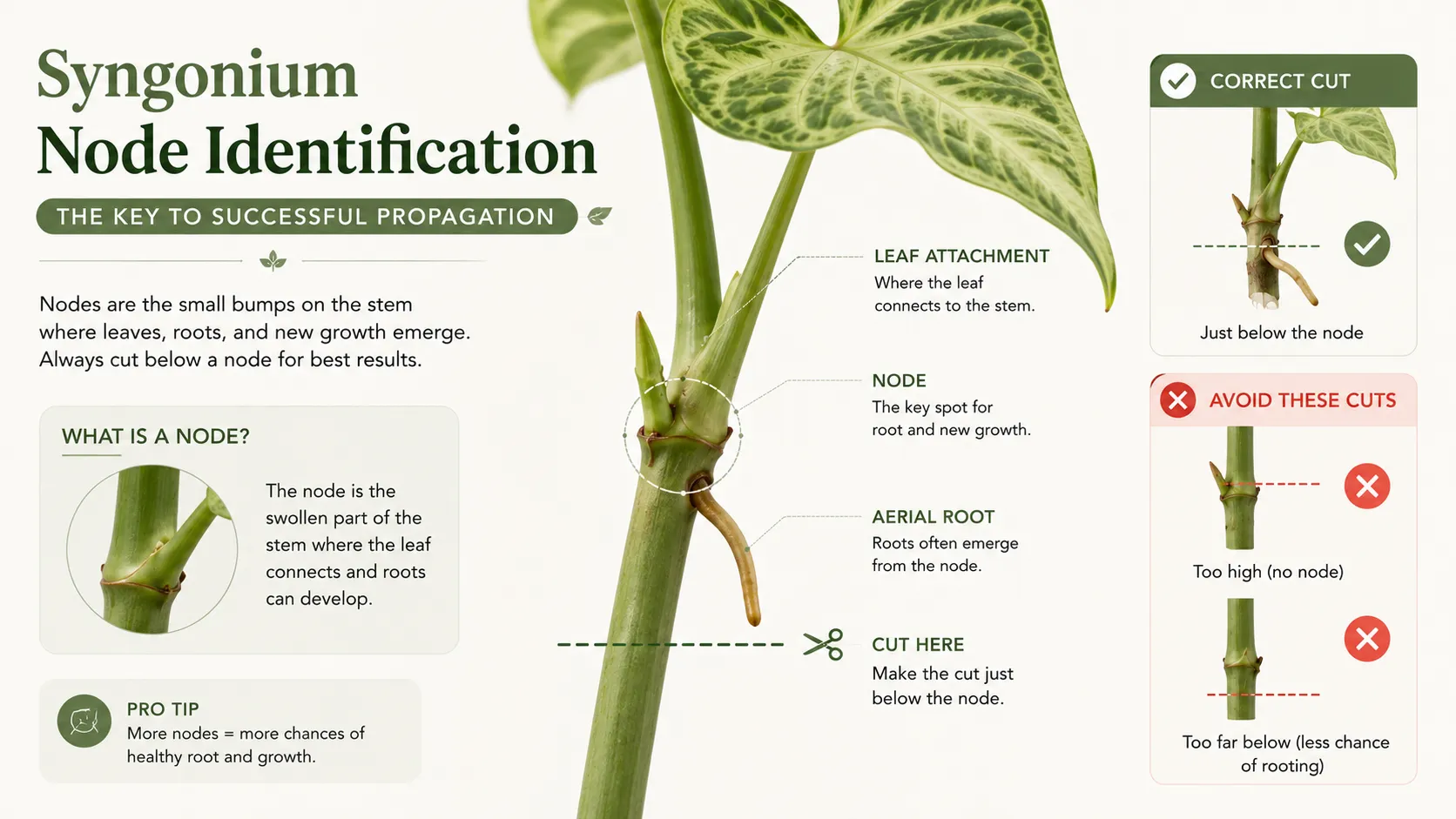
Syngonium nodes are small sections on the stem where leaves, aerial roots, and new growth points emerge. They are usually located at the junction between the leaf stem (petiole) and the main vine.
A Syngonium node may appear as:
- A slightly thicker section of stem
- A small bump or ring around the stem
- A point where an aerial root begins growing
- The area directly below a leaf attachment point
Nodes are important because they contain dormant growth tissue that allows the cutting to produce roots. Understanding nodes is also essential when propagating other aroids, including Monstera, where node placement determines propagation success. A stem section with leaves but no node usually cannot create a complete new plant.
When preparing a cutting, growers should look for:
- A healthy green stem
- At least one visible node
- No signs of rot or disease
- A strong leaf attached above the node
The presence of a node is the most important factor in successful Syngonium propagation.
Can You Propagate Syngonium Without a Node?
Syngonium propagation without a node is generally not successful because roots and new growth develop from node tissue. A leaf-only cutting may stay green for a short period but usually cannot create a new plant.
Unlike some plants that can grow from leaf cuttings, Syngonium requires a stem section containing a node.
A successful cutting should include:
- One or more nodes
- At least one healthy leaf
- A section of mature stem
If a cutting accidentally contains only a leaf and petiole, it may remain alive temporarily but will not reliably produce roots or new shoots.
Where to Cut Syngonium for Propagation
To propagate Syngonium successfully, cut the stem just below a healthy node. The node should remain attached to the cutting because it contains the cells needed for root formation.
The ideal cutting process includes:
- Selecting a healthy vine with active growth
- Identifying a node below a leaf
- Making a clean cut below the node
- Placing the node into water or soil
Tools needed:
- Clean pruning shears or scissors
- Disinfectant or rubbing alcohol for tools
- Clean container for water propagation
- Fresh potting mix for soil propagation
Recommended cutting size:
- Include 1–3 leaves per cutting
- Include at least one node
- Use approximately 3–6 inches of stem when possible
- Avoid very old, woody sections of stem
For the cleanest cut:
- Sterilize cutting tools before use.
- Choose a healthy section of stem.
- Cut about 0.5–1 inch below the node.
- Remove extra leaves that would sit underwater or below soil level.
- Begin propagation immediately after cutting.
Knowing where to cut Syngonium for propagation prevents failed attempts because the node is the active growth point.
How to Propagate Syngonium in Water
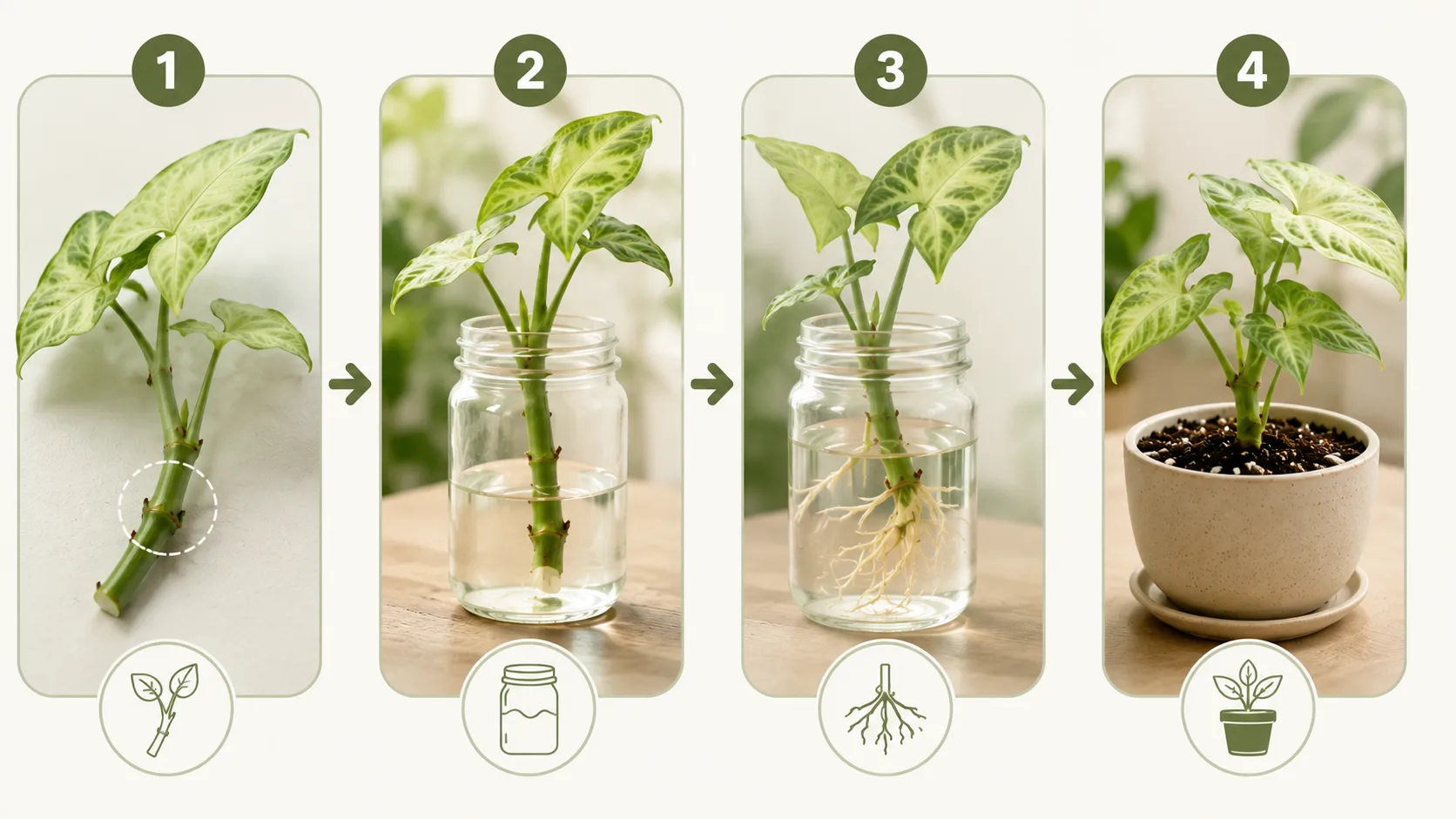
Water propagation is the most popular method for beginners because it allows growers to observe root development. Many growers also keep Syngonium growing in water long term, making water-based care an important part of understanding this adaptable plant. A Syngonium cutting placed in water can develop roots before being transferred into soil.
The basic process is:
- Select a healthy stem cutting with a node.
- Cut below the node using clean scissors.
- Remove lower leaves that would sit underwater.
- Place the node into a container of clean water.
- Keep the cutting in bright, indirect light.
- Replace the water regularly.
- Move the cutting into soil once roots are established.
For successful Syngonium water propagation, only the node should remain submerged. Keeping leaves underwater increases the chance of rot.
Ideal water propagation conditions:
| Condition | Recommendation |
| Light | Bright indirect light |
| Temperature | 65–80°F (18–27°C) |
| Water changes | Every 5–7 days |
| Root transfer time | Usually after roots reach several inches |
Water propagation is useful because it provides visual confirmation that the cutting is developing properly.
Will Syngonium Root in Water?
Yes, Syngonium roots easily in water when the cutting contains a healthy node. Most cuttings begin showing small root growth within 2–4 weeks, although complete root development may take longer depending on temperature, light, and plant health.
Signs of successful rooting include:
- Small white roots emerging from the node
- Longer root growth over time
- New leaf development after transplanting
Once roots are strong enough, the cutting can be moved into soil. Transitioning gradually helps reduce transplant stress.
Do Syngoniums Like Tap Water?
Syngonium can tolerate tap water in many homes, but water quality can affect root health. Some areas have higher levels of chlorine, fluoride, or mineral content that may cause stress over time.
Better options include:
- Filtered water
- Dechlorinated tap water
- Water that has rested before use
If using tap water:
- Allow chlorine-treated water to sit before adding cuttings.
- Monitor roots for discoloration or softness.
- Change water regularly to prevent bacterial growth.
The basic water propagation steps are:
- Cut a stem below a node.
- Submerge the node in clean water.
- Change water weekly.
- Transplant after healthy roots develop.
How to Propagate Syngonium in Soil
Soil propagation involves placing the cutting directly into a suitable growing medium instead of rooting it in water first. This method allows the plant to establish roots in its final environment and can reduce transplant adjustment later.
Steps for soil propagation:
- Take a cutting with at least one node.
- Prepare a lightweight, well-draining potting mix.
- Insert the node into moist soil.
- Keep humidity moderately high.
- Place the cutting in bright indirect light.
- Maintain consistent moisture without waterlogging.
A suitable soil mix may include:
- Indoor potting soil
- Perlite for drainage
- Coco coir or peat moss for moisture retention
- Orchid bark for airflow
Soil propagation works best when the growing medium stays slightly moist but never saturated. Excess water can cause the cutting to rot before roots form.
Is It Faster to Propagate in Water or Soil?
Water propagation usually appears faster because root growth is visible, while soil propagation develops roots hidden underground. However, both methods can produce healthy plants when conditions are suitable.
| Method | Speed | Difficulty | Transplant Shock Risk | Best For |
| Water Propagation | Faster visible progress | Easy | Moderate after moving to soil | Beginners who want to monitor roots |
| Soil Propagation | Similar or slightly slower to observe | Moderate | Lower because roots form directly in soil | Growers who want fewer transitions |
Water is often preferred by beginners, while experienced growers may choose soil propagation for a smoother long-term setup.
What Helps Cuttings Root Faster?
Syngonium cuttings root faster when they receive the right combination of warmth, moisture, humidity, and indirect light. While propagation is naturally easy, improving the environment helps reduce rooting delays and prevents cutting failure.
Factors that encourage faster root development include:
- Warm temperatures: Syngonium roots best in temperatures around 65–80°F (18–27°C). Cold conditions slow cellular activity and delay root formation.
- Bright indirect light: Adequate light supports energy production without causing stress from direct sun exposure.
- High humidity: Tropical plants such as Syngonium develop roots more reliably in moderately humid environments.
- Healthy nodes: Fresh, active nodes root faster than damaged or dried sections.
- Rooting hormone: A rooting hormone can encourage faster root formation, although Syngonium usually roots successfully without it.
Common mistakes that slow rooting include:
- Using a cutting without a node
- Keeping the cutting in low light
- Allowing water to become stagnant
- Overwatering soil cuttings
- Propagating weak or unhealthy stems
How to Propagate Syngonium Indoors
Syngonium propagation indoors is successful because the plant naturally adapts well to household environments. Indoor growers can control important factors such as temperature, light, and humidity to create conditions similar to its tropical origin.
For indoor propagation, provide:
- Light: Place cuttings near an east-facing or north-facing window with bright indirect light.
- Temperature: Maintain stable indoor temperatures between 65–80°F (18–27°C).
- Humidity: Moderate to high humidity supports faster root development.
- Air circulation: Gentle airflow helps prevent fungal problems.
Indoor propagation tips:
- Avoid placing new cuttings near heating vents or air conditioners.
- Do not expose fresh cuttings to harsh direct sunlight.
- Check water or soil moisture regularly.
- Rotate the cutting occasionally for balanced growth after rooting.
Syngonium is naturally a climbing or trailing aroid, so indoor plants may become longer and more vine-like over time. Regular pruning and propagation help maintain a fuller appearance.
Propagating Specific Syngonium Varieties
Most Syngonium varieties can be propagated using the same stem-cutting method because they share the same basic growth structure. However, certain cultivars require extra attention because of differences in variegation, growth speed, and stability.
Commonly propagated Syngonium types include:
- Syngonium podophyllum: The standard arrowhead plant species and one of the easiest types to propagate.
- Syngonium Albo: A highly valued variegated cultivar requiring careful cutting selection.
- Syngonium Fantasy: Known for decorative leaf patterns and moderate growth.
- Syngonium Trileaf Wonder: Recognized for its unique leaf shape and growth habit.
Propagation success depends more on cutting quality and node health than the specific variety.
How to Propagate Syngonium Albo
Syngonium Albo can be propagated using stem cuttings containing at least one healthy node. The main challenge with this variety is maintaining desirable variegation after propagation.
When propagating Syngonium Albo:
- Choose stems with balanced green and white coloration.
- Avoid cuttings with excessive white tissue because they contain less chlorophyll.
- Select nodes from healthy growth points.
- Provide bright indirect light to support stable development.
Highly white variegated sections may grow slowly because they produce less energy through photosynthesis. A cutting with more balanced green and white tissue generally has better growth potential.
What Is the Most Sought-After Syngonium?
The most sought-after Syngonium varieties are usually rare variegated cultivars because of their unusual leaf patterns and collector appeal. Varieties such as Syngonium Albo are especially popular due to their white and green coloration.
Collectors often value Syngonium varieties based on:
- Leaf pattern uniqueness
- Variegation stability
- Availability
- Growth characteristics
Although rare varieties may attract more attention, common Syngonium types remain excellent choices for beginners because they propagate easily and grow reliably.
Common Syngonium Varieties for Propagation
| Variety | Leaf Pattern | Propagation Difficulty | Growth Speed |
| Syngonium podophyllum | Green arrow-shaped leaves | Easy | Fast |
| Syngonium Albo | White and green variegation | Moderate | Moderate |
| Syngonium Fantasy | Speckled or patterned leaves | Moderate | Moderate |
| Syngonium Trileaf Wonder | Distinctive three-lobed foliage | Easy to Moderate | Moderate |
Common Problems When Propagating Syngonium
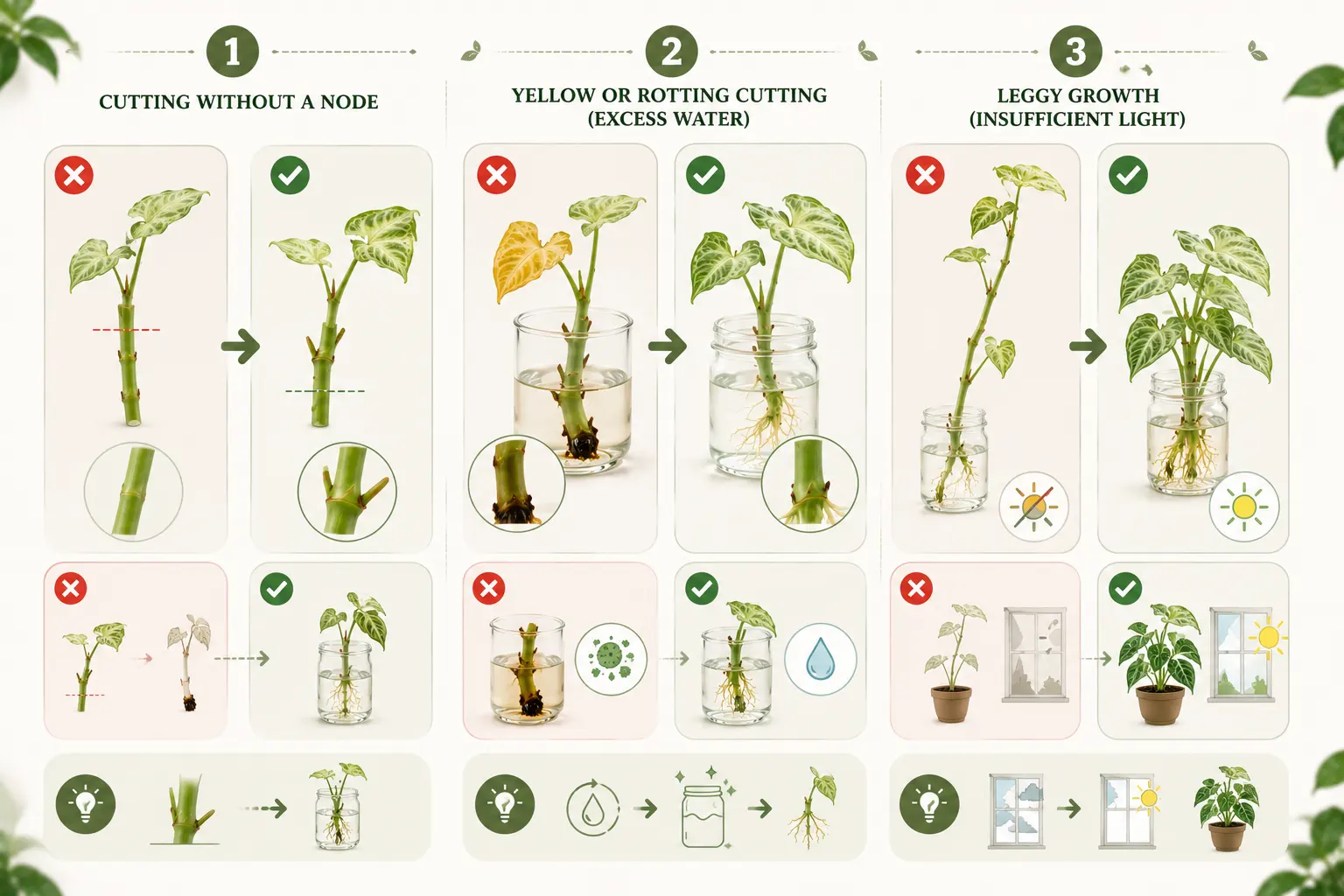
Propagation problems usually occur because of incorrect cutting preparation, unsuitable environmental conditions, or poor aftercare. Similar stress signs, such as yellow leaves, can also appear after propagation when watering, light, or root conditions are not balanced. Learn more about Syngonium leaves turning yellow and how to fix them. Identifying the cause early helps prevent failed cuttings.
Leggy or Long-Leaved Syngonium
Leggy Syngonium growth usually happens because the plant is not receiving enough light or has not been pruned regularly. When light levels are low, the plant stretches toward available light and produces longer spaces between leaves.
Common causes:
- Insufficient indirect light
- Lack of pruning
- Long periods without trimming
How to fix it:
- Move the plant to brighter indirect light.
- Cut back long stems.
- Use healthy cuttings for propagation.
- Pinch growing tips to encourage branching.
How to prevent legginess:
- Provide consistent light.
- Rotate the plant regularly.
- Prune actively growing vines.
Cuttings Failing to Root
Syngonium cuttings usually fail to root because the cutting lacks a node or because growing conditions are unsuitable.
Common causes:
- No node included in the cutting
- Poor water quality
- Low temperatures
- Insufficient light
- Rot caused by excess moisture
Solutions:
- Use a stem cutting with a visible node.
- Replace old or contaminated water.
- Move cuttings into a warmer, brighter location.
- Remove damaged sections before restarting propagation.
Prevention:
- Always check node placement before cutting.
- Use clean tools.
- Avoid keeping soil overly wet.
Slow Growth After Propagation
Slow growth after propagation is often caused by normal adjustment stress or unsuitable growing conditions. Newly rooted cuttings need time to establish a stronger root system.
Common causes:
- Root shock after transplanting
- Low light
- Poor nutrition
- Incorrect watering
How to improve growth:
- Keep soil consistently but lightly moist.
- Provide bright indirect light.
- Avoid fertilizing immediately after transplanting.
- Allow roots time to adapt.
Once established, Syngonium usually resumes active growth during warmer seasons.
How to Make Syngonium Bushy
To make Syngonium bushy, growers should regularly prune growing tips and encourage branching. Since Syngonium naturally grows as a vine, trimming helps create a fuller and more compact shape.
Methods to encourage bushiness:
- Pinch the tips of growing vines.
- Remove excessively long stems.
- Propagate cuttings and replant them into the same pot.
- Maintain good lighting conditions.
Adding rooted cuttings back into the original container is a common technique for creating a fuller-looking plant.
How to Prune Syngonium
Pruning Syngonium involves removing unwanted growth while encouraging new branches. The best place to prune is just above a healthy node because new growth can emerge from nearby growth points.
Pruning steps:
- Identify a long or weak stem.
- Cut above a node using clean scissors.
- Use the removed section as a propagation cutting.
- Monitor new growth from remaining stems.
Regular pruning improves plant shape and provides additional material for propagation.
Post-Propagation Care Essentials
After propagation, Syngonium cuttings need stable conditions to transition into actively growing plants. Many beginner problems happen after roots form because new plants are exposed to unsuitable soil, light, or watering routines.
Important post-propagation care includes:
- Provide bright indirect light.
- Water when the top layer of soil begins drying.
- Avoid oversized pots.
- Increase humidity if indoor air is very dry.
- Allow roots time to establish before heavy fertilizing.
Common beginner mistakes:
- Overwatering newly rooted plants
- Using pots that are too large
- Placing plants in direct sunlight
- Forgetting that successful propagation requires a node
- Moving cuttings too frequently
Do Syngonium Like Small Pots?
Yes, Syngonium generally performs well in smaller pots because a compact root environment helps maintain balanced moisture levels. A pot that is too large can hold excess water and increase the risk of root problems.
When selecting a pot:
- Choose a container only slightly larger than the root system.
- Ensure drainage holes are available.
- Increase pot size gradually as roots expand.
Does Syngonium Like to Be Root Bound?
Syngonium tolerates being slightly root bound but does not require severe root restriction. A mildly compact root system can support healthy growth, but extremely crowded roots may limit water absorption and nutrient availability.
Signs a Syngonium needs repotting:
- Roots growing through drainage holes
- Soil drying unusually quickly
- Slow growth despite proper care
Do Syngoniums Need a Moss Pole?
No, Syngoniums do not need a moss pole for successful propagation or basic growth. However, a moss pole or climbing support can benefit mature plants because Syngonium naturally climbs in tropical environments.
A moss pole can:
- Support climbing growth
- Encourage larger leaves
- Provide a more natural growth structure
For small propagated plants, support is optional rather than necessary.
Is It Illegal to Propagate Certain Plants?
Some plant cultivars are protected by plant patents or intellectual property rights, which may restrict commercial propagation or selling of propagated plants. These restrictions generally apply to patented cultivars rather than common home propagation for personal use.
Rare Syngonium or Philodendron cultivars may have specific protections depending on their origin and registration status.
Important considerations:
- Check cultivar restrictions before selling propagated plants.
- Personal plant care practices may differ from commercial propagation rules.
- Laws vary by location.
This information is general guidance and not legal advice.
Syngonium vs. Similar Aroids
Syngonium propagation is similar to other aroid propagation methods because many aroids rely on nodes for root development. Similar propagation techniques are also used for other popular tropical houseplants, such as prayer plants, although their growth structures differ. However, different genera vary in rooting speed, care requirements, and variegation behavior.
Comparing Syngonium with related plants helps clarify why propagation methods are not always identical.
Syngonium (Arrowhead Plant) vs. Philodendron Pink Princess Propagation
| Plant | Propagation Method | Rooting Time | Care Difficulty | Variegation Stability |
| Syngonium (Arrowhead Plant) | Stem cutting with node in water or soil | Around 2–6 weeks | Easy | Moderate to high depending on variety |
| Philodendron Pink Princess | Stem cutting with node in water, moss, or soil | Around 3–8 weeks | Moderate | Variable depending on genetics |
Syngonium and Philodendron belong to the same plant family, Araceae, and share similar climbing growth habits. However, each species has different care requirements and growth characteristics.More information about another popular climbing aroid can be found in this Philodendron Scandens care guide.
Syngonium, including varieties such as nephthytis and white butterfly plant types, is generally easier for beginners because it roots quickly and tolerates a wider range of conditions. Philodendron Pink Princess propagation requires more attention because variegation patterns can vary between new growth.
Conclusion
Syngonium propagation is a simple and reliable way to create new arrowhead plants from healthy stem cuttings. The most important step is choosing a cutting with a visible node because nodes contain the growth points required for root development. Both water and soil propagation methods work well, with water being the easiest option for beginners who want to monitor root growth. To successfully propagate Syngonium, start with a clean cut near a node, provide bright indirect light, maintain proper moisture, and allow the plant time to establish. A healthy cutting can become a thriving new Syngonium plant with basic care.
FAQs
Is Syngonium easy to propagate?
Yes, Syngonium is easy to propagate because its stems contain nodes that produce roots quickly. Beginners can successfully grow new plants using water or soil propagation methods.
Will Syngonium root in water?
Yes, Syngonium roots well in water when the cutting contains a healthy node. Root development usually begins within 2–4 weeks under suitable conditions.
Can you propagate Syngonium without a node?
No, Syngonium cannot reliably be propagated without a node. A leaf-only cutting usually will not develop into a complete plant because it lacks the growth tissue needed for roots and new stems.
Is it faster to propagate in water or soil?
Water propagation often appears faster because root growth is visible, while soil propagation may reduce transplant stress because roots develop directly in their growing medium.
What helps cuttings root faster?
Syngonium cuttings root faster with warm temperatures, bright indirect light, proper humidity, clean water, and healthy stem nodes. Rooting hormone can also support faster root formation.
Do Syngonium like small pots?
Yes, Syngonium generally grows well in smaller pots because they help maintain balanced moisture. Plants should be moved to larger containers gradually as their root systems expand.