
What is Alocasia Zebrina and Why is it a Popular Houseplant?
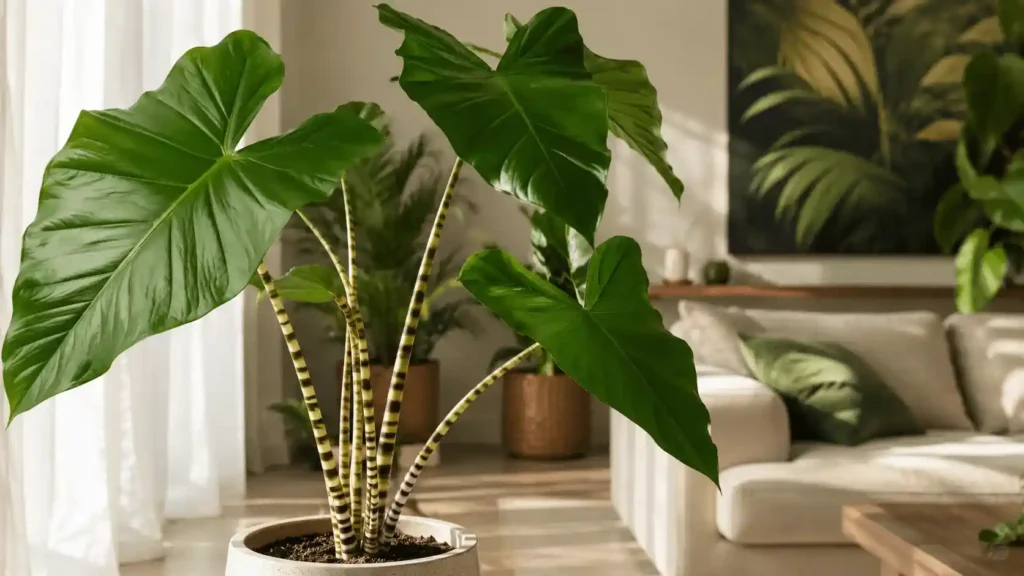
Alocasia zebrina is a striking tropical houseplant native to Southeast Asia, known for its bold arrow-shaped leaves and uniquely patterned yellow-and-white zebra-striped stems. This species, commonly called zebra alocasia, zebrina alocasia, or elephant ear plant zebra, belongs to the Araceae family and is prized for its architectural foliage and ornamental indoor appeal. It has become a popular choice for plant enthusiasts due to its dramatic appearance and relatively manageable indoor care requirements when its environmental needs are properly met.
For botanical classification and species overview, see the scientific reference on Alocasia.
Quick summary
- Alocasia zebrina thrives in bright indirect light — direct sun can scorch its leaves.
- Water only when the top 2 inches of soil are dry to prevent root rot.
- Requires high humidity (60%+) and warm temperatures above 18°C for healthy growth.
- Needs a well-draining soil mix with perlite or orchid bark for strong root development.
Light requirements for alocasia zebrina
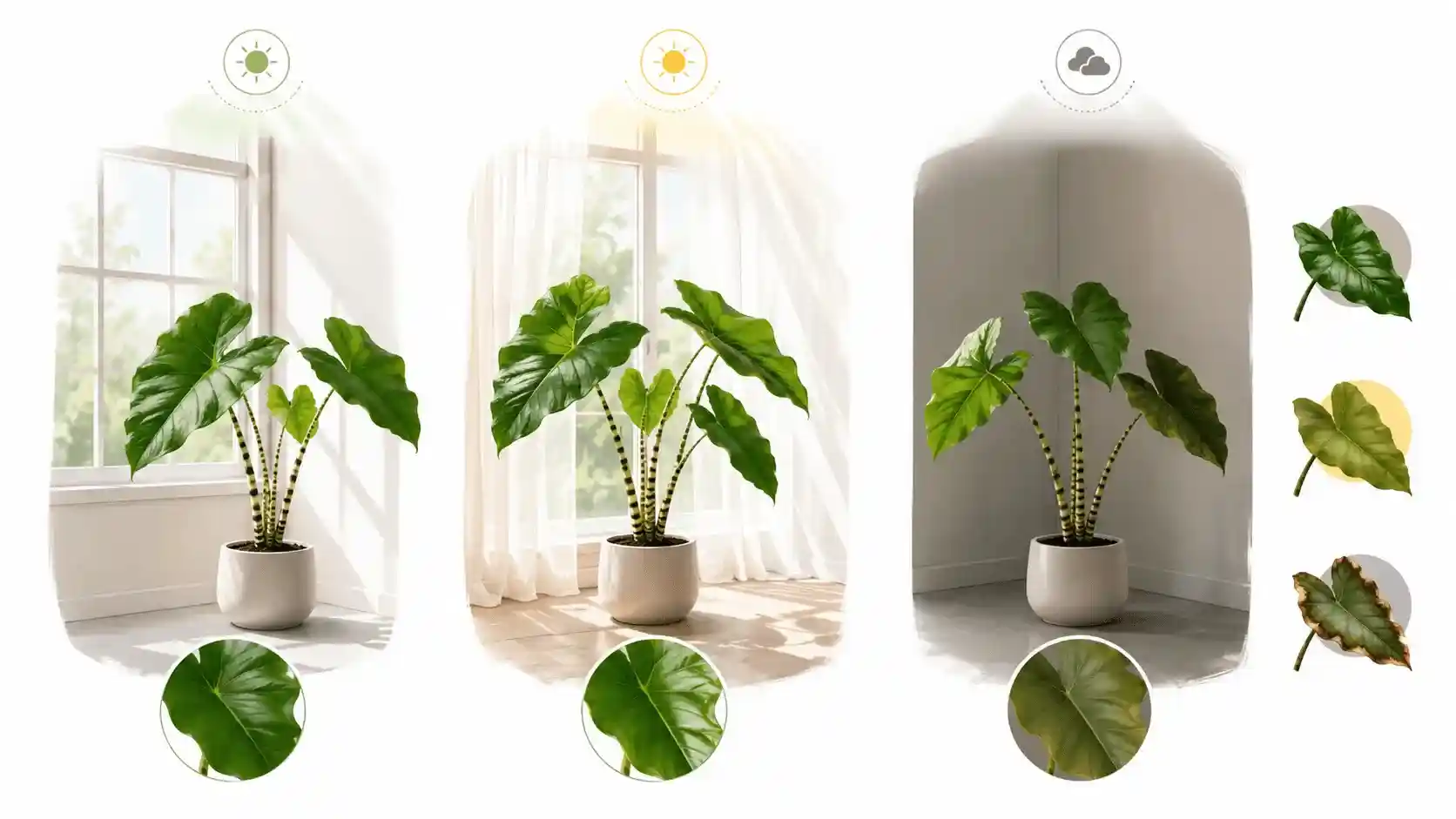
Alocasia zebrina requires bright indirect light for optimal growth, as it cannot tolerate harsh direct sunlight. Direct sun exposure damages leaf tissue, causing scorching and brown patches, while insufficient light leads to slow growth and weak stems.
Alocasia care principles are similar across species, especially when compared with Alocasia Amazonica Care Indoors, which also requires filtered bright light and humidity control.
Bright, filtered light replicates its natural tropical understory habitat, supporting healthy photosynthesis and steady leaf development.
Best Indoor Placement and Window Direction
The best placement for Alocasia zebrina is near east- or south-facing windows with filtered light. A sheer curtain is highly recommended for south-facing windows to prevent sunburn.
- East-facing window: Gentle morning light, ideal for consistent growth
- South-facing window: Strong light, must be diffused with a curtain
- North-facing window: Often too dim, may slow growth
A light meter can help ensure the plant receives sufficient indirect brightness. Ideally, place the plant 1–2 meters away from direct glass exposure.
How Seasonal Light Changes Affect Growth
Seasonal changes significantly affect Alocasia zebrina growth, especially in regions like the UK where winter light levels drop sharply. During November to February, reduced daylight often triggers dormancy or slowed growth.
- Growth slows in low-light winter months
- Supplementary grow lights may be required indoors
- Maintain stable warmth to reduce stress during dormancy
How to water alocasia zebrina correctly
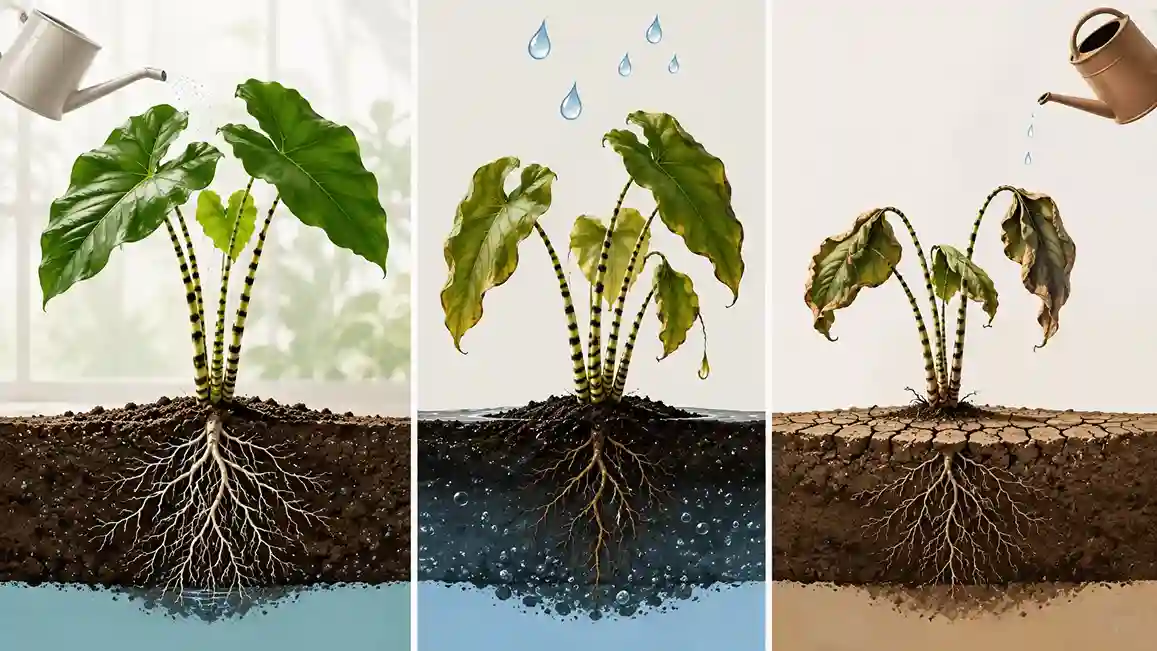
Proper watering is critical for Alocasia zebrina care, as overwatering is the most common cause of decline. The plant prefers consistently moist but never waterlogged soil. The finger test method is the most reliable approach: check the top 2 inches of soil before watering. If dry, water thoroughly and allow excess to drain completely.
Watering mistakes like dry leaf stress are also common in other indoor plants such as Chamaedorea Elegans Dry Leaves Causes & Fix.
Signs of Overwatering vs Underwatering
Overwatering symptoms include yellowing leaves, mushy stems, and root rot. Underwatering leads to dry, crispy leaf edges and drooping foliage.
- Overwatering: Yellow leaves, soft stems, soggy soil
- Underwatering: Dry soil, crisp edges, drooping leaves
Checking soil moisture is essential before adjusting care routines.
Seasonal Watering Adjustments
Watering frequency should change with seasonal growth patterns. During spring and summer, Alocasia zebrina actively grows and requires more frequent watering. In autumn and winter, watering should be reduced.
- Spring/Summer: Moderate, regular watering
- Autumn/Winter: Reduced watering due to slower growth
- Always maintain moist (not wet) soil conditions
Best soil mix for alocasia zebrina
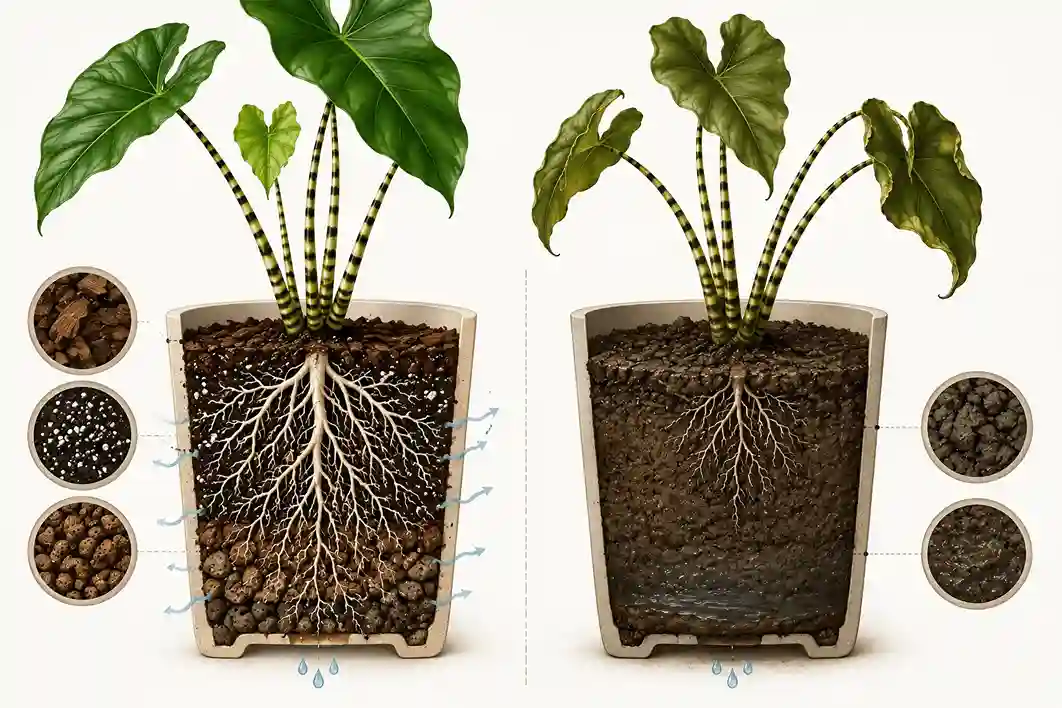
Alocasia zebrina requires a well-draining yet moisture-retentive soil mix to support healthy root growth. Standard potting soil alone is too dense and can lead to compaction and root rot. A balanced soil structure ensures oxygen flow to roots while retaining enough moisture for hydration.
Like Monstera Adansonii Hanging or Climbing, Alocasia zebrina benefits from airy soil that supports strong aerial root development.
DIY Soil Mix Ratios and Components
A recommended soil mix includes:
- 60% quality potting soil
- 20% perlite for aeration
- 20% orchid bark or coco coir for drainage and structure
These components are widely available in garden centers across the UK and help maintain ideal soil balance.
Why Soil Drainage Matters for Root Health
Poor drainage leads to oxygen deprivation in roots, causing rot, yellowing leaves, and plant decline. Healthy drainage ensures roots can breathe and absorb nutrients efficiently.
When and how to repot alocasia zebrina
Alocasia zebrina should be repotted when it becomes root-bound or shows signs of slowed growth despite proper care. Spring is the best time for repotting due to active growth conditions. Signs include roots circling the pot, roots emerging from drainage holes, or water running through soil too quickly.
Repotting principles are similar to Philodendron Scandens Care, Growth, and Varieties Guide, where root space directly impacts growth rate.
Step-by-Step Repotting Process
- Water the plant 24 hours before repotting
- Gently remove it from the pot
- Inspect and trim damaged roots
- Place in a slightly larger pot with fresh soil
- Water thoroughly and place in indirect light
Pot Material and Drainage Hole Requirements
Terracotta pots are ideal because they improve airflow and reduce excess moisture. Plastic pots retain more water, which can increase overwatering risk. Ceramic pots are decorative but often heavy and less breathable.
Drainage holes are essential regardless of pot type to prevent water accumulation and root rot.
How to propagate alocasia zebrina
Alocasia zebrina is propagated reliably through rhizome division. This ensures each new plant has its own root system and growth potential.
Stem or leaf cuttings do not work for this species and will not produce viable plants.
Rhizome Division Explained Step by Step
- Identify healthy mother rhizome at the base
- Locate offsets (pups) with roots
- Carefully separate using clean tools
- Pot each section into fresh, moist soil
- Maintain humidity and indirect light after division
Why Leaf and Stem Cuttings Do Not Work for This Species
Alocasia zebrina requires a rhizome segment to regenerate. Unlike plants such as pothos or monstera, it cannot grow from stem nodes alone, making rhizome division the only effective propagation method.
Common alocasia zebrina problems and how to fix them
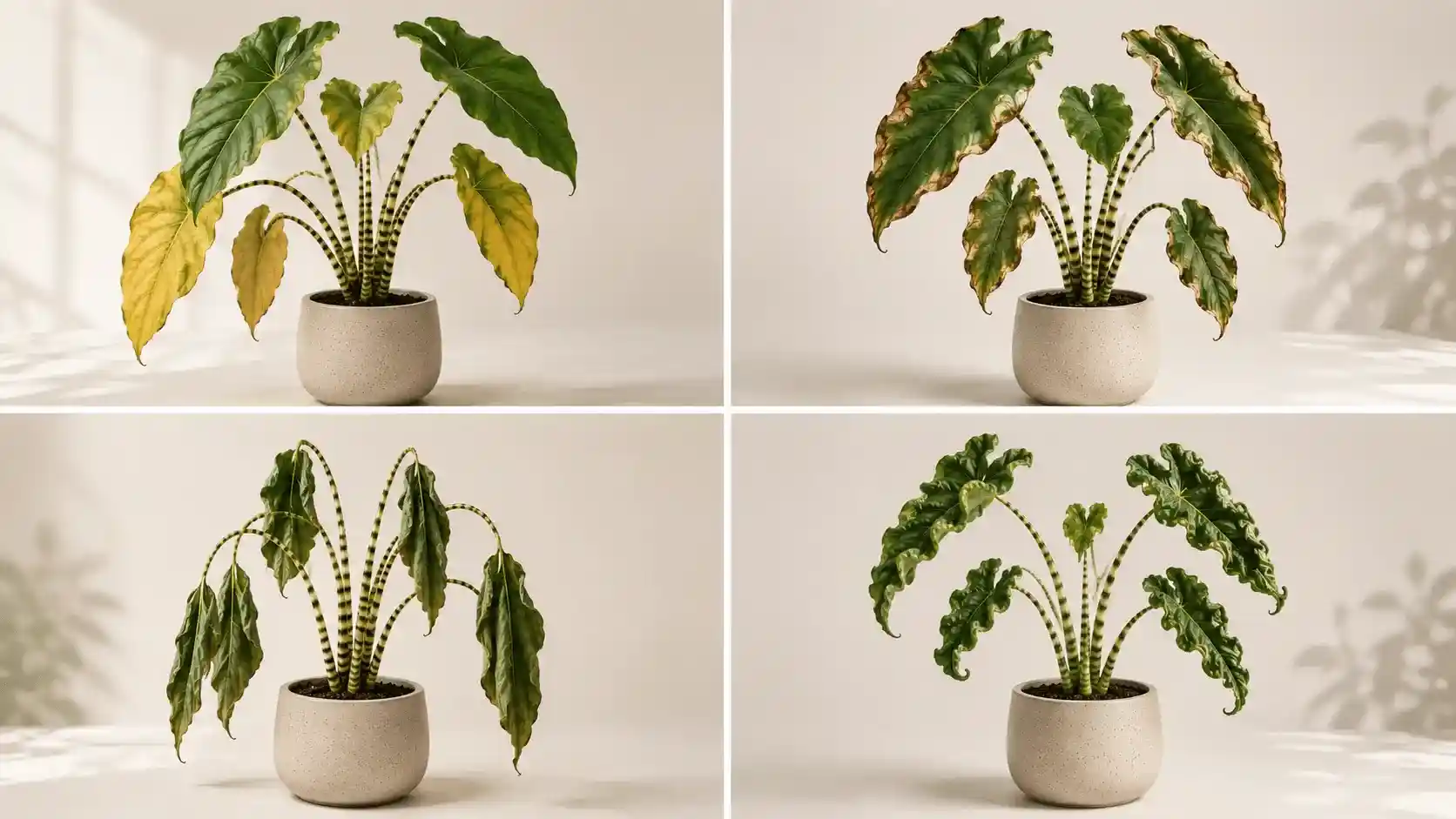
Alocasia zebrina commonly develops issues related to watering, humidity, and light imbalance. Identifying symptoms early helps prevent long-term damage.
| Symptom | Most Likely Cause | Fix |
| Yellow leaves | Overwatering / root rot | Reduce watering, check roots |
| Brown edges | Low humidity | Increase humidity |
| Drooping stems | Underwatering or pot stress | Adjust watering |
| Stem bending | Insufficient light | Move to brighter light |
| Leaves curling | Low humidity or heat stress | Improve humidity |
Yellow Leaves — Causes and Solutions
Yellow leaves usually result from overwatering or root rot. Checking soil moisture and root condition helps identify the exact issue. Natural aging may also cause older leaves to yellow. Yellowing foliage patterns are also frequently observed in Syngonium Leaves Turning Yellow: Causes and Solutions due to similar watering imbalances.
Brown Edges and Brown Leaf Tips
Brown edges are commonly caused by low humidity or inconsistent watering. Tap water mineral buildup can also contribute, so filtered or rested water is recommended.
Drooping and Wilting Stems
Drooping occurs due to underwatering, overwatering, or temperature stress. Soil inspection is the fastest way to determine the cause.
Stem Bending and Weak Petioles
Weak, bending stems are caused by insufficient light exposure. The plant stretches toward light sources, weakening structural support.
Leaves Curling Inward
Leaf curling is typically caused by low humidity or heat stress from nearby radiators or vents. A humidifier provides the most stable long-term solution. Low humidity stress is not unique to Alocasia; it also affects hardy plants like Sansevieria Laurentii Care Guide: Complete Indoor Tips.
Alocasia zebrina plant size and growth expectations
Alocasia zebrina typically reaches 1–1.5 meters indoors under optimal conditions. Leaf size and growth rate depend heavily on environmental stability and care consistency.
Indoor vs Outdoor Size Differences
Indoors, growth is limited by pot size and light conditions. Outdoors in tropical climates (USDA zones 9–11), the plant can grow significantly larger with broader leaves and faster development.
Factors That Affect Growth Rate
Growth is influenced by:
- Light intensity
- Humidity levels
- Pot size
- Fertilization routine
- Seasonal temperature changes
Complete alocasia zebrina indoor care guide
Alocasia zebrina thrives when its core environmental needs are consistently met. Balanced care ensures strong foliage and steady growth.
| Care Parameter | Requirement | Notes |
| Light | Bright indirect | No direct sun |
| Watering | When top 2 inches dry | Reduce in winter |
| Humidity | 60%+ | Use humidifier |
| Temperature | 18–27°C | Avoid drafts |
| Soil | Well-draining mix | Add perlite |
| Fertilizer | Monthly (spring-summer) | Balanced feed |
| Repotting | Every 1–2 years | Spring only |
Humidity and Temperature Requirements
Humidity above 60% is essential for preventing leaf stress and curling. Temperatures should remain between 18–27°C with no exposure to cold drafts or heating vents.
Fertilizing Schedule and Fertilizer Type
Use a balanced liquid fertilizer during active growth seasons. Feeding should stop in autumn and winter when the plant naturally slows down. Feeding schedules are similar to Dracaena fragrans Care Guide: Complete Indoor Growing Tips, where balanced fertilization supports steady growth.
Pruning and Leaf Maintenance
Remove yellow or damaged leaves at the base using clean tools. Regularly wiping leaves improves photosynthesis and overall plant health.
Alocasia zebrina varieties and related plants
Alocasia zebrina includes visually distinct varieties, though care requirements remain similar across types. For more insights into diverse plant species and structured garden ecosystems, see: Australian Native Garden Plants guide.
| Variety | Stem Pattern | Leaf Appearance | Care Difference |
| Alocasia Zebrina | Yellow-white stripes | Bright green leaves | Standard care |
| Zebrina Tiger | Dark mottled stripes | Slightly darker leaves | Same care |
| Black Zebrina | Dark stems | Deep green foliage | Same care |
Alocasia Zebrina Tiger vs Standard Zebrina
The Tiger variety features darker, more mottled striping on the stems, but its care requirements are identical to standard zebrina.
Does Alocasia Zebrina Flower Indoors?
Indoor flowering is rare. When it occurs, it produces a spathe-and-spadix structure typical of the Araceae family, usually under stable warmth, maturity, and high humidity.
Beginner mistakes when caring for alocasia zebrina
Most Alocasia zebrina problems arise from environmental inconsistency rather than plant weakness. Understanding common mistakes improves long-term success. Common beginner mistakes like stress-related leaf drop are also discussed in Peperomia Leaves Falling Off: Causes, Fixes, and Prevention.
The Overwatering Trap and How to Avoid It
Overwatering is the leading cause of plant decline. Always use the finger test before watering and ensure soil partially dries between watering cycles.
Environmental Mistakes — Cold, Drafts, and Low Humidity
Placing the plant near radiators, air conditioners, or cold windows leads to stress symptoms such as drooping, curling, and browning leaves.
Conclusion
Alocasia zebrina care depends on four essential factors: bright indirect light, correct watering, well-draining soil, and stable humidity. When these conditions are maintained, the plant develops strong striped stems and vibrant foliage. Understanding common issues like yellow leaves, drooping stems, and brown edges allows for quick correction and long-term plant health.
FAQs
How do you care for Alocasia Zebrina indoors?
Provide bright indirect light, water when the top 2 inches of soil are dry, maintain humidity above 60%, and keep temperatures above 18°C.
Are Alocasia Zebrina hard to care for?
They are moderately challenging but manageable with consistent watering, humidity, and stable indoor conditions.
Why are my Alocasia Zebrina leaves turning yellow?
Most commonly due to overwatering or root rot, though natural aging can also cause older leaves to yellow.
Where should Alocasia Zebrina be placed in a house?
Near bright, indirect light such as an east-facing or filtered south-facing window.
How do you propagate Alocasia Zebrina?
Only through rhizome division; stem or leaf cuttings will not work.
Why is my Alocasia Zebrina drooping?
Usually caused by incorrect watering, root stress, or temperature fluctuations.
How often should I repot Alocasia Zebrina?
Every 1–2 years in spring when root-bound or growth slows



6 Responses